Mirza Ghasemi.
Persian Smoked Eggplant and Egg
میرزا قاسمی · say it: meer-ZAA ghaa-seh-MEE
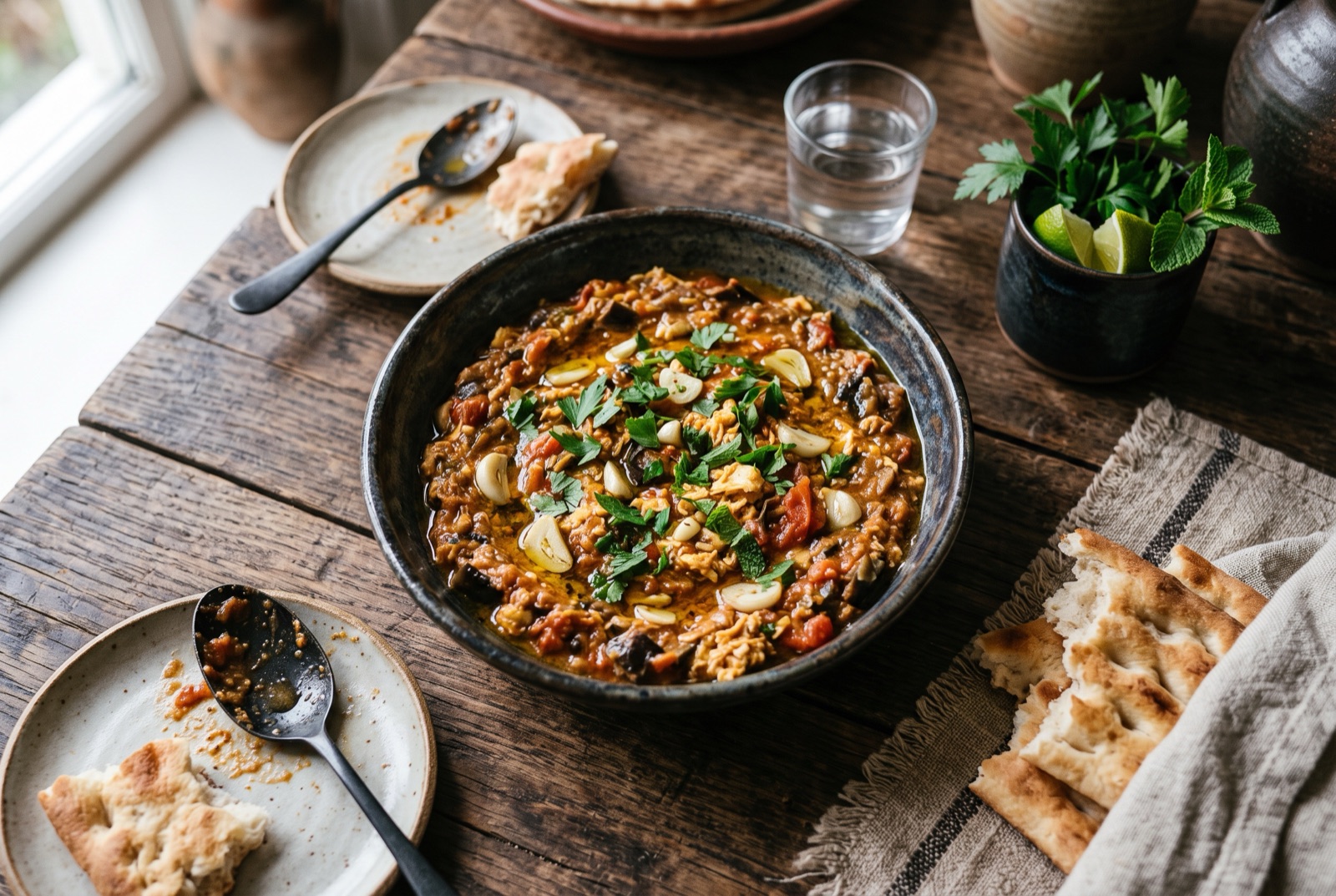
Mirza ghasemi is smoke, garlic and aubergine in roughly equal weight. Whole aubergines are blackened directly over a flame until the skin cracks and the flesh inside collapses, then peeled, chopped and cooked down with fried garlic, turmeric and tomato into a soft, dark, almost jammy mass. Eggs go in at the very end and are stirred through just enough to set into ribbons without turning the whole thing into scrambled egg. It is eaten warm or at room temperature, scooped up with flatbread, and it is unusually garlicky even by Iranian standards — a whole head is normal. Easy to make, and completely dependent on getting real char on the aubergines.

- Gate
- IranGilan
- Prep
- 15 min
- Cook
- 40 min
- Total time
- 55 min
- Serves
- 4
- Status
- Easy
- Nutrition / serving · estimated
- Calories 260 kcal
- Protein 10 g
- Carbs 18 g
- Fat 17 g
- Fiber 8 g
Why this recipe works.
- Insists on real flame char rather than roasting, because oven-baked aubergine makes a different dish entirely.
- Fries the garlic to the sweet-golden stage instead of burning it, which is where most versions go wrong.
- Cooks the aubergine down properly before the eggs go in, so the finished dish is jammy rather than watery.
- Uses a full head of garlic, as northern cooks actually do, instead of a polite two cloves.
Ingredients.
9 itemsFor the base
To finish
Equipment
- Gas hob, barbecue or oven grill for charring
- Wide frying pan
- Sieve or colander
Instructions.
Char the aubergines over flame
Pierce each aubergine twice with a knife tip and set them directly on a gas burner over a medium flame, or under a preheated oven grill. Turn every few minutes for 15 to 20 minutes, until the skin is blackened and papery all over and the aubergine sags and collapses when pressed with tongs.
Tip Line the hob or tray with foil first. This is a messy job and the juices burn on.
Steam, peel and chop
Put the charred aubergines in a bowl, cover with a plate, and leave for 10 minutes. The skin will loosen and slip off in strips. Pull it away, discard any large seed pockets, and chop the flesh roughly with a knife. Drain in a sieve for a few minutes if it looks very wet.
Fry the garlic
Heat the oil in a wide pan over medium-low heat and fry the chopped garlic for 3 to 4 minutes, stirring constantly, until it turns pale gold and smells sweet rather than sharp. Stir in the turmeric and cook for 30 seconds more.
Tip Garlic this finely chopped goes from golden to burnt in about fifteen seconds. Keep it moving and pull it back from the heat if it starts colouring fast.
Cook down the tomatoes
Add the tomato paste and fry for a minute until it darkens, then tip in the chopped tomatoes with the salt. Cook over medium heat for 8 to 10 minutes, until the tomatoes have broken down completely and the mixture no longer releases watery liquid at the edges.
Add the aubergine and reduce
Stir in the chopped aubergine and mash it into the tomato with the back of a wooden spoon. Cook for 12 to 15 minutes over medium-low heat, stirring often, until the mixture darkens and thickens to a jammy mass that holds a spoon-track for a second or two.
Stir the eggs through
Season with the pepper, pour the beaten eggs over the surface, and fold them through with three or four slow movements — you want ribbons of set egg running through the aubergine, not a uniform scramble. Take the pan off the heat while the egg still looks slightly wet.
Tip Residual heat finishes the eggs in the pan. Waiting until they look done means overcooked by the time it reaches the table.
Serve with bread
Turn out into a shallow dish, drizzle with a little more oil, and serve warm or at room temperature with plenty of flatbread for scooping.
Tips from our kitchen.
- Pierce each aubergine a couple of times before it goes over the flame, or steam pressure will make it burst and spatter.
- Char until the skin is genuinely black and papery and the aubergine collapses when you press it. Patchy browning means patchy smoke.
- Let the charred aubergines sit in a covered bowl for ten minutes — the trapped steam loosens the skin and it slips off in strips.
- Chop the flesh with a knife rather than blitzing it. A food processor turns it into a smooth purée and you lose the texture that makes the dish worth eating.
- Drain the aubergine flesh briefly in a sieve if it looks very wet, especially with large supermarket aubergines, or the finished dish will be soupy.
- Pull the pan off the heat while the eggs still look slightly wet. They keep cooking in the residual heat and overcooked mirza ghasemi turns rubbery.
Substitutions.
- Flame-charred aubergines → Aubergines grilled under a very hot oven grill, turned until blackened on all sides
- The closest oven approximation. Simply roasting them whole at 200C gives soft flesh but almost no smoke, which is the point of the dish — if that is your only option, add a small pinch of smoked paprika to compensate.
- Fresh tomatoes → 400 g tinned chopped tomatoes, cooked down until thick
- Works fine out of season, but reduce it well — tinned tomatoes carry more liquid and the dish should be thick, not saucy.
- Eggs stirred through → Omit them entirely
- A vegan version without eggs exists in the region and is served as a dip. It is thinner and sharper but perfectly good with bread.
Variations.
- Mirza ghasemi with fried egg on top
- Instead of stirring eggs through, the mixture is spread in the pan and whole eggs cracked over the surface to set. Common in restaurants because it looks better on the plate.
- Kashke bademjan
- The other great Persian aubergine dish: fried rather than smoked aubergine mashed with kashk, fried mint and crisp onion. Richer, sourer, and served as a dip rather than a side.
- With smoked fish
- A Gilani variation that adds flaked smoked whitefish to the aubergine, doubling down on the smoke. Served as a substantial starter rather than a side dish.
Storage & reheating.
Mirza ghasemi keeps 3 days refrigerated and many people prefer it cold from the fridge the next day, when the smoke and garlic have settled into each other. Reheat gently in a pan rather than a microwave, which can make the egg squeak. It does not freeze well — the aubergine turns watery and the egg goes grainy on thawing. If you want to get ahead, char and chop the aubergines a day early and keep them covered in the fridge, then finish the dish in fifteen minutes.
Serve with
Warm flatbread torn for scooping, as part of a spread with feta, herbs and olives, or alongside steamed rice and grilled fish.
The story behind Mirza Ghasemi.
This is a Gilani dish, from the humid rice-growing provinces along the Caspian coast where the cooking is greener, sourer and far more garlic-heavy than in Tehran. Northern Iranian food has a distinct palate — garlic, sour orange, walnut, smoked fish, aubergine — and mirza ghasemi sits squarely in it. It is served as part of a spread of small dishes alongside bread, or as a side to rice and fish, and it travels well enough that it now appears on menus all over the country as a recognisably northern speciality.
The name is a person's name, and the usual explanation is that it honours a nineteenth-century Qajar-era official from the region who is said to have popularised or invented it. That attribution is repeated everywhere but is not well documented, so it is best treated as tradition rather than history — what is certain is that the dish is northern and that its identity is tied to the smoke.
That smoke is the entire technique. Aubergines cooked in an oven give you soft flesh and a sweet flavour, and the result is a perfectly nice aubergine dish that is not mirza ghasemi. What you want is skin blackened and split over direct fire, gas flame or charcoal, so the flesh steams inside its own burnt shell and picks up the acrid, resinous smoke through the cracks. Gilani cooks traditionally do it over embers, which is best, but a gas hob works well and a very hot grill will get you most of the way. The other non-negotiable is the garlic, which goes in raw-fried rather than raw and mellows into sweetness, and the eggs, which should be stirred through in a few slow folds and pulled off the heat while they still look slightly underdone.
Questions, answered.
Can I make mirza ghasemi without a gas flame?
Yes, but you need direct radiant heat from somewhere. Put the whole aubergines on a foil-lined tray directly under a preheated oven grill on its highest setting and turn them every few minutes until the skin is black and blistered all over and the flesh has collapsed. A charcoal barbecue is even better. Simply baking them whole gives soft flesh with almost no smoke, and smoke is what defines the dish.
Why is my mirza ghasemi watery?
Aubergines hold a lot of liquid, and large supermarket ones hold more than the small Iranian varieties. Let the chopped flesh drain in a sieve for a few minutes before it goes in the pan, and then cook the mixture longer than feels necessary — it should reduce to a thick, jammy consistency that holds its shape on a spoon before the eggs are added.
How much garlic is too much?
For this dish, more than you would expect. A whole head for four people is standard in Gilan, and it is fried until soft and golden so it turns sweet rather than harsh. If you are nervous, start with six cloves, but the garlic is meant to be a leading flavour alongside the smoke rather than a background note.
Is it served hot or cold?
Both are normal. Straight from the pan it is a warm side dish for rice or fish; at room temperature or cold from the fridge it works as part of a mezze-style spread with bread, feta and herbs. Many Iranians consider the leftovers eaten cold the next morning to be the best way to have it.
What kind of aubergine should I use?
Long, slim aubergines are traditional and preferable because they have fewer seeds, less water and a higher ratio of skin to flesh, which means more smoke flavour. Large globe aubergines work but need draining after chopping. Whatever the shape, choose ones that feel heavy and firm with tight, glossy skin rather than dull and spongy.
You might also like.
All recipes →
Keep exploring Iran.
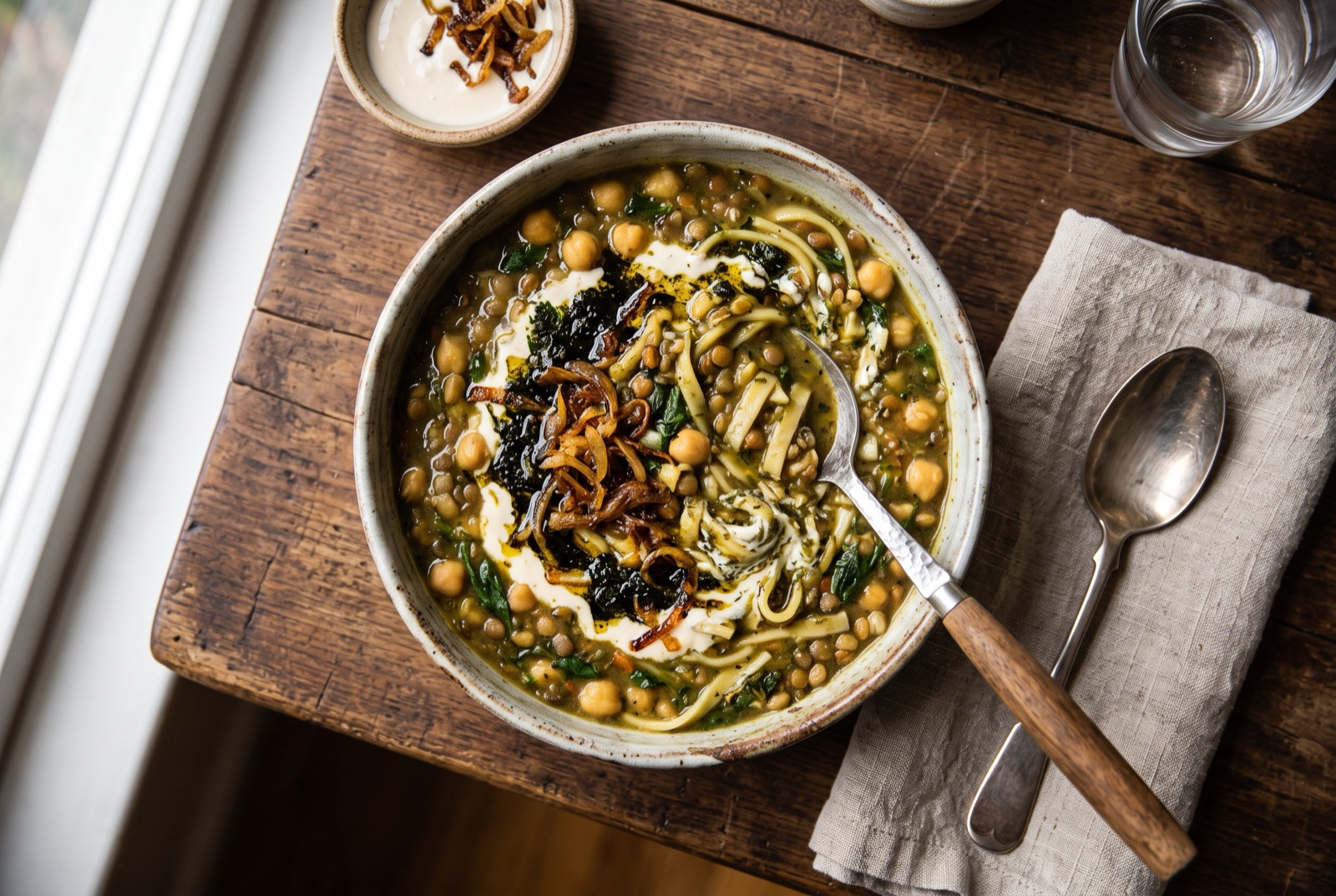
Iran has 9 more dishes in the atlas — Ash-e Reshteh and Faloodeh, and 7 more.
All Iran recipes Eggplant recipes Tomato recipes Garlic recipes appetizersidevegetariangluten freedairy freeRecipe by The DishRoute Kitchen · published August 20, 2026 · updated August 20, 2026