Fesenjan.
Persian Walnut and Pomegranate Stew
خورش فسنجان · say it: feh-sen-JAAN
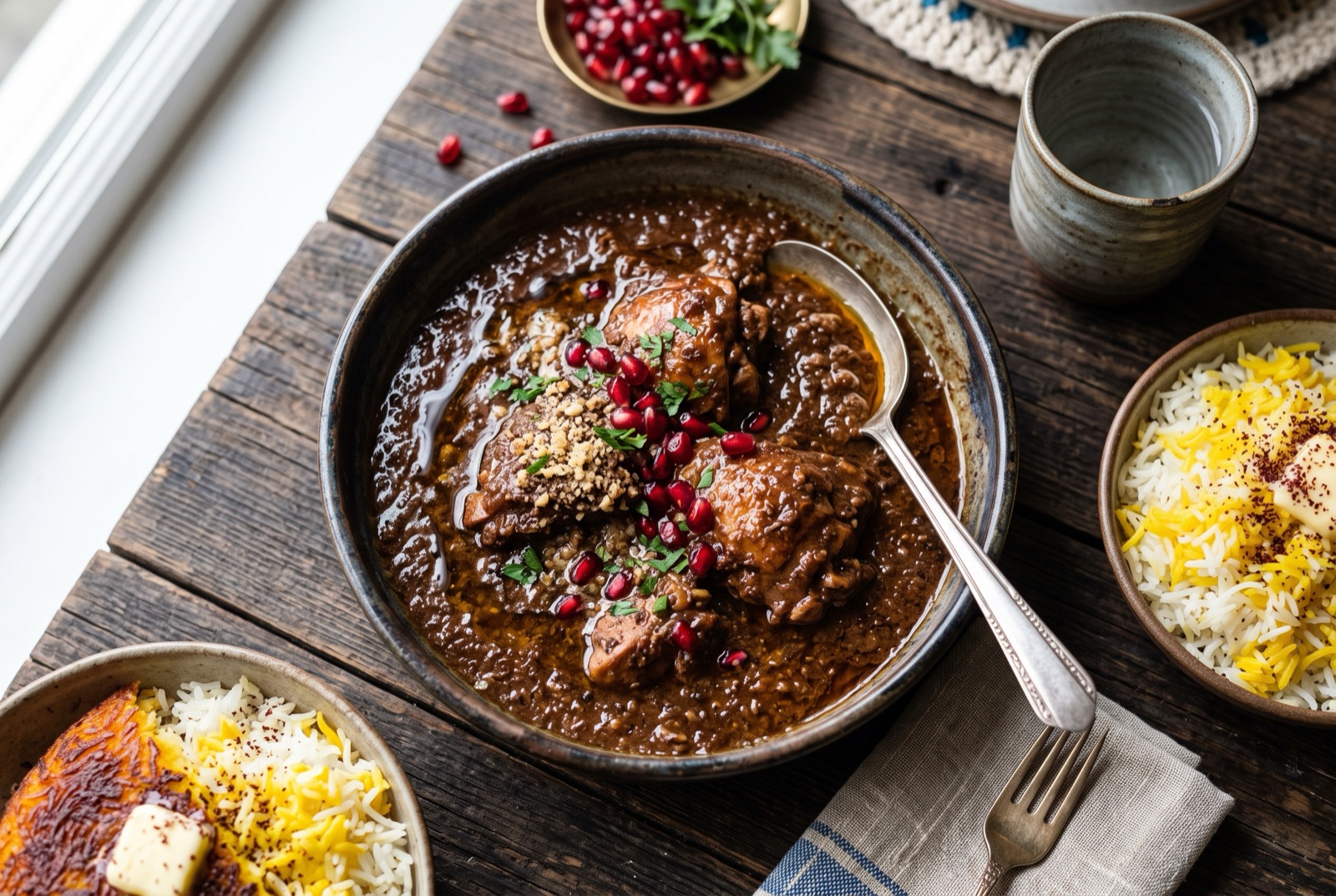
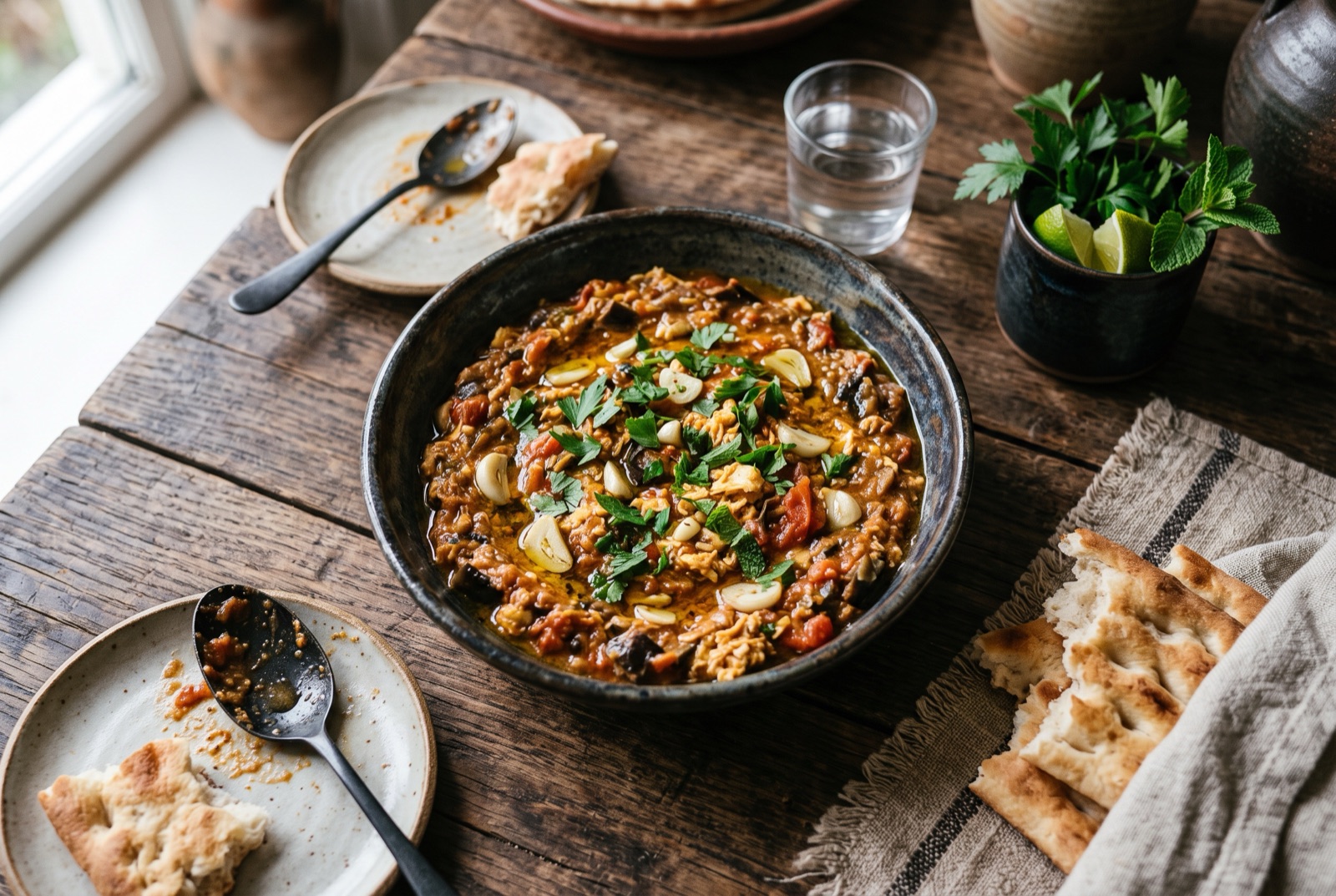
Fesenjan is a stew made almost entirely of two ingredients: walnuts and pomegranate. The nuts are ground fine and simmered for well over an hour until they stop tasting like nuts and start tasting like sauce, releasing their oil and turning the pot from beige to a dark, glossy mahogany. Pomegranate molasses supplies a sourness sharp enough to cut through all that fat, and chicken or duck is poached in the sauce rather than fried into it. The result is thick, faintly sweet, unapologetically rich and completely unlike any other stew — closer in texture to a nut butter sauce than to anything brothy. A little goes a long way, which is why it is always served in modest ladlefuls over plain steamed rice.

- Gate
- IranGilan
- Prep
- 20 min
- Cook
- 2 hr 30 min
- Total time
- 2 hr 50 min
- Serves
- 4
- Status
- Medium
- Nutrition / serving · estimated
- Calories 690 kcal
- Protein 42 g
- Carbs 28 g
- Fat 46 g
- Fiber 5 g
- Sugar 19 g
Why this recipe works.
- Simmers the walnuts long enough for their oil to break out, which is the only way the sauce loses its raw, chalky edge.
- Balances sweet against sour at the end rather than the start, so you can tune it towards Gilani sharpness or Tehrani sweetness.
- Poaches the chicken in the sauce instead of frying it in, keeping the meat tender in a stew that cooks for a long time.
- Tells you exactly what colour and texture to look for at each stage, since fesenjan changes appearance dramatically as it cooks.
Ingredients.
13 itemsFor the sauce
For the meat
To finish
Equipment
- Heavy-based pot or Dutch oven
- Food processor or nut grinder
- Wooden spoon for scraping the base
Instructions.
Toast and grind the walnuts
Toast 300 g of walnuts in a dry pan over medium heat for 3 to 4 minutes, shaking often, until they smell sweet and warm but have not darkened. Cool completely, then pulse in a food processor to a fine, damp meal — stop well before they clump into butter.
Tip Grinding warm walnuts turns them straight to paste. Let them cool properly first.
Soften the onion
Heat the oil in a heavy pot and cook the grated onion over medium heat for 8 minutes, until it collapses and turns pale gold with no raw smell left. Stir in the turmeric and cook for another 30 seconds.
Simmer the walnut sauce
Add the ground walnuts and the water, stir well, and bring to a bare simmer. Cook uncovered on low heat for 60 to 75 minutes, scraping the bottom of the pot every 10 minutes, until the sauce turns from pale beige to dark chocolate brown and beads of walnut oil rise to the surface.
Tip The colour change happens suddenly, usually in the last 20 minutes. If nothing has happened at the 45-minute mark, keep going rather than turning up the heat.
Sour and season the sauce
Stir in the pomegranate molasses, cinnamon and half the saffron water. The sauce will loosen slightly and the colour will deepen to a reddish mahogany. Simmer for 10 minutes to let the acid settle into the walnuts.
Poach the chicken in the sauce
Season the chicken thighs with the salt and pepper and slide them into the sauce, pushing them under so they are fully covered. Cover and simmer gently for 35 to 40 minutes, until the meat is tender enough to cut with a spoon.
Tip Do not brown the chicken first. Poaching keeps it tender in a sauce this thick and lets it take on the pomegranate flavour.
Balance the sweet and sour
Taste the sauce and add honey a teaspoon at a time until the sourness sits where you want it — sharp and bracing for the northern style, rounder and sweeter for the Tehrani one. Adjust salt, and loosen with a splash of hot water if it has thickened past pourable.
Rest and serve
Drizzle over the remaining saffron water, cover, and leave off the heat for 15 minutes so the oil settles into a glossy layer on top. Serve modest ladlefuls over plain steamed rice, scattered with pomegranate seeds.
Tips from our kitchen.
- Grind the walnuts fine but stop before they turn to butter — a food processor pulsed in short bursts gives the texture you want, somewhere between coarse sand and paste.
- Toast the walnuts lightly first. Thirty seconds too long and they turn bitter, so pull them out while they still smell sweet rather than roasted.
- Keep the heat genuinely low and stir the bottom of the pot every ten minutes. Walnut oil catches fast, and one scorched patch flavours the entire stew.
- Add the pomegranate molasses only after the walnut sauce has darkened. Acid added early slows the breakdown of the nuts and keeps the sauce grainy.
- Taste and adjust sweetness right at the end, a teaspoon at a time. Molasses brands vary enormously in sourness, so no fixed sugar quantity will work for every bottle.
- Serve it in smaller portions than you think. Fesenjan is intensely rich and a modest ladle over rice is the traditional serving, not a bowlful.
Substitutions.
- Pomegranate molasses → 700 ml pure pomegranate juice, reduced in a pan to about 150 ml
- This is the older method and gives a fruitier, cleaner sourness. Reduce it separately, without sugar, and add it in the same place in the recipe.
- Chicken thighs → Duck legs, or small lamb meatballs
- Duck is the classic festive version and its fat suits the sauce; give the legs an extra 30 minutes. Lamb meatballs the size of walnuts are a common everyday alternative.
- Walnuts → There is no real substitute
- Almonds or pecans make a pleasant nut stew but not fesenjan — walnut oil and its slight tannic bitterness are what balance the pomegranate.
Variations.
- Fesenjan with duck
- The festive original from Gilan, made with duck legs browned first and then simmered in the sauce. Richer and gamier, and the rendered duck fat blends into the walnut oil.
- Vegetarian fesenjan with pumpkin
- Chunks of pumpkin or butternut squash poached in the walnut sauce instead of meat. The natural sweetness of the squash plays well against the molasses and it needs only 25 minutes.
- Fesenjan-e torsh
- The sharply sour northern style, made with no sugar at all and extra molasses. Startling on a first spoonful and the version many Gilani cooks consider the only real one.
Storage & reheating.
Fesenjan keeps 4 days refrigerated and the flavour deepens overnight as the walnut and pomegranate stop tasting like separate ingredients. It thickens a lot when cold, so reheat gently with a good splash of water, stirring until the sauce loosens back to a spoon-coating consistency. It freezes well for 3 months, though the walnut oil sometimes separates on thawing — a few minutes of stirring over low heat brings it back together.
Serve with
Plain steamed long-grain rice, so the rice stays neutral against the richness, with a bowl of shirazi salad to cut through it.
The story behind Fesenjan.
Fesenjan belongs to the Caspian north, above all to Gilan, where walnut trees and pomegranates both grow abundantly and the cooking leans sour in a way that Tehran cooking does not. It is one of the older documented Persian stews — recipes for meat cooked in walnut and pomegranate appear in Safavid-era cookery writing — and its long association with feasts, weddings and Yalda night reflects both the cost of walnuts and the time the dish demands. In the traditional version the meat is duck, whose fat stands up to the richness of the sauce, though chicken thighs have become the everyday standard and lamb meatballs are common in some households.
The defining argument about fesenjan is sweetness. Southern and Tehrani versions tend towards the sweet end, with sugar or honey balancing the molasses; northern Gilani cooks make it aggressively sour and would consider the sweetened version a dessert. Both are traditional, and the family recipe you grew up with will feel like the correct one. What everyone agrees on is that the sourness has to come from real pomegranate — either thick molasses boiled down from the juice, or in the most traditional versions fresh juice reduced in the pot itself, which takes hours and produces a cleaner, fruitier result than any bottle.
The cooking itself is an exercise in patience with very little technique. Ground walnuts are simmered in water at barely a bubble, and for the first forty minutes very little seems to happen. Then the mixture thickens, darkens, and eventually oil starts to bead on the surface, which is the signal that the nuts have broken down and the sauce is ready to be soured and seasoned. Rushing this stage is the single most common failure: undercooked fesenjan tastes chalky and raw, and no amount of molasses will fix it. Scorching it is the other failure, since walnut oil catches easily and burnt walnut is bitter beyond rescue.
Questions, answered.
Why is my fesenjan grainy and pale?
The walnuts have not cooked long enough. Ground walnuts need at least an hour of gentle simmering before they break down, release their oil and turn the sauce from beige to dark brown. Adding the pomegranate molasses too early makes this worse, because the acid slows the process — cook the walnuts in plain water first, and only sour the sauce once it has darkened.
Should fesenjan be sweet or sour?
Both versions are traditional and it depends on the region. Gilani cooks in the north make it sharply sour with no added sugar at all, while Tehran and southern versions balance the pomegranate with sugar or honey. Start with the sour base, then add sweetness a teaspoon at a time until it tastes balanced to you — pomegranate molasses brands vary so much that no fixed quantity is reliable.
Can I make fesenjan without pomegranate molasses?
Yes, by reducing pure pomegranate juice yourself. Boil about 700 ml of unsweetened juice down to roughly 150 ml of syrup and use it in place of the molasses. This is how the dish was originally made and the flavour is fruitier and less caramelised, though it adds an hour of unattended simmering to the recipe.
Why has my stew turned bitter?
Usually burnt walnuts, either from over-toasting them at the start or from the sauce catching on the bottom of the pot during the long simmer. Walnut oil scorches easily and burnt walnut is intensely bitter with no way to correct it. Toast the nuts only until fragrant, use a heavy-based pot, keep the heat low, and scrape the bottom every ten minutes.
What meat is traditional in fesenjan?
Duck is the oldest and most festive choice, especially in the Caspian provinces where the dish originates, because its fat holds up against the rich sauce. Chicken thighs are the everyday standard now, and small lamb or beef meatballs are common in many households. Vegetarian versions with pumpkin are also genuinely traditional rather than a modern invention.
You might also like.
All recipes →
Keep exploring Iran.
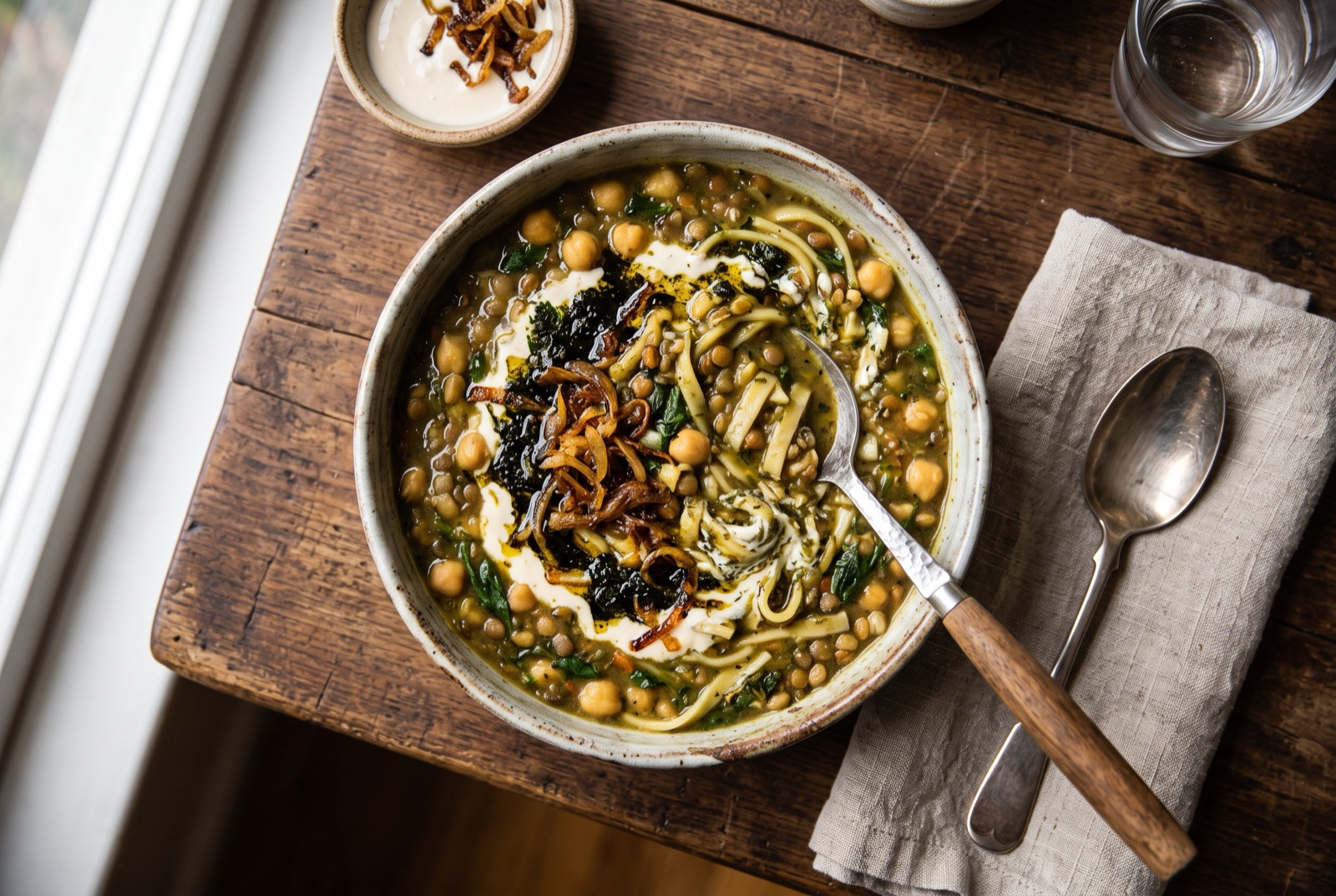
Iran has 9 more dishes in the atlas — Ash-e Reshteh and Faloodeh, and 7 more.
Recipe by The DishRoute Kitchen · published August 20, 2026 · updated August 20, 2026