Morog Polao.
Bangladeshi Chicken Pilaf with Fried Onion
মোরগ পোলাও · say it: MO-rog po-LAO
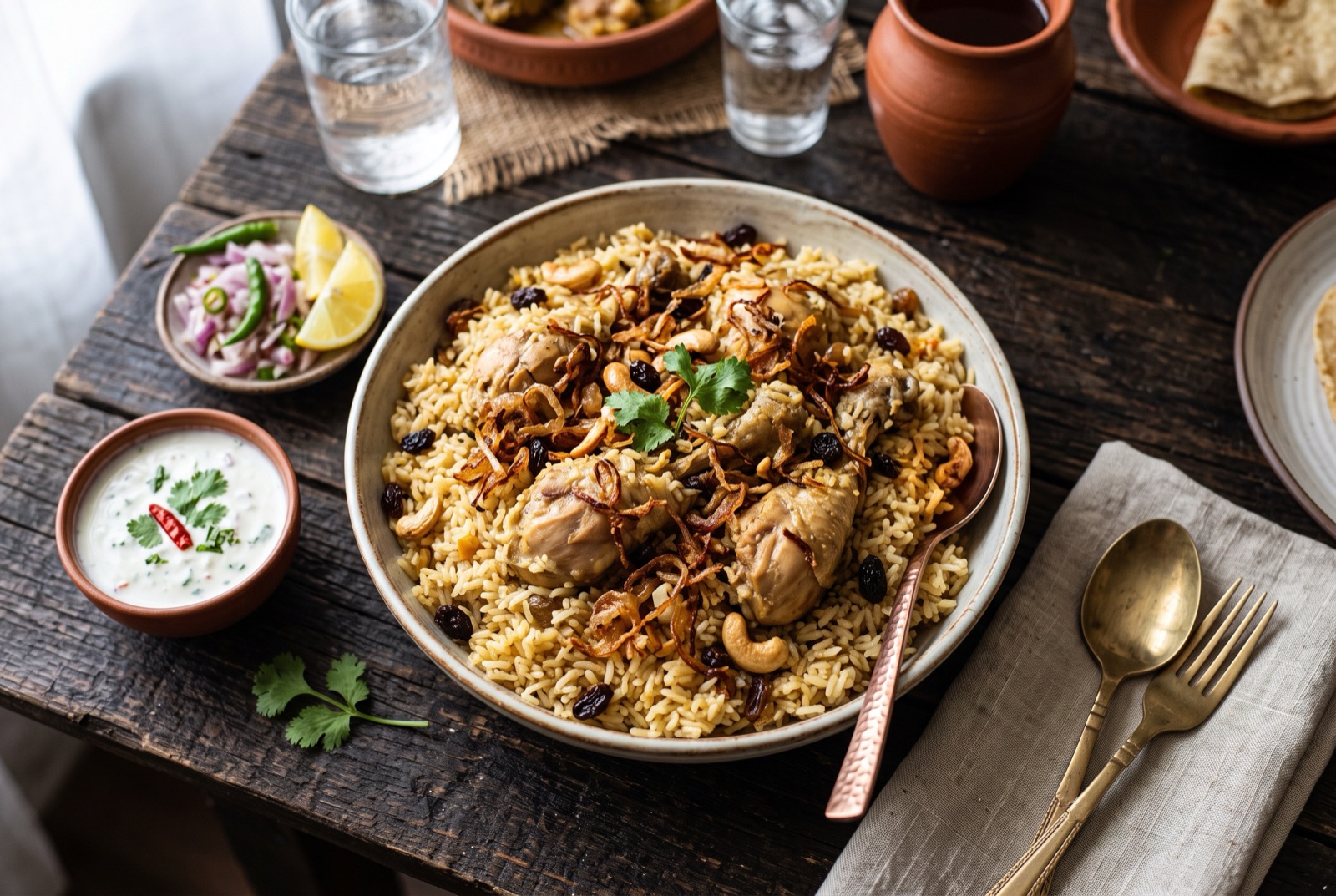
Morog polao is the gentle, milky cousin of biryani — chicken and rice cooked into one pot with whole spices, chicken stock and a splash of milk, and deliberately kept mild. There is no chile heat and no tomato, and the colour is pale gold rather than red. What you taste is cardamom, cinnamon and clove floating over sweet fried onion, chicken that has been marinated in yogurt and ginger until it is soft enough to fall from the bone, and rice that has drunk stock instead of water. Ghee, a handful of raisins and a scatter of crisp beresta on top push it just to the edge of sweet. In Bangladesh it is what gets cooked for guests, for Eid lunch and for a birthday, and it is significantly less work than a kacchi.

- Gate
- BangladeshDhaka
- Prep
- 30 min
- Cook
- 50 min
- Total time
- 2 hr incl. 40 min rest
- Serves
- 5
- Status
- Medium
- Nutrition / serving · estimated
- Calories 690 kcal
- Protein 38 g
- Carbs 76 g
- Fat 25 g
- Fiber 3 g
- Sugar 9 g
- Sodium 850 mg
Why this recipe works.
- One pot, one stage — the rice cooks directly in chicken stock so the flavour is in the grain, not sitting on top.
- Exact liquid ratios for aromatic short-grain rice, which turns to paste far faster than basmati does.
- A yogurt marinade that keeps chicken breast and thigh both tender through the full cooking time.
- Explains the beresta step properly, since crisp fried onion is what separates a good polao from a bland one.
Ingredients.
19 itemsFor the chicken
For the polao
To finish
Equipment
- Heavy lidded pot or Dutch oven
- Slotted spoon
- Sieve for draining rice
Instructions.
Marinate the chicken
Mix 1.2 kg of chicken pieces with the yogurt, ginger and garlic pastes, white pepper and salt. Cover and leave at room temperature for 30 minutes, or refrigerate up to 4 hours — the yogurt should cling to the meat rather than pool in the bowl.
Fry the onions
Melt the ghee in a heavy pot and fry the sliced onions over medium-low heat for 15–20 minutes, stirring constantly once they start to colour, until deep honey-gold. Lift two-thirds out onto paper to drain and crisp; leave the rest in the pot.
Tip They will look slightly underdone when you take them out and turn brittle as they cool. Wait for that stage before judging the colour.
Cook the chicken in the ghee
Add the marinated chicken and all its marinade to the pot with the onions still in it and cook over medium heat for about 10 minutes, turning the pieces, until the yogurt has tightened onto the meat and the ghee comes back to the surface in clear pools. The chicken should be pale gold, not browned.
Toast the rice with the whole spices
Push the chicken to one side, add the cardamom, cinnamon, cloves and bay leaves and let them sizzle for 30 seconds until fragrant. Tip in the drained rice and fold it through the fat for 2 minutes, until every grain looks translucent at the edge and smells toasted rather than raw.
Add the liquid
Pour in the hot stock and warm milk, add the whole green chiles and the optional sugar, and taste the liquid for salt — it should be a little saltier than you want the finished rice to be. Bring to a boil, then cover tightly and drop the heat to the lowest setting.
Tip Judge the salt now. Once the lid goes on there is no way to season the rice again without wrecking the grains.
Steam the polao
Cook covered for 18 minutes without lifting the lid, then scatter the raisins over the surface, replace the lid and give it 5 minutes more. The rice is done when no liquid pools at the bottom and small steam craters have opened across the top.
Rest and serve
Take the pot off the heat and leave it covered for 10 minutes. Fold the rice once with the back of a spoon to bring the chicken up through it, tip onto a wide platter and cover the top with the reserved crisp onions.
Tips from our kitchen.
- Fry the onions over medium-low heat and stir constantly for the last few minutes. They should come out the colour of dark honey and turn brittle as they cool on paper.
- Use bone-in chicken pieces. Boneless breast dries out in the time the rice needs, and the bones are where the stock gets its body.
- Wash the rice until the water runs almost clear, then let it drain for 15 minutes. Wet rice throws off the liquid ratio and clumps in the pot.
- Once the liquid is in, do not stir. Fold gently with the back of a spoon at the very end if you must, or the grains break and the polao turns gluey.
- Rest the covered pot off the heat for 10 minutes before serving. The last of the steam finishes the top layer and lets the grains firm up enough to separate.
- Add the raisins in the final ten minutes rather than at the start, so they plump instead of dissolving into sugar.
Substitutions.
- Chinigura or kalijira rice → Aged basmati rice
- Basmati needs slightly more liquid — use 1.75 cups per cup of rice instead of 1.5 — and about 4 minutes longer. The aroma will be nuttier and less sweet.
- Whole milk → Extra chicken stock, or unsweetened coconut milk thinned with water
- Milk rounds the spices and mutes any sharpness from the yogurt. Without it the polao is a little more savoury, which some cooks actually prefer.
- Ghee → Half butter, half neutral oil
- Ghee has a higher smoke point and a nuttier flavour. If you use butter alone, add it in two stages so it does not brown while the onions fry.
Variations.
- Morog polao with boiled eggs
- Whole peeled eggs fried in a little turmeric until the skins blister, then served on top of each portion. Standard on Eid tables in Dhaka.
- Kashmiri-style sweet polao
- A more heavily sweetened version with extra raisins, cashews and a spoon of sugar in the stock, usually made without meat and served alongside a spicy curry.
- Beef tehari
- The savoury opposite: small pieces of beef, mustard oil, plenty of green chile and no milk or sugar, cooked with the same one-pot method.
Storage & reheating.
Morog polao keeps 3 days refrigerated. Reheat covered with a tablespoon of water sprinkled over the rice, either in a low oven or in a pan over the lowest heat, until steam rises. Never reheat uncovered — the top layer dries into hard grains. It freezes for up to 2 months; portion it before freezing and thaw fully in the fridge, since reheating from frozen leaves the chicken warm and the rice cold.
Serve with
A raw salad of sliced onion, cucumber and green chile with a squeeze of lime, and a bowl of plain yogurt or borhani to cut the ghee.
The story behind Morog Polao.
Polao arrived in Bengal through the same Mughal-Persian channel that brought biryani, and Dhaka kept both, using them for different occasions. Where kacchi biryani is heavy, red with chile and reserved for weddings, morog polao is the polite version — mild enough for children and elderly relatives, rich enough to count as a celebration, and quick enough to make on a weekday when someone announces they are coming over. The distinction Bangladeshis draw is that a biryani layers separately cooked components, while a polao cooks the rice in a flavoured liquid from the start, so the grain itself carries the flavour rather than being coated with it.
The rice matters more than the chicken. Dhaka cooks reach for chinigura or kalijira, tiny short grains with an intense popcorn-like aroma that basmati simply does not have. They cook fast, absorb hard and go from perfect to sticky quickly, which is why polao recipes tend to be so exact about the water ratio and so insistent that nobody stirs the pot after the liquid goes in. The finished rice should be dry and separate but visibly glossy from ghee.
The sweetness is intentional and it is a Bengali habit rather than an accident. Bengali savoury cooking regularly carries a background sweetness — sugar in dals, in fish curries, in vegetable dishes — and polao pushes it slightly further with raisins, milk and sometimes a spoon of sugar dissolved into the stock. Non-Bengalis often find this strange on first taste and then find themselves eating a third helping.
Every Dhaka household has a small argument about beresta, the crisp fried onion. Some cooks stir most of it into the rice so it dissolves and sweetens everything; others keep it all for the top so it stays crunchy. Both are defensible. What nobody disputes is that the onions must be fried slowly to a proper deep gold, drained, and cooled until brittle — soft, greasy onion ruins the texture of the finished dish, and burnt onion makes the whole pot taste scorched.
Questions, answered.
What is the difference between morog polao and biryani?
In a polao the rice is cooked from raw in a flavoured liquid — here chicken stock and milk — so the flavour is inside each grain, and everything cooks together in one stage. A biryani cooks meat and rice separately, then layers them and steams them briefly together. Polao is also milder, paler and usually sweeter; biryani is spicier and more heavily coloured.
Why did my polao turn sticky?
Three usual causes: the rice was not rinsed and drained properly, there was too much liquid for the type of rice used, or the pot was stirred after the liquid went in. Aromatic short grains like chinigura need only about 1.5 parts liquid to 1 part rice, and once the lid goes on the rice should be left completely alone until the resting stage.
Can I make morog polao in advance for a party?
Yes, and it improves slightly on standing. Cook it up to a day ahead, cool it quickly and refrigerate, then reheat covered in a 150°C oven with a splash of water sprinkled over the surface for about 25 minutes. Fry a fresh batch of onions to scatter on top just before serving, since reheated beresta loses its crunch.
Is morog polao supposed to be sweet?
Slightly, yes. Bengali savoury cooking often carries a background sweetness, and polao gets it from milk, raisins and sometimes a small spoon of sugar in the stock. It should read as gently rounded rather than dessert-sweet — if it tastes sugary, cut the raisins and leave out any added sugar next time.
How do I stop the fried onions from burning?
Slice them evenly and thinly, use medium-low heat, and accept that it takes 15 to 20 minutes. Once they begin to colour they darken very fast, so stir constantly at that stage and lift them out a shade lighter than you want — they keep cooking in their own heat while draining and crisp up as they cool.
You might also like.
All recipes →
Keep exploring Bangladesh.
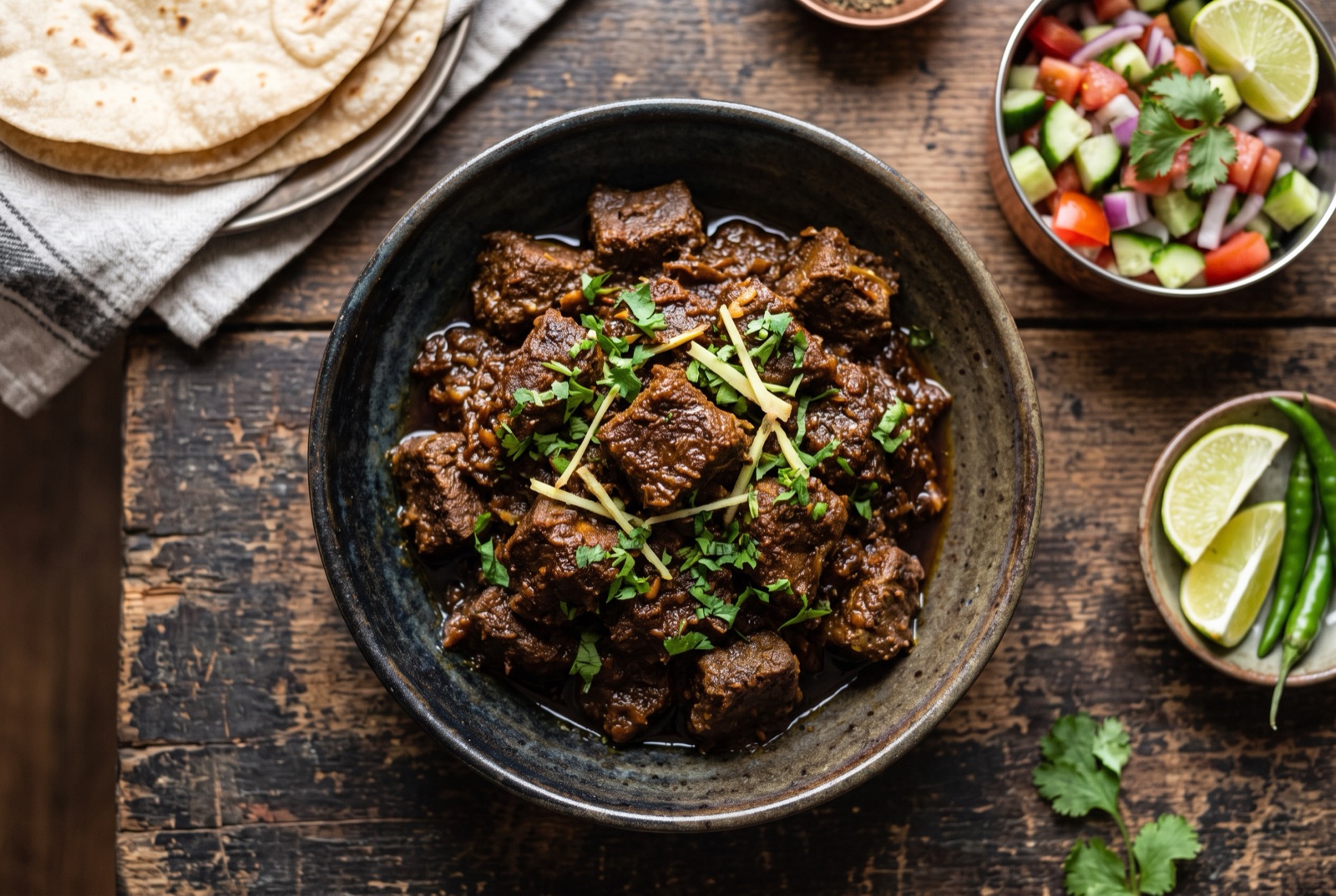
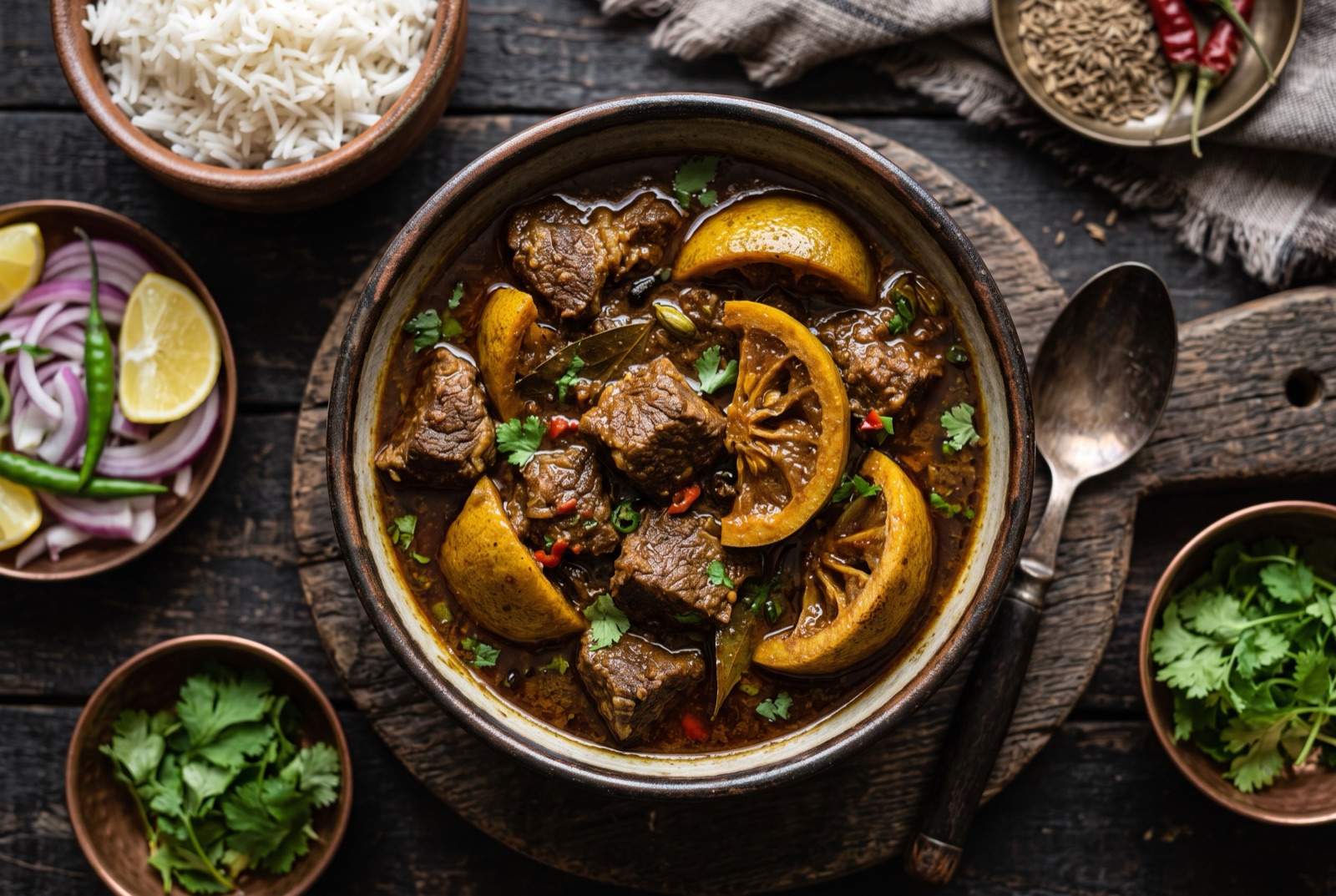
Bangladesh has 9 more dishes in the atlas — Beef Bhuna and Beef Shatkora, and 7 more.
All Bangladesh recipes Chicken recipes Basmati rice recipes Yogurt recipes maingluten freehalal friendlyRecipe by The DishRoute Kitchen · published August 20, 2026 · updated August 20, 2026