Num Banh Chok.
Khmer Rice Noodles in Fish Gravy
នំបញ្ចុក · say it: num bun chok
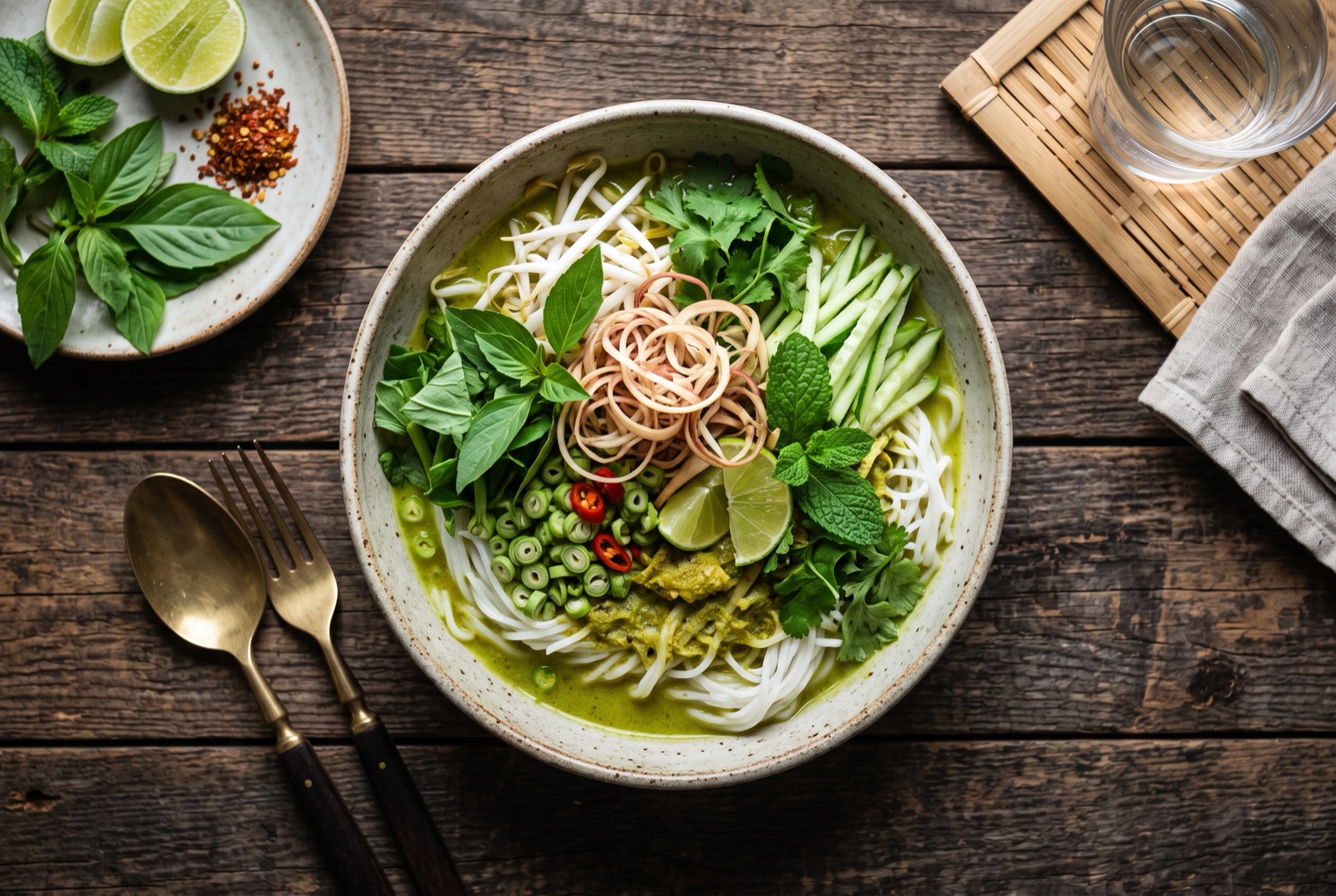
Num banh chok is what Cambodians eat at seven in the morning, sold from baskets balanced on a shoulder pole. A nest of soft, faintly sour rice noodles sits in the bowl at room temperature; over it goes a thin, pale-green gravy made by poaching freshwater fish, pounding the flesh with kroeung and krachai, and loosening it with coconut milk and the poaching liquid. Then comes the pile: shredded banana blossom, cucumber batons, bean sprouts, water lily stems, whole mint and Asian basil leaves, sometimes a raw long bean. You mix it all together and eat the noodles cold, the gravy warm and the vegetables crunching. It is herbal, savoury, mildly sweet and completely unlike any other noodle dish in the region.

- Gate
- CambodiaTonlé Sap Basin
- Prep
- 45 min
- Cook
- 35 min
- Total time
- 1 hr 20 min
- Serves
- 4
- Status
- Takes skill
- Nutrition / serving · estimated
- Calories 520 kcal
- Protein 33 g
- Carbs 68 g
- Fat 13 g
- Fiber 6 g
- Sodium 1500 mg
Why this recipe works.
- Builds the gravy the traditional way — poach the fish, pound it with the paste, then loosen it — instead of dumping raw fish into coconut milk.
- Honest about the noodles: what fermented num banh chok actually are and which shop-bought noodle gets you closest.
- Gets the vegetable pile right, including how to shred banana blossom without it turning brown.
- The gravy is kept deliberately thin, the way it is served in Cambodia, rather than thickened into a curry.
Ingredients.
20 itemsFor the gravy
To assemble
Equipment
- Large mortar and pestle or food processor
- Wide saucepan for poaching
- Sharp knife and a bowl of acidulated water
Instructions.
Poach the fish
Bring 1 litre of water to a bare simmer with the bruised lemongrass stalk and a pinch of salt. Slide in the fish fillets and poach for 6–8 minutes, keeping the water trembling rather than bubbling, until the flesh turns opaque and flakes at a light push. Lift out and reserve the poaching liquid.
Pound the kroeung
While the fish cools, pound the sliced lemongrass, turmeric, krachai, garlic, shallots and lime leaves in a mortar until the fibres disappear and you have a wet, deeply yellow paste. Work in this order and do not rush the lemongrass — it is the toughest ingredient.
Tip A food processor works if you add a ladle of the poaching liquid, but scrape down four or five times and expect a slightly coarser gravy.
Pound in the fish
Flake the cooled fish, checking carefully for bones, then add it to the paste and pound until the mixture is smooth and pale green-yellow with only a fine grain left. It should look like a thick, damp mousse.
Build the gravy
Scrape the fish paste into a pan with 700 ml of the strained poaching liquid and whisk until smooth. Bring to a gentle simmer, add the coconut milk, fish sauce, prahok if using and palm sugar, and cook 10 minutes, stirring, until the gravy just coats a spoon and no longer tastes raw.
Tip It should stay thin enough to pour freely — if it thickens past double cream, loosen with more poaching liquid.
Prepare noodles and vegetables
Rinse fresh noodles under cold water and drain well, or cook dried vermicelli, rinse cold and drain. Drain the shredded banana blossom and pat it dry, and arrange all the vegetables and herbs on a large platter.
Assemble the bowls
Coil a nest of room-temperature noodles into each bowl, ladle over the warm gravy so it pools around rather than drowns them, and pile the banana blossom, cucumber, bean sprouts, long beans and herbs on top. Serve with lime wedges and chiles, and toss everything together before eating.
Tips from our kitchen.
- Serve the noodles at room temperature, not hot. The contrast between cool noodles and warm gravy is the dish, and hot noodles turn the whole bowl into an ordinary soup.
- Poach the fish gently below a simmer. Boiling toughens the flesh and clouds the stock you are about to build the gravy on.
- Pound or blitz the cooked fish with the kroeung rather than adding it in flakes — the gravy should be smooth and slightly grainy, with no distinct chunks.
- Drop shredded banana blossom straight into acidulated water or it oxidises to a dull brown in under a minute.
- Taste the gravy before it goes over the noodles: it should be a touch too salty on its own, because the raw vegetables dilute it.
- Prepare every vegetable before you finish the gravy — this dish is assembled fast and eaten immediately.
Substitutions.
- Fresh num banh chok noodles → Fresh Vietnamese bun noodles, or dried rice vermicelli cooked and rinsed cold
- Dried vermicelli lacks the sourness and slippery bite, but is the most widely available option. Rinse it thoroughly in cold water and drain well so it does not water down the gravy.
- Krachai (fingerroot) → A mix of fresh ginger and a small piece of galangal
- Frozen krachai is sold in Thai grocers and is much closer. The ginger-galangal blend gives you warmth and pine but not the distinctive medicinal note.
- Banana blossom → Finely shredded white cabbage plus extra bean sprouts
- You lose the slight astringency but keep the crunch. Canned banana blossom exists and works if rinsed and squeezed dry.
- Prahok → Extra fish sauce, or 2 tsp anchovy paste
- Prahok gives the gravy its distinctive deep funk. Without it the dish is cleaner and lighter but noticeably less Khmer.
Variations.
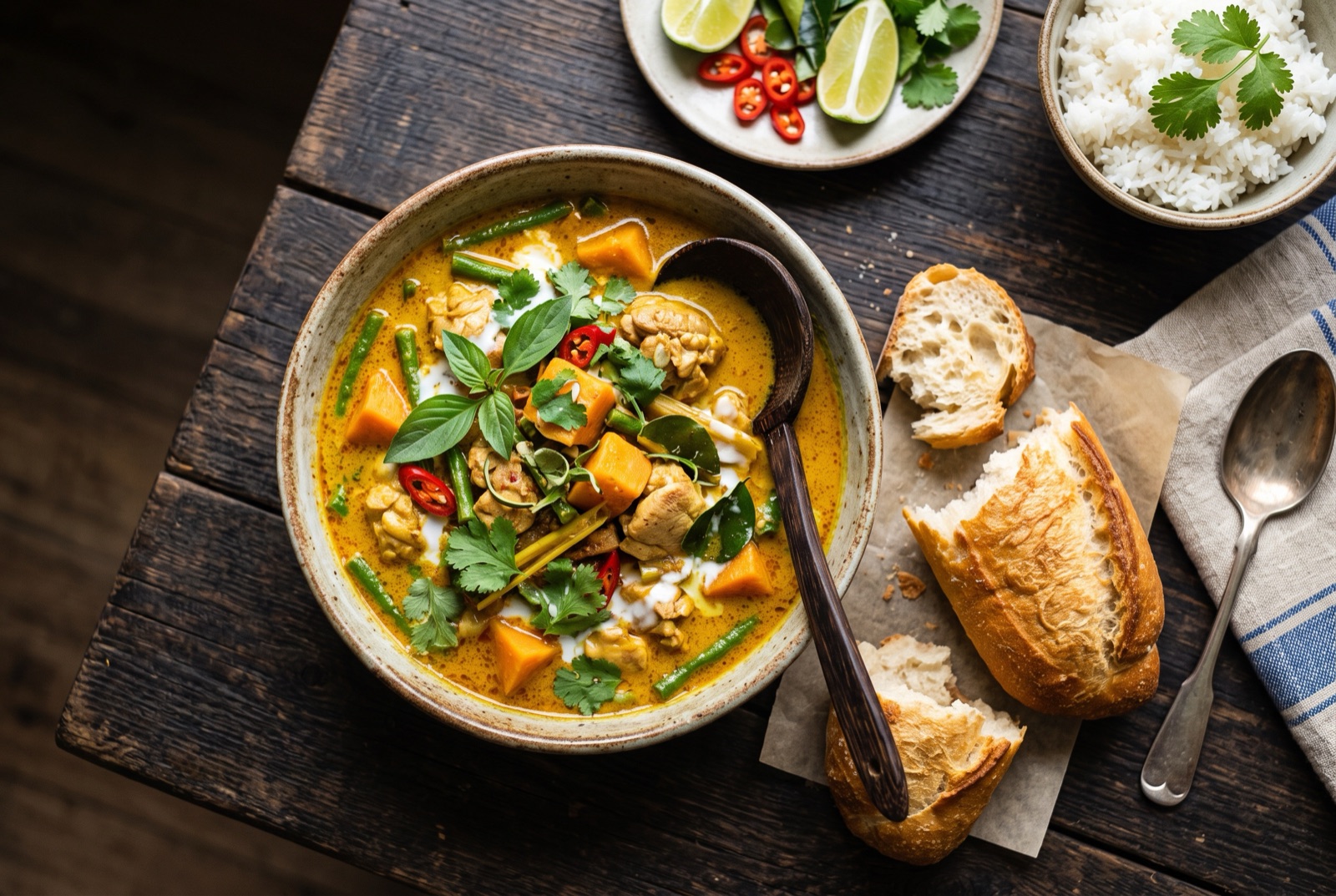
- Num banh chok samlar kari
- The gravy replaced by a red coconut curry with chicken, sweeter and richer, common at celebrations and in the south.
- Battambang style
- A thicker fish gravy served warm over the noodles with fewer raw vegetables and more herbs.
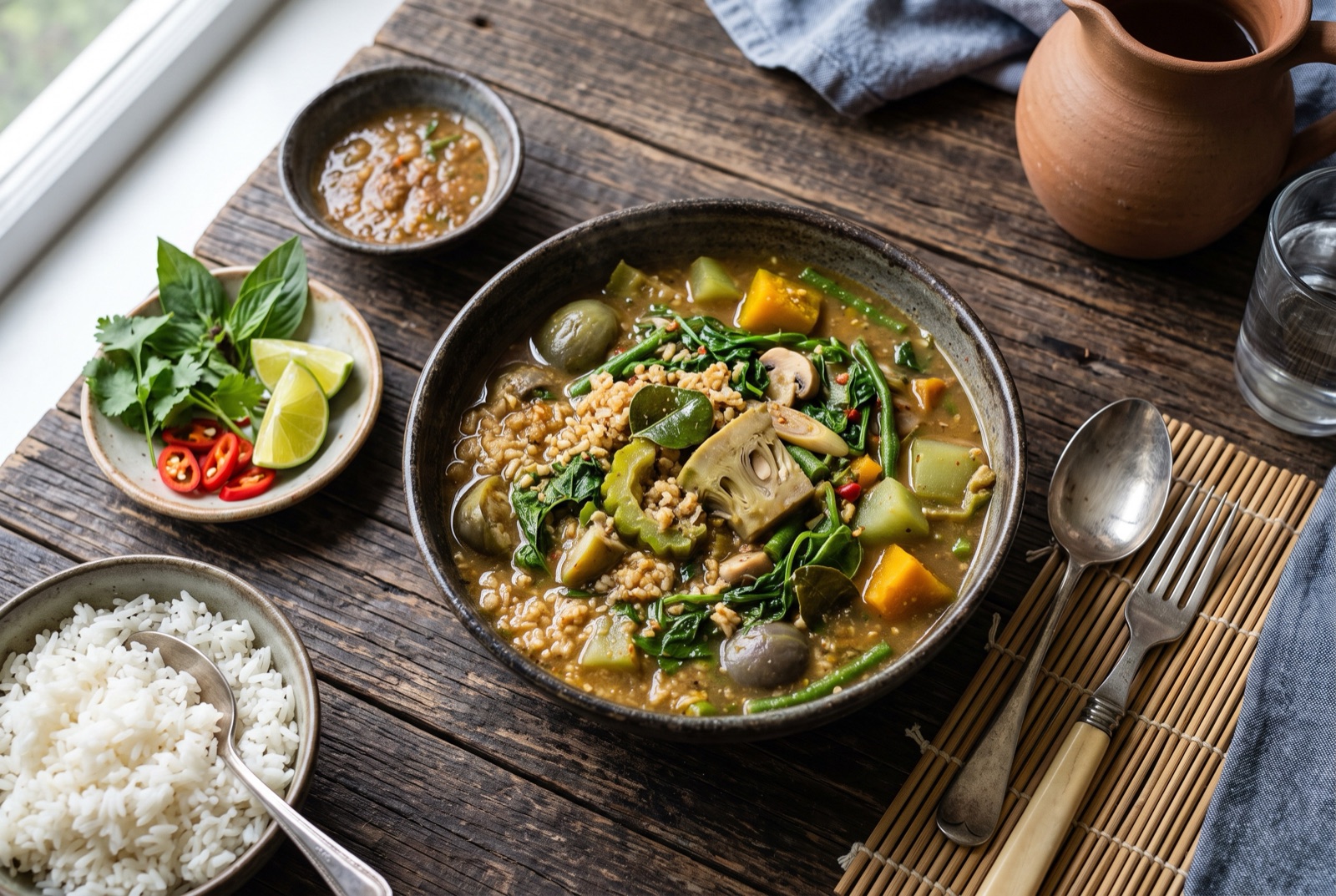
- Vegetarian num banh chok
- The fish replaced by mashed silken tofu and mushrooms, seasoned with fermented soybean paste in place of prahok.
Storage & reheating.
Assembled bowls do not keep — the vegetables wilt and the noodles absorb the gravy within an hour. Store the components separately instead: the gravy keeps 3 days refrigerated and reheats gently on the hob, and the prepped vegetables hold a day in a sealed box with a damp sheet of kitchen paper on top. Fresh rice noodles should be used the day you buy them; they harden in the fridge and never fully soften again. The gravy also freezes for up to a month.
Serve with
A plate of extra herbs and raw vegetables in the middle of the table so everyone can keep topping up their bowl.
The story behind Num Banh Chok.
The noodles give the dish its name and its character. Num banh chok are made by fermenting rice for a day or more, grinding it to a wet dough, then pressing it through a perforated press directly into boiling water, where the strands set into soft white noodles. That fermentation leaves a faint sourness and a slippery texture that dried rice vermicelli simply does not have. Making them at home is genuinely difficult — the press, the ferment and the timing all have to work — which is why almost every Cambodian household buys them fresh in the morning rather than making them. This recipe is rated hard for that reason: the gravy is manageable, the noodles are the real project, and using good fresh rice noodles from an Asian grocer is the honest shortcut.
The gravy, samlar khmer, is the other half. Freshwater fish from the Tonlé Sap is poached, boned and pounded with yellow kroeung and krachai — fingerroot, a knobbly rhizome tasting of pine and citrus that is characteristic of this dish specifically. The result is thin rather than creamy, pale yellow-green, and salted with prahok or fish sauce. It should coat the noodles without gluing them together.
Num banh chok is morning food and festival food. It appears at Khmer New Year and Pchum Ben, and there is a version tied to Siem Reap that visitors are steered towards. Different regions load it differently: a red curry-style gravy in some places, a sweeter version in others, and in Battambang a fish gravy served warmer and thicker. What stays constant is the mountain of raw vegetables, which is not a garnish but roughly half the dish by volume.
Questions, answered.
What are num banh chok noodles made of?
They are fresh rice noodles made from rice that has been soaked and fermented for a day or more, ground into a wet dough and extruded through a press directly into boiling water. The fermentation gives them a faint sourness and a soft, slippery texture that dried rice vermicelli does not have. In Cambodia almost nobody makes them at home; they are bought fresh each morning.
Why are the noodles served cold?
The temperature contrast is deliberate. Cool noodles and raw vegetables against warm gravy make the dish refreshing, which matters when it is eaten at breakfast in a hot climate. It also stops the noodles from swelling and soaking up all the liquid, so the gravy stays a gravy rather than turning into a starchy soup.
What is krachai and do I need it?
Krachai, also called fingerroot or Chinese keys, is a rhizome related to ginger with slender finger-like roots and a piney, faintly medicinal flavour. It is strongly associated with fish dishes across Cambodia and Thailand because it suppresses muddy river-fish flavours. Frozen krachai is stocked by most Thai grocers. Without it the gravy still works, but it loses a signature note.
Which fish should I use for the gravy?
Any mild firm white fish: snakehead and catfish are traditional, but cod, pollock, tilapia or haddock all poach and pound well. Avoid oily fish such as mackerel or salmon, which overwhelm the delicate lemongrass and turmeric. You need the fish cooked and boned before it goes into the mortar, so fillets are far easier than whole fish.
Can I make the gravy ahead of time?
Yes, and it is the sensible way to serve this for a group. Make the gravy up to three days ahead and refrigerate it; it thickens as it cools, so reheat gently and loosen with a splash of water or coconut milk to bring it back to a pouring consistency. Prepare the vegetables no more than a few hours before serving.
You might also like.
All recipes →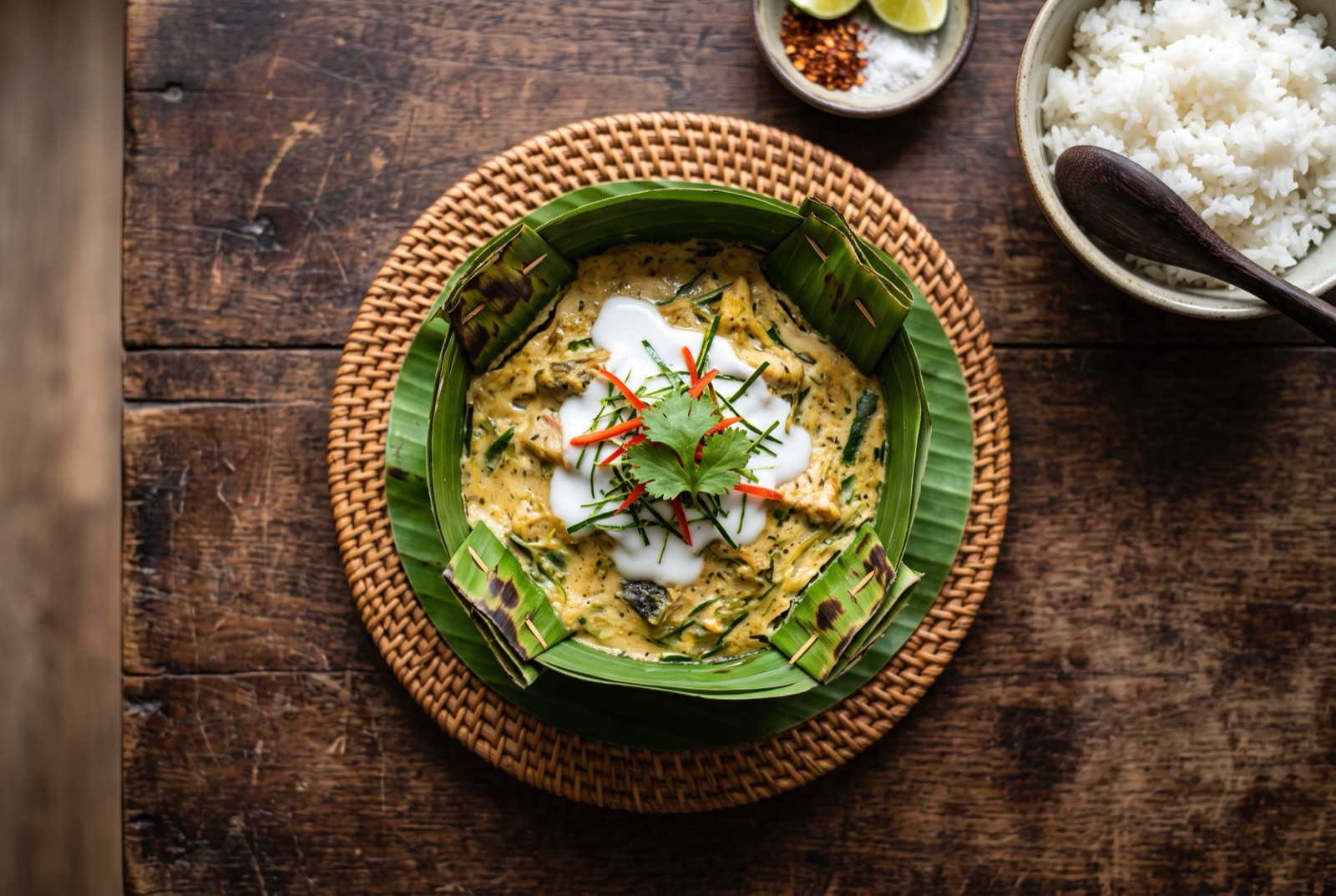
Keep exploring Cambodia.
Cambodia has 9 more dishes in the atlas — Amok Trey and Bai Sach Chrouk, and 7 more.
All Cambodia recipes Rice noodles recipes White fish recipes Lemongrass recipes maingluten freedairy freepescatarianRecipe by The DishRoute Kitchen · published August 20, 2026 · updated August 20, 2026