Karachi Biryani.
Layered Rice with Spiced Meat and Potato
کراچی بریانی · Karachi biryani · say it: kuh-RAA-chee bir-YAA-nee
Karachi biryani is a pot of long-grain basmati layered over meat that has been simmered into a thick, sour, chile-red yogurt masala, with peeled potatoes cooked in the same gravy so they soak it up like sponges. Sealed and steamed, the rice finishes in the meat vapour and comes out patchy rather than uniform — some grains white, some orange from the fried onion and chile, some almost brown at the bottom of the pot where the masala caught. It tastes hot, distinctly sour from yogurt and dried plum, and much more aggressive than the perfumed biryanis further east. Nobody in Karachi eats it without a bowl of thin raita to put the fire out.
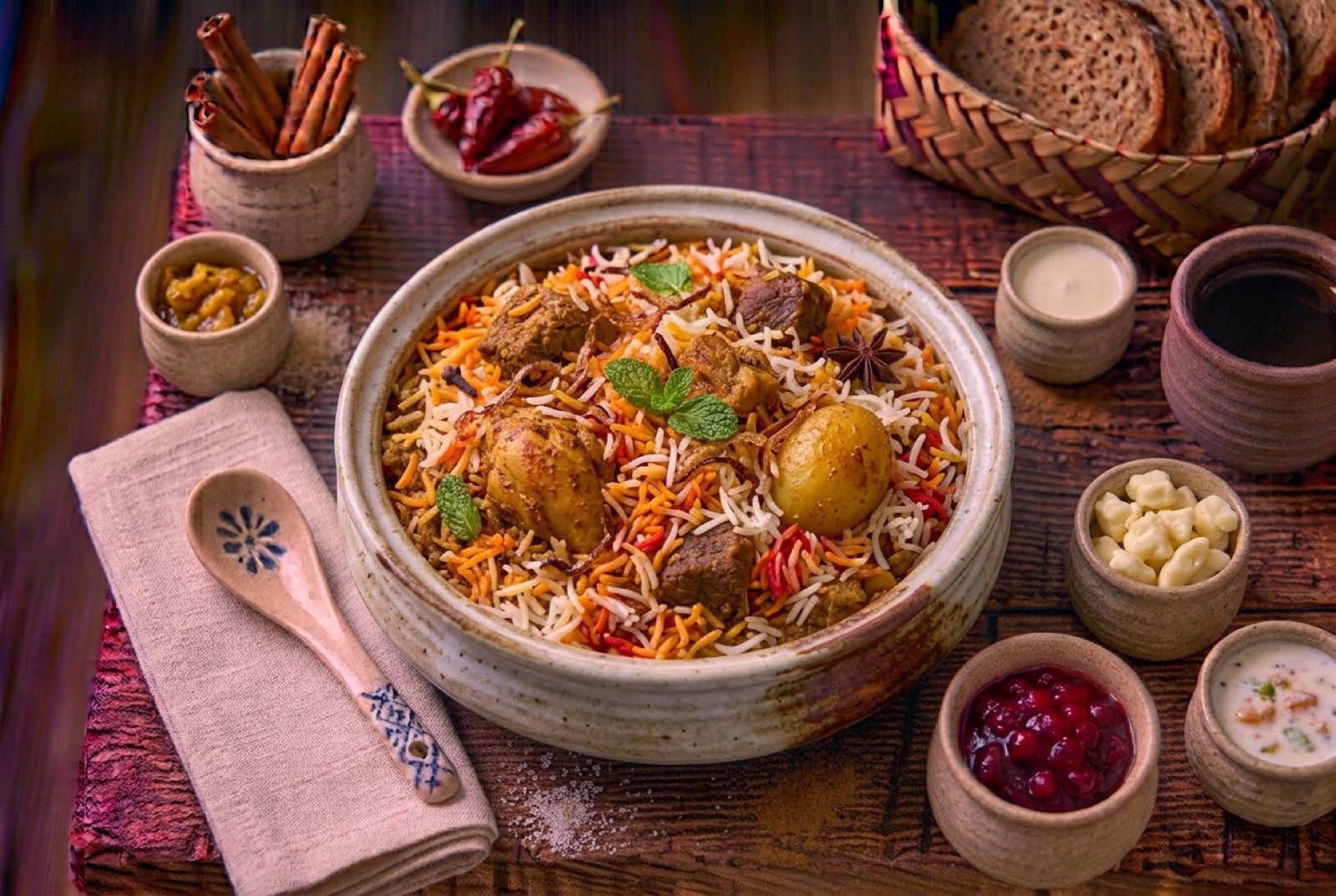

- Gate
- PakistanKarachi, Sindh
- Prep
- 40 min
- Cook
- 1 hr 30 min
- Total time
- 2 hr 25 min incl. 15 min rest
- Serves
- 6
- Status
- Takes skill
- Nutrition / serving · estimated
- Calories 720 kcal
- Protein 34 g
- Carbs 78 g
- Fat 30 g
- Fiber 4 g
- Sodium 890 mg
Why this recipe works.
- Pakki method with the gravy reduced properly first, so the biryani is not watery at the bottom and dry at the top.
- Tells you the exact stage to drain the rice — the detail that decides between separate grains and porridge.
- Keeps the potatoes whole and cooks them in the masala rather than boiling them separately, which is where the flavour comes from.
- Honest about heat: the chile quantity is Karachi-level, with a stated way to dial it down without losing the colour.
Ingredients.
26 itemsFor the meat masala
For the rice
To finish
Equipment
- Large heavy-based pot with a tight lid
- Wide pan for boiling rice
- Slotted spoon
- Sieve or colander
Instructions.
Fry the onions
Heat the oil in the pot and fry the sliced onions over medium heat, stirring often, for 20 to 25 minutes until they are deep amber and audibly crisp when you press one against the side. Lift them out with a slotted spoon onto paper and keep all but three tablespoons of the oil in the pot.
Tip They darken fast at the end. Pull them one shade lighter than you want, because they keep colouring on the paper.
Fry the potatoes
Fry the whole peeled potatoes in the same oil for about 6 minutes, turning, until a light golden skin forms all over. Set them aside — this crust is what stops them collapsing into the gravy later.
Build the masala
Pour off all but four tablespoons of oil, add the ginger and garlic paste and fry for a minute until it stops smelling raw. Add the meat and brown it hard on all sides, then the tomatoes, chile powder, turmeric and ground coriander, and cook until the tomatoes have broken down completely.
Add the yogurt
Take the pot off the heat for a moment, stir in the whisked yogurt, then return it to medium heat and stir constantly for the first two minutes so it does not split. Add half the fried onions, the dried plums and a cup of water, cover and simmer for 45 minutes until the meat is close to tender.
Reduce and check the oil
Add the potatoes, cover and cook for 15 minutes more, then uncover and cook hard, stirring, until the gravy is thick and red oil pools clearly at the edges of the pot. Stir in the garam masala, whole green chiles and half the mint and cilantro. This is the doneness signal — do not layer the rice before you see it.
Part-boil the rice
Bring a large pan of water to a rolling boil with the salt and all the whole spices for the rice. Add the drained soaked rice and boil for 4 to 5 minutes, until a grain crushed between your fingers is soft at the ends but still has a hard white core. Drain immediately.
Tip It will look badly undercooked. That is correct — it steams for another 25 minutes.
Layer the pot
Spread the drained rice over the meat in an even layer without pressing it down. Scatter over the remaining fried onions, mint and cilantro, drizzle with the saffron milk in stripes rather than evenly, then add the melted ghee, kewra water and lemon juice.
Tip Striping the saffron milk is deliberate. Even coverage gives you uniformly yellow rice, and Karachi biryani should be patchy.
Seal and steam
Cover with foil, press the lid down on top, and cook on the lowest possible heat for 25 minutes, using a heat diffuser or a flat tawa under the pot if your burner runs hot. When it is ready the pot will smell strongly of kewra and fried onion and no steam will escape.
Rest and serve
Let the sealed pot stand off the heat for 15 minutes before opening. Cut straight down through the layers with a flat spoon and lift out portions sideways, giving everyone rice from the top, meat from the bottom and one whole potato.
Tips from our kitchen.
- Fry the onions slowly until deep amber and crisp, then drain them on paper. Pale onions give a flat biryani, and burnt ones make the whole pot bitter.
- Boil the rice in heavily salted water and drain it when a grain still has a firm white core — about 70 percent done. It should feel underdone; the dum finishes it.
- Whisk the yogurt smooth and add it off the heat, then bring the pan back up while stirring. Dumping cold yogurt into a hot pan makes it curdle into grains.
- Wait for the oil to separate and pool red at the edge of the masala before the rice goes anywhere near it. That is the doneness signal for the whole dish.
- Use a heavy pot with a tight lid. If the lid is loose, lay a sheet of foil over the rim before you put it on, or seal it with a rope of stiff dough.
- Do not stir the finished biryani. Cut down through the layers with a flat spoon and lift portions out sideways so the grains stay whole.
Substitutions.
- Bone-in goat or lamb → Bone-in chicken thighs and drumsticks
- Chicken biryani is just as common in Karachi. Cut the meat cooking time to about 20 minutes and add the potatoes earlier, since they now need longer than the meat.
- Dried plums (aloo bukhara) → Two extra tablespoons of lemon juice, or a tablespoon of tamarind paste
- The sourness matters more than the fruit itself. South Asian grocers sell dried plums cheaply and they keep for a year, so it is worth buying a bag.
- Kewra water → Omit, or use a few drops of rose water
- Kewra is pandanus flower essence and gives biryani its unmistakable perfume. It is not essential, but it is what makes a pot smell like a Karachi biryani shop.
Variations.
- Sindhi biryani
- Turns the sourness up: more dried plums, more yogurt, sometimes a spoon of tamarind, and often a scattering of extra green chile through the layers.
- Bombay biryani
- A sweeter cousin popular in Karachi households with Gujarati roots, using more dried fruit and a touch of sugar against the chile.
- Beef biryani
- Made with boneless beef chuck cut into large cubes and pressure-cooked before layering — the everyday weekday version in much of Punjab.
Storage & reheating.
Biryani keeps three days refrigerated and genuinely improves on the second day, once the rice has finished absorbing the masala. Reheat covered with a splash of water sprinkled over the top, either in a low oven or on the lowest possible flame, so it steams rather than fries. It freezes acceptably for a month in single portions, though the potatoes turn slightly grainy. Never microwave it uncovered — the top layer dries into hard grains while the bottom is still cold.
Serve with
Thin raita made from whisked yogurt, chopped onion, mint and a pinch of roasted cumin, plus a plate of sliced onion, green chile and lemon wedges.
The story behind Karachi Biryani.
Biryani arrived in what is now Pakistan with the Urdu-speaking families who crossed the new border in 1947 and rebuilt their Delhi and Lucknow kitchens in Karachi. What they cooked there did not stay the same. Karachi was hotter, poorer in the early years, and full of people who liked chile, and within a generation the biryani of the city had turned redder, sourer and far more assertive than anything served in the courts it descended from. Two additions mark it out: a great deal of dried red chile, and whole potatoes, which stretched an expensive pot of meat further and then refused to leave once the economics improved.
The potato is worth pausing on, because Pakistanis argue about it with real energy. Purists from the old Lucknow school consider it a corruption. Karachi considers the argument settled — for most people the potato, saturated with red gravy and collapsing at the touch of a spoon, is the best thing in the pot, and biryani served without one gets sent back. Sindhi biryani, cooked in the province beyond the city, pushes the same style even further with more dried plums and a sourness that borders on sharp.
The method here is pakki: the meat is cooked into a finished gravy before the rice ever meets it, which is how Karachi home kitchens and most of the city's biryani shops actually work. Dum, the sealed steaming that finishes the dish, is not optional decoration. Nothing is added to the pot at that stage except saffron milk and ghee, so the rice has to take its flavour entirely from steam rising through it. That is why the layers go in the order they do, and why the lid stays down.
Questions, answered.
Why did my biryani rice turn to mush?
Almost always because the rice was boiled too long before layering. Basmati for biryani should be drained while it still has a hard white core in the centre of each grain, roughly 70 percent cooked, because it will keep cooking for another 25 minutes in the sealed pot. Old, well-aged basmati also holds up far better than fresh or cheap rice, and soaking for 30 minutes before boiling helps the grains cook evenly instead of breaking at the ends.
What is the difference between kacchi and pakki biryani?
In kacchi biryani the meat goes into the pot raw, marinated, with par-boiled rice piled on top, and both finish together under a sealed lid. In pakki biryani the meat is cooked into a complete gravy first and the layering is only the final step. Kacchi is the harder, more prestigious method; pakki is more forgiving and is what most Pakistani home cooks and biryani shops use, including in this recipe.
Why does Karachi biryani have potatoes in it?
They started as a way to stretch a small amount of expensive meat across more plates in the years after 1947, and then became the point. A potato cooked whole in the masala absorbs the gravy and turns into something between a vegetable and a sauce. Cooks from the older Lucknow tradition regard it as a corruption, and Karachi regards that opinion as wrong.
Can I make biryani ahead for a party?
Yes, and it is the sensible way to cook it for a crowd. Make the meat masala up to two days ahead and refrigerate it; the flavour deepens noticeably. On the day, boil the rice fresh, layer everything into the pot and do the 25-minute dum just before serving. The only stage that cannot be done in advance is the rice, which goes stale and hard if it sits boiled and undressed.
How spicy is this and how do I make it milder?
As written it is hot in the way Karachi expects, mainly from red chile powder and whole green chiles. To keep the deep red colour without the burn, swap most of the hot chile powder for Kashmiri chile powder, which is mild and used mostly for colour, and leave the green chiles whole and unslit so they perfume the pot without releasing heat. Raita on the side also does more than people expect.
You might also like.
All recipes →
Keep exploring Pakistan.
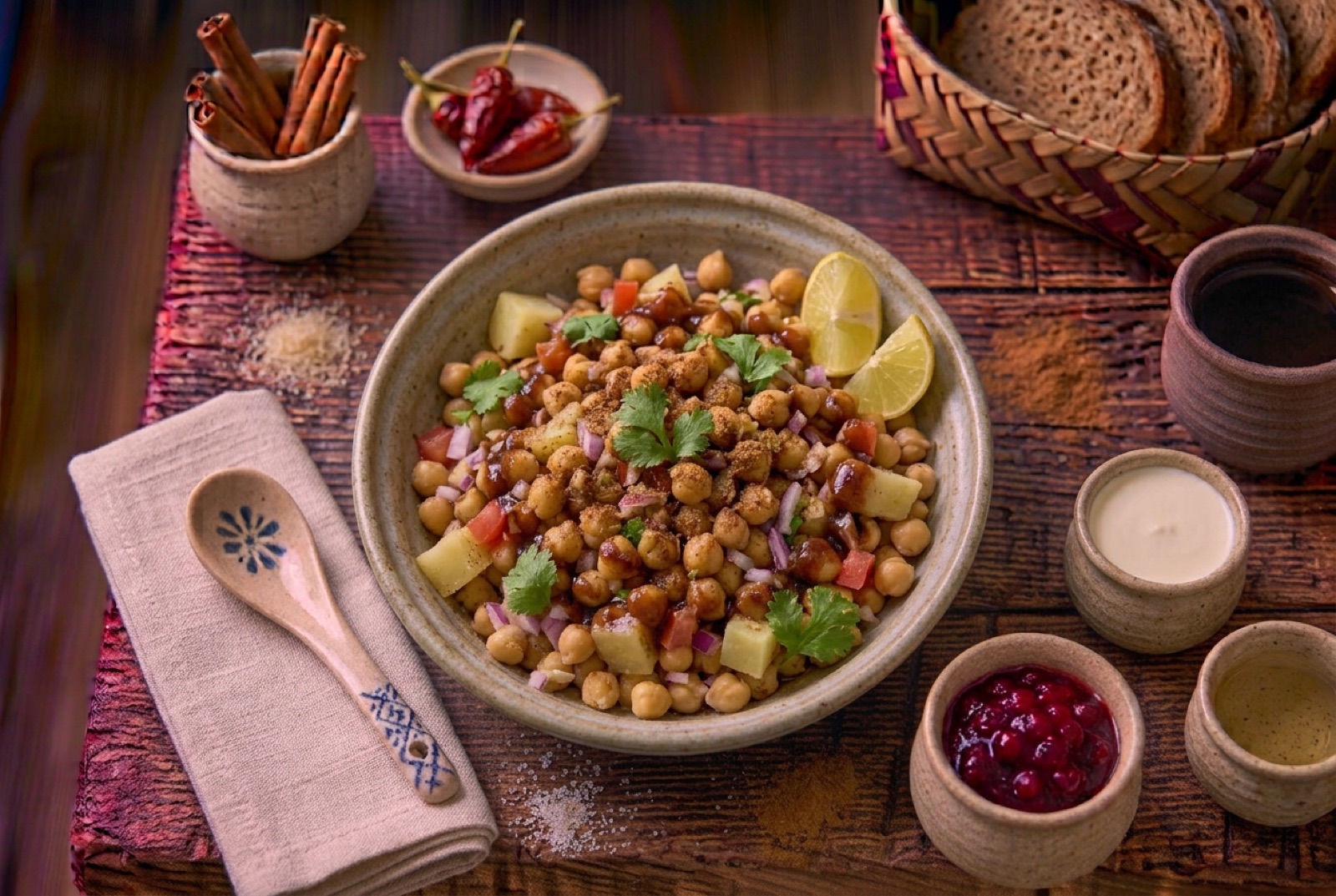
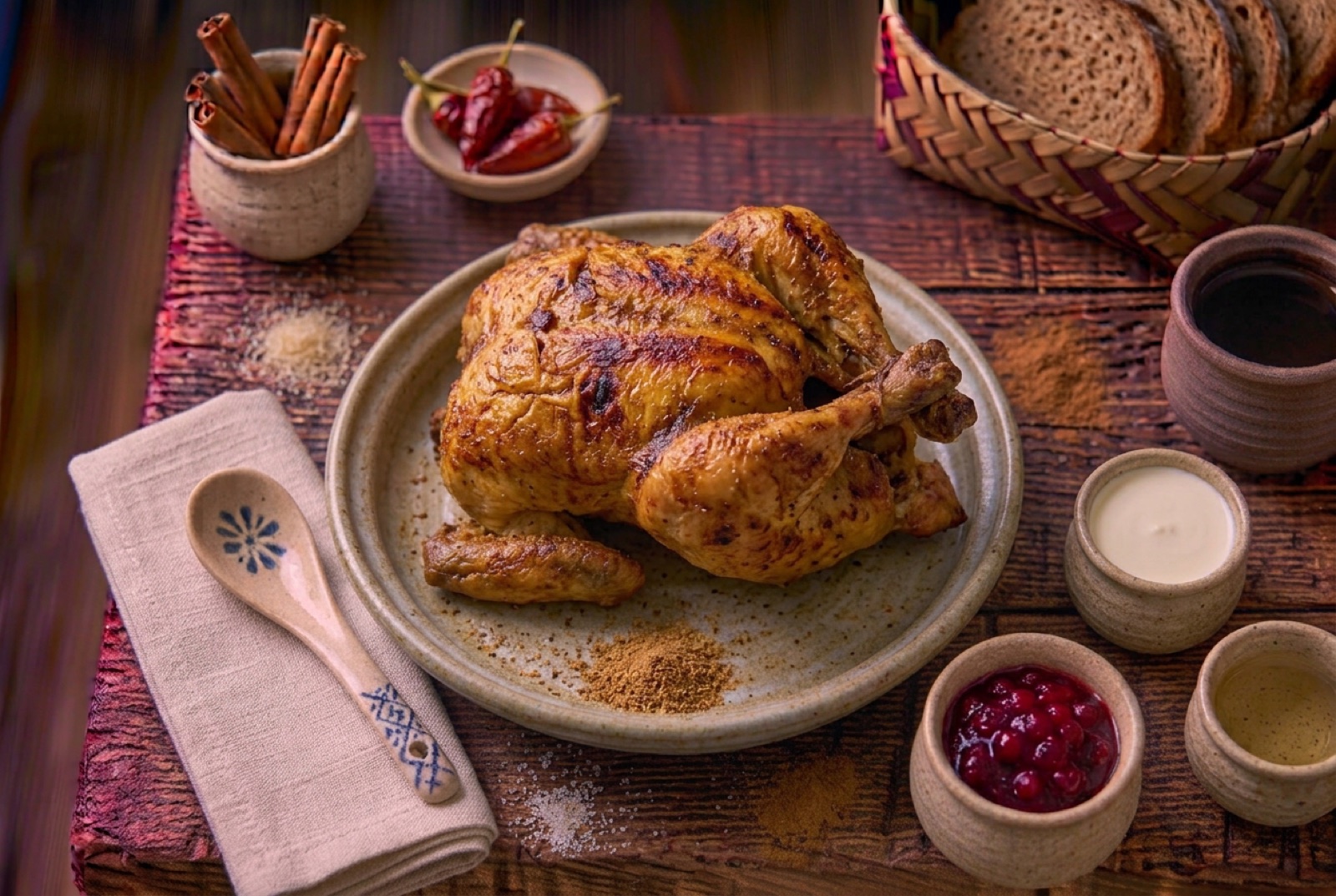
Pakistan has 9 more dishes in the atlas — Balochi Sajji and Chana Chaat, and 7 more.
Recipe by The DishRoute Kitchen · published August 20, 2026 · updated August 20, 2026