Pakistan.
پاکستان
Pakistani cooking is unapologetically meat-forward. Beef, mutton and chicken carry most of the menu, they are usually cooked on the bone, and the fat they release is treated as flavour rather than something to skim off. The working grammar of the kitchen is the bhuna: onions browned hard, ginger and garlic fried until they stop smelling raw, then tomatoes and ground spices cooked down and stirred over high heat until oil pools bright red at the edge of the pan. That pooled oil is the doneness signal, and nothing goes to the table before it appears. Wheat outranks rice at the everyday meal — roti and naan are the utensils, and a gravy is judged by how well it clings to torn bread. Chile heat is present but rarely the point; whole spices, black pepper and dried red chile build a warmth that sits behind the meat instead of shouting over it. Because kitchens are halal, the cuisine has developed extraordinary range in beef and lamb, in cuts that other countries grind or discard: shank, marrow bone, trotters, brain, kidney and tail all have their own famous dish.

- Continent
- AsiaSouth Asia
- Recipes in atlas
- 10
- Must-try dishes
- 3
- Pantry staples
- 10
Start with the classics.
Must tryThe dishes that explain the Pakistan kitchen fastest — if you cook only a few things from this page, cook these.
Inside the Pakistan kitchen.
Four fats do almost all the work. Ghee and desi butter carry the sweets and the festival cooking, mustard oil gives Punjabi village food its sinus-clearing sharpness, rendered beef or lamb fat is what makes chapli kebab and nihari taste like the bazaar, and neutral oil handles the daily pot. Whole spices go into the fat first — cumin, black cardamom, cassia, cloves, black peppercorns — and ground spice comes later, once there is moisture to protect it. Yogurt is the great tenderiser and souring agent, whisked before it goes into a hot pan so it does not split. Dried souring agents matter as much as fresh: dried plums (aloo bukhara) in Sindhi rice, dried pomegranate seed (anardana) in Pashtun kebabs, tamarind in chaat, and lemon squeezed over almost everything at the moment of eating.
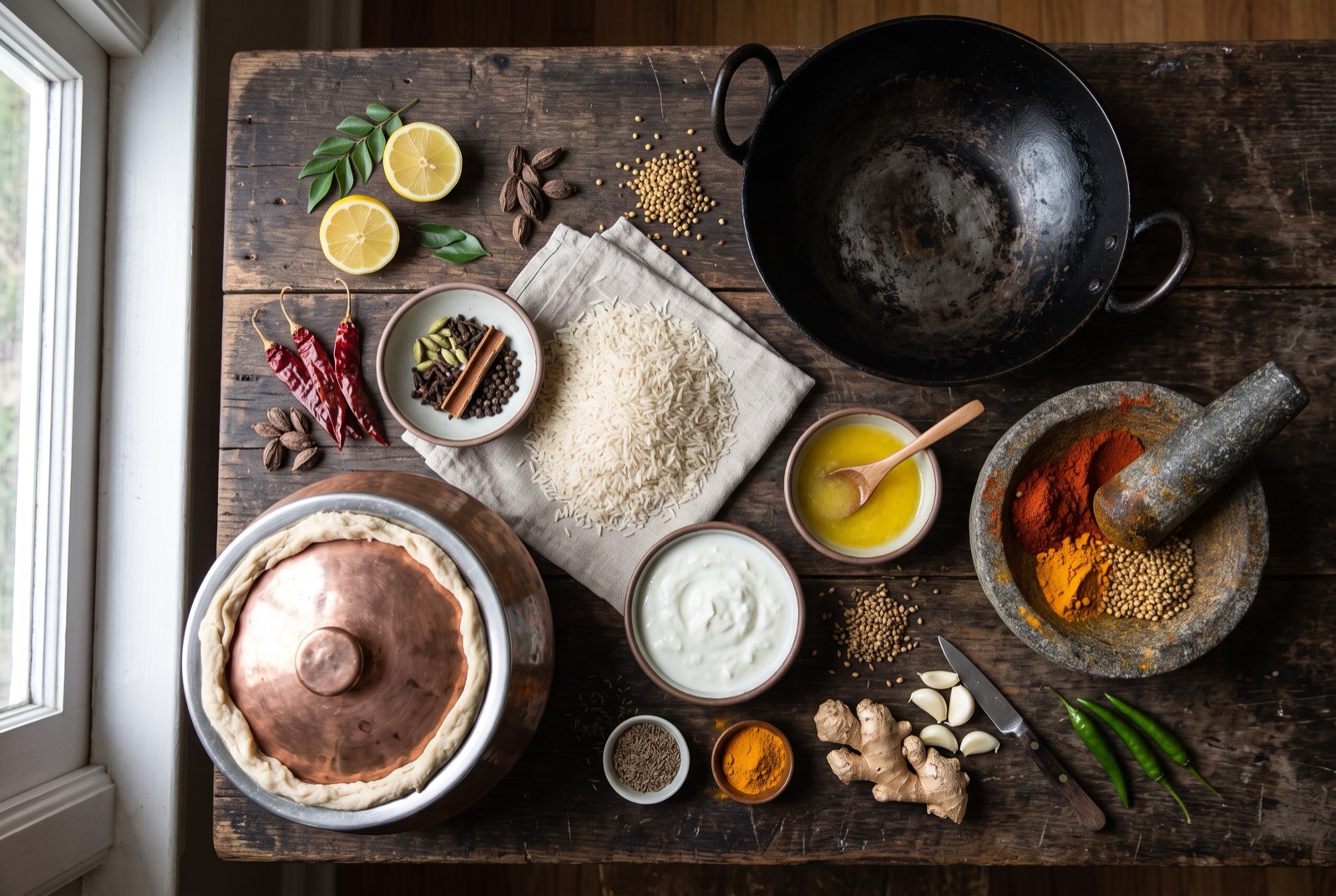
The named techniques are worth learning because they recur everywhere. Bhunai is the hard, active frying of the masala described above. Dum is sealing a pot — traditionally with a rope of dough around the rim — and letting steam finish the food with nothing escaping; it is how biryani, and much of the country's festive cooking, is completed. Baghar or tarka is a final sizzle of spice in hot fat poured over a finished dish. Karahi cooking is the opposite of slow: a wok-shaped iron pan, very high heat, tomatoes and meat and almost no water, done in twenty minutes. And the tandoor, a clay pit oven, still sits at the front of nearly every neighbourhood bakery, turning out naan and roti that home ovens can only approximate.
Meals are structured around bread or rice with one main pot, rather than around courses. A typical dinner is a salan (gravy dish) with roti, a bowl of yogurt or raita, sliced onion with lemon, and green chile on the side. Rice dishes — biryani, pulao — are the exception that stands alone, needing only raita and a salad. Lentils and vegetables appear constantly but usually as company for meat rather than as the centre, which is the clearest daily difference from the vegetarian traditions of neighbouring India.
Regional lines are drawn by climate and by who ruled where. Punjab cooks with dairy, wheat and mustard greens, and it gave the country its butter-and-cream restaurant dishes. Sindh, and Karachi in particular, absorbed the Urdu-speaking migrants of 1947, whose Delhi and Lucknow kitchens brought nihari, haleem and the aggressively spiced Karachi biryani that is now the national obsession. Khyber Pakhtunkhwa eats the plainest and arguably the best meat in the country — salt, fat, fire and very little else. Balochistan roasts whole animals beside open flame, and along the coast at Gwadar adds fish and dates to the picture.
Sweets follow a different logic from the savoury food: milk reduced for hours, semolina fried in ghee, sugar syrup, and perfume from cardamom, kewra, rose and saffron rather than from spice heat. Chai — strong black tea boiled with milk and sugar — punctuates the entire day, and the pink, salted kashmiri chai of the north is a genuinely separate drink that surprises first-time visitors.
Signature pantry.
10 staplesThe ingredients this cuisine cannot function without.
- garam masala
- ghee
- yogurt
- basmati rice
- ginger and garlic
- dried red chile
- black cardamom
- coriander seed
- fresh green chile
- lemon
How people eat in Pakistan.
Eating is done with the right hand, using bread torn into scoops so that no cutlery touches the food. Dishes arrive together and are shared from the middle of the table; taking a plate of your own and not passing it around reads as odd. A raw plate of sliced onion, green chile and lemon wedges sits beside almost every meal, and diners season each bite themselves rather than expecting the cook to have done it. Guests are pressed to eat more than they want, and refusing the second helping outright is impolite — leaving a little on the plate ends the negotiation gracefully. During Ramadan the whole rhythm inverts: the fast breaks at sunset with dates, fried snacks and chaat, and the heavy cooking happens after dark.
Regional kitchens.
Pakistan cooks 4 distinctly different ways depending on where you stand — here is what changes between them.
- R1Punjab
- Wheat, dairy and mustard oil country. Thick tandoori breads, saag with makhan, charred karahi and the sweet-savoury Sunday halwa puri all belong to Lahore and the plains around it.
- R2Sindh and Karachi
- The port city where the Urdu-speaking migrants of Partition rebuilt Delhi and Lucknow cooking. Nihari, haleem and the fiercely spiced, potato-studded Karachi biryani are its calling cards.
- R3Khyber Pakhtunkhwa
- Pashtun grilling territory, where good meat is treated with salt, fat and fire and almost nothing else. Peshawar gave the country chapli kebab, namkeen karahi and nut-stuffed naan.
- R4Balochistan
- Vast, arid and built around open-fire roasting — whole lamb and chicken sajji cured only in salt, cooked upright beside embers, and served with plain rice or coarse bread.
All Pakistan recipes.
10 recipes and counting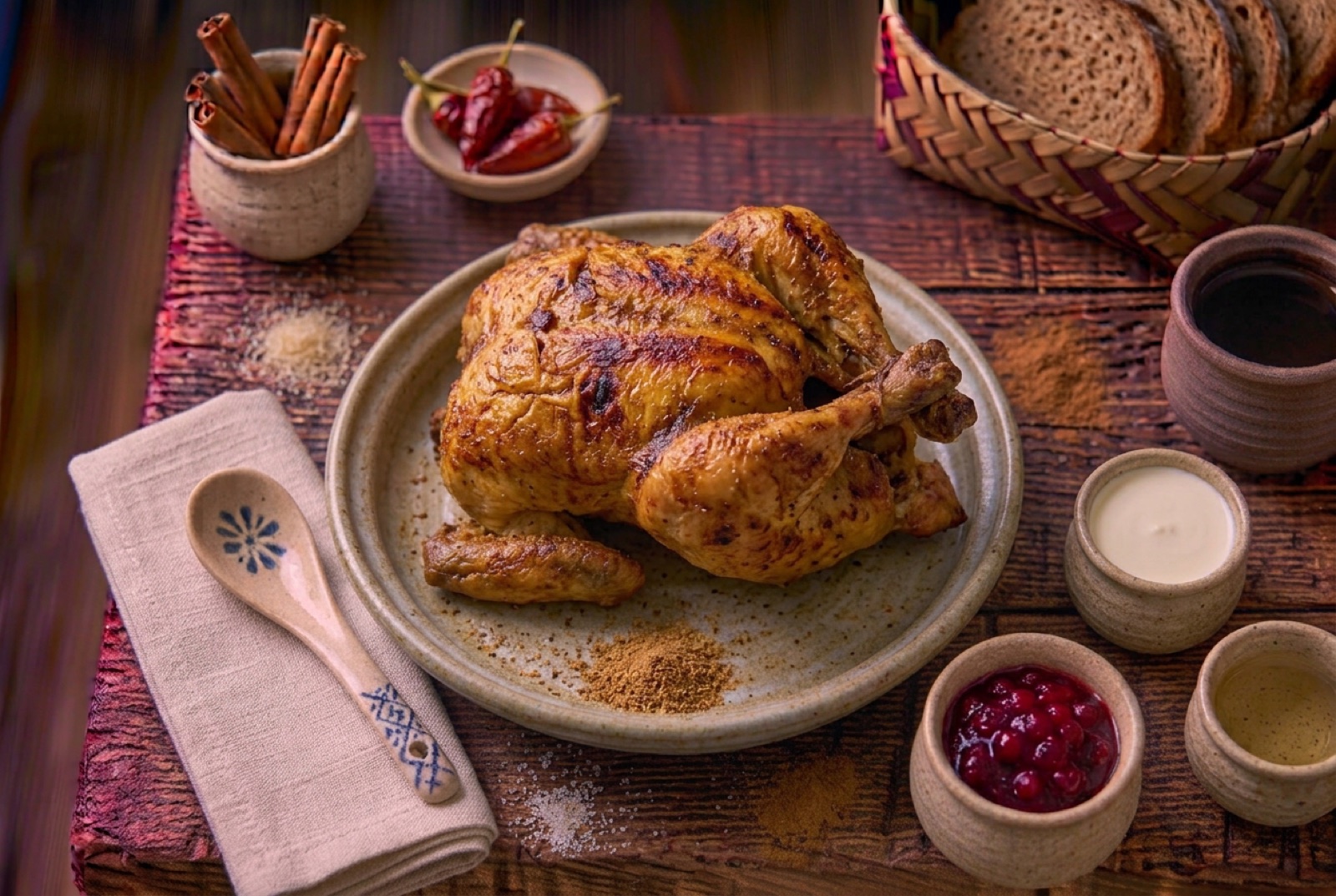
Pakistan5 hr 40 min
Balochi Sajji
Salt-Cured Whole Roast Chicken
Pakistan55 min
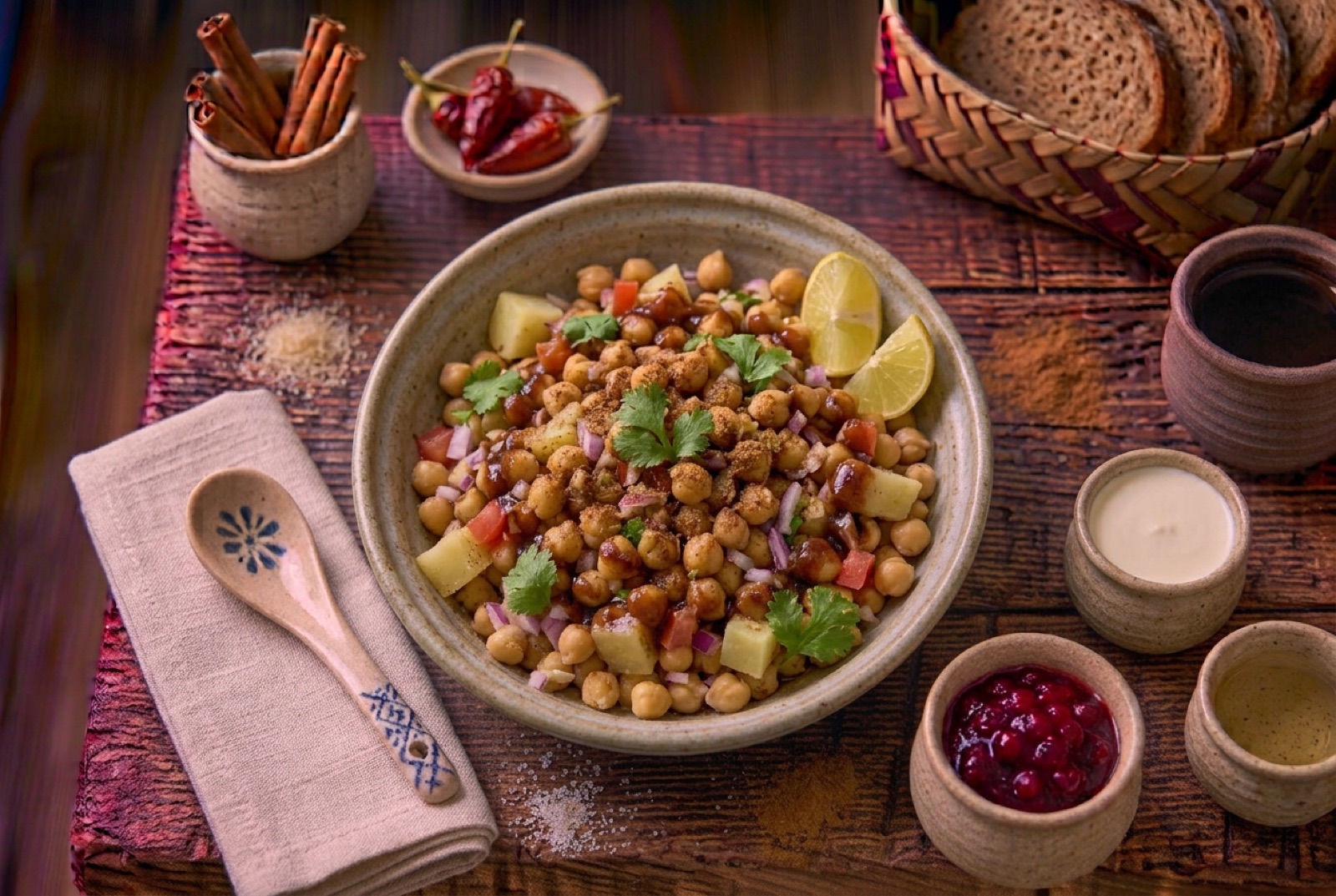
Chana Chaat
Chickpea, Potato and Tamarind Salad
Pakistan1 hr 45 min
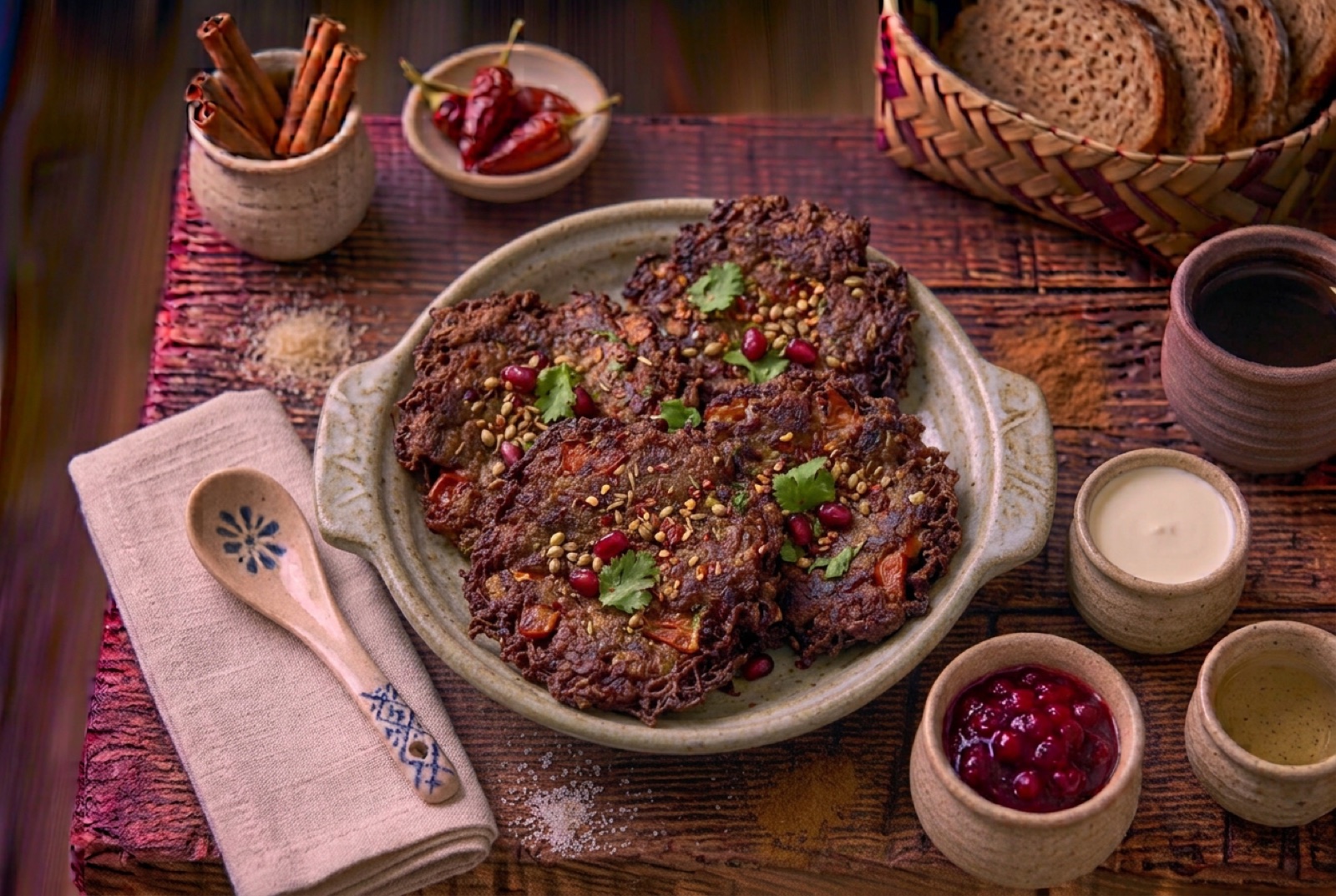
Chapli Kebab
Peshawari Flat Beef Patties
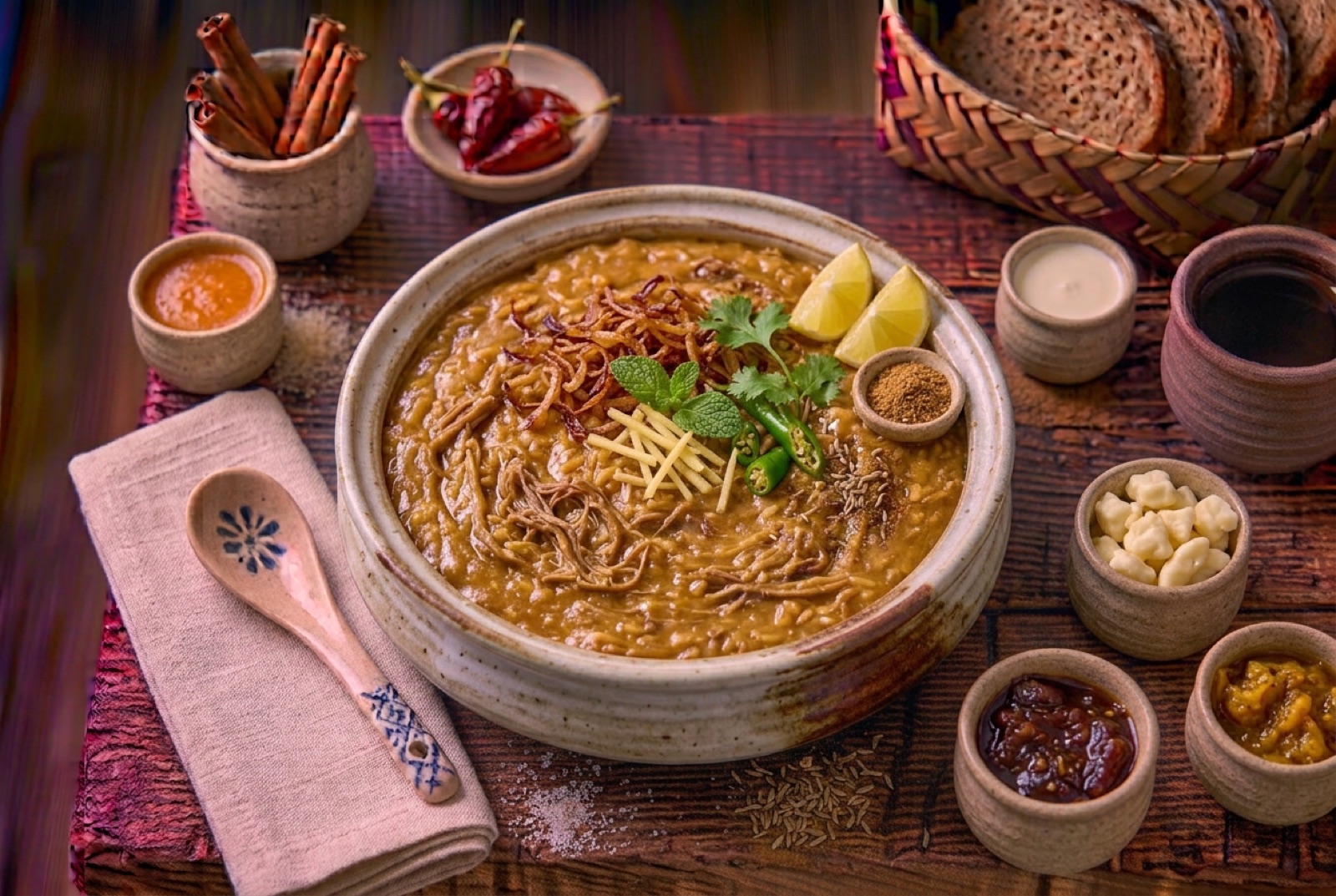
Pakistan13 hr
Haleem
Wheat, Barley and Shredded Beef Porridge
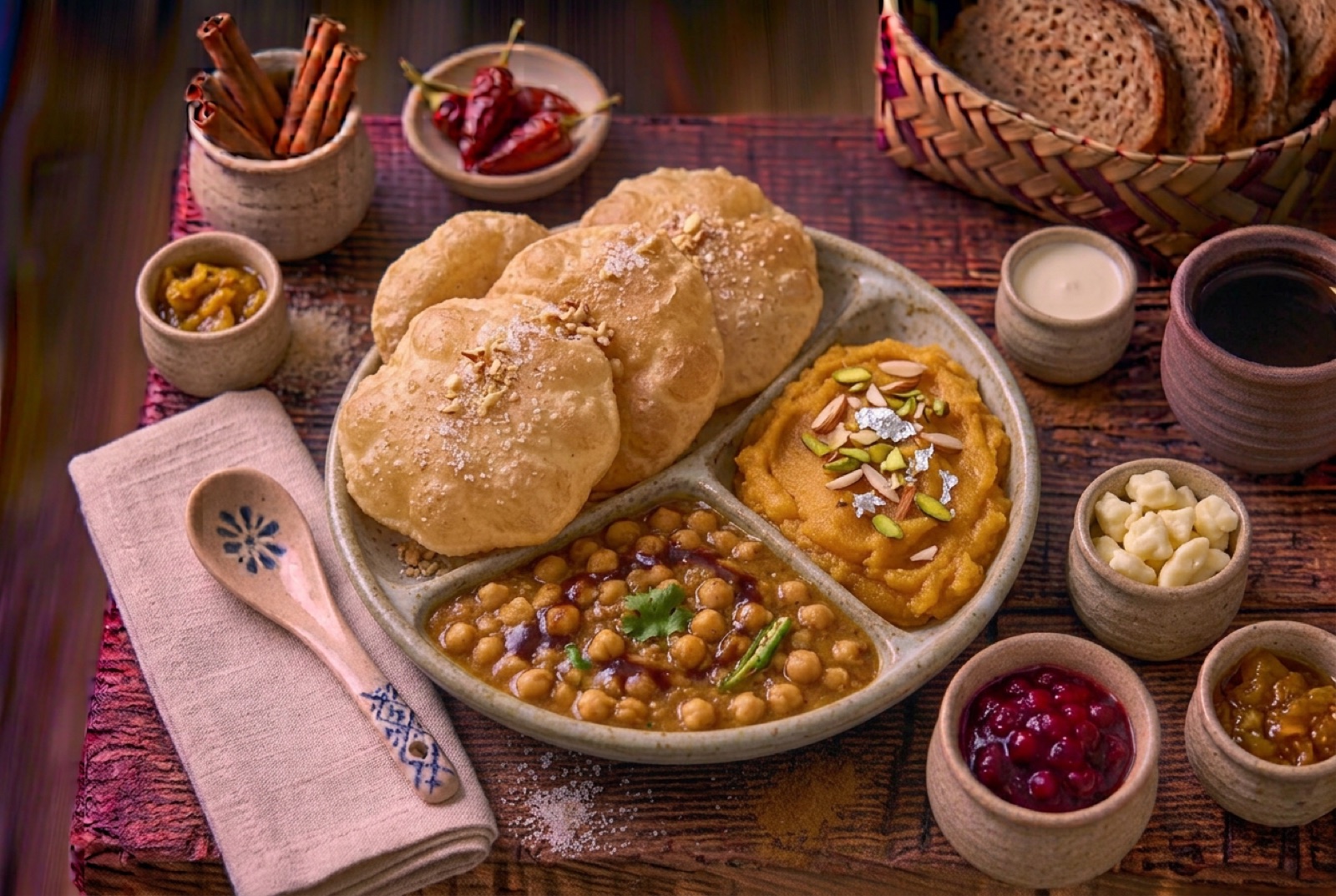
Pakistan1 hr 55 min
Halwa Puri
Fried Bread with Semolina Halwa and Chickpeas
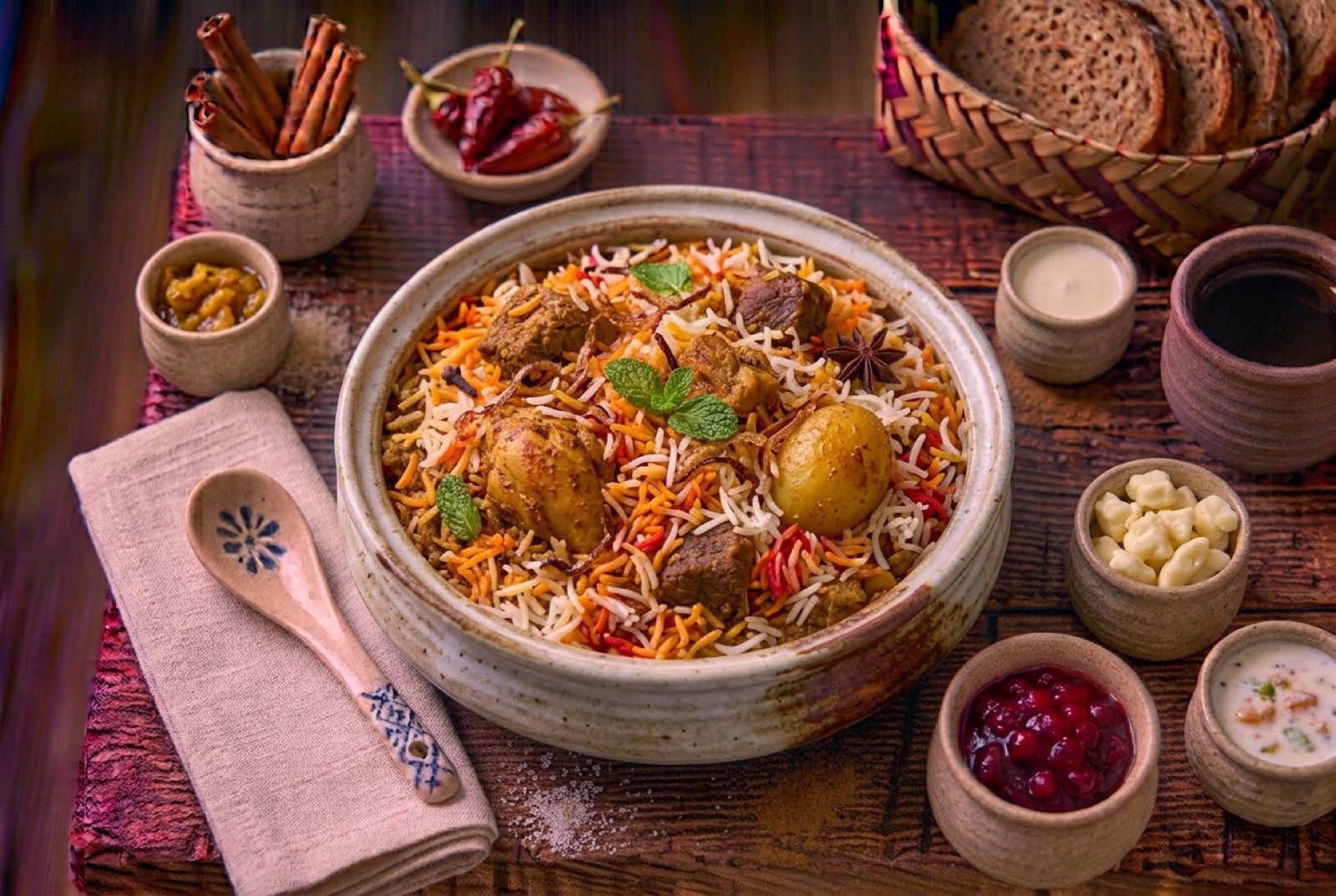
Pakistan2 hr 25 min
Karachi Biryani
Layered Rice with Spiced Meat and Potato
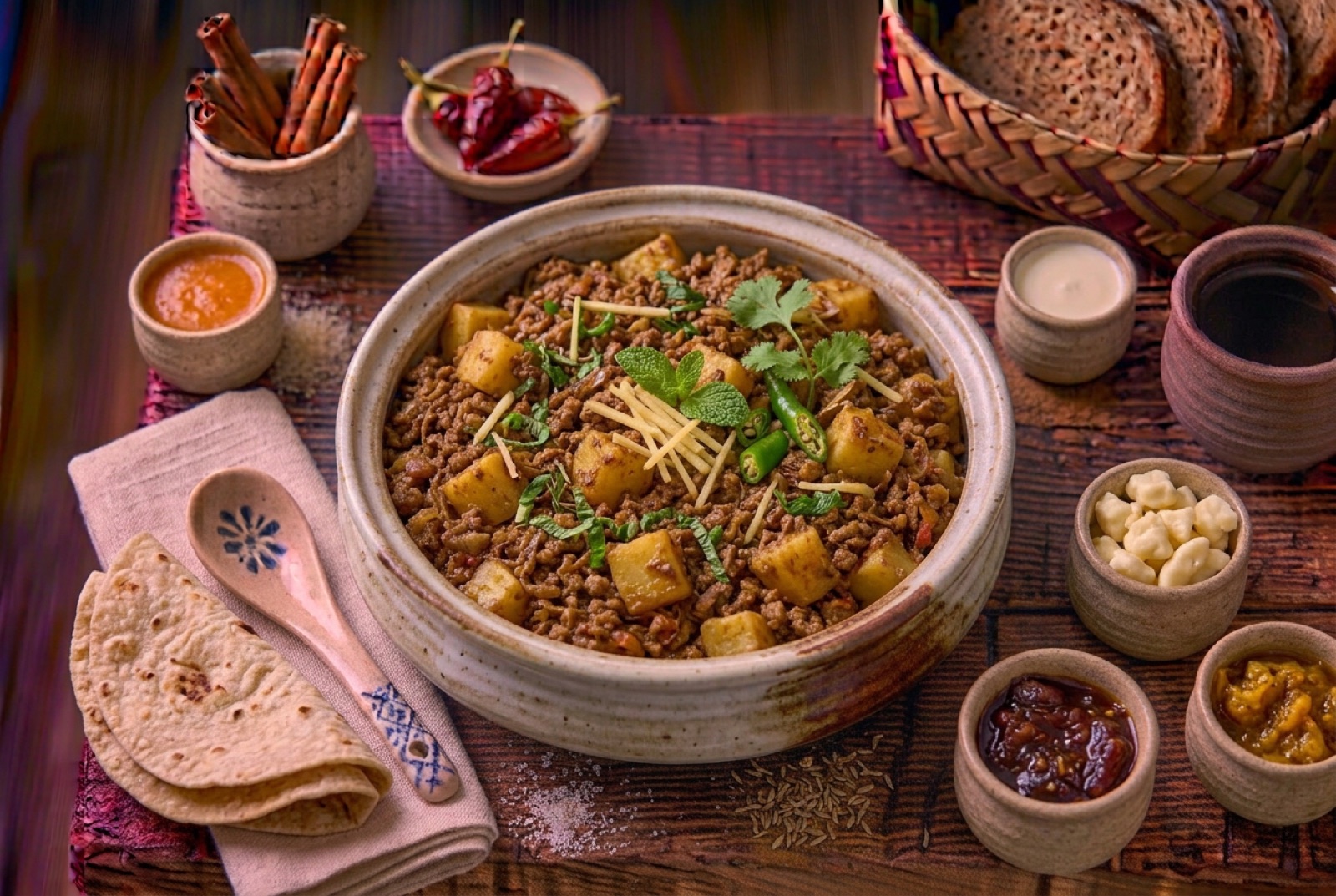
Pakistan55 min
Keema Aloo
Minced Beef and Potato Masala
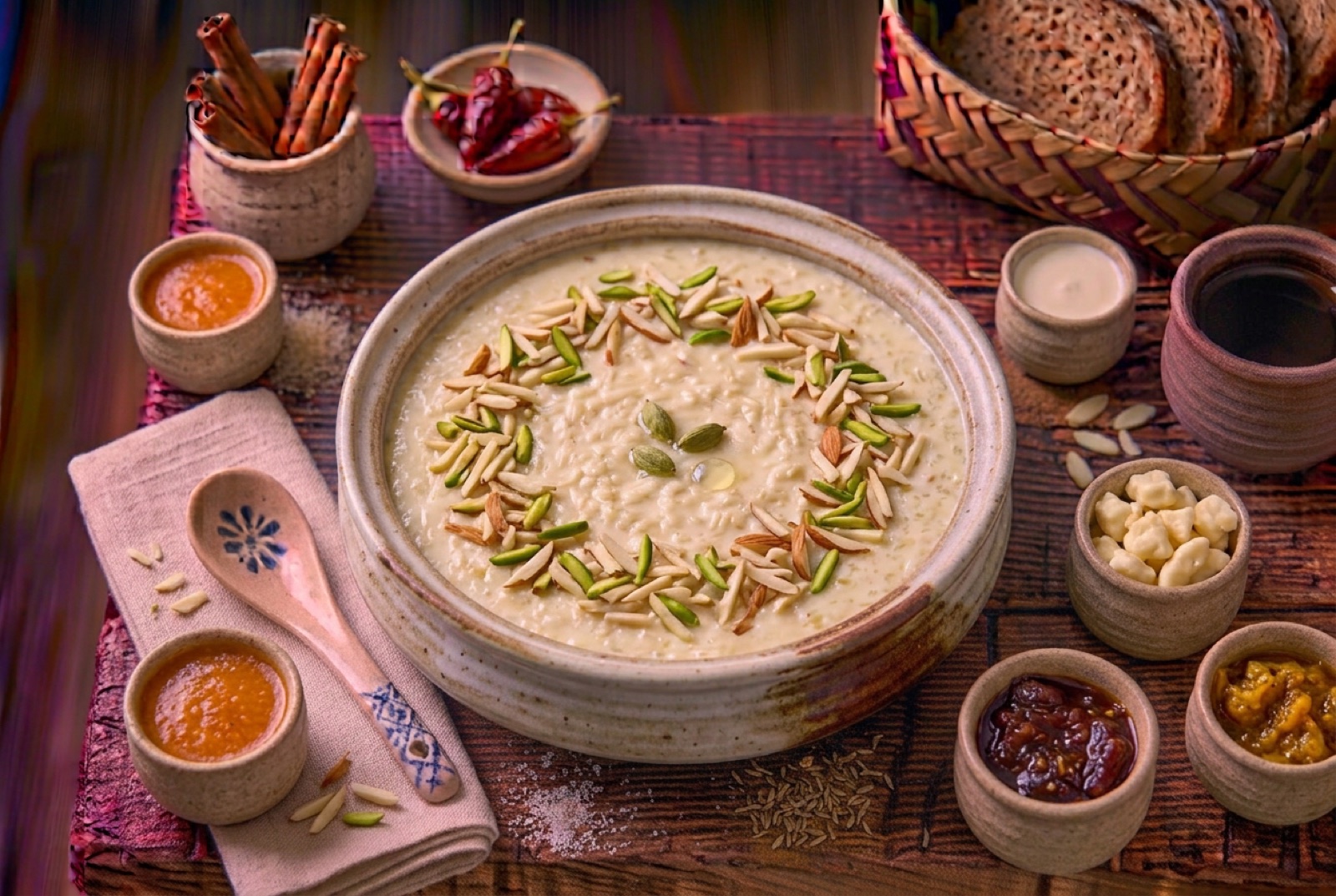
Pakistan4 hr 30 min
Kheer
Slow-Reduced Milk and Rice Pudding with Cardamom
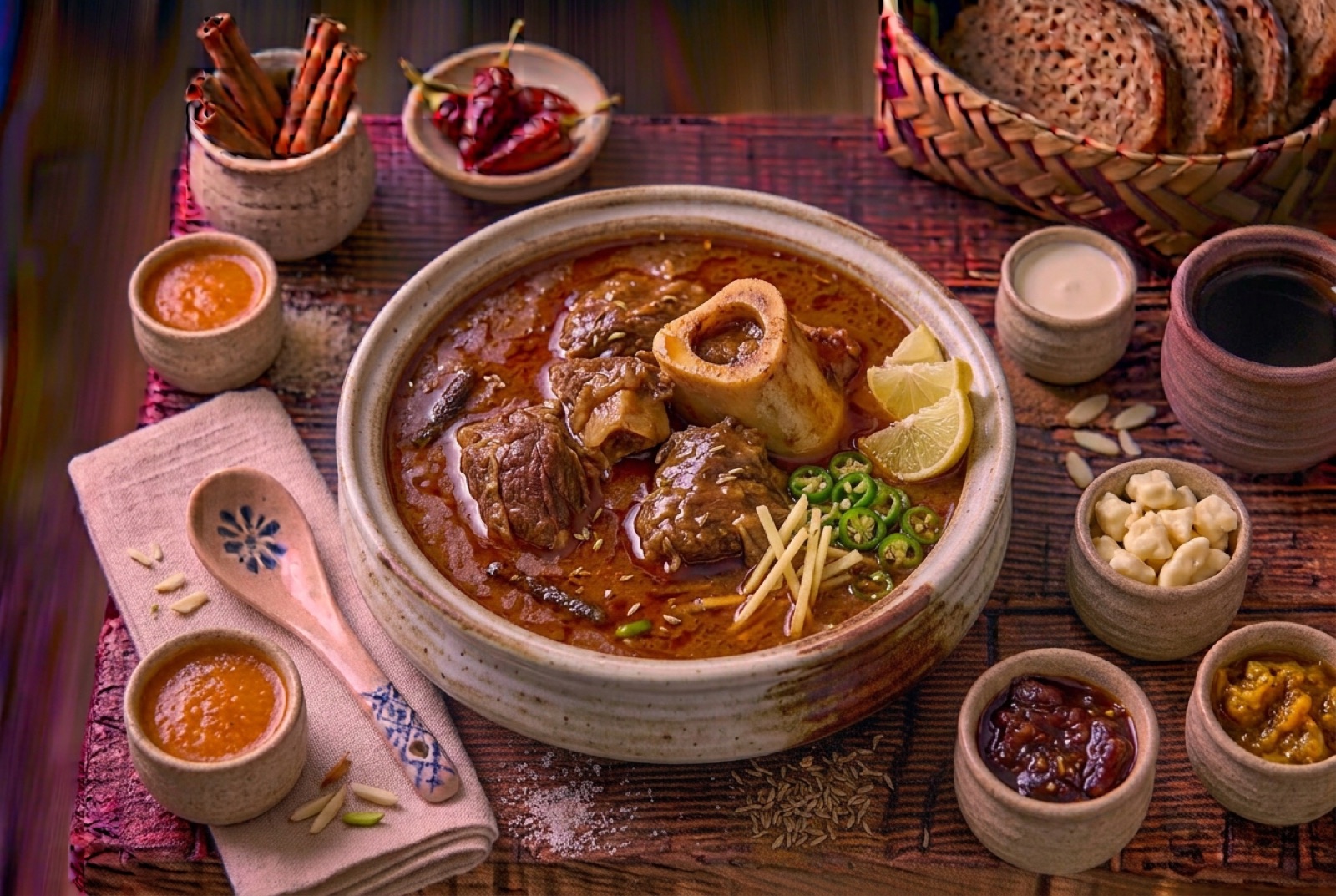
Pakistan5 hr 25 min
Nihari
Overnight Beef Shank Stew with Long Pepper
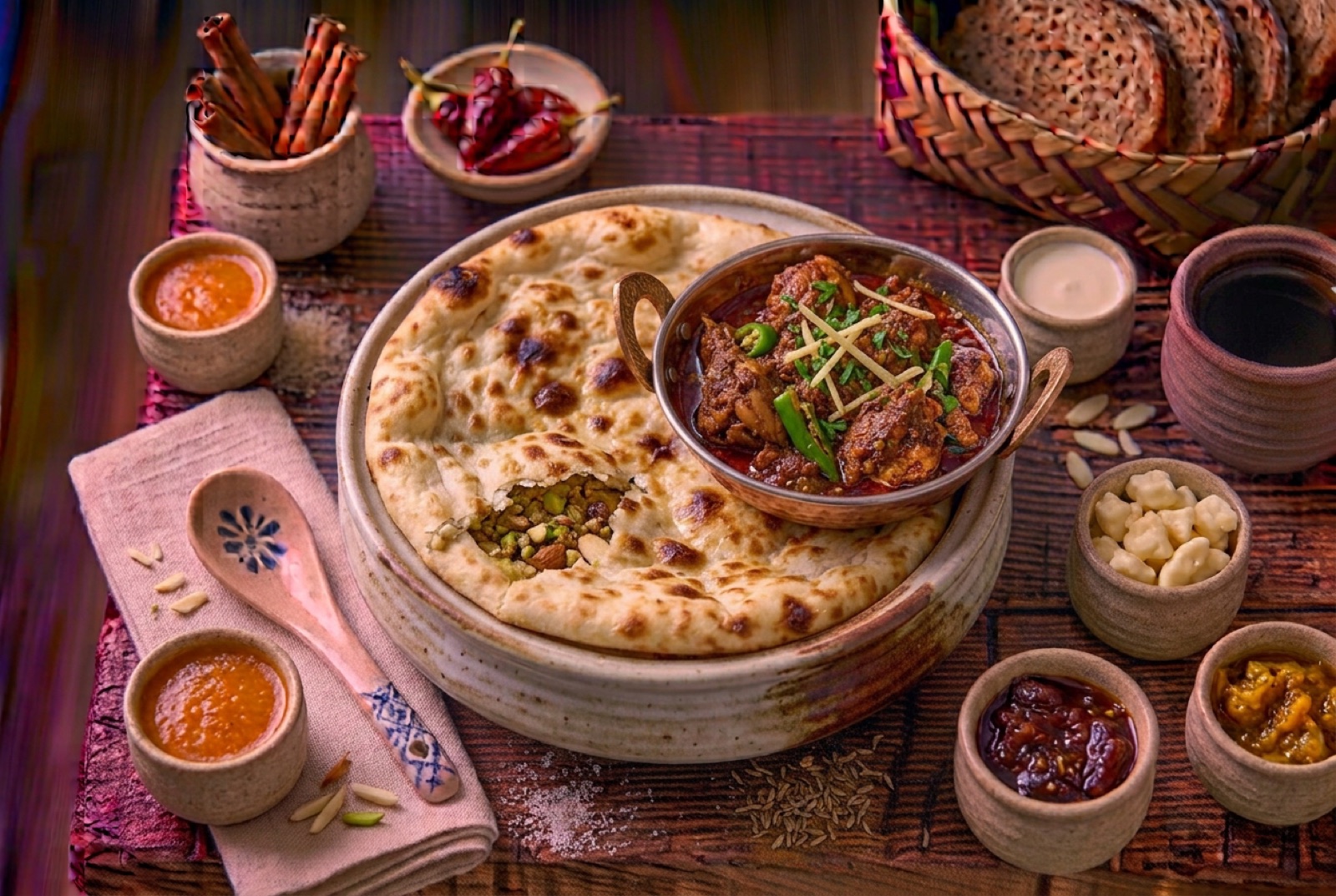
Pakistan2 hr 15 min
Peshawari Naan
Nut and Raisin Stuffed Flatbread
Keep traveling.
Pakistan sits in South Asia, and its kitchen shares borders as well as ingredients with Armenia and Bangladesh.
 Armenia
 Bangladesh