Chapli Kebab.
Peshawari Flat Beef Patties
چپلی کباب · Chapli kabab · say it: CHUP-lee kuh-BAAB
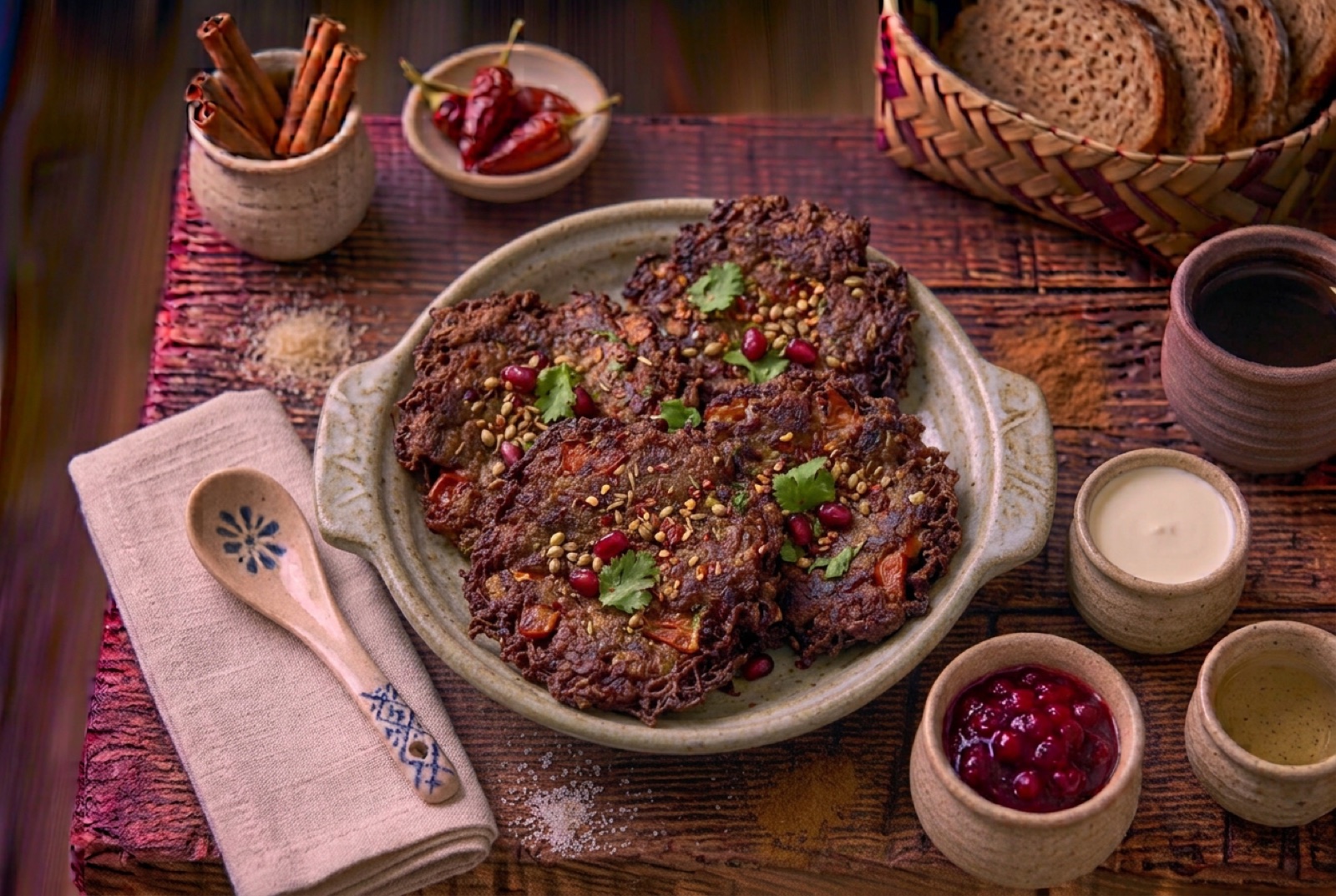
Chapli kebab is a flat, hand-sized patty of coarsely minced beef mixed with chopped tomato, onion, green chile, cracked coriander seed and dried pomegranate seed, bound loosely with cornmeal and fried in a shallow bath of beef fat. It is not a burger and should not be shaped like one: the patty is pressed thin and wide so the edges catch and turn lacy while the middle stays juicy and slightly crumbly. The flavour is dominated by coriander seed, which is used by the tablespoon rather than the teaspoon, and by the sour pop of pomegranate against beef fat. Peshawar eats it torn into naan with raw onion and a squeeze of lemon.

- Gate
- PakistanPeshawar, Khyber Pakhtunkhwa
- Prep
- 25 min
- Cook
- 20 min
- Total time
- 1 hr 45 min incl. 1 hr rest
- Serves
- 4
- Status
- Medium
- Nutrition / serving · estimated
- Calories 520 kcal
- Protein 30 g
- Carbs 14 g
- Fat 39 g
- Fiber 3 g
- Sodium 860 mg
Why this recipe works.
- Keeps the coarse grind and loose bind that make a chapli kebab crumble properly instead of bouncing like a burger.
- Uses coriander seed cracked, not ground, which is the flavour most home versions lose.
- Explains the shallow fat bath honestly, including how to get the effect without a shopful of rendered beef fat.
- Includes the chilling step that stops the patties falling apart in the pan, which most recipes skip.
Ingredients.
17 itemsFor the kebabs
For frying
To serve
Equipment
- Mortar and pestle
- Wide heavy frying pan or cast-iron skillet
- Fish slice or wide spatula
Instructions.
Crack the coriander
Pound the coriander seeds in a mortar until they are broken and uneven, with some pieces still almost whole. Do the same with the pomegranate seeds and cumin. Stop well before anything becomes powder — the grit is what you want.
Mix the meat
Put the beef in a wide bowl and add the crushed spices, chopped tomato, onion, green chile, cilantro, cornmeal, beaten egg, chile flakes, black pepper and salt. Mix with your hands using a lifting and folding motion for about a minute, just until everything is distributed.
Tip Do not knead or squeeze the mixture the way you would for a seekh kebab. Working the meat makes it springy, and chapli kebab should crumble.
Chill the mixture
Cover the bowl and refrigerate for at least an hour, or up to a day. The cornmeal swells, the coriander softens slightly, and the fat firms up so the patties will hold their shape in the pan.
Shape flat and wide
Divide into eight and press each portion between wet palms into a disc about 1 cm thick and as wide as your hand, leaving the edges a little ragged rather than smoothing them. Press a slice of tomato onto the top of each if you like.
Fry in deep fat
Melt the beef fat in a wide heavy pan to a depth of about 5 mm over medium-high heat. Slide in two or three kebabs, without crowding, and fry undisturbed for 3 minutes until the underside is deep brown and the thin edges have gone lacy and crisp.
Turn once
Flip carefully with a wide spatula and fry another 3 minutes, spooning hot fat over the top as they cook. They are done when the centre is firm to a press and juices running from a poke are clear rather than pink.
Drain and eat immediately
Lift onto a rack rather than paper so the underside stays crisp, and serve within minutes with hot naan, raw onion rings, green chutney and plenty of lemon. Tear the kebab into the bread rather than cutting it with a knife.
Tips from our kitchen.
- Use coarsely ground beef with plenty of fat, ideally 20 percent or more. Fine supermarket mince gives a dense, springy patty rather than a crumbly one.
- Crush the coriander seed in a mortar until it is cracked and uneven, not powdered. You should be able to feel the pieces between your teeth in the finished kebab.
- Chop the tomato, deseed it and squeeze the pieces gently before mixing. Wet tomato is the main reason these patties collapse in the pan.
- Chill the mixture for at least an hour. Cold fat holds the patty together long enough for a crust to form, and warm mixture will slump the moment it hits the pan.
- Press the patties thin — about 1 cm and as wide as your palm — with slightly ragged edges. Those thin edges are what fry lacy and crisp, and neat circles lose them.
- Fry in fat at least 5 mm deep and do not move the kebab for the first three minutes. Turning it early tears it in half.
Substitutions.
- Rendered beef fat for frying → Half ghee and half neutral oil, or beef dripping from a roast
- The flavour difference is real but not fatal. If your butcher will sell you beef suet, render it slowly in a low oven and it keeps in the fridge for weeks.
- Dried pomegranate seeds (anardana) → One tablespoon of pomegranate molasses, or two teaspoons of dried mango powder
- Both give the sourness, though neither gives the little chewy pops of the whole seed. South Asian grocers sell anardana cheaply.
- Cornmeal → Gram flour (besan), lightly toasted in a dry pan
- Widely used in Peshawar and slightly more binding. Toast it first or the kebab tastes raw and chalky.
Variations.
- Takht Bhai style
- The most famous version, from a town north of Peshawar: more tomato in the mix, a thinner patty and a slice of tomato pressed onto the top before it goes into the fat.
- Lamb chapli
- Made with coarsely minced lamb shoulder, sweeter and softer than beef. Common in the hill districts and needs slightly more cornmeal to hold together.
- Chapli burger
- The Karachi and Lahore fast-food adaptation, served in a bun with chutney and salad. Not traditional, and very hard to argue with at midnight.
Storage & reheating.
Fried kebabs keep two days refrigerated but they are a different thing cold — the fat sets and the crisp edges go soft. Reheat in a dry pan over medium heat for a couple of minutes a side rather than in a microwave. The raw mixture is the better thing to store: it keeps two days in the fridge and improves as the coriander seed swells and the salt works into the meat. Shaped raw patties freeze well for two months, layered between sheets of baking paper, and fry from frozen with an extra two minutes a side.
Serve with
Hot naan, sliced raw onion and tomato with lemon, a green chutney of cilantro, mint and green chile, and strong tea afterwards.
The story behind Chapli Kebab.
Chapli kebab belongs to Peshawar and to Pashtun cooking on both sides of the Khyber Pass. The name is generally taken to come from the Pashto word for flat or for sandal, describing the shape, and the kebab is sold from open-fronted shops where enormous flat pans of rendered beef or lamb fat sit over gas rings with dozens of patties frying at once. The fat is the point. Chapli kebab shops keep a deep pool of it, top it up as the day goes on, and the fat gets progressively more flavoured — home cooks who fry theirs in a spoonful of vegetable oil are making something else.
The seasoning is unusual for Pakistan in that it is barely a masala at all. There is no ginger-garlic paste in the older versions, no garam masala, no yogurt. What there is instead is coriander seed, coarsely crushed rather than ground so it stays gritty and audible, dried pomegranate seed for sourness, and a lot of fresh tomato and onion mixed directly into the meat. Cornmeal or gram flour goes in to bind, though not much: a chapli kebab should be slightly fragile and crumble a little as you break it.
The town of Takht Bhai, north of Peshawar, is widely reckoned to make the best version in the country, and its shops draw people who drive an hour for lunch. Mardan and Peshawar itself both claim their own style, generally differing in how much tomato goes in and whether the kebab gets a slice of tomato pressed onto the top before frying. What everyone agrees on is that the kebabs should be wide, thin and eaten within minutes of leaving the fat, with naan, sliced raw onion, green chutney and lemon, and nothing much else on the table.
Questions, answered.
Why do my chapli kebabs fall apart in the pan?
Usually excess moisture, and usually from the tomato. Deseed the tomato and squeeze the chopped pieces before mixing, and drain the onion if it looks wet. The other two causes are skipping the chill, since cold fat is what holds a loose patty together until a crust forms, and turning the kebab too early. Leave it alone for three full minutes before it goes anywhere.
What makes chapli kebab different from other kebabs?
Three things: the shape, the grind and the spicing. It is pressed flat and wide rather than moulded onto a skewer, the meat is coarsely ground so the texture stays crumbly, and the dominant seasoning is cracked coriander seed and dried pomegranate rather than a full garam masala. It is also shallow-fried in fat rather than grilled over coals, which is what most Pakistani kebabs do.
Do I really need to fry them in beef fat?
Not strictly, but it is what makes a Peshawar chapli kebab taste the way it does. The shops keep a wide pan of rendered beef or lamb fat and the kebabs cook half-submerged in it. At home, half ghee and half neutral oil at a depth of about 5 mm gets you most of the way. Frying in a thin film of vegetable oil produces a decent patty but a noticeably plainer one.
Can I cook chapli kebabs in the oven or an air fryer?
You can cook them through, but you will not get the defining feature. The lacy, crisp, slightly frilly edge comes from thin meat meeting hot fat, and dry heat gives a uniformly firm patty instead. If you want to avoid frying, the better compromise is a heavy cast-iron pan with a tablespoon of ghee, pressed thin and cooked hot.
What is anardana and can I leave it out?
Anardana is dried wild pomegranate seed, used across northern Pakistan and Afghanistan as a souring agent. In chapli kebab it provides sharp little pops that cut through the beef fat. You can leave it out, but replace the sourness with something — dried mango powder or a spoon of pomegranate molasses — because without it the kebab tastes flat and heavy no matter how much chile is in it.
You might also like.
All recipes →
Keep exploring Pakistan.
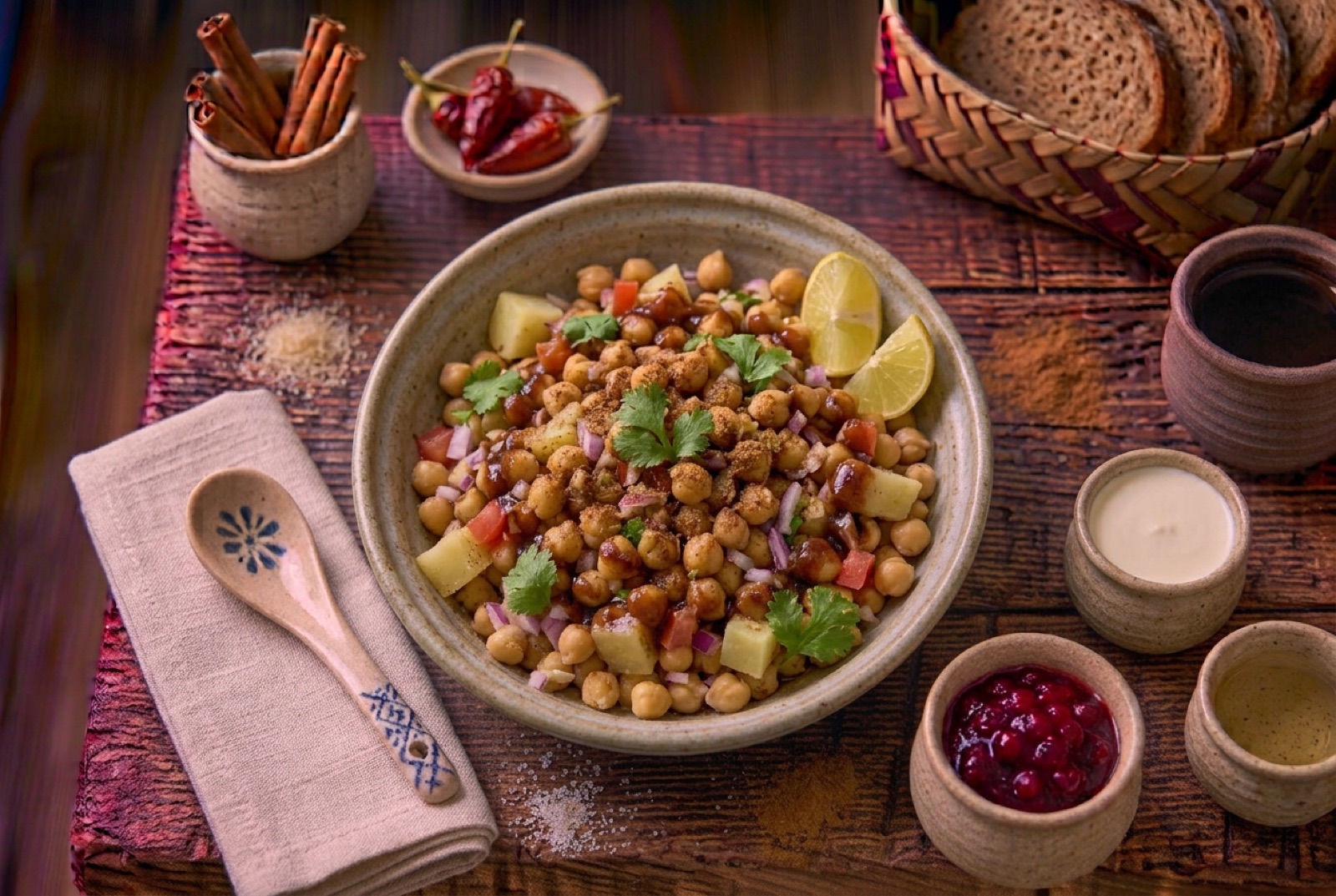
Pakistan has 9 more dishes in the atlas — Balochi Sajji and Chana Chaat, and 7 more.
All Pakistan recipes Ground beef recipes Coriander seed recipes Tomato recipes street foodmainhalal friendlydairy freeRecipe by The DishRoute Kitchen · published August 20, 2026 · updated August 20, 2026