Nihari.
Overnight Beef Shank Stew with Long Pepper
نہاری · Nihari · say it: nih-HAA-ree
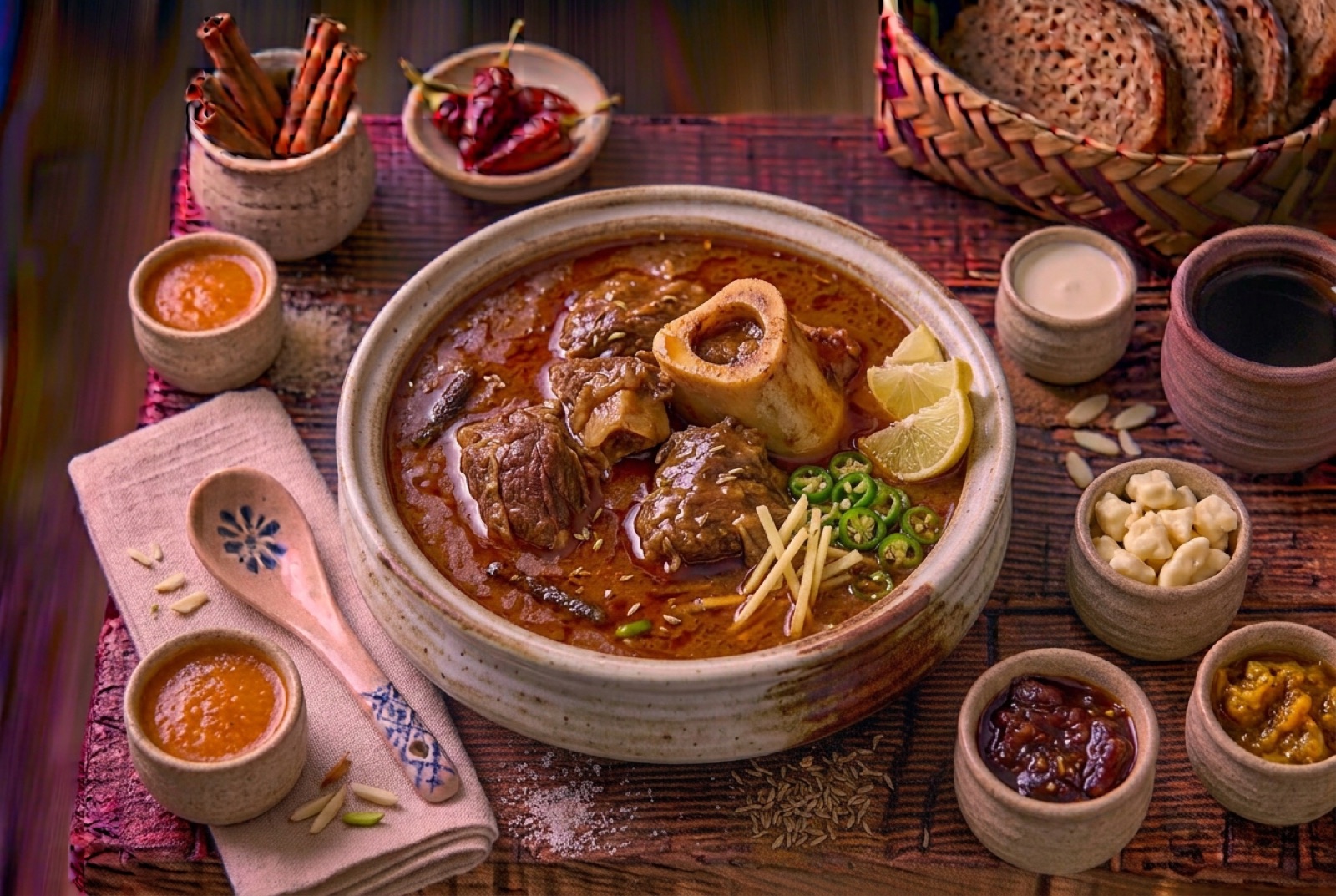
Nihari is a stew of beef shank and marrow bones cooked so long that the meat gives up entirely, in a gravy thickened with wheat flour until it turns dark, glossy and thick enough to coat a spoon. The spicing is unusual for South Asia: fennel and long pepper lead, not chile, so the heat arrives late and low in the throat rather than on the tongue, and the whole thing tastes deeply of beef fat. It is eaten for breakfast, torn naan in hand, with a heap of raw ginger julienne, sliced green chile, chopped cilantro and a hard squeeze of lemon piled on top — sharp, fresh things whose only job is to keep the richness from winning.

- Gate
- PakistanKarachi and Lahore
- Prep
- 25 min
- Cook
- 5 hr
- Total time
- 5 hr 25 min
- Serves
- 6
- Status
- Takes skill
- Nutrition / serving · estimated
- Calories 620 kcal
- Protein 45 g
- Carbs 16 g
- Fat 42 g
- Fiber 2 g
- Sodium 780 mg
Why this recipe works.
- Uses shank plus marrow bones, the combination that gives both collagen for body and the fat that carries the spice.
- Explains the flour slurry properly, including how to add it without lumps and what the finished gravy should look like on a spoon.
- Builds the spice blend from scratch so fennel and long pepper lead instead of generic curry heat.
- Gives a same-day timing that still gets the meat to the falling-apart stage, plus an overnight version for the real thing.
Ingredients.
24 itemsFor the stew
For the nihari masala
To thicken
To serve
Equipment
- Large heavy pot or Dutch oven with a lid
- Spice grinder or mortar and pestle
- Balloon whisk
- Fine sieve
Instructions.
Make the masala
Toast the fennel, long pepper, coriander, peppercorns, cumin, cardamom, cassia and cloves in a dry pan over medium heat for about 2 minutes, until the fennel smells sweet and the pan is fragrant. Cool, grind to a powder, then stir in the nutmeg, dried ginger, chile powder and turmeric.
Tip Stop toasting the moment the fennel turns one shade darker. Scorched fennel makes the whole pot taste bitter and there is no fixing it.
Brown the onions and meat
Melt the ghee in a heavy pot and fry the sliced onions over medium heat for about 12 minutes until golden brown. Add the ginger and garlic paste, fry for a minute until it stops smelling raw, then add the shank pieces and marrow bones and brown them on all sides.
Bloom the spices
Add the ground masala and about half a cup of water and stir hard for 3 to 4 minutes, keeping the spices moving so they fry without catching. Cook until the mixture darkens and oil begins to bead at the edge of the pan.
Long cook
Pour in the water, bring to a boil, then drop the heat to the lowest setting, cover and cook for at least 4 hours, or overnight if you have a very low burner or an oven set to 130C. The meat is ready when it slides off the bone at the push of a spoon and the broth has turned deep brown.
Thicken with the slurry
Whisk the flour into the cold water until completely smooth with no dry specks. Take the pot down to a bare simmer and pour the slurry in as a thin stream while stirring constantly, then simmer uncovered for 20 minutes, stirring now and then.
Tip If any lumps form, push the gravy through a sieve before continuing. Do not try to whisk them out at a boil.
Judge the gravy
Cook until a spoon dragged across the bottom of the pot leaves a trail that closes slowly and a clear slick of red-brown fat sits on the surface. Season with salt. Leave that fat where it is — it carries all the spice.
Serve loaded
Ladle into bowls with a piece of shank and a marrow bone in each, then let everyone pile on their own ginger matchsticks, green chile and cilantro and squeeze over plenty of lemon. Eat with hot naan torn straight into the bowl.
Tips from our kitchen.
- Buy shank cut across the bone into thick rounds and ask for two extra marrow bones. Boneless stewing beef makes a pot with no body and no shine.
- Toast and grind the fennel, long pepper and coriander yourself. Pre-ground fennel loses its sweetness within weeks and it is the front note of the whole dish.
- Whisk the flour into cold water until completely smooth, then pour it into the pot in a thin stream while stirring, with the heat low. Added to a boiling pot it seizes into lumps immediately.
- The gravy is right when a spoon dragged through it leaves a trail that closes slowly, and a slick of red oil sits on the surface. If it still runs like broth, cook it down further.
- Do not skim the fat. That layer of beef fat on top is what nihari is; skimming it produces a lean, sad version of the dish.
- Cut the ginger for the top into matchsticks, not mince. You want the crunch and the raw bite in individual pieces, which minced ginger cannot give.
Substitutions.
- Long pepper (pippali) → One extra teaspoon of black peppercorns plus a pinch of ground ginger
- Not a true match — long pepper is sweeter and its heat builds slowly at the back of the throat — but it keeps the dish in the right register. South Asian grocers stock it dried, and a small bag lasts years.
- Beef shank → Lamb or goat shank, or oxtail
- All work. Lamb cooks about an hour faster and gives a sweeter gravy; oxtail gives the richest body of the three but needs the full overnight cook.
- Wheat flour slurry → Equal weight of cornstarch, whisked into cold water
- A workable gluten-free route, though the gravy sets glossier and slightly more slippery than the traditional atta version, which is softer and cloudier.
Variations.
- Nalli nihari
- Served with whole marrow bones standing in the bowl, the marrow pushed out with a skewer and spread straight onto hot naan. The most sought-after order in any nihari shop.
- Maghaz nihari
- A poached lobe of beef brain stirred through each bowl at serving, adding a soft, custard-like richness. Common at breakfast counters in Karachi and Lahore.
- Chicken nihari
- A modern weeknight compromise using bone-in chicken thighs and a two-hour cook. Lighter and less gelatinous, but the spice profile survives intact.
Storage & reheating.
Nihari keeps four days refrigerated and is widely considered better on day two, once the fat has set on top and been stirred back in. It will look solid and jellied when cold, which is a good sign — that is the collagen from the shank. Reheat gently with a splash of water, stirring as it loosens, and never at a hard boil or the flour gravy can catch and taste scorched. It freezes well for three months; freeze the meat in its gravy and add the fresh garnishes only at serving.
Serve with
Hot tandoori naan or khameeri roti, plus a bowl of ginger julienne, sliced green chile, chopped cilantro and lemon wedges for everyone to load their own portion.
The story behind Nihari.
Nihari is a dish built around a shift change. The name comes from the Arabic nahar, meaning day or morning, and the cooking pattern reflects it exactly: the pot goes on at night, cooks unattended over dying coals, and is sold at dawn. In Old Delhi, where it took its recognisable form, it was labourers' food eaten before a day of physical work, heavy enough to hold a man until evening. When families left for the new country in 1947, nihari travelled with them to Karachi and Lahore, and Pakistan adopted it so completely that many people are surprised to hear it came from anywhere else.
The defining trick of the great nihari houses is the taar — a ladleful of gravy held back from yesterday's pot and stirred into today's. The most famous shops in Karachi and Lahore claim unbroken chains going back decades, which is a claim about continuity rather than about any single measurable ingredient, and it is treated with real seriousness. The other institution is the maghaz nihari, ordered with a lobe of brain stirred in, and the nalli, ordered with an extra marrow bone whose contents you knock out onto the naan.
What makes nihari taste like nihari, rather than like any other beef stew, is long pepper — pippali, a slim catkin-shaped relative of black pepper with a sweeter, hotter, more lingering burn — together with fennel seed and a heavy hand of ground ginger. Chile is present but secondary. The second structural element is the atta slurry whisked in near the end, which is what turns a thin broth into something with body and shine. Get the slurry wrong and you have either soup or wallpaper paste, which is why it goes in slowly, off the boil, through a whisk.
Questions, answered.
Why is my nihari gravy thin instead of glossy?
Two likely reasons. Either the flour slurry was under-cooked, in which case simmer it for at least another 15 minutes so the starch swells fully, or the meat was too lean to contribute collagen. Nihari gets most of its body from shank and marrow bones breaking down over hours, not from the flour alone, so boneless stewing beef will never give the same result no matter how much slurry goes in.
What is long pepper and do I really need it?
Long pepper, called pippali in Urdu, is a dried catkin-shaped spice related to black pepper, with a sweeter aroma and a heat that builds slowly at the back of the throat rather than hitting the tongue. It is the signature note of nihari and the main reason the stew does not taste like an ordinary curry. Black pepper plus a little ground ginger is a reasonable stand-in if you cannot find it, but the dish loses some of its identity.
Why is nihari eaten at breakfast?
Because of how it is cooked. The pot goes on overnight over low heat and is ready at dawn, which historically suited both the cook, who did not have to tend it, and labourers who needed a heavy meal before a long working day. Pakistani cities still keep dedicated nihari shops that open before sunrise and sell out by mid-morning, and Sunday nihari breakfast is a genuine institution.
Can I make nihari in a pressure cooker?
Yes, and most Pakistani households do on weekdays. Pressure-cook the meat with the spices and water for about 45 minutes at full pressure, release, then continue with the flour slurry and the final open-pot simmer exactly as written. The texture is very close, though a long slow cook gives a slightly deeper, rounder flavour that pressure cannot fully reproduce.
How do I stop the flour slurry going lumpy?
Mix the flour with cold water first and whisk until there is no trace of dry powder, then take the pot down to the barest simmer before pouring the slurry in as a thin stream, stirring the whole time. Lumps form when flour meets boiling liquid too fast and the outsides gelatinise before the insides are wet. If you do get lumps, push the gravy through a sieve before the final simmer.
You might also like.
All recipes →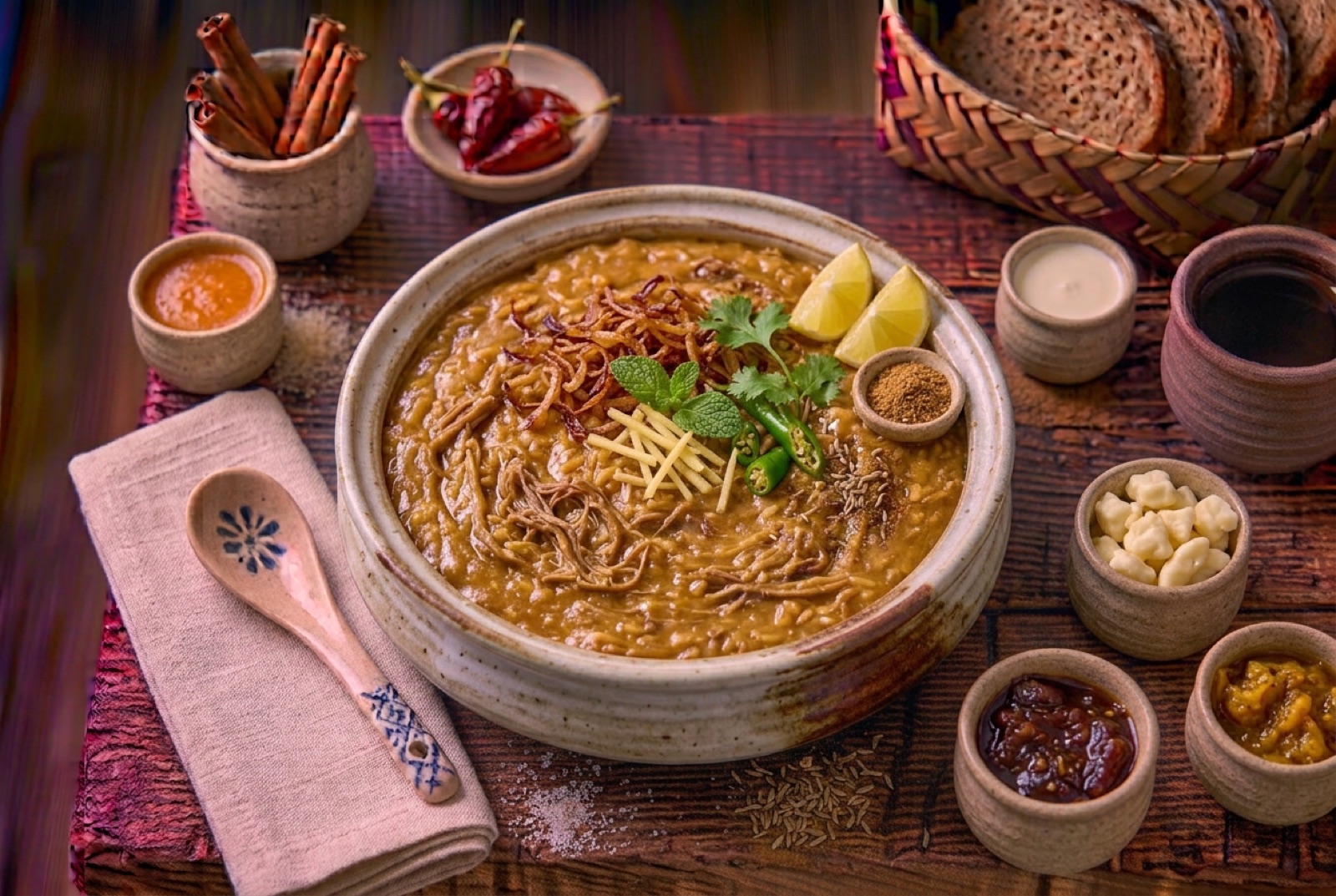
Pakistan13 hr
Haleem
Wheat, Barley and Shredded Beef Porridge
Pakistan1 hr 55 min
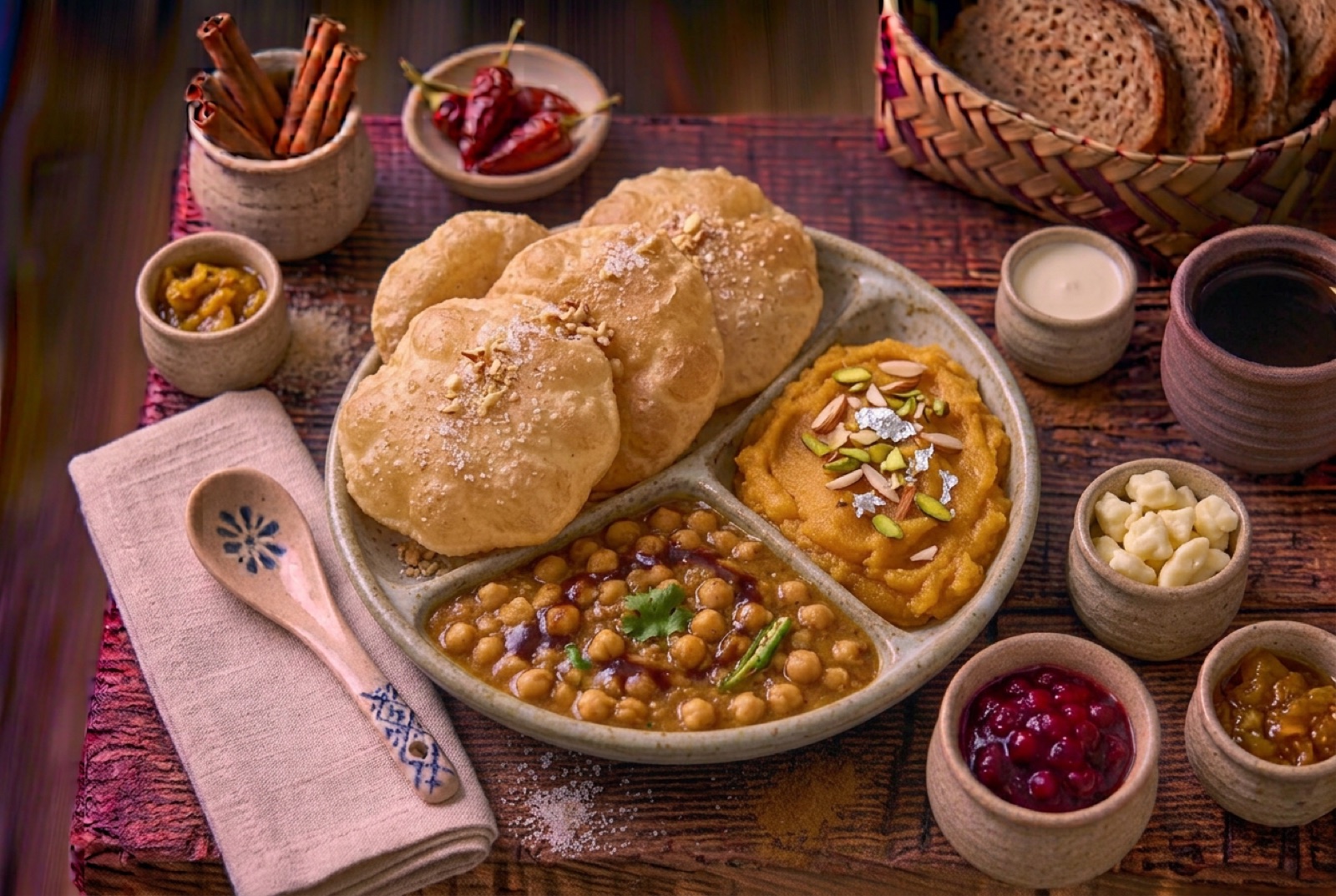
Halwa Puri
Fried Bread with Semolina Halwa and Chickpeas
Pakistan1 hr 45 min
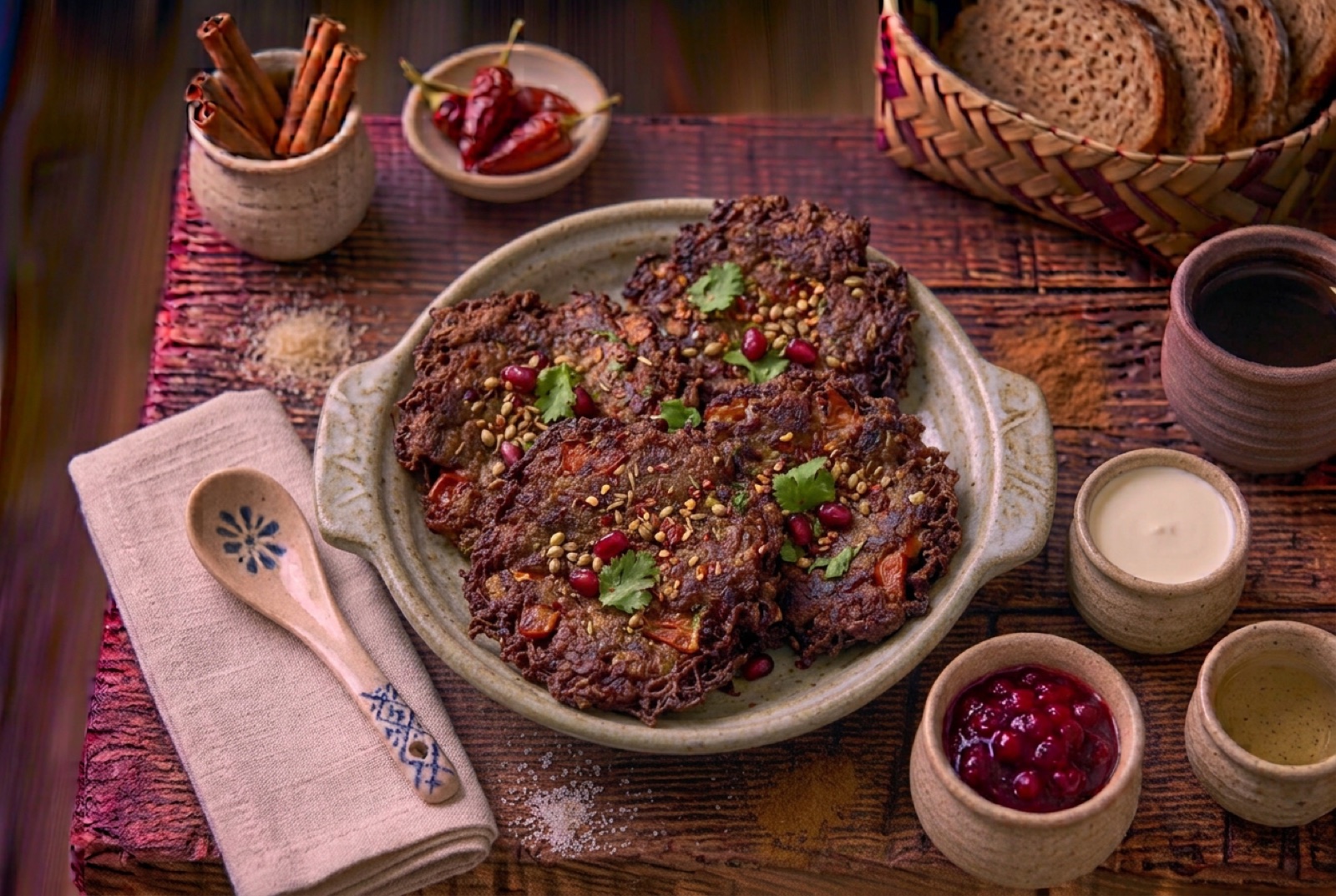
Chapli Kebab
Peshawari Flat Beef Patties
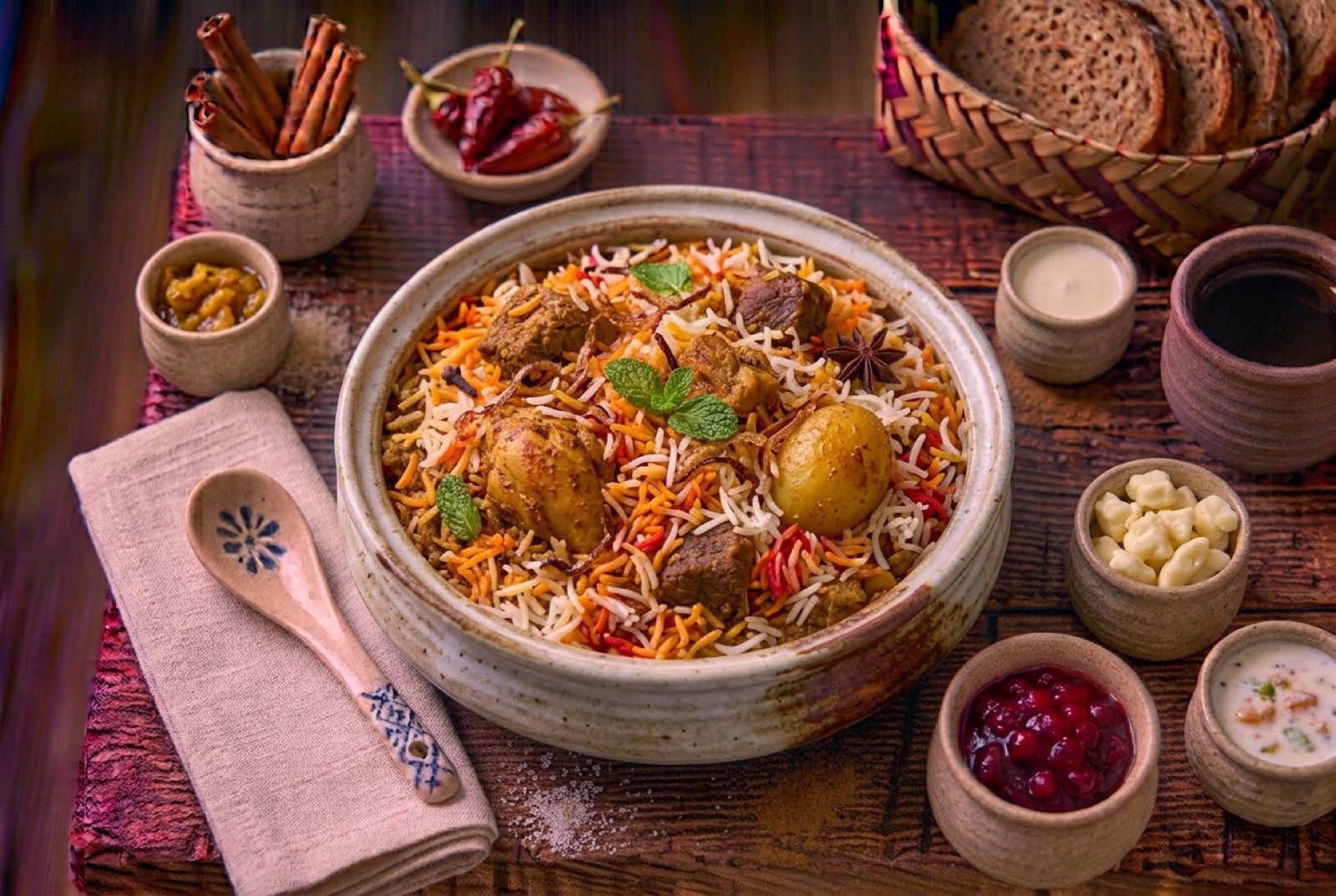
Pakistan2 hr 25 min
Karachi Biryani
Layered Rice with Spiced Meat and Potato
Keep exploring Pakistan.
Pakistan has 9 more dishes in the atlas — Balochi Sajji and Chana Chaat, and 7 more.
All Pakistan recipes Beef shank recipes Ginger recipes Onion recipes mainbreakfasthalal friendlydairy freeRecipe by The DishRoute Kitchen · published August 20, 2026 · updated August 20, 2026