Ispod Peke.
Croatian Veal and Potatoes Baked Under a Bell
Ispod peke · say it: EES-pod PEH-keh
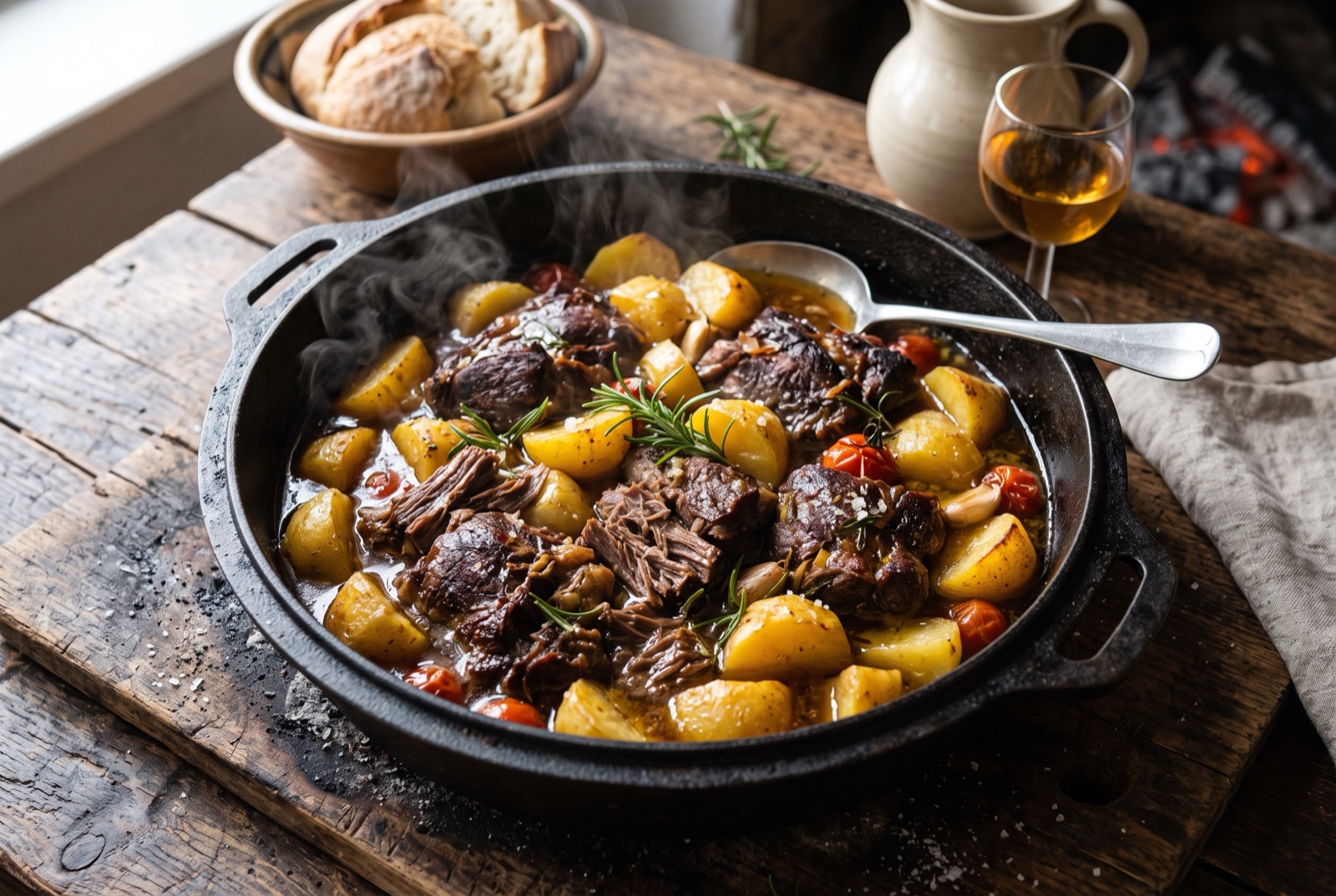
Peka is not a recipe so much as a piece of equipment that dictates one. A shallow metal tray of meat, potatoes and vegetables is covered with a heavy domed iron lid — the peka — which is then buried under glowing embers so heat comes from above as well as below. Nothing escapes: the ingredients cook in their own steam, seasoned with little more than olive oil, garlic, rosemary and a splash of white wine, until the veal falls off the bone and the potatoes have absorbed every drop of fat and juice in the tray. The flavour is deep, roasted and surprisingly clean, because there is no sauce, no browning of flour, nothing added at the end. This version gives you both the real fire method and an oven route that gets genuinely close.

- Gate
- CroatiaDalmatia
- Prep
- 25 min
- Cook
- 2 hr
- Total time
- 2 hr 35 min incl. 10 min rest
- Serves
- 6
- Status
- Takes skill
- Nutrition / serving · estimated
- Calories 680 kcal
- Protein 48 g
- Carbs 42 g
- Fat 34 g
- Fiber 6 g
Why this recipe works.
- Covers both routes honestly — the real fire-and-bell method and a heavy covered roasting pan in the oven that gets close.
- Cuts the potatoes thick and layers them under the meat so they braise in fat and juice instead of drying out.
- Includes the mid-cook turn that Dalmatian cooks never skip, and explains what it actually does.
- Seasons with almost nothing, because the technique does the work — and says so plainly.
Ingredients.
12 itemsFor the tray
Equipment
- Cast-iron peka bell and outdoor hearth, or a deep roasting tin with a tight-fitting lid
- Long tongs and a shovel if cooking over embers
- Heatproof gloves
Instructions.
Build the fire, or heat the oven
If cooking over embers, light a hardwood fire on the hearth at least an hour before you plan to eat and let it burn down to a deep glowing bed with no flame. For the oven route, heat it to 180°C with a shelf in the lower third.
Season the meat
Rub the veal chunks all over with a third of the olive oil, the salt and the pepper, working the seasoning into every surface. Leave them at room temperature while you prepare the vegetables — cold meat straight from the fridge lengthens the cook by half an hour.
Load the tray
Spread the potatoes, onions, carrots, peppers and halved garlic heads over the base of a shallow metal tray or roasting tin, tuck in the rosemary and bay, and sit the veal on top so its fat drips down through the vegetables as it cooks.
Tip Pack the tray tight but in one layer — a crowded pile steams unevenly and the top never colours.
Oil and wine
Pour the remaining olive oil evenly over everything and add the white wine down the side of the tray rather than over the meat, so you do not wash off the seasoning. The liquid should sit about 1 cm deep; add nothing else.
Cover and bury
Set the peka bell over the tray, rake embers up against the sides and shovel a thick layer over the dome until it is completely covered. In the oven, seal the tin with its lid or a double sheet of foil crimped tightly around the rim.
Cook undisturbed, then turn
Leave it alone for 60 minutes, refreshing the embers around the bell once if they fade. Then lift the lid, turn the meat over and stir the potatoes up from the bottom so they change places, and check that there is still a shallow layer of liquid in the tray.
Tip The liquid should look like fat and dark juice, not water. If the tray has run dry, add a small splash of wine — but this is rare.
Finish the cook
Cover again and cook for another 50–60 minutes, until the veal pulls apart under a fork with no resistance, the potato edges have gone golden where they touched the metal, and the juices in the tray have reduced to a glossy, deeply savoury pool.
Rest and serve from the tray
Uncover, brush off any stray ash, and let the tray stand for 10 minutes so the meat reabsorbs its juices. Bring it whole to the table with bread and spoon the pan juices over each serving.
Tips from our kitchen.
- Cut potatoes into big wedges, at least 4 cm across. Anything smaller collapses into mush over two hours of enclosed cooking.
- Do not add water. The wine, the vegetables and the meat produce all the liquid needed, and extra water dilutes the juices into a thin broth.
- If you are using a real peka, build the ember bed a full hour ahead. A fire that is still flaming will scorch the tray before the inside cooks.
- Turn everything once at the halfway point so the potatoes that were on the bottom spend the second hour on top and cook evenly.
- For the oven version, weigh the lid down or seal the pan edge with a strip of foil — the whole method depends on nothing escaping.
- Let the tray stand 10 minutes off the heat before serving so the meat relaxes and reabsorbs the juice it pushed out.
Substitutions.
- Veal shoulder → Lamb shoulder, chicken thighs and drumsticks, or 1.5 kg cleaned octopus
- Lamb is equally traditional. Chicken needs only 70–80 minutes total. Octopus is the coastal speciality and produces the wettest, most flavourful potatoes of all.
- A cast-iron peka bell → A deep roasting tin with a tight-fitting lid, or a large Dutch oven
- You lose the smoke and the radiant heat from above, but the enclosed steam-roast is reproducible. A pizza stone under the pan helps with base heat.
- Dry white wine → Chicken or vegetable stock with a squeeze of lemon
- Wine brings acidity that cuts the fat. Stock alone tastes flatter, so the lemon is doing real work here, not decorating.
Variations.
- Hobotnica ispod peke
- Octopus peka: whole cleaned octopus with the same potatoes and aromatics. It renders an extraordinary amount of liquid, so the potatoes finish soft and saturated rather than roasted.
- Janjetina ispod peke
- Lamb shoulder or leg on the bone, the island version, usually with rosemary doubled and a whole head of garlic split across the tray.
- Vegetable peka
- Potatoes, peppers, courgette, whole onions and garlic under the bell with plenty of olive oil — genuinely good, and the standard workaround at Dalmatian tables with vegetarians at them.
Storage & reheating.
Keeps 3 days refrigerated with the meat and potatoes stored together in their juices. Reheat covered in a 160°C oven for 20–25 minutes rather than in a microwave, which turns the potatoes waxy. The meat freezes acceptably for 2 months, but the potatoes do not — they go grainy and watery on thawing, so pick out the meat and juices for the freezer and cook fresh potatoes to go with them.
Serve with
Bread for the juices at the bottom of the tray, and a simple tomato and onion salad dressed with olive oil.
The story behind Ispod Peke.
Cooking under a bell is one of the oldest surviving techniques in the region, and versions of it exist across the Balkans and around the Mediterranean under different names — sač in Bosnia and Serbia, and similar iron domes anywhere people cooked on an open hearth long before ovens were domestic. In Croatia the peka is most closely associated with Dalmatia and the islands, where konobas and stone-house courtyards still keep an outdoor hearth for exactly this purpose. The bells are cast iron or, historically, terracotta, and the good ones are heavy enough that lifting them is a two-handed job.
The method is unhurried by design. The fire is lit an hour or more before cooking to build a bed of embers, the tray goes on the hot hearth, the bell goes over it, and then embers are shovelled over and around the dome so heat surrounds the food completely. Nobody opens it for the first hour. Somewhere around the halfway mark the bell comes off, the contents are turned so the potatoes swap places with the meat, more embers are added and the lid goes back on. The whole thing takes two hours or so, which is precisely the point — peka is booked in advance at coastal restaurants because it cannot be made to order, and at home it is Sunday cooking, organised around drinking, talking and tending the fire.
What goes under the bell varies with what is available. Veal and lamb are the classics, chicken is the everyday choice, and along the coast octopus peka is a speciality worth planning a holiday around — the octopus releases so much liquid that the potatoes end up almost braised. The constants are potatoes cut thick enough to survive two hours, whole heads of garlic, a generous pour of olive oil, rosemary or bay, and a glass of white wine that turns to steam in the first ten minutes. Serve it straight from the tray with bread, because the juices at the bottom are the best part and nobody wants them left behind.
Questions, answered.
What exactly is a peka?
Peka is the name of both the dish and the equipment: a heavy domed iron or terracotta lid placed over a shallow tray of food on a hearth, with hot embers piled over and around it. Because heat comes from every direction and nothing escapes, the food roasts and steams at the same time. The word covers anything cooked this way — meat, octopus, vegetables or even bread.
Can I make peka without an open fire?
Yes, with compromises. Use a deep roasting tin with a tight lid, or a large Dutch oven, at 180°C for roughly the same total time, keeping it sealed and turning the contents once halfway. You will not get the smokiness or the intense top heat of embers, but the enclosed steam-roast produces very similar texture and juices. Seal the pan edge with foil if the lid is loose.
Why should I not add water or stock?
Because the method is designed around the ingredients cooking in their own liquid. Meat, potatoes and onions release a surprising amount of moisture into a sealed vessel, and the wine adds the rest. Adding water dilutes the concentrated juices that collect at the bottom of the tray, which is the part everyone fights over with a piece of bread.
How do I know when it is done?
The meat should pull away from the bone with almost no resistance and a knife should slide into the thickest potato wedge without any grip. On a proper peka this takes about two hours for veal or lamb, less for chicken. Lift the bell only at the halfway turn and again near the end — every look you take costs you heat and steam.
Do I need to brown the meat first?
Traditionally no. The radiant heat from the bell browns the exposed surfaces during cooking, which is part of what distinguishes peka from a plain braise. In an oven version, a quick sear of the meat before it goes in the pan is a reasonable cheat, since a domestic oven lid will not deliver the same top heat.
You might also like.
All recipes →
Keep exploring Croatia.
Croatia has 9 more dishes in the atlas — Brudet and Crni Rižot, and 7 more.
Recipe by The DishRoute Kitchen · published August 20, 2026 · updated August 20, 2026