Prebranac.
Serbian Baked Beans with Caramelized Onions
Пребранац · Prebranac · say it: preh-BRAH-nats
Prebranac is Serbian baked beans, and it tastes like far more than its ingredient list suggests: large white beans, an almost alarming quantity of onions cooked slowly until sweet and golden, sweet paprika, bay leaf, and good oil, layered in a deep dish and baked until the top browns into a crust while the inside turns silky. There is no meat and no stock, yet the dish eats rich — the onions do the work, melting into a sweet, paprika-red gravy that coats every bean. It is naturally vegan as traditionally made with oil, forgiving to cook, better the next day, and one of the most comforting things in the Serbian repertoire.


- Gate
- Serbia
- Prep
- 30 min
- Cook
- 2 hr 30 min
- Total time
- 11 hr incl. 8 hr rest
- Serves
- 6
- Status
- Easy
- Nutrition / serving · estimated
- Calories 460 kcal
- Protein 17 g
- Carbs 56 g
- Fat 19 g
- Fiber 15 g
- Sugar 9 g
Why this recipe works.
- The onions are cooked low and slow to true sweetness before baking — the single step that separates great prebranac from bland beans.
- Written with oil the traditional posna (fasting) way, so it is naturally vegan with zero compromise.
- Layering beans and onions, rather than stirring, builds the sweet paprika gravy and the crusted top the dish is known for.
- Honest about beans: dried tetovac-style beans if you can get them, with a canned shortcut that still works.
Ingredients.
10 itemsFor the beans
For the onions
For serving
Equipment
- Large pot for boiling the beans
- Wide heavy pan for the onions
- Deep baking dish (about 25 × 30 cm)
Instructions.
Soak the beans
Pick over the beans, cover them with plenty of cold water, and soak for at least 8 hours or overnight. They are ready when they have roughly doubled in size and the skins are smooth, with no wrinkles.
Boil until just tender
Drain the beans, cover with fresh water by a few centimeters, add the bay leaves, and simmer gently, skimming any foam, until the beans are tender but still hold their shape — 60–90 minutes depending on age. Salt them in the last 15 minutes, then drain, reserving the cooking liquid and the bay leaves.
Tip Bite one to check: creamy to the center with an intact skin means ready. Al dente beans stay chalky even after baking.
Caramelize the onions
While the beans cook, warm the oil in a wide pan over medium-low heat and cook 1 kg of sliced onions with a pinch of salt, stirring now and then, until they collapse, turn golden and taste sweet — a patient 25–30 minutes. Add the garlic for the final 3 minutes, until fragrant.
Bloom the paprika
Pull the pan off the heat, wait 30 seconds, then stir 2 tbsp of sweet paprika and the black pepper (plus hot paprika, if using) into the onions until everything is stained brick-red and smells toasty rather than raw. Off the heat is deliberate — scorched paprika turns bitter.
Layer the dish
Heat the oven to 180°C. In a deep baking dish, layer a third of the beans, then half the onions; repeat, and finish with beans and the reserved bay leaves on top. Pour in enough bean cooking liquid to come about two-thirds of the way up — the top layer should sit above the liquid.
Bake until crusted
Bake uncovered for 45–60 minutes, until the liquid has thickened to a paprika-red gravy bubbling at the edges and the top layer of beans has browned into a wrinkled crust. If the top browns before the inside thickens, cover loosely with foil.
Rest and serve
Let the dish rest for 15 minutes out of the oven — the gravy settles and thickens as it cools slightly. Scatter with parsley and serve warm, not piping hot, with bread and pickled peppers.
Tip Leftovers reheated the next day are widely considered better than the first serving — plan for it.
Tips from our kitchen.
- Do not rush the onions. They need 25–30 gentle minutes to turn golden and sweet; browned-in-a-hurry onions make a harsh, flat prebranac.
- Cook the soaked beans only to just-tender before baking — they finish softening in the oven, and overboiled beans collapse into mash.
- Take the pan off the heat before stirring in the paprika. In oil that is too hot, paprika scorches in seconds and turns bitter.
- Save the bean cooking liquid. It is the only moisture the bake gets, and its starch is what turns the layers into a silky gravy.
- Use a generous hand with oil — this is a fasting dish designed to eat rich without meat, and a lean version tastes like punishment.
- Make it a day ahead if you can; like most bean dishes, prebranac is noticeably better reheated.
Substitutions.
- Large white tetovac beans (dried) → Dried gigantes, butter beans or large lima beans
- Any very large white bean that cooks creamy works. Standard small white beans are fine too, just less luxurious.
- Dried beans altogether → 3 × 400 g cans of butter beans, drained
- A real time-saver: skip soaking and boiling, use 300 ml of water or vegetable stock as the baking liquid. Texture is slightly softer.
- Sunflower oil → Olive oil, or lard for a non-fasting version
- Neutral sunflower oil is the Serbian default. Lard is the old-school non-posna route — richer, and obviously no longer vegan.
Variations.
- With hot paprika
- Southern Serbian households often add hot paprika or a whole dried chili between the layers — a gentle burn that suits the sweetness of the onions.
- With garlic pressed in
- Whole peeled garlic cloves, or an entire halved head, tucked into the layers before baking, melting into sweet pockets by the end.
- Non-fasting prebranac
- Outside the fasts, some cooks bake smoked sausage or smoked ribs on top, letting the fat render down through the beans — a different, heavier dish.
Storage & reheating.
Prebranac keeps 4 days refrigerated and genuinely improves overnight as the paprika and onion settle into the beans. Reheat covered in a moderate oven or gently in a pan with a splash of water. It freezes well for up to 3 months; thaw overnight in the fridge and reheat in the oven to revive the top.
Serve with
Crusty bread and pickled vegetables — pickled peppers or turšija — with a simple cabbage salad on the side.
The story behind Prebranac.
Prebranac is the great dish of the Serbian post — the fasting periods of the Orthodox Christian calendar, when observant households cook posna hrana: food without meat, dairy or eggs. The fasts are long (the Nativity fast alone runs some forty days), so Serbian cuisine developed a deep bench of dishes that satisfy without animal products, and prebranac sits at the head of that table. Made with oil rather than lard, as it traditionally is for fasting, the dish is vegan by centuries-old design rather than by modern adaptation — a point of quiet pride when it is explained to visiting vegetarians who expected to go hungry in the Balkans.
The name is usually connected to the verb "prebrati" — to pick over, to sort — a nod to the once-obligatory ritual of spreading dried beans on the table and picking out the stones and duds before soaking. The beans themselves matter: the prized variety is tetovac, a very large, flat white bean named after the town of Tetovo, grown across the southern Balkans and beloved for turning creamy rather than mealy. Outside the region, large white beans such as gigantes, butter beans or big lima beans stand in well.
Prebranac is everyday and ceremonial at once. It appears on the slava table — the Serbian family feast for its patron saint's day — whenever the slava falls in a fasting period, and it shows up just as readily as a weekday lunch with bread and pickled peppers, or alongside grilled meat and sausages when nobody is fasting at all. Every household bakes it a little differently — more onions or fewer, hot paprika or none, a whole head of garlic pushed into the beans — but the constants hold: slow-cooked onions, sweet paprika, patience, and a crusted top that people quietly fight over.
Questions, answered.
What is prebranac?
Prebranac is a traditional Serbian baked bean dish: large white beans layered with a large amount of slowly caramelized onions seasoned with sweet paprika and bay leaf, then baked until the top browns and the inside turns creamy. It contains no meat in its traditional fasting form and is a staple of Serbian home cooking, served as a main course with bread or as a side to grilled meat.
Is prebranac vegan?
Traditionally, yes — when made with oil, as it is for the Orthodox Christian fasting periods (posna food excludes meat, dairy and eggs). That is the standard version and the one in this recipe, so no adaptation is needed. Some non-fasting households use lard or bake smoked meat on top, so when eating out it is worth confirming which version is being served.
What are tetovac beans and what can I use instead?
Tetovac is a very large, flat white bean from the southern Balkans, named after the town of Tetovo, and it is the prestige bean for prebranac because it bakes up creamy rather than mealy. Outside the region it is hard to find; dried gigantes, butter beans or large lima beans are excellent substitutes, and ordinary white beans still make a good, if humbler, prebranac.
Why does prebranac use so many onions?
The onions are the engine of the dish. Prebranac has no meat or stock in its traditional form, so nearly all of its richness and sweetness comes from a very large quantity of onions — often close to the weight of the beans — cooked slowly until golden, stained with paprika, and layered through the bake. Skimping on onions, or rushing them, is the most common reason a prebranac tastes flat.
When do Serbians eat prebranac?
Constantly, but it is most closely tied to the Orthodox fasting periods before Christmas and Easter, when meat, dairy and eggs are off the table and prebranac becomes a centerpiece. It also appears on fasting slava tables (the family patron-saint feast) and, in everyday life, as a cheap, filling lunch with bread — or as a side dish at barbecues, where nobody is fasting at all.
You might also like.
All recipes →


Keep exploring Serbia.
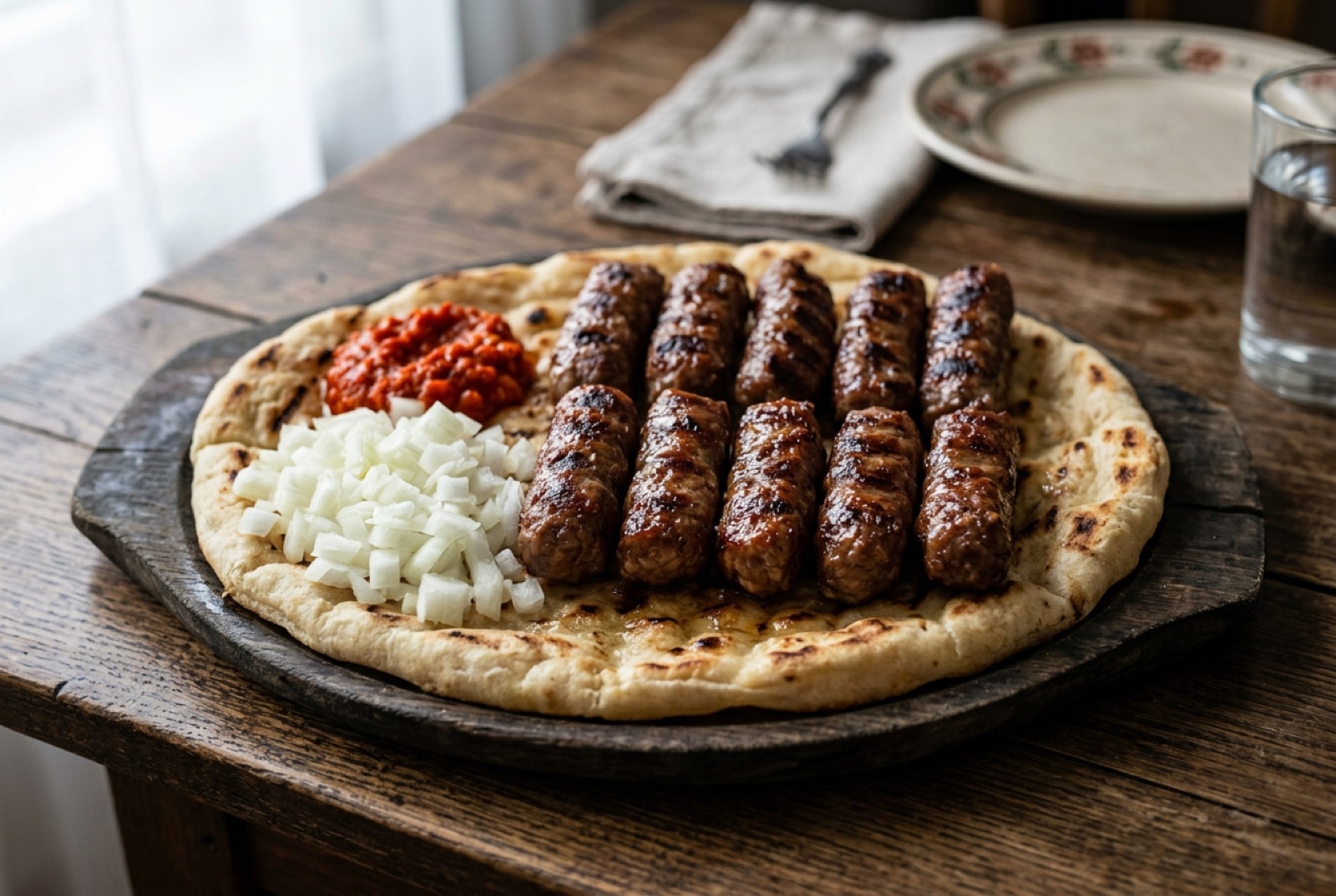
Serbia has 9 more dishes in the atlas — Ćevapi and Gibanica, and 7 more.
Recipe by The DishRoute Kitchen · published August 18, 2026 · updated August 18, 2026