Empanadas de Plátano.
Plantain Parcels with Milk Custard
Empanadas de plátano · say it: em-pah-NAH-dahs deh PLAH-tah-noh
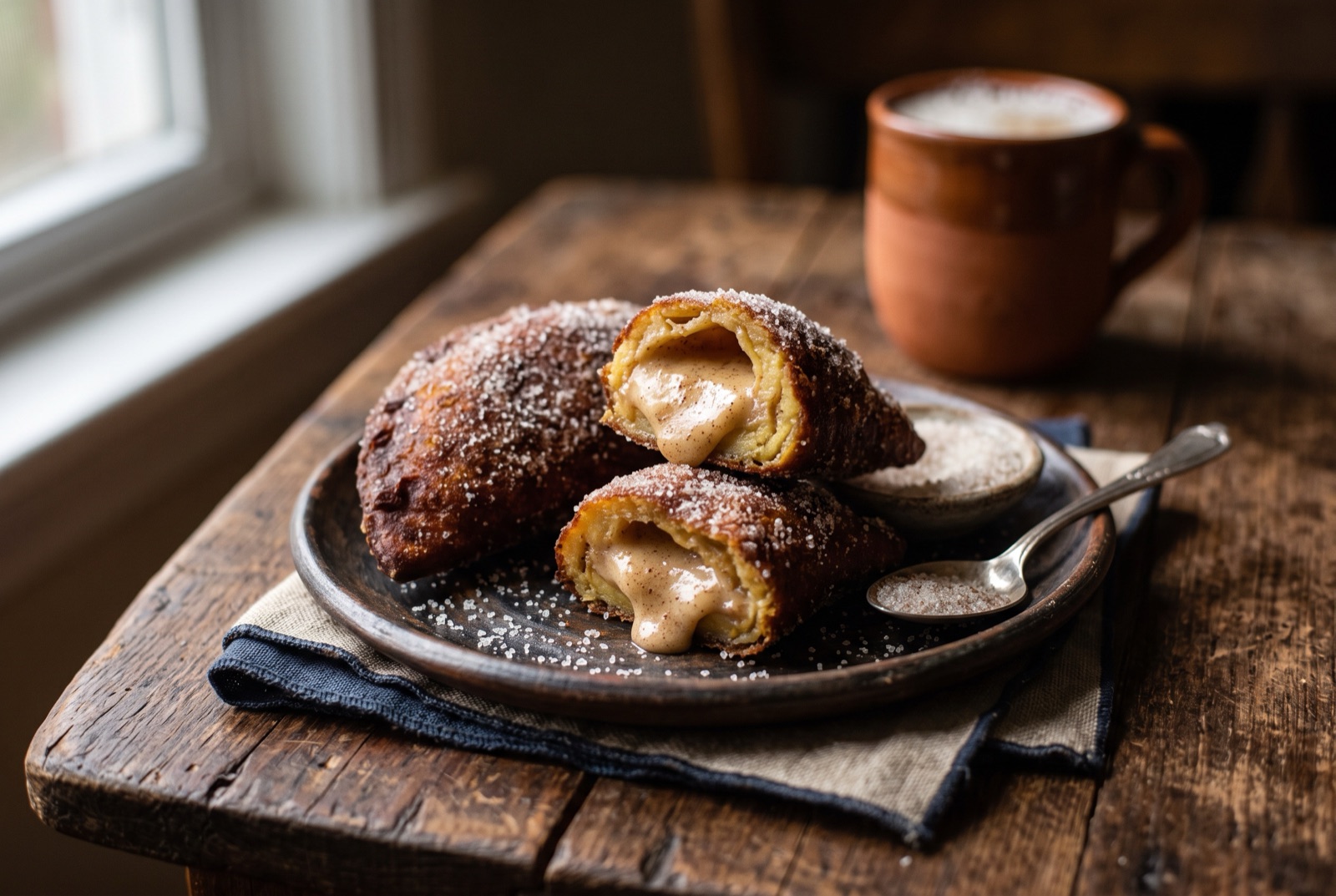
These are not pastry empanadas. The dough is boiled ripe plantain mashed smooth, dark and sweet, patted around a spoonful of leche poleada — a thick cornstarch-set milk custard scented with cinnamon — then deep-fried until the outside turns almost mahogany and forms a thin crisp shell over a soft, almost molten interior. Rolled in sugar straight out of the oil, they taste like caramelised banana with a warm vanilla-cinnamon centre. Salvadorans eat them for breakfast with coffee, or from a street cart in the afternoon, and they are always eaten hot.

- Gate
- El SalvadorNationwide
- Prep
- 35 min
- Cook
- 30 min
- Total time
- 1 hr 35 min incl. 30 min rest
- Serves
- 4
- Status
- Medium
- Nutrition / serving · estimated
- Calories 430 kcal
- Protein 7 g
- Carbs 68 g
- Fat 15 g
- Fiber 3 g
- Sugar 36 g
Why this recipe works.
- Sets the custard firm with cornstarch and yolk so it survives being wrapped and fried instead of running out.
- Uses genuinely blackened plantains and explains what happens if you rush that — the single most common failure.
- Adds a small amount of flour or cornstarch to bind the mash, which is what stops the dough splitting in hot oil.
- Chills both dough and filling before shaping, making these possible for a cook who has never sealed anything before.
Ingredients.
11 itemsFor the dough
For the custard
To fry and finish
Equipment
- Saucepan for the custard
- Potato masher or fork
- Deep pan or fryer with a thermometer
- Slotted spoon
Instructions.
Make the custard first
Warm 400 ml of the milk with the cinnamon stick and lime zest until steaming, then fish out the aromatics. Whisk the cornstarch, sugar and yolks into the remaining cold milk, pour in the hot milk, return everything to the pan and cook over medium heat, whisking, until it thickens.
Tip It is ready when a spoon dragged across the pan base leaves a track that holds for a second before closing over.
Chill the custard flat
Spread the custard on a plate, press cling film directly onto its surface to stop a skin forming, and refrigerate for at least 30 minutes until firm and cold enough to scoop into neat spoonfuls.
Boil and mash the plantains
Peel 4 of blackened plantains, cut them into chunks and boil in unsalted water for 12–15 minutes until a fork goes through with no resistance. Drain very well, then mash while hot until completely smooth with no lumps.
Bind the dough
Work the flour and salt into the warm mash until you have a soft, sticky dough that just holds together when squeezed. Add another spoonful of flour if it will not hold a shape, then cool it to room temperature.
Shape the parcels
On a square of oiled parchment, flatten a golf-ball of dough into a 10 cm disc. Place a heaped teaspoon of cold custard in the centre, lift the parchment to fold the dough over, and press the edges firmly closed into a sealed half-moon.
Tip Check the seam by rolling it gently between your palms — any thin patch will open in the oil.
Fry until deep gold
Heat the oil to 170°C and fry the empanadas in small batches for 3–4 minutes, turning once, until the surface is deep amber and blistered and they float high in the oil. Lift out onto paper.
Tip Do not crowd the pan. Plantain dough is fragile and knocking two together while frying splits them.
Roll in sugar and eat hot
While they are still hot enough to steam, roll each empanada in the cinnamon sugar until coated, then let them sit for two minutes so the custard stops being molten. Serve immediately with coffee.
Tips from our kitchen.
- The plantains must be black, not yellow. If yours are still firm, leave them somewhere warm for two or three days — there is no shortcut.
- Cook the custard until a spoon drawn across the pan base leaves a track that holds for a second before closing. Underset custard escapes into the fryer.
- Chill the custard flat on a plate and the dough separately for at least 30 minutes. Cold filling is far easier to wrap.
- Shape on a square of oiled parchment or cling film rather than in your hand — plantain dough is sticky and tears if you fight it.
- Fry at a moderate 170°C. Hotter and the sugary plantain blackens before the inside warms through; cooler and the shell drinks oil.
- Roll in sugar the moment they come out. Once the surface cools the sugar will not stick and simply falls off the plate.
Substitutions.
- Leche poleada custard → Sweet refried beans cooked down with panela until jammy
- The traditional alternative filling in El Salvador, not a compromise. Cook the beans until they hold their shape on a spoon.
- Ripe plantain → Very ripe regular bananas mixed with a little more flour
- A workable emergency version, but bananas are wetter and sweeter, so the dough needs more binding and the result is softer.
- Cornstarch in the custard → Rice flour, or an extra egg yolk
- Rice flour sets slightly less cleanly. Extra yolk gives a richer custard that needs more careful cooking to avoid scrambling.
Variations.
- Empanadas de frijol
- Filled with dark sweetened bean paste instead of custard. Sold side by side with the milk version at every street cart and just as traditional.
- Rellenos de plátano
- The same dough shaped into flatter, larger discs and filled more generously, sometimes baked rather than fried for a lighter result.
- Plátanos en gloria
- A related dish where whole ripe plantains are baked with cream, cheese and cinnamon rather than fried, and eaten with a spoon.
Storage & reheating.
Best eaten within an hour of frying, when the shell is still crisp and the custard is warm. Fried empanadas keep 2 days refrigerated and can be revived in a 180°C oven for 8 minutes, though the sugar coating dissolves and the shell never returns to its original crispness. Uncooked shaped empanadas freeze well on a tray for up to a month and can be fried from frozen at a slightly lower temperature. The custard alone keeps 3 days chilled under cling film pressed to its surface.
Serve with
Strong black coffee — the Salvadoran breakfast pairing — or a glass of cold milk in the afternoon.
The story behind Empanadas de Plátano.
Plantain-dough empanadas run down the Pacific side of Central America and into Colombia and Venezuela, but the Salvadoran version is defined by its filling. Leche poleada is a national sweet in its own right — milk thickened with cornstarch and egg yolk, flavoured with cinnamon, sometimes with a strip of lime zest, and eaten warm from a cup or set firm enough to slice. Spooning it into a plantain shell and frying the result is the kind of dessert logic that shows up wherever there is a lot of ripe fruit and a lot of milk.
The alternative filling, and in some households the older one, is sweetened refried beans. That sounds strange to visitors and is entirely normal in El Salvador, where the boundary between sweet and savoury bean preparations is much softer than in Europe: the beans are cooked down with panela until they are dark and jammy, which puts them closer to a red bean paste than to anything on a dinner plate. Street vendors usually sell both and expect to be asked which is which.
Timing the plantain is the whole craft. The fruit has to be genuinely overripe — skin blackened, flesh yielding to a fingertip — because that is when the starch has converted to sugar and the mashed dough will be sweet and pliable enough to seal. A yellow plantain with green shoulders makes a dough that is starchy, bland and cracks apart in the pan. Salvadoran cooks buy plantains days ahead specifically to let them go past the point most people would consider edible, and the empanadas are the standard destination for a bunch that has turned all at once.
Questions, answered.
How ripe do the plantains need to be?
Fully black-skinned and soft enough that your thumb sinks in with light pressure. At that stage the starch has converted to sugar, which is what makes the dough sweet, sticky and pliable. Yellow plantains produce a starchy dough that tastes bland and cracks open in the fryer. Buy them three or four days before you plan to cook.
Why did my empanadas burst open in the oil?
Usually the seal, occasionally the filling. The dough must close completely with no thin patches, so shape them on oiled parchment and pinch the edges firmly. A custard that is too loose will also force its way out as it heats and expands, so make sure the filling is properly set and thoroughly chilled before you wrap it.
Can I bake these instead of frying?
You can, at 200°C for about 20 minutes with the tops brushed in melted butter, and the result is lighter and less messy. It is not the same dish, though — baking gives a drier, cakier shell without the thin crisp crust and caramelised edges that frying produces. Roll them in cinnamon sugar as soon as they leave the oven.
What is leche poleada?
A Salvadoran milk pudding thickened with cornstarch and egg yolk and flavoured with cinnamon, somewhere between a pastry cream and a loose blancmange. It is eaten warm on its own from a cup as well as used as a filling. Made slightly firmer than usual, it becomes the custard centre for these empanadas.
Can I make the dough ahead?
Yes. Boiled and mashed plantain dough keeps a day in the fridge, tightly covered, and is actually easier to handle cold. Let it sit out for ten minutes before shaping so it becomes workable again. If it feels wet after chilling, knead in another tablespoon of flour or cornstarch.
You might also like.
All recipes →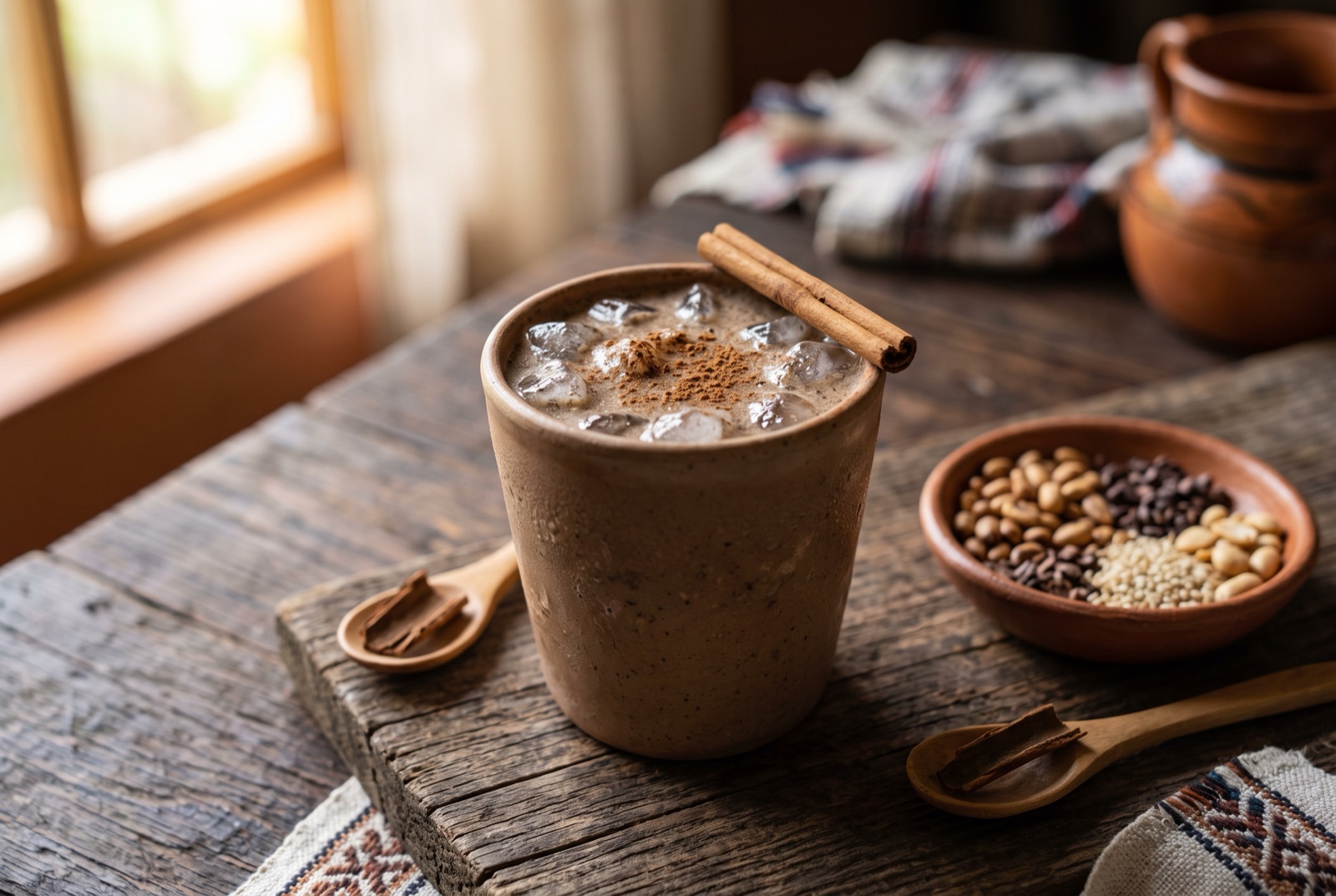
El Salvador2 hr 35 min
Horchata de Morro
Toasted Morro Seed Drink
El Salvador25 min
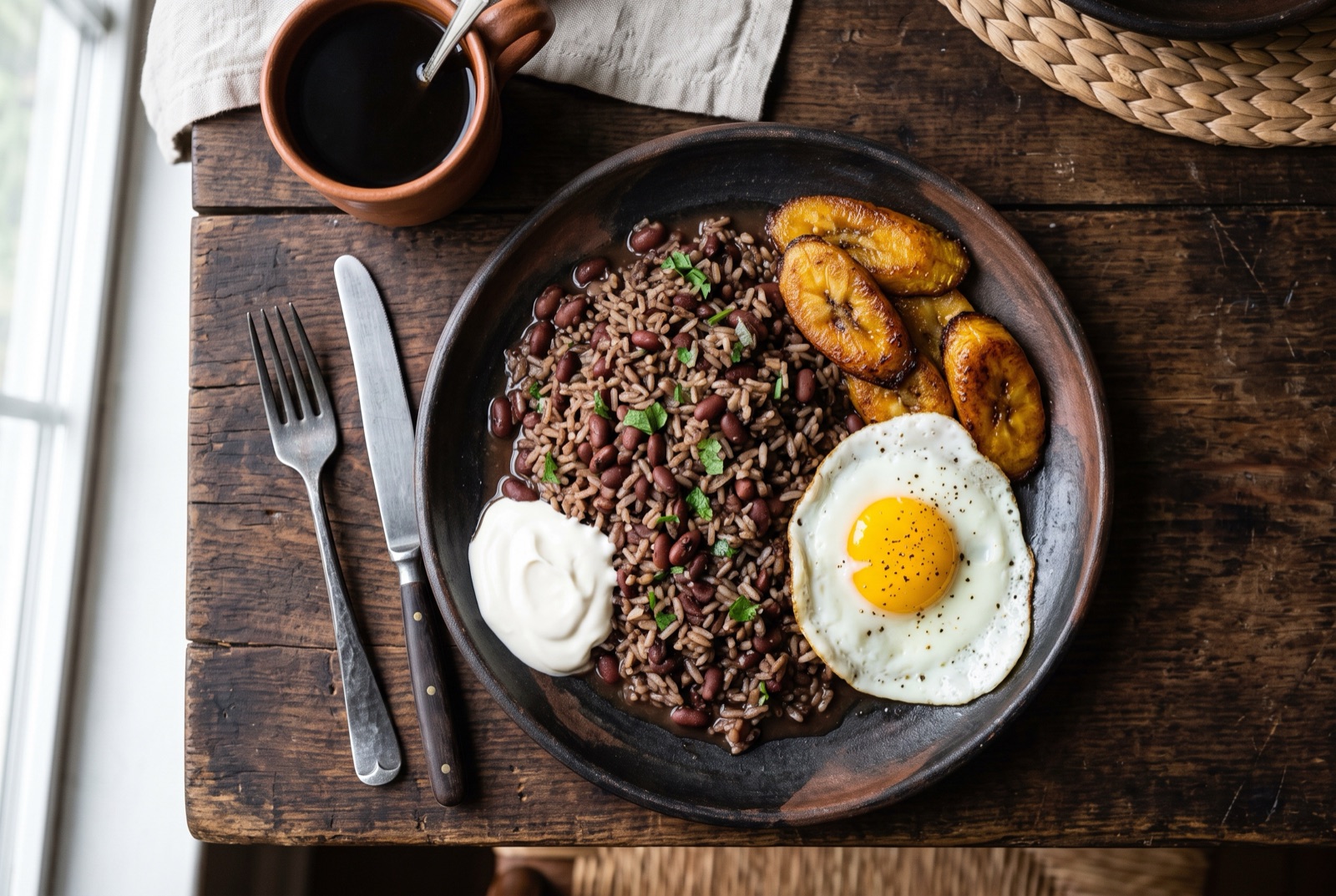
Casamiento
Salvadoran Rice Married with Red Beans
El Salvador24 hr 25 min
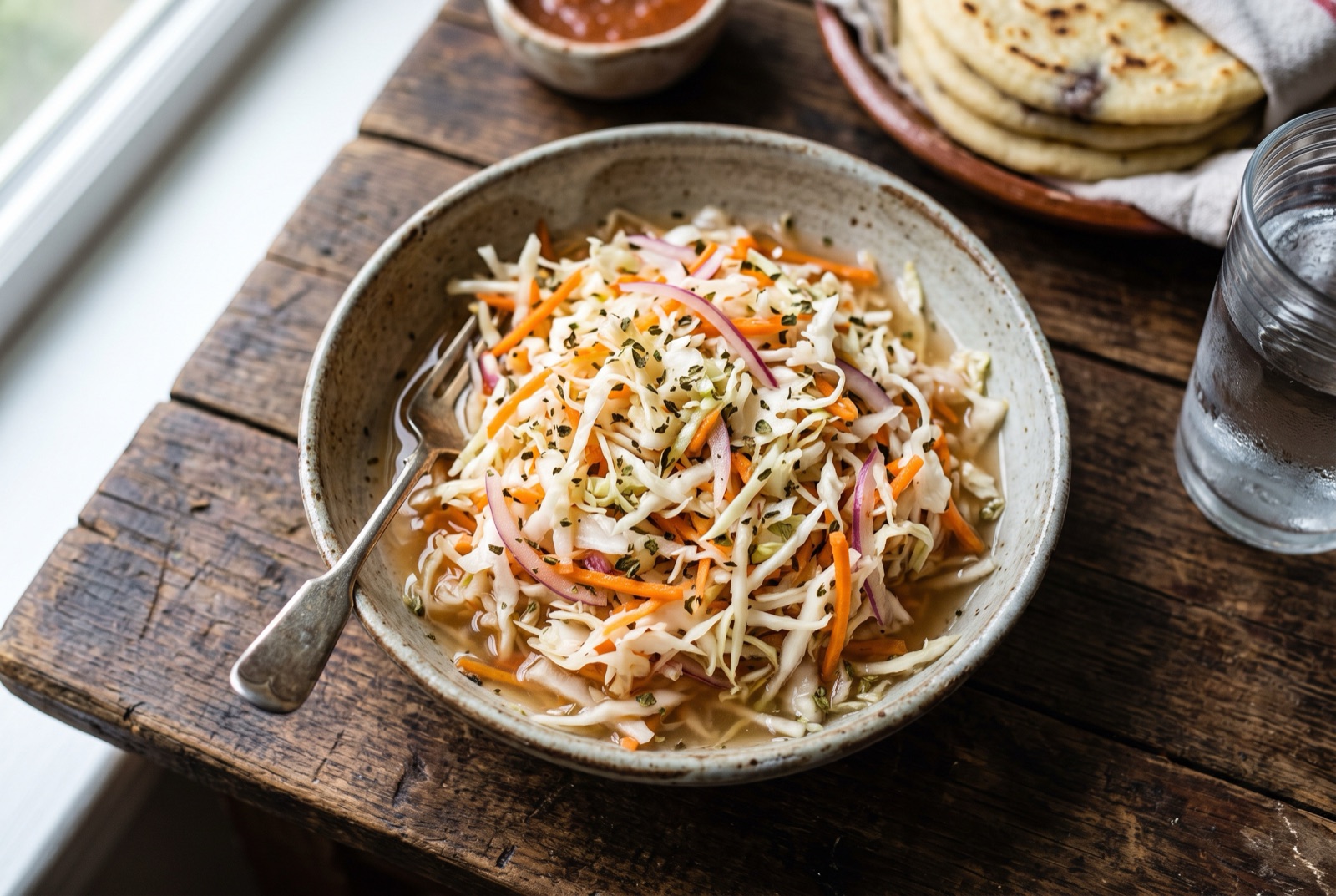
Curtido
Salvadoran Lightly Fermented Cabbage Slaw
El Salvador14 hr 40 min
Gallo en Chicha
Rooster Stewed in Fermented Corn Wine
Keep exploring El Salvador.
El Salvador has 9 more dishes in the atlas — Casamiento and Curtido, and 7 more.
Recipe by The DishRoute Kitchen · published August 20, 2026 · updated August 20, 2026