Curtido.
Salvadoran Lightly Fermented Cabbage Slaw
Curtido · say it: koor-TEE-doh
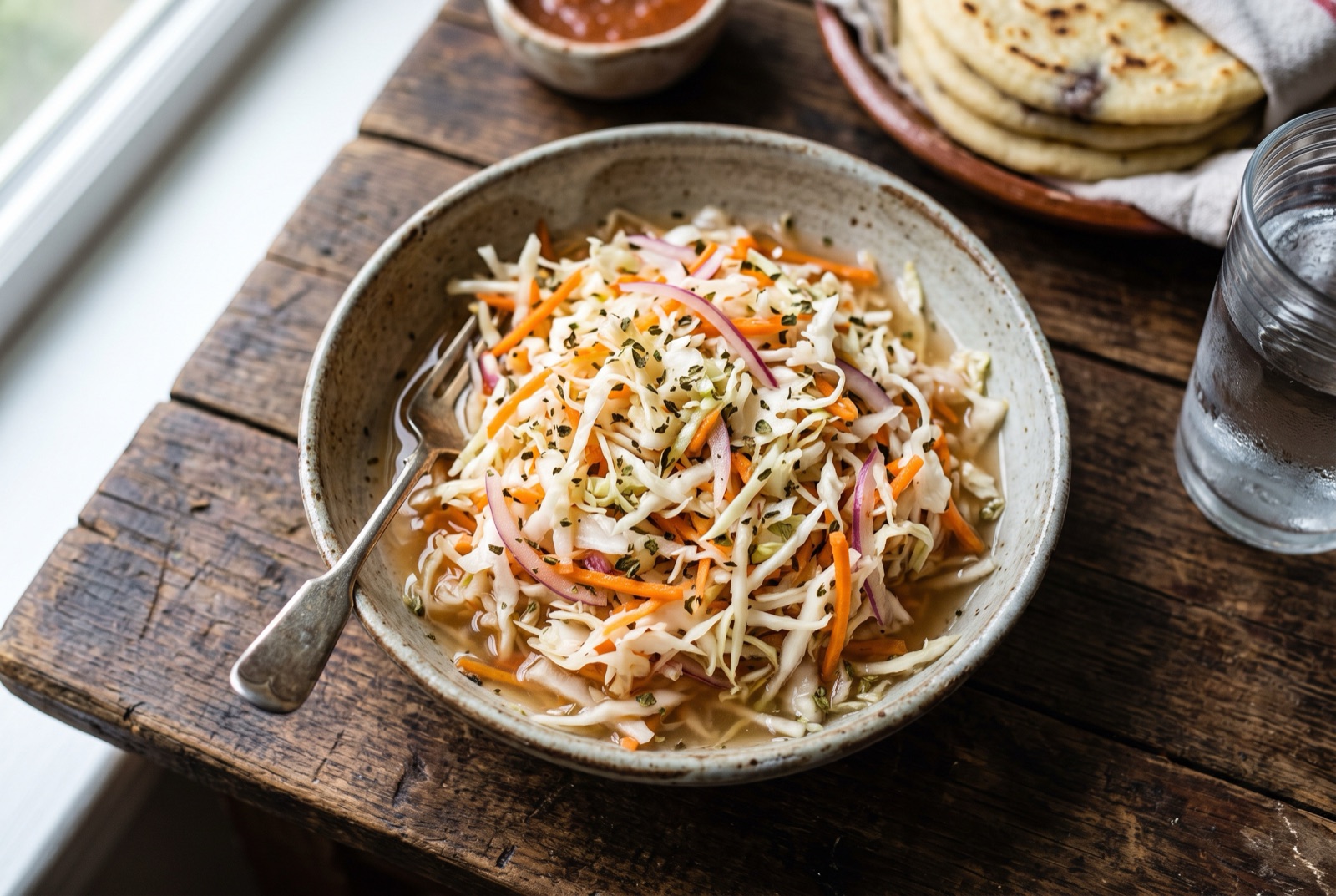
Curtido is shredded white cabbage, carrot and onion doused in a hot brine of vinegar, water, salt and dried oregano, then left in a jar at room temperature for a day or two before it goes in the fridge. That short rest is what separates it from a quick pickle: it softens the raw cabbage bite, sharpens the sourness and starts a mild fermentation that gives a faint fizz on the tongue. It is crunchy, sour, aromatic with oregano, and only as hot as the chile you choose to add. In El Salvador it is not a side dish — it is a required component of pupusas, yuca and fried fish.

- Gate
- El SalvadorNationwide
- Prep
- 20 min
- Cook
- 5 min
- Total time
- 24 hr 25 min incl. 24 hr rest
- Serves
- 8
- Status
- Easy
- Nutrition / serving · estimated
- Calories 45 kcal
- Protein 2 g
- Carbs 9 g
- Fat 0 g
- Fiber 3 g
- Sugar 5 g
- Sodium 380 mg
Why this recipe works.
- Blanches the cabbage for exactly one minute — long enough to take the raw edge off, short enough to keep the crunch.
- Uses a brine ratio that is sour enough to preserve without stripping the vegetables of their sweetness.
- Explains the room-temperature rest, which is where the flavour actually develops and which most recipes skip.
- Keeps for weeks in the fridge and gets better for the first ten days, so one batch covers several pupusa nights.
Ingredients.
10 itemsVegetables
For the brine
Equipment
- Large heatproof bowl
- Sharp knife or mandoline
- 1.5 litre jar with a lid
Instructions.
Blanch the cabbage briefly
Put the shredded cabbage in a large heatproof bowl and pour over boiling water to cover. Leave it exactly one minute, then drain hard in a colander — the cabbage should have lost its raw squeak but still snap when you bite a strand.
Tip Longer than a minute and you are cooking it. Drain it thoroughly or the brine will be diluted.
Combine the vegetables
Return the drained cabbage to the bowl and toss it with the carrot, sliced onion and jalapeño if using, separating the onion into loose half-rings as you go.
Make the hot brine
Bring the vinegar, water, salt, sugar, crushed oregano and bay leaf to a boil in a small pan, stirring until the salt and sugar dissolve. Let it boil for one minute so the oregano infuses.
Pour over and pack down
Pour the boiling brine over the vegetables and press them down with a spoon until everything is submerged. Let the bowl stand until cool enough to handle, about 20 minutes.
Jar it and let it work
Pack the vegetables tightly into a clean jar and pour the brine over, making sure nothing sits above the liquid line. Close the lid loosely and leave it at room temperature for 24 to 48 hours — small bubbles at the surface and a slightly cloudy brine mean the fermentation has started.
Chill and serve
Move the jar to the fridge, where it will keep for weeks and improve for the first ten days. Lift portions out with a fork, letting the brine drain, and pile it onto pupusas, yuca or fried fish.
Tips from our kitchen.
- Shred the cabbage finely and evenly. Thick, uneven pieces stay raw-tasting in the middle while the thin ones go limp.
- Blanch, do not boil. One minute in boiling water then straight into the brine — any longer and you lose the crunch that makes curtido worth eating.
- Pack the vegetables down hard so the brine covers them completely. Anything above the liquid line will discolour and can spoil.
- Leave the jar at room temperature for 24–48 hours with the lid loose before refrigerating. That is where the gentle fizz and depth come from.
- Rub the dried oregano between your palms as you add it — crushing it releases far more aroma than dropping the leaves in whole.
- Drain curtido with a fork or tongs when serving. A wet handful waters down whatever it lands on.
Substitutions.
- White wine or cane vinegar → Apple cider vinegar, or distilled white vinegar diluted with a little extra water
- Cider vinegar gives a slightly fruitier result. Plain distilled vinegar is sharper and needs the pinch of sugar more than the others do.
- Mexican or Salvadoran oregano → Mediterranean dried oregano, used a little more sparingly
- Mediterranean oregano is sweeter and less citrusy. It works, but use about two thirds as much or it dominates.
- Jalapeño → A whole dried chile, a pinch of chile flakes, or nothing at all
- Heat is entirely optional in curtido. Many Salvadoran households make it completely mild and offer chile sauce separately.
Variations.
- Curtido fermentado
- The vinegar-free country method: salt the cabbage, pack it tight under its own brine and leave it 3–5 days at room temperature to sour on wild lactic bacteria, like a sauerkraut.
- Curtido de rábano
- Sliced radish added with the carrot, giving a peppery bite and pink streaks through the jar. Common alongside fried fish on the coast.
- Curtido de repollo morado
- Made with red cabbage, which turns the whole batch bright magenta in the acidic brine. Purely cosmetic, and popular at fairs.
Storage & reheating.
Curtido keeps 4 to 6 weeks in a sealed jar in the fridge and is at its best between days two and ten, after which it slowly softens. Always use a clean fork rather than fingers to take portions out, and keep the vegetables pushed under the brine. It does not freeze — the cell walls burst and it thaws into a limp, watery mess. If the brine turns cloudy that is normal fermentation; if it smells of mould or anything grows fuzz on top, discard the jar.
Serve with
Pupusas above all, plus yuca con chicharrón, fried fish, grilled meat or anything that needs cutting through.
The story behind Curtido.
Almost every Salvadoran table has a jar of curtido on it, and almost every Salvadoran household makes it slightly differently. It belongs to the broad family of Latin American escabeches and encurtidos that arrived with Spanish vinegar-pickling and then absorbed local ingredients, and the name simply means "cured" or "pickled." What is specific here is the role: curtido exists in a fixed relationship with pupusas, and asking for pupusas without it in El Salvador is a bit like ordering fish and chips and refusing the vinegar.
The method sits on a line between pickling and fermenting. The traditional country version uses no vinegar at all — cabbage is salted, packed down and left to sour on its own lactic bacteria for several days, the same principle as sauerkraut. The urban and commercial version pours hot vinegar brine over the vegetables for speed and consistency, and lets a mild ferment happen on top of that. Both are called curtido, both are correct, and the vinegar route is what most home cooks use because it is ready overnight and keeps for weeks.
The seasoning is restrained on purpose. Dried oregano is essential and does most of the aromatic work; Salvadoran oregano is closer in character to Mexican oregano than the Mediterranean kind, with a more resinous, citrusy note. Some cooks add a bay leaf, some add a pinch of sugar to round the vinegar, and many add sliced jalapeño or a whole dried chile. Beyond that, adding more turns curtido into a salad and misses the point: its function is to be sharp, cold and simple against something hot and rich.
Questions, answered.
How long does curtido need before it is ready to eat?
You can eat it after about an hour, but it is noticeably better after a day and properly good after two. Leave the jar at room temperature with the lid loose for 24 to 48 hours so a mild fermentation starts, then refrigerate. The sourness deepens and the raw onion sharpness softens into something rounder.
Is curtido actually fermented or just pickled?
Both versions exist. The traditional method salts the cabbage and lets wild lactic bacteria sour it over several days with no vinegar, which is true fermentation. The common home and restaurant method pours hot vinegar brine over the vegetables, which is pickling, with a short mild ferment on top if you leave it out at room temperature. Both are called curtido in El Salvador.
Why did my curtido go soft and limp?
The cabbage was blanched too long or the jar has been in the fridge for over a month. One minute in boiling water is the maximum — the point is to take the raw squeak off, not to cook it. If you prefer maximum crunch, skip the blanching entirely and pour the hot brine directly over raw shredded cabbage.
Can I use a food processor to shred the cabbage?
A processor with a slicing disc works well and gives a very even shred. The grating blade does not — it tears the cabbage into short shards that go soft immediately and turn the jar mushy. A mandoline or a sharp knife and patience both give better texture than any grater.
Do I need to sterilise the jar?
For a batch you will eat within a month, a jar washed in very hot soapy water and dried thoroughly is sufficient, since the vinegar and salt do most of the protective work. If you want to keep it longer, run the jar through a hot dishwasher cycle or pour boiling water through it and let it dry completely before filling.
You might also like.
All recipes →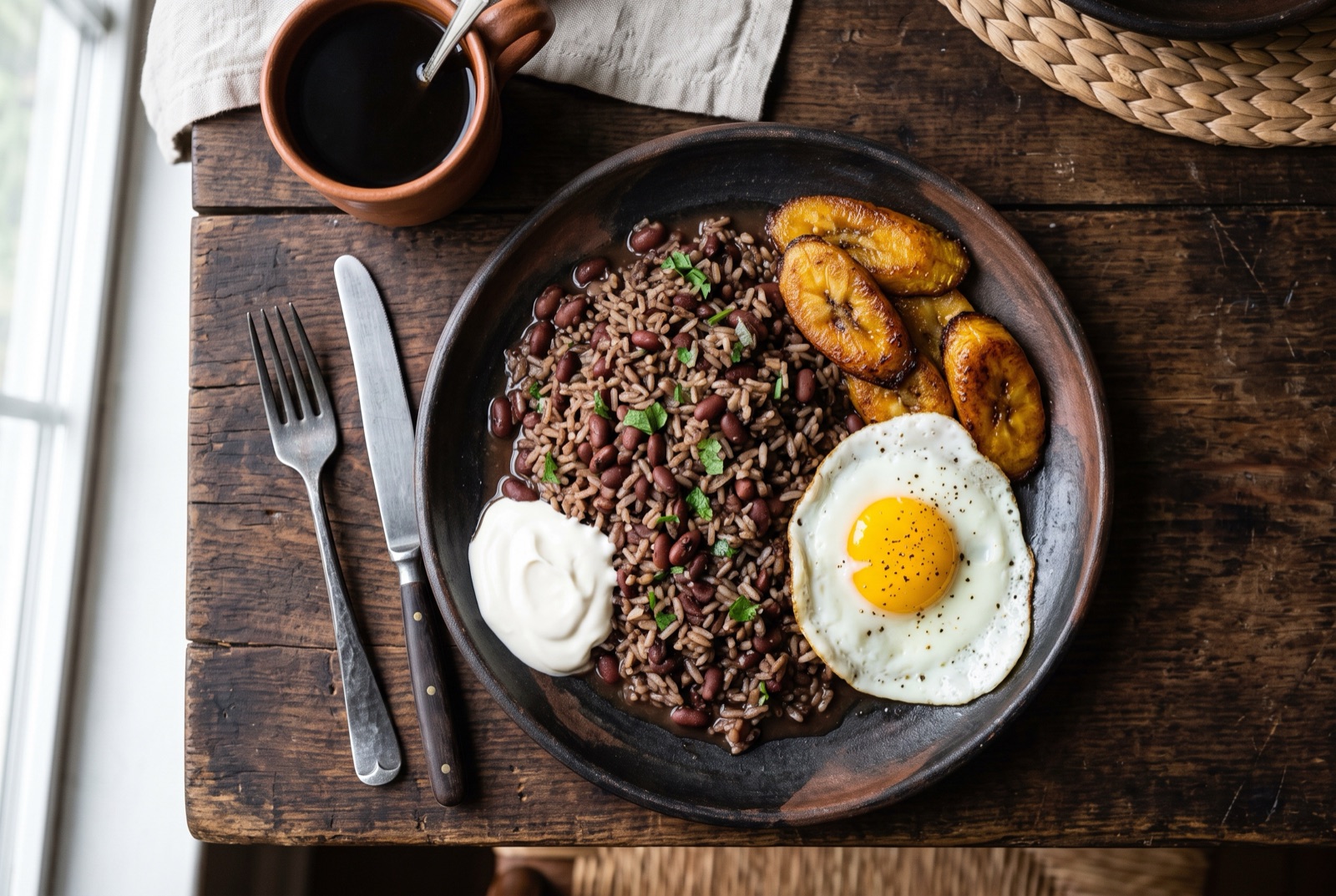

Keep exploring El Salvador.
El Salvador has 9 more dishes in the atlas — Casamiento and Empanadas de Plátano, and 7 more.
All El Salvador recipes Cabbage recipes Carrot recipes Onion recipes sidevegetarianvegangluten freedairy freeRecipe by The DishRoute Kitchen · published August 20, 2026 · updated August 20, 2026