Gallo en Chicha.
Rooster Stewed in Fermented Corn Wine
Gallo en chicha · say it: GAH-yoh en CHEE-chah
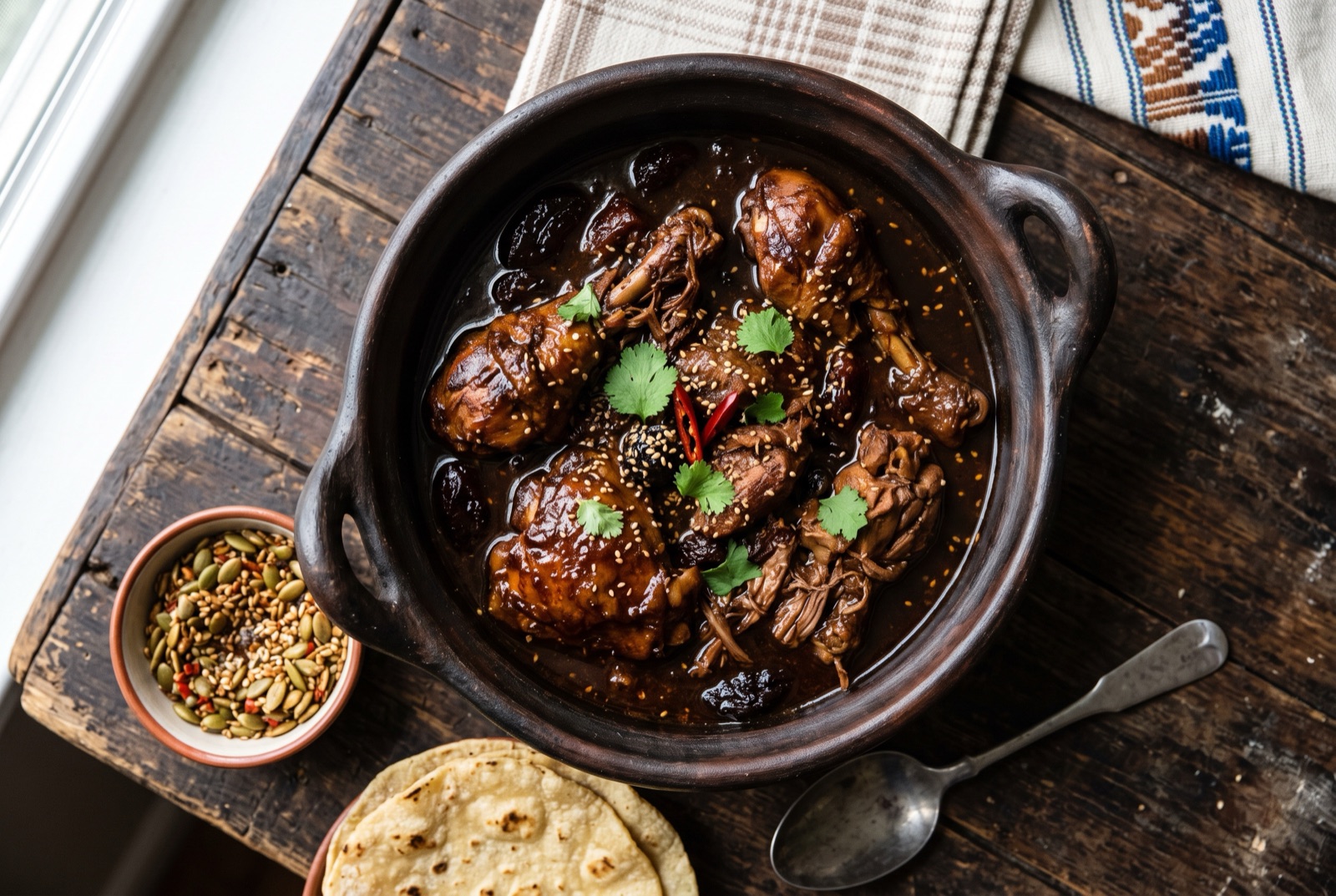
Gallo en chicha is a long, dark, sweet-and-sour stew of rooster cooked in chicha — corn fermented at home into a cloudy, faintly alcoholic wine — with unrefined panela sugar, prunes or raisins, and the toasted seed-and-chile mix called relajo. The sauce ends up somewhere between a mole and a braise: glossy, almost black-red, sweet at the front and sour underneath from the fermentation, with the nutty thickness that ground pumpkin and sesame seeds give. The meat, from a bird far older and tougher than a supermarket chicken, needs hours to surrender, and that slow collapse is the point of the dish.

- Gate
- El SalvadorWestern highlands
- Prep
- 40 min
- Cook
- 2 hr
- Total time
- 14 hr 40 min incl. 12 hr rest
- Serves
- 6
- Status
- Takes skill
- Nutrition / serving · estimated
- Calories 690 kcal
- Protein 46 g
- Carbs 52 g
- Fat 31 g
- Fiber 5 g
- Sugar 38 g
Why this recipe works.
- Includes a workable home chicha ferment and a same-day substitute, so the dish is possible either way.
- Uses the toasted relajo mix properly, ground fine, which is what gives the sauce body without any flour.
- Balances the panela against the ferment step by step, so the stew lands sweet-sour rather than cloying.
- Adapts the timing honestly for a supermarket chicken, which needs a fraction of the cooking a real rooster does.
Ingredients.
18 itemsFor the bird
For the relajo
For the stew
Equipment
- Large heavy casserole with a lid
- Dry pan for toasting spices
- Spice grinder or blender
- Fermenting jar if making chicha
Instructions.
Marinate in chicha
Season the jointed bird generously with salt and pepper and submerge it in half the chicha in a non-reactive bowl. Cover and refrigerate overnight — the acidity begins tenderising the meat long before it meets heat.
Toast and grind the relajo
Toast the sesame seeds, pumpkin seeds, guajillo chiles, allspice, cinnamon, bay and thyme in a dry pan over medium heat for 2–3 minutes, shaking constantly, until the seeds smell nutty and the pumpkin seeds begin to pop. Cool, then grind as finely as your machine allows.
Tip Stop the second the aroma turns nutty. Burnt seeds make the whole sauce bitter and no amount of panela will hide it.
Brown the bird hard
Lift the pieces out of the marinade, pat them dry and brown them in the oil in batches over medium-high heat until each side is deep golden and the pan smells roasted. Set aside and keep the marinade.
Tip Dry meat browns; wet meat steams. Take the extra minute with the paper towel.
Build the dark base
Cook the onions and garlic in the same pan until they slump and take on colour at the edges, about 10 minutes. Stir in the ground relajo and fry it for a minute until it darkens and smells toasted, then add the tomatoes and cook until they break down into a thick paste.
Simmer long and low
Return the bird with all the chicha, the reserved marinade, half the panela, the prunes and raisins. Bring to a bare simmer, cover and cook very gently for 1 hour for chicken or up to 3 hours for a rooster, until the meat gives no resistance to a fork.
Reduce and balance
Uncover, skim the fat off the surface and lift out the meat. Reduce the sauce over medium heat until it is glossy and coats a spoon thickly, about 15 minutes, stirring in the rest of the panela to taste. Correct with salt and a splash of cider vinegar until the sweetness has a clear sour edge behind it.
Return and serve
Slide the meat back into the sauce and warm it through for 5 minutes so it takes on the glaze. Serve in shallow bowls with white rice, spooning the prunes and plenty of the dark sauce over each portion.
Tips from our kitchen.
- If you can get a real rooster or an old stewing hen, use it — the flavour is far deeper and the meat holds together through hours of simmering. Expect 3 hours rather than 1.
- Taste the chicha before it goes in. It should smell tart and yeasty like cider that has gone slightly wild; if it smells of nail varnish or mould, throw it out and start again.
- Add the panela in two stages and taste between them. The sauce reduces by a third and the sweetness concentrates with it.
- Toast the relajo seeds only until fragrant. Scorched sesame turns a stew this dark bitter in a way you cannot cover with sugar.
- Brown the bird properly before it goes in the liquid — this stew has no tomato brightness to hide behind, so all its colour comes from caramelisation.
- Skim the fat from the surface before the final reduction, or the sauce will never turn glossy.
Substitutions.
- Home-fermented chicha → 500 ml dry cider plus 150 ml water and 1 tbsp cider vinegar
- Not identical, but it gives the same sweet-sour, lightly fermented character. Unfiltered farmhouse cider is closest.
- Rooster or stewing hen → A large free-range chicken, jointed
- Cut the simmering time to about an hour and check early — modern chicken falls apart long before an old bird would.
- Panela (unrefined cane sugar) → Dark muscovado sugar, or jaggery
- Panela has a molasses depth that white sugar cannot supply. Muscovado is the closest widely available match.
Variations.
- Gallina en chicha
- Made with an old laying hen rather than a rooster — slightly fattier and more common in practice, since hens outlive their laying years more often than roosters outlive their usefulness.
- With capers and olives
- Some cooks add capers and green olives to the sauce for a briny counterweight to the panela, pushing the dish closer to a Spanish-influenced sweet-sour braise.
- Pollo en chicha
- The everyday shortcut version made with ordinary chicken and bottled chicha or cider, cooked in about ninety minutes. Common in city kitchens.
Storage & reheating.
Gallo en chicha improves overnight — the sweetness settles and the sauce thickens further. It keeps 4 days refrigerated and freezes well for 3 months. Reheat covered over low heat with a splash of water or stock, since the sauce sets almost to a jelly when cold and can catch on the pan base. If you are cooking for a party, make it the day before as a matter of course; almost every Salvadoran family does.
Serve with
White rice to catch the sauce, warm tortillas, and a plain green salad to cut the sweetness.
The story behind Gallo en Chicha.
This is celebration food from the Salvadoran countryside, made for patron-saint fiestas, weddings and Christmas rather than for any ordinary week. Its logic is agricultural: a rooster past its useful life is tough, gamy and free, and the only sensible thing to do with such a bird is cook it for half a day in something acidic. Chicha, the maize-based fermented drink made across the Americas long before European contact, is exactly that something — its acidity tenderises the meat while its sugars caramelise into the sauce.
Making chicha at home is a several-day project and a genuinely living tradition: cracked corn or ground maize is mixed with water and panela, sometimes with a piece of pineapple skin or a handful of raw sugar to get the fermentation going, and left covered in a clay or plastic vessel for three or four days until it smells sharp and yeasty and bubbles at the surface. In Salvadoran history chicha was also politically loaded — colonial and later republican authorities repeatedly tried to suppress home distilling and fermenting in favour of taxed liquor, and rural production continued anyway. The version used for cooking is young and mildly alcoholic, not the stronger stuff people drink.
The finished stew is usually served in a shallow bowl with plenty of the sauce, white rice to absorb it, and sometimes a spoonful of the cooked prunes on top. It is a dish that divides visitors, because the sweetness is more forward than most people expect from a savoury meat stew — closer in spirit to a northern European sweet-sour braise than to anything in Mexican cooking. Salvadorans who grew up with it treat it the way other cultures treat a Christmas roast: not a weeknight food, and not something you would ever order in a hurry.
Questions, answered.
What is chicha and how do I make it at home?
Chicha is a lightly fermented corn drink made across the Americas. For cooking, mix 250 g of coarsely ground maize with 1.5 litres of water and 100 g of panela, cover loosely with a cloth and leave at room temperature for 3–4 days, stirring daily, until it smells tart and yeasty and bubbles at the surface. Strain before using. Discard it if it grows fuzzy mould or smells of solvent.
Will the finished stew be alcoholic?
Barely. Cooking chicha for well over an hour drives off most of the alcohol, which was low to begin with — home cooking chicha usually sits around the strength of a weak beer. What remains is the sour, yeasty flavour rather than any real potency. It is served to whole families including children in El Salvador.
Can I make this with ordinary supermarket chicken?
Yes, and most people outside the countryside do. The difference is timing: a farmed chicken is tender in about an hour, while a real rooster needs three or more. Use bone-in pieces rather than breast, keep the simmer very gentle, and start checking at 45 minutes — overcooked modern chicken shreds into the sauce and loses its shape.
The sauce tastes too sweet. What went wrong?
Either the chicha was too young to be properly sour, or the panela went in all at once. Correct it with a splash of cider vinegar or lime juice added off the heat, tasting as you go, until the sweetness has a sharp edge behind it. Next time add the sugar in two stages and taste after the sauce has reduced, because reduction concentrates sweetness considerably.
What do the prunes do?
They dissolve partly into the sauce, adding body and a deep dried-fruit sweetness that supports the panela, and the whole ones that survive are served alongside the meat. Raisins are the common alternative. If you leave the dried fruit out entirely the sauce is noticeably thinner and one-dimensional.
You might also like.
All recipes →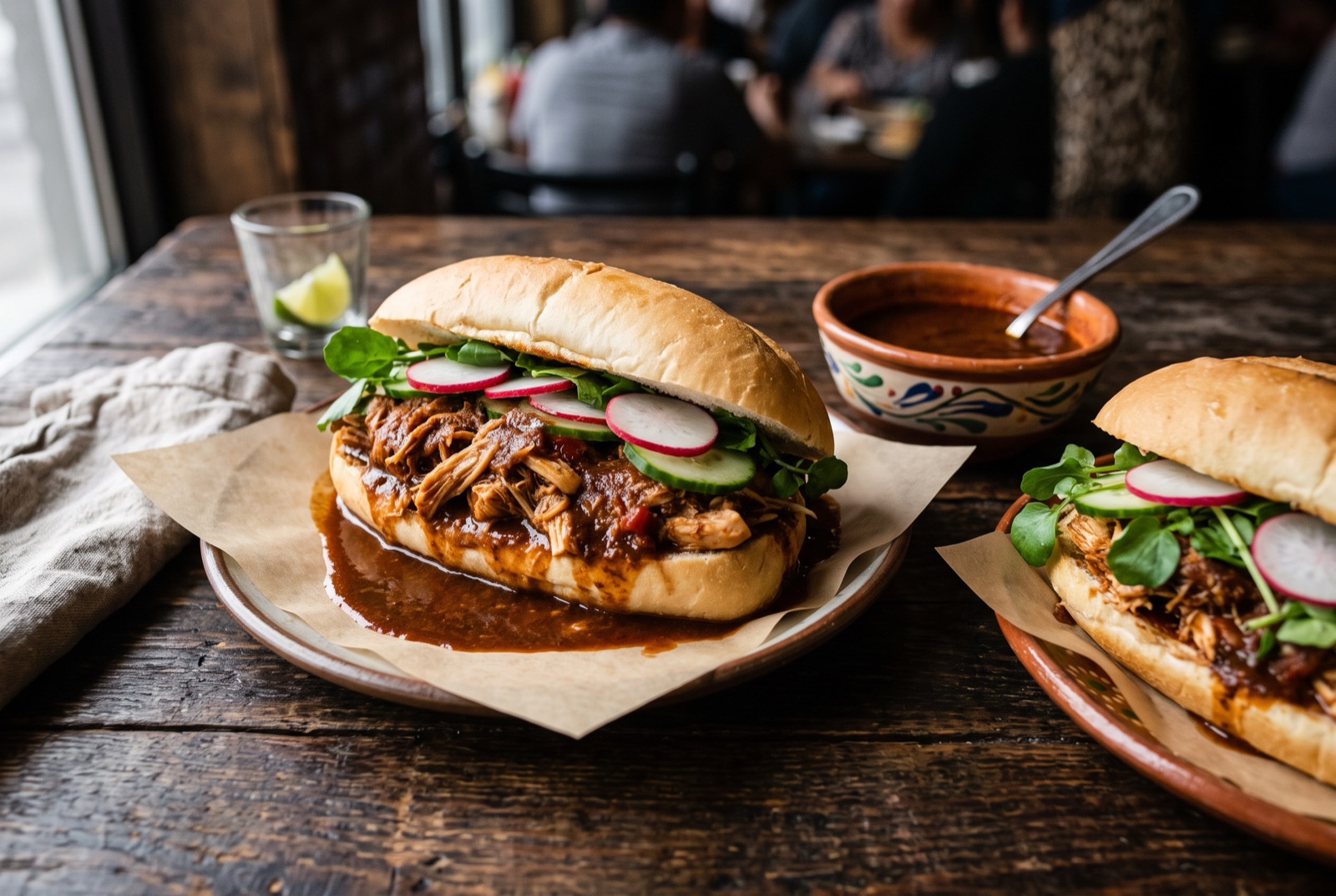
El Salvador1 hr 25 min
Panes con Pollo
Salvadoran Braised Chicken Sandwiches
El Salvador4 hr 40 min
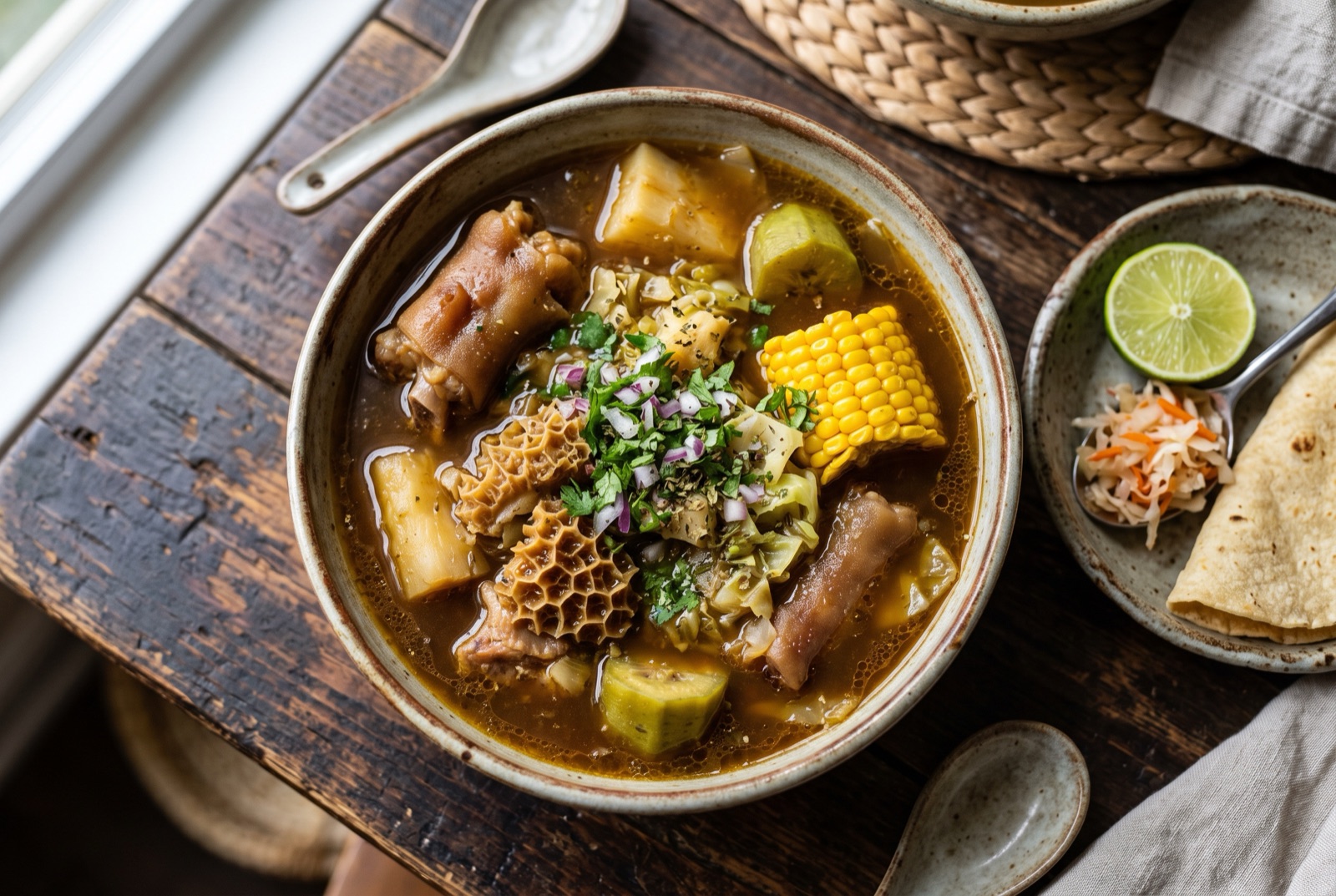
Sopa de Pata
Salvadoran Cow Foot and Tripe Soup
El Salvador2 hr 35 min
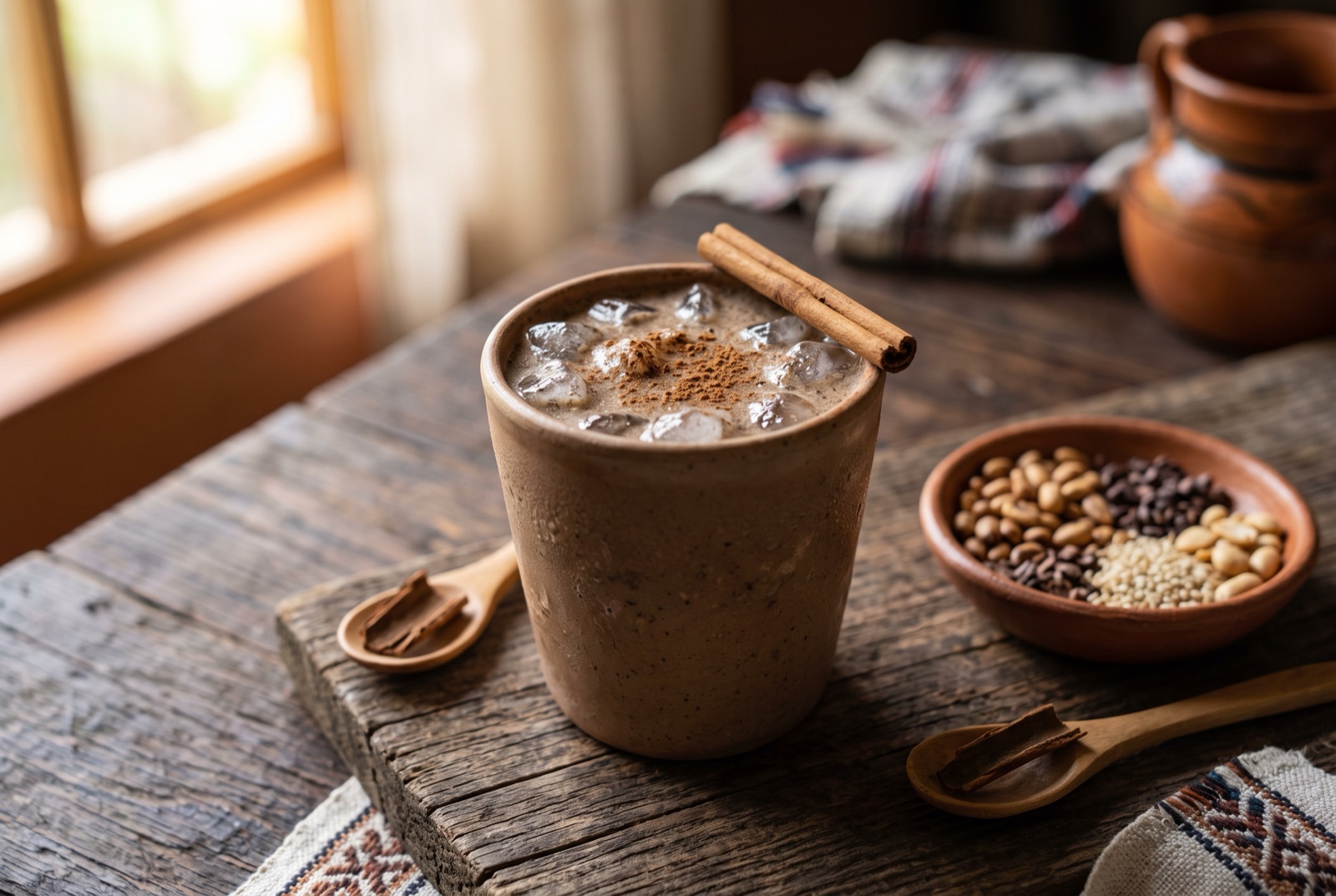
Horchata de Morro
Toasted Morro Seed Drink
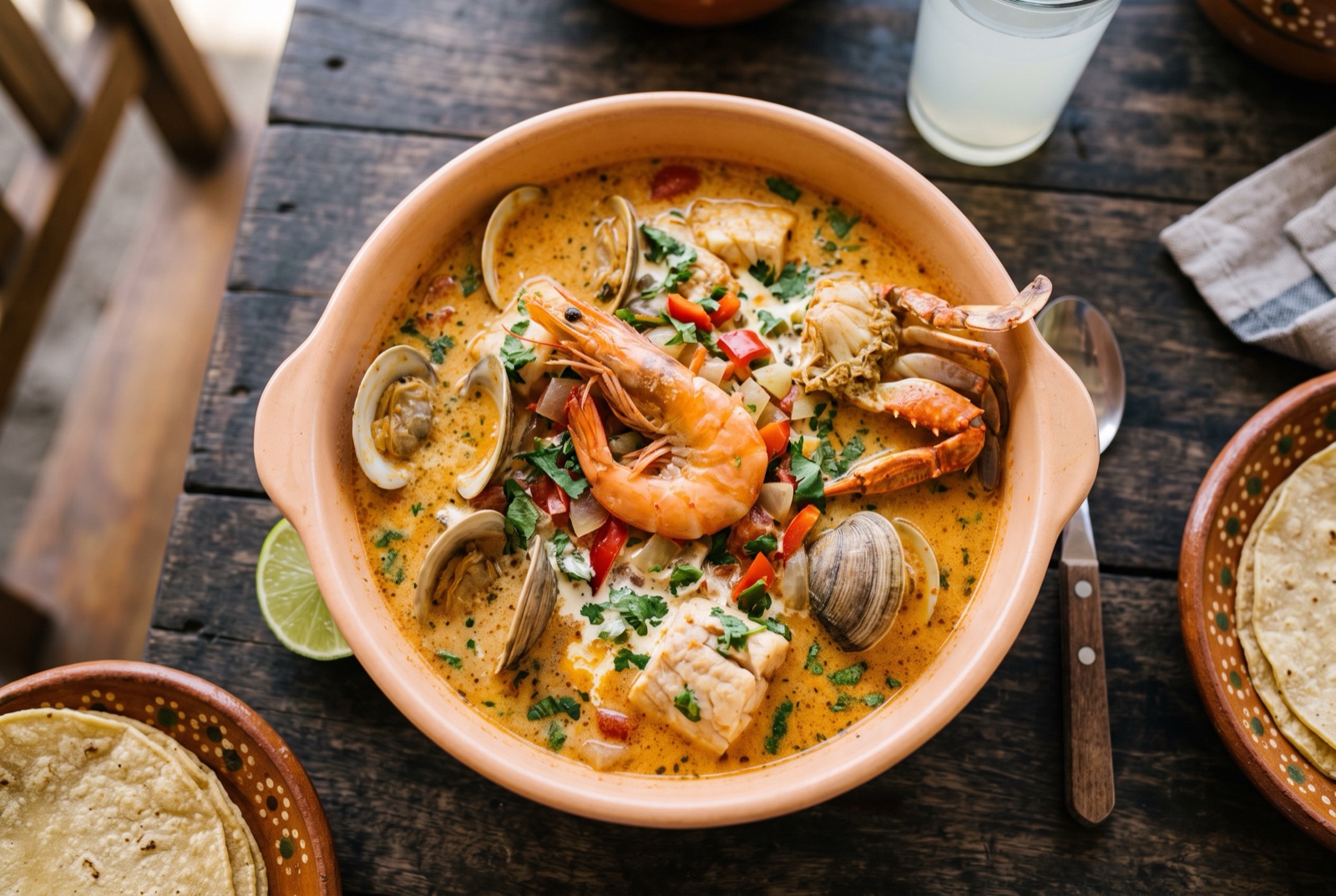
El Salvador1 hr 5 min
Mariscada Salvadoreña
Creamy Pacific Seafood Stew
Keep exploring El Salvador.
El Salvador has 9 more dishes in the atlas — Casamiento and Curtido, and 7 more.
Recipe by The DishRoute Kitchen · published August 20, 2026 · updated August 20, 2026