Panes con Pollo.
Salvadoran Braised Chicken Sandwiches
Panes con pollo · say it: PAH-nehs kon POH-yoh
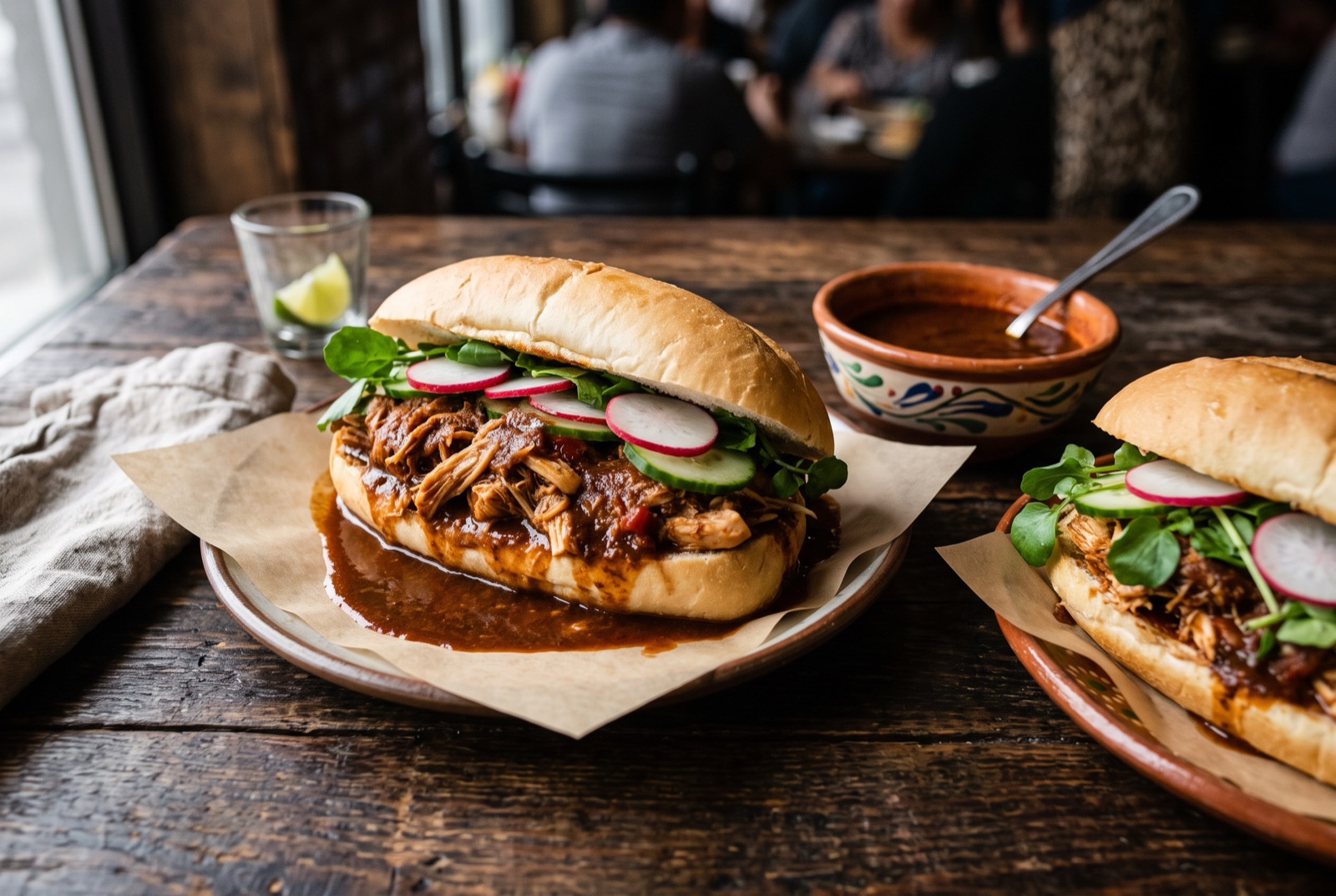
Panes con pollo is a sandwich you eat with both hands over a plate, because it is deliberately, unapologetically wet. Chicken is braised in a dark red sauce built on tomato, achiote and relajo — a toasted mix of sesame and pumpkin seeds, dried chiles, allspice and thyme — until it falls off the bone, then shredded and piled into a split French roll lined with watercress, sliced radish, cucumber and a smear of mustard and mayonnaise. Just before it reaches you, more sauce goes over the top so the bread soaks through. The flavour is savoury and faintly sweet, nutty from the seeds, not hot at all.

- Gate
- El SalvadorSan Salvador
- Prep
- 30 min
- Cook
- 55 min
- Total time
- 1 hr 25 min
- Serves
- 4
- Status
- Medium
- Nutrition / serving · estimated
- Calories 640 kcal
- Protein 38 g
- Carbs 48 g
- Fat 32 g
- Fiber 5 g
- Sodium 920 mg
Why this recipe works.
- Toasts and grinds the relajo from scratch, which is the difference between a nutty, layered sauce and plain tomato chicken.
- Braises bone-in thighs so the gravy picks up body and the meat shreds without drying out.
- Keeps enough sauce back for the mandatory pour over the assembled sandwich, instead of using it all in the pan.
- Builds the cold salad layer properly so the finished pan is sharp and crunchy rather than heavy.
Ingredients.
22 itemsFor the relajo
For the braise
To assemble
Equipment
- Dry frying pan for toasting
- Blender or spice grinder
- Heavy casserole or deep sauté pan
Instructions.
Toast the relajo
Toast the sesame seeds, pumpkin seeds, guajillo chiles, allspice, cloves, thyme and bay leaves together in a dry pan over medium heat, shaking constantly. Pull the pan off after 2–3 minutes, the moment the seeds smell nutty and the pumpkin seeds start to pop — any darker and the sauce turns bitter.
Grind and blend the sauce
Grind the cooled relajo to a fine powder, then blend it with the tomatoes, half the onion, the garlic and 200 ml of the stock until smooth. It should look like thick brick-coloured cream.
Brown the chicken
Season the chicken well and brown it skin side down in the oil over medium-high heat until the skin is deep gold and releases easily from the pan, about 6 minutes. Turn, give it 2 more minutes and lift it out.
Tip Do not crowd the pan — chicken that steams instead of browning leaves the sauce pale and flat.
Build the braise
Soften the remaining onion and the bell pepper in the same fat until they slump and start to colour. Stir in the achiote until it stains the vegetables orange, then pour in the blended sauce and cook it hard for 5 minutes, stirring, until it darkens and thickens enough to leave a trail behind the spoon.
Simmer until it shreds
Return the chicken with the remaining stock, cover and simmer gently for 40 minutes, turning the pieces once. It is done when the meat pulls away from the bone with no resistance and the sauce is glossy and coats the back of a spoon.
Shred and season
Lift out the chicken, discard skin and bones, and pull the meat into coarse strands. Return about half of it to the pan with just enough sauce to keep it wet, and taste for salt — it needs to be assertive enough to carry the bread. Keep the remaining sauce hot for pouring.
Assemble and drench
Spread mayonnaise and mustard inside each roll, line it with watercress, cucumber and radish, then heap in the saucy chicken. Spoon a generous ladle of the reserved sauce over the filling so it soaks into the crumb, close the roll and serve straight away with a plate underneath.
Tips from our kitchen.
- Toast the seeds and chiles in a dry pan over medium heat and pull them the moment they smell nutty — burnt sesame turns the whole sauce bitter and there is no fixing it.
- Grind the toasted relajo as finely as your blender will manage, then push it through a sieve if you want a smooth sauce. A little grit is normal and traditional.
- Use bone-in, skin-on thighs. Breast meat goes stringy in a long braise and gives the sauce nothing back.
- Season the sauce more aggressively than seems right — it has to season the bread and the salad too, not just the chicken.
- Assemble at the very last minute. The roll has to be soaked, but a sandwich that has been sitting for twenty minutes turns to mush.
- Make the braise a day ahead if you can. The seed-thickened sauce settles and tastes rounder on the second day.
Substitutions.
- Ready-made relajo mix → 2 tbsp sesame seeds, 2 tbsp pumpkin seeds, 2 dried guajillo chiles, 6 allspice berries, 3 cloves, 1 tsp dried thyme, 2 bay leaves
- This is essentially what the market bundle contains. Toast everything together, then grind.
- Pan francés (Salvadoran roll) → Small soft baguette, bolillo or a French roll with a thin crust
- Avoid a hard, crackly crust — the roll has to absorb sauce. A ciabatta is too open-crumbed and lets everything run out.
- Watercress → Rocket, mâche or tender lettuce leaves
- You want something peppery and cold. Iceberg works for crunch but adds nothing else.
Variations.
- Panes con pavo
- The Christmas and celebration version, made with turkey braised in the same relajo sauce. Many Salvadorans regard it as the original and the sandwich with chicken as the everyday substitute.
- With pickled beetroot and egg
- Some families line the roll with thin slices of pickled beetroot and hard-boiled egg alongside the salad, which makes the sandwich sweeter and richer.
- Roasted rather than braised
- The bird is rubbed with relajo paste and roasted whole, then carved and dressed with sauce made separately from the pan juices. Drier meat, deeper flavour.
Storage & reheating.
Keep the braised chicken and sauce refrigerated for up to 3 days, or freeze for 2 months — the sauce thickens as it chills, so loosen it with a splash of stock when reheating over low heat. Never store assembled sandwiches: the bread disintegrates within an hour. Prepare the salad components a few hours ahead and keep them in cold water so they stay crisp, then drain and assemble to order.
Serve with
A cold hibiscus or tamarind refresco, and extra sauce in a jug for the second pour.
The story behind Panes con Pollo.
These sandwiches belong to occasions rather than to restaurants. Panes con pollo — or panes con pavo, made with turkey, which many Salvadorans consider the older and better version — are what gets made for church fundraisers, wakes, birthdays, Christmas Eve and school events, sold from a table by the door wrapped in paper and eaten standing up. The economics are part of the design: one braised bird stretches across twenty rolls once the sauce and salad are doing half the work, which is exactly why they became the default food for feeding a crowd.
The sauce is where the Salvadoran identity lives. Relajo is a bundle of dried aromatics sold pre-mixed in every market — sesame seeds, pumpkin seeds, guajillo or pasilla chiles, allspice berries, cloves, thyme, bay and sometimes cumin — that gets toasted, ground and let down with tomato to make a thickened, earthy gravy rather than a spicy one. The ground seeds give body without flour and a nutty background you cannot get any other way, and the same mix turns up in gallo en chicha and in the country's festival stews. Achiote colours it the deep brick red that makes the sandwich instantly recognisable.
The salad layer is not decoration. Watercress, radish and cucumber are all sharp, cold and crunchy, and they exist to fight the sauce; skip them and the sandwich collapses into something one-note and heavy. Some families add pickled beetroot or a slice of hard-boiled egg, and the mustard-mayonnaise smear on the bread is standard rather than a foreign import. Salvadoran bakeries make a soft, slightly sweet roll called pan francés for exactly this purpose — sturdy enough to hold, soft enough to drink up the gravy.
Questions, answered.
What is relajo and can I buy it ready made?
Relajo is a Salvadoran dried spice bundle of sesame and pumpkin seeds, dried chiles, allspice, cloves, thyme and bay, sold in packets at Latin American markets. It is toasted and ground to thicken and flavour stews. If you cannot find it, mix your own from the substitution list — the proportions are forgiving.
Is this sandwich spicy?
No. The dried chiles in relajo are mild ones used for colour and depth rather than heat, so the sauce is earthy and slightly sweet. Salvadorans add heat at the table with a bottled chile sauce if they want it, which keeps the sandwich accessible to everyone at a party.
Why is my sauce bitter?
The seeds or chiles were toasted too far. Sesame in particular goes from fragrant to acrid in under a minute, and dried chiles scorch even faster once they blister. Toast over medium heat, shake constantly, and take the pan off as soon as the aroma turns nutty. Bitter relajo cannot be rescued — it is quicker to start the spice mix again.
Can I make panes con pollo for a crowd in advance?
Yes, and that is how they are usually made. Braise the chicken and make the sauce a day ahead, shred the meat and keep it in enough sauce to stay moist. Cut and wash the salad the morning of. Reheat the chicken and set up an assembly line — the rolls should be filled no more than a few minutes before people eat.
Which cut of chicken works best?
Bone-in, skin-on thighs and drumsticks. The bones and connective tissue give the braising liquid body, and dark meat stays juicy through 40 minutes of simmering. If you use breast, add it for the last 15 minutes only and shred it into the sauce off the heat.
You might also like.
All recipes →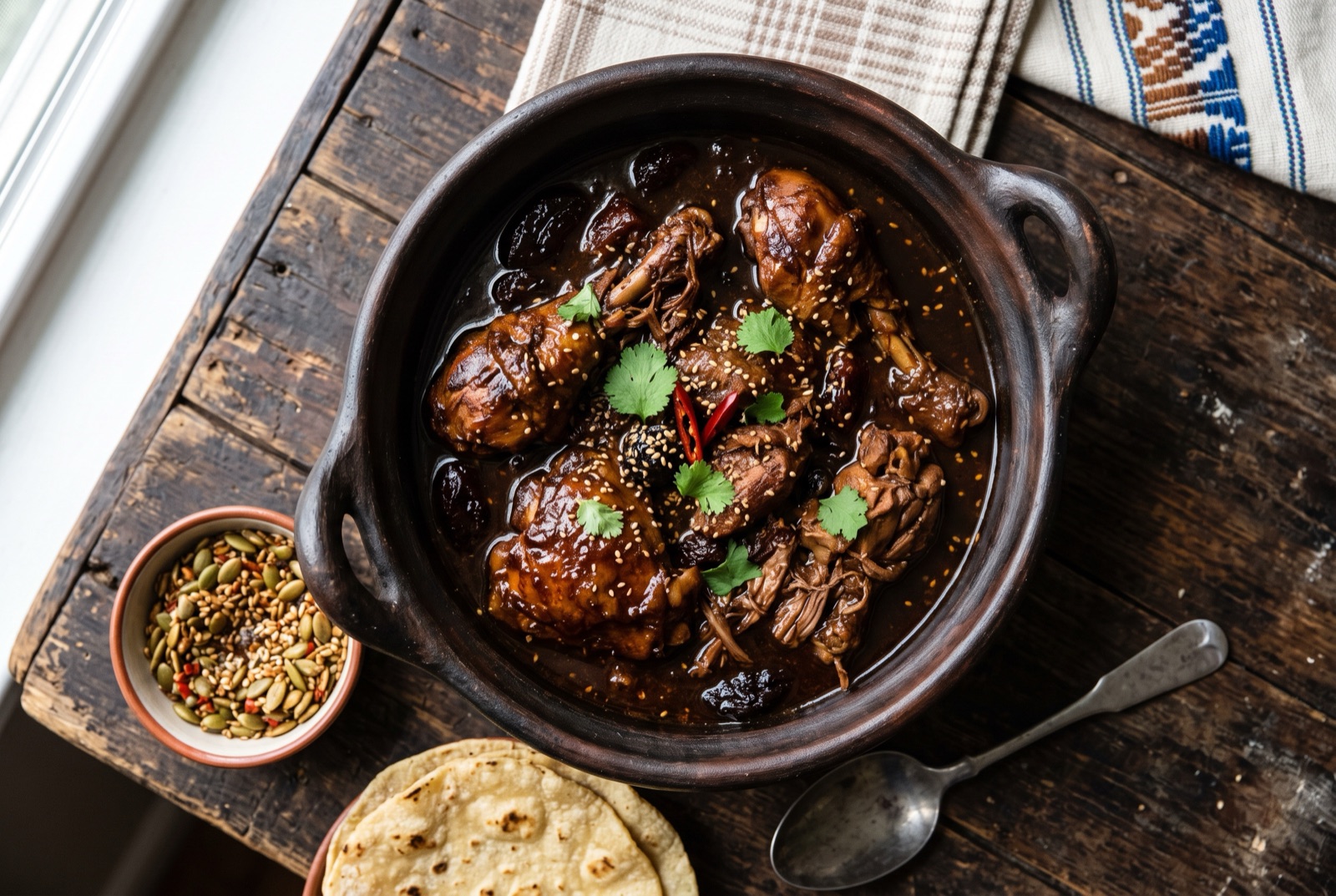
Keep exploring El Salvador.
El Salvador has 9 more dishes in the atlas — Casamiento and Curtido, and 7 more.
All El Salvador recipes Chicken recipes Tomato recipes Sesame seeds recipes mainstreet fooddairy freeRecipe by The DishRoute Kitchen · published August 20, 2026 · updated August 20, 2026