Sauerbraten.
Rhineland Marinated Pot Roast
Rheinischer Sauerbraten · say it: ZOW-er-BRAH-ten
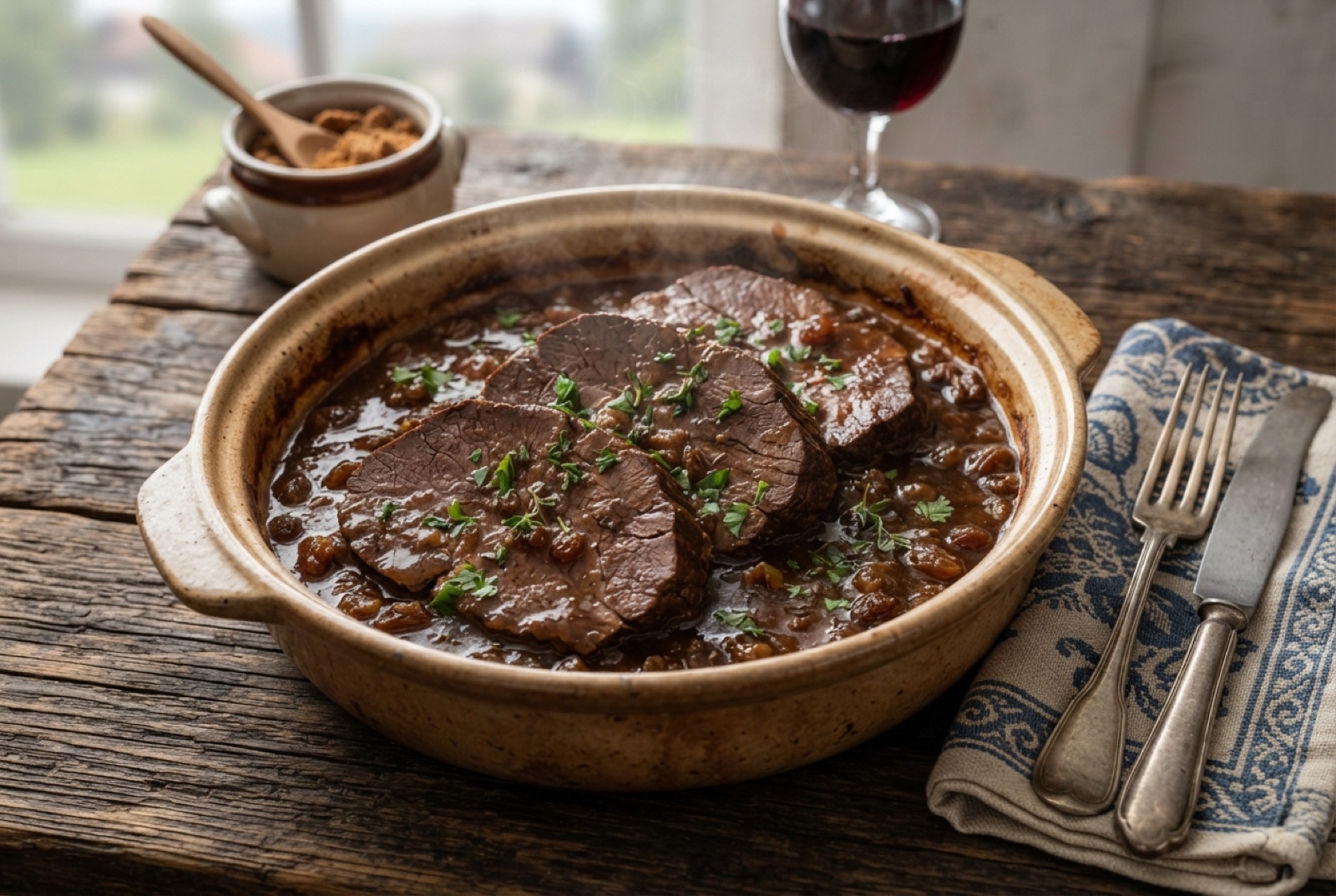
Sauerbraten is a pot roast that spends days in an acidic bath before it ever sees heat. A lean cut of beef sits in red wine, vinegar, onion, juniper, cloves and bay until the acid has worked its way in, then it is browned and braised low for three hours. What comes out is meat you can cut with the side of a spoon in a gravy that tastes distinctly sour-sweet — vinegar sharpness on one side, raisins and crushed Lebkuchen gingerbread on the other, with the spice cabinet of a medieval kitchen underneath. It is Sunday food in the Rhineland, always served with something to catch sauce: potato dumplings, Spätzle or boiled potatoes, and braised red cabbage on the side.

- Gate
- GermanyRhineland
- Prep
- 40 min
- Cook
- 3 hr
- Total time
- 75 hr 40 min incl. 72 hr rest
- Serves
- 6
- Status
- Takes skill
- Nutrition / serving · estimated
- Calories 520 kcal
- Protein 52 g
- Carbs 24 g
- Fat 21 g
- Fiber 3 g
- Sugar 16 g
- Sodium 780 mg
Why this recipe works.
- A three-day marinade balanced so the beef tastes seasoned through, not pickled — half wine, half vinegar and water rather than straight vinegar.
- Gravy built the Rhenish way with real Lebkuchen and sugar-beet syrup, plus a fallback if you cannot find either.
- The marinade is strained and reduced instead of thrown away, so nothing you waited three days for is lost.
- Clear doneness cues for a cut that goes from tough to perfect to dry in a narrow window.
Ingredients.
20 itemsFor the meat
For the marinade
For the braise
To finish the sauce
Equipment
- Non-reactive container or large zip bag for marinating
- Heavy Dutch oven with a lid
- Fine sieve
- Carving knife
Instructions.
Build the marinade
Bring the wine, vinegar, water, onion, carrot, celeriac, juniper, cloves, bay leaves, allspice and peppercorns to a boil in a saucepan, then take it off the heat and cool completely to room temperature. Never pour warm marinade over raw meat.
Marinate for three days
Put 1.5 kg of beef in a non-reactive container or a large zip bag, pour over the cold marinade so the meat is fully covered, and refrigerate for 3 days. Turn the meat once a day; any surface left above the liquid goes grey.
Tip Two days works if you are short on time. Past five days the outside turns unpleasantly sour without improving the centre.
Dry and sear
Lift the beef out and strain the marinade, keeping both the liquid and the vegetables. Pat the meat bone-dry with paper towel, season it with the salt, and sear in the hot lard in a Dutch oven until every side is deep mahogany brown — about 10 minutes in total. Wet meat will not brown, so keep drying it between turns.
Brown the vegetables and deglaze
Lift the roast onto a plate. Fry the strained marinade vegetables in the same pot until their edges catch colour, stir in the tomato paste and cook it for a minute until it darkens from red to brick, then pour in the reserved marinade liquid and scrape the base clean.
Boil the marinade, then braise
Boil the liquid hard for 5 minutes, skimming off the grey foam that rises. Add the stock, return the beef with any resting juices, cover, and cook at a bare simmer over low heat or in a 150°C oven for 3 hours, turning the roast every 45 minutes.
Tip The braise is done when a skewer slides into the centre with almost no resistance but the roast still holds its shape when lifted.
Rest the meat and finish the sauce
Move the roast to a board, tent it loosely with foil and leave it 15 minutes. Strain the braising liquid into a clean pan, pressing hard on the vegetables, then skim the fat from the surface and simmer to reduce by about a quarter.
Thicken with gingerbread and raisins
Whisk the crumbled Lebkuchen into the simmering sauce and let it dissolve for 5 minutes until the sauce coats a spoon, then add the raisins and the sugar-beet syrup. Taste: it should hit sour first, then sweet, then spice. Adjust with more syrup or a splash of vinegar and season with salt and pepper.
Slice and serve
Carve the roast firmly across the grain into slices about 1 cm thick, lay them overlapping in a warm dish and spoon plenty of gravy over the top. Serve with potato dumplings or Spätzle and braised red cabbage.
Tips from our kitchen.
- Use a lean, solid cut with an even shape — top round, bottom round or a tied chuck roast. Cuts with a lot of loose fat turn greasy over three hours of braising.
- Keep the meat fully submerged in the marinade. Anything above the surface oxidises grey; a small plate or a zip bag pressed down solves it.
- Dry the beef thoroughly before searing. Meat straight out of the marinade is soaking wet and will steam instead of browning, and you lose the dark crust that colours the gravy.
- Taste the sauce before you thicken it. If the vinegar dominates, add the syrup a teaspoon at a time — you are aiming for a sauce that reads sour first and sweet a moment later.
- Rest the roast at least 15 minutes before slicing, and slice firmly across the grain. Sliced hot and along the grain it shreds into strings.
- Sauerbraten is better on day two. If you can, braise it the day before, cool it in the sauce, then slice cold and reheat the slices gently in the gravy.
Substitutions.
- Lebkuchen (spiced gingerbread) → 60 g plain gingerbread or ginger snaps, or 2 tbsp fine breadcrumbs plus 1/2 tsp ground cinnamon and 1/4 tsp ground cloves
- German Lebkuchen is available year-round from German delis and online. Ginger snaps are the closest supermarket match; they are sweeter, so cut back the syrup.
- Rübenkraut (sugar-beet syrup) → Molasses, or dark apple butter thinned with a splash of water
- Molasses is stronger and more bitter, so start with half the amount and taste. Apple butter is milder and slightly fruitier but works well with the raisins.
- Red wine → Equal parts beef stock and extra water, plus one extra tablespoon of vinegar
- The marinade still tenderises without alcohol. The gravy loses some depth, so brown the meat harder to compensate.
Variations.
- Fränkischer Sauerbraten
- The Franconian take: mostly wine in the marinade, little or no vinegar, and no gingerbread. The gravy is thickened with a dark roux and stays savoury rather than sweet-sour.
- Sauerbraten with sour cream
- Common in Bavaria and Austria. A few spoonfuls of sour cream are stirred into the finished sauce off the heat, rounding the acidity into something closer to a stroganoff.
- Marinated pork Sauerbraten
- A shoulder of pork treated the same way needs only 24 hours in the marinade and about 2 hours of braising — the fastest way to get the flavour on a weeknight schedule.
Storage & reheating.
Sauerbraten keeps 4 days refrigerated, and improves for the first two. Cool the roast whole in its sauce, slice cold, then reheat the slices submerged in gravy over low heat until they steam — reheating uncovered dries the surface immediately. It freezes well as sliced meat under sauce for up to 3 months; freeze the gravy with the meat, never separately, or the slices come out dry. The raw marinade must be discarded if it has held meat, unless you boil it hard for 5 minutes first, which this recipe does.
Serve with
Potato dumplings (Kartoffelklöße), Spätzle or plain boiled potatoes, with braised red cabbage and an extra jug of gravy on the table.
The story behind Sauerbraten.
Sauerbraten belongs to the older European habit of using acid as a preservative and a tenderiser at the same time. Before refrigeration, a long soak in wine and vinegar bought a cut of beef extra days of life and softened muscle that would otherwise stay tough; the sourness that gives the dish its name was originally a practical side effect that cooks then learned to build a sauce around. Versions of it exist across the German-speaking world, and each area marinates differently — Swabians and Franconians often use more wine and less vinegar, Bavarians sometimes finish with cream, Silesian cooks lean harder on the sweet side.
The Rhenish version is the one most people mean. Its signature is the thickener: Lebkuchen, the dense spiced gingerbread otherwise associated with Christmas markets, crushed into the braising liquid at the end where it dissolves and pulls the sauce together with clove, cinnamon and a background sweetness that no roux delivers. Alongside it goes Rübenkraut, a thick dark syrup pressed from sugar beets that is a Rhineland pantry staple, plus raisins that plump in the sauce. The result sits closer to a sweet-and-sour dish than most people expect from German food, which is exactly the point — this sweet-against-sour axis runs through the region's cooking.
You will also hear that Sauerbraten was originally made with horsemeat. This is true in a limited sense rather than a legendary one: horse Sauerbraten was genuinely common in parts of the Rhineland well into the twentieth century, and a handful of butchers in Cologne and Düsseldorf still sell it. Beef has been the standard for generations, and the claim that Charlemagne invented the dish is folklore with nothing behind it. What is beyond argument is the schedule. This is a dish you start on Thursday to eat on Sunday, and the waiting is not optional.
Questions, answered.
How long does Sauerbraten really need to marinate?
Three days is the sweet spot for a beef roast of about 1.5 kg. Two days gives a milder result that still works; five days or more makes the outer centimetre of the meat grey and aggressively sour without adding anything to the middle. Turn the meat once a day so it marinates evenly, and keep it refrigerated the whole time.
Can I reuse the marinade for the sauce?
Yes, and you should — it carries most of the flavour. Strain it, bring it to a full boil for at least five minutes to make it food-safe after contact with raw meat, then use it as the braising liquid. Skim the grey foam that rises during the first minute of boiling; it is coagulated protein and looks unpleasant in a finished sauce.
Why is my sauce too sour?
Either the vinegar-to-wine ratio was too high or the marinade reduced too far during braising. Fix it in the pan rather than starting over: add sugar-beet syrup, honey or extra crushed gingerbread a spoonful at a time, and if it is still sharp, dilute with beef stock and re-thicken. A knob of butter stirred in off the heat also rounds off harsh acidity.
What cut of beef should I use?
A lean, dense cut that holds its shape: top round (Oberschale), bottom round (Unterschale) or a tied chuck roast. Traditional recipes favour round because it slices cleanly, while chuck is more forgiving and stays juicier. Avoid brisket, which falls into strands, and any cut with large internal fat seams.
Is Sauerbraten really made from horsemeat?
It was, in parts of the Rhineland, and a small number of butchers around Cologne and Düsseldorf still sell horse Sauerbraten. Beef has been the normal choice for generations everywhere else, and every recipe here assumes beef. The marinade and method are identical either way.
You might also like.
All recipes →
Keep exploring Germany.
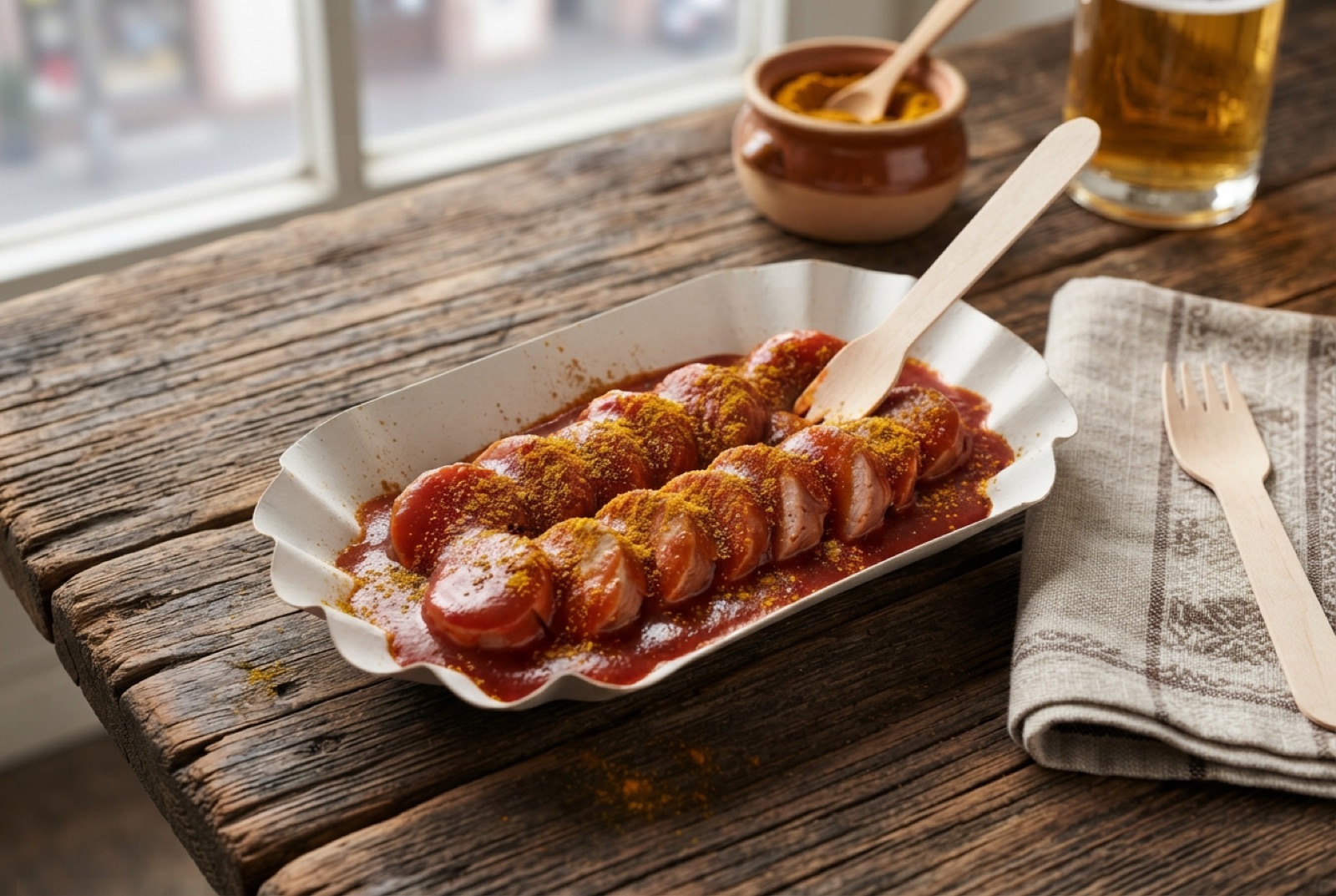
Germany has 9 more dishes in the atlas — Currywurst and Handkäse mit Musik, and 7 more.
Recipe by The DishRoute Kitchen · published August 19, 2026 · updated August 19, 2026