Sel Roti.
Nepali Fermented Rice Ring Bread
सेलरोटी · say it: sel ROH-tee
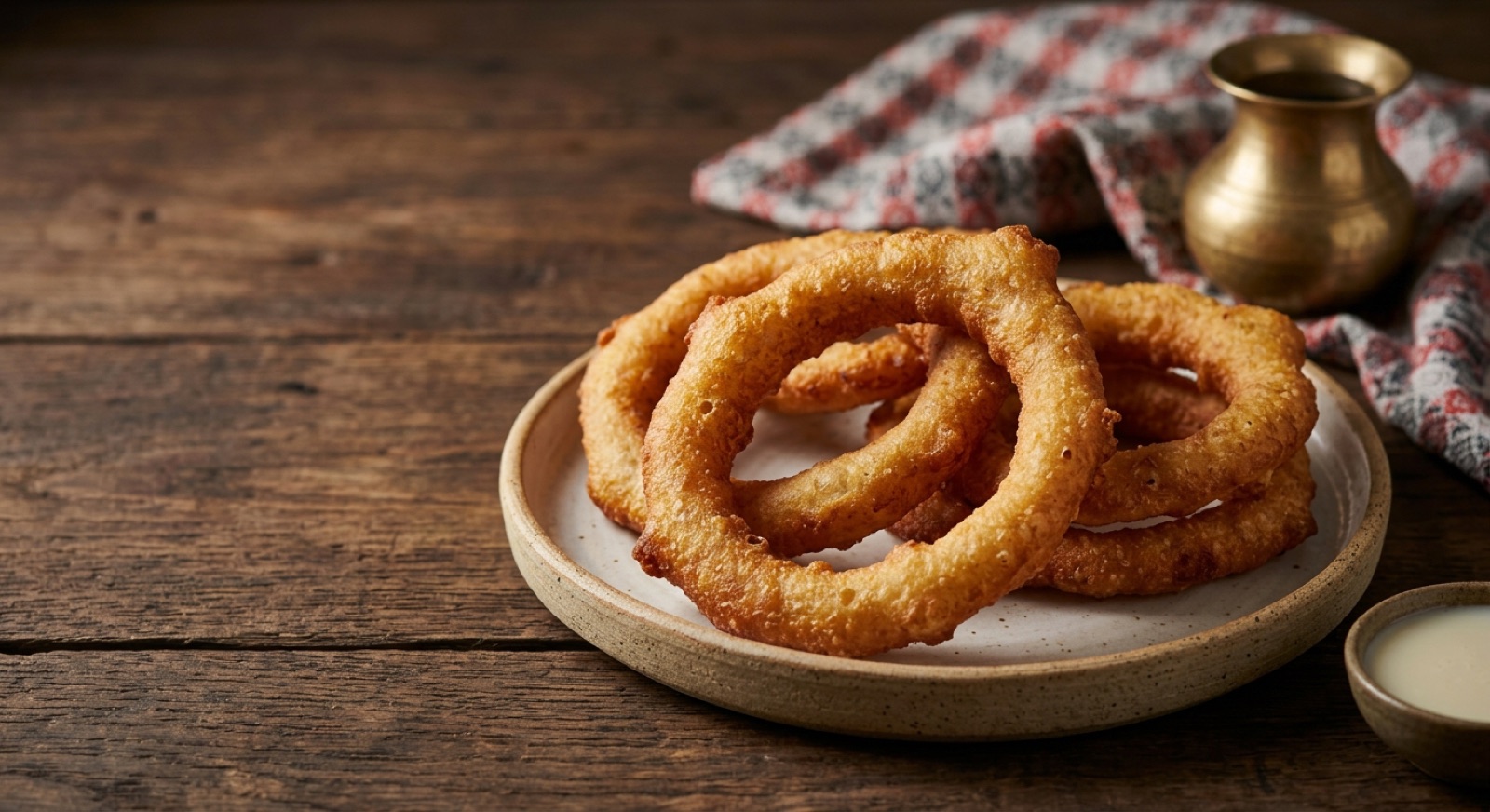
Sel roti is not a doughnut, whatever it looks like. There is no wheat, no yeast packet and no kneading: rice is soaked overnight, ground with sugar and a little ghee into a thick, pourable batter, left to sour for a few hours, then poured in a continuous circle straight into hot oil by hand. The ring puffs, sets and turns deep reddish-brown in a couple of minutes, coming out crisp and slightly glassy on the outside and dense and faintly chewy within. The flavour is mild — rice, sugar, cardamom, the whisper of ferment — which is why it is eaten with sour yogurt or a sharp potato pickle rather than alone.

- Gate
- NepalNationwide, strongest in the hills
- Prep
- 30 min
- Cook
- 30 min
- Total time
- 5 hr incl. 4 hr rest
- Serves
- 6
- Status
- Medium
- Nutrition / serving · estimated
- Calories 310 kcal
- Protein 4 g
- Carbs 52 g
- Fat 10 g
- Fiber 1 g
- Sugar 18 g
- Sodium 130 mg
Why this recipe works.
- Uses soaked whole rice ground fresh, which no packet of rice flour reproduces.
- Builds in a real fermentation rest so the rings puff rather than sit flat and oily.
- Gives a batter consistency test you can actually check before the oil is hot.
- Explains the freehand pour, which is the only genuinely difficult part of the dish.
Ingredients.
9 itemsBatter
To fry
Equipment
- Blender or wet grinder
- Deep heavy pan or karahi
- Slotted spoon
- Squeeze bottle or jug (optional)
Instructions.
Soak the rice
Rinse the rice until the water runs almost clear, then cover it generously with cold water and leave it for at least 8 hours. A soaked grain should crush to a smooth paste between your finger and thumb with no gritty core.
Grind to a thick batter
Drain the rice thoroughly and grind it in batches with the sugar, ghee and just enough milk to keep the blades moving. Work it until completely smooth — 4 to 5 minutes — stopping to scrape down the sides so no whole grains escape.
Tip Add liquid a spoonful at a time. You can always loosen a stiff batter, but a thin one is hard to rescue.
Season and beat
Scrape the batter into a bowl and beat in the cardamom, cloves, salt and the mashed banana if using. Whip hard with a whisk or your hand for 3 to 4 minutes to work air through it, which is what lifts the ring in the oil.
Rest and ferment
Cover the bowl and leave it in a warm place for 4 hours, or overnight somewhere cool. The batter should smell faintly sour and show small bubbles on the surface when you stir it, and it will have thickened slightly.
Check the consistency
Lift a spoonful and let it fall back. It should drop in a thick unbroken ribbon that rests on the surface for a second before merging in. Loosen with milk or firm up with a spoonful of rice flour until it behaves that way.
Heat the oil and test one
Heat the oil in a deep pan to about 170C — a drop of batter should rise and sizzle steadily rather than spitting. Pour one test ring, fry it through and taste for sugar, salt and texture before committing the batch.
Pour the rings
Pour the batter into the oil in a continuous circle about 12 cm across, working from a squeeze bottle or from your cupped hand, and lift cleanly where the circle closes. Fry two or three at a time so the oil stays hot.
Tip If a ring breaks, leave it. Nudging a soft ring before the crust sets tears it apart.
Fry and drain
Cook for about 90 seconds until the underside is deep reddish-brown, turn once with a slotted spoon and give it another minute. Lift onto a rack rather than paper so both sides stay crisp, and repeat with the rest of the batter.
Tips from our kitchen.
- Soak the rice until a grain crushes to smooth paste between your fingers — usually 8 hours. Underhydrated rice grinds gritty and the ring stays hard.
- Grind with as little water as you can manage. A thin batter spreads into a flat lace instead of a raised ring and drinks oil.
- The batter should fall from a spoon in a thick unbroken ribbon that holds its line on the surface for a second or two before sinking back in.
- Keep the oil around 170C. Too hot and the outside darkens before the middle sets; too cool and the ring goes heavy and greasy.
- Fry one test ring before committing the batch. Adjust with a spoonful of water or a spoonful of rice flour, then carry on.
- Pour from a jug or a squeeze bottle if your hand is unsteady — the traditional freehand pour is not worth ruining a batch over.
Substitutions.
- Freshly ground soaked rice → Fine rice flour whisked with warm water
- Faster and workable, but the texture is noticeably drier and more crumbly. Rest the flour batter for at least four hours so it hydrates and ferments a little.
- Ghee → Neutral oil or melted butter
- Ghee gives the toasted note and helps the crust crisp. Oil works and keeps the batter dairy-free; butter browns faster, so drop the oil temperature slightly.
- Banana → Omit, or use 2 extra tbsp sugar
- Banana is a common household addition for softness and aroma, not a fixed ingredient. Without it the ring is a little firmer and the rice flavour reads cleaner.
Variations.
- Plain festival sel
- Rice, sugar, ghee and cardamom only — the version most households fry at Tihar, meant to be eaten with yogurt or aloo achar rather than as a sweet on its own.
- Banana sel roti
- A ripe banana mashed into the batter for extra sweetness, colour and a softer crumb. Popular in shops because the rings brown more readily.
- Savoury sel
- Sugar cut right back and salt increased, giving a mildly savoury ring served with meat curry or pickle rather than at the sweet end of the meal.
Storage & reheating.
Sel roti keeps 3 to 4 days at room temperature in a covered basket or tin, which is exactly what it was designed to do. It stiffens as it sits; a few seconds in a dry pan or a hot oven brings the crisp edge back. Refrigeration makes it hard and stale-tasting, so avoid it. Fried rings freeze well for a month and reheat straight from frozen in a hot oven. Uncooked batter should be fried the same day — past about twelve hours the ferment turns properly sour and the rings taste tangy rather than mild.
Serve with
Thick sour yogurt, aloo achar or a bowl of goat curry, with black tea alongside.
The story behind Sel Roti.
Sel roti belongs to festival cooking, and the reason is storage. Rice is the one thing a Nepali household has in quantity, and deep-frying a sweetened rice batter turns it into something that keeps for days without refrigeration in a cold hill house. That matters at Tihar and Dashain, when families cook in bulk, travel to their ancestral village, feed a stream of visitors and exchange food between houses over the better part of a week. Sel roti is made in enormous batches on those days, strung on a cord or stacked in a covered basket, and handed out to children, relatives and neighbours long after the frying is done. At Bhai Tika it is part of what a sister gives her brother alongside the tika and the garland.
The technique is old and unfussy. Rice is washed, soaked overnight until a grain crushes to paste between finger and thumb, then ground — traditionally on a stone quern, now almost always in a wet grinder or blender — with just enough water to make a batter that ribbons off a spoon. Sugar, ghee, cardamom and sometimes a mashed banana go in, and the mixture is beaten hard and left to stand. That standing time is doing real work: wild fermentation puts a faint sourness into the batter and produces the gas that makes the ring puff instead of sitting flat and greasy in the oil. Households that fry sel roti every year keep a little batter back from one batch to start the next.
Similar fried rice rings turn up across the eastern Himalaya — Nepali-speaking communities in Sikkim, Darjeeling and Bhutan make it identically, and the dish travelled with them rather than being invented separately. What is specifically Nepali is the ritual weight it carries: it is one of the few dishes whose absence from a Tihar table would actually be remarked on. The pouring is the skill, and it is genuinely learned by watching. A steady hand takes the batter round in one unbroken circle and lifts cleanly at the join; a nervous one produces a comma, and the household eats the comma without complaint.
Questions, answered.
Why is sel roti not made with rice flour?
It can be, and many people do, but soaked whole rice ground fresh holds far more water and gives a chewier, moister ring with a crisp shell. Packet rice flour is milled dry, absorbs less, and produces a drier and more crumbly result. If you use flour, rest the batter for several hours so it hydrates properly.
Why did my sel roti come out flat and greasy?
Two usual causes: the batter was too thin, so it spread across the oil instead of holding a raised ring, or the oil was below about 165C, which lets the batter absorb fat before the crust sets. Thicken with a little rice flour, get the oil to 170C and test one ring before frying the rest.
Do I have to pour it freehand?
No. The traditional method is pouring from the fingers in one continuous circle, and it takes practice. A squeeze bottle, a piping bag with a wide opening or a small jug with a spout gives a cleaner circle straight away and changes nothing about the taste or texture.
When is sel roti eaten in Nepal?
It is festival food above all, made in large batches at Tihar and Dashain and exchanged between households, though shops and roadside stalls sell it year-round as a breakfast or tea-time item. It is also common at weddings and other gatherings where food has to be prepared ahead and travel well.
Is sel roti gluten-free?
Yes. It contains no wheat at all — the structure comes entirely from ground rice, and the puff comes from beaten-in air and a short natural fermentation. Check that the frying oil has not been used for wheat batters if you are cooking for someone with coeliac disease.
You might also like.
All recipes →
Keep exploring Nepal.
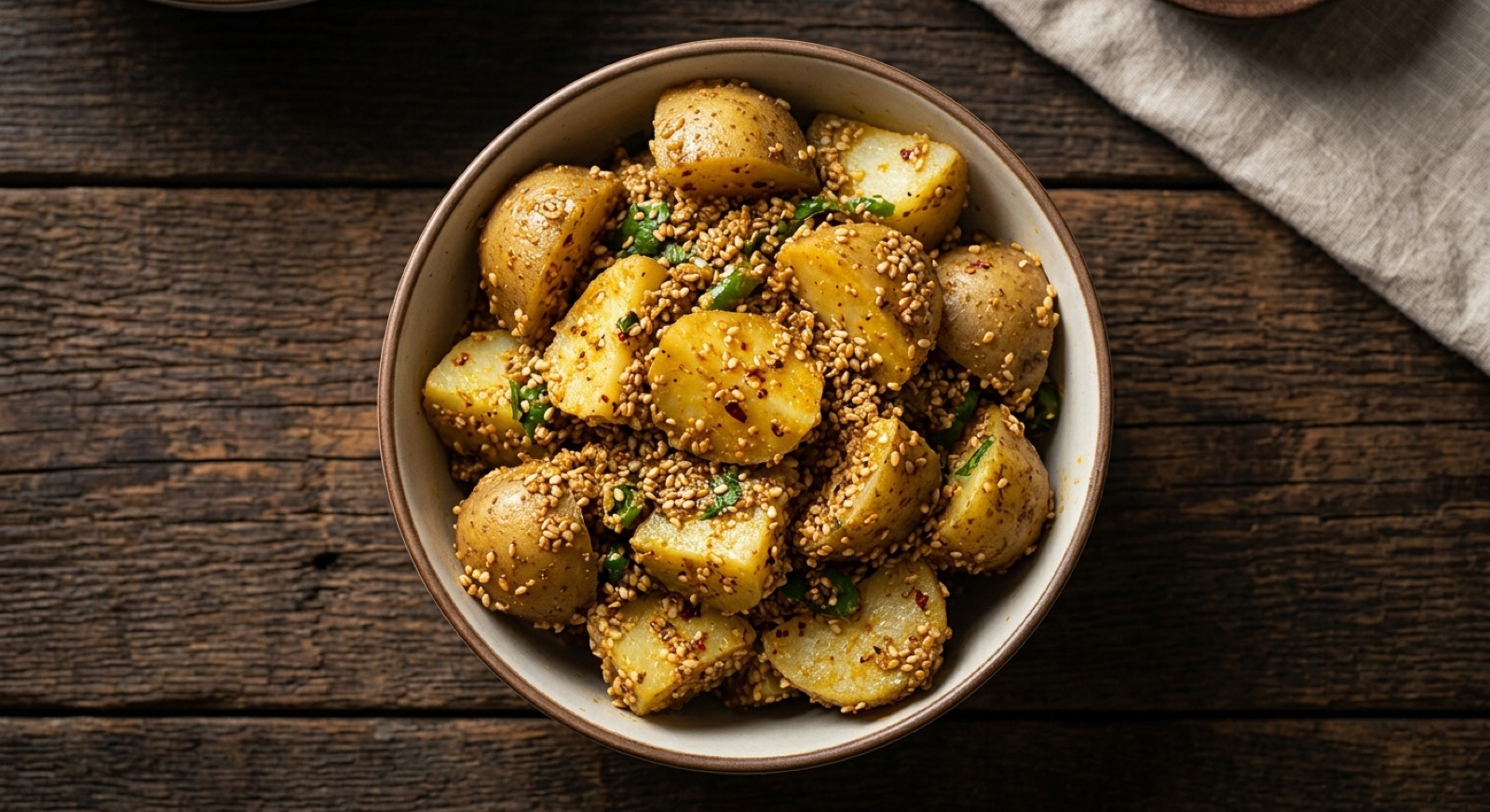
Nepal has 9 more dishes in the atlas — Aloo ko Achar and Aloo Tama, and 7 more.
All Nepal recipes Rice recipes Ghee recipes Cardamom recipes breadbreakfastsnackvegetariangluten freenut freeRecipe by The DishRoute Kitchen · published August 21, 2026 · updated August 21, 2026