Yomari.
Newari Steamed Sweet Rice Dumplings
योमरी · say it: YOH-mah-ree
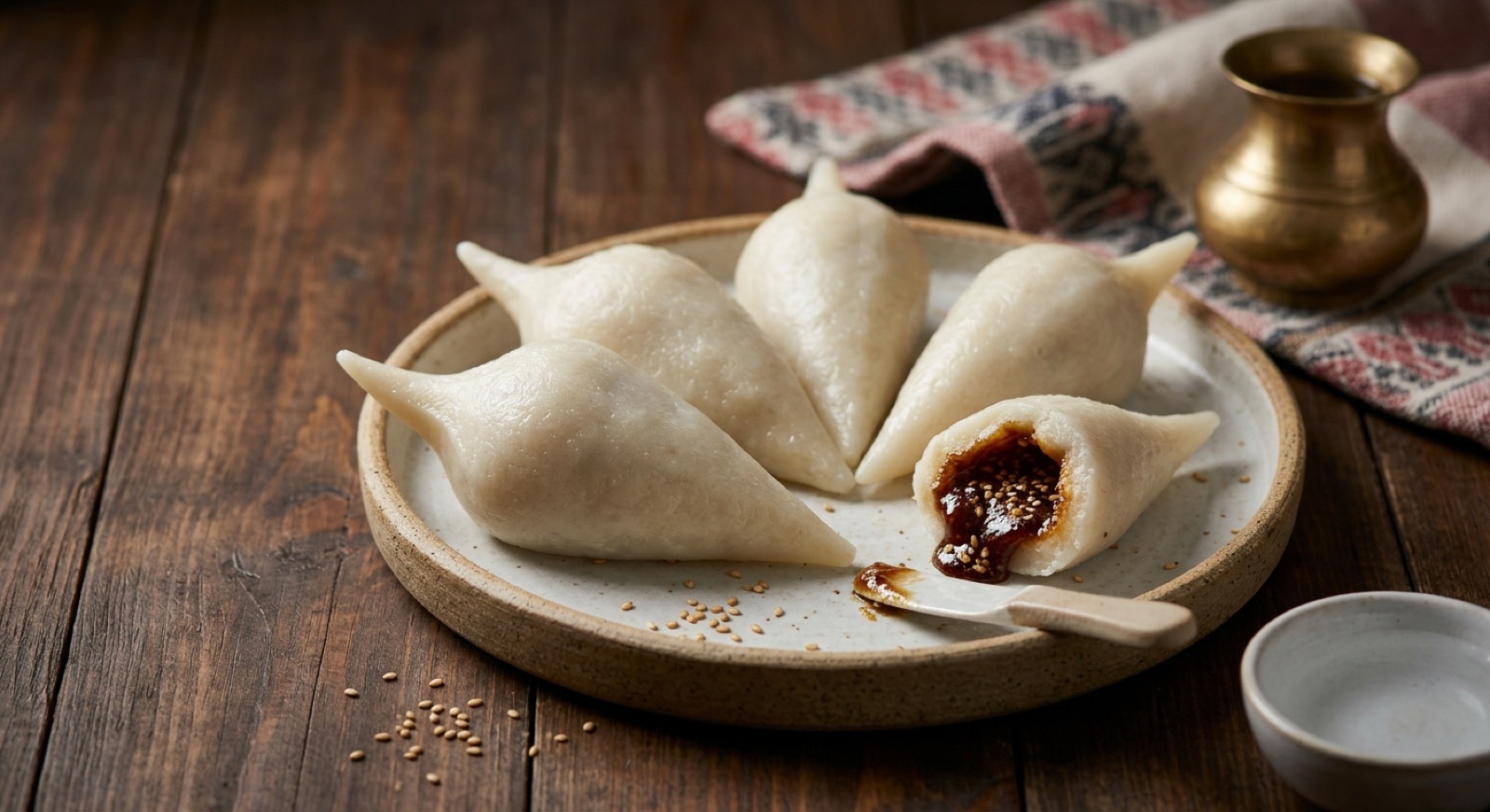
Yomari is a steamed dumpling with a shape nothing else shares: a smooth teardrop body drawn out into a long curved tip, sealed by hand without a mould. The casing is rice flour scalded with boiling water and kneaded hot, which makes it stretchy enough to pull thin without splitting. Inside goes chaku, dark unrefined cane molasses, worked with toasted sesame and ghee so it melts into a sweet, faintly smoky syrup during steaming. Eaten straight from the steamer, the wrapper is soft and slightly springy and the filling is liquid, which is why they are served hot and eaten carefully.

- Gate
- NepalKathmandu Valley
- Prep
- 45 min
- Cook
- 25 min
- Total time
- 1 hr 30 min incl. 20 min rest
- Serves
- 4
- Status
- Takes skill
- Nutrition / serving · estimated
- Calories 340 kcal
- Protein 6 g
- Carbs 62 g
- Fat 9 g
- Fiber 2 g
- Sugar 26 g
- Sodium 210 mg
Why this recipe works.
- Scalds the rice flour properly, which is the only way the dough stretches instead of cracking.
- Cooks the chaku filling to a workable consistency before it ever goes near the dough.
- Handles the dough hot, the way it is actually shaped in Newar kitchens.
- Gives a realistic fallback filling for cooks who cannot buy chaku.
Ingredients.
9 itemsWrapper
Filling
Equipment
- Steamer with a lid
- Heavy pan for the filling
- Damp cloth for the dough
Instructions.
Toast the sesame
Dry-toast the sesame seeds over medium heat, shaking the pan constantly, for 3 to 4 minutes until they smell nutty and start to pop. Tip them straight out of the pan and crush them coarsely so they release their oil.
Make the chaku filling
Melt the chaku or jaggery in a heavy pan over low heat with the ghee until it runs smooth, then stir in the crushed sesame, cardamom and salt. Cook for 2 minutes until it pulls together into a thick dark paste that comes away from the pan.
Tip Spread it on a plate and chill it. Warm filling smears when you shape, and a smeared seam always leaks.
Scald the rice flour
Put the rice flour and salt in a bowl, pour over the boiling water all at once and mix hard with a wooden spoon until no dry flour remains. It will look ragged and wet at this stage, which is correct. Cover and leave 5 minutes.
Knead the dough hot
As soon as you can bear the heat, knead the dough in the bowl for 6 to 8 minutes, dipping your palms in cold water when it sticks, until it is completely smooth and holds a thumb print without cracking at the edges.
Shape the casings
Divide the dough into 12 pieces and keep them under a damp cloth. Roll one into a ball, press a deep hollow with your thumb and turn it against your fingers into a thin-walled cup about 6 cm across, keeping the rim even.
Fill and pinch the tip
Spoon a heaped teaspoon of chilled filling into the cup, then close the rim over it and draw the sealed end upward between finger and thumb into a smooth curved point 3 to 4 cm long. Check the seam for gaps before setting it down.
Tip Work the point slowly. Pulling it fast thins the wall unevenly and it splits in the steamer.
Steam
Set the yomari on a greased or lined steamer tray, leaving space between them, and steam over rapidly boiling water for 12 to 15 minutes until the wrappers turn slightly translucent and glossy and no longer look chalky.
Rest before serving
Lift the tray off and let the dumplings stand for 2 minutes so the molten filling stops scalding and the wrappers firm up enough to peel cleanly off the liner. Serve them warm, before the casing has a chance to stiffen.
Tips from our kitchen.
- Pour the water on boiling and mix immediately with a spoon. Warm water leaves the starch ungelatinised and the dough tears when you thin the tip.
- Knead while the dough is as hot as your hands can stand, wetting your palms in cold water between passes. Cooled dough stiffens and stops taking a smooth surface.
- Keep every piece you are not working on under a damp cloth. A dough ball left uncovered for five minutes develops a skin that will crack at the seam.
- Chill the chaku filling until firm before shaping. Soft filling smears along the seam and the dumpling leaks in the steamer.
- Line the steamer with greased leaves or perforated parchment. Bare metal welds the wet dough to the tray and the base tears when you lift it.
- Let them stand for two minutes off the heat before serving — straight out of the steamer the molten chaku is hot enough to burn.
Substitutions.
- Chaku (hard cane molasses) → Dark jaggery or gur, chopped and melted
- The closest widely available match, though usually a little sweeter and less bitter. Boil it down briefly with the sesame so it firms up on cooling.
- Chaku filling → Khuwa or thick milk solids with sugar
- The other traditional filling, mild and rich rather than dark and mineral. Reduce whole milk with a spoon of ghee until it crumbles, then sweeten to taste.
- Fine rice flour → Glutinous rice flour blended half and half with plain rice flour
- Gives a stretchier, chewier casing that is easier for a beginner to shape, but noticeably softer than a traditional yomari wrapper.
Variations.
- Chaku ni yomari
- The festival standard, filled with cane molasses, toasted sesame and ghee, and the version most Newar households make on Yomari Punhi.
- Khuwa yomari
- Filled with reduced milk solids and sugar for a milder, creamier result. Often shaped with a shorter tip so the two fillings can be distinguished at a glance.
- Savoury yomari
- A less common version stuffed with spiced minced meat or black lentil paste, steamed the same way and eaten as part of a Newar feast plate rather than as a sweet.
Storage & reheating.
Yomari are at their best within an hour of steaming, while the filling is still molten and the wrapper soft. They keep 2 days refrigerated, after which the rice casing turns firm and chalky as the starch retrogrades — steam them again for 4 to 5 minutes and the texture comes back almost completely. Do not microwave them dry; without steam the wrapper toughens. Uncooked shaped dumplings can be frozen on a tray, bagged once solid and steamed from frozen with an extra 5 minutes.
Serve with
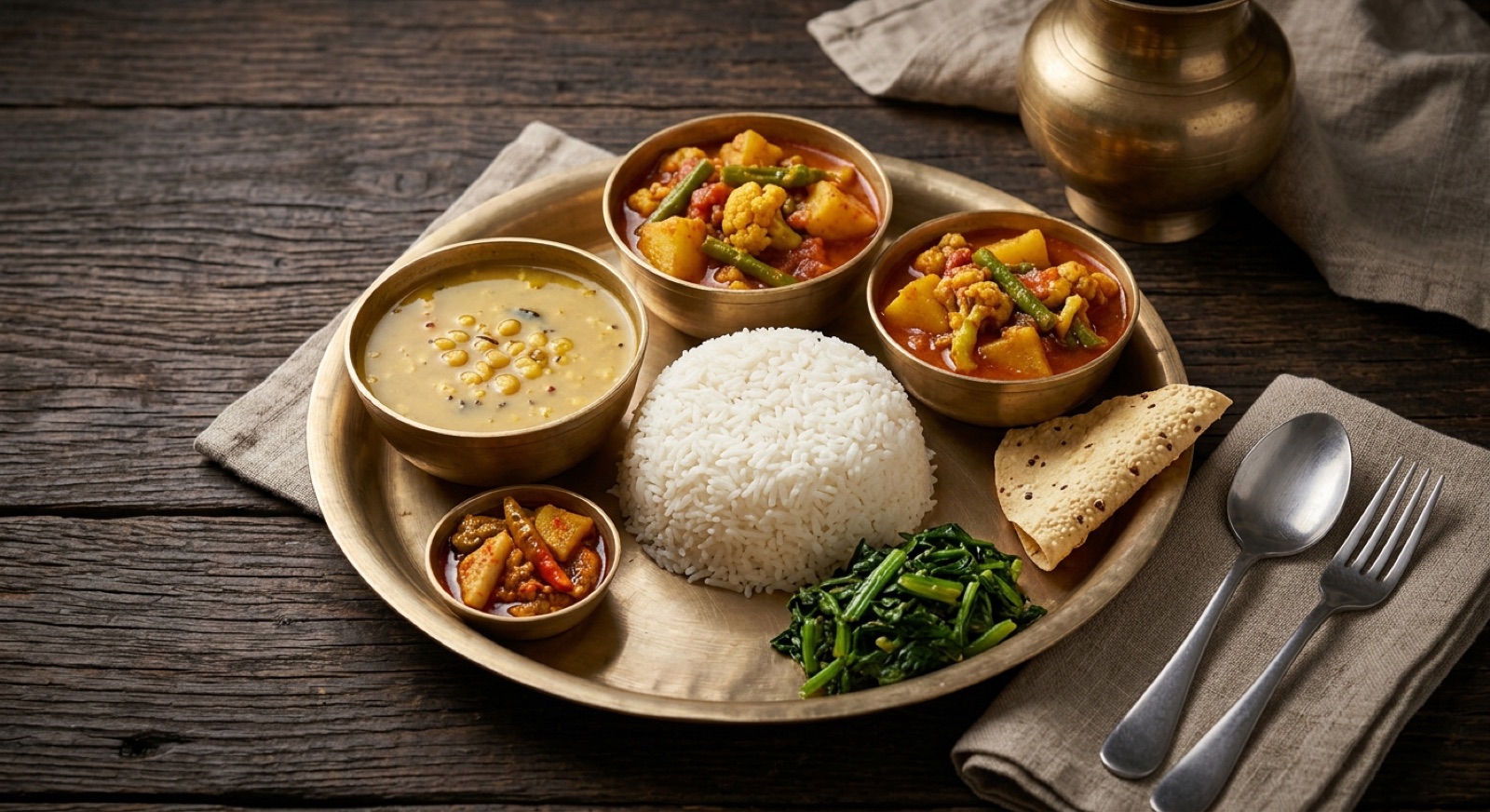
On their own while hot, with black tea, or as the sweet end of a Newar feast plate.
The story behind Yomari.
Yomari exists because of the rice harvest. In the Kathmandu Valley the crop comes in through late autumn, and on the full moon of the Newar month of Thinla — usually December — Newar households mark the end of threshing with Yomari Punhi, a festival built entirely around this one dumpling. The point is that the flour is new. Rice from the season just gathered is milled fine, and the first thing made from it is a sweet offered in the house before anyone eats it. Households make dozens, keep some for domestic rituals, and children go from door to door asking for them, which is closer to a harvest rite than to a dessert course.
The filling explains the timing as much as the flour does. Chaku is sugarcane juice boiled down for hours until it sets dark and hard, and it is made and sold in winter because it is treated as a warming food; the same ingredient turns up in other Newar winter preparations. Combined with sesame — also pressed in the cold months — and a little ghee, it gives a filling that is sweet, mineral and slightly bitter at the edge rather than flatly sugary. A second common filling is khuwa, milk reduced to a crumbly solid, which makes a milder and richer dumpling often shaped slightly differently so the two can be told apart in a steamer.
The shape is the part people argue about. It is variously explained as a fig, a stylised temple finial or the pointed sacred thread, and Newar tradition connects the dumpling to Annapurna, the goddess of grain and plenty; none of these readings is agreed on, and the honest answer is that the form is old and the explanations came later. What is not in dispute is that the tip is a technical requirement — it gives the pincher somewhere to finish the seam and lets steam escape from the seal without splitting the belly of the dumpling. Yomari is one of the least exported dishes in Nepali cooking, still made overwhelmingly in Newar homes rather than restaurants, and it remains a strong marker of Newar identity in a valley where that identity has been under pressure for decades.
Questions, answered.
What is chaku and can I substitute it?
Chaku is sugarcane juice boiled down until it sets into a dark, hard block, sold in Nepal in winter and eaten as a warming food. Dark jaggery or gur is the nearest substitute available elsewhere, though it is usually a little sweeter and lacks some of the faint bitterness that makes chaku interesting.
Why does my dough keep cracking when I shape it?
Almost always because the water was not fully boiling when it went into the rice flour, or because the dough cooled before shaping. Rice flour has no gluten and depends entirely on gelatinised starch for stretch. Scald it with genuinely boiling water, knead it hot, and keep unworked pieces under a damp cloth.
When is yomari eaten in Nepal?
It is the centrepiece of Yomari Punhi, a Newar festival on the December full moon marking the end of the rice harvest, when the dumplings are made from the new season flour. Some Kathmandu sweet shops now sell them year-round, but they remain overwhelmingly a home-made seasonal food.
Can yomari be made vegan?
Yes, if you use the chaku and sesame filling and swap the ghee for a neutral oil or coconut oil. The wrapper is only rice flour, water and salt, so it contains no dairy to begin with. The khuwa version cannot be made vegan, since it is essentially reduced milk.
Why is one end drawn out into a point?
The tip is where the seam is finished after the filling goes in, so it serves a practical purpose in sealing the dumpling by hand without a mould. It also lets a little steam escape from the top rather than bursting the body. Newar tradition attaches several symbolic readings to the shape, none of them universally agreed.
You might also like.
All recipes →
Keep exploring Nepal.
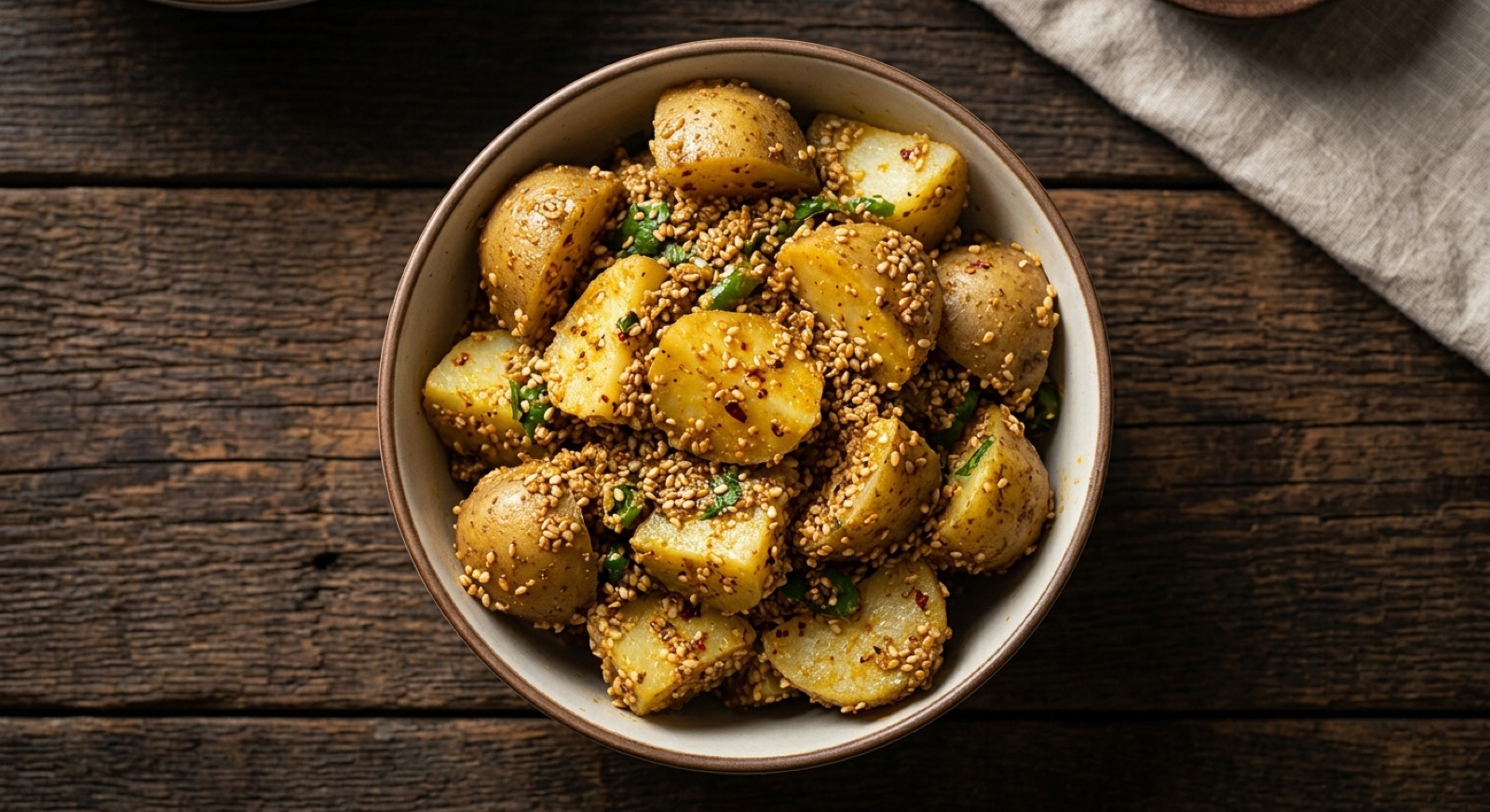
Nepal has 9 more dishes in the atlas — Aloo ko Achar and Aloo Tama, and 7 more.
Recipe by The DishRoute Kitchen · published August 21, 2026 · updated August 21, 2026