Stoemp.
Brussels Lumpy Mash with Root Vegetables
Stoemp / stoempe · say it: STOOMP
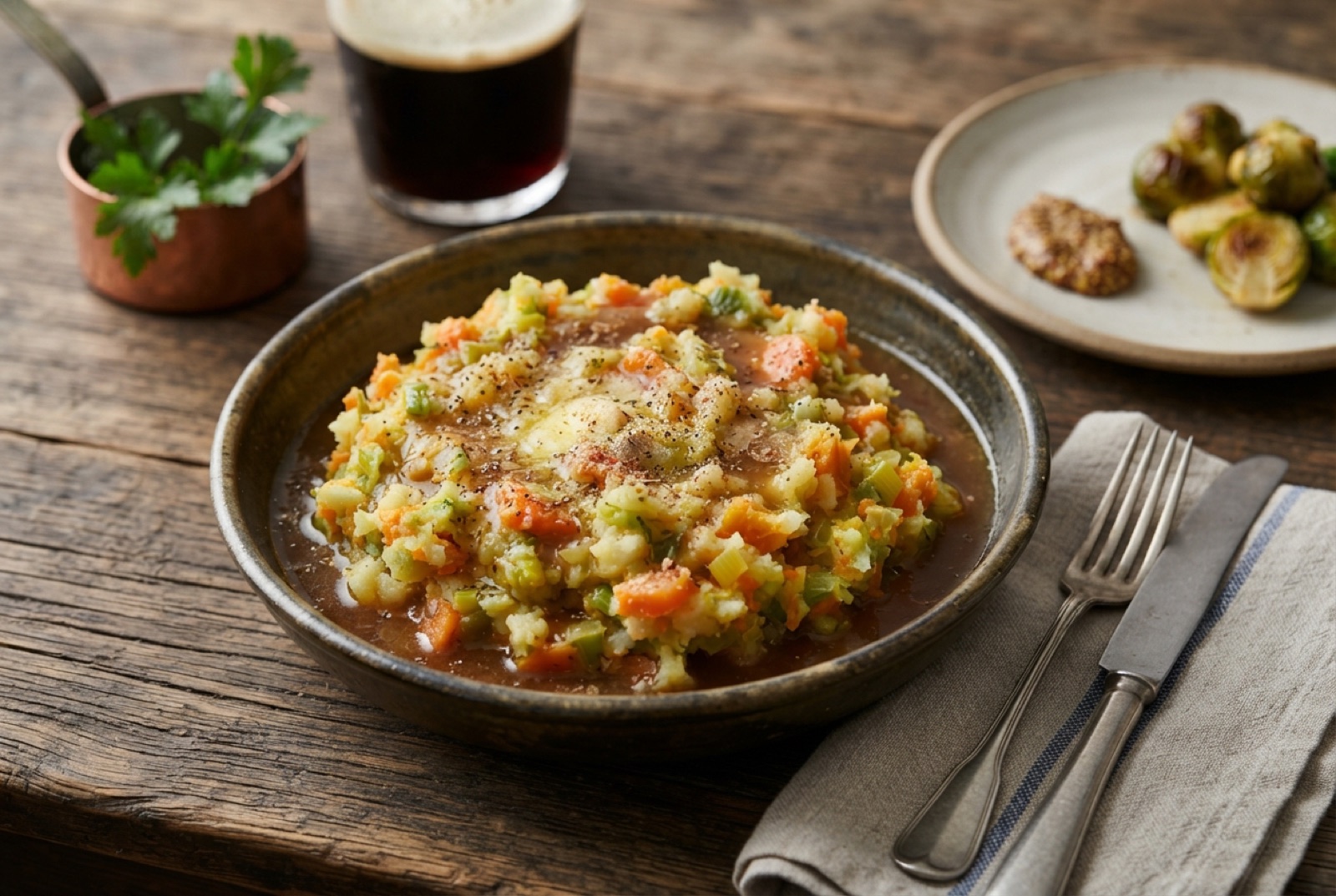
Stoemp is Brussels mashed potato with vegetables crushed into it and no interest whatsoever in being smooth. Potatoes and carrots are boiled together, leeks and onion are softened in butter, and everything is mashed by hand until it is combined but still visibly lumpy — flecks of orange carrot, threads of green leek, pockets of potato that never gave in. Butter and a splash of cream go in generously, nutmeg goes in more generously than feels sensible, and that is the dish. It is sweet from the root vegetables, savoury from the browned onion, and it sits under a sausage or a fried egg the way few side dishes manage. The texture is the point: whip it smooth and you have made purée, not stoemp.

- Gate
- BelgiumBrussels
- Prep
- 15 min
- Cook
- 30 min
- Total time
- 45 min
- Serves
- 4
- Status
- Easy
- Nutrition / serving · estimated
- Calories 430 kcal
- Protein 10 g
- Carbs 47 g
- Fat 23 g
- Fiber 7 g
- Sugar 9 g
- Sodium 560 mg
Why this recipe works.
- Sweats the onion slowly in butter first, which is the difference between sweet stoemp and bland mash.
- Boils the potato and carrot together so both finish at once and the dish takes one pot rather than three.
- Says clearly why lumps are correct and which tools will destroy them.
- Nutmeg and pepper quantities that are actually Belgian rather than timid.
Ingredients.
13 itemsFor the mash
To finish
Equipment
- Large pot
- Potato masher or sturdy fork
- Sauté pan
- Colander
Instructions.
Boil potato and carrot together
Put 900 g of potato chunks and 400 g of carrot coins in a large pot with the bay leaf, cover with cold salted water and bring to the boil. Simmer for 18–20 minutes, until a knife slides into a potato piece and it starts to break apart at the edges.
Sweat the onion and leek
Meanwhile melt half the butter in a sauté pan and cook the onion, leek and bacon over medium-low heat for 12 minutes, stirring, until the leek has collapsed, the onion is soft and golden at the edges, and the pan smells sweet rather than sharp.
Tip This is where most of the flavour comes from — do not rush it to five minutes of pale onion.
Drain and steam dry
Drain the potato and carrot thoroughly, discard the bay leaf, and return them to the hot empty pot over low heat for 1 minute, shaking occasionally, until the surface moisture has steamed off and they look chalky.
Crush, do not whip
Add the remaining butter and mash by hand with a masher or fork, working in the warm milk and cream a little at a time. Stop while there are still clear lumps and streaks of potato — around fifteen seconds of mashing, not two minutes.
Tip Never use a mixer, ricer or food processor here. Overworked potato starch turns the mash into glue.
Fold in the vegetables
Tip the onion, leek and bacon with all their buttery pan juices into the potato and fold through with a spoon rather than mashing further. You should still be able to see individual pieces of carrot and thread of leek throughout.
Season and serve hot
Grate in the nutmeg, add the black pepper and salt to taste, then check it again — stoemp needs more seasoning than plain mash because of the sweet vegetables. Scatter the parsley over and serve immediately while it is still steaming.
Tips from our kitchen.
- Use floury potatoes such as Bintje, Maris Piper or russet. Waxy potatoes resist crushing and give a gluey rather than fluffy mash.
- Mash with a hand masher or a fork only. A mixer or food processor overworks the starch and turns stoemp into wallpaper paste in seconds.
- Let the drained potatoes steam dry in the hot pan for a minute before mashing so the excess water evaporates.
- Warm the milk and cream before adding them. Cold dairy stiffens the starch and makes the mash claggy and hard to fold.
- Season with nutmeg twice: once into the vegetables and again at the end after tasting. It fades quickly against all that butter.
- Stop mashing while you can still see distinct pieces of carrot and leek. Combined is finished; uniform has gone too far.
Substitutions.
- Carrot and leek → Brussels sprouts, celeriac, spinach, turnip or endive
- All are traditional. Leafy vegetables should be wilted and squeezed dry first; hard roots go in with the potatoes.
- Bacon → Leave it out and add an extra 20 g butter, or use smoked tofu cubes
- Meat-free stoemp is entirely normal in Belgium. Without bacon, be more generous with salt and nutmeg.
- Double cream → Full-fat milk, or the potato cooking water plus extra butter
- Cooking water is the thriftiest option and closest to how the dish was originally made.
Variations.
- Stoemp met spruitjes
- Made with Brussels sprouts, halved and boiled until just tender, then crushed in whole. Sharper and more assertive than the carrot version.
- Stoemp-saucisse
- The full Brussels brasserie plate: a mound of stoemp with a grilled pork sausage and a spoonful of pan gravy poured over the top.
- Stoemp met witloof
- Belgian endive braised and chopped into the mash, giving a bitter edge that plays against the sweetness of the onion and potato.
Storage & reheating.
Stoemp keeps 3 days refrigerated and reheats better than most mash because the butter content protects it. Warm it in a pan over low heat with a splash of milk, stirring, until steaming; the microwave works too if you cover it and stir halfway. Leftovers also fry beautifully — press a portion into a hot buttered pan and leave it undisturbed until a dark crust forms, then flip. It freezes for 2 months, though the carrot softens further and the texture becomes noticeably less distinct.
Serve with
A grilled sausage, black pudding, a fried egg, or a spoonful of carbonnade sauce poured over the top.
The story behind Stoemp.
Stoemp is Brussels working-class cooking and it wears that origin openly. The word is Brussels dialect and the concept is thrift: whatever cheap root vegetable is in the house gets crushed into the potatoes so the pot goes further. Carrot is the most common, but leek, celeriac, turnip, Brussels sprouts, spinach, endive and even peas all have their versions, and households defend their own combination with the confidence of people who have never eaten anyone else's. In Brussels brasseries it is listed by its vegetable — stoemp met wortelen, stoemp met prei — and served under a sausage, a piece of black pudding, or a slab of braised meat.
It belongs to a small northern European family of crushed-potato dishes that includes Dutch stamppot and Irish colcannon, and the resemblance is not a coincidence: the potato arrived late, spread fast among the poor, and every country in the region found the same way to stretch it with whatever grew locally. What distinguishes stoemp from stamppot is fat and seasoning. Stamppot is typically leaner and blunter; stoemp is enriched with butter and often cream, seasoned hard with nutmeg and pepper, and built on a base of onion sweated slowly in butter until sweet.
The other distinguishing feature is texture, and Belgians are unusually firm about it. Stoemp is crushed with a masher or a fork and never with a mixer, a ricer or a food processor. The lumps are not a failure of technique, they are the technique: they give the dish something to chew and keep the individual vegetables identifiable. A stoemp that has been beaten smooth has crossed a line and, in the words most often heard in Belgian kitchens, is simply purée with things in it.
Questions, answered.
What is the difference between stoemp and stamppot?
Both are crushed potato mixed with vegetables, but stoemp is Belgian, specifically associated with Brussels, and is richer: it starts with onion sweated in butter and is finished with butter, cream and a lot of nutmeg. Dutch stamppot is generally leaner and more plainly seasoned. Stoemp is also usually coarser, with the vegetables left clearly visible.
Why should the mash be lumpy?
Texture is the defining characteristic of stoemp. Crushing rather than whipping keeps pieces of carrot, leek and potato identifiable, which gives the dish something to chew and lets each vegetable taste of itself. It is also practical: overworking potato starch releases it and turns the mash gluey, which is exactly what a mixer or food processor will do in seconds.
Which potatoes work best?
Floury varieties with a high starch content: Bintje in Belgium, or Maris Piper, King Edward, Agria and russet elsewhere. These break down readily under a masher and absorb butter well. Waxy potatoes such as Charlotte or new potatoes hold their shape too stubbornly and produce a heavy, slightly slippery mash.
Can I make stoemp ahead of time?
Yes. It reheats well because of its butter content, so it can be made a day ahead, refrigerated, and warmed in a pan with a splash of milk. If you are cooking for a crowd, prepare it completely, spread it in a buttered baking dish, and reheat covered at 180°C for 25 minutes, stirring once halfway through.
What do Belgians eat with stoemp?
Most often a sausage — the classic Brussels order is stoemp-saucisse, with a grilled pork sausage and gravy. Black pudding with apple, smoked bacon, meatballs in tomato sauce and braised beef are all common. It is also served plain under a fried egg as a cheap supper, and it is the usual accompaniment to a stew that needs something to soak up its sauce.
You might also like.
All recipes →

Keep exploring Belgium.
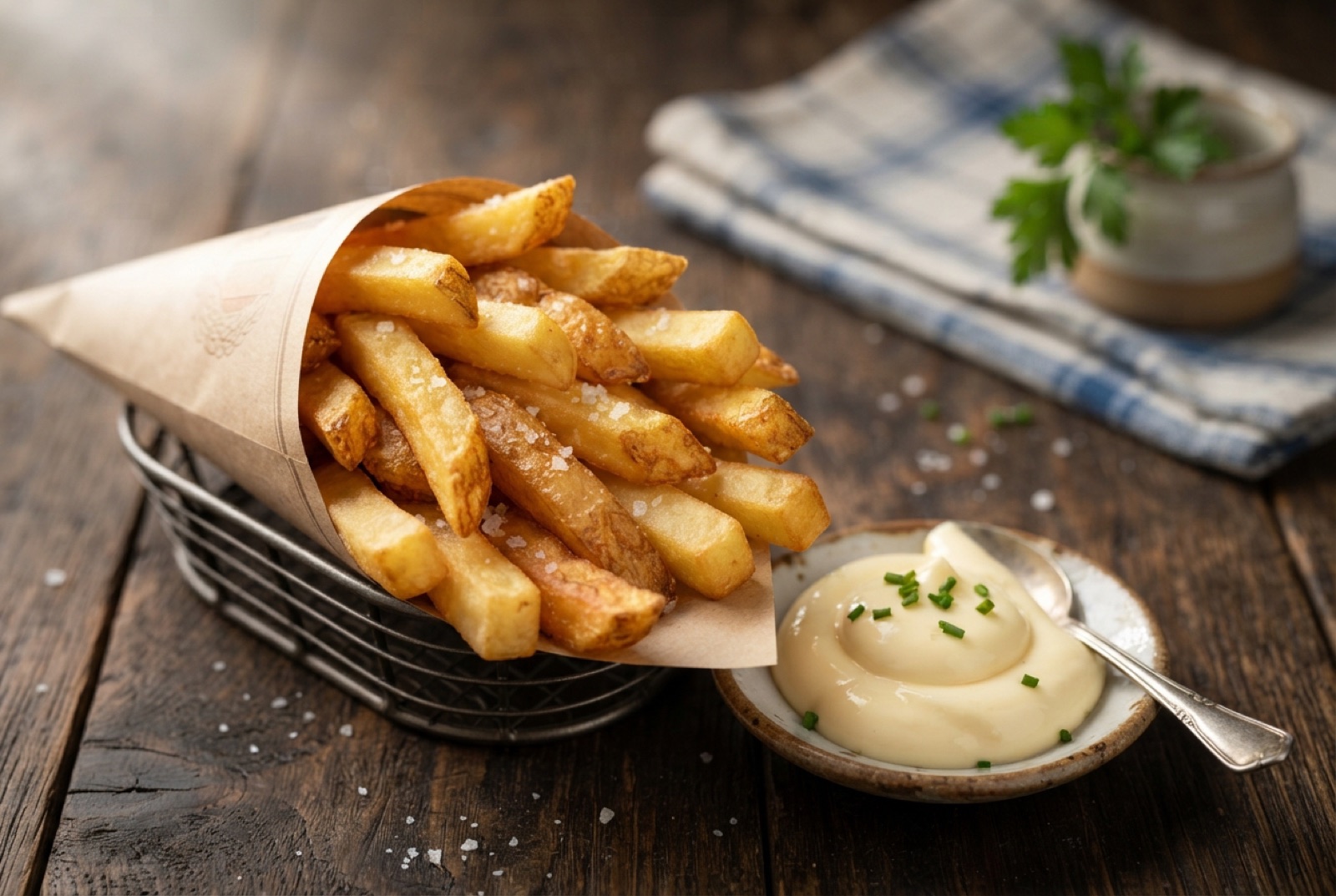
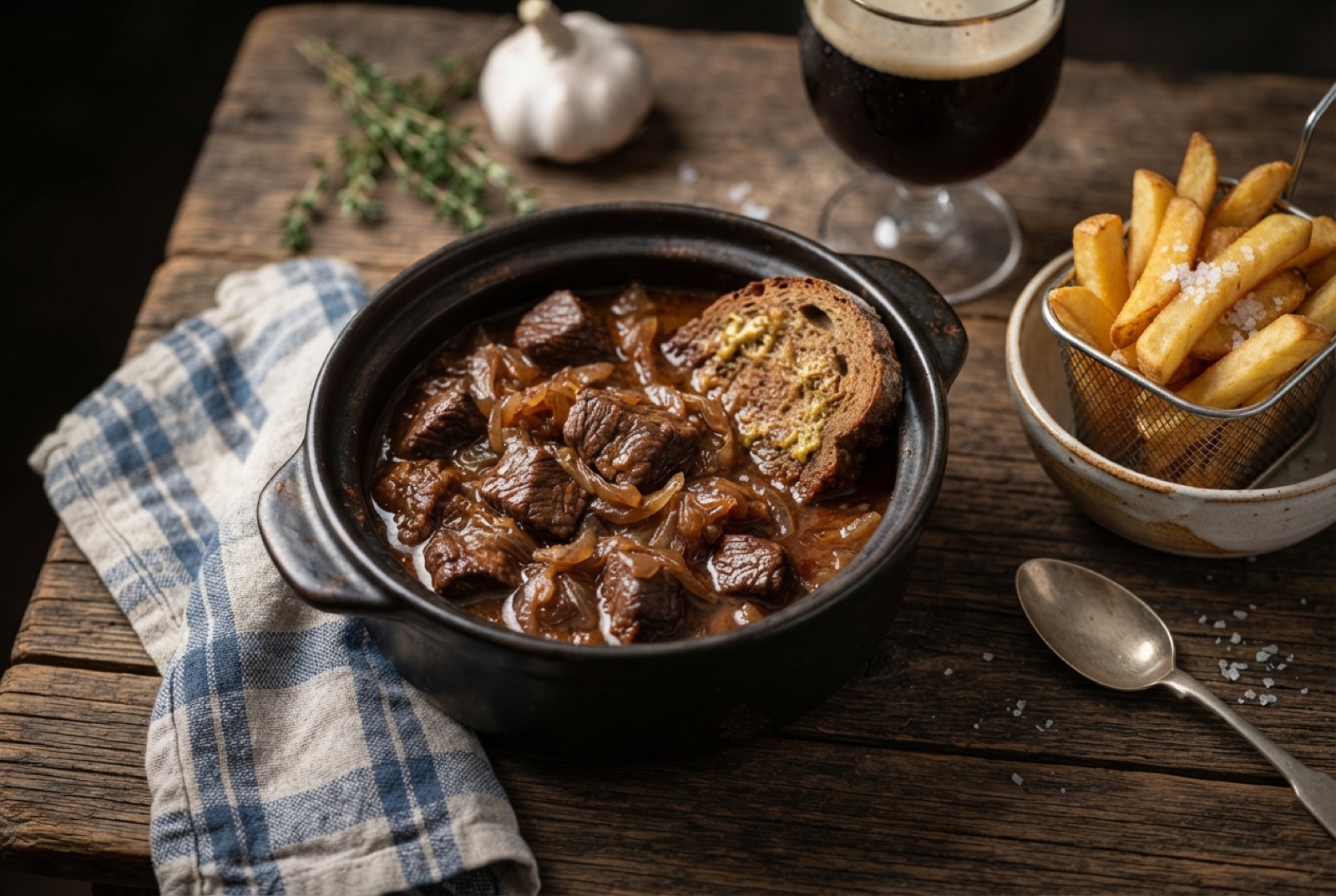
Belgium has 9 more dishes in the atlas — Belgische Frieten and Carbonnade Flamande, and 7 more.
Recipe by The DishRoute Kitchen · published August 19, 2026 · updated August 19, 2026