Estonia.
Eesti
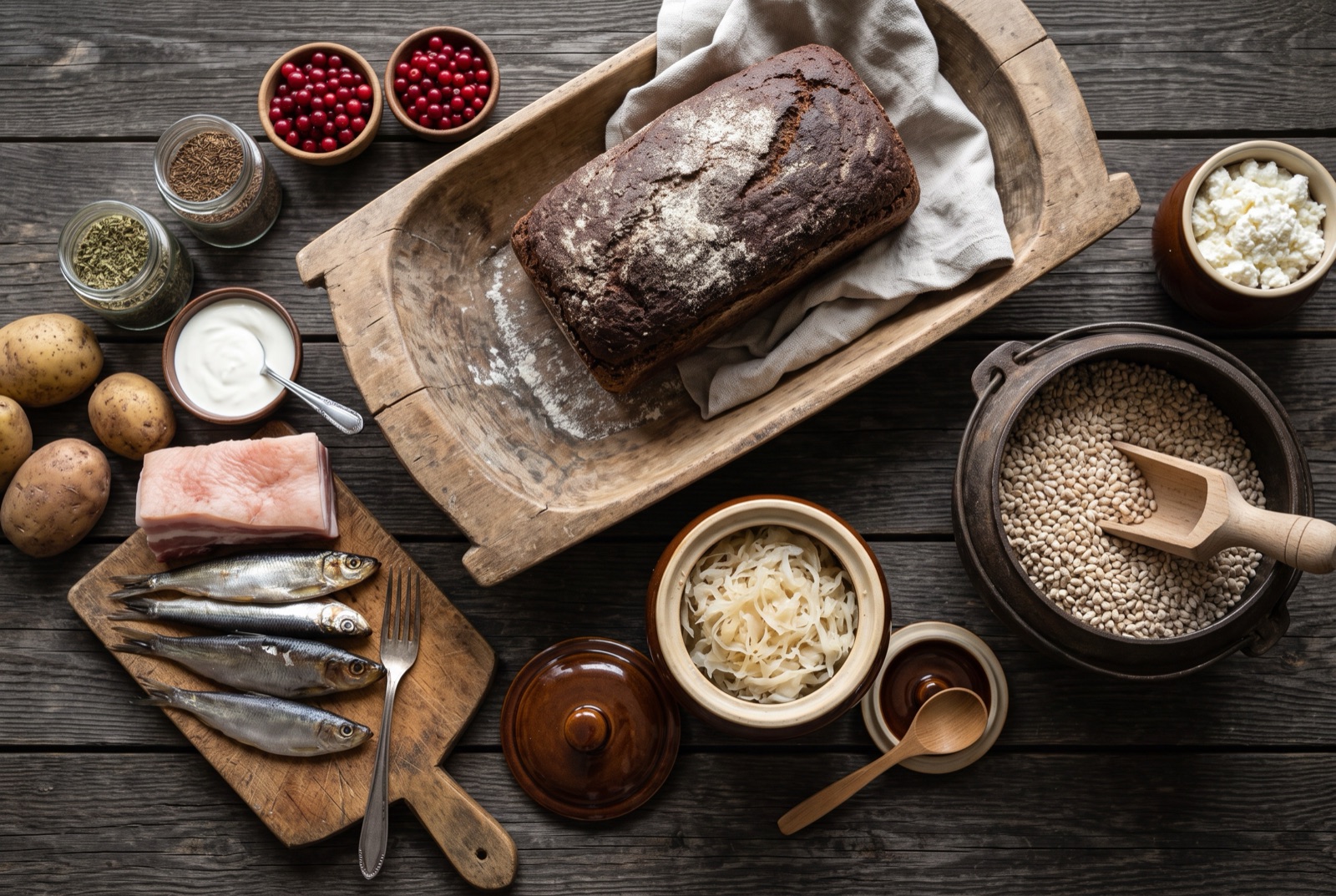
Estonian food is a northern larder cuisine: it tastes of what a farm could store through six months of cold. Rye and barley instead of wheat, potatoes in daily rotation, pork raised through the summer and salted or smoked before winter, cabbage soured in a barrel, herring and sprat from the Baltic salted or spiced in jars, berries picked from the forest and boiled down into jam, and milk turned into curd, kefir, sour cream and cultured butter. The flavour profile is sour, smoky and grain-heavy rather than spicy — the seasoning shelf runs to salt, black pepper, caraway, marjoram, allspice, dill and juniper, and stops there. What keeps it from being austere is contrast: fatty roast pork against sharp sauerkraut, dense black bread against sweet lingonberry, hot fried fish against a cold vinegar marinade. Estonians eat this way without nostalgia; sour cabbage soup and black bread are ordinary Tuesday food, not heritage theatre.

- Continent
- EuropeBaltics
- Recipes in atlas
- 10
- Must-try dishes
- 3
- Pantry staples
- 10
Start with the classics.
Must tryThe dishes that explain the Estonia kitchen fastest — if you cook only a few things from this page, cook these.
Inside the Estonia kitchen.
Black rye bread — leib — is the spine of the whole cuisine, to the point that the Estonian word for bread means rye bread specifically, and wheat bread needs its own separate word. It is a dense, dark, faintly sweet-sour sourdough that keeps for a week, and it appears at breakfast under butter and sprats, at lunch beside soup, and at the end of its life boiled into pudding or dessert soup. Nothing about rye is wasted, and that instinct — a second life for the leftover, the crust, the bone — runs through everything else.
Barley is the other defining grain, and the one that most clearly separates Estonian cooking from its neighbours. Pearl barley is not just soup filler here: it is cooked into potato mash to make mulgipuder, folded into sauerkraut before it goes under a roast, stuffed with blood into sausage casings at Christmas, and simmered into thick winter soups. It brings a slippery, nutty chew that Estonians read as home cooking the way Italians read olive oil.
Souring is the main preservation technique and the main seasoning strategy at once. Cabbage goes into the barrel in autumn and comes out as hapukapsas, which is then braised with a little sugar and caraway to round the acid off; milk becomes hapukoor and kefir; fish gets a sweet-sour vinegar marinade after frying. This is why so many Estonian plates look monochrome but do not taste flat — the acid is doing the work that chile does elsewhere.
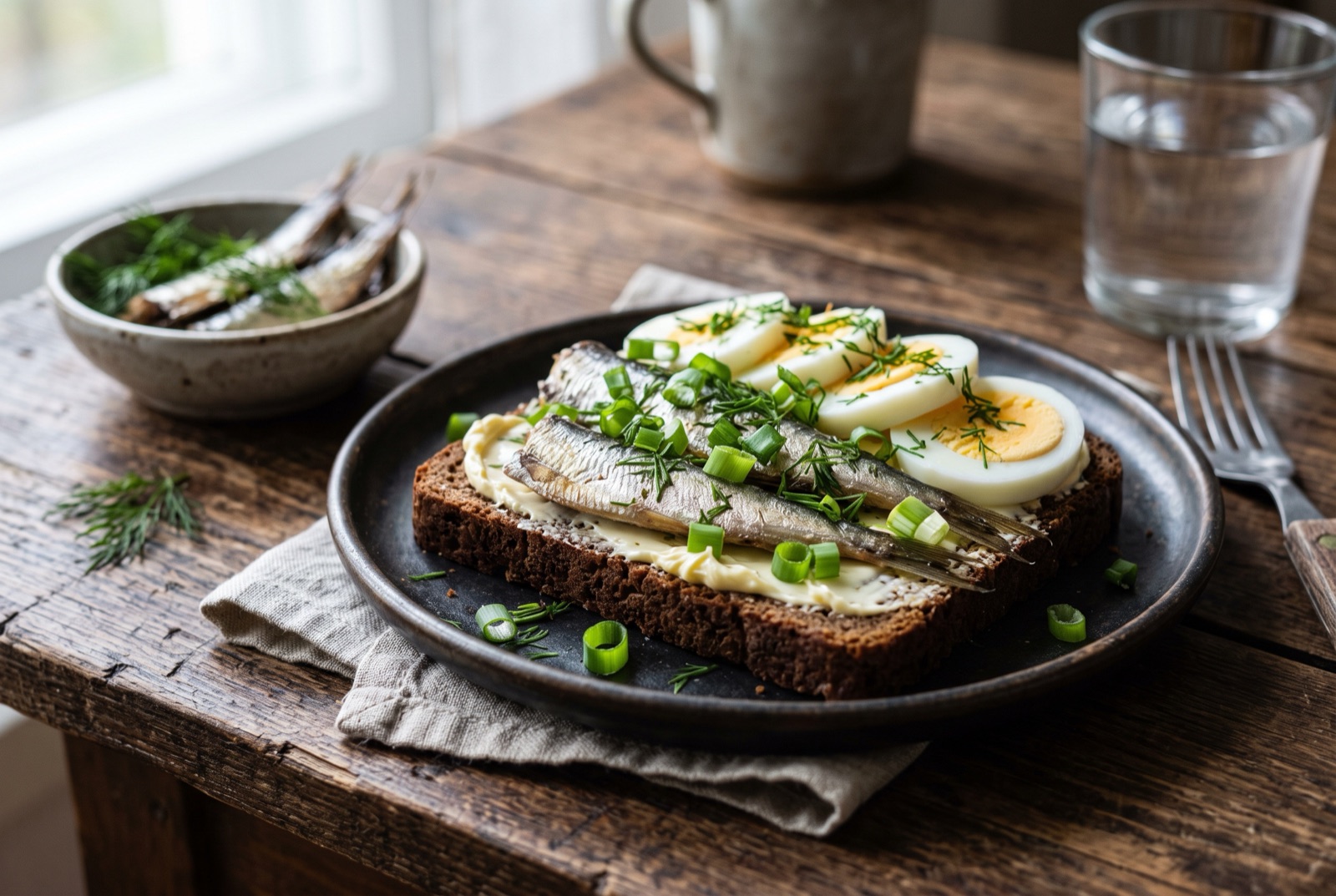
The Baltic supplies two small fish that matter enormously. Räim, the Baltic herring, is floured with rye and pan-fried, then either eaten hot or marinated overnight. Kilu, the spiced sprat cured with allspice, cloves and a little sugar, is a pantry staple sold in flat tins and eaten on buttered black bread — the single most recognisable Estonian snack.
The meal structure is plain and unfussy: a hot main at midday, open sandwiches and curd or kefir at the edges of the day, soup constantly. Regional differences are quiet but real — the Mulgi region in the south gave the country its barley-and-potato mash, the western islands lean harder on fish and lamb, and Setomaa in the south-east carries Orthodox feast traditions and its own cheese and dumpling repertoire. Since the 2000s a serious modern Estonian restaurant scene has grown in Tallinn and Pärnu, built almost entirely on this same shortlist of ingredients — rye, barley, curd, sprat, juniper, forest berries — treated with contemporary technique rather than replaced by imports.
Signature pantry.
10 staplesThe ingredients this cuisine cannot function without.
- black rye bread
- pearl barley
- sauerkraut
- Baltic sprat and herring
- pork
- potatoes
- sour cream and curd
- lingonberries
- marjoram
- caraway
How people eat in Estonia.
Estonians eat quietly and early. The main hot meal lands around midday, supper is often just open sandwiches with curd, kefir or kohuke, and coffee runs all day. Bread is not a course but a constant — it sits on the table in a basket and gets buttered without ceremony. Sour cream turns up on almost everything savoury, spooned on at the table rather than stirred in during cooking, and sauerkraut or a pickle is expected beside anything rich. Christmas is the one immovable feast: roast pork, blood sausage, baked sauerkraut, potatoes and lingonberry jam, eaten on the evening of 24 December. Toasting is brief, small talk is minimal, and refilling a guest's plate without asking is normal hospitality.
Regional kitchens.
Estonia cooks 4 distinctly different ways depending on where you stand — here is what changes between them.
- R1Mulgimaa (the south)
- Historically the richest farming country in Estonia, and the source of mulgipuder — barley cooked into potato mash. Pork, barley and smoked meats dominate the local table.
- R2The western islands (Saaremaa and Hiiumaa)
- Sea-facing kitchens built on Baltic fish, lamb grazed on coastal meadows, and a rye bread tradition of their own. Saaremaa is also known nationwide for its dark, dense bread and its beer.
- R3Setomaa (the south-east)
- An Orthodox borderland with its own language and feast calendar, keeping traditions the rest of Estonia lost — fresh curd cheese, baked dishes for saint days, and long communal tables.
- R4Tallinn and the north coast
- The urban kitchen: sprat tins, marzipan, café culture inherited from the Hanseatic and Baltic-German centuries, and the modern restaurants rebuilding Estonian cooking from local ingredients.
All Estonia recipes.
10 recipes and counting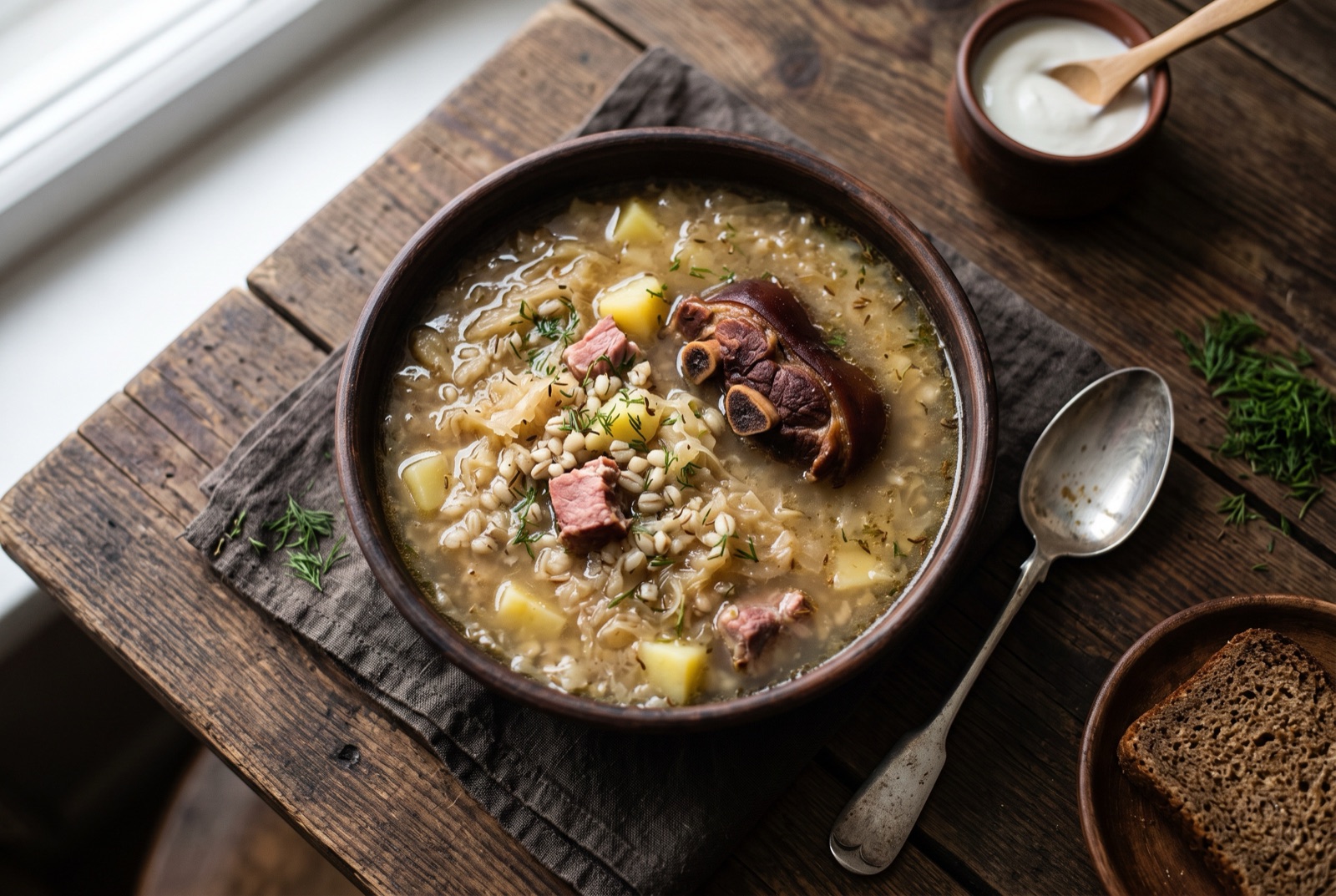
Estonia1 hr 55 min
Hapukapsasupp
Estonian Sauerkraut and Barley Soup
Estonia16 min
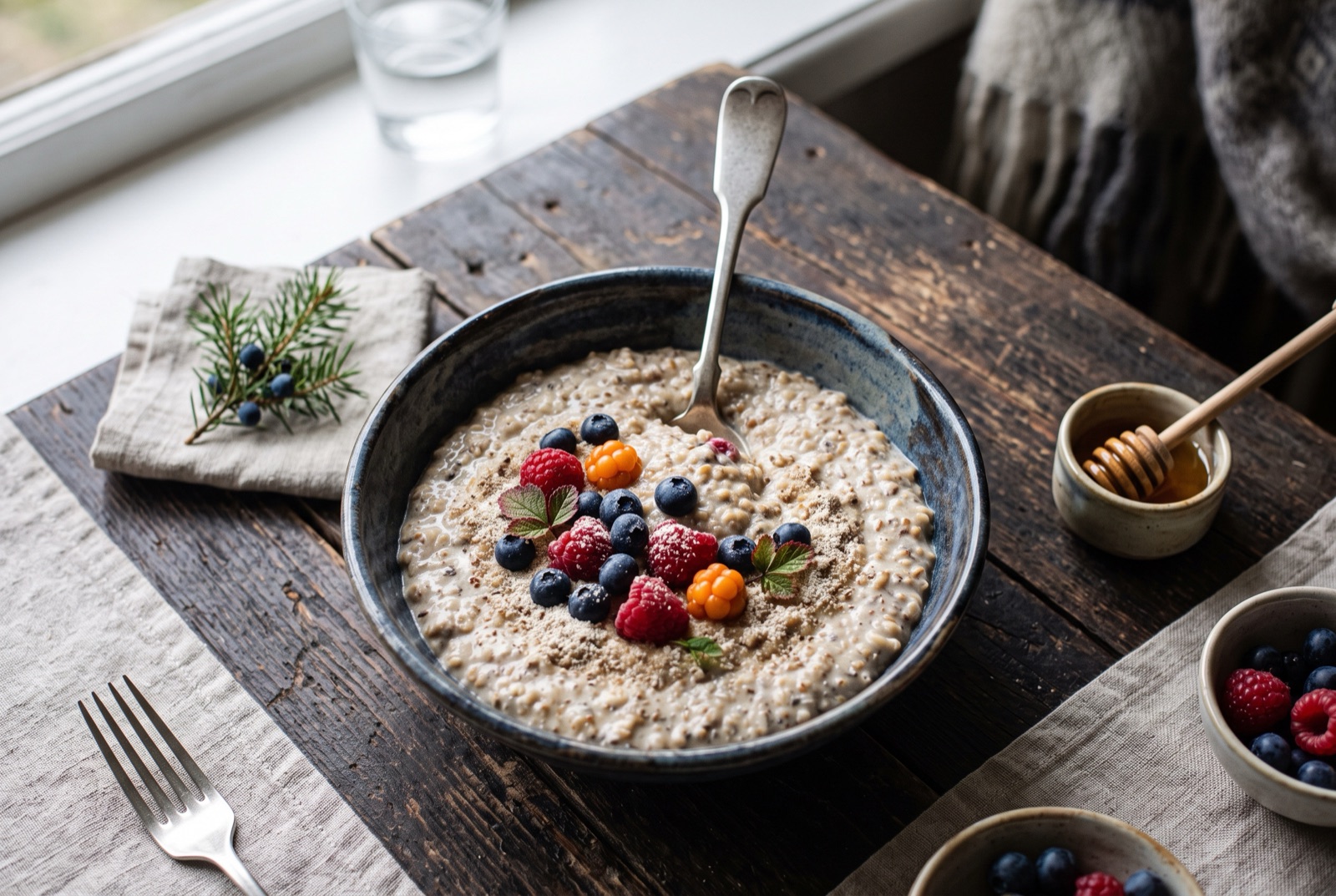
Kama
Estonian Toasted Grain Flour with Kefir
Estonia18 min
Kiluvõileib
Spiced Sprat Sandwich on Black Bread
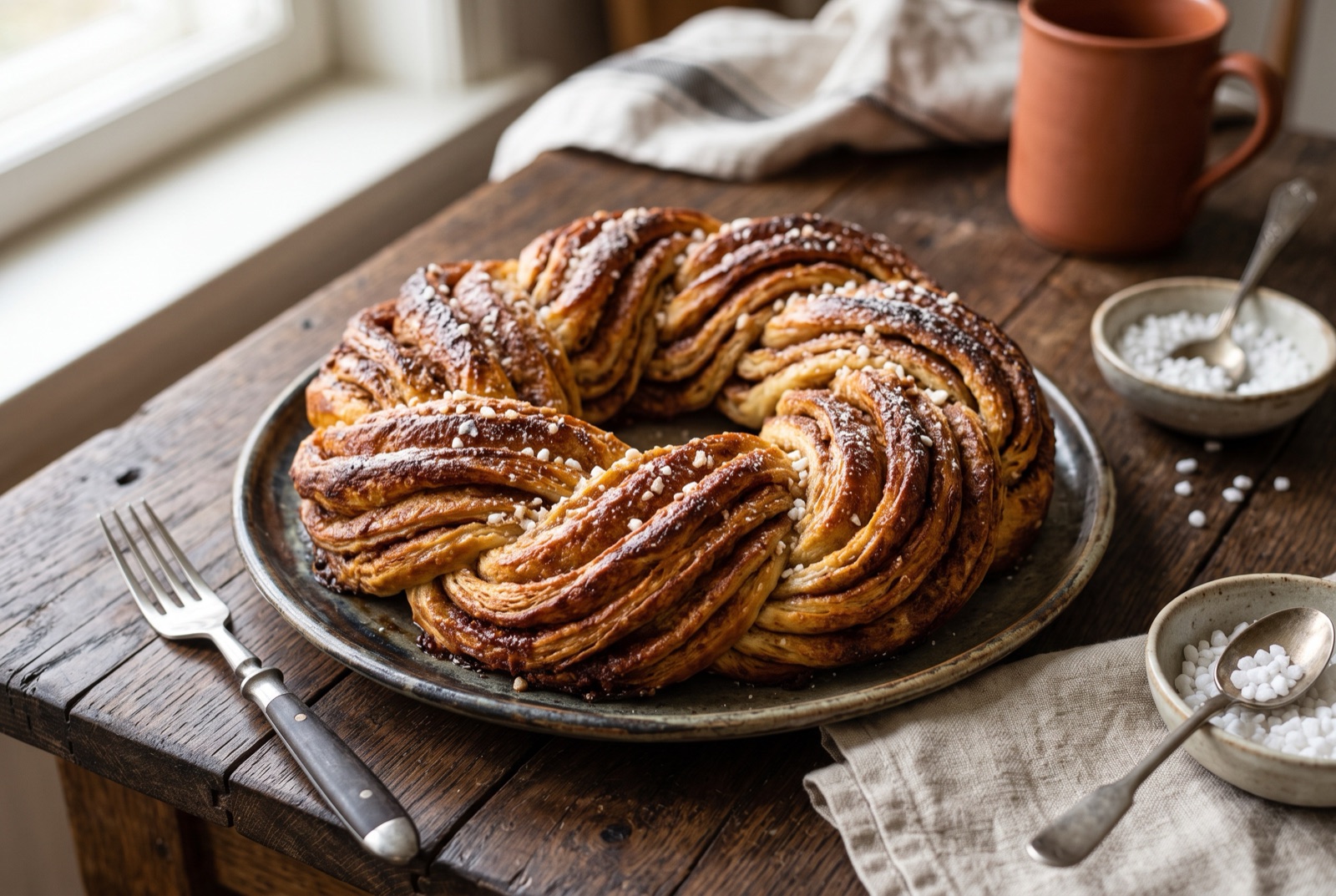
Estonia2 hr 50 min
Kringel
Estonian Braided Cardamom Sweet Bread
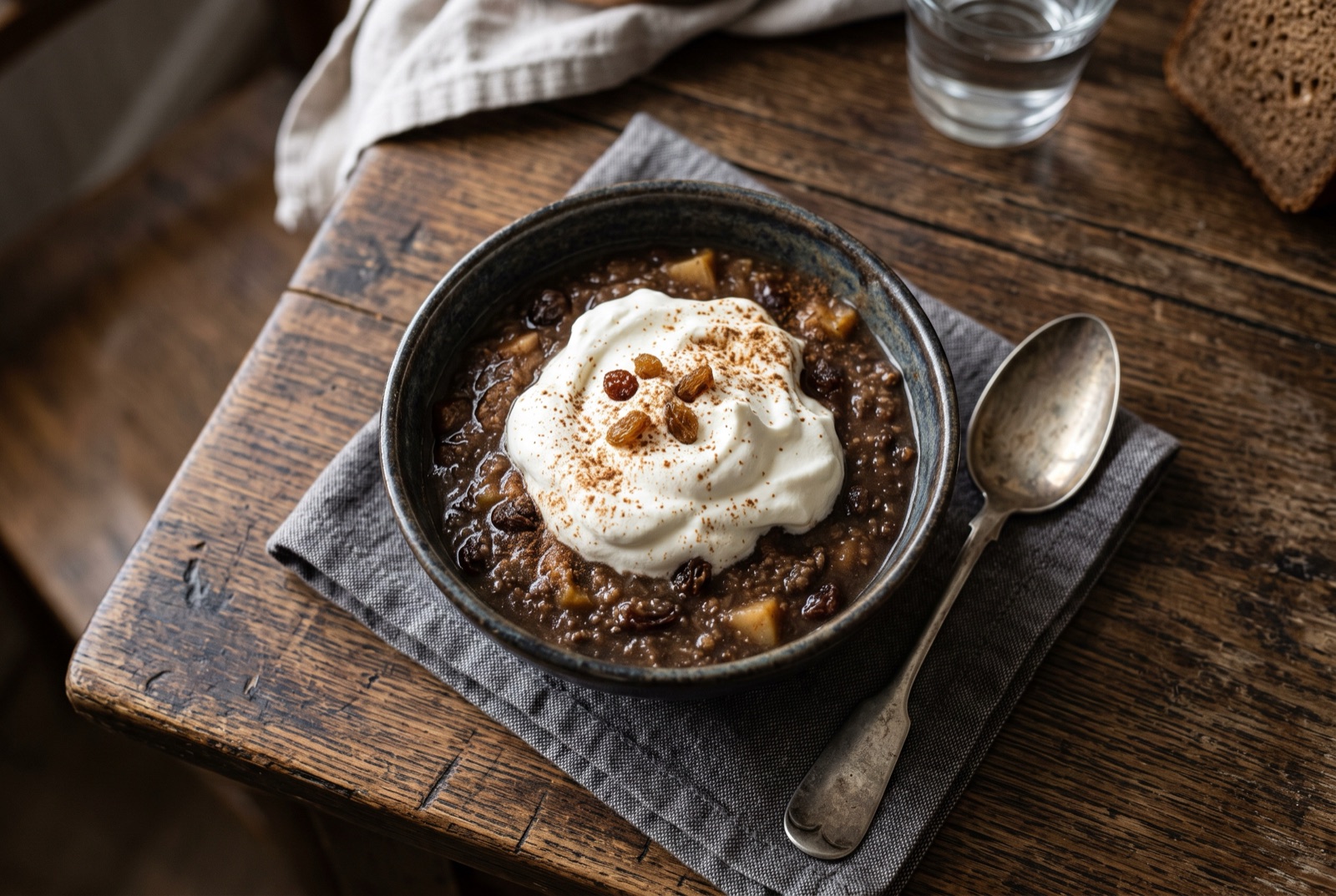
Estonia4 hr 45 min
Leivasupp
Sweet Estonian Rye Bread Soup
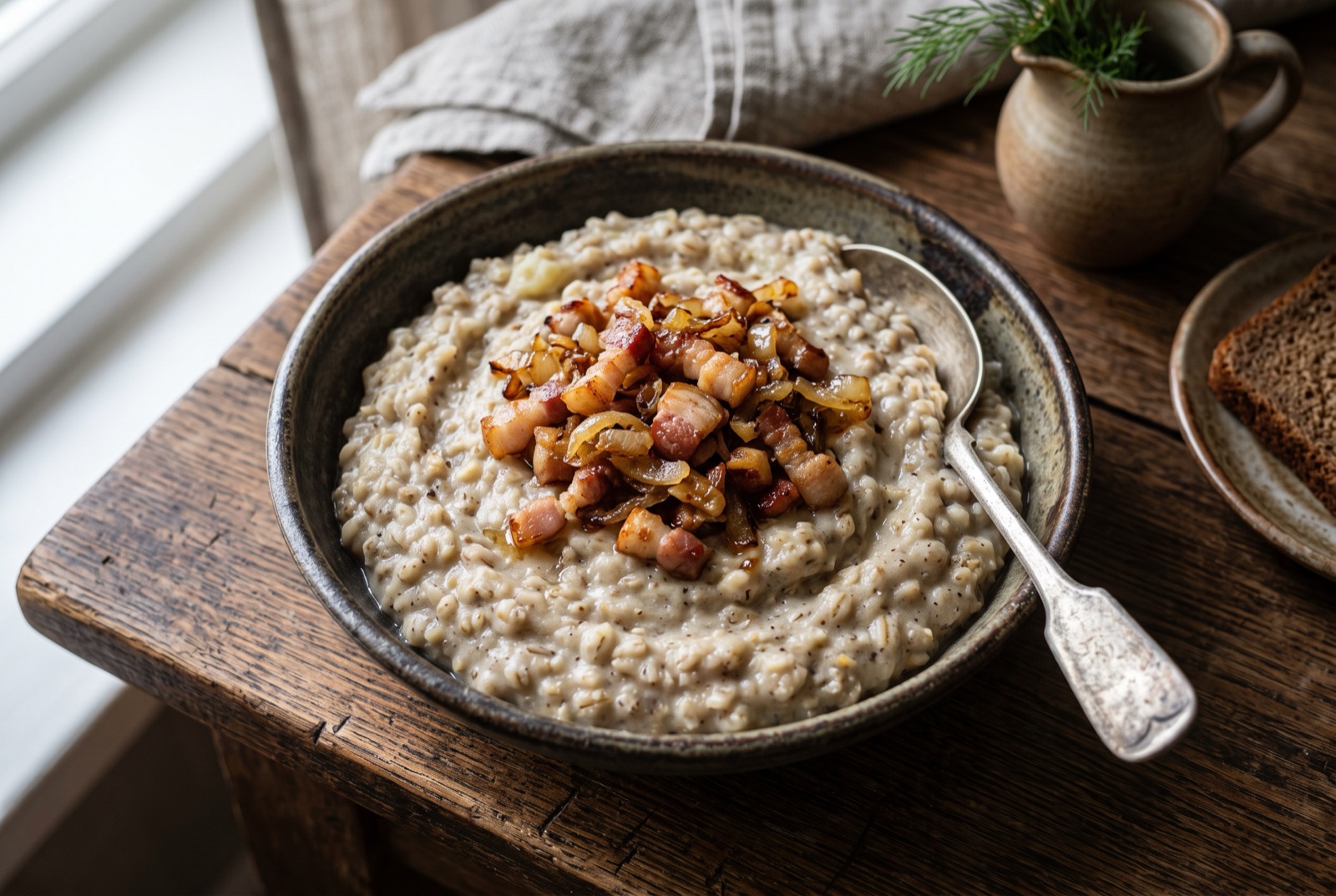
Estonia1 hr 5 min
Mulgipuder
Estonian Barley and Potato Mash
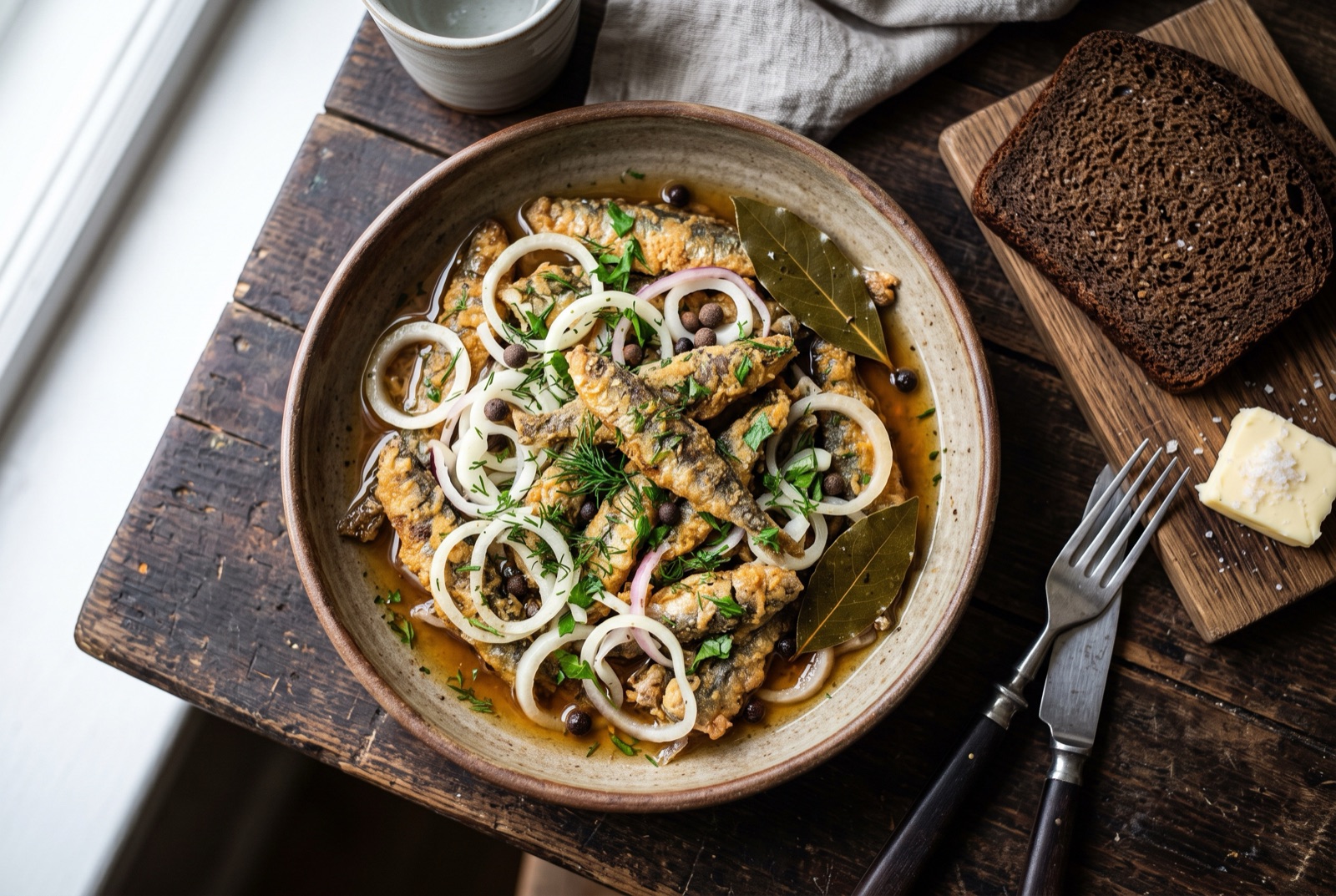
Estonia12 hr 50 min
Praetud Räim
Fried Marinated Baltic Herring
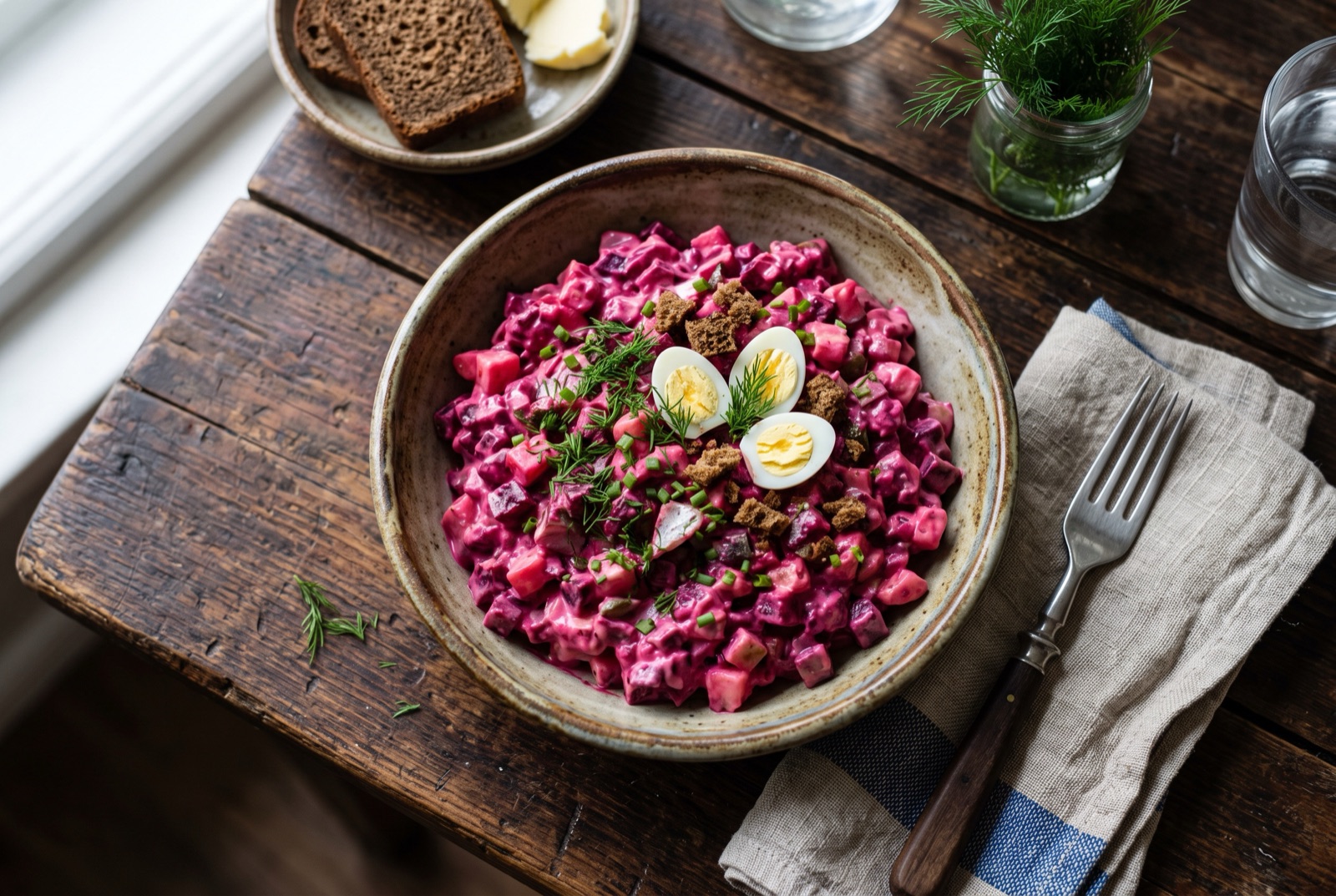
Estonia5 hr 20 min
Rosolje
Estonian Beetroot, Herring and Potato Salad
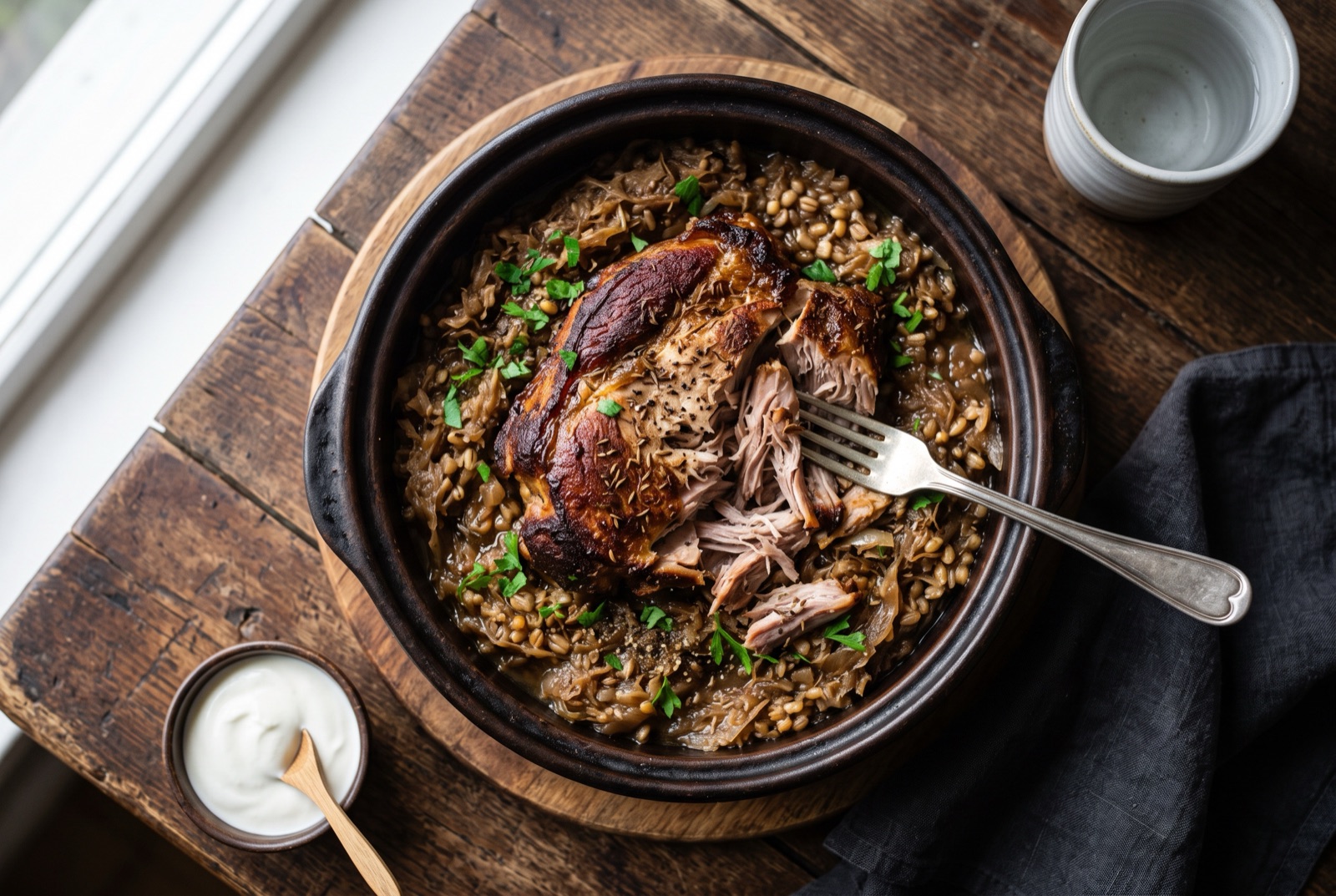
Estonia3 hr 55 min
Seapraad Hapukapsaga
Roast Pork with Braised Sauerkraut
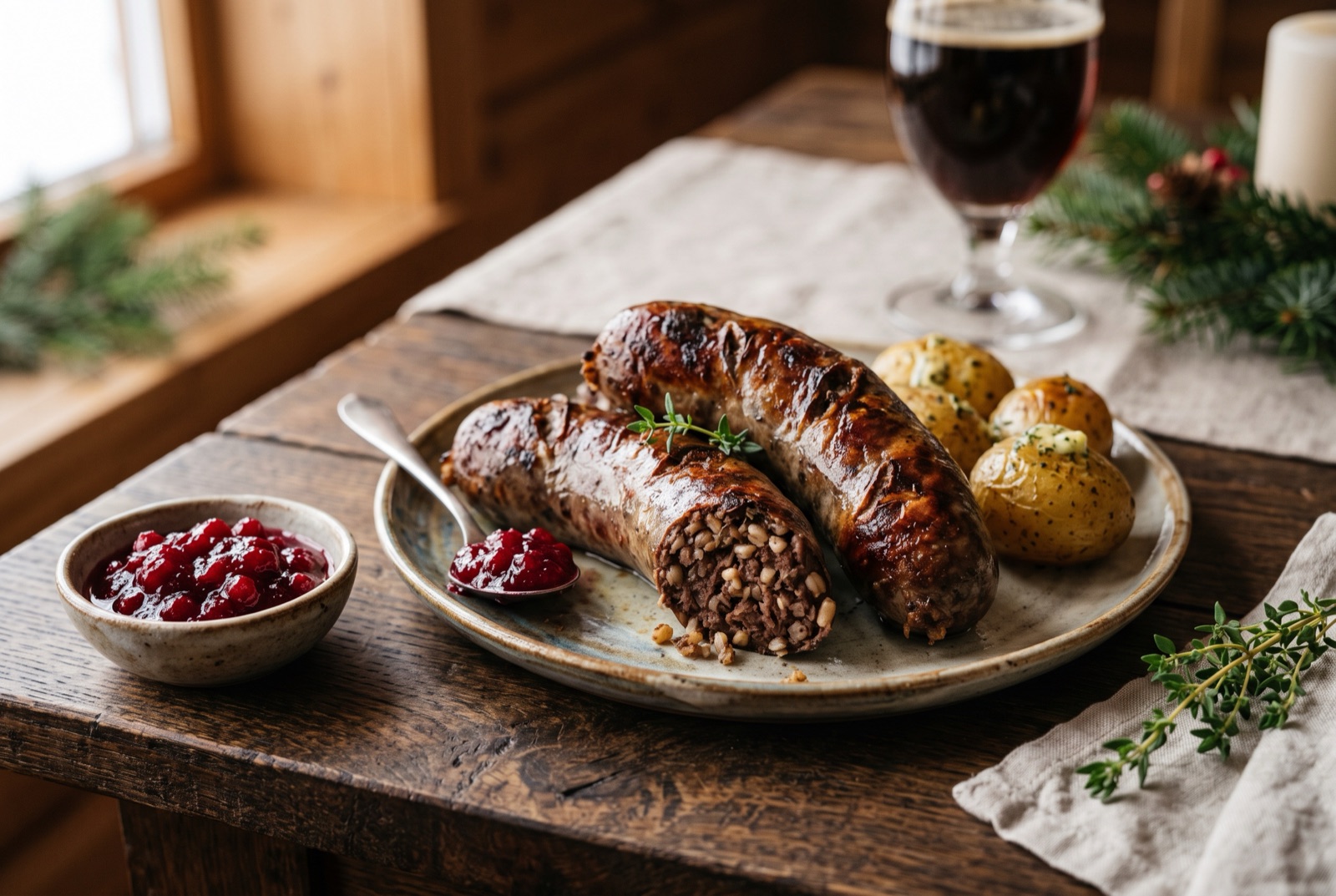
Estonia2 hr
Verivorst
Estonian Christmas Blood Sausage
Keep traveling.
Estonia sits in Baltics, and its kitchen shares borders as well as ingredients with Albania and Austria.
 Albania
 Austria