Malaysia.
Malaysia
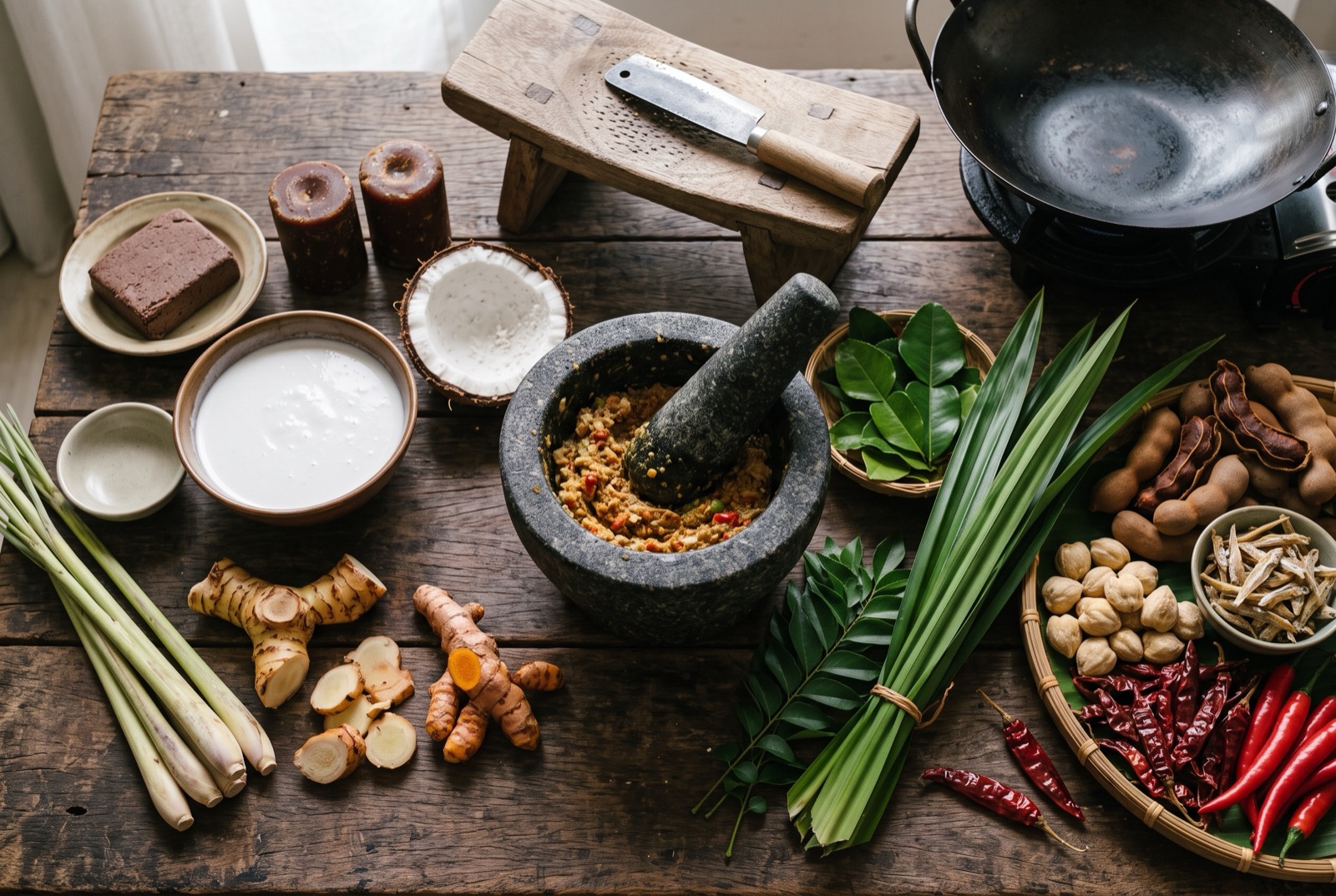
Malaysian food is three cuisines that have been arguing and borrowing from each other for six centuries. Malay cooking supplies the backbone — the rempah, a wet paste of shallots, garlic, lemongrass, galangal, turmeric and chile pounded together and fried until the oil splits out. Chinese immigrants brought the wok, the noodle and the discipline of high-heat frying. Tamil and Indian-Muslim cooks brought the griddle, the dhal and the ground spice blends of the south. What makes the result Malaysian rather than a food court is that the borrowing went both ways: Chinese noodles are dressed in Malay sambal, Indian flatbreads are dipped in coconut curry, and Nyonya kitchens in Malacca and Penang fused Chinese ingredients with Malay technique into something neither side could have made alone. The flavour signature underneath all of it is coconut milk, tamarind sourness, palm sugar sweetness and fermented shrimp — belacan — used the way Europeans use anchovy, as invisible depth rather than a taste in itself.

- Continent
- AsiaSoutheast Asia
- Recipes in atlas
- 10
- Must-try dishes
- 3
- Pantry staples
- 10
Start with the classics.
Must tryThe dishes that explain the Malaysia kitchen fastest — if you cook only a few things from this page, cook these.
Inside the Malaysia kitchen.
Everything starts with the rempah. Shallots, garlic, dried and fresh chiles, lemongrass, galangal, fresh turmeric and often candlenut go into a stone mortar or a blender and come out as a coarse wet paste. That paste is then fried patiently in oil — this is the step home cooks rush and regret — until it darkens, stops smelling raw and green, and the oil separates back out around the edges in a red slick called pecah minyak, "broken oil". A rendang, a laksa, an ayam percik and a fish curry can all begin from the same handful of ingredients; what separates them is the ratio, the additions, and how long the paste is fried.
The second pillar is belacan, a dense block of shrimp fermented and pressed into cakes. Raw it smells aggressive; toasted over a flame or dry-fried until it crumbles, it turns nutty and savoury and disappears into sambal, laksa broth and vegetable dishes. Alongside it sit tamarind (asam) for sour edge, gula melaka — palm sugar tapped from coconut flower stems, sold in dark cylinders — for a smoky caramel sweetness that white sugar cannot imitate, and coconut milk in two grades: the thick first press for richness, the thin second press for volume.
The Chinese kitchen contributes technique rather than seasoning. Char kway teow, hokkien mee and wonton noodles depend on wok hei, the scorched, faintly smoky aroma a screaming-hot carbon steel wok imparts in seconds. Soy sauce, dark and light, oyster sauce and lard belong to this side of the map, and the great Chinese-Malaysian dishes are almost all noodles cooked to order by a single cook at a single burner.
Indian-Muslim cooks — the mamak — run the country's all-night stalls, and their repertoire is its own genre: roti canai stretched and flipped to order, teh tarik pulled between two cups until foamy, mee goreng fried with tomato sauce and tofu puffs, nasi kandar rice buried under ladles of several curries at once. Tamil Malaysian cooking adds banana-leaf rice, rasam, curry leaves and mustard seed tempering.
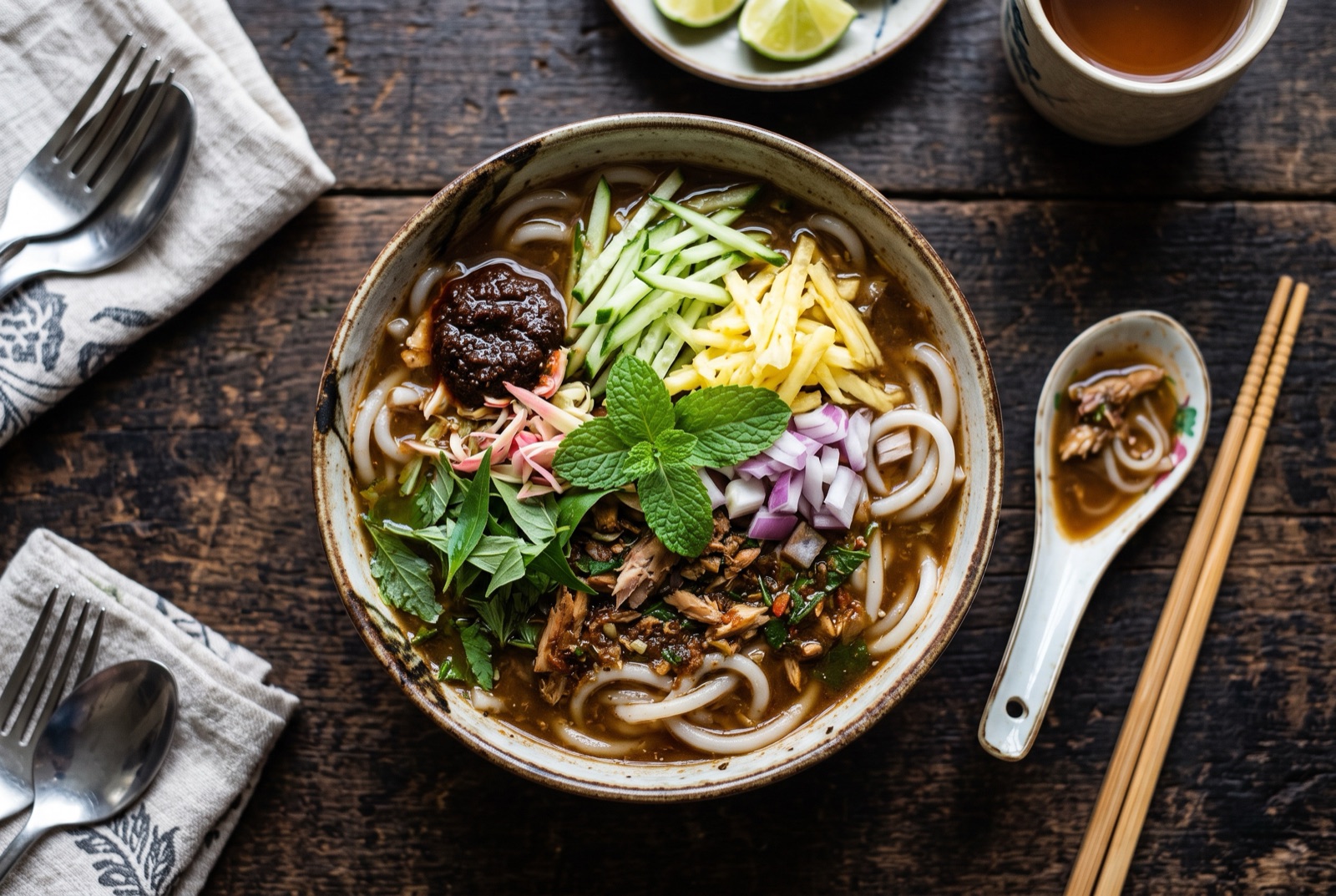
Regional lines are real. The east coast states of Kelantan and Terengganu cook sweeter, with more coconut and grilled fish. Penang is the sour-and-pungent capital, home of asam laksa and the best hawker street in the country. Malacca and Penang share Nyonya cooking, the Peranakan tradition of Chinese families who adopted Malay ingredients. Across the sea in Sarawak and Sabah, indigenous Iban, Bidayuh and Kadazan kitchens cook with bamboo, jungle ferns and rice wine, and Sarawak laksa tastes nothing like the peninsula's.
Signature pantry.
10 staplesThe ingredients this cuisine cannot function without.
- belacan (fermented shrimp paste)
- gula melaka (palm sugar)
- coconut milk
- lemongrass
- galangal
- tamarind
- pandan leaves
- dried anchovies (ikan bilis)
- candlenuts
- curry leaves
How people eat in Malaysia.
Malaysians eat out constantly and early — a kopitiam or roadside stall breakfast of nasi lemak or roti canai is normal on a weekday. Malay and Indian meals are eaten with the right hand, rice pressed into a small mound with the fingertips; Chinese meals use chopsticks and a spoon, and mixed tables simply set out both. Food is shared from the centre with rice as the anchor, and a plate of sambal or acar sits on the table the way salt does elsewhere. Because the country is majority Muslim, pork is absent from Malay and mamak kitchens and clearly separated in Chinese ones, and asking whether a stall is halal is an ordinary, unembarrassing question. Hands are washed at the table, often from a jug.
Regional kitchens.
Malaysia cooks 4 distinctly different ways depending on where you stand — here is what changes between them.
- R1Penang
- The hawker capital of the country and the home of sour, shrimp-paste-driven cooking: asam laksa, char kway teow fried over charcoal, and a Nyonya tradition that runs through half the island's home kitchens.
- R2Kelantan and Terengganu (the East Coast)
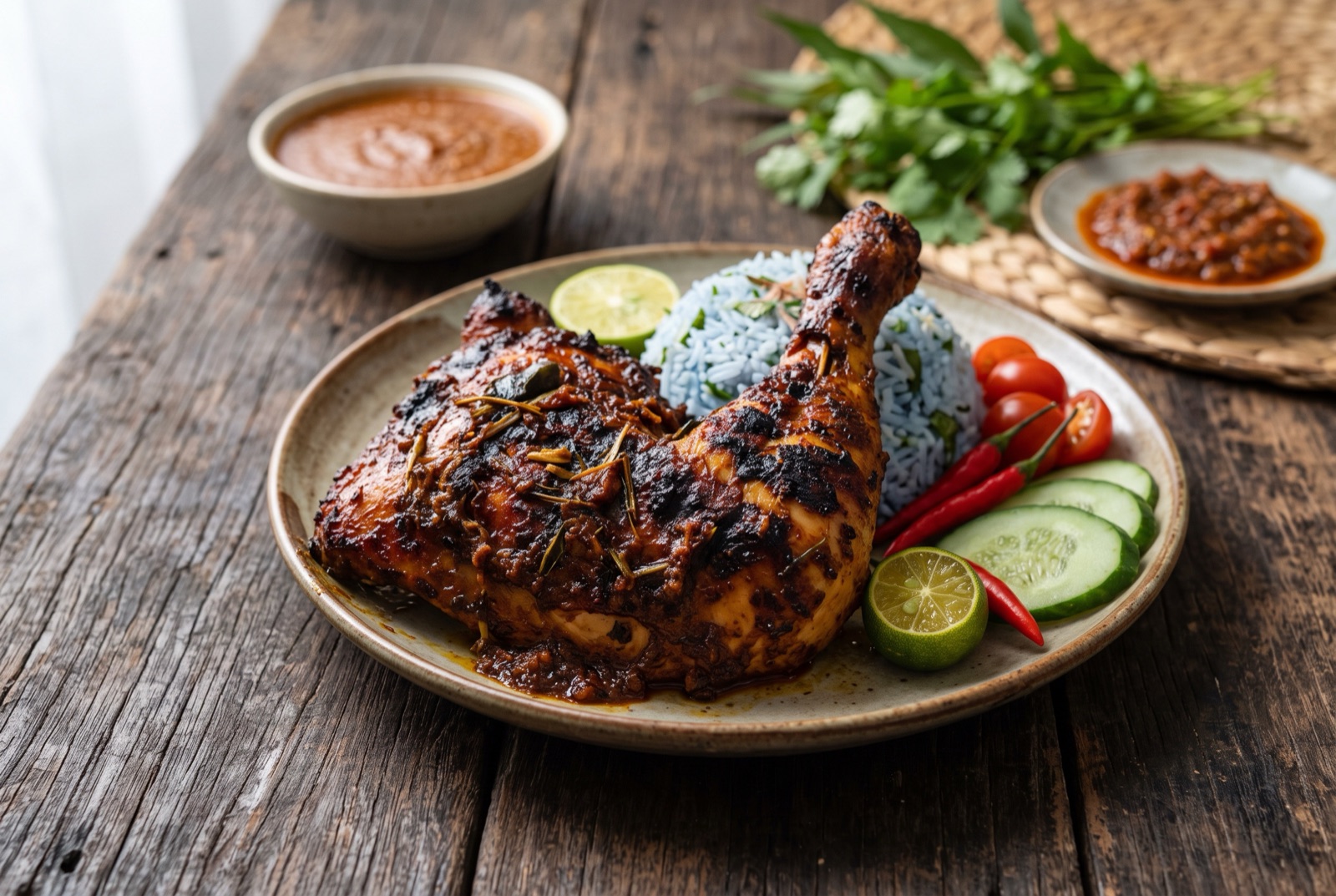
- Malay cooking at its sweetest and most coconut-heavy, close to the Thai border and to the sea. Grilled fish, nasi kerabu tinted blue with butterfly pea flowers, and ayam percik basted over coals.
- R3Malacca and the Nyonya kitchen
- Where Peranakan cooking was born from Chinese families marrying into Malay communities. Pork and soy meet rempah and coconut, and the acar, kuih and laksa lemak of this coast belong to neither parent cuisine.
- R4Sarawak and Sabah (Borneo)
- A different food map entirely: bamboo-cooked chicken, jungle ferns, sago, and a Sarawak laksa built on sambal and coconut that locals defend as unrelated to any peninsular version.
All Malaysia recipes.
10 recipes and counting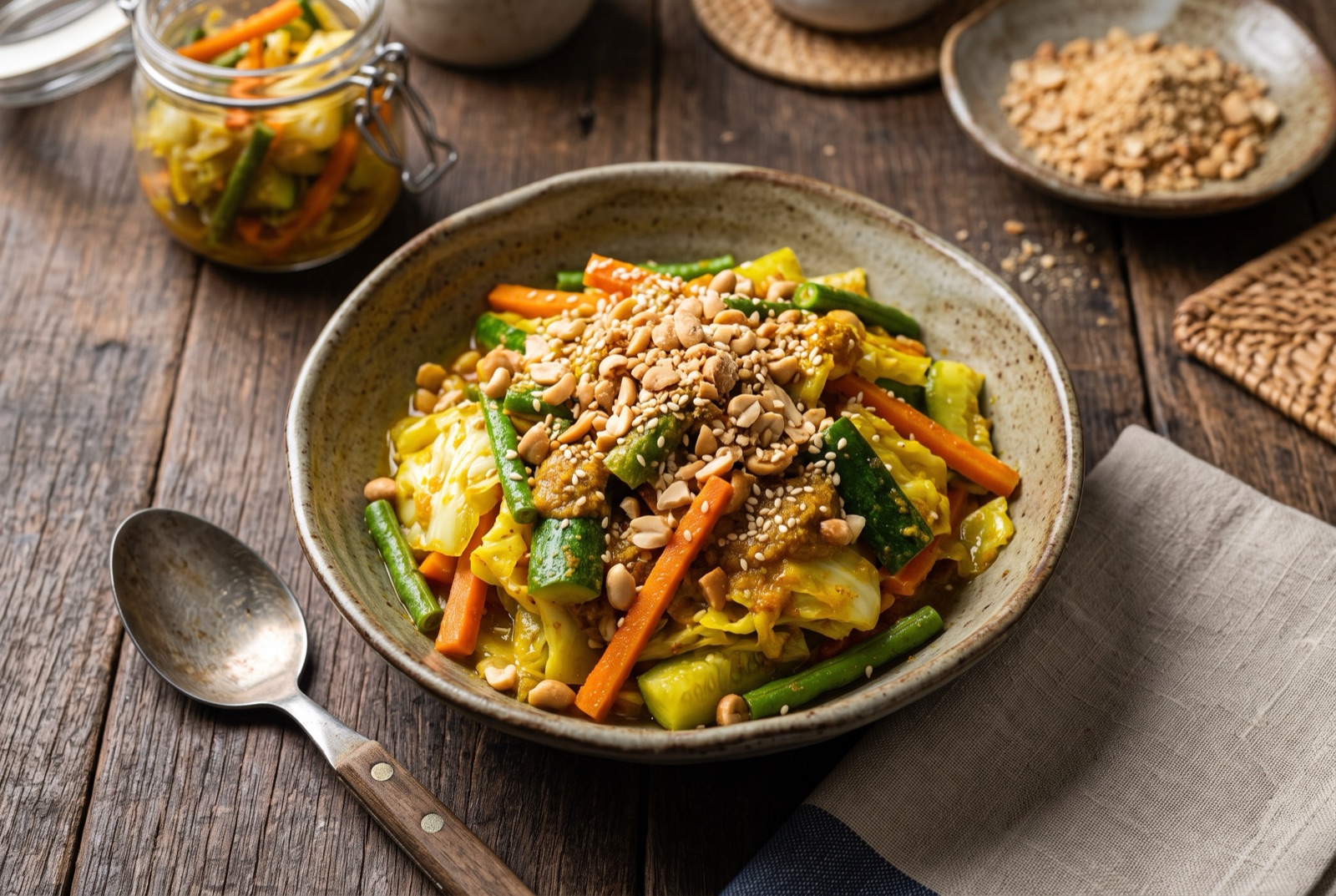
Malaysia13 hr 15 min
Acar Awak
Nyonya Spiced Pickled Vegetables
Malaysia1 hr 25 min
Asam Laksa
Penang Sour Fish Noodle Soup
Malaysia1 hr 35 min
Ayam Percik
Kelantan Grilled Chicken in Coconut Gravy
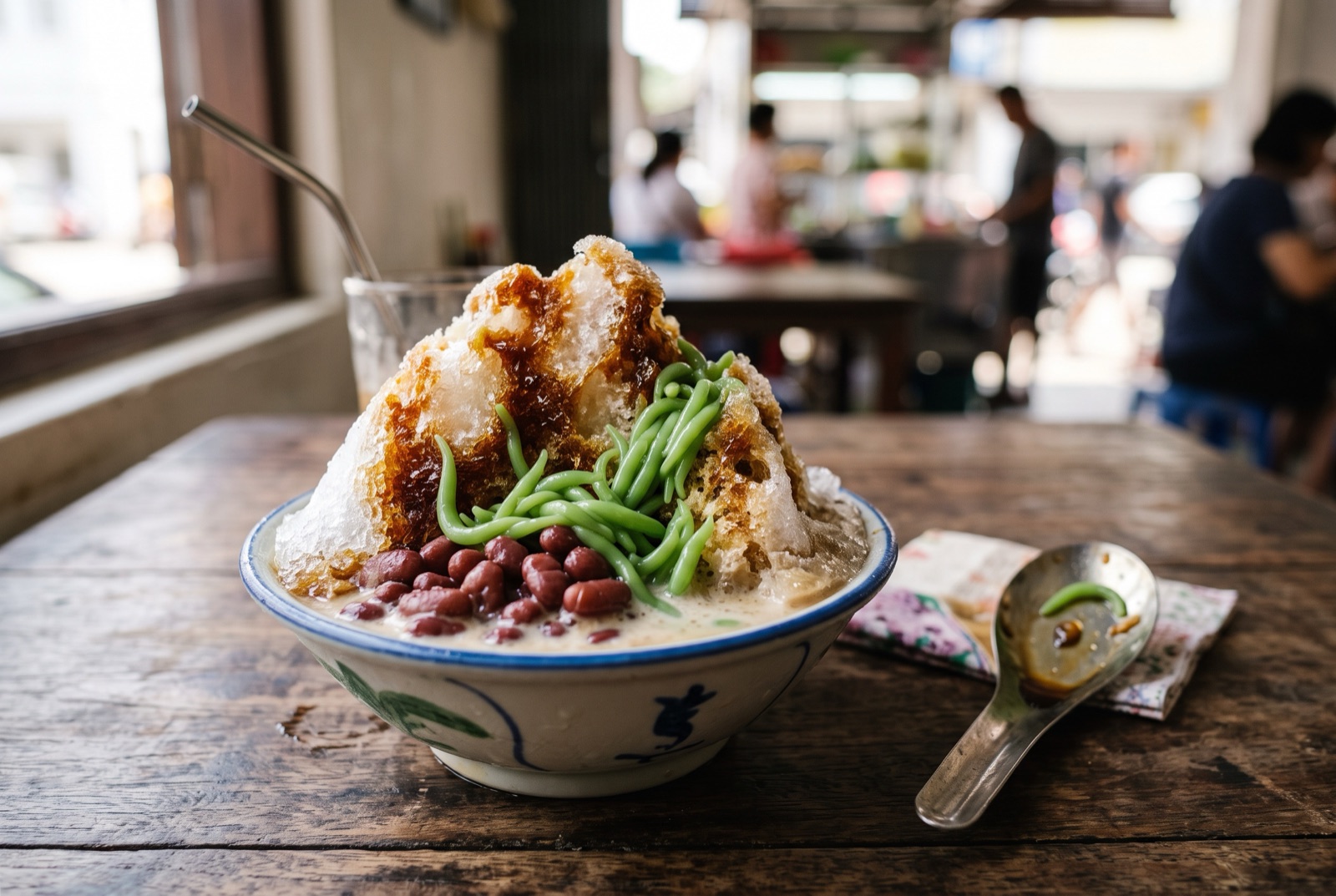
Malaysia1 hr 15 min
Cendol
Penang Shaved Ice with Pandan Noodles
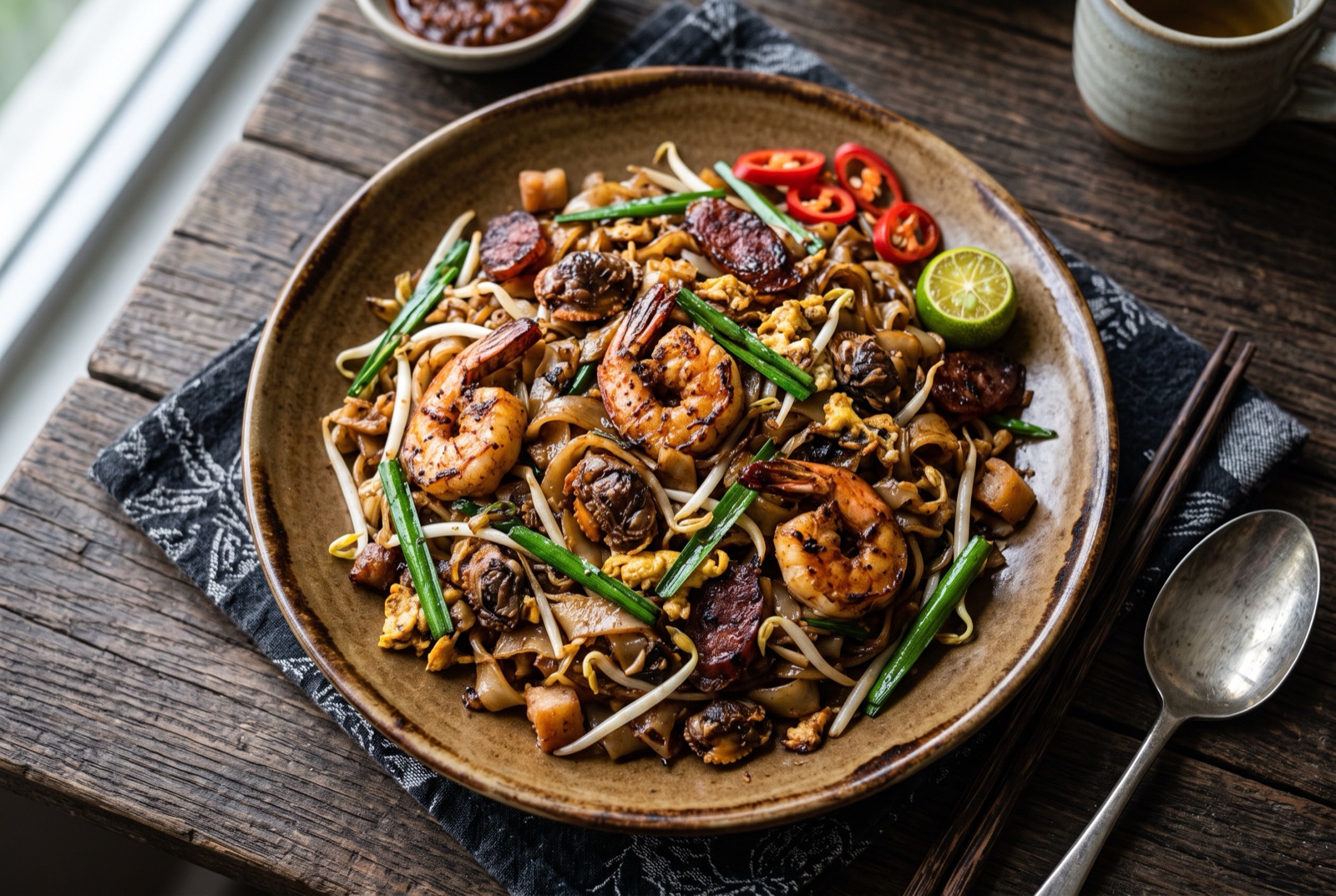
Malaysia35 min
Char Kway Teow
Penang Wok-Fried Flat Noodles
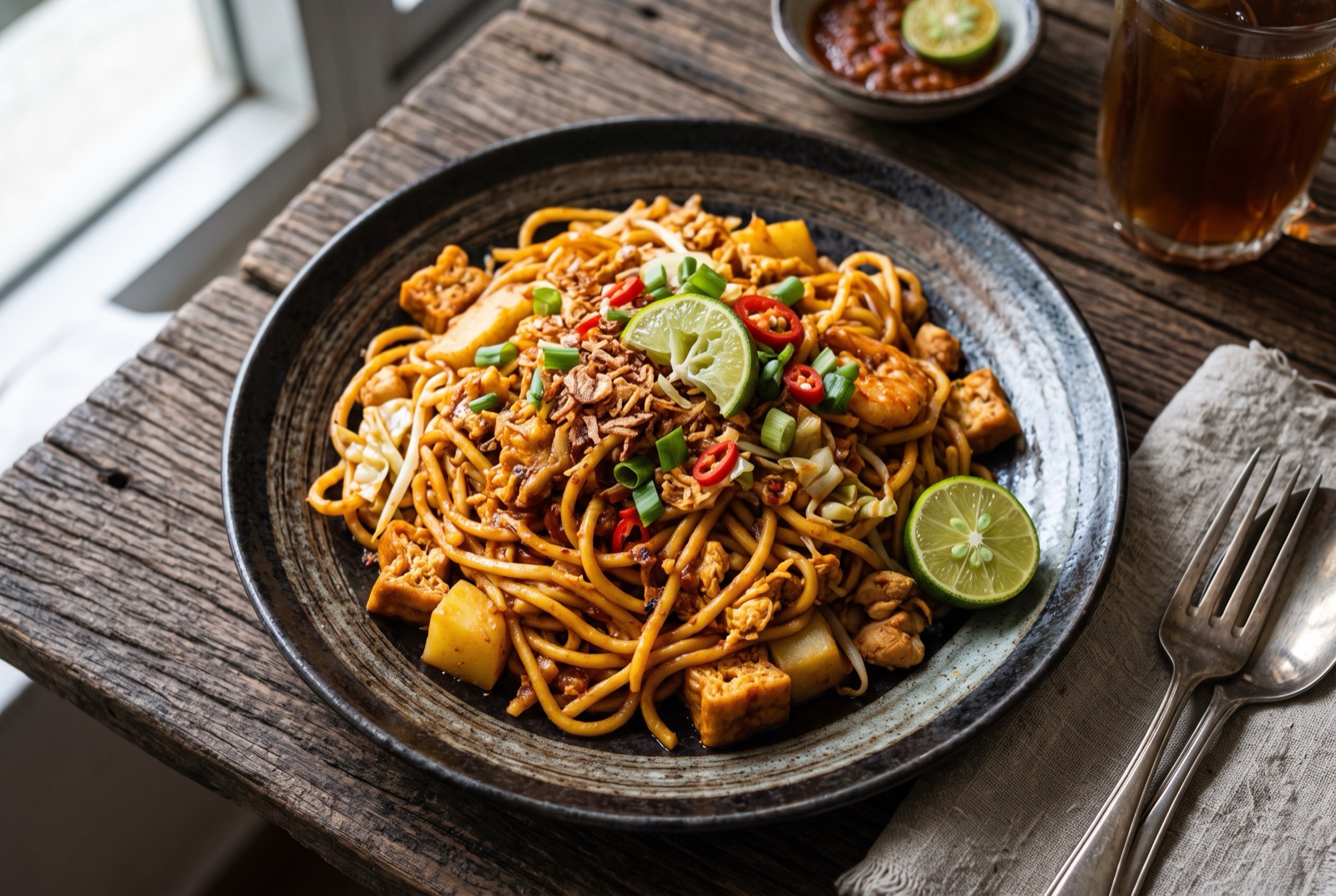
Malaysia35 min
Mee Goreng Mamak
Indian-Muslim Fried Noodles
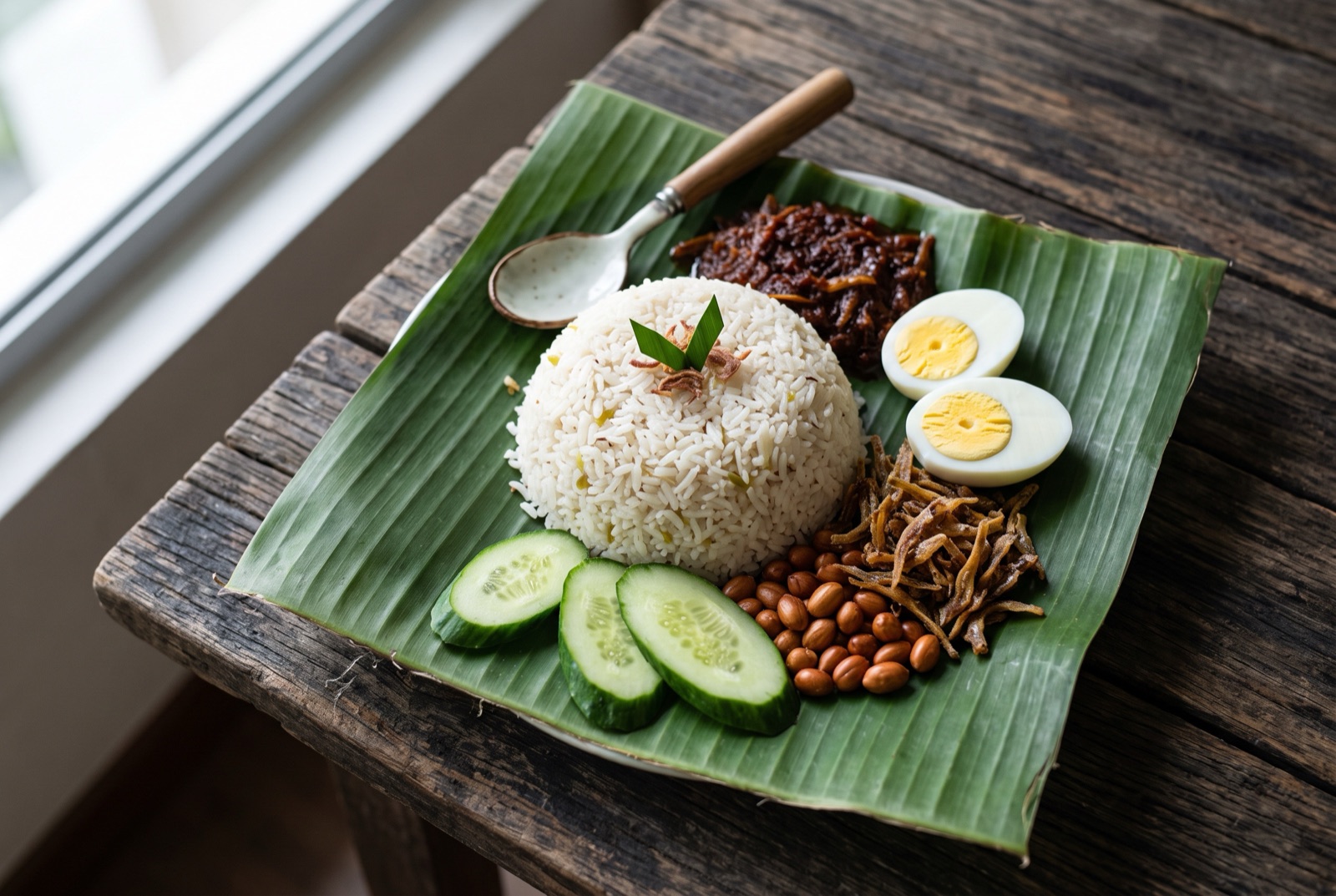
Malaysia1 hr 20 min
Nasi Lemak
Malaysian Coconut Rice with Sambal
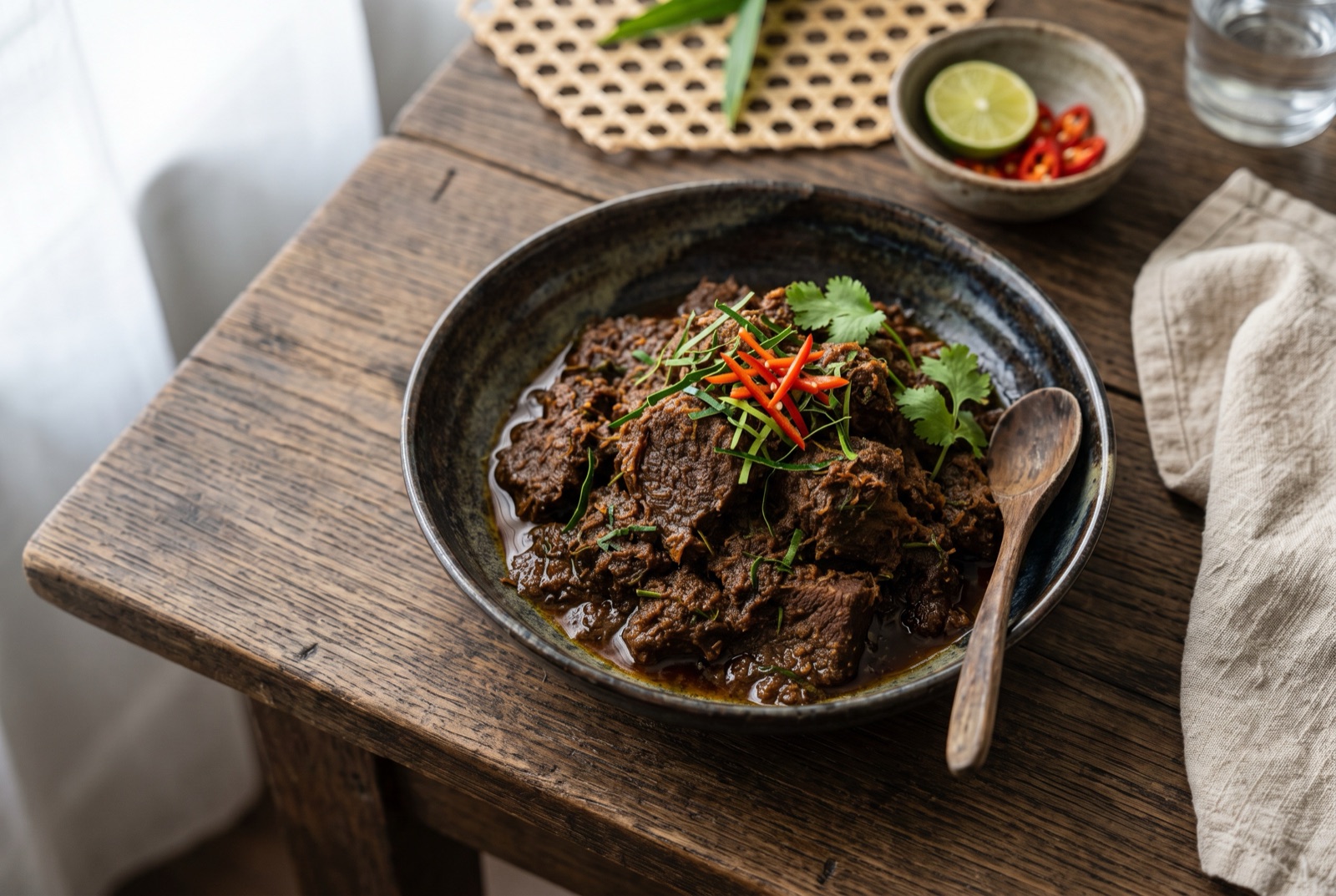
Malaysia3 hr 35 min
Rendang Daging
Malaysian Dry Coconut Beef
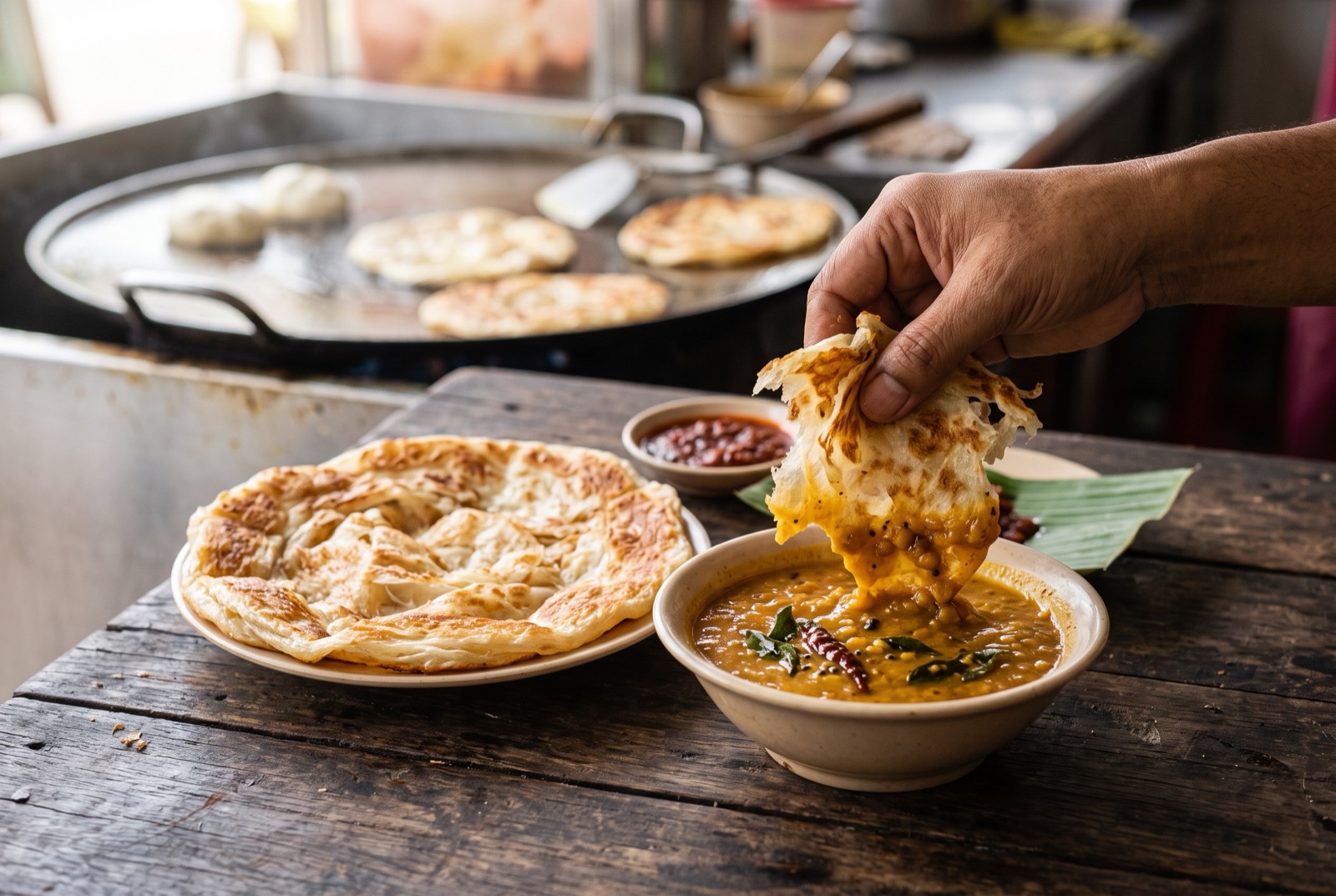
Malaysia9 hr 10 min
Roti Canai
Flaky Malaysian Griddled Flatbread
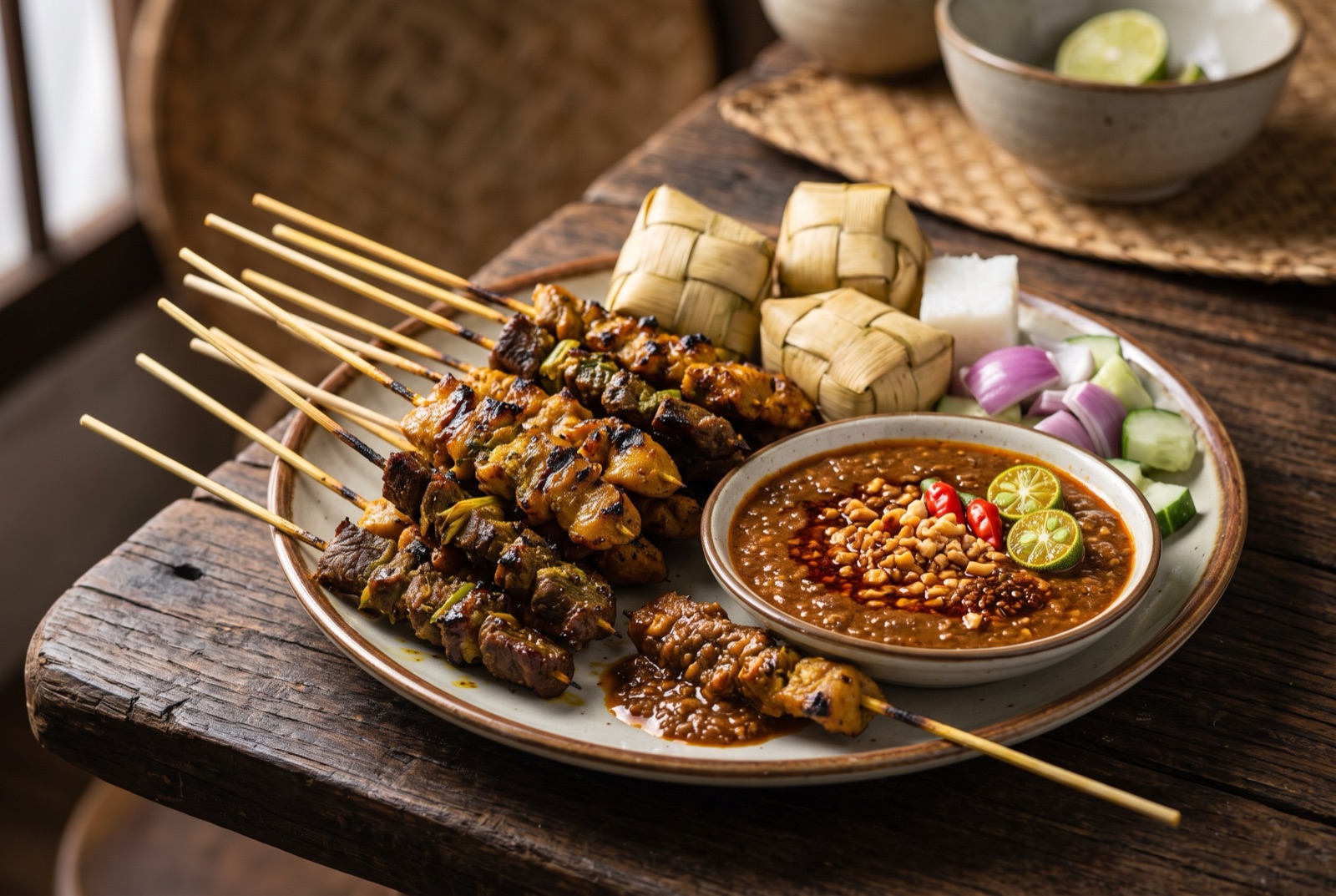
Malaysia5 hr 15 min
Satay Kajang
Malaysian Skewers with Peanut Sauce
Keep traveling.
Malaysia sits in Southeast Asia, and its kitchen shares borders as well as ingredients with Armenia and Bangladesh.
 Armenia
 Bangladesh