Nasi Lemak.
Malaysian Coconut Rice with Sambal
Nasi lemak · say it: NAH-see luh-MUCK
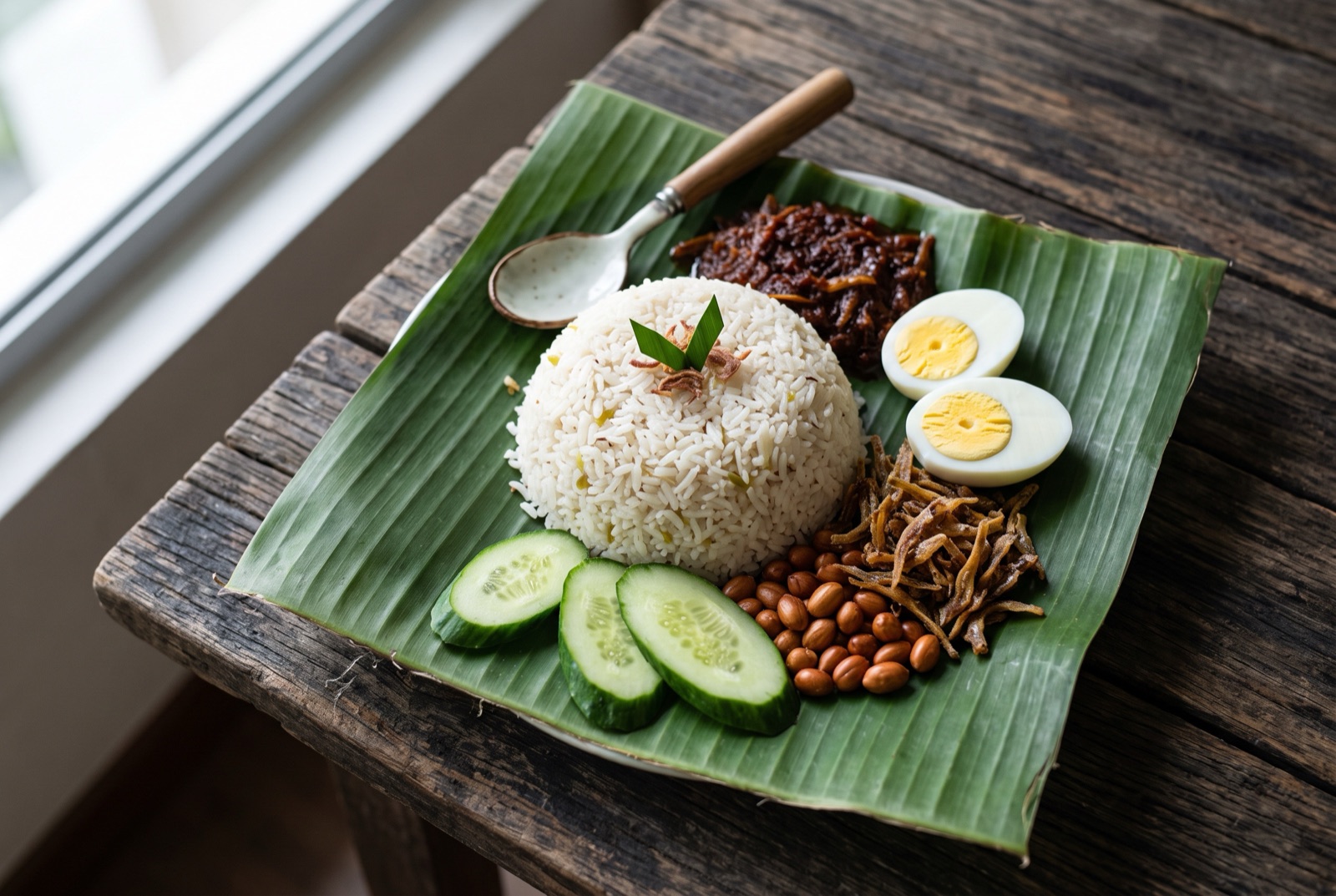
Nasi lemak is a plate, not a dish: rice cooked in coconut milk with a knot of pandan leaf until each grain is glossy and faintly sweet, surrounded by a ring of small, sharp things that cut through it. The centrepiece is sambal tumis ikan bilis — dried anchovies fried into a chile paste with tamarind and palm sugar until it turns dark red, thick and jammy. Around that go crunchy fried anchovies, roasted peanuts, cool cucumber slices and half a boiled egg. Every mouthful is assembled by the eater: a little rice, a smear of sambal, a crunch. Malaysians eat it for breakfast wrapped in banana leaf and newspaper, and again at midnight.

- Gate
- Malaysia
- Prep
- 25 min
- Cook
- 45 min
- Total time
- 1 hr 20 min incl. 10 min rest
- Serves
- 4
- Status
- Medium
- Nutrition / serving · estimated
- Calories 690 kcal
- Protein 24 g
- Carbs 88 g
- Fat 27 g
- Fiber 5 g
- Sugar 11 g
- Sodium 1100 mg
Why this recipe works.
- The sambal is fried the proper way, until the oil separates and the paste turns dark — the step that separates real sambal tumis from chile sauce.
- Rice ratios are adjusted for coconut milk, which is fattier than water, so the grains steam separate instead of turning gluey.
- Two uses for one packet of dried anchovies: some fried crisp for the plate, the rest simmered into the sambal.
- Honest about pandan, belacan and gula melaka — what to do if you can only find two of the three.
Ingredients.
19 itemsFor the coconut rice
For the sambal
To serve
Equipment
- Blender or stone mortar
- Heavy saucepan with a tight lid, or a rice cooker
- Wide frying pan or wok
- Fine sieve
Instructions.
Steam the coconut rice
Put the drained rice, coconut milk, water, ginger slices, knotted pandan and salt in a heavy saucepan. Bring to a boil uncovered, stir once, then clamp on the lid, drop the heat to its lowest setting and cook 12 minutes. Leave the lid on and rest off the heat for 10 minutes before forking through.
Tip Do not lift the lid during the 12 minutes — the rice cooks in trapped steam, and coconut milk scorches easily if the heat is not truly low.
Fry the anchovies and peanuts
Put 80 g of peanuts in a dry pan over medium heat and toast, shaking often, for 6–8 minutes until the skins darken and split. Tip out, then pour 3 tablespoons of oil into the same pan, add the anchovies for frying while the oil is still cool, and bring it up to heat until they turn pale gold and rattle like dry leaves. Drain on paper.
Tip They crisp further as they cool, so pull them while still slightly blond. Anything approaching dark brown will taste burnt.
Make the rempah
Drain the soaked chiles and blend them with the shallots, garlic and toasted belacan into a coarse, thick paste, adding only a splash of water if the blades stall. It should be spoonable, not runny.
Fry the sambal until the oil splits
Heat the remaining oil in a wide pan over medium heat and add the paste. Fry for 15–20 minutes, stirring regularly, until it darkens from bright red to brick, stops smelling raw and a rim of red oil pools at the edge of the pan.
Tip This is the whole dish. If the paste still smells sharp and grassy, it is not done, whatever the clock says.
Finish the sambal
Stir in the second batch of anchovies, the strained tamarind water, the sugar and the onion rings. Simmer 8–10 minutes until the sambal is thick enough to hold a furrow when you drag the spoon through it and the onion has softened but still has bite. Taste and balance: it should be savoury first, then sweet, then sour.
Build the plate
Pack a mound of coconut rice into a small bowl and turn it out onto each plate, or spoon it onto a warmed banana leaf. Arrange a generous spoon of sambal, a pile of fried anchovies, a heap of peanuts, half a boiled egg and a fan of cucumber around it, keeping everything separate so each bite can be mixed by hand.
Tips from our kitchen.
- Rinse the rice until the water runs clear, then let it drain properly. Surface starch plus coconut milk is what turns nasi lemak into porridge.
- Fry the ikan bilis in cool oil brought slowly up to heat — dropped into hot oil they scorch before they dry out, and burnt anchovy is bitter.
- Toast the belacan first: wrap the piece in foil and dry-fry it a minute per side until it crumbles and smells nutty rather than sharp.
- Do not stop frying the sambal at the point it looks done. Keep going until a red oil rims the pan and the paste holds a furrow when you drag the spoon through it.
- Sambal tastes better the next day. Make it ahead and reheat with a splash of water while the rice steams.
- If you have banana leaves, warm them briefly over a flame until they turn glossy and pliable, then wrap portions and let them sit ten minutes before eating.
Substitutions.
- Belacan (fermented shrimp paste) → 1 tbsp fish sauce, or 2 tsp Thai kapi
- Neither is identical — belacan is drier and more toasted — but both supply the savoury base the sambal needs. Leaving it out entirely makes the sambal taste thin and sweet.
- Gula melaka (palm sugar) → Dark brown sugar plus a few drops of molasses
- Gula melaka is smokier and less cloying. Brown sugar gets you most of the way; add it gradually and taste, since the sambal should read savoury with sweetness behind it.
- Pandan leaves → Omit, or use half a teaspoon of pandan extract
- Frozen pandan leaves are common in Asian shops and work as well as fresh. Without it the rice is still good, just less perfumed — do not substitute vanilla, which tastes wrong here.
Variations.
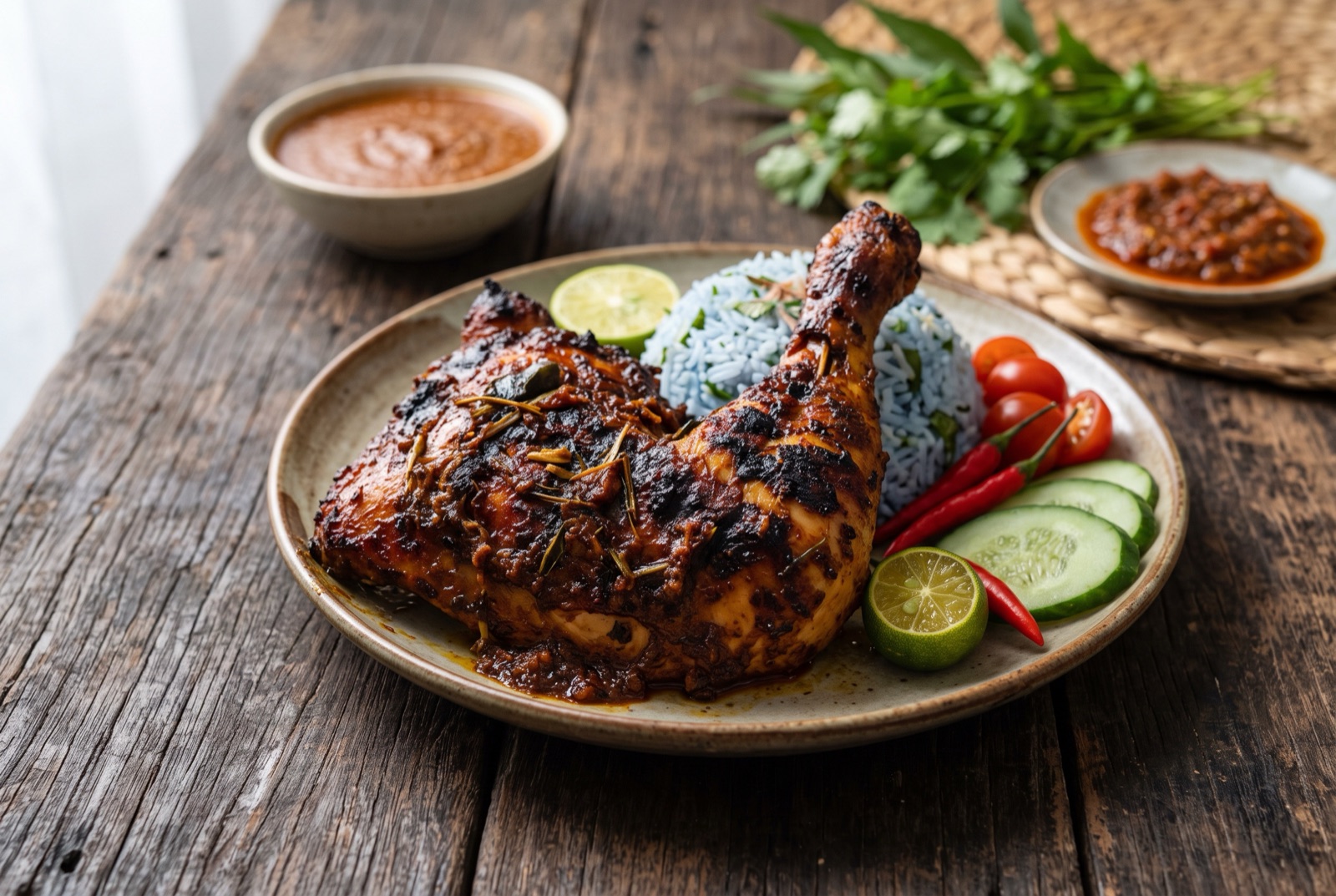
- Nasi lemak ayam goreng
- The most common upgrade: a piece of turmeric-marinated fried chicken laid over the rice, so the sambal doubles as a dipping sauce.
- Nasi lemak sotong
- Squid rings cooked into the sambal instead of anchovies, giving a wetter, sweeter sambal that stains the rice red.
- Nasi lemak bungkus
- The wrapped breakfast version: a small mound of rice, a spoon of sambal, a few anchovies and peanuts, folded into banana leaf and eaten within the hour.
Storage & reheating.
The sambal keeps a week refrigerated in a sealed jar and genuinely improves after a day; it also freezes well in small portions. Coconut rice is best the day it is made — refrigerate it and the coconut fat firms up and the grains harden, though a covered reheat with a splash of coconut milk or water in a steamer or microwave brings it most of the way back. Fried anchovies and peanuts stay crisp for a week in an airtight jar at room temperature; do not refrigerate them, as they go soft.
Serve with
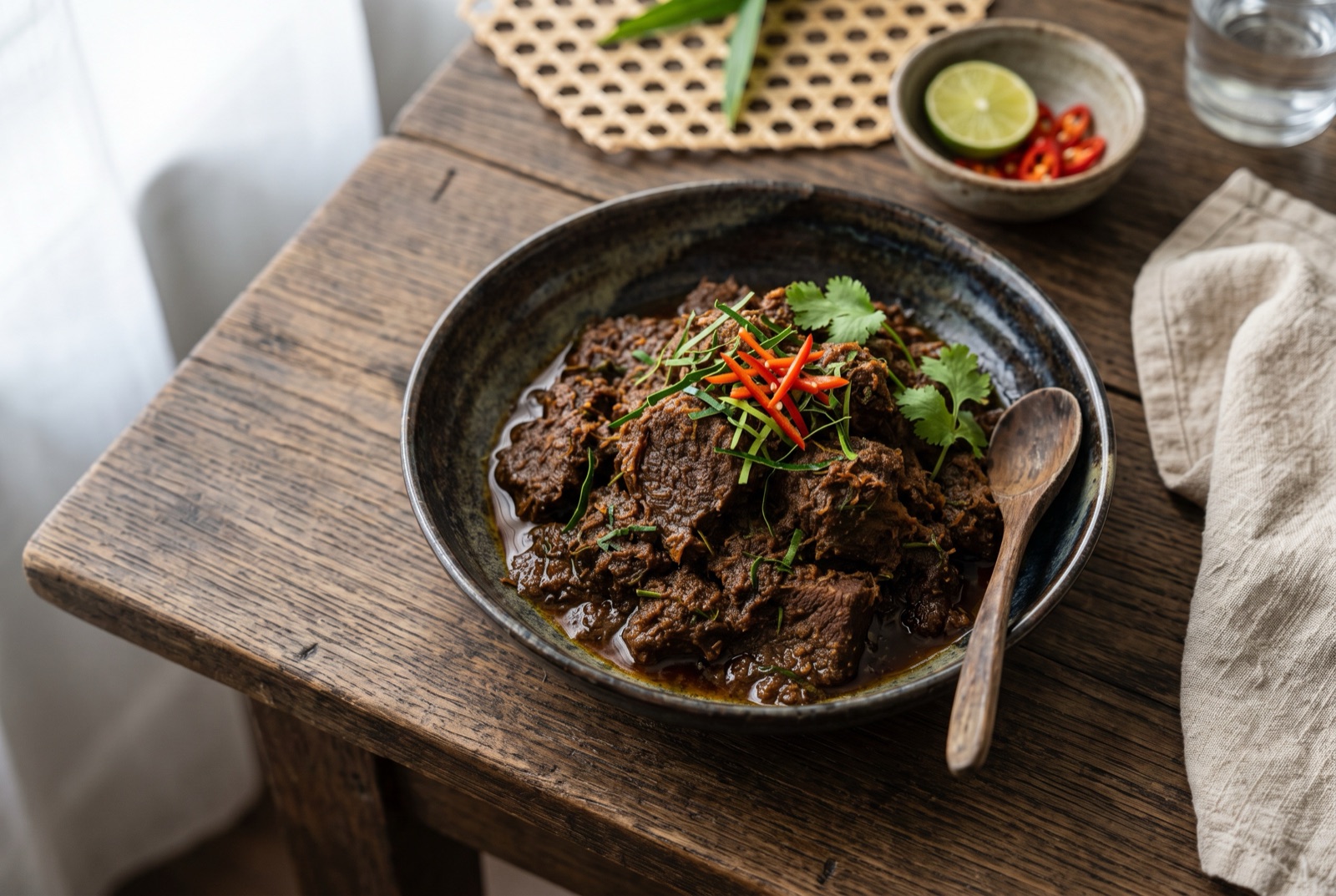
Fried chicken or beef rendang for a full plate, and hot sweet tea or teh tarik alongside.
The story behind Nasi Lemak.
Nasi lemak began as farmers' and fishermen's food on the Malay peninsula — a way of making a small amount of rice carry a whole morning's work by cooking it in coconut milk for fat and calories, then seasoning it hard with chile and dried fish. The name simply means "fatty rice", a description of method rather than a poetic flourish. For most of its life it was a breakfast eaten standing up, bought from a woman with a basket, wrapped in a banana leaf folded into a pyramid and secured with a stick of bamboo or a staple, and priced at whatever a labourer could spare.
It outgrew that. Today nasi lemak is the closest thing Malaysia has to a national dish, and it is eaten by everyone: Malay, Chinese, Indian, at hawker stalls, in office canteens, on airline trays and in hotel breakfast buffets. The base plate stays constant while the toppings expand — fried chicken (nasi lemak ayam goreng), beef rendang, squid sambal, fried egg instead of boiled. Singapore and southern Thailand have their own closely related versions, and arguing about whose sambal is better is a regional sport with no referee.
The banana leaf matters more than it looks. Warm rice against fresh leaf releases a faint grassy perfume that no plate reproduces, and the parcel steams itself gently on the way to work so the sambal softens into the rice. Cooks will tell you that a nasi lemak bungkus — the wrapped version, small and cheap — tastes better than the same food served open on a plate, and they are not entirely wrong. The wrapped ones are also deliberately small: two or three of them is a normal breakfast.
Questions, answered.
Why is my coconut rice mushy?
Almost always too much liquid or unrinsed rice. Coconut milk contains fat and solids as well as water, so use less total liquid than you would for plain rice — roughly 1.1 parts liquid to 1 part rice by volume. Rinse the rice until the water runs clear to remove loose starch, drain it well, and let the cooked rice stand covered off the heat for ten minutes before fluffing.
Can I make nasi lemak without shrimp paste?
Yes, though the sambal loses its backbone. Belacan supplies fermented, salty depth rather than a shrimp flavour you can identify. Fish sauce is the closest easy substitute. For a fully vegetarian version, use a spoon of white miso plus extra tamarind — it is not traditional, but it gives the sambal something savoury to stand on.
What are ikan bilis and where do I buy them?
Ikan bilis are small dried anchovies, sold in bags in any Southeast Asian or Chinese grocery and often labelled dried anchovy or silver fish. Buy the ones with heads and guts already removed if you can. They are used twice here: fried crisp as a topping and simmered into the sambal, where they dissolve slightly and season it.
How spicy is nasi lemak supposed to be?
Moderately hot, but the sweetness and the tamarind matter more than the burn. Malaysian sambal tumis is built on soaked dried chiles, which give deep colour and mild-to-medium heat rather than the sharp attack of fresh bird's eye chiles. Control it by removing the seeds from the dried chiles, and add fresh chile only if you want real heat.
Can I use a rice cooker?
Yes, and most Malaysian households do. Put rinsed rice, coconut milk, water, salt, the ginger slices and a knotted pandan leaf straight into the bowl and run the standard white rice programme. Stir once at the start so the coconut milk is evenly distributed, then leave it alone; coconut milk can catch on the base if stirred mid-cook.
You might also like.
All recipes →
Keep exploring Malaysia.
Malaysia has 9 more dishes in the atlas — Acar Awak and Asam Laksa, and 7 more.
All Malaysia recipes Rice recipes Coconut milk recipes Peanuts recipes mainbreakfastdairy freehalal friendlyRecipe by The DishRoute Kitchen · published August 20, 2026 · updated August 20, 2026