Mee Goreng Mamak.
Indian-Muslim Fried Noodles
Mee goreng mamak · say it: mee GO-reng MAH-mak
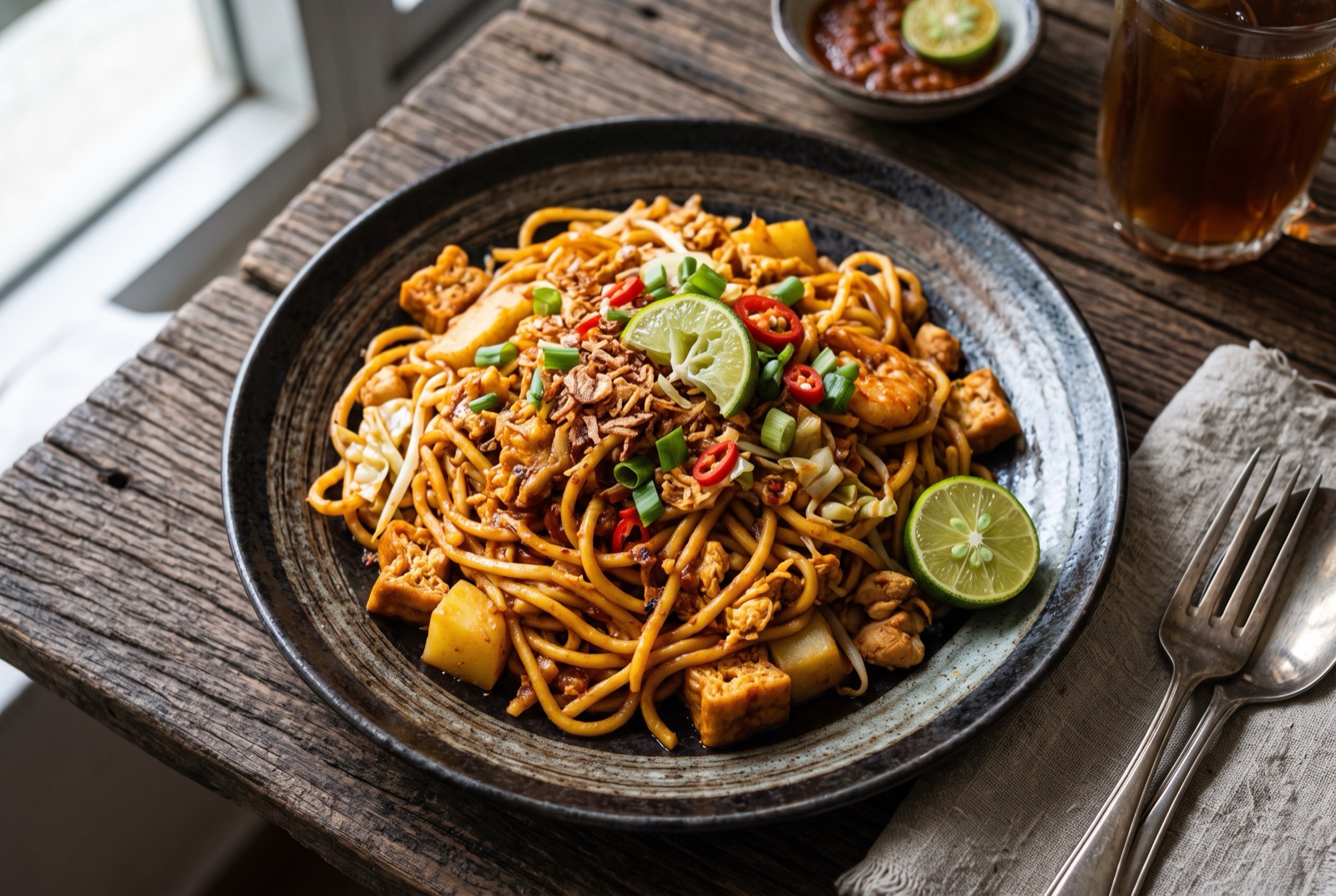
Mee goreng mamak is bright orange, sweet, sour and slightly spicy, and it is the noodle dish Malaysians eat at one in the morning. Thick yellow alkaline noodles are fried with cubes of boiled potato, spongy tofu puffs, bean sprouts and an egg scrambled through, in a sauce built on tomato ketchup, chile paste and soy — a combination that sounds improbable and works completely. The texture is what sets it apart: the noodles stay springy and slippery, the tofu puffs soak up sauce like sponges, and the potato goes soft. A lime wedge on the side is not optional, since the whole thing needs that final sourness to come into focus.

- Gate
- Malaysia
- Prep
- 15 min
- Cook
- 20 min
- Total time
- 35 min
- Serves
- 3
- Status
- Easy
- Nutrition / serving · estimated
- Calories 560 kcal
- Protein 20 g
- Carbs 82 g
- Fat 18 g
- Fiber 6 g
- Sugar 14 g
- Sodium 1500 mg
Why this recipe works.
- The sauce is mixed and balanced in a bowl first, so the dish is seasoned correctly rather than squirted at while the pan burns.
- Tofu puffs and potato in the right proportion — the two textures that make mamak mee goreng different from any other fried noodle.
- Fast enough for a weeknight: about fifteen minutes once the potato is boiled, with no rempah to pound.
- Naturally meat-free as written, with a one-line change for a fully vegan version.
Ingredients.
17 itemsFor the noodles
For the sauce
To serve
Equipment
- Wok or large frying pan
- Small saucepan
- Mixing bowl
Instructions.
Mix the sauce
Stir the ketchup, sambal, light soy, sweet soy and oyster sauce together in a small bowl with 3 tablespoons of water. Taste it — it should be assertively sweet, sour and salty all at once, since the noodles will dilute it.
Fry the aromatics and tofu
Heat the oil in a wok over high heat until it shimmers, then add the shallots and garlic and stir for 30 seconds until fragrant and just turning gold. Add the tofu puffs and potato cubes and fry 2 minutes until the puffs brown at the edges.
Tip Keep the garlic moving. It goes from gold to bitter faster than anything else in the pan.
Scramble in the eggs
Push everything to one side, crack the eggs into the clear space and let them set for 15 seconds before breaking the yolks and stirring them into loose curds. Fold the tofu and potato back through.
Add noodles and sauce
Tip in the noodles and cabbage, pour the sauce over and toss hard for 2 minutes, lifting and turning, until every strand is stained orange and the noodles are hot through but still springy when you bite one.
Finish with sprouts and chives
Throw in the bean sprouts and chives and toss for a final 30 seconds so they warm without wilting — they should still snap. Taste and correct with a squeeze of lime or a splash more soy.
Serve immediately
Divide between plates while the noodles are steaming, with lime wedges on the side and a saucer of sliced green chile in soy sauce for anyone who wants more heat. Squeeze the lime over just before eating.
Tips from our kitchen.
- Rinse fresh yellow noodles in warm water and drain them well. They are packed in alkaline liquid, and unrinsed noodles taste soapy and smell faintly of ammonia.
- Boil the potato ahead and let it cool and dry before frying — hot, wet potato falls apart and clouds the sauce.
- Squeeze the tofu puffs gently before they go in. Emptying them of air is what lets them refill with sauce.
- Use ketchup, not passata or tomato paste. The sugar and vinegar in ketchup are doing structural work here, not just adding tomato.
- Get the pan properly hot and cook in two batches if your wok is small — piled noodles steam and go slack.
- Taste before serving and adjust with lime and soy rather than more chile: mee goreng should land sweet-sour first with heat behind it.
Substitutions.
- Fresh yellow alkaline noodles → Dried ramen or thick egg noodles, cooked one minute under the packet time
- The bouncy, slippery texture of Hokkien-style yellow noodles is hard to replicate. Undercook whatever you substitute, since it will keep cooking in the wok.
- Tofu puffs → Firm tofu cut into cubes and shallow-fried until golden
- Not the same — commercial puffs are hollow and act as sponges — but fried firm tofu gives you the protein and some of the surface. Look for tau pok or fried bean curd in the chilled aisle.
- Sambal oelek → Sriracha, or any chile-garlic paste
- Sriracha is sweeter and more vinegary, so cut the ketchup slightly if you use it. Plain dried chile flakes will give heat but not the body the sauce needs.
Variations.
- Mee goreng udang
- With prawns added: fry them first for 30 seconds, remove, and fold them back in at the end so they do not turn rubbery.
- Mee goreng basah
- The wet version — a ladle of stock or the gravy from a curry pot added at the end, so the noodles finish in a shallow sauce instead of dry.
- Maggi goreng
- The same treatment applied to instant noodles, which mamak stalls sell in enormous quantities and which nobody in Malaysia considers a downgrade.
Storage & reheating.
Best eaten immediately — the noodles soften and the sauce dulls within an hour. If you must keep it, refrigerate for up to 2 days and revive it in a very hot pan with a splash of water and a fresh squeeze of lime, which does more to bring it back than any amount of extra sauce. Do not freeze: the noodles turn to paste and the tofu puffs collapse. The sauce mixture itself can be made up to a week ahead and kept in a jar, which turns this into a genuinely fast weeknight dish.
Serve with
A wedge of lime, sliced green chile in soy sauce, and iced teh tarik or lime juice.
The story behind Mee Goreng Mamak.
Mamak is the Malaysian term for Tamil Muslims, whose families arrived on the peninsula from South India — many from the Tamil Nadu coast — over generations of trade and migration. Their food stalls, known simply as mamak stalls, became one of the most important institutions in Malaysian social life: cheap, halal, open all night, and one of the few genuinely mixed spaces where Malay, Chinese and Indian Malaysians sit at the same plastic tables. Football is watched at mamak stalls. Arguments are settled there.
The cooking is a hybrid that could not have happened anywhere else. Mee goreng mamak uses Chinese alkaline wheat noodles, Indian frying technique and chile paste, and Malay sweetness, plus tomato ketchup, which arrived through the British and stayed because it worked. Purists occasionally object to the ketchup; the dish has been made that way for as long as anyone can document, and stalls that leave it out produce something noticeably duller. The same kitchen turns out roti canai, nasi kandar, teh tarik pulled between two cups, and mee rebus, all cooked by a man at a burner facing the street.
Because mamak food is halal by definition, mee goreng contains no pork, and the standard version is often vegetarian apart from the egg — the protein comes from tofu puffs and sometimes a handful of prawns or shredded mutton if you ask for it. That makes it one of the easiest Malaysian dishes to cook at home without hunting down specialist ingredients: the only thing you really need from an Asian grocery is the noodles themselves and the tofu puffs. Everything else is in a normal supermarket, which is not something you can say about most of this cuisine.
Questions, answered.
What are yellow alkaline noodles?
Fresh wheat noodles treated with an alkaline solution that makes them springy, slippery and yellow — the same family as ramen noodles, sold refrigerated in Asian groceries as Hokkien mee, mee kuning or yellow noodles. They usually need only rinsing and a minute in the pan. Rinse them in warm water first to wash off the alkaline packing liquid, which otherwise tastes soapy.
Is tomato ketchup really authentic here?
Yes. Mamak stalls have used bottled tomato and chile sauce for generations, and it is a defining part of the flavour rather than a shortcut — the sugar and vinegar balance the soy and chile. Malaysian cooks are entirely unembarrassed about it. Substituting fresh tomato or paste gives you a duller, flatter dish.
Can I make this vegan?
Almost as written. Leave out the egg and check that your noodles contain no egg — most yellow alkaline noodles do not, but read the packet. Replace the oyster sauce with a mushroom-based vegetarian version. The tofu puffs, potato and bean sprouts already carry the dish, so nothing else needs changing.
Why are my noodles soggy instead of springy?
Usually overcrowding or overcooking. Fresh yellow noodles need barely two minutes in the wok; any longer and they absorb sauce until they go slack. Cook in two batches if your pan is not wide enough for everything in a single layer, and have the pan properly hot before the noodles go in so they fry rather than steam.
What is the difference between mee goreng mamak and Indonesian mie goreng?
They share a name and a noodle but taste quite different. Indonesian mie goreng leans on kecap manis, sweet dark soy, giving a brown, sweet-savoury dish. The mamak version is orange and sharply sweet-sour from tomato and chile sauce, with tofu puffs and potato as standard, and is finished with lime rather than fried shallots.
You might also like.
All recipes →
Keep exploring Malaysia.
Malaysia has 9 more dishes in the atlas — Acar Awak and Asam Laksa, and 7 more.
All Malaysia recipes Tofu recipes Potato recipes Eggs recipes mainstreet foodvegetariandairy freehalal friendlyRecipe by The DishRoute Kitchen · published August 20, 2026 · updated August 20, 2026