Char Kway Teow.
Penang Wok-Fried Flat Noodles
炒粿條 · Char kway teow · say it: char kway TEOW
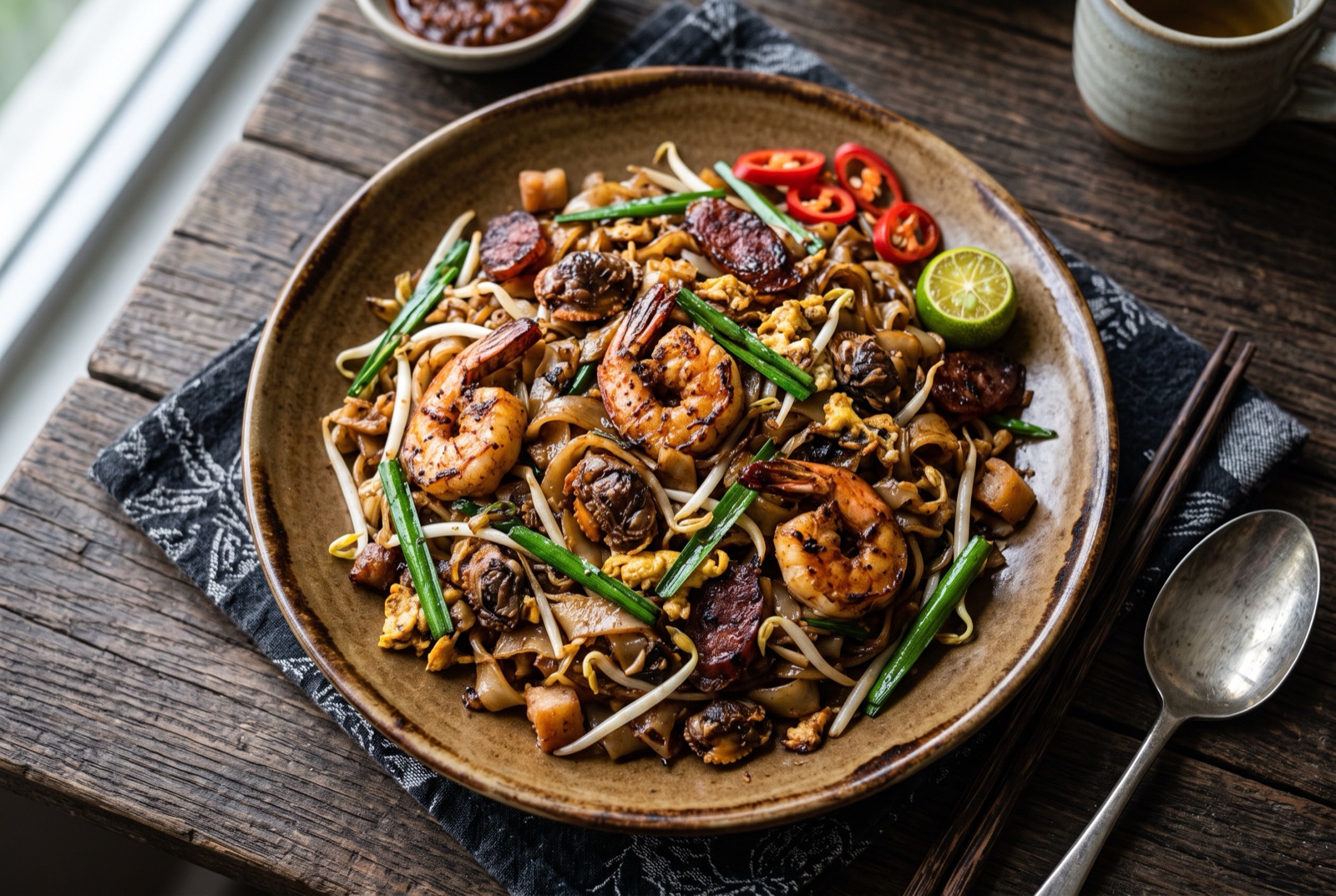
Char kway teow is a plate of wide, slippery rice noodles fried so fast and so hot that they pick up a faint scorched perfume before anything has time to steam. The seasoning is simple — dark and light soy, a spoon of chile paste, a knob of pork lard — and the additions are traditional rather than optional: prawns, blood cockles, garlic chives, bean sprouts and an egg cracked in at the end and scrambled through. It should taste smoky first, savoury second and sweet third, with the noodles bruised and slightly torn rather than pristine. Penang cooks fry it one portion at a time, because two portions in the pan means no char at all.

- Gate
- MalaysiaPenang
- Prep
- 25 min
- Cook
- 10 min
- Total time
- 35 min
- Serves
- 2
- Status
- Medium
- Nutrition / serving · estimated
- Calories 720 kcal
- Protein 32 g
- Carbs 76 g
- Fat 32 g
- Fiber 4 g
- Sugar 6 g
- Sodium 1600 mg
Why this recipe works.
- Written for a home hob: single portions, an empty screaming wok, and everything measured out before the first thing hits the pan.
- Uses rendered pork lard and crisp lard croutons, which is what makes street char kway teow taste like street char kway teow.
- Penang-style seasoning — restrained dark soy, real chile paste, no sugar-heavy sauce drowning the noodles.
- Says plainly what a home kitchen cannot reproduce, and what actually gets you closest.
Ingredients.
14 itemsFor the noodles
For the sauce
Equipment
- Carbon steel wok
- Wok spatula
- Small bowls for mise en place
Instructions.
Render the lard
Put the diced pork fat in a cold wok with a splash of water and set it over medium heat. Cook for 10–12 minutes until the water has gone, the fat has melted out and the solids are golden and crunchy. Lift out the croutons with a slotted spoon and keep the liquid fat in a bowl.
Tip Starting cold and wet renders more fat and stops the pieces browning before they give up their oil.
Set up before you cook
Whisk the light soy, dark soy, chile paste, oyster sauce and white pepper together in a small bowl. Line everything up beside the hob in separate bowls: noodles, garlic, prawns, cockles, sausage, eggs, sprouts, chives, sauce and lard. Once frying starts there is no time to fetch anything.
Sear the aromatics and seafood
Heat the wok over the highest flame you have until it is lightly smoking, then add 1 tablespoon of the lard. Throw in half the garlic, then the prawns and sausage, and toss hard for 45 seconds until the prawns are just pink at the edges. Scrape everything onto a plate.
Fry the noodles
Add another tablespoon of lard to the empty wok, wait until it shimmers, then add half the noodles and half the sauce. Toss and press the noodles flat against the metal for 90 seconds, letting them sit still for a few seconds at a time so they catch and blister at the edges.
Tip Resist stirring constantly. The char comes from contact with the hot surface, and a noodle in motion never chars.
Add the egg
Push the noodles up one side of the wok, crack an egg onto the bare hot metal and let it set for 10 seconds before breaking the yolk and folding the noodles through it in ragged streaks. Return half the prawn mixture and add the cockles.
Finish with sprouts and chives
Scatter in half the bean sprouts, chives and lard croutons and toss for a final 20 seconds — just long enough to heat them through while they still squeak. Slide straight onto a plate and repeat the whole sequence for the second portion.
Tips from our kitchen.
- Fry one portion at a time. Two portions drop the wok temperature below the point where charring happens and you get steamed, gluey noodles.
- Fresh flat rice noodles must be at room temperature and gently separated by hand before they go in — cold, clumped noodles tear and stick.
- Have every ingredient prepped in bowls beside the hob. The entire fry takes about three minutes and there is no pause to chop anything.
- Get the wok hotter than feels reasonable: it should be lightly smoking before any oil goes in, and the oil should shimmer instantly.
- Push the noodles up the side of the wok and crack the egg onto the bare hot metal, letting it set for a few seconds before folding it through.
- Add bean sprouts and chives in the last twenty seconds only. They should still squeak between the teeth, not wilt.
Substitutions.
- Pork lard → Peanut oil, or duck fat
- Lard is the traditional and best-tasting choice, and the crisp lard bits are half the dish. For a halal or pork-free version use peanut oil and add extra prawns; the result is lighter but still very good.
- Blood cockles → Small clams, or simply more prawns
- Fresh cockles are hard to find outside Southeast Asia and should never be used frozen and rubbery. Leaving them out is far better than using bad ones, and most stalls will do it on request.
- Fresh flat rice noodles → Dried wide rice noodles, soaked in warm water until pliable but not soft
- Fresh noodles from a Chinese grocery are noticeably better. If using dried, undersoak them — they finish cooking in the wok and turn to paste if they go in fully hydrated.
Variations.
- Char kway teow with duck egg
- Penang stalls often offer a duck egg for a small surcharge — richer yolk, more custardy through the noodles, and the version regulars usually pick.
- Kuala Lumpur style
- Darker and sweeter, with a heavier hand on dark soy sauce and often no cockles. Penangites consider it a separate dish rather than a variation.
- Vegetarian char kway teow
- Fried in peanut oil with pressed tofu and extra bean sprouts, seasoned with a mushroom-based sauce instead of prawns and lard.
Storage & reheating.
Char kway teow does not keep and should not be made ahead. Refrigerated noodles firm up and shed water, and reheating produces something wet, grey and nothing like the original. If you have leftovers, eat them cold within a few hours rather than reheating. What you can prepare in advance is the mise en place: chile paste, chopped garlic, rendered lard and prepped seafood all hold for a day in the fridge, which turns cooking time into three minutes per plate.
Serve with
Nothing but a cold drink — iced lime juice or barley water is the Penang pairing.
The story behind Char Kway Teow.
Char kway teow started as cheap fuel for people doing hard physical work. Chinese labourers, fishermen and rickshaw pullers in the Straits Settlements needed calories, and a hawker with a charcoal brazier could deliver them for a few cents: rice noodles, lard, whatever cockles came off the boat that morning. The generous use of pork fat was the whole point, not an indulgence, and older Penangites still order it "extra lard" without embarrassment.
The dish is Chinese-Malaysian in the specific sense that it belongs to the Hokkien and Teochew communities who settled Penang, and its name is Teochew: kway teow are the flat rice noodles, char means fried in a wok. Penang has spent decades defending its version against Singapore's and Kuala Lumpur's, which tend to be darker and sweeter with more dark soy. The Penang style is comparatively pale and drier, with more chile heat, and the argument centres on the cockles — sei hum — briefly warmed rather than cooked, so they stay plump and slightly bloody. Tourists frequently ask for them to be left out; regulars consider that a different dish.
What nobody argues about is wok hei, literally the breath of the wok. It is the aroma produced when oil, food and the surface of a very hot carbon steel pan interact for a few seconds — part caramelisation, part vaporised fat igniting above the rim. Street stalls achieve it with cast-iron woks over jet-engine burners, worked by cooks who have fried the same dish thousands of times and never fry more than one or two portions at once. A domestic hob cannot match that output, which is the honest limitation of every home char kway teow. You can get close by cooking single portions in a bone-dry, ferociously preheated wok and accepting a smoky kitchen.
Questions, answered.
What is wok hei and can I get it at home?
Wok hei is the smoky aroma a very hot wok imparts, produced when food, oil and hot metal meet for a few seconds and some of the vaporised fat combusts above the pan. Street burners put out several times the heat of a domestic hob, so you cannot fully reproduce it. You get closest with a thin carbon steel wok preheated until it smokes, one portion at a time, and ingredients that go in dry.
Why did my noodles turn to mush?
Three usual causes: the wok was not hot enough, you cooked too large a batch, or the noodles were over-soaked or straight from the fridge. Cold noodles cool the pan and release water, which steams instead of fries. Bring fresh noodles to room temperature, separate them by hand, and cook a single portion in a wok that is already smoking.
Can I make char kway teow without pork?
Yes. Pork lard is traditional and does contribute flavour, but plenty of halal stalls in Malaysia fry it in peanut oil with prawns, squid and egg. Use a high-smoke-point oil, be slightly more generous with it than you would be with lard, and consider adding a small amount of chicken fat if you want the richness back.
What kind of noodles do I need?
Fresh flat rice noodles about 1 cm wide, sold refrigerated in Chinese and Southeast Asian groceries as hor fun, kway teow or sha he fen. They are usually stuck together in a slab and need gently peeling apart at room temperature. Dried wide rice sticks work at a pinch if you soak them only until bendy, not soft.
Do I really need cockles?
They are traditional in Penang and give a mineral, slightly iron-like note that regulars consider essential, but they are genuinely hard to source fresh abroad. Small fresh clams are the closest substitute. Poor-quality frozen cockles are worse than none, so leaving them out is a legitimate choice rather than a compromise.
You might also like.
All recipes →
Keep exploring Malaysia.
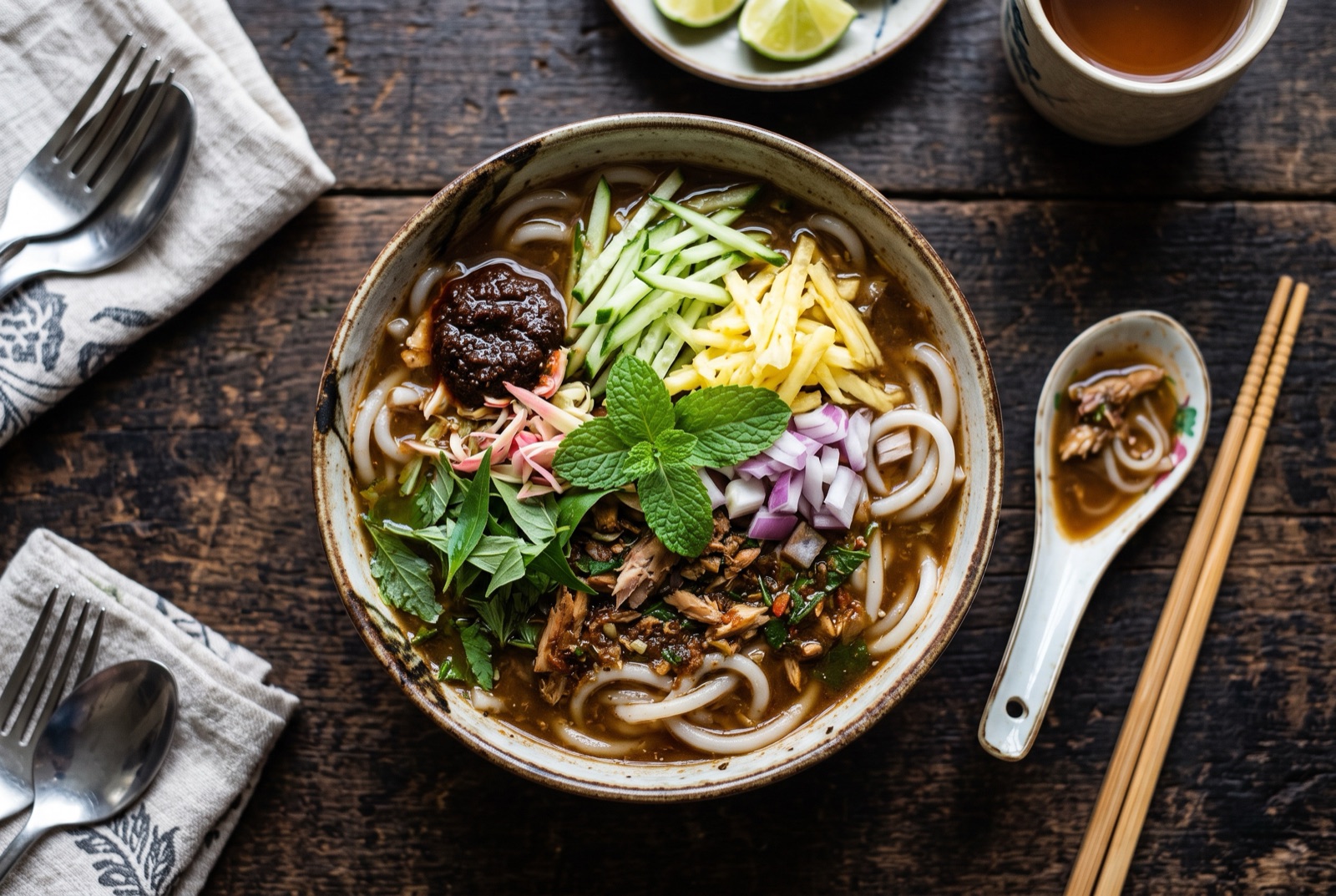
Malaysia has 9 more dishes in the atlas — Acar Awak and Asam Laksa, and 7 more.
Recipe by The DishRoute Kitchen · published August 20, 2026 · updated August 20, 2026