Aish Baladi.
Egyptian Wholewheat Pocket Bread
عيش بلدي · ʿAish baladī · say it: AYSH ba-LA-dee
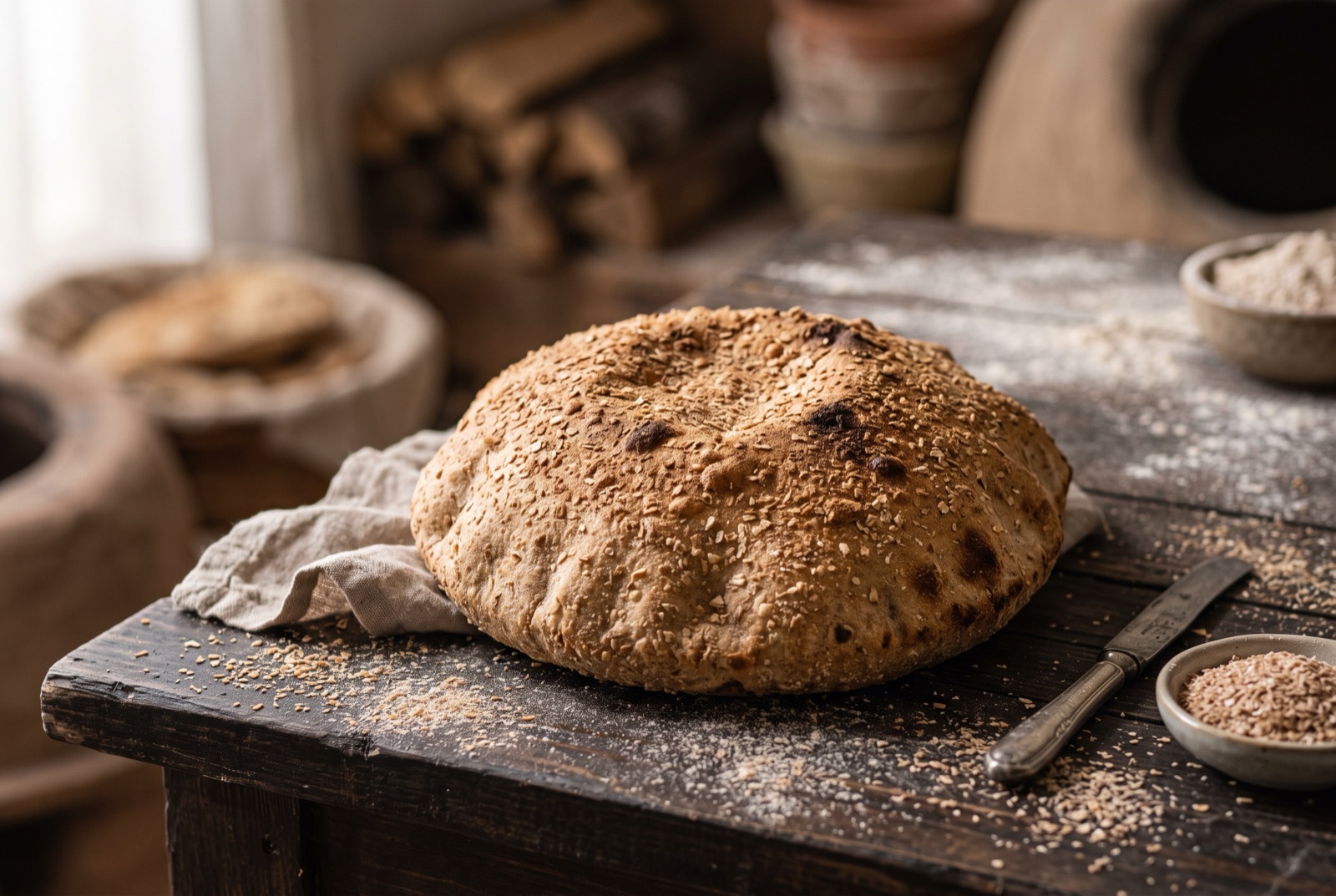
Aish baladi is a wholemeal flatbread with a rough, bran-dusted skin and a hollow middle, baked so hot and so fast that the loaf balloons in under a minute and then sinks into two thin walls with a pocket between them. It tastes nutty and faintly sour from the wholegrain flour, and it is chewier and more substantial than the pale pita most people know — this is bread that works as a scoop for ful, a wrapper for ta'ameya, and a shell for hawawshi without tearing. Aish means life, which tells you where it sits in the meal. Four ingredients, one long rise, and an oven turned as high as it will go.

- Gate
- Egypt
- Prep
- 30 min
- Cook
- 20 min
- Total time
- 3 hr 10 min incl. 2 hr 20 min rest
- Serves
- 8
- Status
- Medium
- Nutrition / serving · estimated
- Calories 230 kcal
- Protein 8 g
- Carbs 46 g
- Fat 1.5 g
- Fiber 7 g
- Sugar 1 g
- Sodium 490 mg
Why this recipe works.
- Uses a high-hydration dough, which is what generates the steam that inflates the loaf rather than leaving it flat.
- Proves the shaped rounds on bran the way Egyptian bakeries do, so nothing sticks and the surface gets its speckled skin.
- Says plainly what a home oven can and cannot match, and how to get the closest result from one.
- Makes eight loaves from four ingredients, and the dough is mixed and forgotten for most of the time.
Ingredients.
6 itemsThe dough
To shape and bake
Equipment
- Baking stone, steel or heavy cast-iron pan
- Large mixing bowl
- Bench scraper
- Clean cloths for proving and stacking
Instructions.
Mix and rest
Stir both flours with the yeast in a large bowl, pour in the warm water and mix with a hand or a spoon until no dry flour is left. It will look shaggy and unpleasantly sticky. Cover and leave it for 20 minutes so the bran softens and takes up the water.
Add salt and knead
Sprinkle the salt over the dough and knead in the bowl or on a lightly oiled surface for 6 to 8 minutes, using a scraper to fold rather than adding flour. Stop when the dough pulls into a rough ball that holds its shape for a few seconds before slumping — wholemeal will never go silky or fully translucent, and chasing that will only dry it out.
Tip Resist the urge to flour the bench. Every extra spoonful of flour costs you steam, and steam is what makes the pocket.
Bulk rise
Cover the bowl and leave the dough somewhere warm for 60 to 75 minutes, until it has roughly doubled and the surface is domed and bubbled. A finger poked into it should leave a dent that fills back only halfway.
Divide and rest the balls
Tip the dough out, divide it into 8 pieces of about 110 g, and roll each into a tight ball on an unfloured patch of the bench. Cover them and leave 15 minutes so the gluten relaxes and they stop springing back.
Heat the oven properly
While the balls rest, put a baking stone, steel or heavy cast-iron pan on the top-middle shelf and set the oven to its maximum, at least 250°C. Give it a full hour of preheating even if the oven says it has reached temperature — the stone lags well behind the air.
Tip Turn on the top element or grill for the last ten minutes if your oven has one; it helps blister the surface.
Shape and prove on bran
Scatter bran thickly over two cloths or trays. Press each ball out with your fingertips into a round about 16 cm across and 6 mm thick, turning it in the bran so both sides are coated. Cover and prove for 30 to 40 minutes, until the rounds look puffy and a fingertip leaves a slow, shallow dent.
Tip No rolling pin at this stage. Fingertips push the dough out while leaving the gas inside it.
Bake one at a time
Slide a round onto the hot stone, bran side down. Within 30 to 45 seconds it should lift, dome and inflate into a balloon; give it 2 to 3 minutes in total, until the surface is dry with a few brown blisters. Bake the rest one or two at a time, letting the stone recover for a minute between loaves.
Tip A loaf that stays flat is telling you the stone lost heat. Wait longer between bakes rather than changing the dough.
Stack under a cloth
As each loaf comes out, stack it on the previous one and cover the pile with a clean cloth. They will deflate and settle into soft, flexible pockets as they cool. Eat warm, or bag them once fully cool.
Tips from our kitchen.
- Preheat the stone or steel for a full hour at maximum temperature. The pocket forms from a sudden blast of heat on the base, and an under-heated surface gives you a flat disc.
- Keep the dough wet — around 75 percent hydration. It should be tacky and slack rather than smooth and firm, because the water in it becomes the steam that lifts the loaf.
- Do not use a rolling pin on the proved rounds. Press them out with your fingertips so the gas stays in the dough; a pin drives it out and the bread stays flat.
- Bake one loaf as a test. If it does not balloon within 45 seconds, the oven or the stone is not hot enough, not the dough.
- Stack the hot loaves under a clean cloth as they come out. Trapped steam softens them; cooling on a rack leaves them stiff and cracker-like.
- Wholemeal flour absorbs water slowly, so let the mixed dough sit 20 minutes before kneading. It will feel much less sticky afterwards.
Substitutions.
- Wheat bran for dusting → Fine semolina, or coarse cornmeal
- Bran is what Egyptian bakeries use and gives the characteristic speckled surface. Semolina stops sticking just as well but the crust is smoother.
- Stoneground wholemeal flour → Half wholemeal, half strong white flour
- A softer, more forgiving dough that puffs more readily in a home oven. Less nutty, and paler than a real baladi loaf.
- Baking stone or steel → A heavy cast-iron pan or an upturned baking tray, preheated the same way
- Anything with mass that can be preheated will work. A thin tray heats and loses heat too quickly and the loaves come out pale.
Variations.
- Aish shami
- The white version: swap the wholemeal for strong white flour and skip the bran. Softer, thinner and paler, and the usual bread for sandwiches rather than scooping.
- Aish fino
- A small soft roll made from an enriched white dough with a little sugar and oil, baked at a lower temperature so it stays pale and never forms a pocket.
- Skillet baladi
- For ovens that will not go past 220°C: cook the rounds in a screaming-hot dry cast-iron pan, two minutes a side, pressing the edges gently as they inflate.
Storage & reheating.
Baladi bread is at its best within hours of baking. Kept in a sealed bag at room temperature it stays pliable for 2 days, then goes hard — which is not a problem, because dried baladi is exactly what fattah and bread-based salads want. Freeze the loaves flat in a bag for up to 3 months and refresh them straight from frozen: 20 seconds a side in a dry hot pan, or 4 minutes in a 200°C oven. Never refrigerate flatbread; it stales faster at fridge temperature than on the counter.
Serve with
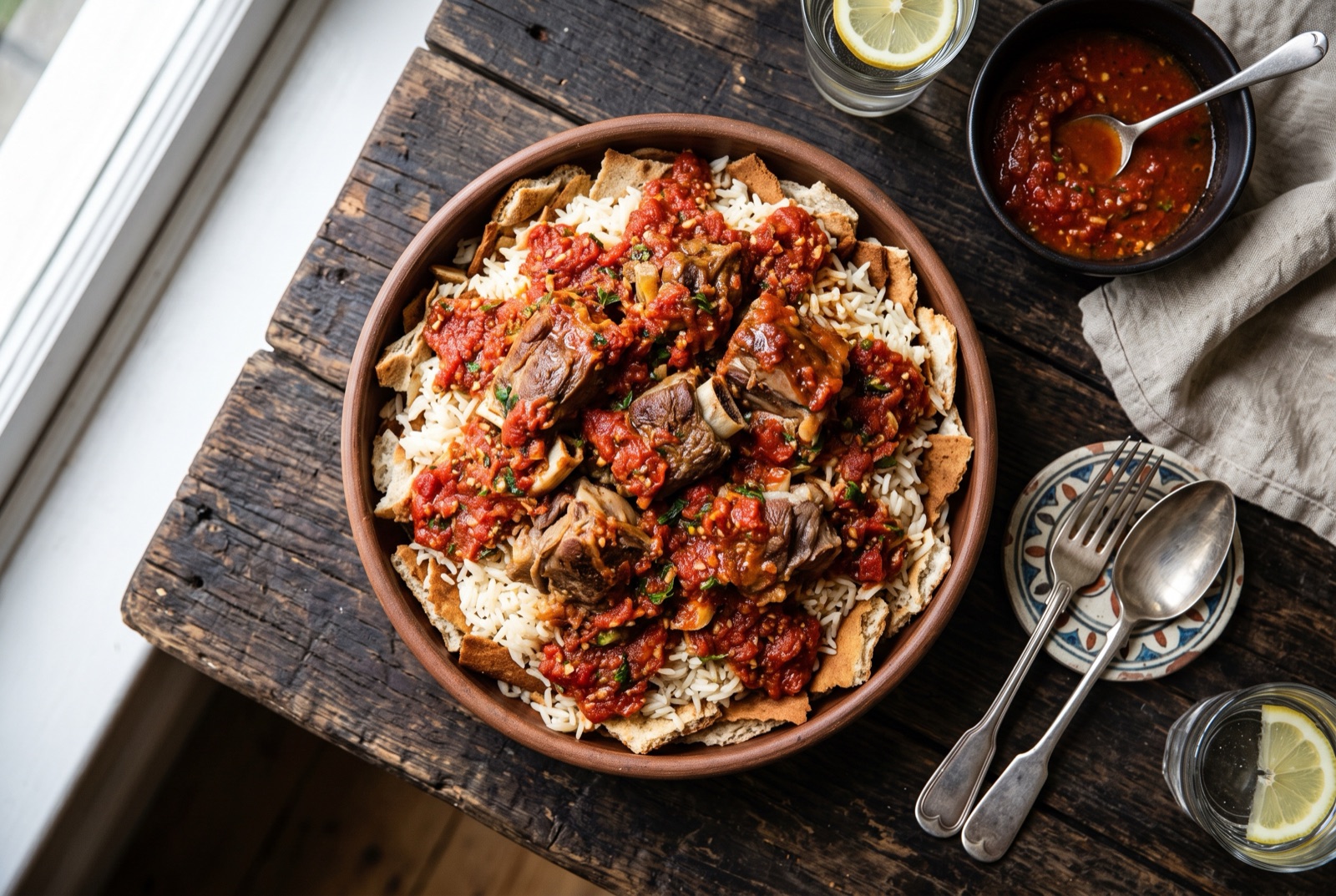
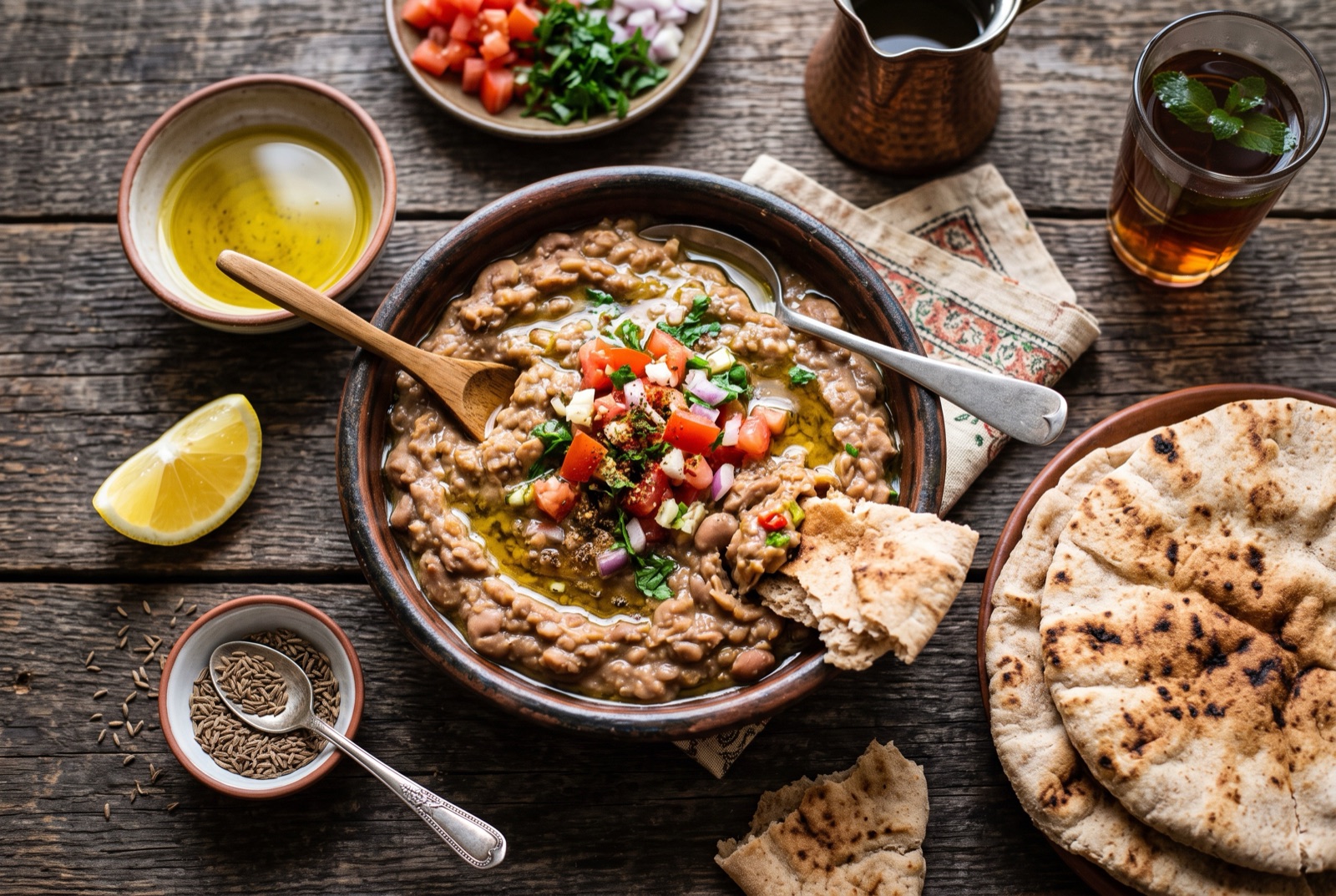
Ful medames, ta'ameya and tahini for a full Egyptian breakfast, or torn into pieces and dried as the base layer for fattah.
The story behind Aish Baladi.
Bread baking in Egypt goes back as far as records of the country do, and the flat, hollow loaf is one of the oldest continuously made foods on the Nile. The word baladi means local or of the country, and the name distinguishes this coarse wholegrain round from aish shami, the paler, finer white loaf associated with Levantine influence. The wholemeal flour is milled from the whole grain, bran included, which is why the bread is beige rather than white and why it fills you up.
It is also a political object. Subsidised bread has been part of Egyptian life for decades, sold at a fraction of its production cost, and changes to that subsidy have historically been serious public events rather than administrative ones. Millions of loaves are baked daily in state-supported bakeries, queued for in the morning, and carried home stacked on wooden racks balanced on heads or bicycle handlebars — a sight that is entirely ordinary in Cairo and entirely startling the first time you see it.
The traditional bake happens in a stone oven at temperatures a domestic kitchen cannot approach, on a floor dusted with bran so the wet, high-hydration dough does not stick. That bran also gives the finished bread its speckled surface and part of its flavour. At home the honest position is that you will get close but not identical: a pizza stone or steel preheated for an hour at maximum temperature will puff the loaves reliably, but the crumb comes out slightly thicker and the crust slightly less blistered than a loaf from a baladi oven. It is still far better than anything a supermarket sells, and the pocket forms just the same.
Questions, answered.
Why did my bread not puff up into a pocket?
Almost always heat. The dough hits a very hot surface, the water inside turns to steam and forces the two layers apart, and that only happens above roughly 250°C on a preheated stone. Other causes are dough rolled too thin or with a rolling pin, dough that was too dry, or rounds that were not proved long enough before baking.
Can I make aish baladi without a baking stone?
Yes, with something heavy that holds heat: a cast-iron skillet, a thick upturned baking tray, or a heavy roasting dish, all preheated for at least 45 minutes at maximum temperature. You can also cook the loaves directly in a very hot dry pan on the hob, which puffs them reliably but gives a slightly drier crust.
What is the difference between aish baladi and pita?
Baladi is made with coarse wholemeal flour including the bran, so it is darker, nuttier, chewier and thicker-walled than standard pita, which is usually white. Both form a pocket by the same steam mechanism. Baladi is sturdy enough to hold a heavy filling or to be stuffed and baked, which thin white pita is not.
How wet should the dough be?
Noticeably wetter than a bread dough you would shape into a loaf — tacky, slack, and slightly sticky on the fingers. Wholemeal flour drinks water slowly, so let the mixed dough rest 20 minutes before you judge it. If it is stiff enough to knead comfortably from the start, it is too dry and the loaves will not inflate properly.
Why are my loaves rock hard once they cool?
They were cooled uncovered. Flatbread loses its moisture within minutes on a rack and sets hard. Stack the loaves on top of each other as they come out of the oven and cover the pile with a clean cloth or tea towel — the steam they release keeps the whole stack soft and pliable.
You might also like.
All recipes →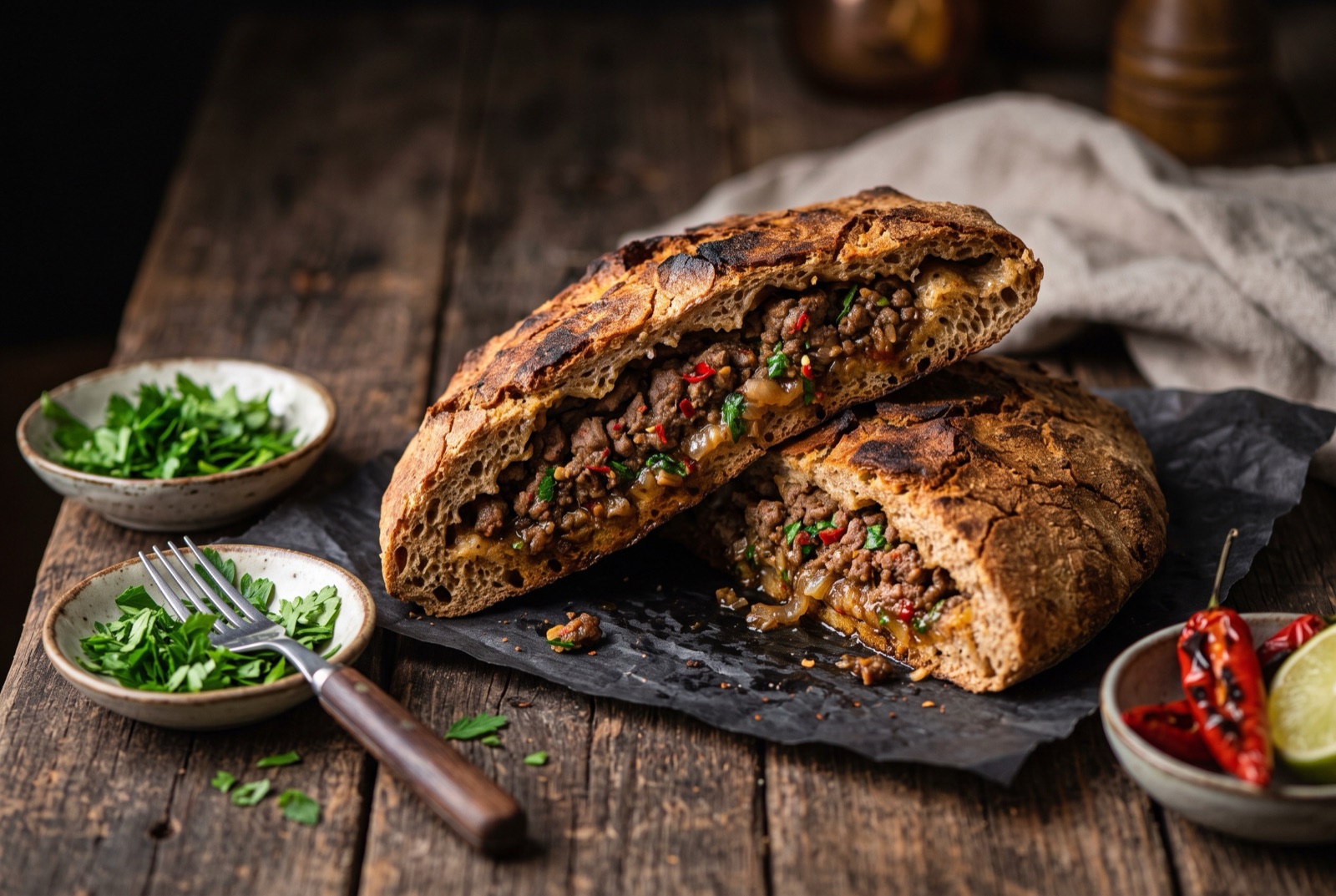
Keep exploring Egypt.
Egypt has 9 more dishes in the atlas — Fattah and Ful Medames, and 7 more.
Recipe by The DishRoute Kitchen · published August 20, 2026 · updated August 20, 2026