Akara.
Nigerian Fried Bean Fritters
Àkàrà · say it: ah-KAH-rah
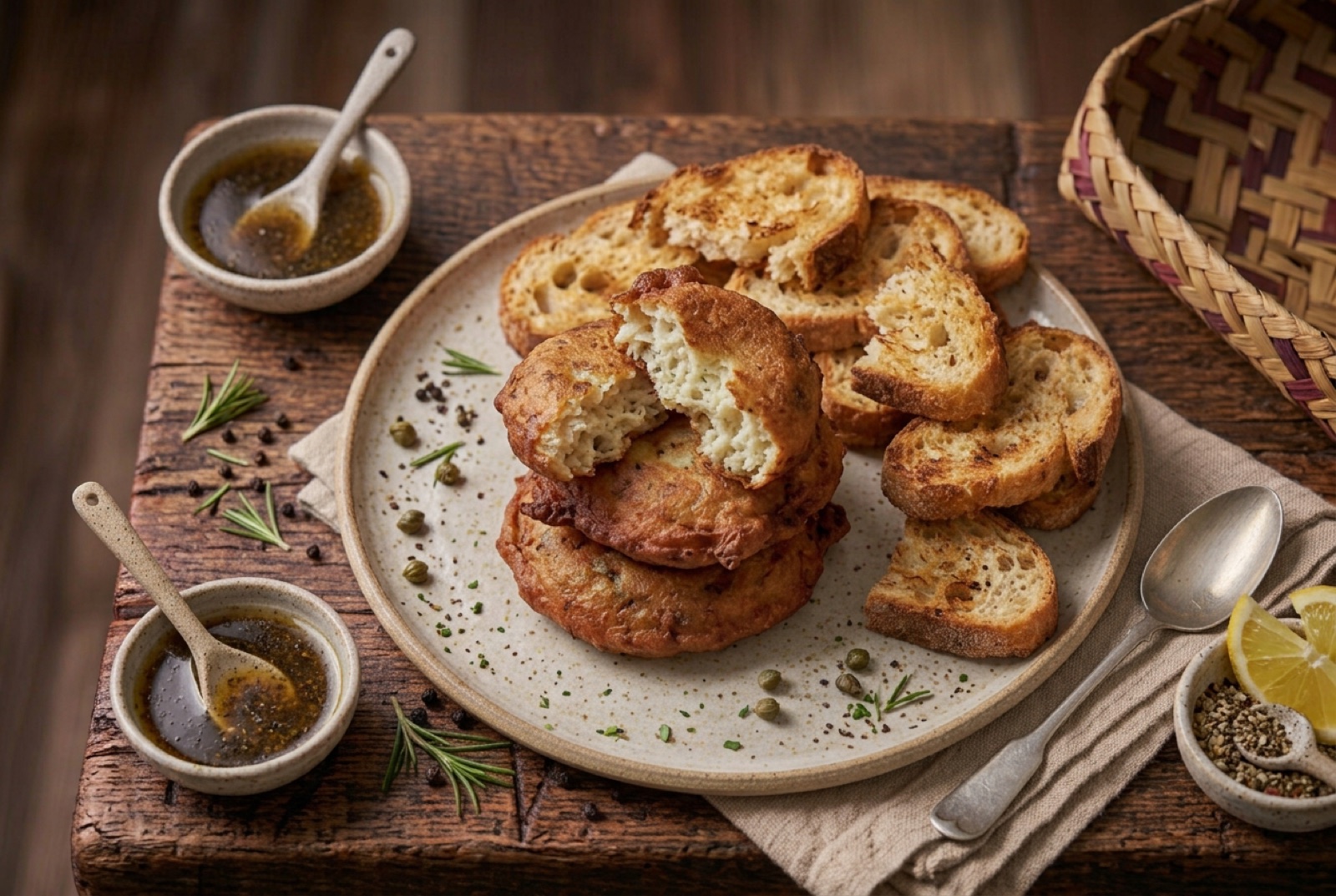
Akara is what a bean batter becomes when you beat air into it. Skinned black-eyed peas are ground with onion and pepper into a thick paste, then whipped hard until it lightens and swells, and spoonfuls are dropped into hot oil where they inflate into rough golden spheres. The shell is thin and crisp, the inside soft and open like the crumb of a fried dumpling, and the taste is savoury and mildly hot with a clean bean sweetness underneath. It is breakfast food above all — sold from roadside pans at first light, eaten scalding with fermented corn porridge or pushed inside a split bread roll.

- Gate
- Nigeria
- Prep
- 40 min
- Cook
- 25 min
- Total time
- 3 hr 5 min incl. 2 hr rest
- Serves
- 4
- Status
- Easy
- Nutrition / serving · estimated
- Calories 390 kcal
- Protein 17 g
- Carbs 44 g
- Fat 16 g
- Fiber 9 g
- Sodium 640 mg
Why this recipe works.
- Uses the float test so you know the batter is aerated before you commit a pan of hot oil to it.
- Keeps the batter deliberately stiff, which is why the fritters puff instead of spreading into flat discs.
- Sets an oil temperature window and describes what the surface should look like at each stage.
- Explains how one batch of peeled beans can be split between akara and moi moi in a single morning.
Ingredients.
5 itemsEquipment
- Blender or food processor
- Stand mixer or a sturdy wooden spoon
- Deep heavy pan
- Slotted spoon
- Wire rack
Instructions.
Soak and skin the peas
Soak the black-eyed peas in plenty of cold water for 2 hours, until the skins loosen and slip when pinched. Rub them between your palms under the water so the skins float, tip the water and skins away, and repeat until the beans are evenly pale.
Grind to a stiff paste
Drain the beans thoroughly and blend them with the onion and scotch bonnet, adding water only a tablespoon at a time when the machine stalls. Aim for a thick paste that holds a peak on the spoon — closer to hummus than to batter.
Tip Stop and scrape the sides often. Adding water to unstick the blades is the most common way this goes wrong.
Beat in the air
Transfer the paste to a wide bowl and beat hard with a wooden spoon or a stand mixer paddle for 8 minutes. The batter should lighten from beige to almost ivory, grow noticeably in volume, and hold a soft peak when the spoon is lifted.
Run the float test
Drop half a teaspoon of batter into a glass of cold water. If it bobs to the surface it is ready; if it sinks, keep beating and test again after two minutes. Only now beat in the salt.
Tip Salting earlier draws water out of the batter and slackens it just when you need it stiff.
Heat the oil
Pour the oil into a deep pan to a depth of at least 5 cm and bring it to 170°C. A dot of batter should rise straight back up and fizz steadily around the edges without browning on contact.
Fry in batches
Scoop rounded tablespoons of batter with a wet spoon and slide them into the oil, five or six at a time. Fry for 4 to 5 minutes, turning once, until they are deep golden all over, sound hollow when tapped and no longer sink when nudged.
Tip Give the pan room. Crowding drops the temperature and the fritters absorb oil instead of sealing.
Drain and eat hot
Lift the akara onto a wire rack rather than kitchen paper so steam escapes and the shells stay crisp. Eat within minutes, with hot pap or tucked into split bread rolls.
Tips from our kitchen.
- Grind the beans as dry as your blender allows. Every extra spoon of water flattens the fritters and makes them drink oil.
- Add the salt only just before frying. Salted batter left to stand loses some of the air you worked to beat into it.
- Beat for a full eight minutes and watch the colour: finished batter is noticeably paler and looks whipped rather than merely mixed.
- Fry at around 170°C. Too hot and the shell browns while the middle stays raw; too cool and the fritters go greasy and heavy.
- Scoop with a wet spoon or wet fingers and slide the batter in from close to the surface, so it lands as a rough ball rather than a splash.
- Drain on a wire rack instead of paper. Sitting on paper traps steam and softens the crust within a minute.
Substitutions.
- Whole dried black-eyed peas → Pre-peeled bean flour from an African grocer
- Mix with water to a thick paste, rest 15 minutes, then whip as normal. The fritters are slightly denser but the peeling work disappears entirely.
- Black-eyed peas → Brown honey beans (oloyin), skinned the same way
- A common Nigerian choice that gives a sweeter, darker fritter. The batter behaves identically.
- Fresh scotch bonnet → Half a teaspoon of cayenne, or a mild red chilli
- The pepper is blended in raw, so a dried chilli changes the aroma more than the heat. Reduce rather than remove if you want a milder version.
Variations.
- Akara with crayfish
- A tablespoon of ground crayfish and a little chopped smoked fish beaten into the batter, giving a distinctly savoury fritter often sold at markets rather than at breakfast stands.
- Kosai
- The Hausa name and northern version, usually spiced a little differently and eaten with koko, a spiced millet porridge, instead of maize pap.
- Akara Osu
- A larger, flatter fritter associated with parts of the south-east, cooked longer over lower heat so the middle sets fully in a thicker cake.
Storage & reheating.
Akara is a fry-and-eat-immediately food; the crust softens within about fifteen minutes and never fully returns. If you must hold some back, cool them on a rack and revive in a 200°C oven for 6 minutes, which restores most of the crispness though not the lightness. Beaten batter does not keep — the air collapses within the hour and salt draws out water — but peeled raw beans freeze beautifully for 3 months, so peel a large quantity once and grind fresh batter whenever you want fritters.
Serve with
Ogi or pap — smooth fermented maize porridge — or stuffed into a soft white bread roll with pepper sauce.
The story behind Akara.
The morning akara stand is a fixture across southern Nigeria: a wide pan of oil over a fire, a bowl of pale beaten batter, and a queue that forms before the first fritter is out. It is Yoruba in name — àkàrà — but versions are cooked from Senegal to Cameroon under other names, and it belongs to the same family of skinned-cowpea preparations as moi moi, which uses an identical batter that is thinned and steamed rather than aerated and fried.
Akara also crossed the Atlantic. Enslaved West Africans carried the dish to Brazil, where it became acarajé — fried in red palm oil, split and stuffed with shrimp fillings, and given a religious role in Candomblé that the Nigerian original does not have. The two are recognisably the same fritter separated by four hundred years and an ocean, which makes akara one of the clearest surviving lines between a West African kitchen and an American one. In Nigeria it stayed a breakfast, cooked in whatever neutral oil is to hand and eaten plain.
The technique rewards patience in exactly two places. The skins have to come off, because they are fibrous, they darken the batter and they stop it holding air. And the batter has to be beaten well past the point where it looks finished — properly aerated akara batter turns from beige to near-white, grows visibly in the bowl, and a small spoonful dropped into cold water floats instead of sinking. Cooks in Nigeria beat by hand with a wooden spoon and can hear when it is ready by the change in sound. A stand mixer does the same job in less time and is not considered cheating by anyone under forty.
Questions, answered.
Why is my akara flat and heavy instead of puffed?
Either the batter was too wet or it was not beaten enough. Grind the beans with the minimum water your blender needs, then whip the paste for at least eight minutes until it pales and increases in volume. Test by dropping half a teaspoon into a glass of cold water: aerated batter floats, and batter that sinks will fry into dense discs.
Do I really have to peel the beans?
For proper akara, yes. The skins are fibrous, they speckle the batter grey and they physically interfere with the air you are trying to trap, so unpeeled fritters come out dark, dense and slightly gritty. Pre-peeled bean flour is a legitimate way to avoid the job, and frozen peeled beans are sold in West African shops for the same reason.
What is akara eaten with in Nigeria?
Most often with ogi, also called pap or akamu — a smooth, slightly sour porridge made from fermented maize, served hot and sometimes sweetened. It is also eaten inside a soft bread roll as a street sandwich, or alongside custard. All of these are breakfast contexts; akara is rarely served as an evening dish.
What oil should I fry akara in?
Any neutral oil with a high smoke point: groundnut, sunflower, canola or vegetable oil. Nigerian cooks generally do not use red palm oil for akara, unlike its Brazilian relative acarajé, because palm oil browns quickly and would dominate the mild bean flavour. Keep the oil around 170°C and at least 5 cm deep.
Can I make akara ahead for a party?
Only partly. The batter collapses within an hour of beating, so it cannot be made in advance, but you can peel and freeze the raw beans weeks ahead and grind them straight from frozen after a short thaw. Fried akara can be held for about half an hour in a low oven on a rack, which is usually enough to get one large batch to the table together.
You might also like.
All recipes →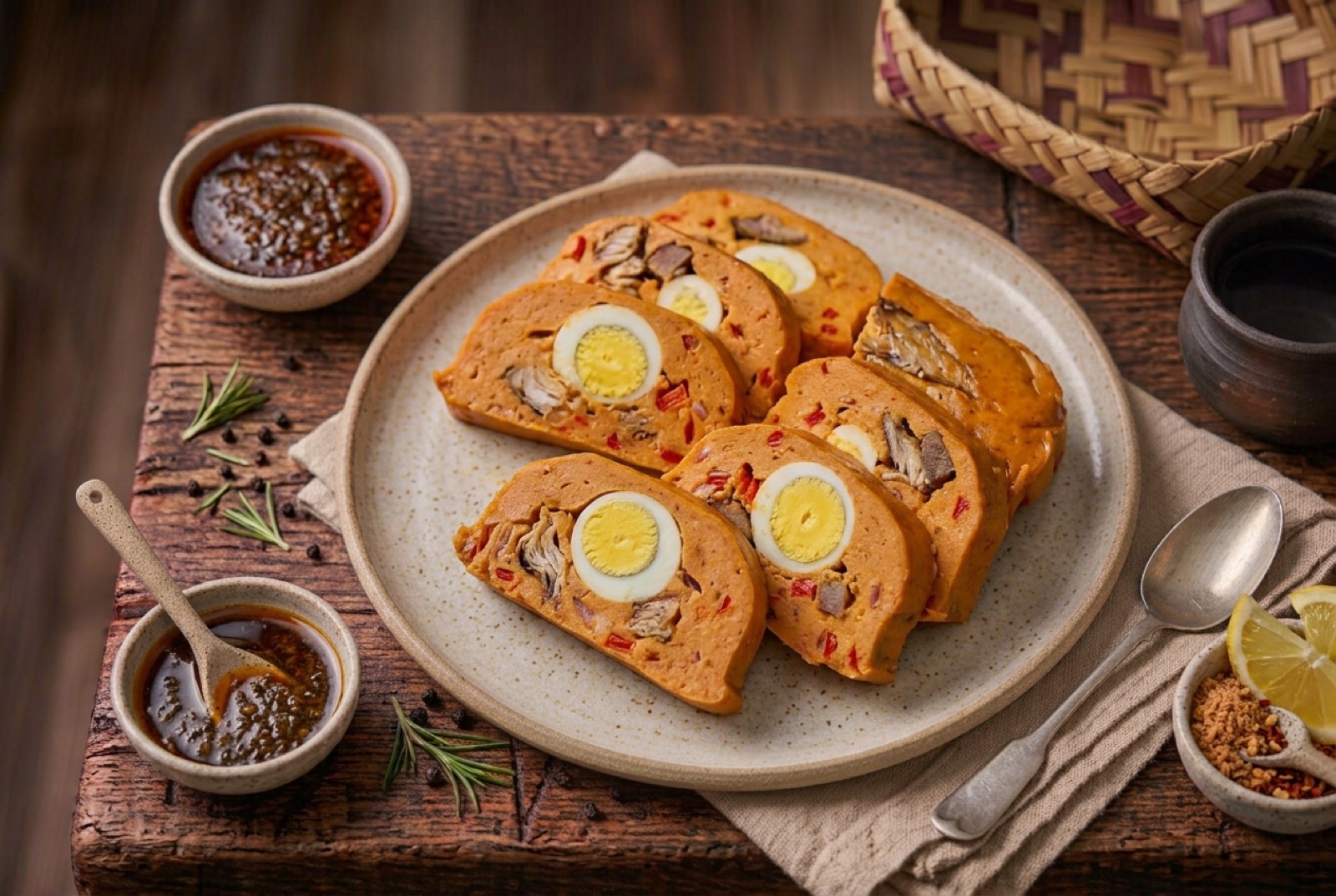
Keep exploring Nigeria.
Nigeria has 9 more dishes in the atlas — Ayamase and Efo Riro, and 7 more.
All Nigeria recipes Onion recipes Scotch bonnet recipes breakfastsnackveganvegetariangluten freedairy freenut freehalal friendlyRecipe by The DishRoute Kitchen · published August 20, 2026 · updated August 20, 2026