Nigeria.
Nigeria
Nigerian cooking starts with a pepper base and ends with something to scoop it up. Almost every savoury dish in the south begins the same way — red bell peppers, scotch bonnets and onion blended raw, then cooked down hard in oil until the water has boiled off and the paste darkens and thickens. What goes in next decides whether you are making jollof rice, efo riro or a pot of stew for the week. The other half of the equation is the starch: rice, or a soft dough called swallow, torn off in pieces, dipped into soup and swallowed rather than chewed. Chilli heat is assumed rather than offered, and it is direct heat, not the layered warmth of a ground spice blend. Fat is not apologised for either — red palm oil in the south, groundnut oil in the north — because it carries the pepper and gives the food its colour. Fermented and dried seasonings do the rest: locust beans, ground crayfish, dried and smoked fish and rock-hard stockfish supply a savoury depth that salt alone never reaches.

- Continent
- AfricaWest Africa
- Recipes in atlas
- 10
- Must-try dishes
- 3
- Pantry staples
- 10
Start with the classics.
Must tryThe dishes that explain the Nigeria kitchen fastest — if you cook only a few things from this page, cook these.
Inside the Nigeria kitchen.
The pepper base is the grammar of the whole cuisine. Nigerians blend fresh red tatashe (bell peppers) with ata rodo (scotch bonnets), onion and often tomato, then boil the purée down and fry it in oil for far longer than a European cook would think reasonable — fifteen, twenty, sometimes thirty minutes — until the raw tomato smell disappears, the colour deepens from bright red to brick, and the oil separates and floats in a visible ring on top. That ring is the doneness signal. Stop early and everything downstream tastes thin and sour; take it all the way and a pot of rice, a stew or a pan of greens can be built on it in minutes.
The second structural idea is the pairing of soup and swallow. Nigerian "soup" is not a bowl you drink from — it is a thick, oily, intensely seasoned stew of greens, seeds, meat and fish, and it is never eaten alone. Opposite it sits swallow: pounded yam, eba made from cassava garri, amala from yam flour, fufu, or semolina, worked into a smooth elastic mound. You pinch off a piece with the right hand, press a dent into it, use it as a scoop, and swallow without much chewing so the soup does the tasting. Which soup goes with which swallow is a matter of household habit and regional loyalty, and people are firm about it.
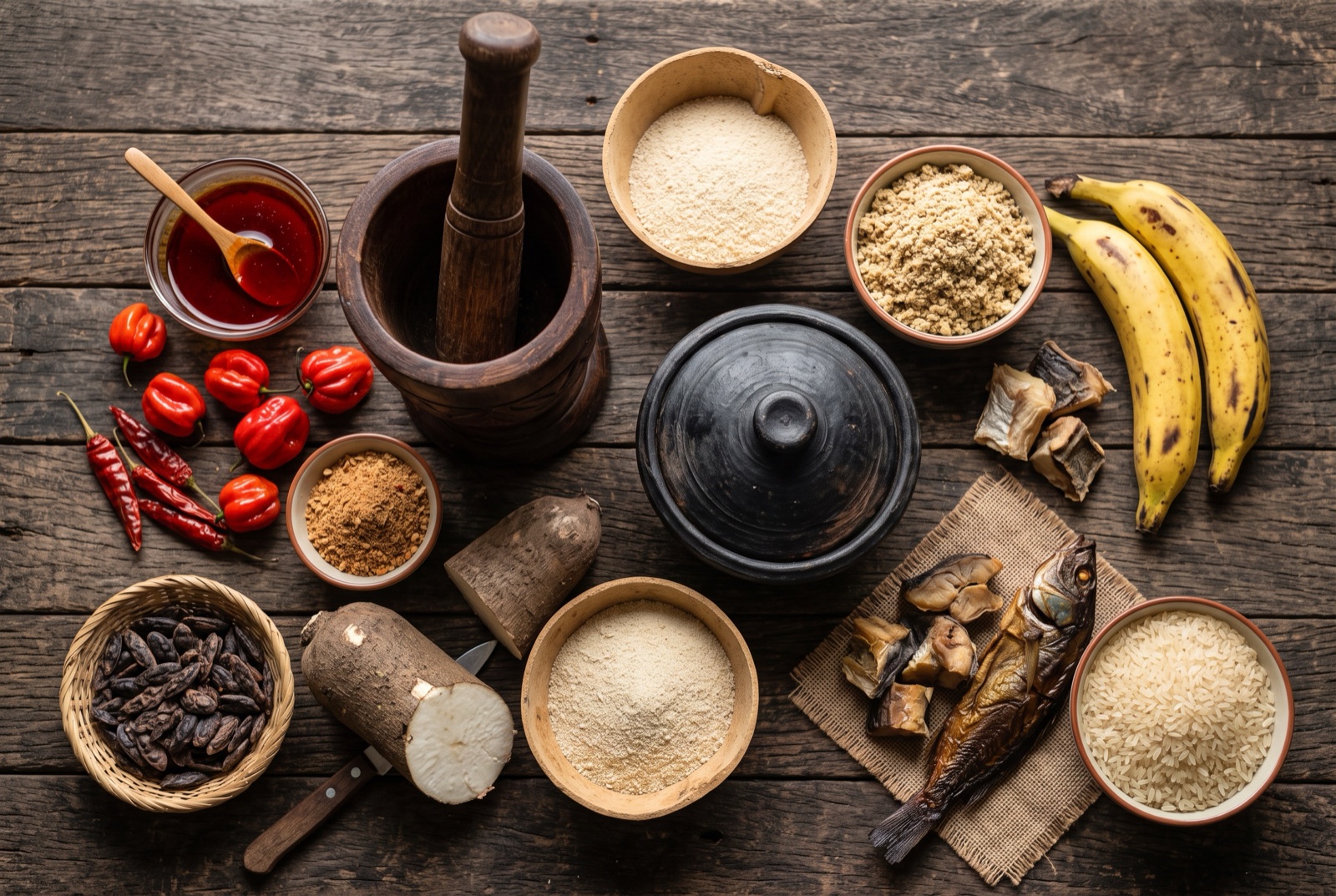
Seasoning comes from a pantry of dried and fermented things rather than from a spice rack. Iru or dawadawa, fermented locust beans, adds a pungent, almost cheesy funk to Yoruba and northern cooking. Ground crayfish — dried shrimp, milled to a powder — goes into nearly every southern pot. Stockfish and smoked catfish add slow-released savouriness, ogiri brings sharper fermentation, and aromatic seeds and leaves such as uziza, uda, ehu, utazi and scent leaf carry the regional signatures. Bouillon cubes are also genuinely part of the modern canon, not a shortcut cooks are embarrassed about; most Nigerian kitchens use them alongside everything above.
The map divides roughly at the palm line. The forested south cooks in red palm oil and leans on yam, cassava, plantain, seafood and leafy greens, giving Yoruba efo riro, Igbo bitterleaf soup and nkwobi, and the Niger Delta banga and afang soups built around palm fruit and periwinkles. The drier north cooks in groundnut oil, eats millet, sorghum and rice, and turns them into tuwo eaten with soups thickened by baobab leaf or okra. Northern food is also the source of the country's most exported dish, suya, and of dairy traditions — nono and fura — that barely exist further south.
Finally there is party food, which in Nigeria is a category in its own right. An owambe celebration means enormous pots cooked outdoors over firewood, jollof rice with a deliberately smoky bottom layer, fried plantain, moi moi, peppered meat and trays of small chops handed round while the cooking is still going. Much of what the world recognises as Nigerian food — jollof, puff puff, suya, chin chin — travelled outward from exactly that setting.
Signature pantry.
10 staplesThe ingredients this cuisine cannot function without.
- red palm oil
- scotch bonnet peppers
- ground crayfish
- iru (fermented locust beans)
- yam
- cassava (garri and fufu)
- egusi (ground melon seeds)
- plantain
- stockfish and smoked fish
- long-grain parboiled rice
How people eat in Nigeria.
Swallow is eaten with the right hand, and the technique matters: pinch, dent, scoop, swallow — chewing a ball of pounded yam marks you as a visitor. Everything arrives at once rather than in courses, and a plate is expected to be generous; sending a guest away with a takeaway pack is normal hospitality, not an afterthought. Feeding people who turn up unannounced is close to obligatory, and refusing food outright can read as an insult, so a token plate is the polite minimum. At celebrations the food keeps coming for hours and guests are handed portions to carry home. Drinks run to malt, palm wine in the south, chapman at parties, and cold beer with peppered bar food such as nkwobi or isi ewu.
Regional kitchens.
Nigeria cooks 4 distinctly different ways depending on where you stand — here is what changes between them.
- R1The South-West (Yoruba country)
- Lagos, Ibadan and Abeokuta: home of efo riro, ofada rice with its green pepper stew, amala with ewedu and gbegiri, and pounded yam. Fermented locust beans and red palm oil run through nearly everything.
- R2The South-East (Igbo country)
- Bitterleaf and ogbono soups, abacha shredded cassava salad, and the palm-oil bar plates — nkwobi and isi ewu — served in wooden bowls with cold beer. Utazi, uziza and ehu are the local aromatics.
- R3The Niger Delta and South-South
- Efik, Ibibio and Ijaw cooking built on the creeks: banga soup from fresh palm fruit, afang and edikang ikong dense with greens, periwinkles and fresh fish, and pepper soup drunk hot at any hour.
- R4The North
- Hausa-Fulani grain country, where millet, sorghum and rice become tuwo eaten with baobab-leaf or okra soups. Suya and kilishi come from here, along with groundnut oil, fermented dairy and less palm oil.
All Nigeria recipes.
10 recipes and counting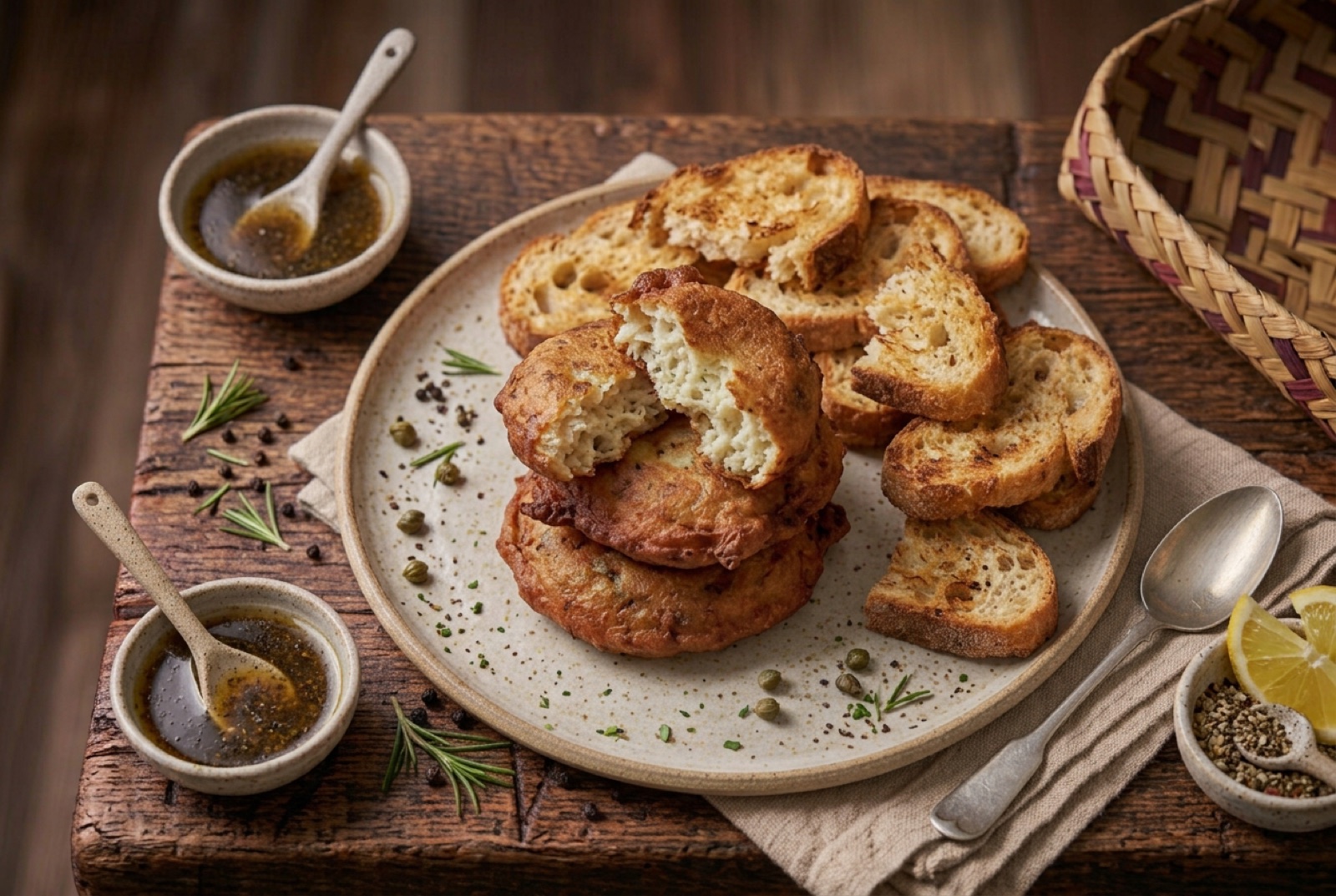
Nigeria3 hr 5 min
Akara
Nigerian Fried Bean Fritters
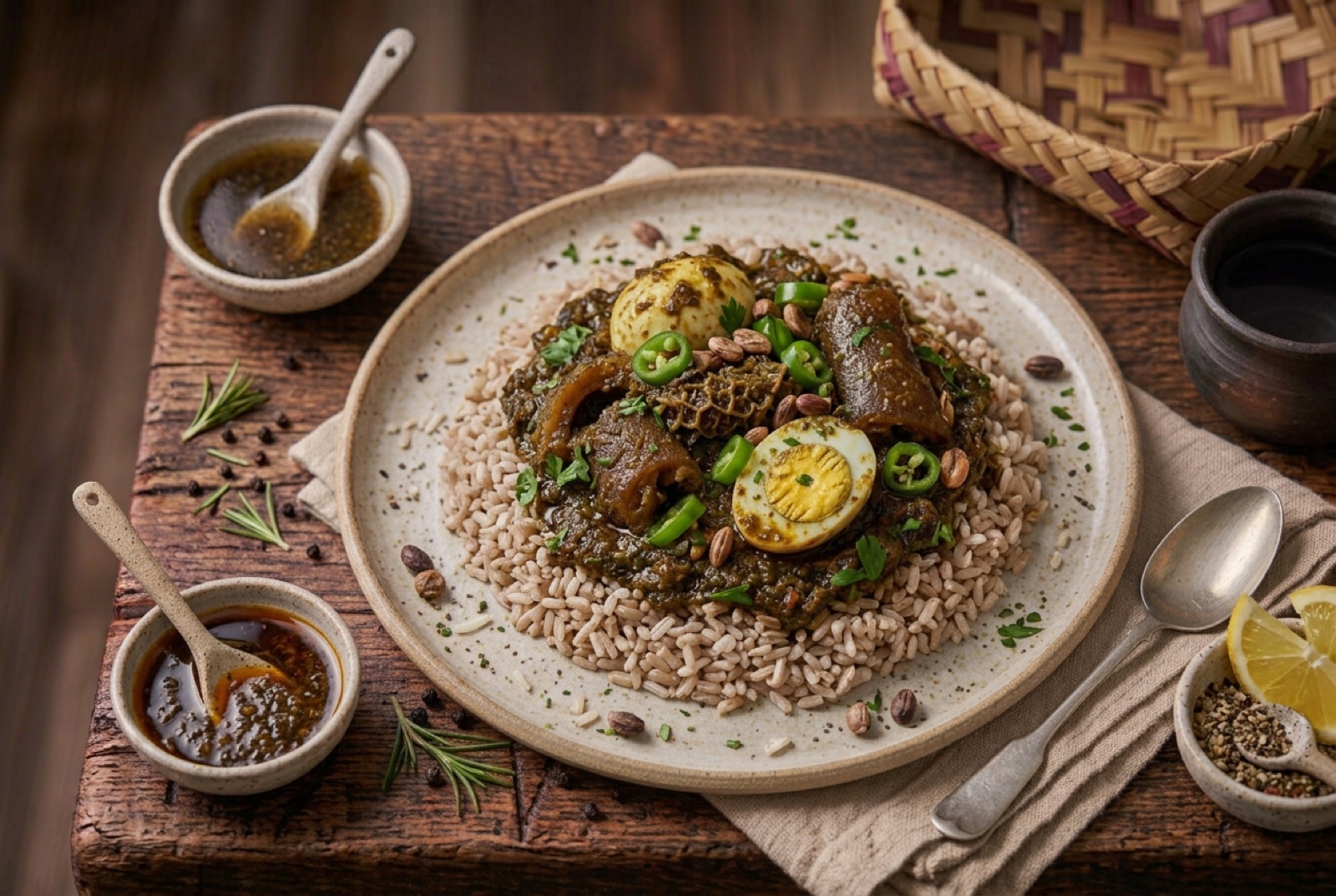
Nigeria2 hr 20 min
Ayamase
Ofada Green Pepper Stew
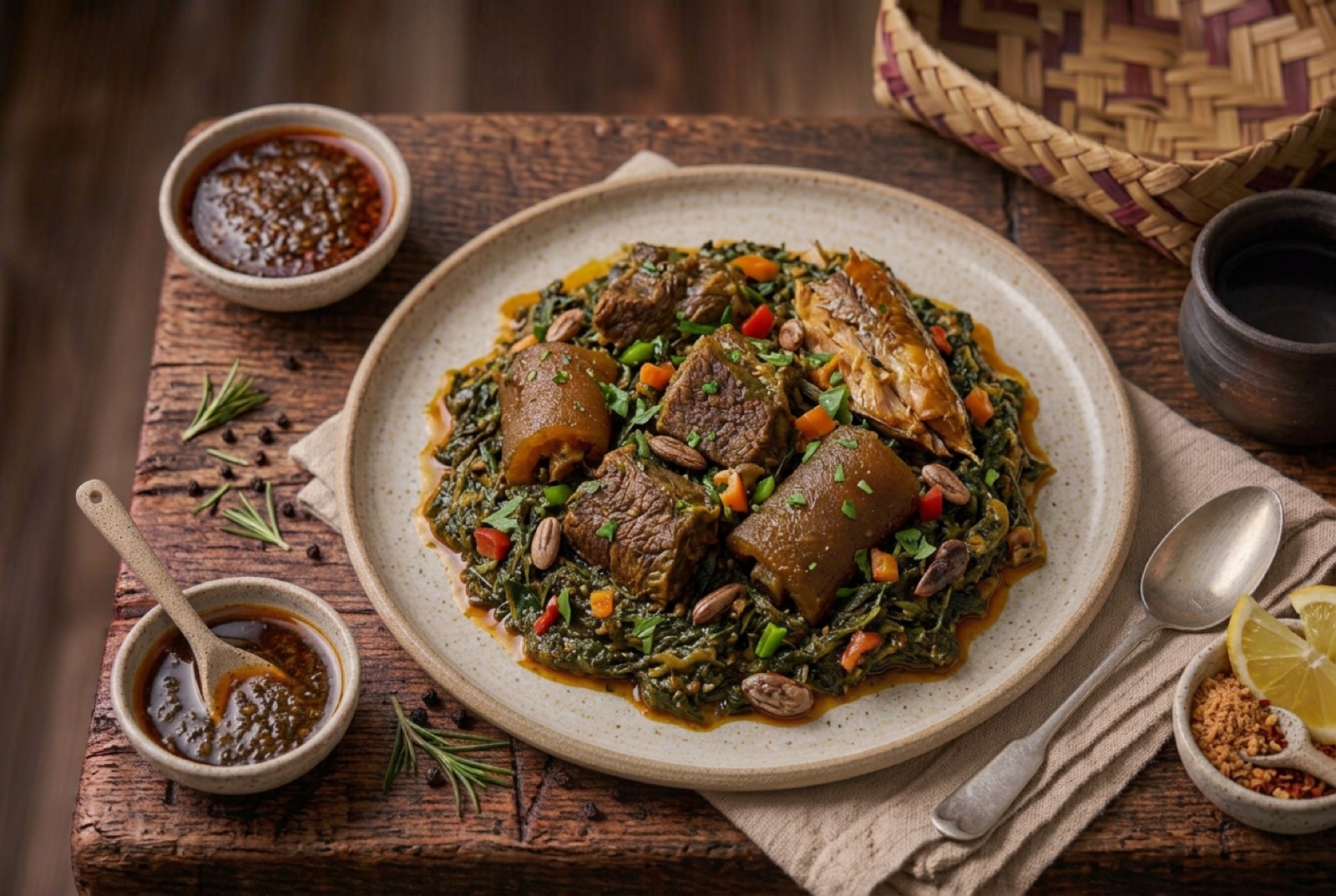
Nigeria1 hr 40 min
Efo Riro
Yoruba Spinach and Pepper Stew
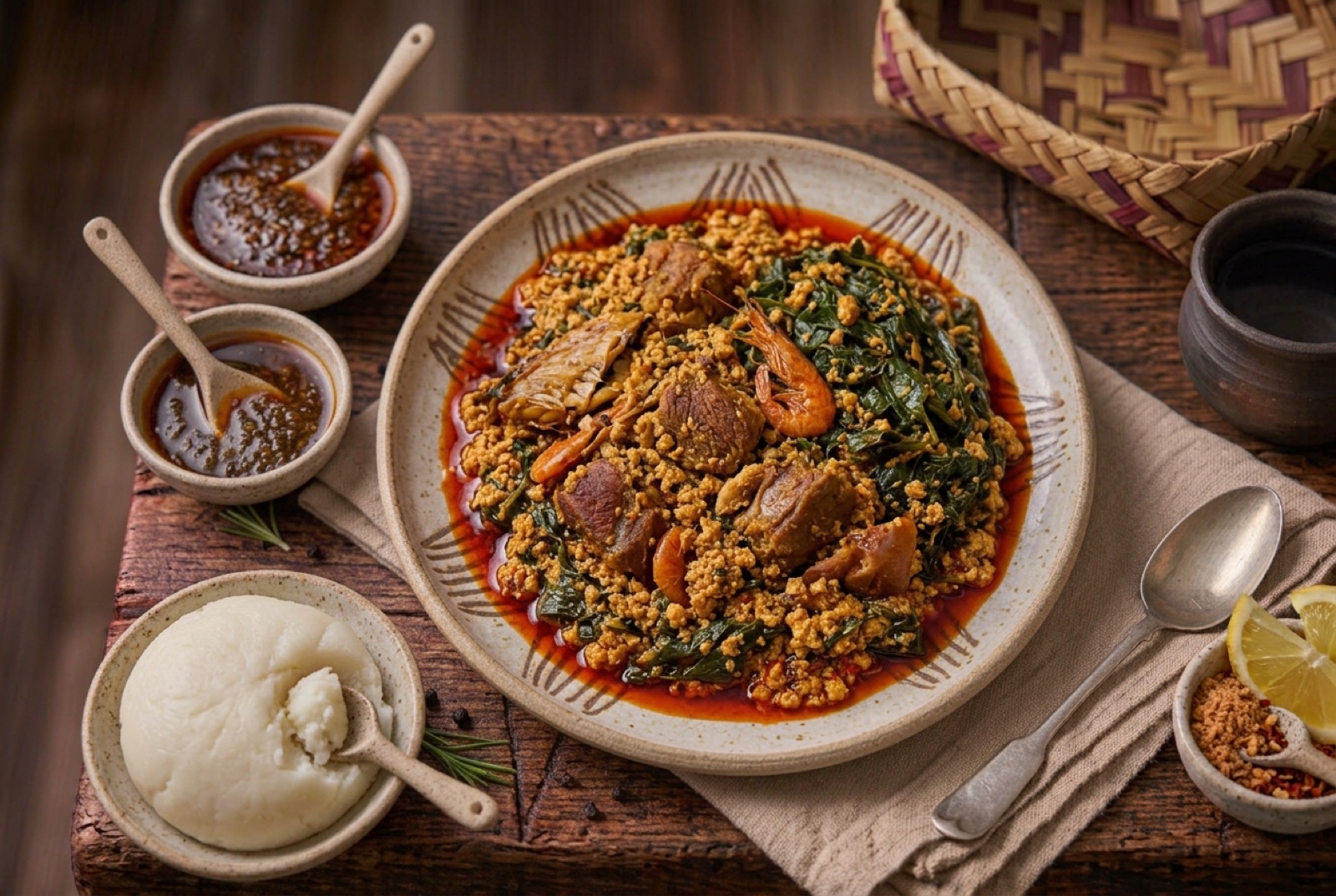
Nigeria1 hr 55 min
Egusi Soup
Nigerian Melon Seed and Greens Stew
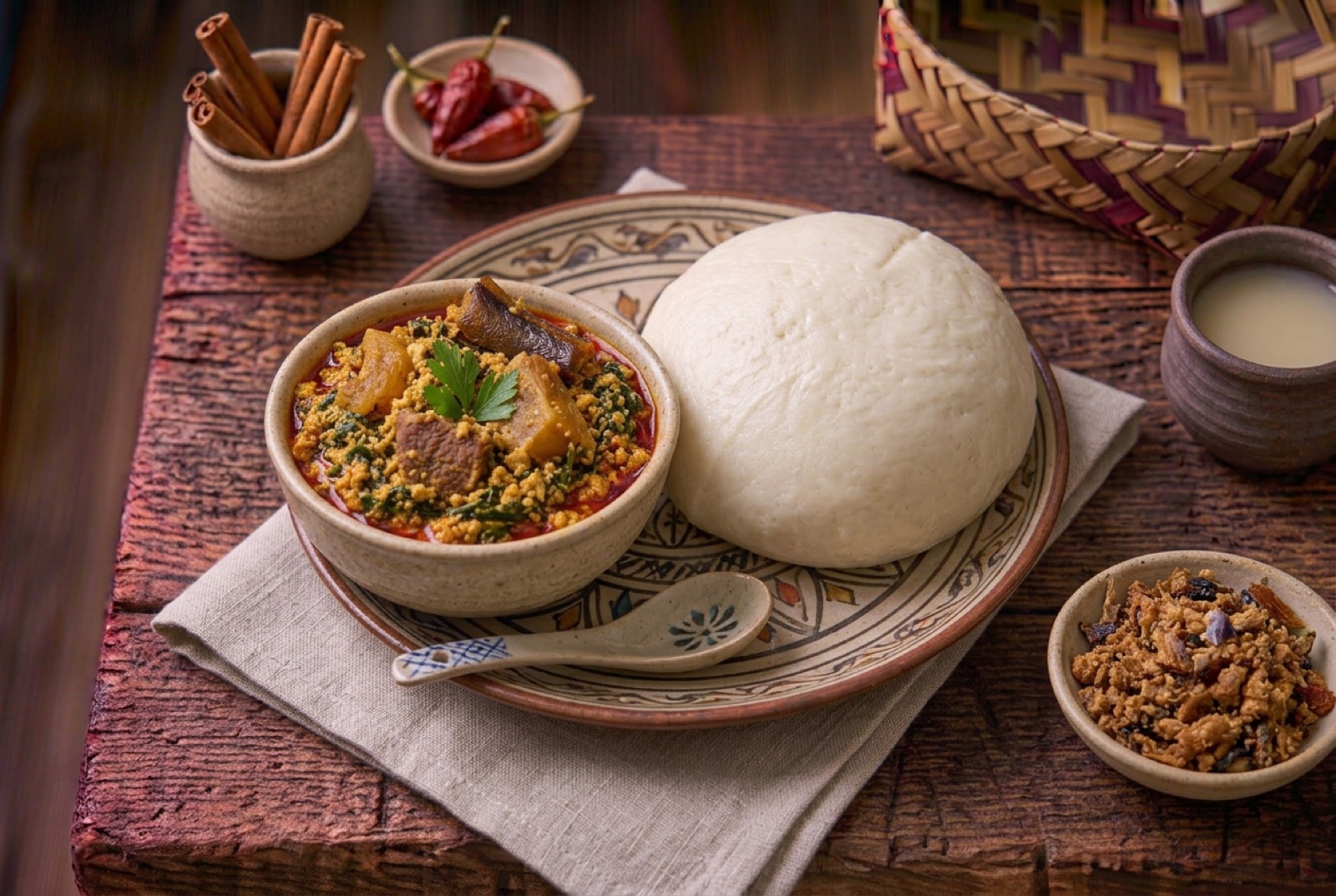
Nigeria50 min
Iyan
Nigerian Pounded Yam Swallow
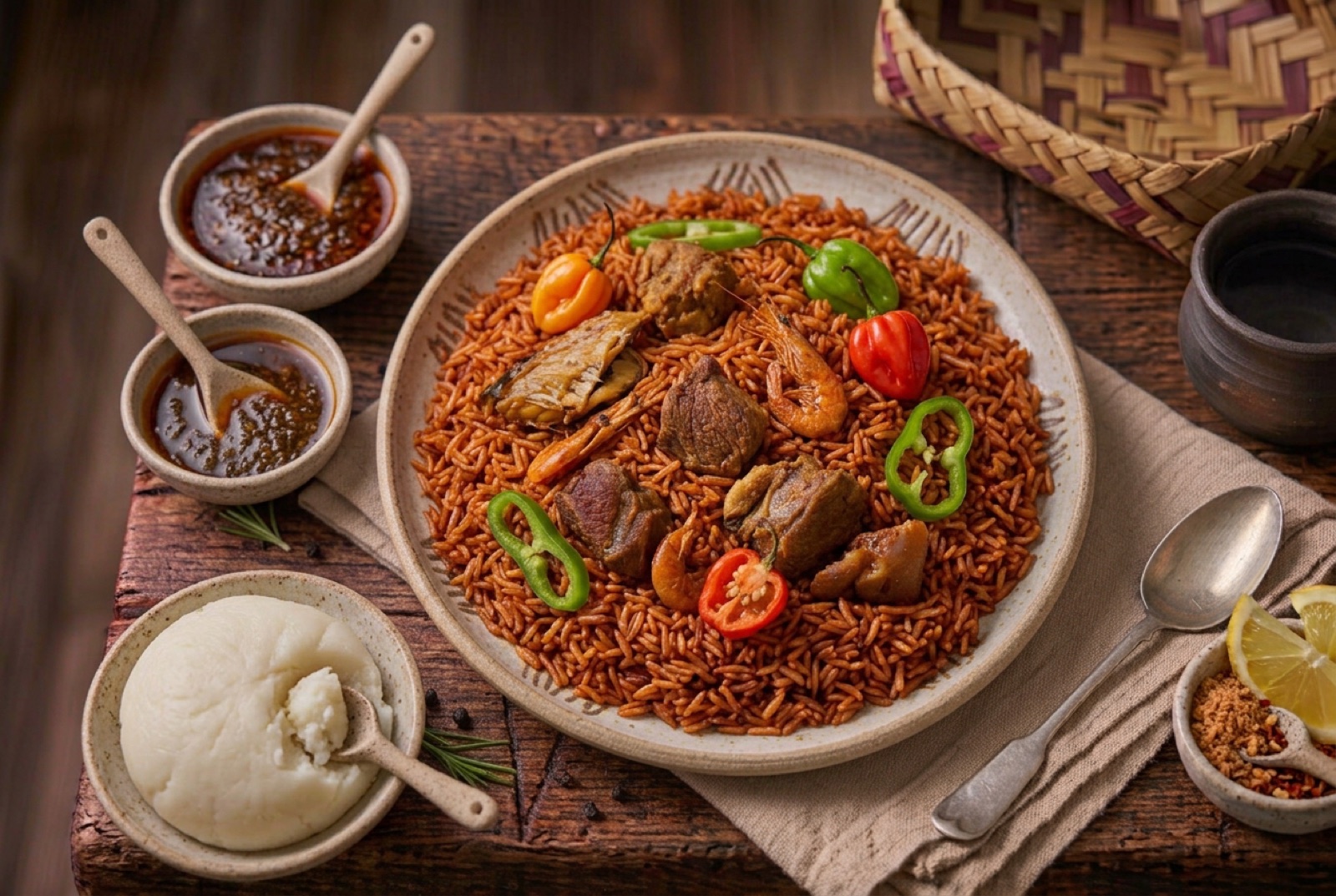
Nigeria1 hr 45 min
Jollof Rice
Nigerian Tomato and Pepper Rice
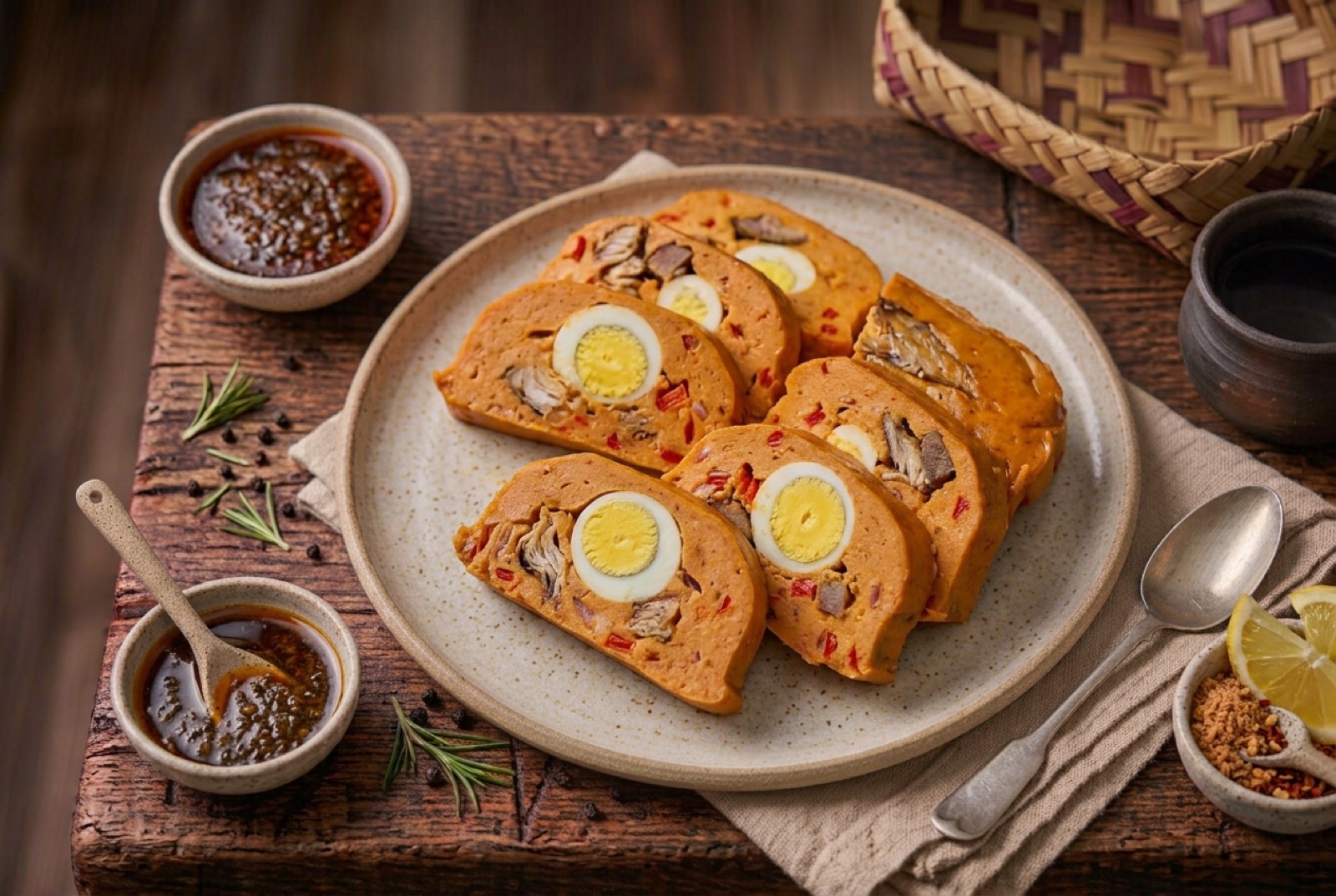
Nigeria3 hr 30 min
Moi Moi
Nigerian Steamed Bean Pudding
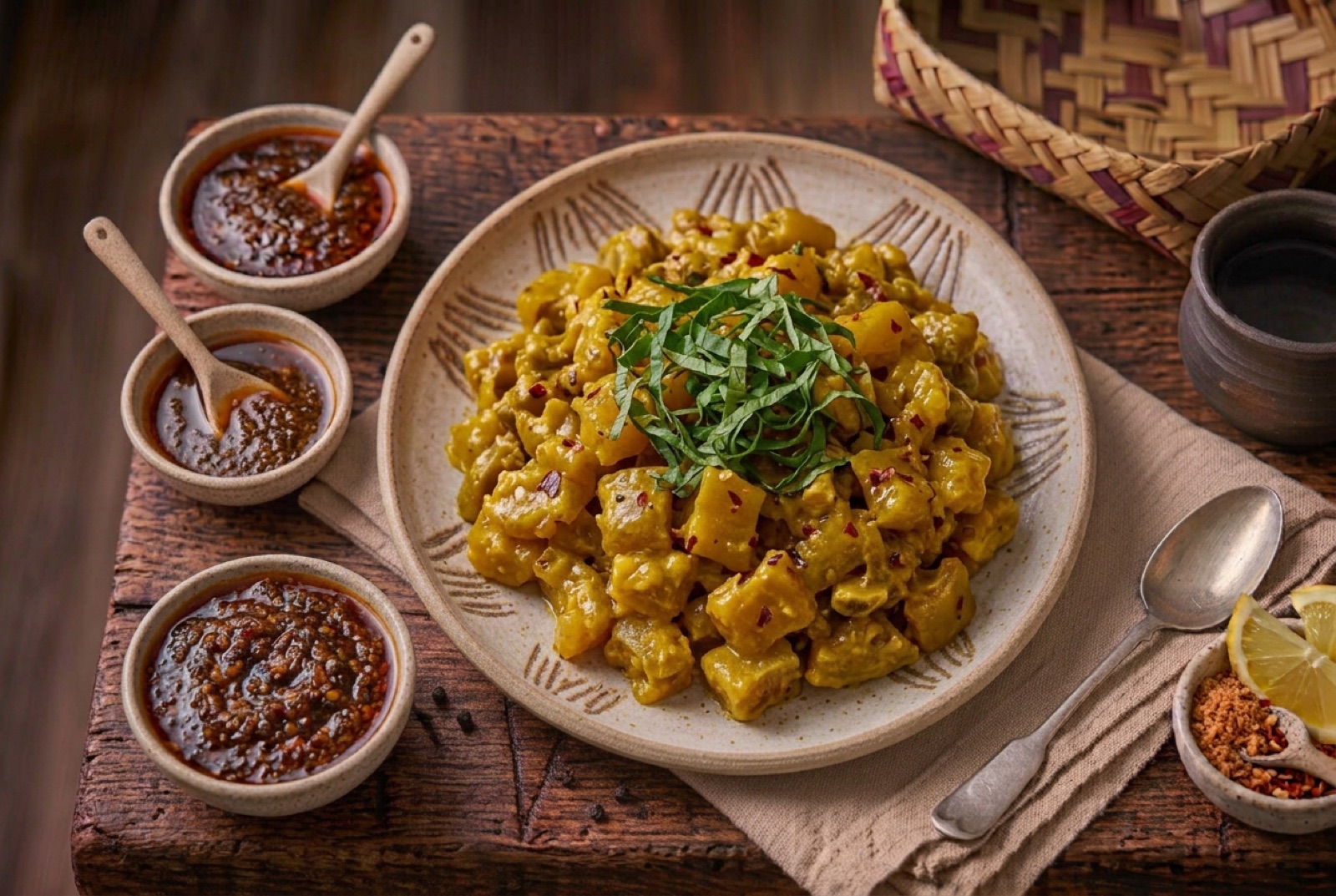
Nigeria2 hr 30 min
Nkwobi
Igbo Spiced Cow Foot in Palm Oil
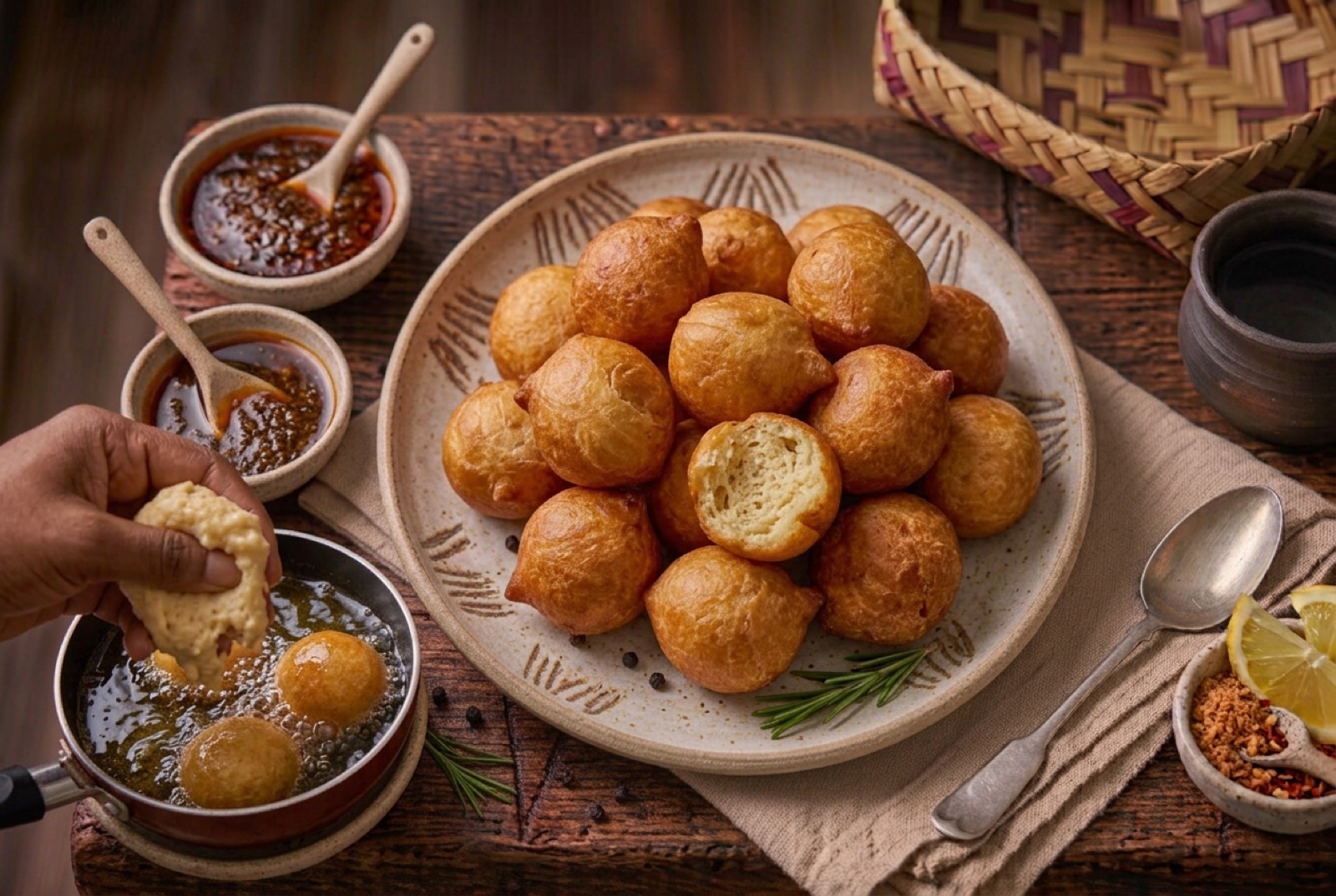
Nigeria2 hr 10 min
Puff Puff
Nigerian Sweet Fried Dough Balls
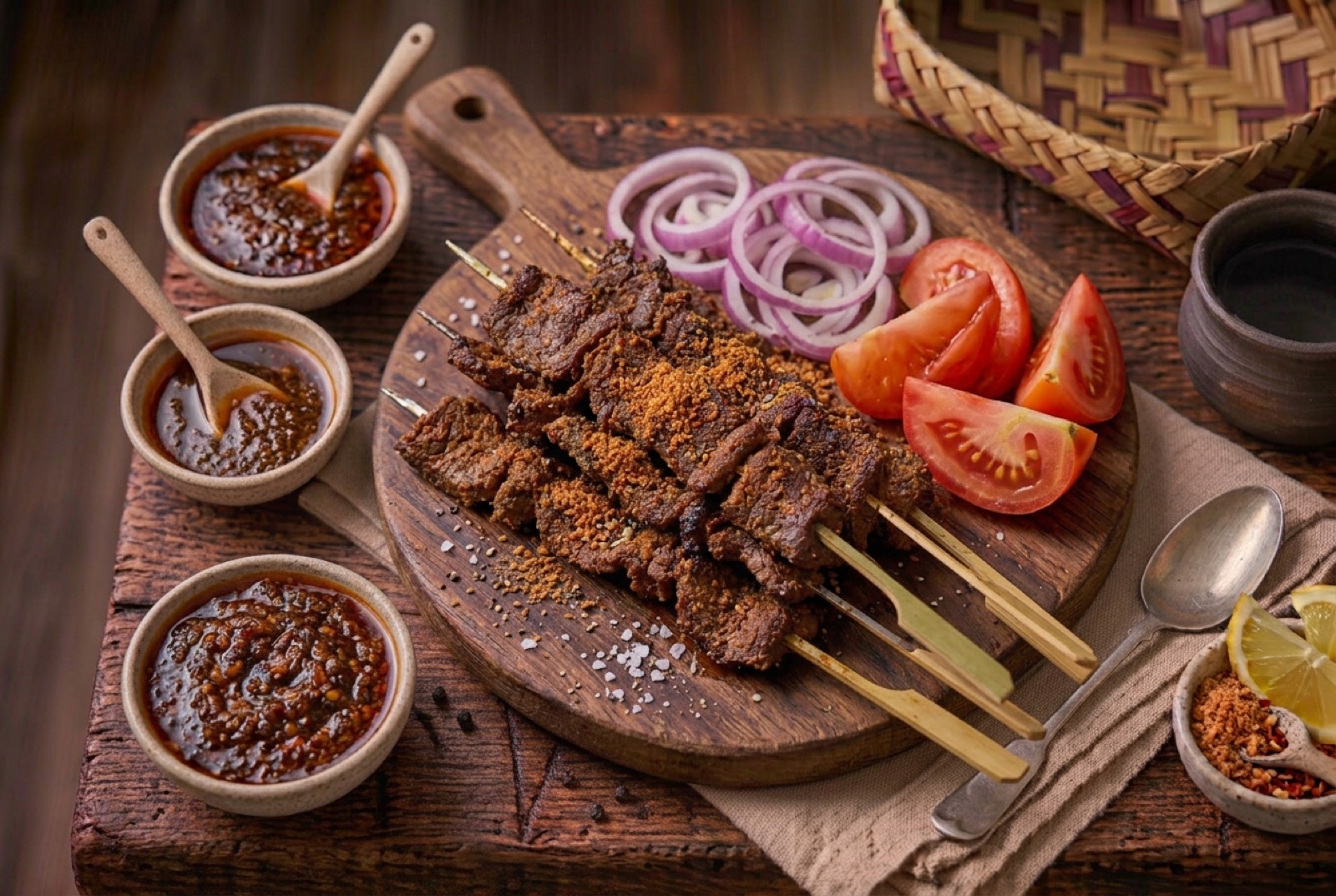
Nigeria1 hr 27 min
Suya
Nigerian Peanut-Spiced Beef Skewers
Keep traveling.
Nigeria sits in West Africa, and its kitchen shares borders as well as ingredients with Algeria and Cameroon.
 Algeria
 Cameroon