Moi Moi.
Nigerian Steamed Bean Pudding
Mọ́í mọ́í · say it: moy-MOY
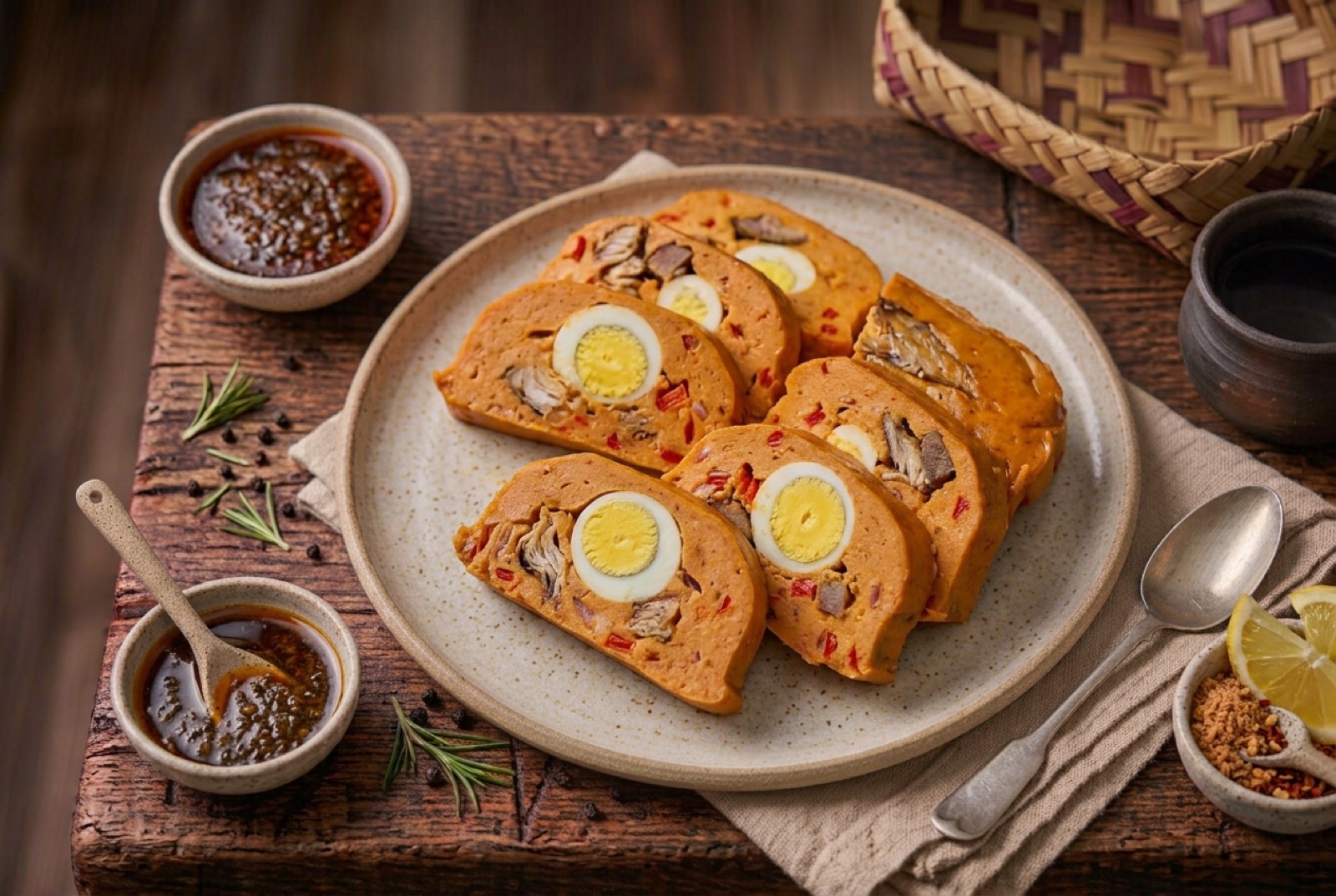
Moi moi is a savoury pudding made entirely from beans. Skinned black-eyed peas are blended raw with red bell pepper, onion and scotch bonnet into a loose batter, seasoned with ground crayfish and stock, slackened with palm oil, then steamed in parcels until the protein sets into something between a terrine and a very soft cake. The texture is smooth and slightly springy, the colour a warm orange, and the flavour savoury and gently hot with a background sweetness from the peppers. Slices of boiled egg or flakes of fish are usually buried inside, so cutting one open is part of the pleasure.

- Gate
- Nigeria
- Prep
- 35 min
- Cook
- 55 min
- Total time
- 3 hr 30 min incl. 2 hr rest
- Serves
- 6
- Status
- Easy
- Nutrition / serving · estimated
- Calories 420 kcal
- Protein 21 g
- Carbs 35 g
- Fat 22 g
- Fiber 8 g
- Sodium 700 mg
Why this recipe works.
- Pins down the batter consistency with a visual test, which is the single thing that decides whether moi moi sets.
- Uses pre-peeled beans or gives a fast peeling method, so the longest part of the job is manageable.
- Steams at a controlled temperature instead of a hard boil, so the pudding stays smooth rather than pitted.
- Covers leaves, foil and tins honestly, including what each does to the shape and the cooking time.
Ingredients.
11 itemsFor the batter
For the filling
Equipment
- Blender
- Large pot with a lid
- Foil, ramekins or small tins
- Skewer for testing
Instructions.
Soak and peel the beans
Cover the black-eyed peas with cold water and soak for 2 hours, until the skins wrinkle and lift when you pinch a bean. Rub them in handfuls between your palms under the water, pour off the floating skins, and repeat until the beans are uniformly cream-coloured.
Tip A few seconds of pulsing in a processor with plenty of water loosens most of the skins and saves real effort.
Blend the batter
Drain the peeled beans and blend them with the bell peppers, scotch bonnet and onion, adding only enough water to keep the blades moving. Work until the mixture is completely smooth with no grit between your fingers.
Season and check the consistency
Stir in the warm stock a little at a time, then the palm oil, crayfish, nutmeg and salt. Stop adding liquid when the batter ribbons slowly off a lifted spoon and the trail holds for a second before sinking — that is the set point.
Tip Taste it raw for salt. Under-seasoned batter cannot be corrected once it is inside a parcel.
Fill the wrappers
Grease your tins, ramekins or foil parcels lightly and fill each two-thirds full. Push a quarter of boiled egg and a little flaked fish into the centre of each, then cover the tops with foil so condensation cannot drip in.
Steam gently
Stand the parcels in a wide pot, pour in boiling water to come a third of the way up their sides, cover and keep at a steady simmer for 45 to 55 minutes. Top up with boiling water if the pot runs low.
Tip Simmer, not boil. Aggressive steam pits the surface and makes the pudding spongy.
Test and rest
Push a skewer into the middle of the thickest parcel; it should come out clean and the surface should spring back under a fingertip. Let the moi moi stand for 10 minutes before unmoulding, or it will slump as it comes out of the tin.
Tips from our kitchen.
- The batter should ribbon slowly off the spoon, like thick pancake batter. If it pours freely, blend in a couple of extra spoonfuls of soaked beans.
- Blend with as little water as your machine will tolerate, adding stock at the end. Water added early is almost impossible to take back out.
- Warm the palm oil slightly before stirring it in so it disperses evenly instead of setting in orange streaks.
- Fill containers only two-thirds full. Moi moi rises as it steams and overfilled tins spill and cook unevenly.
- Keep the water at a steady simmer, not a rolling boil. Violent steam makes the surface bubble and pit.
- Test with a skewer through the centre of the thickest parcel; it should come out clean and the pudding should spring back when pressed.
Substitutions.
- Dried black-eyed peas to peel → Pre-peeled bean flour, sold as beans powder or moi moi flour
- Widely used and completely legitimate. Whisk it with liquid to the same ribboning consistency and rest for 10 minutes before seasoning; the texture is slightly denser.
- Ewe eran (moi moi leaves) → Foil parcels, small ramekins or clean metal tins
- Leaves add a faint grassy aroma and the traditional tapered shape. Tins give straighter slices and take about five minutes longer to cook through.
- Ground crayfish → A tablespoon of dried shrimp blitzed to powder, or omit for a vegetarian version
- Crayfish is the savoury backbone. Leaving it out gives a milder, sweeter pudding, so compensate with extra stock and a little more salt.
- Red palm oil → Groundnut or sunflower oil
- The pudding will be pale yellow rather than orange and slightly cleaner tasting. It still sets and still works; it simply looks like someone else's moi moi.
Variations.
- Moi moi elemi meje
- The loaded version, whose name refers to the several things buried inside — boiled egg, corned beef, sardines and smoked fish all in one parcel. Party and celebration food.
- Moi moi awarawa
- Steamed in leaves and cut into thick slabs, with a firmer set achieved by using less liquid. Sold in market stalls and eaten by hand.
- Baked moi moi
- The batter poured into a greased loaf tin and baked in a water bath at 180°C for around 45 minutes. Convenient for a crowd, with a slightly drier crumb and a browned top.
Storage & reheating.
Cooked moi moi keeps 4 days in the fridge and reheats well by steaming for 8 minutes or microwaving under a damp cloth. It freezes for 2 months in its wrapper, which makes it worth cooking a double batch; thaw overnight and steam through rather than reheating from frozen, or the centre stays cold while the edges dry. Uncooked batter should be cooked the same day, since the raw bean purée sours quickly even refrigerated and the pepper turns the mixture watery as it sits.
Serve with
Jollof rice, pap for breakfast, or soaked garri with cold water and a spoon of sugar.
The story behind Moi Moi.
Wherever cowpeas grow in West Africa, someone steams them. Moi moi is Nigeria's version, made from the same skinned black-eyed pea batter that becomes akara when it is aerated and fried instead, and the two dishes are so closely linked that many households prepare one batch of peas and split it between them. Related steamed bean cakes exist across the region — abará in the Afro-Brazilian kitchen descends from the same practice, carried across the Atlantic and rebuilt with local ingredients.
The wrapper is the traditional variable. Moi moi is classically steamed in ewe eran, the broad leaves of Thaumatococcus daniellii, which are folded into cones and pinched shut; the leaves impart a faint grassy fragrance and give the finished pudding its distinctive tapered shape. Aluminium foil, small metal tins, ramekins, heatproof plastic containers and even empty tomato purée tins have all become normal substitutes in urban kitchens, and each changes the shape more than the flavour. Cooks who grew up with leaves will tell you the difference is real, and they are right, but the leaves are hard to source outside West Africa and no one should skip the dish for want of them.
Moi moi is eaten across the whole day and across the whole class spectrum. It goes with pap for breakfast, sits beside jollof rice at every party, gets eaten with garri as a cheap filling lunch, and appears at funerals, naming ceremonies and Sunday tables. Fillings mark the occasion: plain moi moi for a weekday, moi moi with boiled egg, corned beef, sardines or flaked smoked fish when there is something to celebrate. Getting it to set properly is the one technical hurdle — too much water and it never firms, too little and it turns dense and dry — which is why experienced cooks judge the batter by how it falls off the spoon rather than by measuring.
Questions, answered.
Why did my moi moi not set?
Almost always too much liquid in the batter. Skinned black-eyed peas set through protein and starch, and there is a narrow window: the raw batter should ribbon thickly off the spoon rather than pour. Blending with excess water, or adding stock before checking the consistency, produces a parcel that stays soupy no matter how long you steam it.
How do I peel black-eyed peas quickly?
Soak them in cold water for at least two hours until the skins wrinkle, then rub handfuls firmly between your palms under water so the skins float free and pour them off. Repeat until the beans are uniformly pale. A short pulse in a food processor with plenty of water loosens most skins in seconds and cuts the hand work roughly in half.
What can I steam moi moi in without leaves?
Foil folded into sealed parcels, small metal tins, ramekins, heatproof glass jars or silicone moulds all work. Fill them two-thirds full, cover the top so condensation does not drip in, and stand them in a pot with water coming a third of the way up their sides. Firmer-sided containers give neater slices than foil.
Can moi moi be made vegan?
Yes, and it is a small change. Leave out the egg and crayfish, use vegetable stock, and keep the palm oil, which is plant-based. The result is milder, so season more assertively and consider adding sautéed mushrooms or smoked paprika to replace some of the savoury depth the dried seafood provided.
What is the difference between moi moi and akara?
They start from the same batter of skinned black-eyed peas, pepper and onion. Moi moi is thinned, seasoned, poured into wrappers and steamed until it sets into a soft pudding. Akara is beaten to trap air, kept much thicker, and deep-fried into crisp-shelled fritters. One batch of soaked peeled beans can be split between both.
You might also like.
All recipes →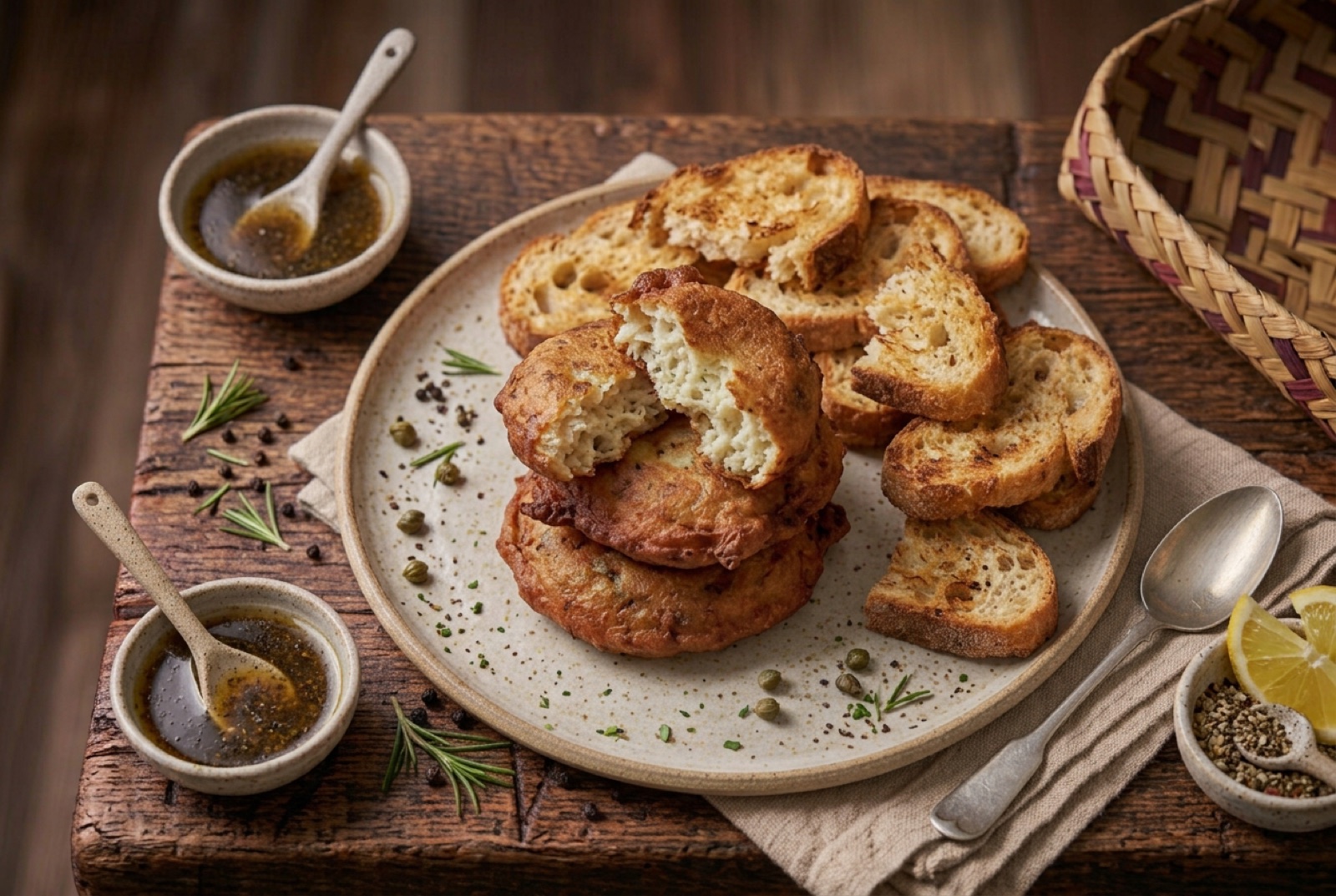
Keep exploring Nigeria.
Nigeria has 9 more dishes in the atlas — Akara and Ayamase, and 7 more.
All Nigeria recipes Bell pepper recipes Onion recipes Eggs recipes sidebreakfastgluten freedairy freenut freehalal friendlyRecipe by The DishRoute Kitchen · published August 20, 2026 · updated August 20, 2026