Suya.
Nigerian Peanut-Spiced Beef Skewers
Suya · say it: SOO-yah
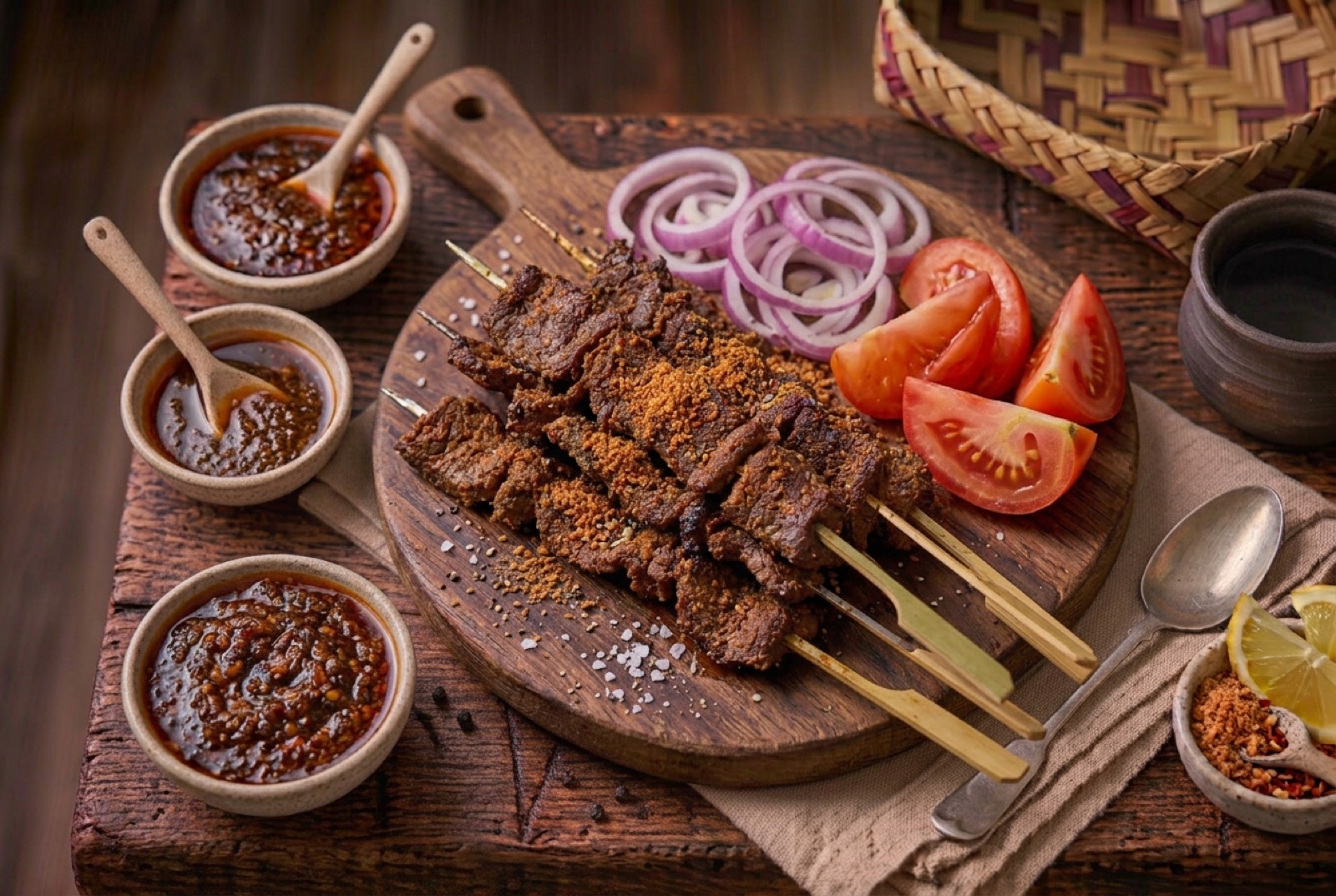
Suya is beef sliced thin, rubbed with a dry peanut-based spice called yaji and grilled fast over open coals until the edges char. The rub is the whole dish: roasted groundnuts ground to a powder that clings to the meat, cut with cayenne, ginger, garlic and onion powder, so the flavour lands nutty first, then hot, then savoury. Because the slices are thin the outside crisps while the inside stays juicy, and a second dusting of yaji goes on after grilling so the raw spice hits your tongue directly. It is eaten off the skewer with sliced raw onion and tomato, standing up, late, usually with something cold.

- Gate
- NigeriaNorthern Nigeria
- Prep
- 30 min
- Cook
- 12 min
- Total time
- 1 hr 27 min incl. 45 min rest
- Serves
- 4
- Status
- Easy
- Nutrition / serving · estimated
- Calories 480 kcal
- Protein 42 g
- Carbs 11 g
- Fat 30 g
- Fiber 4 g
- Sodium 920 mg
Why this recipe works.
- Builds yaji from scratch with defatted peanut, so the rub grips the meat instead of sliding off in the heat.
- Slices and threads the beef the way a mai suya does, flat and thin, which is what lets it char without drying.
- Splits the spice into a marinade dose and a finishing dose, exactly as it is done at the grill.
- Gives honest oven and pan methods for cooks without charcoal, and says what each one loses.
Ingredients.
14 itemsFor the skewers
For the yaji
To serve
Equipment
- Charcoal grill, or an oven grill with a rack
- Long flat skewers
- Spice grinder or small food processor
- Sharp knife
Instructions.
Mix the yaji
Grind the kuli-kuli or peanuts in short pulses to a dry, sandy powder, stopping the moment it starts to look damp. Tip it into a bowl and stir in the cayenne, ground ginger, garlic and onion powder, paprika, cloves and salt. Split the mixture into two equal portions.
Tip Rub a pinch between your fingers. It should feel like coarse flour, never like marzipan.
Slice the beef thin
Freeze the beef for 30 to 40 minutes until firm at the edges, then slice it across the grain into strips about 3 mm thick and 8 cm long. Pat every slice dry with kitchen paper so the spice has something to grip.
Spice and rest
Toss the beef with the groundnut oil, then work in the first portion of yaji until each strip is evenly coated and slightly tacky. Cover and rest in the fridge for 45 minutes so the spice hydrates and takes hold.
Thread the skewers
Thread the strips onto skewers in long flat folds, pressing each piece down against the last so the meat lies in a single layer along the stick. Leave no thick bunches — they will steam instead of char.
Grill hard and fast
Set the skewers over hot charcoal, or under an oven grill on maximum about 10 cm from the element. Cook 2 to 3 minutes a side, until the edges are dark brown and frilled, the surface looks dry and a little blistered, and fat is sizzling audibly.
Tip Thin meat goes from juicy to leathery in under a minute. Pull the skewers the moment the edges colour.
Dust and serve
Sprinkle the second portion of yaji generously over the hot skewers so the raw spice sticks to the surface. Pile them onto a board or a sheet of paper with the onion rings, tomato, cabbage and lime, and eat straight away with extra yaji on the side.
Tips from our kitchen.
- Freeze the beef for 30 to 40 minutes before slicing. Semi-frozen meat lets you cut the 3 mm slices this needs with an ordinary knife.
- Press the slices flat along the skewer rather than bunching them up — bunched meat steams in its own moisture and never chars.
- If you grind your own peanuts, blot them hard between kitchen paper first and pulse in short bursts, stopping before the oil comes out.
- Keep half the yaji back for after grilling. Spice cooked onto the meat tastes deep; spice added at the end tastes sharp, and you want both.
- Cook the skewers hot and fast, two or three minutes a side at most. Suya is thin meat cooked quickly, not barbecue.
- Soak wooden skewers for 20 minutes so the exposed ends do not catch fire before the meat is done.
Substitutions.
- Kuli-kuli (defatted groundnut cake) → Roasted unsalted peanuts, blotted and ground in short pulses
- The everyday home substitute. Grind too far and the oil releases and the rub turns to paste, so stop while it is still a coarse powder.
- Beef sirloin or top round → Chicken thigh, lamb leg, or firm fish fillet
- All are grilled as suya in Nigeria. Chicken needs an extra minute a side, fish needs a wire basket and a gentler hand.
- Charcoal grill → Oven grill on maximum, or a ridged cast-iron pan
- You keep the char and lose the woodsmoke. A pinch of smoked paprika in the yaji covers some of the gap without pretending to replace it.
- Peanuts entirely → Toasted sunflower seeds, ground the same way
- For nut allergies. The texture and clinging power work; the specific roasted groundnut flavour is what makes suya taste like suya, so treat this as a different skewer.
Variations.
- Suya chicken
- Thigh meat cut into strips and given the same treatment, popular in Lagos bars. It takes the rub well and stays juicier than breast, which dries out before it colours.
- Balangu
- A northern relative grilled in chunks rather than thin slices, seasoned mainly with salt and finished with yaji at the table. Meatier and less spice-forward.
- Yaji everything
- The spice mix used well beyond skewers: dusted over grilled fish, roast potatoes, fried plantain, popcorn or chips. Sold ready-made in Nigerian shops as suya pepper.
Storage & reheating.
Grilled suya is best within minutes and goes leathery within the hour, so grill to order rather than in advance. The yaji itself keeps 3 months in a sealed jar away from light, and it is worth making a triple batch since the grinding is the only fiddly part. Raw spiced meat can sit covered in the fridge for up to 24 hours and improves for it. Leftover cooked skewers are best repurposed: strip the meat, warm it briefly and fold it into fried rice or a sandwich rather than trying to revive the char.
Serve with
Thick rings of raw onion, sliced tomato, shredded cabbage and a wedge of lime, with extra yaji in a saucer.
The story behind Suya.
Suya belongs to the Hausa north, where the mai suya — the suya man — works a grill of glowing wood coals from late afternoon until the meat runs out. The trade is specialised and largely hereditary: sourcing the cut, slicing it, threading it flat onto long skewers, judging the fire, and mixing a house yaji whose exact ratio is not shared. Spice blends differ from stall to stall and from town to town, which is why regulars are loyal to a particular grill rather than to suya in general.
The backbone of yaji is kuli-kuli, a hard cake made from groundnut paste after most of the oil has been pressed out, then ground to a powder. Using defatted peanut rather than plain ground nuts matters, because ordinary peanuts release oil when milled and turn the rub into a paste that slides off the meat instead of adhering to it. Around that go dried chilli, ginger, garlic, onion powder, a little clove or African nutmeg depending on the maker, and salt. The blend travelled south with traders and migrants and is now sold in Lagos supermarkets, spread onto chicken, ram, gizzards, fish and even chips, but its home remains the northern roadside.
The method has a religious and practical logic to it as well. Suya is halal food from a majority-Muslim region, cooked in the open where anyone can see the meat, and it functions as evening street food rather than a household dish — very few Nigerians make it at home, though plenty could. What a domestic kitchen cannot supply is the fire: a wood-coal grill runs hotter and drier than most home equipment and gives a smokiness that a hot pan simply does not. Grilling over charcoal gets you most of the way; a very hot oven grill gets you most of the flavour and none of the smoke, which is a trade worth making on a weeknight.
Questions, answered.
What is yaji made of?
Yaji is a dry Nigerian spice rub built on ground defatted peanut, usually from kuli-kuli cake, mixed with cayenne or dried chilli, ground ginger, garlic powder, onion powder and salt. Individual makers add cloves, African nutmeg or bouillon powder in proportions they keep to themselves. It is sold ready-made as suya spice or suya pepper in African grocers.
Why does my suya spice fall off the meat?
The peanut was ground too far and released its oil, turning the rub greasy so it slides rather than clings. Use defatted kuli-kuli if you can find it, or blot roasted peanuts and pulse them in short bursts to a dry, sandy powder. Patting the beef dry before you spice it also helps the rub adhere.
Can I cook suya in the oven?
Yes. Lay the skewers on a rack over a tray and grill under maximum heat about 10 cm from the element, two to three minutes a side, until the edges are dark and slightly frilled. You get real charring but none of the wood smoke, which is the one thing an indoor oven cannot reproduce.
Is suya very hot?
Roadside suya in northern Nigeria is genuinely hot, and the vendor usually asks how much yaji you want on top. Because the heat comes from a dry rub you control, you can dial it down by cutting the cayenne in half without changing anything else — the peanut, ginger and onion still give the blend its character.
What cut of beef should I use?
Something lean and tender enough for fast cooking: sirloin, top round, rump or flank all work. Fatty or heavily worked cuts are wrong here, because the slices are cooked for only a few minutes and connective tissue has no time to break down. Slice across the grain and no thicker than about 3 mm.
You might also like.
All recipes →
Keep exploring Nigeria.
Nigeria has 9 more dishes in the atlas — Akara and Ayamase, and 7 more.
All Nigeria recipes Peanuts recipes Ginger recipes Onion recipes street foodappetizergluten freedairy freehalal friendlyRecipe by The DishRoute Kitchen · published August 20, 2026 · updated August 20, 2026