Bigilla.
Maltese Broad Bean and Garlic Dip
Bigilla · say it: bee-JIL-la
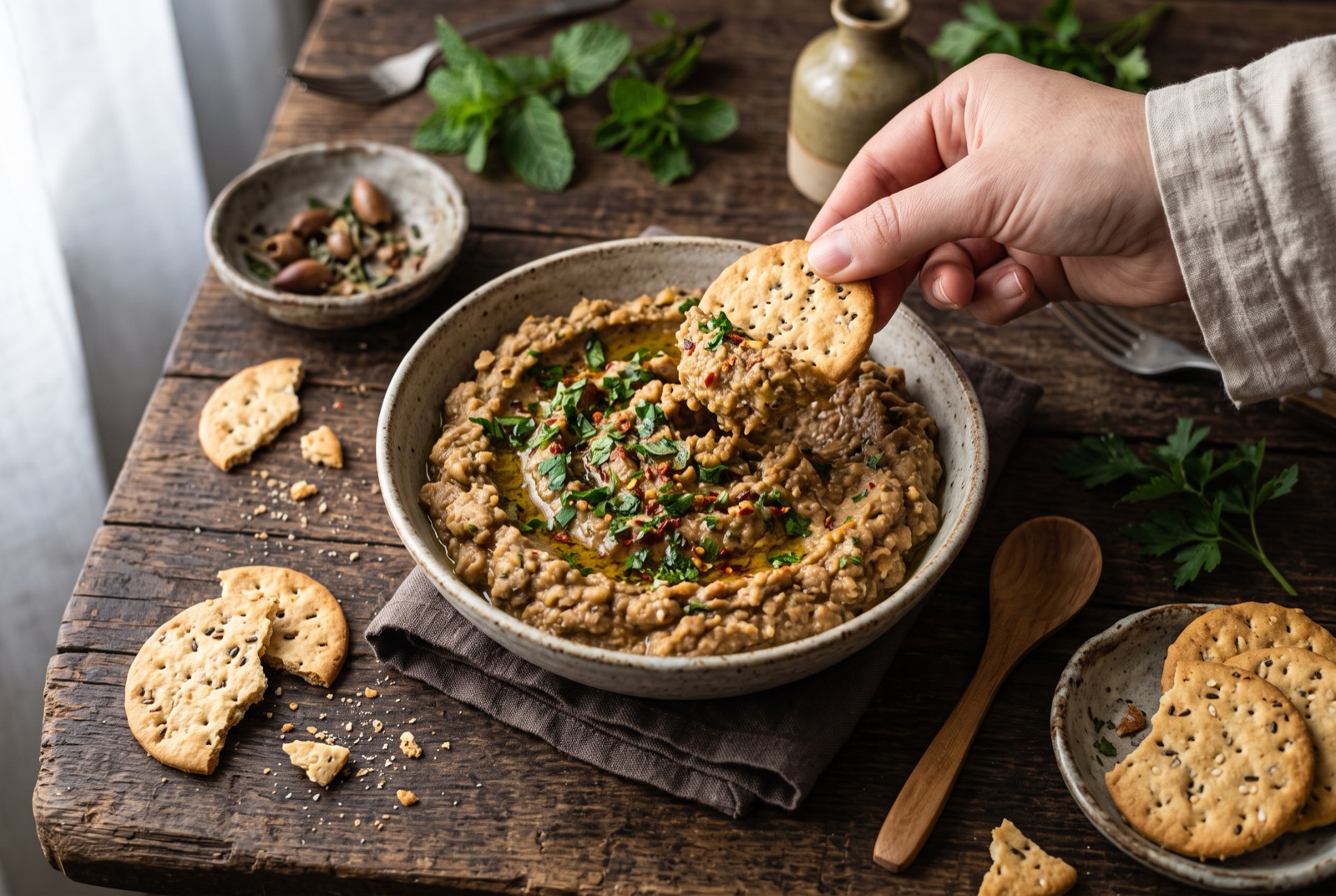
Bigilla is a thick, garlicky paste of dried broad beans, and it is the most Maltese thing on any table of nibbles. The beans — small dark ħabb tal-ful, cooked skins and all — are simmered until they fall apart, then crushed with a great deal of raw garlic, olive oil, parsley, mint and chilli into something between a dip and a spread. It is deliberately rough, never smooth, and it tastes earthy, warm with garlic and faintly bitter from the bean skins, which is exactly the point. Served warm with galletti, the dry Maltese water crackers, it costs almost nothing and disappears faster than anything else you put out.

- Gate
- Malta
- Prep
- 15 min
- Cook
- 1 hr 30 min
- Total time
- 13 hr 45 min incl. 12 hr rest
- Serves
- 8
- Status
- Easy
- Nutrition / serving · estimated
- Calories 250 kcal
- Protein 12 g
- Carbs 26 g
- Fat 11 g
- Fiber 10 g
- Sodium 320 mg
Why this recipe works.
- Uses whole skin-on dried broad beans for the real colour, bitterness and texture, not a pale purée.
- Crushed by hand rather than blitzed, keeping the coarse consistency Maltese cooks insist on.
- Garlic added raw and off the heat, so it stays sharp instead of turning sweet and flat.
- Costs very little, keeps for days and needs nothing more complicated than a pot and a fork.
Ingredients.
9 itemsFor the beans
To crush in
Equipment
- Large pot
- Potato masher or sturdy fork
- Mixing bowl
Instructions.
Soak the beans
Cover the dried broad beans with plenty of cold water and leave to soak for at least 12 hours, or overnight and into the next morning. They should swell to roughly double their size and the skins should look plump rather than wrinkled.
Tip In warm weather soak them in the fridge so they do not start to ferment.
Boil until collapsing
Drain, cover with fresh water by 5 cm, add the bay leaves and bring to a boil. Skim the foam, then simmer for 60–90 minutes until the beans crush effortlessly against the side of the pot with no firm centre left. Salt only in the last 10 minutes.
Tip Top up with hot water if the level drops below the beans — they need to stay submerged to soften evenly.
Drain, keeping the liquid
Scoop out a mugful of the cooking water and set it aside, then drain the beans and discard the bay leaves. Tip the hot beans into a bowl and let the steam escape for a couple of minutes.
Crush by hand
Mash the warm beans with a potato masher or fork until you have a rough paste with plenty of broken skins and half-crushed beans still visible. Loosen with the reserved cooking water a spoonful at a time until it drops thickly from the masher.
Tip Stop well before it looks smooth — coarse is the correct texture and it firms up as it cools.
Add garlic, herbs and oil
Beat in the raw garlic, olive oil, parsley, mint and chilli flakes while the beans are still warm so the flavours spread. Season with salt and plenty of black pepper, and add the lemon juice if you want a sharper finish.
Rest and serve warm
Let the bigilla sit for 15 minutes so the garlic works into the beans, then taste again and adjust. Spread in a shallow bowl, dent the surface with a spoon, pour olive oil into the hollows and serve warm with galletti crackers.
Tips from our kitchen.
- Soak the beans at least 12 hours, ideally 24. Under-soaked broad beans stay stubbornly firm no matter how long you boil them.
- Do not salt the cooking water until the beans are already soft — salt added early can keep the skins tough.
- Cook until the beans genuinely collapse when pressed against the side of the pot. If they still hold their shape, they are not ready and the dip will be gritty.
- Reserve a cup of the cooking liquid before draining. You will almost certainly need it to loosen the paste to a scoopable texture.
- Crush with a fork, potato masher or the back of a wooden spoon. A blender turns bigilla into hummus-textured paste and loses the character completely.
- Add the garlic and herbs off the heat. Cooked garlic goes sweet and mild, and this dip depends on the raw bite.
Substitutions.
- Ħabb tal-ful (dried skin-on broad beans) → Any dried whole fava beans with skins on, from Middle Eastern or Mediterranean grocers
- Look for small brown fava beans, sold for ful medames. Avoid split or peeled fava, which give a pale, sweet purée rather than bigilla.
- Dried beans → 2 tins of cooked fava beans, drained
- A real shortcut that works. Warm them through with a little water first, then crush. The texture is softer and the flavour slightly flatter, so be generous with the garlic.
- Galletti crackers → Water biscuits, cream crackers or toasted flatbread
- You want something dry and brittle rather than soft. Anything that snaps cleanly works in place of galletti.
Variations.
- Bigilla with extra chilli
- Fresh red chilli chopped through the finished paste and a chilli-infused oil on top, which is how many bars serve it with beer.
- Smooth bigilla
- Blitzed briefly for a spreadable version used on toast or as a sandwich filling. Common in cafés, disapproved of by traditionalists.
- Bigilla with anchovy
- A chopped anchovy fillet or two crushed into the warm beans, adding salt and depth without announcing itself as fish.
Storage & reheating.
Keeps 5 days refrigerated with a layer of olive oil on the surface to stop it drying out. It stiffens considerably when cold, so take it out at least 30 minutes before serving and stir in a spoonful of warm water to bring it back to a scoopable texture. Freezes for 3 months in portions; thaw in the fridge and refresh with olive oil, fresh garlic and a little chopped parsley, since the herb flavour fades in the freezer.
Serve with
Galletti crackers, a plate of olives, sundried tomatoes and Maltese ġbejniet cheeselets, with cold beer or wine.
The story behind Bigilla.
Broad beans are one of the oldest cultivated crops in the Mediterranean and one of the few things that grow reliably on Malta's thin limestone soil in winter. Dried, they keep indefinitely, and for most of Maltese history they were the protein that filled the gap between meat, which was expensive, and fish, which depended on the weather. Bigilla is what those beans became: a way of turning something dry and cheap into something worth eating, using ingredients that cost nothing extra — garlic, oil, herbs.
The specific bean matters. Ħabb tal-ful are small, dark, thick-skinned broad beans, and unlike the pale, peeled beans used for Egyptian ful medames or Greek fava, they are cooked with their skins on. That is where the dip gets its brown-grey colour and its slightly bitter, mineral edge. Maltese cooks who use peeled beans get something paler, sweeter and, most would say, not quite bigilla. It is also why the paste is left coarse — a food processor produces a smooth beige purée that loses the texture entirely.
Bigilla used to be street food. Vendors sold it warm from pots, ladled onto paper with crackers, and it was ordinary weekday food rather than anything special. Now it turns up as part of a Maltese platter alongside ġbejniet, olives, sundried tomatoes and Maltese sausage, in bars and at village festas, and it has quietly become a marker of national food identity — the sort of thing Maltese people abroad make when they want to feed someone their country. The one non-negotiable is that it should be eaten warm or at least at room temperature. Cold from the fridge it stiffens into a paste that no cracker will survive.
Questions, answered.
What kind of beans do I need for bigilla?
Small dried broad beans with their skins on, called ħabb tal-ful in Maltese and often sold as brown fava beans in Middle Eastern shops. The skins are essential: they give bigilla its dark colour and slightly bitter, earthy taste. Peeled or split fava beans produce a pale, sweet purée that is a different dish.
How is bigilla different from hummus or ful medames?
Hummus is chickpeas with tahini and lemon, and is smooth. Ful medames is a warm Egyptian dish of stewed fava beans, usually eaten as a meal with egg and bread. Bigilla is coarser than both, contains no tahini, and is dominated by raw garlic and fresh herbs rather than acid or sesame.
Can I use a food processor?
You can, but you will not get bigilla. The dip is meant to be coarse, with recognisable pieces of bean and skin, and a processor turns it into a uniform paste. If you must use one, pulse three or four times at most and finish by hand with a fork.
Why is my bigilla dry and crumbly?
Not enough liquid or oil. The paste thickens noticeably as it cools, so it should look slightly looser than you want while it is still warm. Beat in some of the reserved bean cooking water a spoonful at a time, followed by more olive oil, until it holds together and drops from a spoon.
Should bigilla be served hot or cold?
Warm or at room temperature. Straight from the fridge it sets into a stiff block that breaks crackers and tastes muted, since cold flattens the garlic and herbs. Take it out well in advance, or warm it briefly with a splash of water and stir before serving.
You might also like.
All recipes →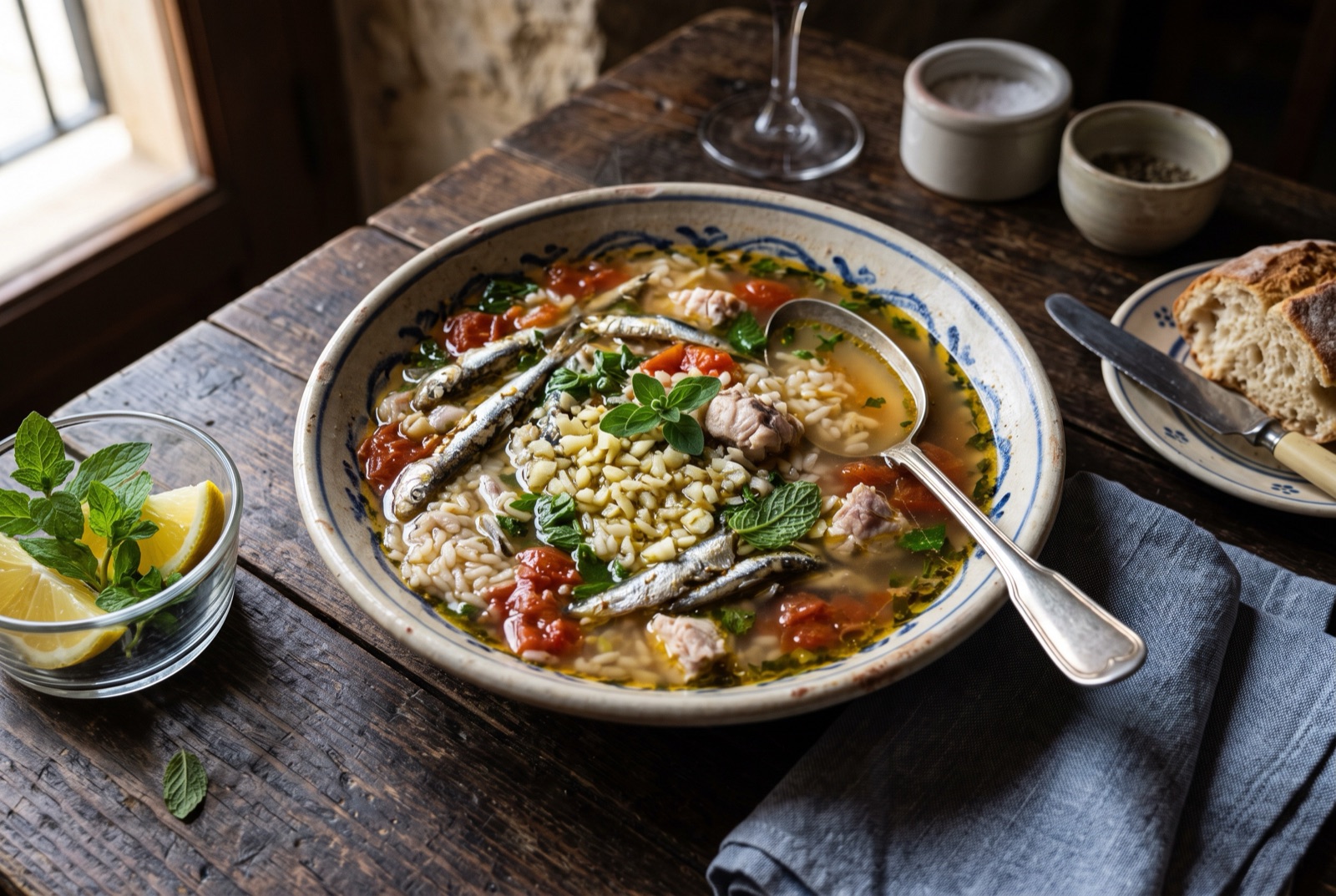
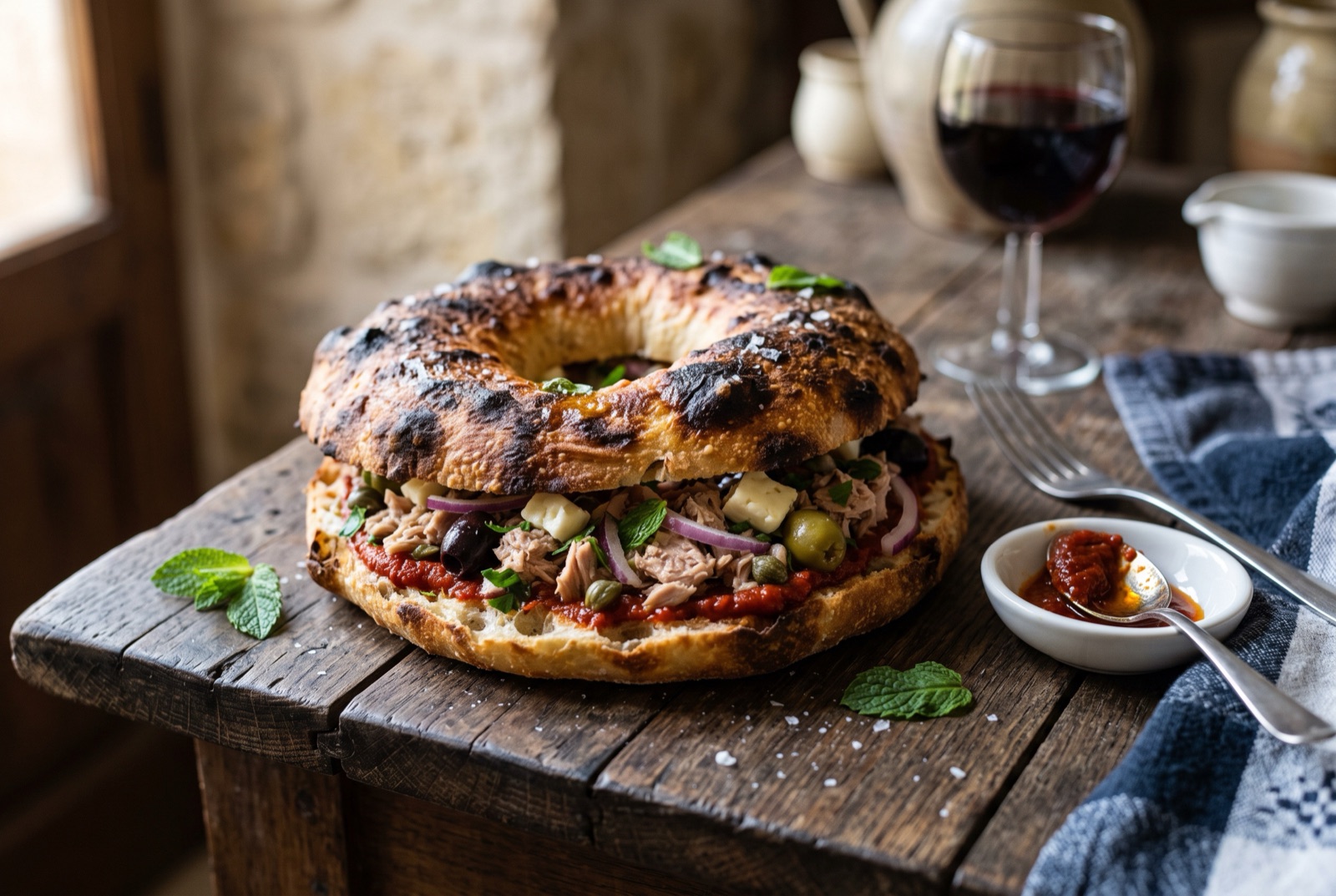
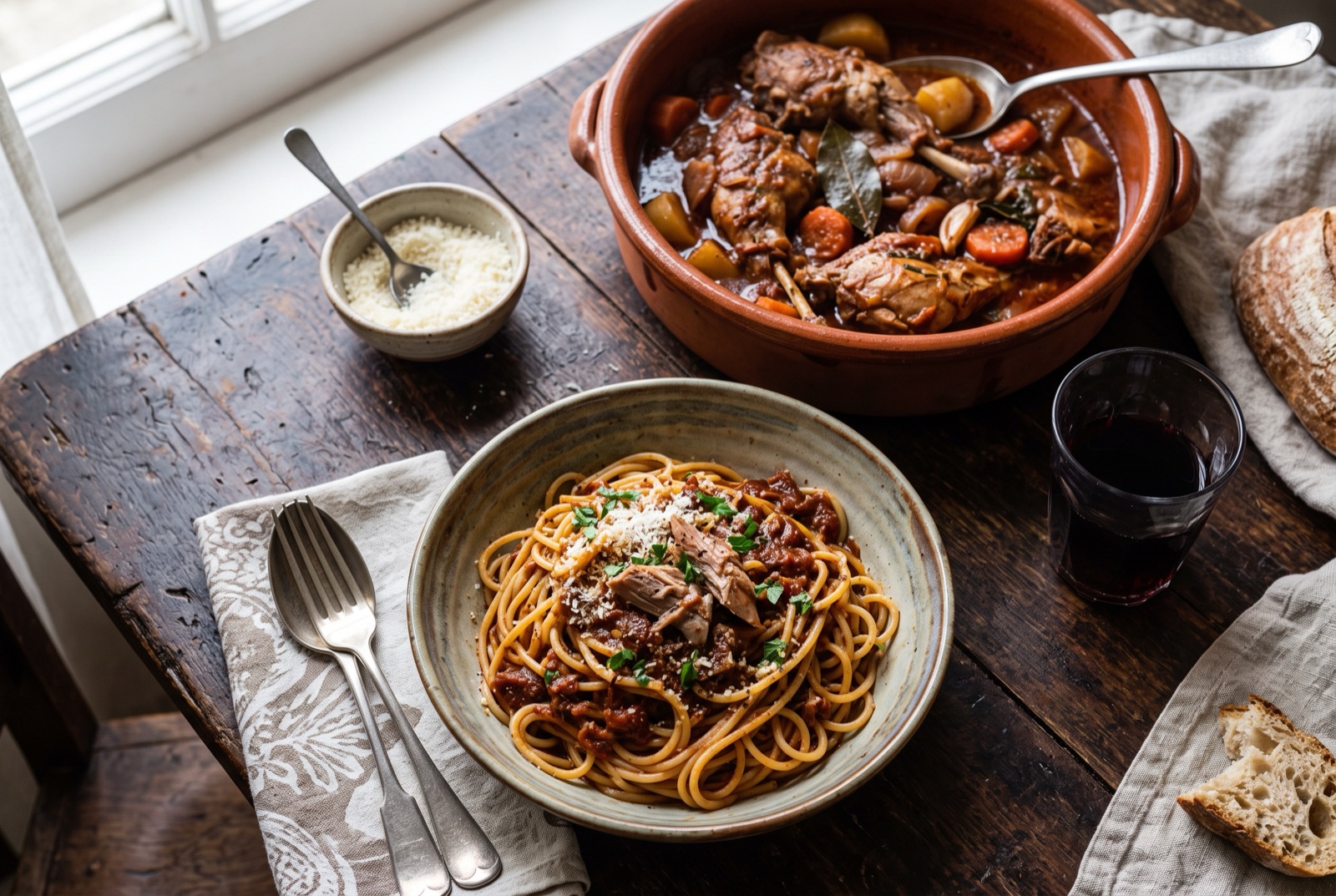
Keep exploring Malta.
Malta has 9 more dishes in the atlas — Aljotta and Braġioli, and 7 more.
All Malta recipes Garlic recipes Parsley recipes Mint recipes appetizersnackveganvegetariandairy freenut freeRecipe by The DishRoute Kitchen · published August 20, 2026 · updated August 20, 2026