Stuffat tal-Fenek.
Maltese Rabbit Stew in Red Wine
Stuffat tal-fenek · say it: STOO-fat tal-FEH-nek
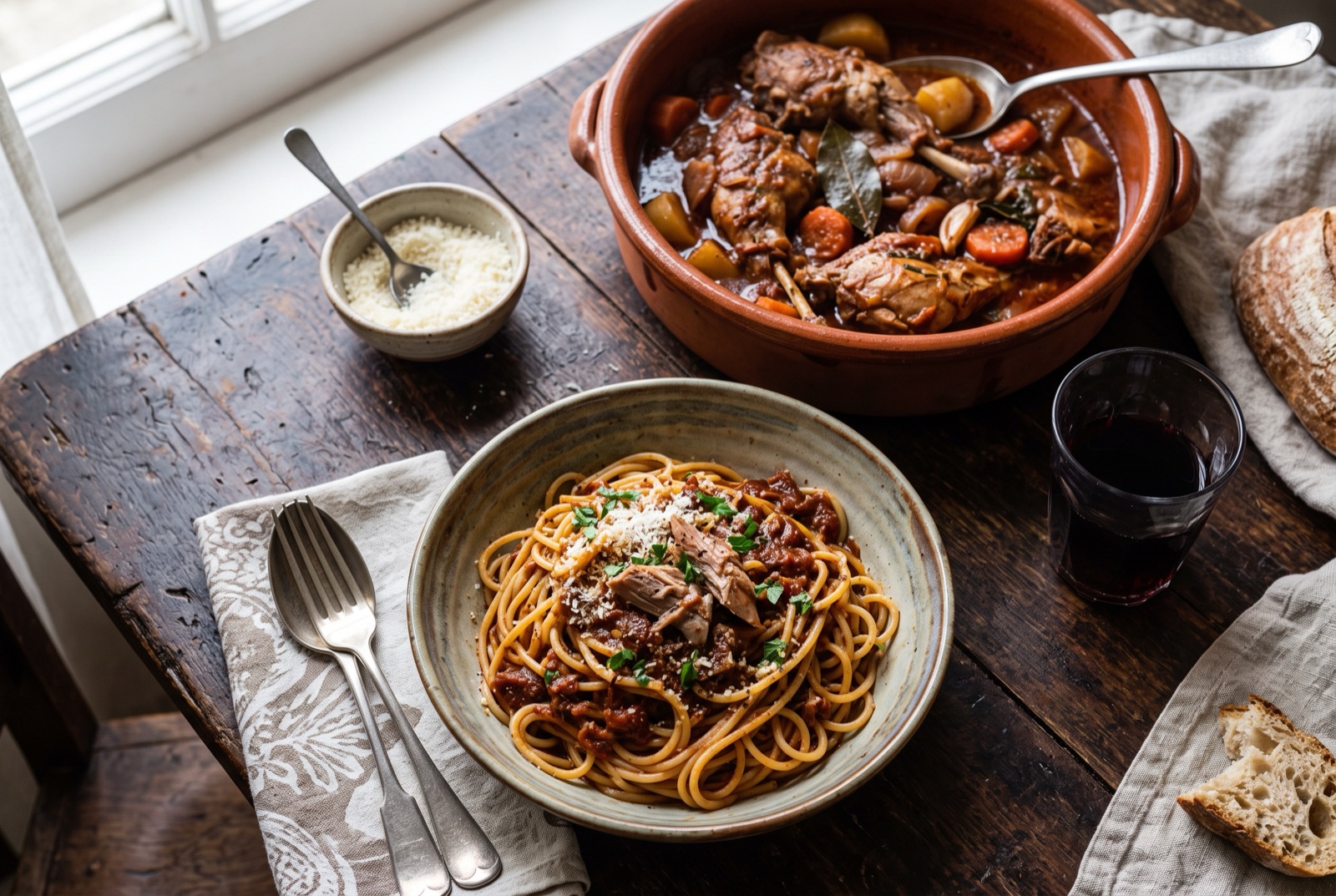
Stuffat tal-fenek is a slow rabbit stew built on red wine, garlic and bay, and it is the closest thing Malta has to a national plate. The meat is marinated overnight so the wine both tenderises and perfumes it, then browned in olive oil and simmered with onion, carrot, potato and a little tomato until the sauce turns glossy and dark and the rabbit gives way at a fork. The flavour is deep and savoury rather than gamey — rabbit is mild, and the wine, bay and long cooking round it out completely. What makes the Maltese version distinctive is not the stew itself but how it is served: the sauce comes to the table first, tossed through spaghetti as a separate course, and only then do the pieces of rabbit arrive with the vegetables.

- Gate
- Malta
- Prep
- 30 min
- Cook
- 1 hr 45 min
- Total time
- 10 hr 15 min incl. 8 hr rest
- Serves
- 4
- Status
- Medium
- Nutrition / serving · estimated
- Calories 610 kcal
- Protein 48 g
- Carbs 42 g
- Fat 22 g
- Fiber 5 g
- Sodium 620 mg
Why this recipe works.
- Overnight wine marinade does the real work — the rabbit is seasoned through, not just coated in sauce.
- Shows the authentic two-course fenkata order: pasta with the sauce first, then the meat.
- Clear browning and reduction cues so the sauce ends up glossy and dark rather than thin and pink.
- Honest about rabbit sourcing and gives a chicken thigh fallback that actually works.
Ingredients.
15 itemsFor the marinade
For the stew
To serve
Equipment
- Heavy casserole or Dutch oven with a lid
- Large non-reactive bowl for marinating
- Tongs
Instructions.
Marinate overnight
Put the rabbit pieces in a non-reactive bowl with the red wine, crushed garlic, bay leaves and cracked peppercorns. Turn everything to coat, cover and refrigerate for at least 8 hours or overnight, turning once if you remember.
Tip Use glass, ceramic or stainless steel — wine sitting in aluminium picks up a metallic taste.
Dry and brown the rabbit
Lift the rabbit out and reserve every drop of the marinade. Pat the pieces thoroughly dry with kitchen paper, season with salt, then brown in the olive oil over medium-high heat in batches until deeply golden on both sides, about 4 minutes a side. The pan base should be coated in sticky brown fond.
Tip If the fond starts to blacken rather than darken, lower the heat — burnt fond makes the whole sauce bitter.
Soften the vegetables
Set the rabbit aside. Add the onions and carrots to the same pot and cook over medium heat for 8 minutes, scraping the browned bits up as the onions release their moisture, until the onions are soft and translucent at the edges.
Build the sauce
Stir in the tomato paste and cook for 2 minutes, until it darkens from bright red to brick and smells sweet rather than raw. Pour in the reserved marinade, bring to a boil and let it bubble for 5 minutes to cook off the sharp alcohol edge.
Simmer low and slow
Return the rabbit and any resting juices, add the stock so the meat is almost covered, and bring back to a bare simmer. Cover and cook very gently for 1 hour, turning the pieces once halfway.
Tip Bubbles should surface lazily every second or two. Anything more vigorous toughens lean rabbit.
Add potatoes and finish
Tuck in the potato chunks, cover again and simmer for a further 30 minutes, until a knife slides into the potatoes without resistance and the rabbit meat pulls away from the bone. Stir in the peas for the last 8 minutes if using.
Reduce and season
Lift out the rabbit and potatoes and keep them warm. Boil the sauce uncovered until it thickens enough to coat the back of a spoon and turns glossy and dark, 5–10 minutes. Taste and correct with salt and pepper — it should be savoury and winey, not sharp.
Serve as two courses
Cook the spaghetti until al dente, drain and toss with about half the sauce, then serve that first with parsley scattered over. Bring the rabbit, potatoes and the remaining sauce to the table afterwards as the main course.
Tips from our kitchen.
- Ask the butcher to joint the rabbit into 8 pieces — two front legs, two hind legs, saddle cut into four. Even pieces cook evenly.
- Pat the marinated pieces genuinely dry before browning. Wet rabbit steams grey instead of taking colour, and colour is where the sauce gets its depth.
- Brown in batches with space between the pieces. Crowding the pan drops the heat and you lose the fond that flavours everything.
- Farmed rabbit is lean and can dry out — keep the simmer at a lazy blip, never a rolling boil, and check the loin pieces first since they finish sooner.
- Reduce the sauce hard at the end if it looks watery; you want it to coat spaghetti, not pool under it.
- Make it a day ahead if you can. Rabbit stew is noticeably better on day two, once the wine has settled into the meat.
Substitutions.
- Whole rabbit → Bone-in chicken thighs and drumsticks (1.2 kg)
- Not traditional, but the method transfers cleanly. Cut the total simmering time to about 45 minutes — chicken thighs are tender long before rabbit is.
- Maltese red wine → Any dry, medium-bodied red — Nero d'Avola, Merlot or Chianti
- Avoid heavily oaked reds, which turn bitter over a long reduction. The wine should taste like something you would drink.
- Fresh bay leaves → Dried bay leaves, using three instead of two
- Dried bay is milder and slower to release, so add it at the start of the simmer rather than at the end.
Variations.
- Fenek moqli
- The other half of a fenkata: rabbit pieces fried hard in olive oil with a great deal of garlic, splashed with wine and finished with nothing else. Faster, sharper and more garlicky than the stew.
- Stuffat with peas
- Many households stir a cup of peas into the pot for the final ten minutes, which brightens the colour and adds sweetness against the wine.
- Rabbit sauce for pasta only
- Cook the stew, shred the meat off the bone entirely and return it to the sauce for a single-course rabbit ragù over spaghetti or tagliatelle.
Storage & reheating.
Refrigerate in the sauce for up to 3 days; the flavour improves overnight. Reheat gently in a covered pan over low heat, adding a splash of water if the sauce has tightened. It freezes well for 2 months — freeze the meat submerged in sauce so it does not dry out, and thaw fully in the fridge before reheating. Do not boil hard when reheating, as the lean loin meat turns stringy quickly.
Serve with
Spaghetti tossed with the sauce as a first course, then the rabbit and potatoes with crusty Maltese bread and a glass of the same red used in the pot.
The story behind Stuffat tal-Fenek.
Rabbit occupies an unusually loaded place in Maltese life. The islands are small, farmland is scarce and grazing land scarcer, so for centuries rabbit was the meat a household could actually raise in a hutch on a rooftop or in a courtyard — cheap protein that needed no pasture. Wild rabbit hunting was periodically restricted under the Knights of St John, and eating rabbit acquired a stubborn, slightly defiant streak that has never entirely faded. The word for a rabbit feast, fenkata, still means a whole evening rather than a dish: a long table, several courses, wine, and the animal cooked two ways.
The fenkata itself follows a fixed order that Maltese families treat as non-negotiable. First comes the spaghetti, dressed with the rich wine-and-tomato sauce the rabbit has been cooking in — a first course that tastes of the meat without containing any of it. Then the rabbit itself is served, either as this stew or fried simply in garlic and wine, with the potatoes and vegetables that cooked alongside. Bread is on the table throughout, and nobody is expected to be discreet about the bones. In villages inland — Mġarr on Malta, and traditionally around Baħrija — restaurants built their reputations entirely on this one meal, and booking a fenkata is still a social event rather than a dinner reservation.
The stew also shows the two forces that shaped Maltese cooking generally. The technique is Mediterranean and largely Sicilian in structure — soffritto, wine, tomato, long low simmer — while the habit of serving pasta as a first course with the braising liquid is straight Italian. But the seasoning is restrained in a way that is specifically Maltese: bay, garlic, black pepper, occasionally a clove, and nothing that would compete with the wine. It is not a showy dish. It is Sunday, and everyone knows exactly what is coming.
Questions, answered.
Where do I buy rabbit, and what size should it be?
Good butchers, farmers' markets, halal butchers and online game suppliers all sell rabbit, usually farmed and already skinned. Look for one around 1.2–1.5 kg, which serves four. Wild rabbit is smaller, leaner and much stronger in flavour, and needs longer cooking — if that is what you find, add 30–40 minutes to the simmer.
Does rabbit taste gamey?
Farmed rabbit does not. It is mild, lean and closer to chicken thigh than to game, with a slightly firmer texture. Wild rabbit is noticeably stronger and more savoury. The overnight wine marinade in this recipe softens any strong notes either way, which is part of why Maltese cooks have always used it.
Why is the sauce served with pasta before the meat?
That is the traditional fenkata order in Malta: the braising sauce is tossed with spaghetti and eaten as a first course, then the rabbit and vegetables follow as the main. It stretches an expensive protein across two courses and means the sauce is tasted on its own terms rather than as a coating.
Can I make this without alcohol?
You can, but it becomes a different dish, since the wine is the backbone rather than an accent. Replace it with stock plus 2 tablespoons of red wine vinegar and a little extra tomato paste for depth and acidity. The result is a decent rabbit stew, but not stuffat tal-fenek as Malta would recognise it.
My rabbit came out dry — what went wrong?
Almost always heat. Rabbit is very lean, so a rolling boil squeezes moisture out of the muscle faster than the connective tissue can soften. Keep the pot at a bare simmer with just an occasional bubble breaking the surface, and pull the saddle pieces out early if they are done before the legs.
You might also like.
All recipes →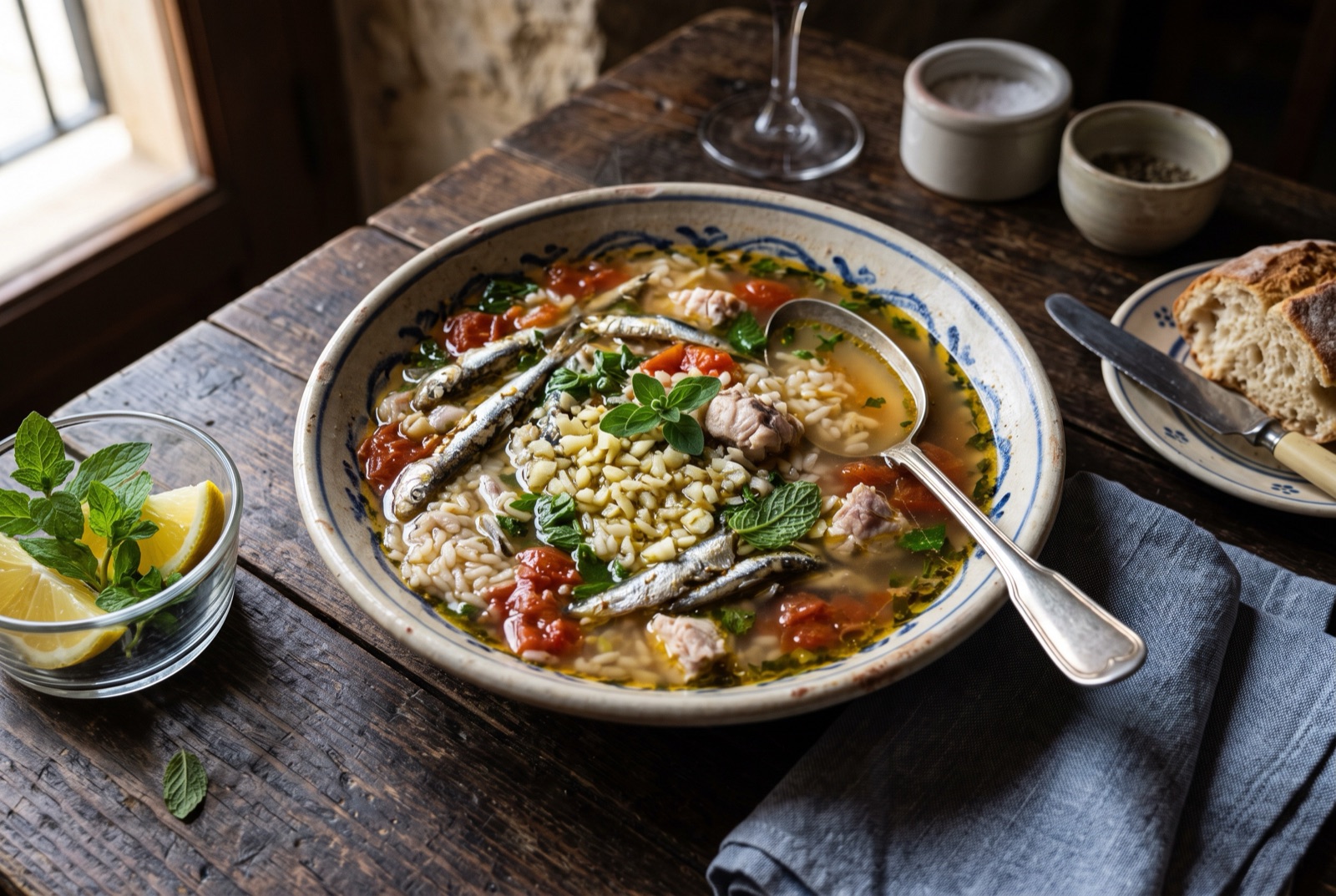
Keep exploring Malta.
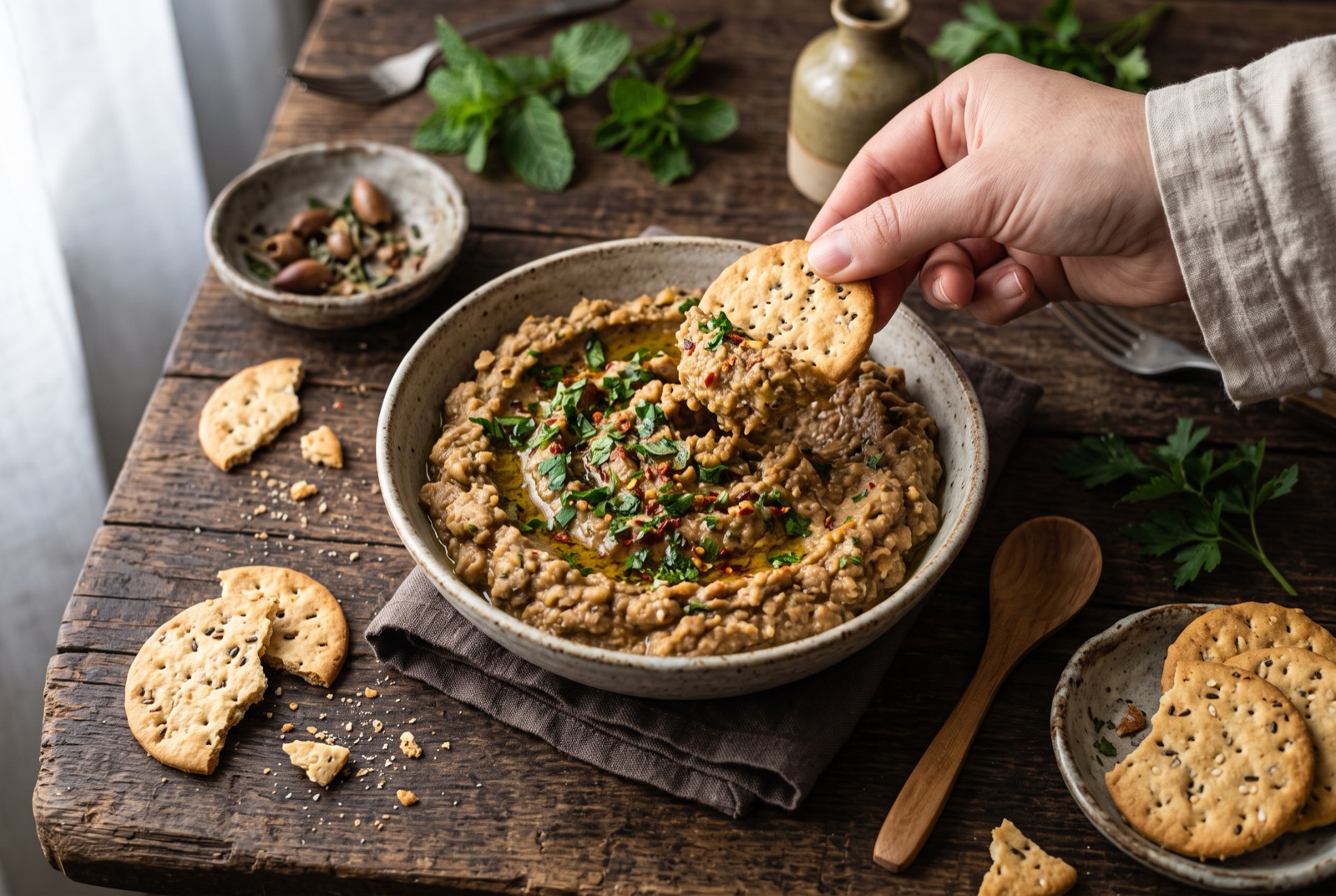
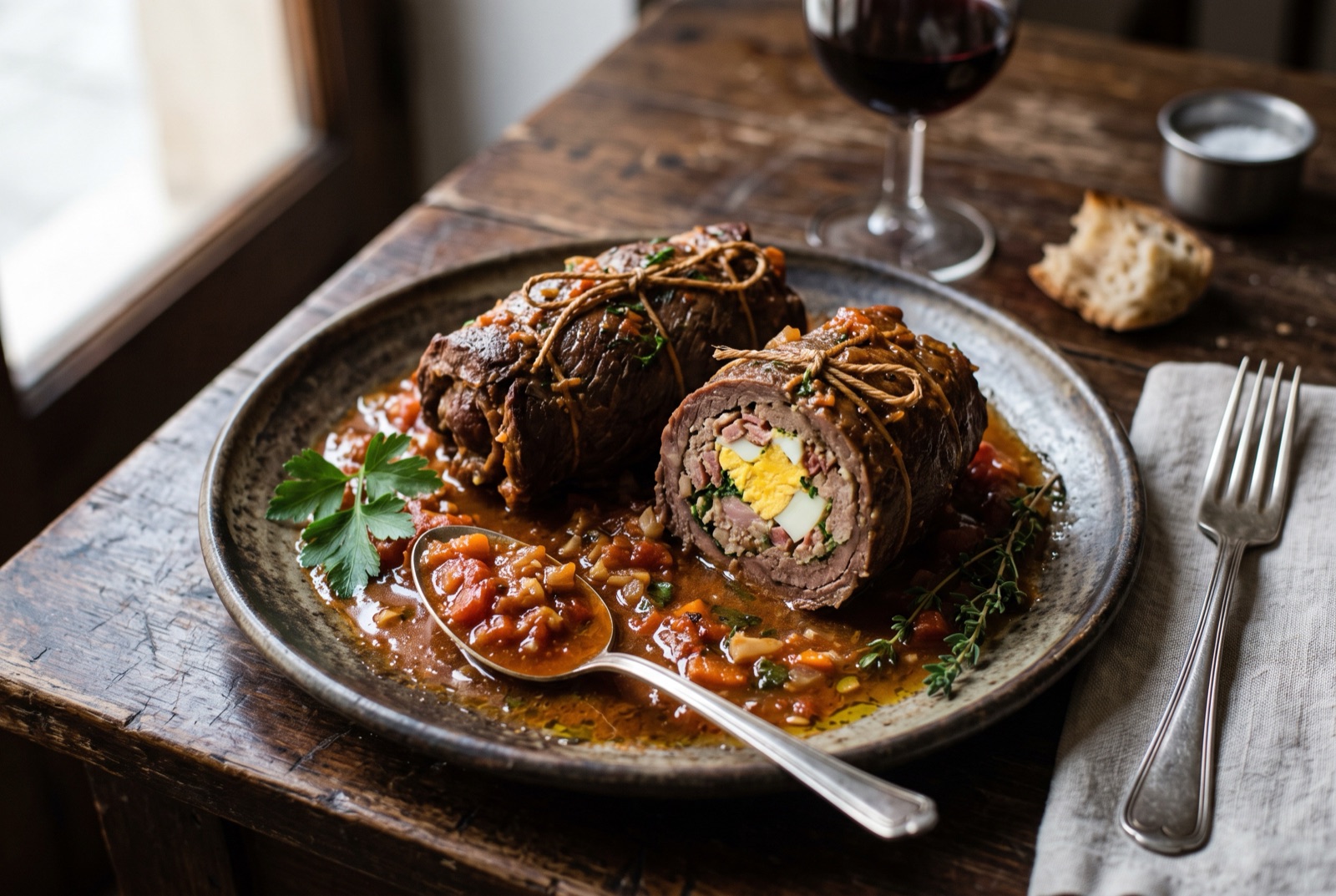
Malta has 9 more dishes in the atlas — Aljotta and Bigilla, and 7 more.
Recipe by The DishRoute Kitchen · published August 20, 2026 · updated August 20, 2026