Coq au Vin.
French Chicken Braised in Red Wine
Coq au vin · say it: kok oh VAN
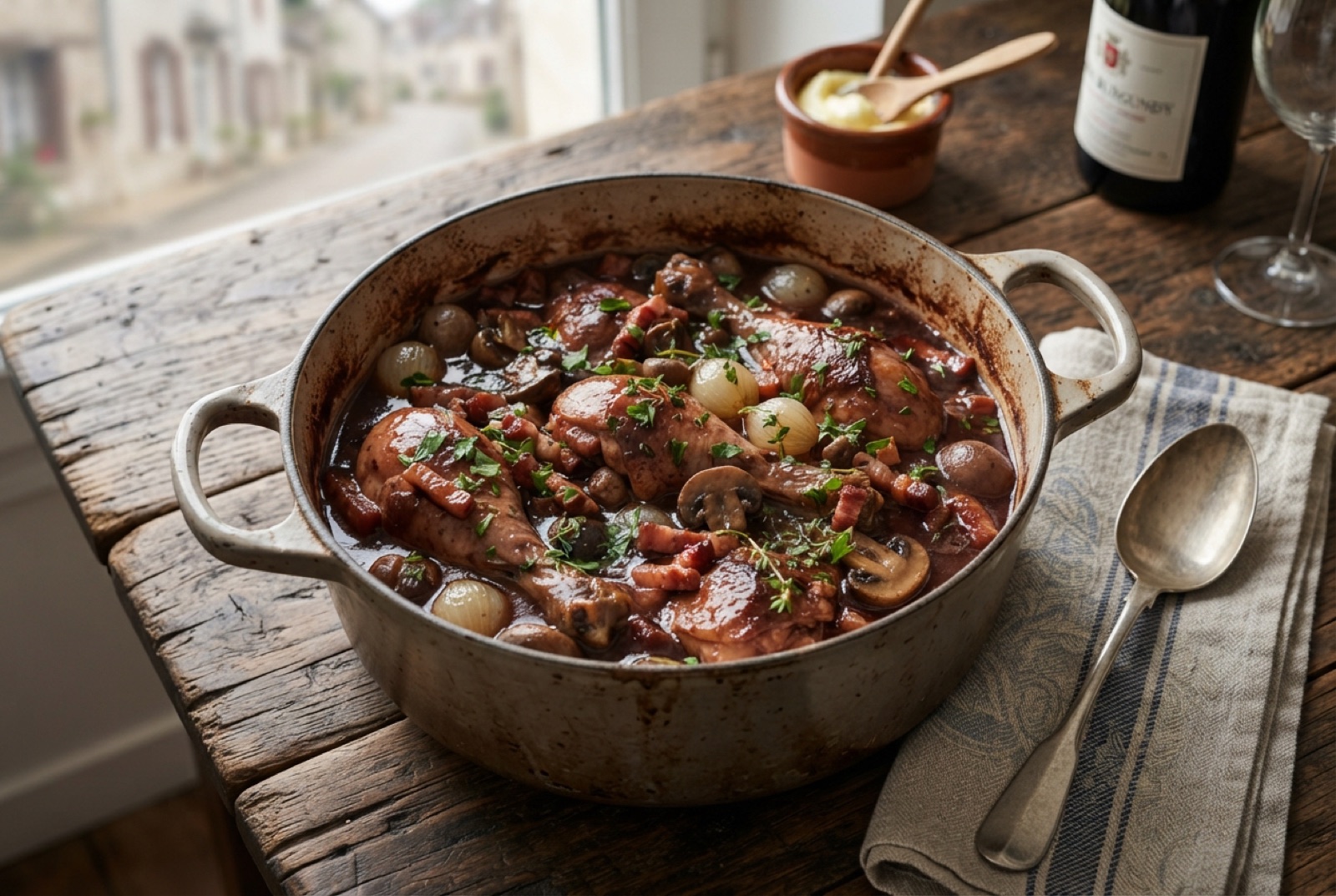
Coq au vin takes bone-in chicken, browns it hard, and finishes it in red wine with bacon, mushrooms and small onions until the meat pulls away from the bone and the sauce goes dark and silky. It tastes savoury and slightly sweet, with the wine softened by long heat and the bacon supplying the smoke; the beurre manié whisked in at the end gives it a gloss you cannot get from stock alone. It sits somewhere between everyday cooking and a dish you make on purpose for people — an hour and a half, one pot, and no technique more difficult than browning meat properly and keeping a simmer honest.

- Gate
- FranceBurgundy
- Prep
- 30 min
- Cook
- 1 hr 20 min
- Total time
- 1 hr 50 min
- Serves
- 4
- Status
- Medium
- Nutrition / serving · estimated
- Calories 590 kcal
- Protein 46 g
- Carbs 16 g
- Fat 34 g
- Fiber 2 g
- Sugar 5 g
- Sodium 820 mg
Why this recipe works.
- Uses bone-in legs and thighs rather than breast, so the meat stays juicy through a braise instead of turning chalky.
- The sauce is finished with beurre manié, the classic French fix — instant gloss and body without a raw flour taste.
- Garnish cooked apart and folded in at the end, so mushrooms are browned and onions glazed rather than boiled pale.
- Straight about the rooster: what the dish originally was, and why the modern chicken version still works.
Ingredients.
18 itemsFor the braise
For the garnish and finish
Equipment
- Heavy Dutch oven or deep casserole with a lid
- Frying pan for the garnish
- Tongs
Instructions.
Crisp the lardons
Warm the olive oil in a heavy casserole over medium heat and cook the lardons for about 8 minutes, stirring now and then, until the fat has rendered out and the pieces are browned but still chewy. Scoop them out and set aside, leaving the fat in the pot.
Brown the chicken skin-side down
Season the chicken all over and lay the pieces skin-side down in the hot fat without touching each other. Leave them alone for 6–7 minutes, until the skin is crisp and deep golden and releases from the pot by itself, then turn and colour the other side for 3 minutes. Work in two batches and set the pieces aside.
Tip If the skin sticks when you try to lift it, it is not ready. Give it another minute and it will let go on its own.
Soften the aromatics and flame the brandy
Pour off all but two tablespoons of fat, then cook the chopped onion, carrot and garlic over medium heat for 6 minutes until soft and lightly coloured. Stir in the tomato paste, cook for a minute, then add the brandy and let it bubble away almost completely, scraping the base clean as it reduces.
Deglaze and build the braise
Pour in the wine and stock, add the thyme and bay leaves, and bring to a boil. Let it bubble openly for 5 minutes so the raw alcohol edge burns off, then return the chicken skin-side up along with the lardons — the liquid should reach about two-thirds up the pieces, leaving the skin above the surface.
Simmer until the meat loosens
Cover partially and simmer very gently for 45 minutes, skimming the fat that gathers at the edges, until the meat retreats from the drumstick bone and offers no resistance to a knife tip. The surface should tremble with occasional lazy bubbles, never boil.
Glaze the onions and brown the mushrooms
While the chicken cooks, melt half the butter in a frying pan and cook the pearl onions with a splash of water over medium-low heat for 12–15 minutes, shaking regularly, until sticky and bronzed. Turn the heat high, add the mushrooms, and cook without stirring for 3 minutes, then toss until they squeak and turn deep gold.
Thicken with beurre manié
Lift the chicken onto a plate and discard the herb stalks. Mash the remaining butter with the flour into a smooth paste, then whisk it into the barely simmering sauce a pea-sized piece at a time until the sauce coats a spoon in a glossy layer. Simmer for 3 minutes more so no floury taste remains.
Tip Add the paste off the boil and whisk between each piece — dropping it all in at once guarantees lumps.
Combine and serve
Slide the chicken back into the sauce with the onions and mushrooms and warm through for 5 minutes, spooning sauce over the pieces. Taste for salt and acidity, scatter with parsley, and bring the pot to the table with noodles or potatoes.
Tips from our kitchen.
- Bone-in thighs and drumsticks are the right cut. Breast meat overcooks in half the time a braise needs and goes dry and stringy.
- Dry the skin hard before browning and do not crowd the pan — the fond left on the base of the pot is where the sauce gets its depth.
- Blanch heavily smoked bacon in simmering water for two minutes before rendering, or the smoke will flatten the wine flavour.
- Make the beurre manié by mashing equal weights of soft butter and flour into a smooth paste, then whisk it in off the boil in small pieces so it disperses instead of lumping.
- Taste for acidity before serving. If the sauce is sharp, a teaspoon of sugar or a knob of butter rounds it; if it is flat, a splash of wine vinegar wakes it up.
- Skim the fat that rises during the braise — chicken skin releases a lot of it, and unskimmed sauce feels greasy on the lips.
Substitutions.
- Brandy or Cognac → An extra 100 ml of the wine, or a splash of dry sherry
- The brandy adds a warm, slightly caramel note but the dish is complete without it. Do not substitute a sweet liqueur.
- Bacon lardons → Pancetta batons, or diced smoked ham
- Aim for chunky pieces about the size of your little fingertip. Thin rashers dissolve and you lose the meaty bite.
- Red wine → Dry white wine plus 100 ml of cream stirred in at the end
- This turns the dish into coq au riesling, an Alsatian version that is every bit as traditional and considerably lighter.
- Pearl onions → Shallots, halved lengthways
- Halved shallots caramelise faster and give a slightly sweeter result. Frozen pearl onions work if patted dry first.
Variations.
- Coq au riesling
- The Alsatian version: dry Riesling instead of red, cream stirred through at the end, and often no tomato paste. Pale, rich and aromatic rather than dark and winey.
- Coq au vin jaune
- From the Jura, made with the region's oxidative vin jaune and dried morels. Nutty, sherry-like and the most expensive way to cook a chicken in France.
- Overnight marinade
- Marinate the chicken in the wine with the aromatics for 12 hours before cooking. The colour deepens noticeably; drain and dry the pieces thoroughly or they will never brown.
Storage & reheating.
Refrigerate in the sauce for up to 3 days; the flavour deepens overnight and any fat sets on top for easy removal. Reheat covered over low heat or in a 150°C oven until the sauce steams — boiling dries the chicken and can make the beurre manié break. It freezes for up to 3 months, though the mushrooms soften; if that bothers you, freeze without them and brown fresh ones on the day. Chicken on the bone reheats far better than breast meat, which is another reason to use legs.
Serve with
Buttered egg noodles, mashed potato, or plain boiled potatoes with plenty of bread for the sauce.
The story behind Coq au Vin.
The name is literal and slightly misleading. A coq is a rooster, not a chicken, and the original dish existed because farms kept one cockerel for breeding and had to do something with him when he was replaced. An old rooster is muscular, sinewy and close to inedible by any fast method; wine, aromatics and several hours of wet heat were the only way to get anything out of him. Some versions went further and thickened the sauce with the bird's own blood, which is where the deep, almost purple colour of a traditional coq au vin comes from. Almost nobody cooks it that way now, and almost nobody can buy a rooster — modern coq au vin is made with a good farmed chicken and cooked in a fraction of the time.
Burgundy is the region most associated with the dish, and coq au vin is essentially bœuf bourguignon logic applied to poultry: the same lardons, the same button mushrooms, the same glazed pearl onions, the same bottle. But almost every wine region in France claims a version, and they are named after the bottle rather than the bird — coq au riesling in Alsace, made with white wine and cream; coq au vin jaune in the Jura with its oxidative yellow wine and morels; coq au Chambertin in the grandest Burgundian telling, which is more a boast than a recipe. There are stories tying the dish to Julius Caesar and to Gaulish chieftains, and they are almost certainly invented after the fact; the first written recipes are much more recent, and the dish's real history is farmhouse rather than imperial.
What carried coq au vin into kitchens outside France was the same wave of mid-twentieth-century cookbooks that carried bourguignon. It became one of the fixed points of what people abroad understood as French cooking: something braised, something in wine, something served in the pot it was cooked in. Cooked at home today it is closer to its origins than its reputation suggests — a way of turning modest ingredients and a modest bottle into something that tastes far above its cost.
Questions, answered.
Do I actually need a rooster to make coq au vin?
No, and you almost certainly cannot buy one. The dish was invented to tenderise an old breeding rooster, which needed several hours of wine braising to become edible. A modern farmed chicken has none of that toughness, so the recipe adapts: use bone-in legs and thighs, cook for about 45 minutes rather than three hours, and you get the same flavour with much better texture.
Can I use chicken breast instead of legs?
You can, but the result is worse. Breast meat is lean and finishes cooking in 15–20 minutes, so by the time a braise has built any flavour the breast is dry and fibrous. If breast is all you have, brown it, remove it from the pot, build and simmer the sauce for 30 minutes, then return the breast for the last 10 minutes only.
What is beurre manié and why not just use cornflour?
Beurre manié is equal weights of soft butter and plain flour kneaded into a paste, whisked into a hot sauce in small pieces at the end of cooking. The butter coats each flour particle so it disperses without lumping, and it thickens while adding richness and shine. Cornflour thickens but gives a slightly glassy, slick texture and adds nothing in flavour or gloss.
My sauce tastes harsh and sour. What went wrong?
Either the wine was too tannic or oaky for a long reduction, or it was not simmered long enough after deglazing to cook off the raw alcohol. Let the sauce bubble openly for a few more minutes, then correct: a knob of cold butter whisked in softens acidity, and a teaspoon of sugar balances a wine that was too dry. Next time, use a lighter, low-tannin red.
Can I make coq au vin ahead of time?
Yes — this is one of the rare braises that is better on day two. Cook it completely up to two days ahead, cool, and refrigerate; the sauce settles and the chicken absorbs more of it. Reheat gently and add the mushrooms and glazed onions fresh on the day if you want them at their best. Do not add the beurre manié until the final reheat if you plan to reduce the sauce further.
You might also like.
All recipes →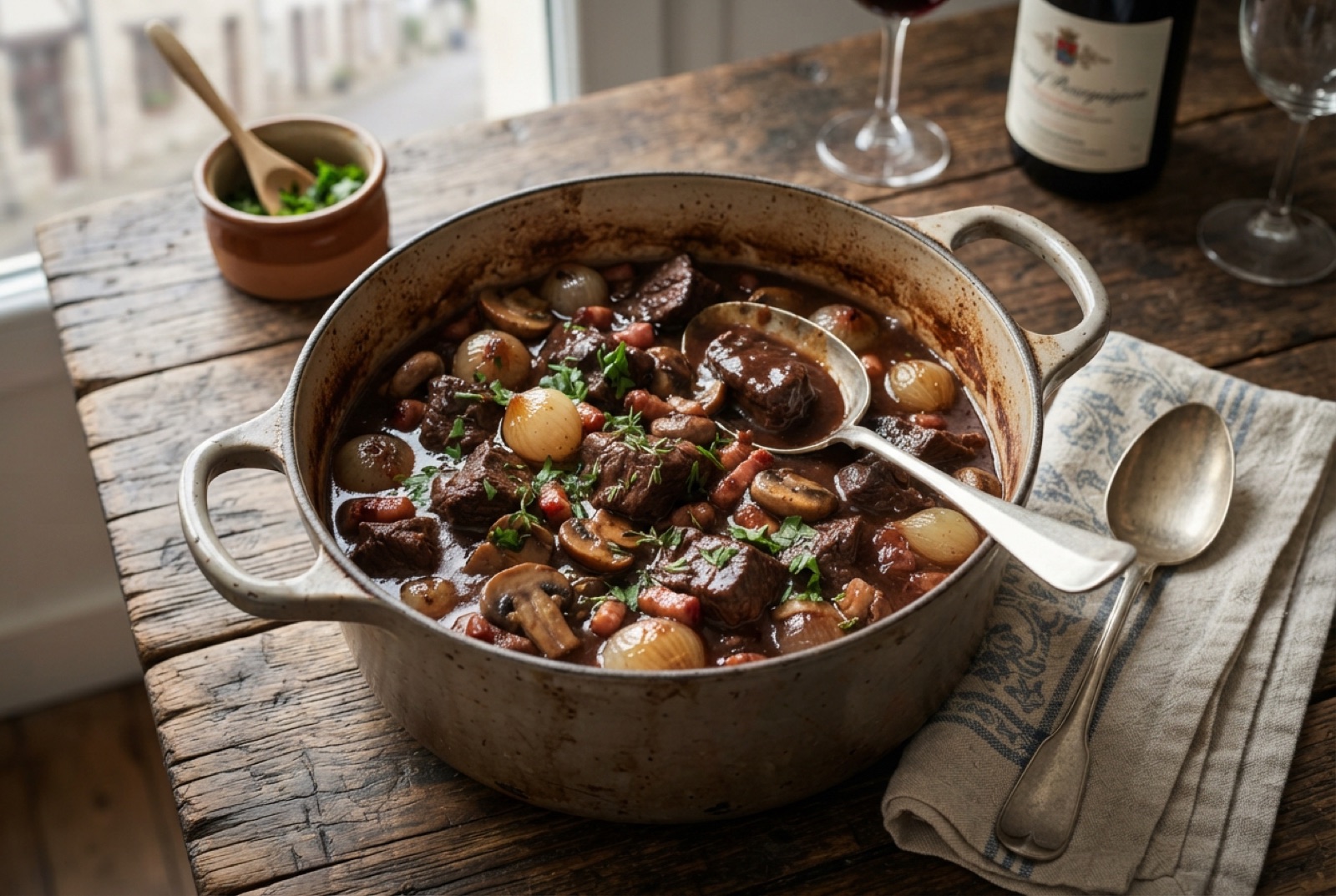
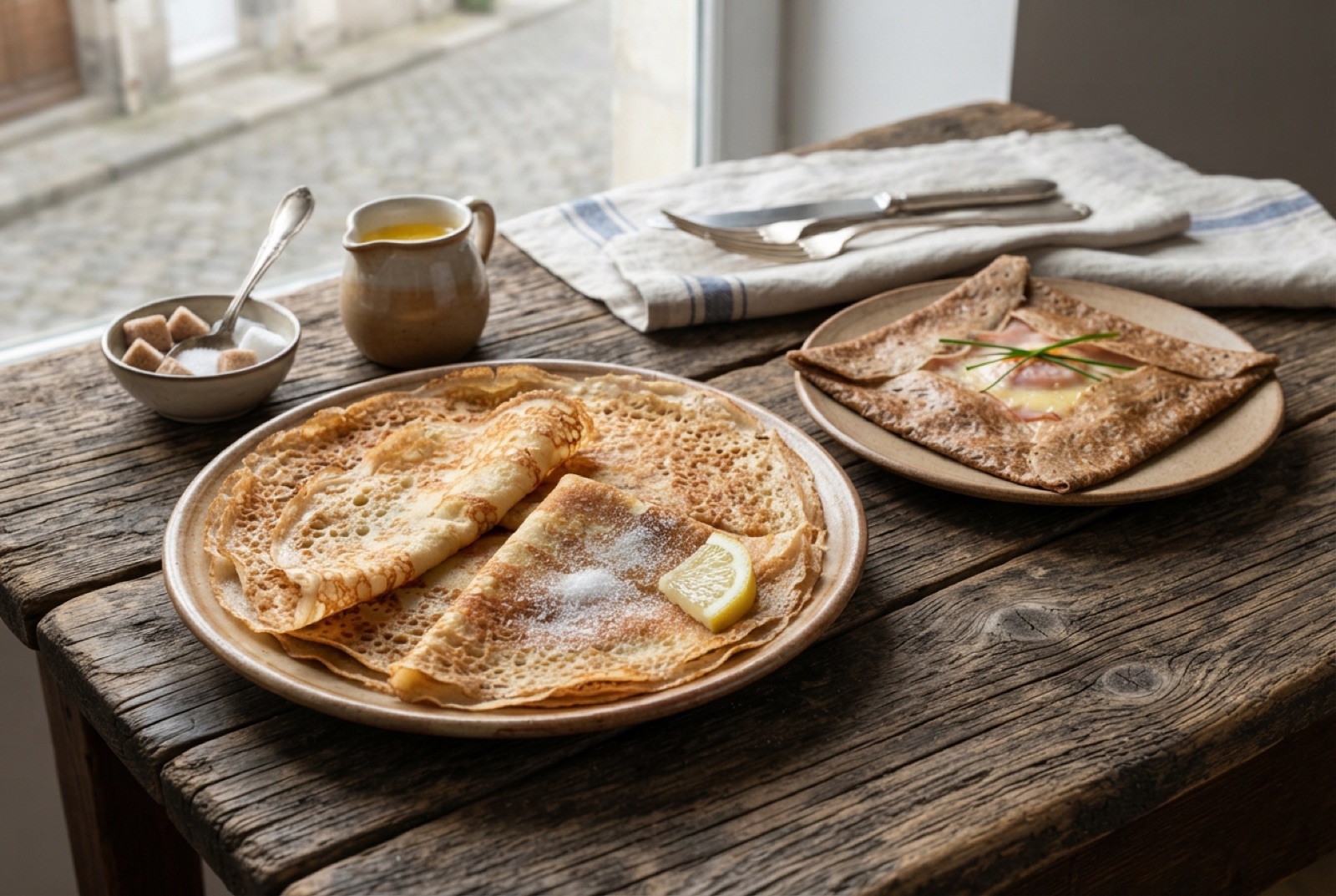
Keep exploring France.
France has 9 more dishes in the atlas — Baguette and Bœuf Bourguignon, and 7 more.
Recipe by The DishRoute Kitchen · published August 19, 2026 · updated August 19, 2026