French Crêpes.
Crêpes · say it: krep
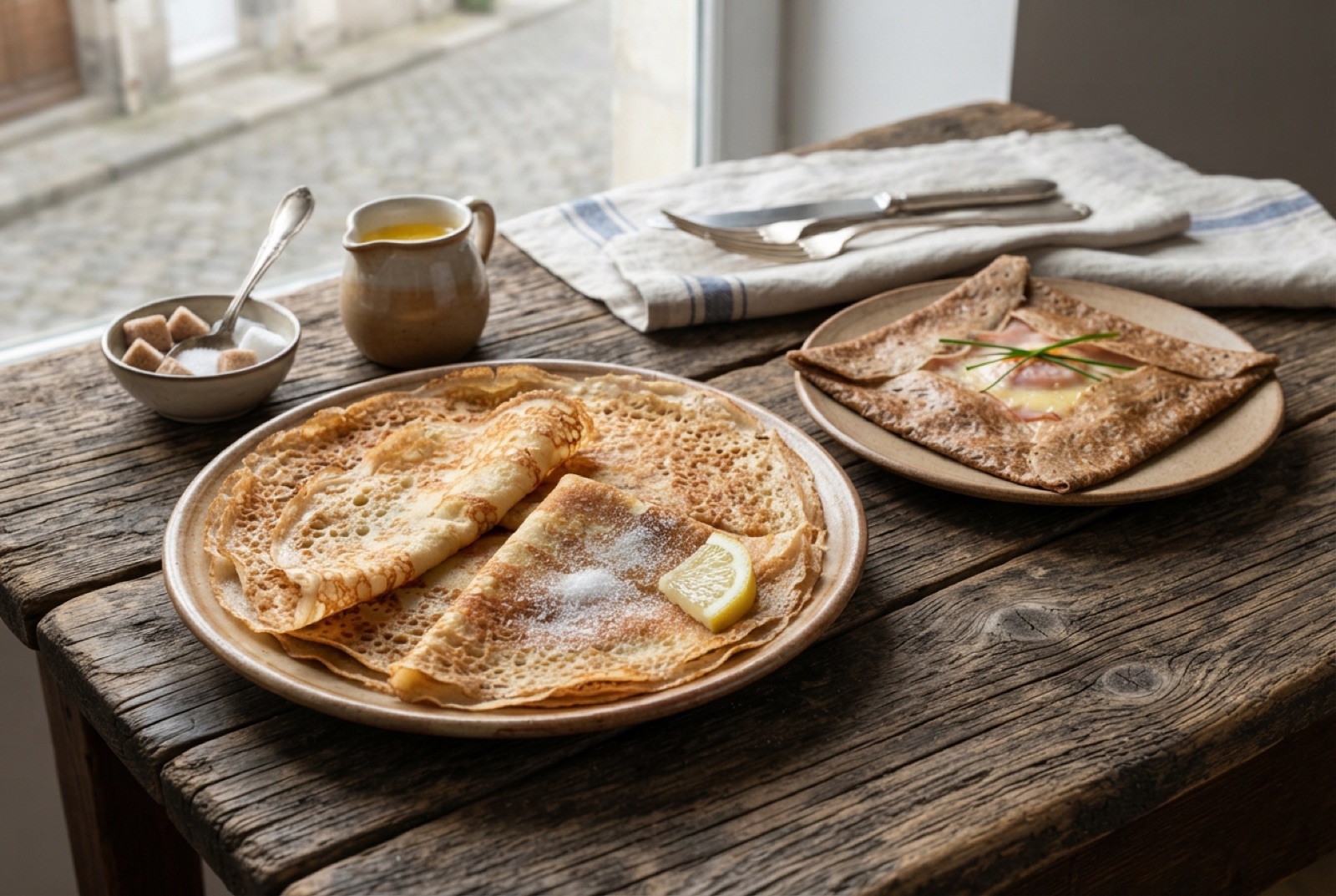
A crêpe is the thinnest useful pancake there is: a loose batter of flour, eggs, milk and melted butter, swirled across a hot pan into a sheet barely thicker than the lace at its edges. It tastes of browned butter and egg, mildly sweet, and exists mainly to carry things — sugar and lemon, jam, folded ham and cheese in the savory buckwheat version. The batter takes five minutes in a blender; the two real skills are resting it so the flour hydrates and the first crêpe stops being a sacrifice, and the wrist-swirl that spreads it thin. After three crêpes you will have the motion, and the remaining stack disappears faster than you can cook it.

- Gate
- France
- Prep
- 10 min
- Cook
- 25 min
- Total time
- 1 hr 5 min incl. 30 min rest
- Serves
- 4
- Status
- Easy
- Nutrition / serving · estimated
- Calories 420 kcal
- Protein 13 g
- Carbs 52 g
- Fat 18 g
- Sugar 9 g
Why this recipe works.
- Blender batter — smooth in thirty seconds, no whisking lumps out by hand.
- A real rest is built in, which is the difference between lacy crêpes and rubbery ones.
- Covers both traditions: the sweet wheat crêpe here, Brittany's buckwheat galette in the variations.
- Written for an ordinary nonstick pan — no billig, no special spreader needed.
Ingredients.
9 itemsFor the batter
For cooking
For serving
Equipment
- Blender or whisk and bowl
- 24–26 cm nonstick or crêpe pan
- Ladle
- Thin spatula
Instructions.
Blend the batter
Put the milk, eggs, 250 g of flour, melted butter, sugar, salt and vanilla in a blender and blend for about 30 seconds, until completely smooth with no dry flour clinging to the sides. The batter should pour like heavy cream.
Tip No blender: whisk the eggs into the flour first, then add the milk gradually — liquids into flour, never the reverse, to avoid lumps.
Rest the batter
Let the batter rest at room temperature for 30 minutes (or refrigerate overnight), until the surface bubbles have subsided and it has thickened slightly. Stir once; thin with a splash of milk if it no longer pours easily.
Heat and butter the pan
Heat the pan over medium heat until a drop of batter sets on contact with a soft sizzle. Rub the surface with butter on a folded paper towel — a thin shine, not a puddle.
Swirl and cook the first side
Lift the pan off the heat, pour in a small ladle of batter and immediately tilt and swirl so it coats the base in the thinnest possible layer. Cook until the edges turn golden and lacy and lift from the pan, and the surface looks dry rather than shiny, 60–90 seconds.
Tip Too much batter is the usual mistake — pour in less than looks right and swirl fast.
Flip and finish
Loosen the edge with a thin spatula, flip the crêpe and cook the second side just until freckled with golden-brown spots, 20–30 seconds. Slide it onto a plate and repeat, re-buttering the pan every third or fourth crêpe and stacking the crêpes as they come.
Fill and serve
Serve the crêpes warm, spread with sugar and a squeeze of lemon or a spoonful of jam, folded into quarters or rolled. For a crowd, keep the stack covered with a clean towel so it stays soft and pliable.
Tips from our kitchen.
- Rest the batter at least 30 minutes (or overnight in the fridge). The flour hydrates, the bubbles from blending subside, and the crêpes turn tender instead of rubbery.
- The batter should pour like heavy cream. If it coats the ladle thickly, whisk in milk a tablespoon at a time — thin batter is what makes thin crêpes.
- Get the pan properly hot before the first ladle: a drop of batter should set on contact with a quiet sizzle. Then swirl immediately — the batter only flows for a second or two.
- Butter the pan once with a folded paper towel, then only every third or fourth crêpe. A puddle of butter fries the crêpe instead of browning it.
- Flip when the edges turn golden, lift from the pan and the surface looks dry — a crêpe flipped wet tears; one flipped late turns brittle.
- Stack the finished crêpes on a plate as you go; their own steam keeps the pile soft and pliable.
Substitutions.
- Whole milk → Half milk, half water — or any plant milk
- Water makes them slightly crisper and lighter; oat milk works well with no flavor penalty.
- Butter in the batter → Neutral oil
- Works fine structurally, but you lose the browned-butter flavor that makes a crêpe taste French.
- White flour → Buckwheat flour (for galettes)
- This is not a like-for-like swap — buckwheat batter is a different recipe (see variations) and suits savory fillings, not sugar.
Variations.
- Galette de sarrasin (Brittany)
- The savory buckwheat original: 250 g buckwheat flour, 500 ml water, 1 egg, big pinch of salt, rested overnight. Cook larger and slightly thicker, fill with ham, grated cheese and an egg, and fold the sides in to frame the yolk — the classic "complète."
- Crêpes Suzette
- Folded crêpes warmed in a caramel of butter, sugar, orange juice and zest, flambéed with orange liqueur. Restaurant theater that is genuinely easy at home.
- Ham and cheese crêpe
- The street-stand savory version on wheat batter: flip the crêpe, lay on ham and grated Emmental while the second side cooks, fold into quarters once the cheese melts.
Storage & reheating.
Cooked crêpes keep 2 days in the fridge, stacked with parchment between them and wrapped; reheat one at a time in a dry pan for 20 seconds a side until soft and hot. They freeze well the same way for 2 months — thaw in the fridge before reheating. The uncooked batter also holds 2 days refrigerated; re-whisk before using.
Serve with
Sugar and a squeeze of lemon, good jam, or dark chocolate spread — and dry cider if you're honoring Brittany.
The story behind French Crêpes.
Pancakes exist everywhere flour does, but the crêpe as the world knows it is French, and its spiritual home is Brittany, the granite peninsula in the country's northwest. Brittany's acidic soil grew wheat poorly but suited buckwheat — a hardy plant, by most accounts established there around the fifteenth century — and Breton cooks turned its dark flour into the galette de sarrasin: a large, savory buckwheat crêpe, traditionally cooked on a flat cast-iron billig and folded around ham, cheese and an egg. The white-flour sweet crêpe came later, as wheat grew affordable, and the two still divide labor in Brittany today: buckwheat for savory, wheat for sweet, cider in a bowl alongside. When Bretons migrated to Paris in the early twentieth century, many settled around Montparnasse and opened crêperies, which is why that neighborhood remains thick with them.
Crêpes also own a date on the French calendar. La Chandeleur, the second of February, is crêpe day across France, trailing folk customs with it — flipping the first crêpe while holding a coin is said to bring prosperity for the year, a charming superstition rather than anything more. And at the luxurious end of the spectrum sit crêpes Suzette, flambéed in orange butter and liqueur, a dish attached to a famous origin legend involving a young waiter, a chance kitchen fire and the Prince of Wales — a story that is almost certainly embellished, and is best enjoyed the way the dish is: warm, theatrical, not entirely to be trusted.
At home in France crêpes are weeknight food, made from memory, eaten standing up with sugar. That is the version worth learning first, and it is the one written here.
Questions, answered.
What is the difference between crêpes and pancakes?
Crêpes are unleavened and thin — the batter contains no baking powder and pours like heavy cream, so it spreads across the pan into a flexible sheet a couple of millimeters thick. American-style pancakes are leavened, thick and fluffy. Crêpes are also folded or rolled around fillings rather than stacked and topped.
Why does crêpe batter need to rest?
Two reasons: resting lets the flour fully absorb the liquid, which thickens the batter to its true consistency, and it relaxes the gluten developed by blending, so the crêpes cook up tender and lacy instead of rubbery and prone to tearing. Thirty minutes at room temperature is the minimum; overnight in the fridge is even better.
What is a galette and how is it different from a crêpe?
In Brittany, in northwestern France, a galette (galette de sarrasin) is a large savory crêpe made from buckwheat flour, water and salt — dark, nutty and sturdier than a wheat crêpe. Tradition divides the jobs: buckwheat galettes carry savory fillings like ham, cheese and egg, while white wheat crêpes are for sweet toppings. Buckwheat is also naturally gluten-free, though wheat crêpes are not.
Why does the first crêpe always fail?
It is usually the pan's fault, not yours: the first crêpe hits a pan that is not yet evenly hot or evenly buttered, so it cooks patchily and sticks. The French treat it as a rule of life and eat the evidence. Letting the pan preheat fully, resting the batter, and wiping on a thin butter film all shrink the casualty rate to zero after crêpe one.
Can crêpes be made ahead for a crowd?
Yes — crêpes are one of the best make-ahead foods there is. Cook the whole stack up to two days early, layer with parchment, wrap and refrigerate, then rewarm briefly in a dry pan or covered in a low oven. The batter itself can also be made the night before, which improves it. Only fill and fold at the last minute.
You might also like.
All recipes →
Keep exploring France.
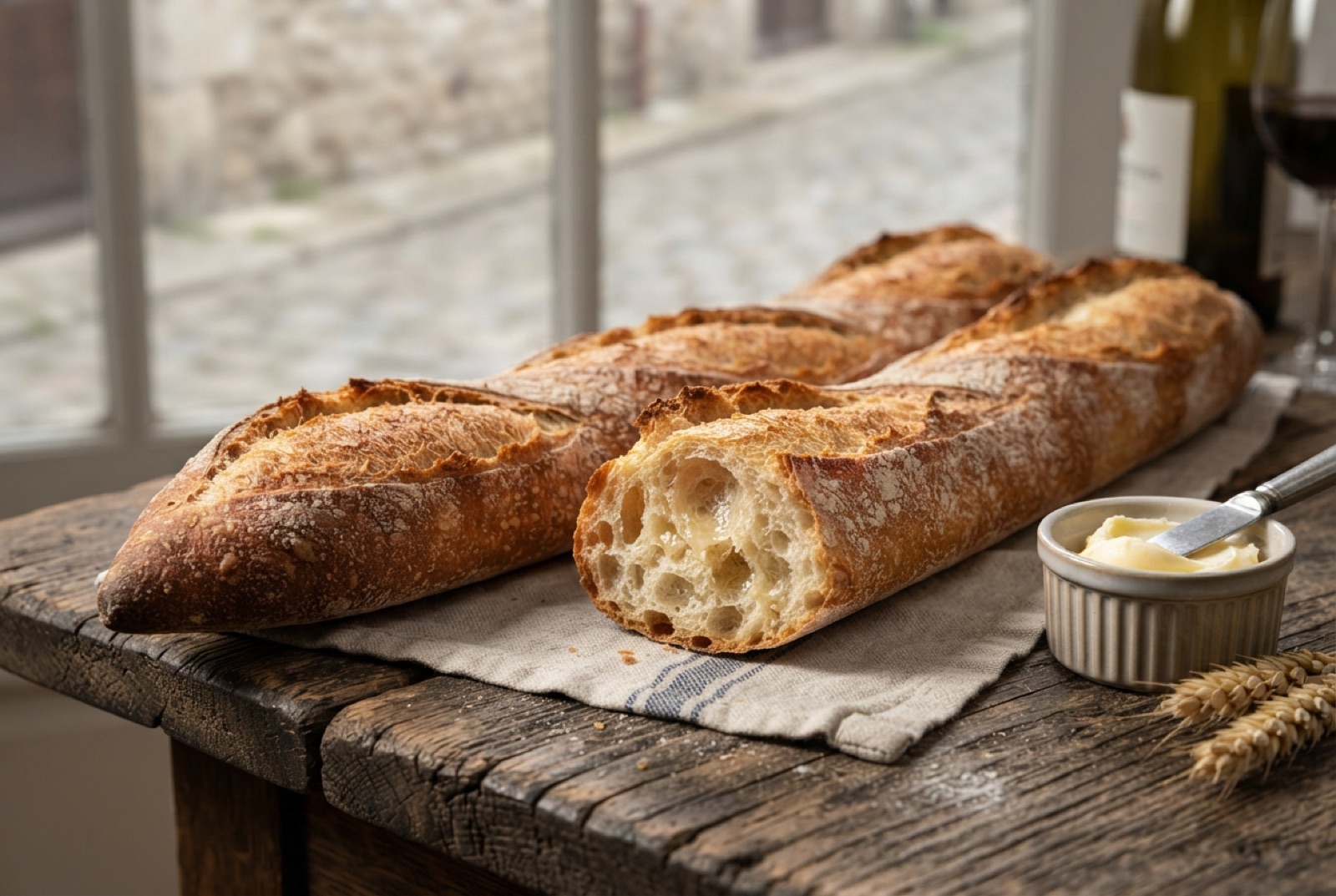
France has 9 more dishes in the atlas — Baguette and Bœuf Bourguignon, and 7 more.
Recipe by The DishRoute Kitchen · published August 18, 2026 · updated August 18, 2026