Baguette.
French Crusty Loaf with an Overnight Poolish
Baguette de tradition française · say it: bah-GET
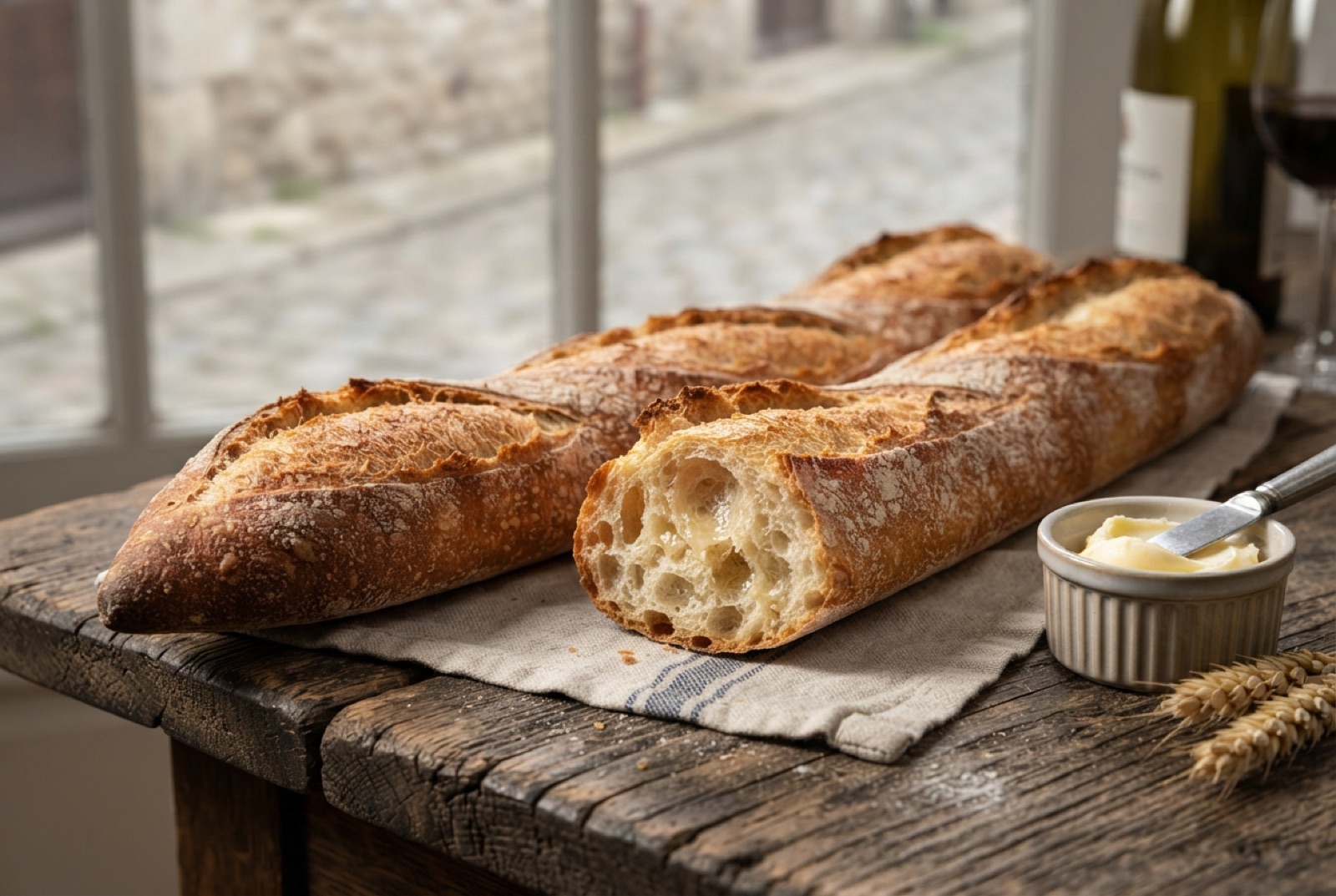
A baguette is the shortest ingredient list in baking and the longest list of things that can go wrong. Wheat flour, water, salt and yeast — that is the entire recipe — and everything you taste comes from what fermentation does to them over roughly eighteen hours. The finished loaf should have a crust that fractures and sheds splinters when you tear it, a crumb that is open and irregular but still slightly moist, and a flavour that is faintly sweet, faintly sour and distinctly of wheat rather than of yeast. It is a hard bake at home, and worth saying plainly why: the dough is slack and sticky, the shaping has to be tight without crushing the gas, and domestic ovens are built to remove steam at exactly the moment a baguette needs it most. This recipe works around all three.

- Gate
- France
- Prep
- 45 min
- Cook
- 25 min
- Total time
- 18 hr 10 min incl. 17 hr rest
- Serves
- 6
- Status
- Takes skill
- Nutrition / serving · estimated
- Calories 305 kcal
- Protein 10 g
- Carbs 62 g
- Fat 1 g
- Fiber 2 g
- Sodium 650 mg
Why this recipe works.
- An overnight poolish does the flavour work while you sleep, with 0.3 g of yeast doing the whole job.
- Shaping is broken into pre-shape, bench rest and final roll, which is how you get length without tearing the skin.
- Three realistic home steam methods, ranked, including the inverted-tray trick that beats most of them.
- States clearly what a domestic oven cannot do, so you know which parts of the result are the recipe and which are the equipment.
Ingredients.
8 itemsFor the poolish (night before)
For the final dough
For shaping
Equipment
- Digital scale accurate to 0.1 g for the yeast
- Large bowl and a bench scraper
- Linen couche or a heavy floured tea towel
- Lame, razor blade or a very sharp thin knife
- Baking stone or heavy inverted baking tray
- Large roasting tin to invert over the loaves for steam
Instructions.
Mix the poolish the night before
Stir the 150 g of flour, 150 g of water and the 0.3 g of yeast together in a large bowl until no dry flour remains — it will be a loose batter. Cover and leave at cool room temperature for 12–16 hours.
Tip Use a bowl at least three times the volume of the mixture. A poolish more than triples before it falls back.
Check the poolish, then autolyse
The poolish should be domed, riddled with bubbles and just beginning to sink in the middle, smelling of yoghurt and cider. Add the remaining 350 g of flour and 200 g of water, mix to a shaggy mass with no dry patches, and leave it covered for 30 minutes.
Tip This rest lets the flour hydrate on its own and does a large part of the kneading for you.
Add salt and yeast, build strength
Sprinkle over the salt and the 2 g of yeast and squeeze the dough repeatedly between your fingers until they disappear and the mass comes together. It will be sticky and slack. Cover and leave for 30 minutes.
Bulk ferment with folds
Over the next 2 to 2½ hours, give the dough three sets of stretch-and-folds at 30-minute intervals: wet one hand, lift one side of the dough high, fold it over the centre, and repeat around all four sides. By the third set the dough should feel smooth, elastic and full of air, and hold a dome instead of spreading.
Tip The dough is ready when it has risen by about half, jiggles as a single mass, and shows bubbles under the surface. Do not wait for it to double.
Divide and pre-shape
Tip the dough out onto a lightly floured bench without deflating it, cut into three even pieces of roughly 290 g each, and fold each loosely into a stubby cylinder. Cover and leave to relax for 25 minutes.
Tip Skipping the bench rest is why doughs tear during final shaping — the gluten needs this time to slacken.
Shape the loaves
Working one at a time, pat a piece into a rough rectangle, keeping the big bubbles near the edges. Fold the top third down and press the seam with the heel of your hand, fold again, then fold the dough in half lengthways and seal the seam firmly along its whole length. Roll from the centre outward with light pressure until it is 35–40 cm long, tapering the ends.
Tip The sealed seam is what holds the loaf together in the oven. A weak seam splits along the side and the loaf collapses sideways.
Final proof in the couche
Lay the loaves seam-side up on a heavily floured couche or pleated tea towel, pulling a fold of cloth up between each one for support. Cover and proof for 45–60 minutes at room temperature, until a floured fingertip pressed into the side leaves a dent that fills back slowly and incompletely.
Tip If the dent springs straight back it needs longer. If it does not move at all, bake immediately — it is on the edge of over-proofed.
Preheat hard
Start the oven at its maximum, ideally 250 °C, at least 45 minutes before baking, with a baking stone or heavy inverted tray on the middle shelf. Cut a piece of baking paper to fit and have your large roasting tin ready to invert over the loaves.
Flip, score and load
Roll each loaf off the couche onto the baking paper, seam-side down now. Score three or four cuts along the length with the blade almost flat at about 30 degrees, each overlapping the previous by a third. Slide the paper onto the hot stone and immediately invert the roasting tin over the loaves.
Tip Work fast — a scored loaf starts losing gas at once, and every second the oven door is open costs you 15 degrees.
Bake under cover, then bare
Bake covered for 12 minutes, then lift off the tin — the loaves will be pale, swollen and fully sprung. Drop the oven to 230 °C and bake for a further 10–13 minutes until deeply browned, almost chestnut at the score edges, and the base sounds hollow when tapped.
Tip Pale bread is under-baked bread. Baguette crust flavour lives in that last shade of colour, so take them further than feels comfortable.
Cool and listen
Move the loaves straight to a wire rack. Within a minute or two the crust will start to crackle audibly as it contracts — that is the sound of a properly baked baguette. Wait at least 20 minutes before cutting.
Tips from our kitchen.
- Weigh everything, including the water and the 0.3 g of yeast for the poolish. Volume measures are not precise enough for a four-ingredient bread.
- The poolish is ready when it has domed, filled with bubbles and just begun to sink in the centre — it smells of yoghurt and cider. Used too early it adds nothing; used too late it goes sharp and slack.
- Handle the shaped dough with floured hands and a light touch. Every large bubble you press flat is a hole in the crumb you will not get back.
- Score with a blade held almost flat to the loaf, about 30 degrees, so the cut slides under the skin rather than digging down. Vertical cuts open into trenches instead of ears.
- Bake one tray of loaves at a time. Two trays halve the oven temperature recovery and you get pale, flat bread twice instead of good bread once.
- Cool on a rack and listen — a well-baked baguette crackles audibly as it cools. Cutting it hot steams the crumb and softens the crust you just spent two days building.
Substitutions.
- T65 French bread flour → Strong white bread flour, or plain flour with 1 tbsp of it swapped for wholemeal
- T65 sits around 11–12% protein, between typical plain flour and strong bread flour. Bread flour gives a chewier crumb, plain flour a more tender one — both bake well.
- Instant dried yeast → Fresh yeast, at three times the weight (1 g becomes 3 g)
- Crumble fresh yeast into the water rather than the flour. It behaves identically otherwise.
- Linen couche → A heavy tea towel dusted generously with flour, pleated between the loaves
- The pleats are the point: they support the sides so the loaves proof upward instead of spreading into flatbreads. Rub the flour into the weave first.
Variations.
- Baguette aux graines
- Roll the shaped loaves in a damp cloth and then in sesame, poppy or linseed before the final proof. The seeds toast in the oven heat and change the crust more than you would expect.
- Bâtard
- Shape into two shorter, fatter loaves instead of three long ones. Far easier to handle, far kinder to a small oven, and the crumb comes out more open because the dough is less stretched.
- Épi de blé
- Instead of scoring, snip deep into the proofed loaf at 45 degrees with scissors and flick each cut piece alternately left and right. It bakes into a wheat-ear of pull-apart rolls, all crust.
Storage & reheating.
A baguette is at its best between one and four hours out of the oven and it is not designed to keep — that is a consequence of the lean formula, not a fault. Store it cut-side down on a board, in paper if you must, never in plastic, which softens the crust within twenty minutes. Day-old bread revives well: run it briefly under the tap and put it into a 200 °C oven for 6–8 minutes, and it comes back crisp for about an hour. For longer storage, freeze the loaves whole the day they are baked and reheat from frozen at 200 °C for 12 minutes. Anything past that becomes croutons, pain perdu, or the thickener for a soup.
Serve with
Salted butter and radishes, a wedge of Comté, or torn straight into a bowl of French onion soup.
The story behind Baguette.
The long thin loaf is younger than most people assume. Bread in France was round and large for centuries — a heavy miche that kept for days — and the shift to slender, quick-staling loaves belongs to the late nineteenth and early twentieth century, driven by steam-injected ovens, refined white flour and city bakers selling bread several times a day. By the interwar years the baguette was the Paris standard, and it spread outward from there rather than up from the countryside.
What happened next nearly killed it. Postwar industrial baking pushed the process faster and faster: high-speed mixers that whipped air and oxidised the flour pale, chemical improvers, frozen dough delivered to bake-off counters. The bread came out white, cottony and flavourless, and people noticed. The response was regulatory. The décret pain of September 1993 defined pain de tradition française: it may contain only wheat flour, drinking water, salt and leavening, within a short permitted list of additions, and it may not be frozen at any stage of production. Buying a baguette de tradition rather than the standard baguette ordinaire is, in practice, buying the difference between a loaf that was fermented and one that was merely mixed. In 2022 the craft knowledge behind it — the artisanal know-how and culture of the baguette — was inscribed on UNESCO's list of intangible cultural heritage.
The method below leans on a poolish, the wet overnight preferment that French bakers borrowed, name and all, from Polish and then Viennese practice in the nineteenth century. Equal weights of flour and water with a speck of yeast, left out overnight, produce acids and aromatic compounds that a straight three-hour dough simply cannot generate. It costs you nothing but a bowl and a night, and it is the single biggest step up available to a home baker. Everything after it — the folds, the bench rest, the tight seam, the steam — is about keeping the gas that fermentation made.
Questions, answered.
Why does my home baguette come out pale and flat compared to a bakery one?
Two reasons, and only one is your fault. Professional deck ovens run hotter than most domestic ones and inject steam directly into the chamber, which keeps the crust soft for the first ten minutes so the loaf can expand fully before it sets, then dries and browns it hard. A home oven vents its moisture instead. Trapping steam under an inverted roasting tin for the first twelve minutes recovers most of that, and preheating for a full 45 minutes recovers the rest. The other reason is usually under-fermentation or slack shaping.
How long should the poolish ferment and how do I know it is ready?
Twelve to sixteen hours at a cool room temperature, around 18–20 °C. It is ready when the surface is covered in bubbles, the mass has domed and just started to dip in the centre, and it smells sour and faintly alcoholic, like cider or plain yoghurt. If your kitchen is warm it can be ready in ten hours; if it is cold it can take eighteen. Judge the look and smell, not the clock.
Can I make baguettes in one day without the overnight poolish?
You can make bread, but it will not taste like a baguette. The overnight preferment is where the acidity, the aroma and the faintly sweet wheat flavour come from; a same-day dough leavened with more yeast rises just as well and tastes flat and yeasty. If you are short of time, a straight dough given a four-hour bulk in the fridge is a reasonable middle ground.
How do I create steam in a home oven?
Ranked best to worst: cover the loaves with a large inverted roasting tin or a deep baking tray for the first 12 minutes, which traps the dough's own steam right against the crust; or preheat a heavy cast-iron pan on the oven floor and pour a cup of boiling water into it as the bread goes in; or spray the oven walls with water three times in the first five minutes. Do not pour water onto the oven floor or onto a glass door — thermal shock cracks both.
Why did my scores not open into ears?
Usually the blade angle. Held vertically it cuts a canyon that simply widens; held almost flat, at roughly 30 degrees, it lifts a flap of skin that peels back and crisps into an ear as the loaf springs. The other common causes are over-proofing, which leaves no spring left to push the cut open, and a wet or sticky surface that drags on the blade instead of parting cleanly.
My dough is too sticky to handle — should I add more flour?
No. At around 70% hydration this dough is meant to be slack, and adding flour to make it comfortable gives you a tight, dry, closed crumb. Use wet hands or a bench scraper instead of dry hands, work quickly, and let the folds during bulk fermentation build the strength. The dough will feel dramatically more manageable after the second set of folds.
You might also like.
All recipes →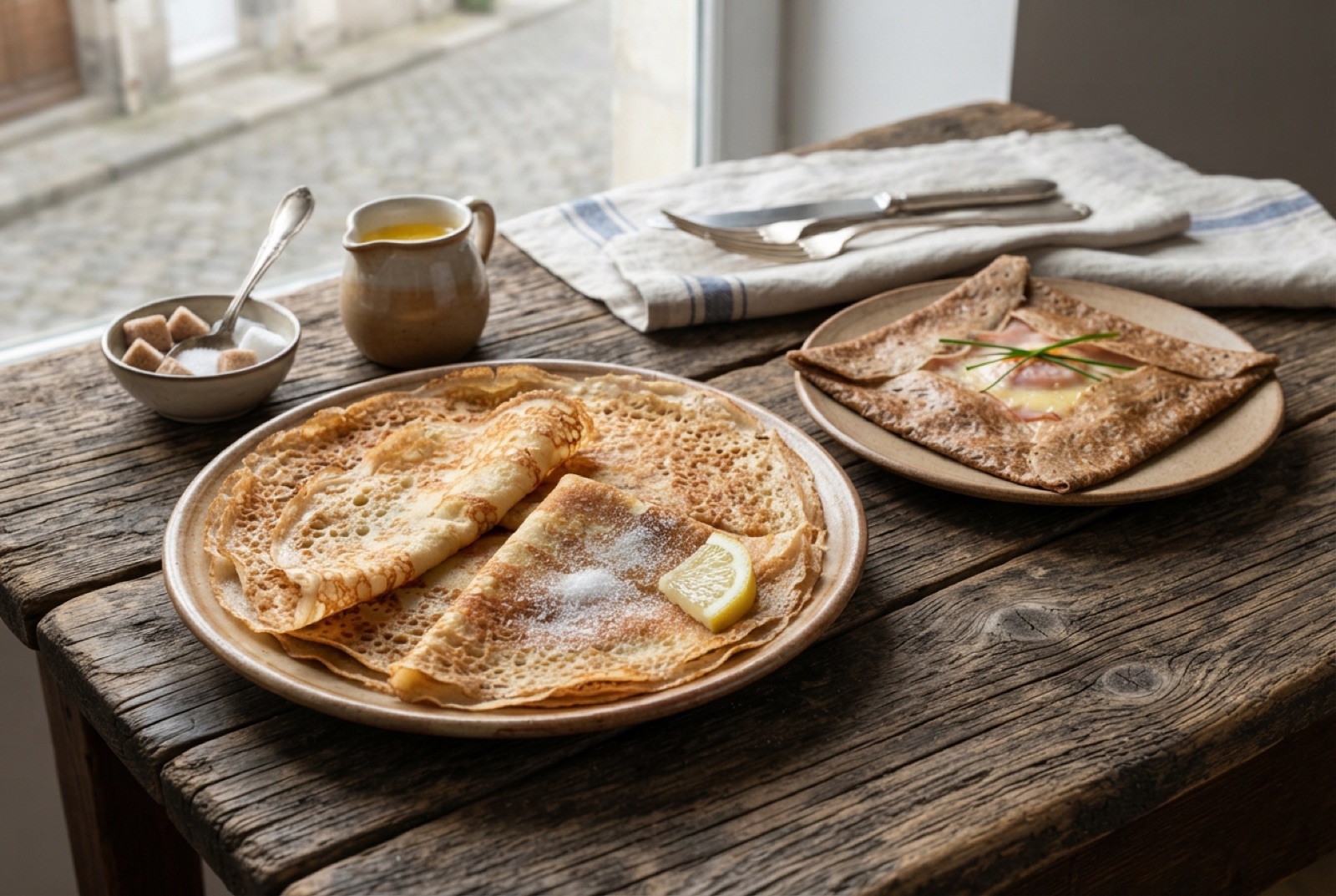
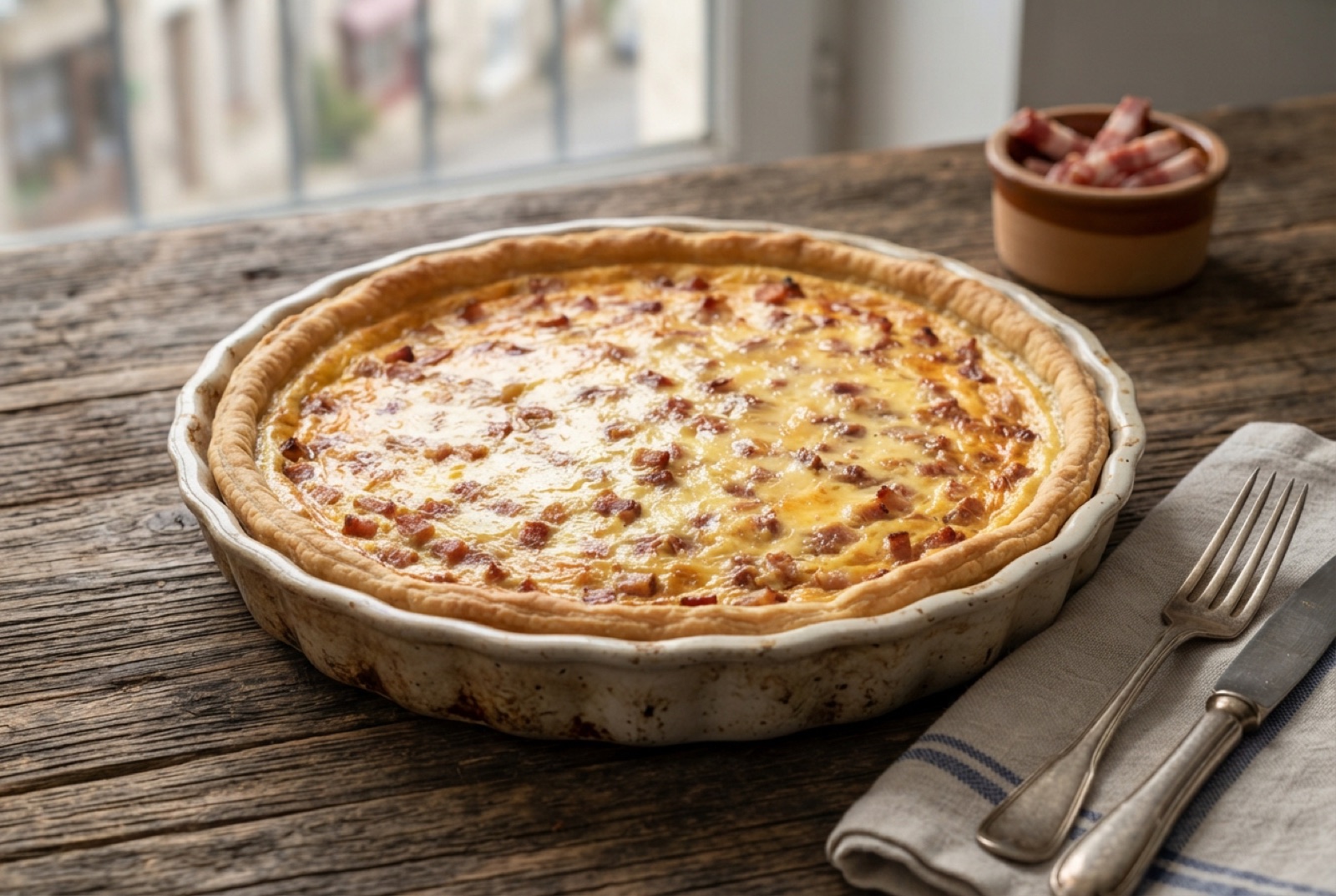
Keep exploring France.
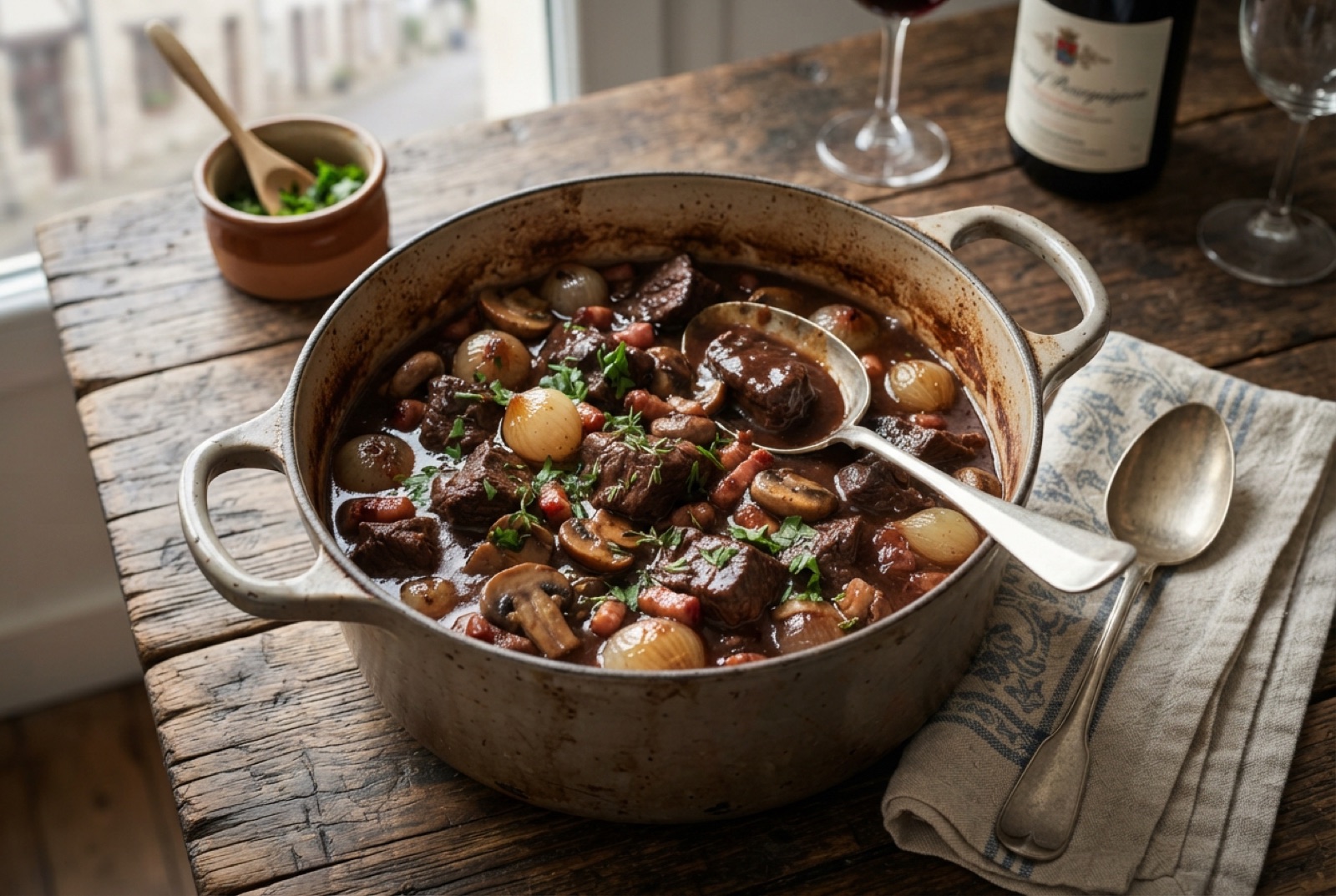
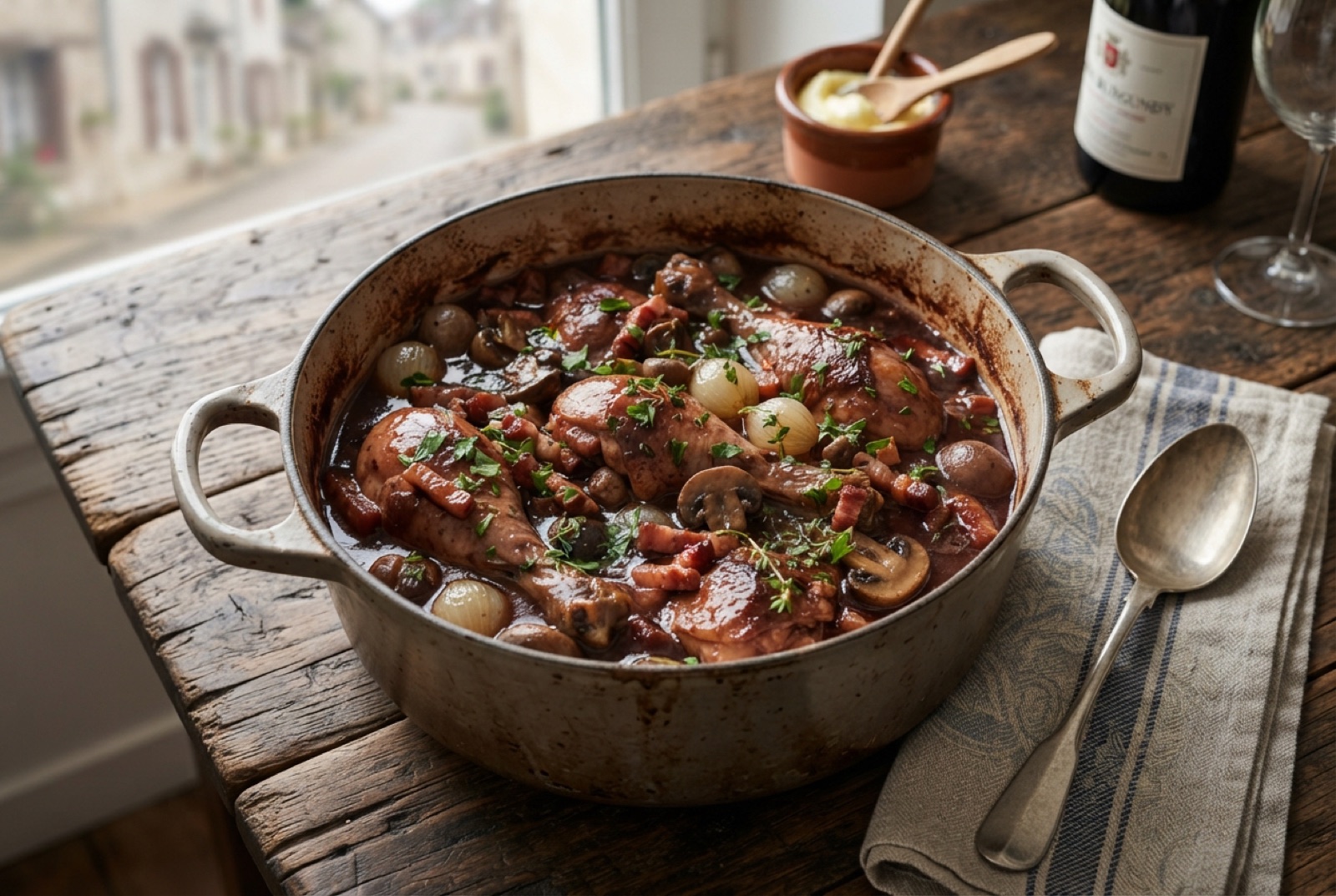
France has 9 more dishes in the atlas — Bœuf Bourguignon and Coq au Vin, and 7 more.
Recipe by The DishRoute Kitchen · published August 19, 2026 · updated August 19, 2026