Dal Tadka.
Yellow Lentils with Sizzling Tempering
दाल तड़का · Dāl taṛkā · say it: dahl TUD-kah
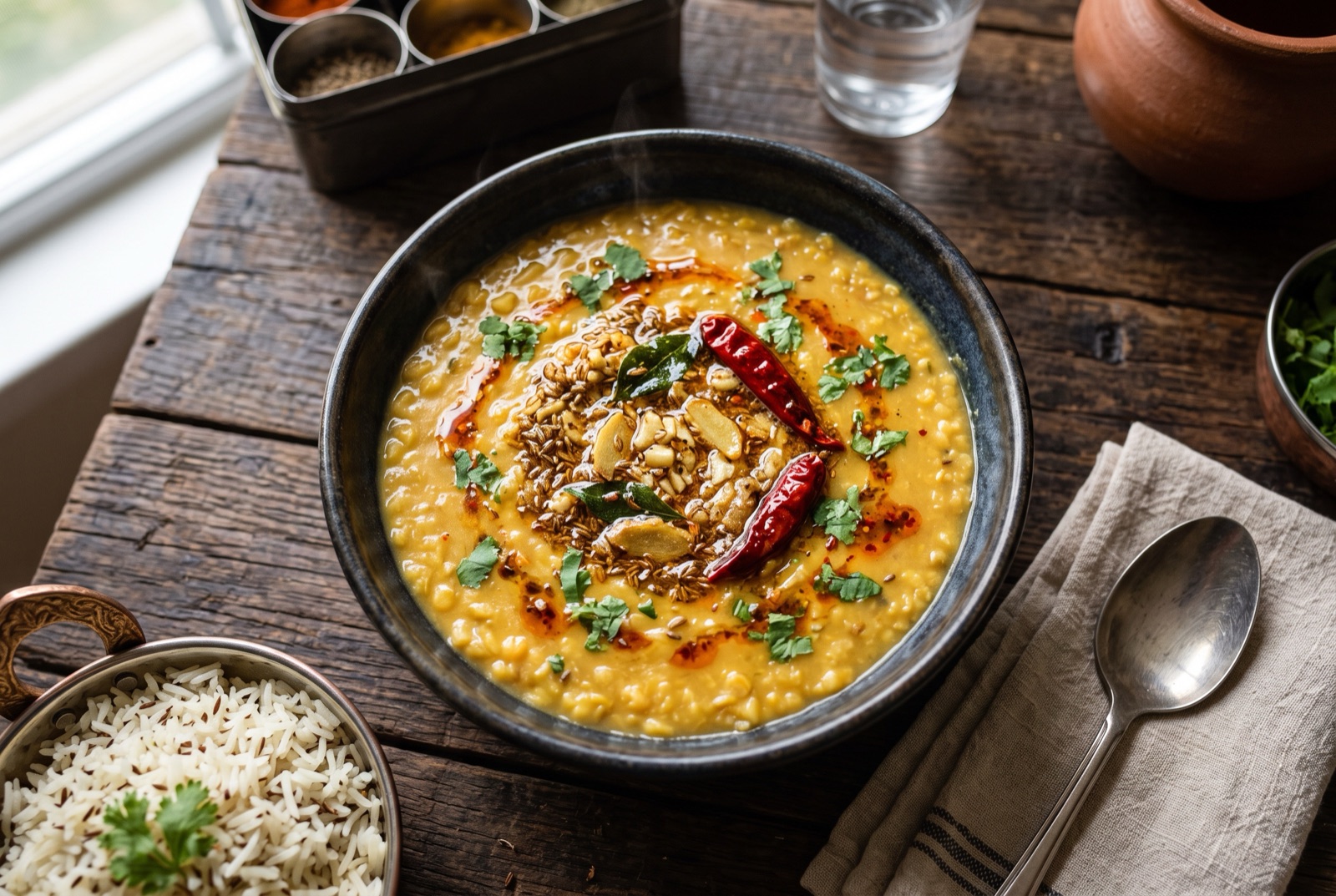
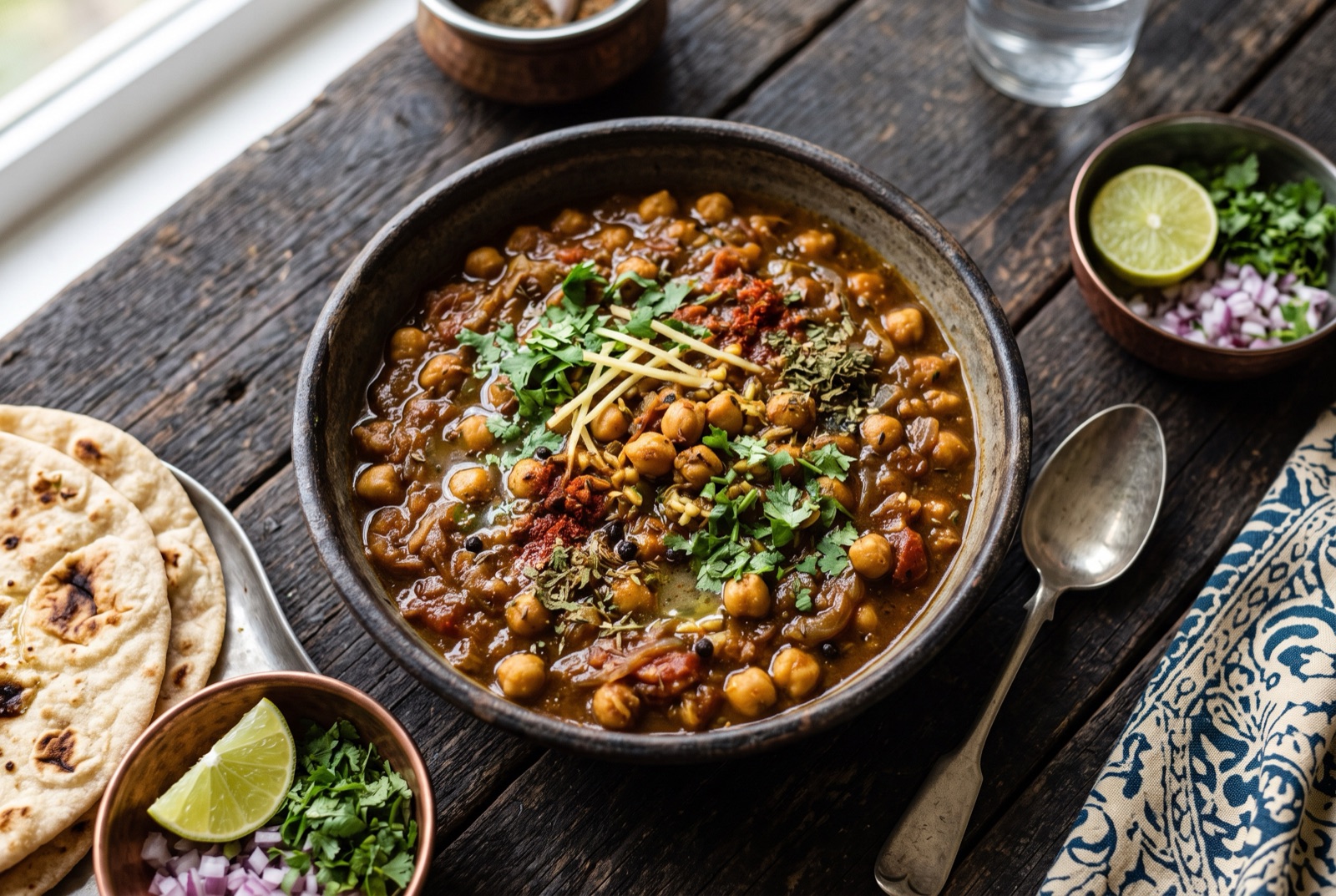
Dal tadka is the dish that explains half of Indian cooking in one pot: yellow lentils simmered with turmeric and tomato until they collapse into a soft, spoonable stew, then finished with a tadka — whole cumin seeds, sliced garlic and dried red chiles sizzled in hot ghee and poured, still spitting, over the top. The dal itself is mild, earthy and comforting; the tadka lands on it like a struck match, all toasted spice and golden garlic. It is cheap, gently spiced, naturally gluten-free, and forgiving enough to be many Indian cooks' first from-scratch dish — yet a good one is the benchmark by which roadside restaurants across North India are judged.

- Gate
- IndiaNorth India
- Prep
- 10 min
- Cook
- 40 min
- Total time
- 50 min
- Serves
- 4
- Status
- Easy
- Nutrition / serving · estimated
- Calories 330 kcal
- Protein 16 g
- Carbs 40 g
- Fat 12 g
- Fiber 9 g
Why this recipe works.
- Teaches the tadka technique properly, with the sensory cues that separate bloomed spices from burnt ones.
- A double tempering — half stirred in, half poured sizzling over the top — the way dhabas serve it.
- Works with easy-to-find red lentils as well as traditional toor dal, with timings for both.
- Pantry-cheap and one-pot: lentils, aromatics and ghee make a complete protein-rich main with rice.
Ingredients.
14 itemsFor the dal
For the tadka
To finish
Equipment
- Medium pot with a lid (or pressure cooker)
- Small frying pan or tadka pan for the tempering
- Whisk or wooden spoon
Instructions.
Rinse the lentils
Rinse 250 g of dal in several changes of water, swishing with your fingers, until the water runs nearly clear instead of cloudy.
Simmer until collapsed
Combine the dal, water, turmeric, tomato and ginger in a pot and bring to a boil, skimming any foam. Simmer partly covered, stirring occasionally, until the lentils crush into cream when pressed against the pot wall — 25–30 minutes for toor dal, about 15 for red lentils.
Tip A pressure cooker does this in 10 minutes at pressure — the standard method in Indian kitchens.
Whisk and season
Whisk the dal hard for about 30 seconds so it turns from watery-with-bits into one smooth, pourable body — like a thick soup. Stir in the salt, and add hot water if it has tightened past that.
Make the tadka
Heat the ghee in a small pan over medium-high heat until it shimmers. Add the cumin seeds and let them sputter and darken a shade, about 15 seconds, then add the garlic, dried chiles and hing and fry until the garlic edges turn deep gold and the chiles darken and smell toasty.
Tip Ten seconds separate golden garlic from bitter garlic — have the dal ready and stay by the pan.
Add chili off the heat
Pull the pan off the flame and stir the Kashmiri chili powder into the hot ghee — it should bloom to a deep red without darkening further. If it turns brown it has scorched; the fat this hot needs only residual heat.
Pour, sizzle, finish
Stir half the tadka into the dal and taste for salt. Ladle the dal into a serving bowl and pour the remaining tadka over the top so it hisses and pools golden on the surface. Scatter with cilantro.
Serve hot
Serve immediately with steamed basmati rice or roti and lemon wedges — a hard squeeze of lemon at the table brightens the whole bowl. The dal thickens as it sits, so loosen leftovers with hot water.
Tips from our kitchen.
- Rinse the lentils until the water runs nearly clear — it lifts off surface starch and keeps the dal from foaming over and tasting muddy.
- Cook the dal past "done" to fully collapsed: the grains should crush into cream against the pot wall. Distinct, intact lentils mean an underdone dal.
- Whisk the cooked dal for 30 seconds before finishing — it emulsifies the texture from watery-with-bits into one silky body.
- For the tadka, have every spice measured and at hand before the ghee heats. The window between golden garlic and burnt garlic is about ten seconds.
- Add chili powder to the tadka only off the heat — in fat that hot it scorches instantly and turns acrid.
- Dal thickens dramatically as it stands; loosen with hot water and re-season rather than serving it stodgy.
Substitutions.
- Toor dal (split pigeon peas) → Red lentils (masoor dal)
- Red lentils cook in half the time and taste slightly sweeter. Common in Indian homes too — no authenticity lost.
- Ghee → Neutral oil or coconut oil
- Makes the dish vegan and still good, but you lose the nutty browned-butter aroma that defines a dhaba-style tadka.
- Dried red chiles → A pinch of chile flakes, added off the heat
- Flakes burn faster than whole chiles, so add them after the pan leaves the flame.
Variations.
- Dal fry
- The restaurant sibling: the onion-tomato-spice mixture is fried first and the boiled dal is added into it, rather than a tadka being poured over. Richer, more homogeneous.
- Smoky dhungar dal
- Rest a small bowl holding a lit piece of charcoal on the finished dal, spoon ghee onto the coal, cover for 2 minutes — a dhaba trick that adds real smoke.
- Palak dal
- Stir a few handfuls of chopped spinach into the simmering dal for the last 5 minutes, until wilted and dark green — a standard home upgrade.
Storage & reheating.
Dal keeps 4 days refrigerated and freezes perfectly for up to 3 months — it is one of the best batch-cooking dishes there is. It sets thick when cold, so reheat gently with a splash of hot water and adjust salt. If you plan ahead, freeze the dal plain and make a fresh tadka when serving; two minutes of sizzling ghee makes a thawed dal taste newly cooked.
Serve with
Steamed basmati rice or roti, with a wedge of lemon, sliced raw onion and a spoonful of pickle.
The story behind Dal Tadka.
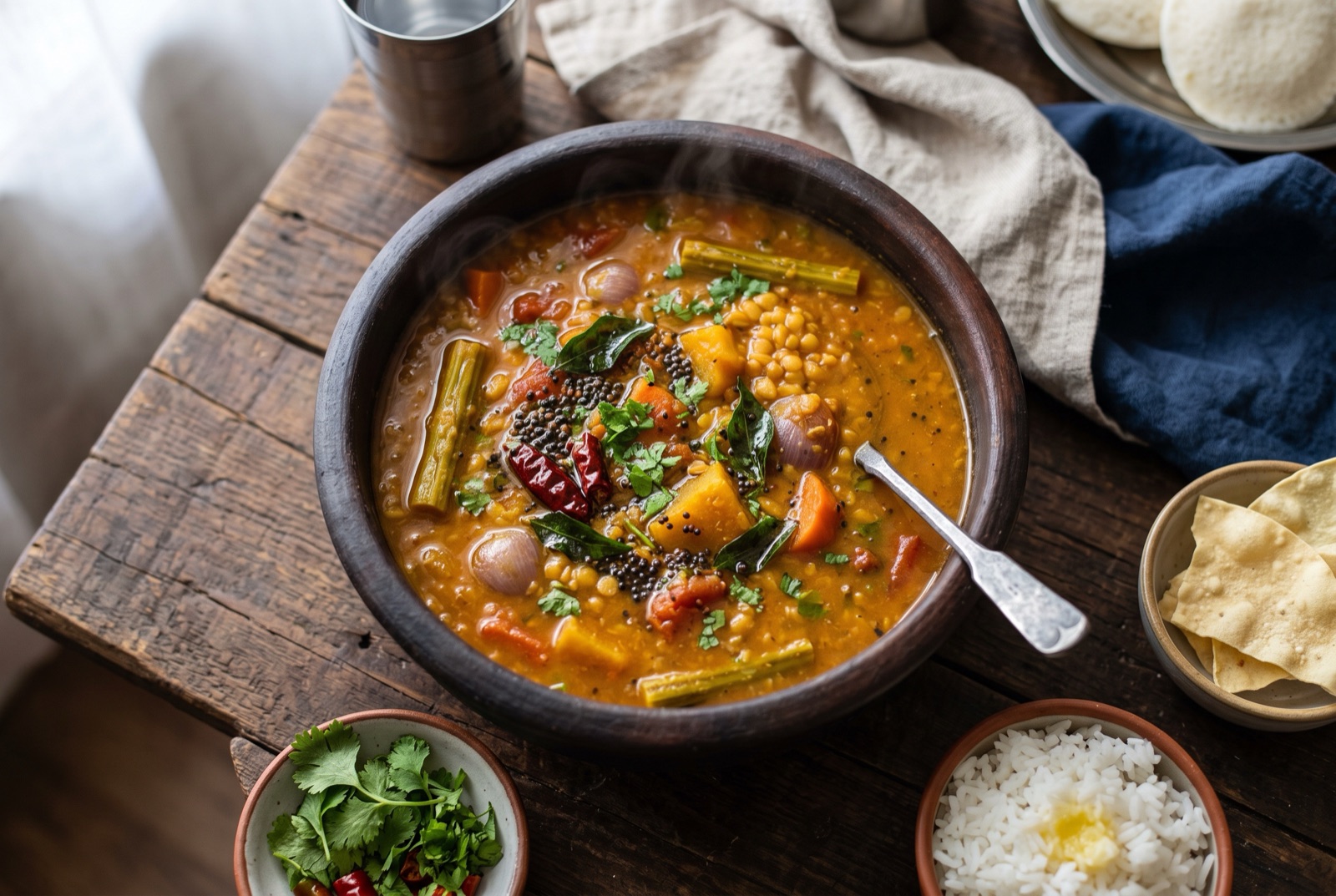
Dal is not a dish in India so much as a daily fact. Lentils and other split pulses have anchored the subcontinent's diet for thousands of years, and some form of dal appears at most meals in most households — the affordable, sustaining protein of a largely vegetarian civilization. Every region has its own: sambar in the south, cholar dal in Bengal, the slow black dal makhani of Punjab. Dal tadka, made with quick-cooking yellow lentils, is the northern everyday version, and its natural habitat is the dhaba — the roadside truck-stop restaurants along North Indian highways, where it simmers in wide pots all day and arrives with tandoori roti and raw onion.
The name describes the technique, and the technique is the point. Tadka — known elsewhere in India as chaunk, baghar or tarka — means blooming whole spices in hot fat. Fat pulled to the edge of smoking, cumin seeds thrown in to sputter and darken, garlic and dried chiles following, and the whole sizzling spoonful poured over the finished food. The chemistry is simple and old: many spice aromatics are fat-soluble, not water-soluble, so ten seconds in hot ghee extracts flavor that an hour of simmering never reaches. The pour is done at the table in some kitchens, dal hissing as the tadka hits it, which is as close to showmanship as home cooking gets.
Ghee is the traditional fat and earns its place — its nutty, browned-butter depth is half the aroma of a dhaba dal. Oil works, and makes the dish vegan, but the ghee version is the one memories are made of. Some dhabas add a final flourish called dhungar, smoking the dal with a lit coal, though at home the double tadka in this recipe — one stirred in, one poured over at the table — is the more useful trick to steal.
Questions, answered.
What does "tadka" actually mean?
Tadka (also called chaunk, baghar or tarka in different Indian regions) is the technique of briefly sizzling whole spices and aromatics — cumin seeds, garlic, dried chiles, curry leaves — in hot ghee or oil, then pouring that fat over a dish. Because many spice flavor compounds dissolve in fat rather than water, those few seconds extract aromas that simmering alone cannot, which is why the technique finishes so many Indian dishes.
Which lentils should I use for dal tadka?
The classic choice is toor dal (split pigeon peas), which gives a slightly nutty, earthy dal in 25–30 minutes of simmering. Split red lentils (masoor dal) are a fully traditional alternative that cooks in about 15 minutes and is easier to find in Western supermarkets. Yellow moong dal also works. Avoid whole brown or green lentils and French Puy lentils — they hold their shape instead of collapsing into the soft texture the dish needs.
Is dal tadka vegetarian and gluten-free?
Yes to both as traditionally made: it contains lentils, vegetables, spices and ghee (clarified butter), so it is vegetarian and naturally gluten-free — pair it with rice rather than wheat bread if gluten matters. One footnote: hing (asafoetida), an optional traditional pinch in the tadka, is often sold cut with wheat flour, so use a certified gluten-free brand or simply omit it. Made with oil instead of ghee, the dish is fully vegan.
What is the difference between dal tadka and dal fry?
The order of operations. In dal tadka, the lentils are boiled separately and a sizzling tempering of spices in ghee is poured over them at the end, so the spices sit on top at full volume. In dal fry, aromatics and spices are fried first and the boiled dal is stirred into that base and simmered, giving a richer, more blended result. Restaurants list both; many home cooks combine the approaches.
Why did my tadka taste bitter?
Almost always burnt spices. Cumin seeds go from toasted to scorched in seconds once they darken, garlic turns bitter the moment it passes deep gold, and ground chili powder scorches instantly in very hot fat. Have everything measured before the ghee heats, keep the pan just below smoking, and pull it off the heat before adding any ground spices — the residual heat is enough to bloom them.
You might also like.
All recipes →
Keep exploring India.
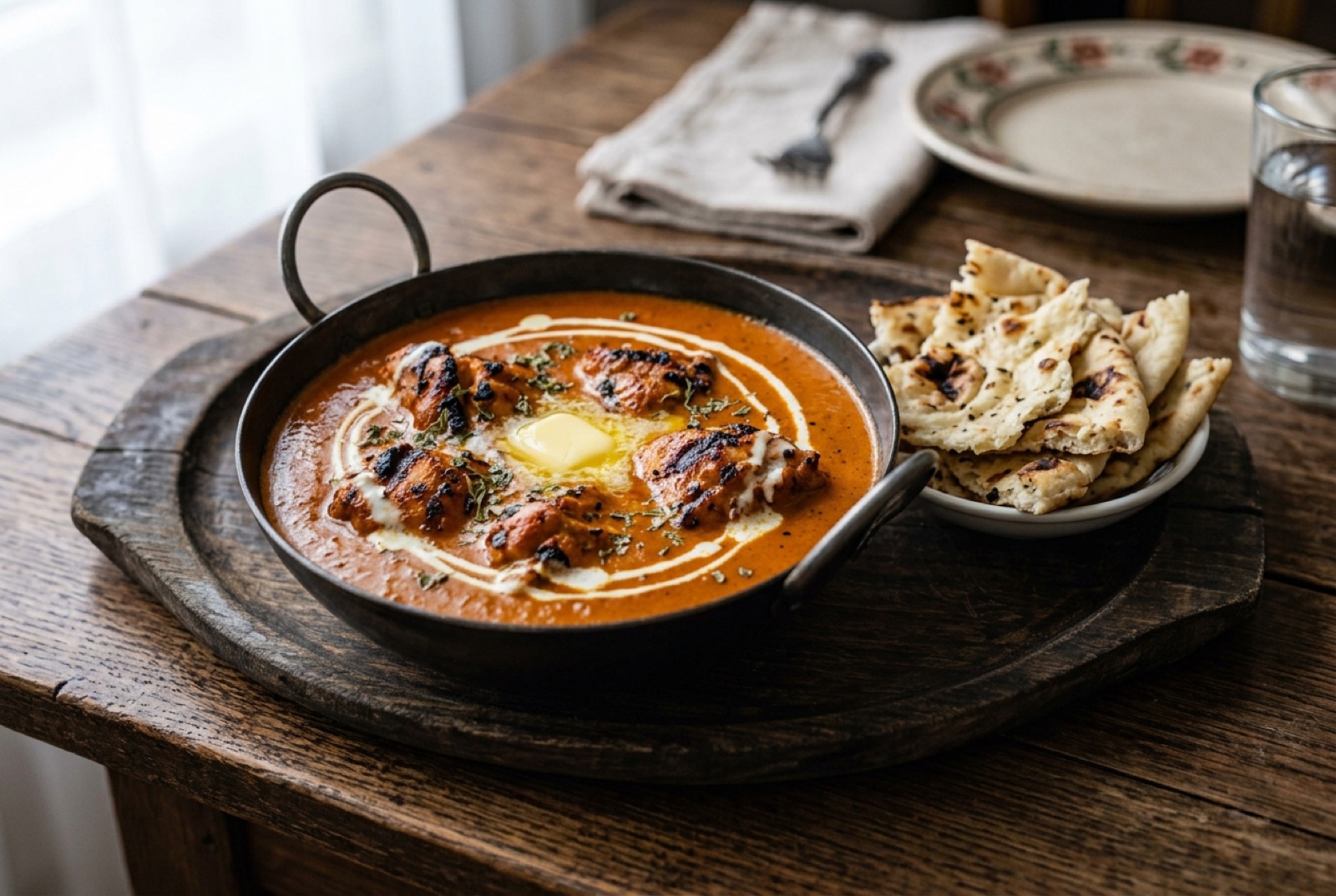
India has 9 more dishes in the atlas — Aloo Paratha and Butter Chicken, and 7 more.
All India recipes Lentils recipes Garlic recipes Tomato recipes mainsoupvegetariangluten freenut freeRecipe by The DishRoute Kitchen · published August 18, 2026 · updated August 18, 2026