Sambar.
South Indian Tamarind Lentil and Vegetable Stew
சாம்பார் · Sāmbār · say it: SAHM-bahr
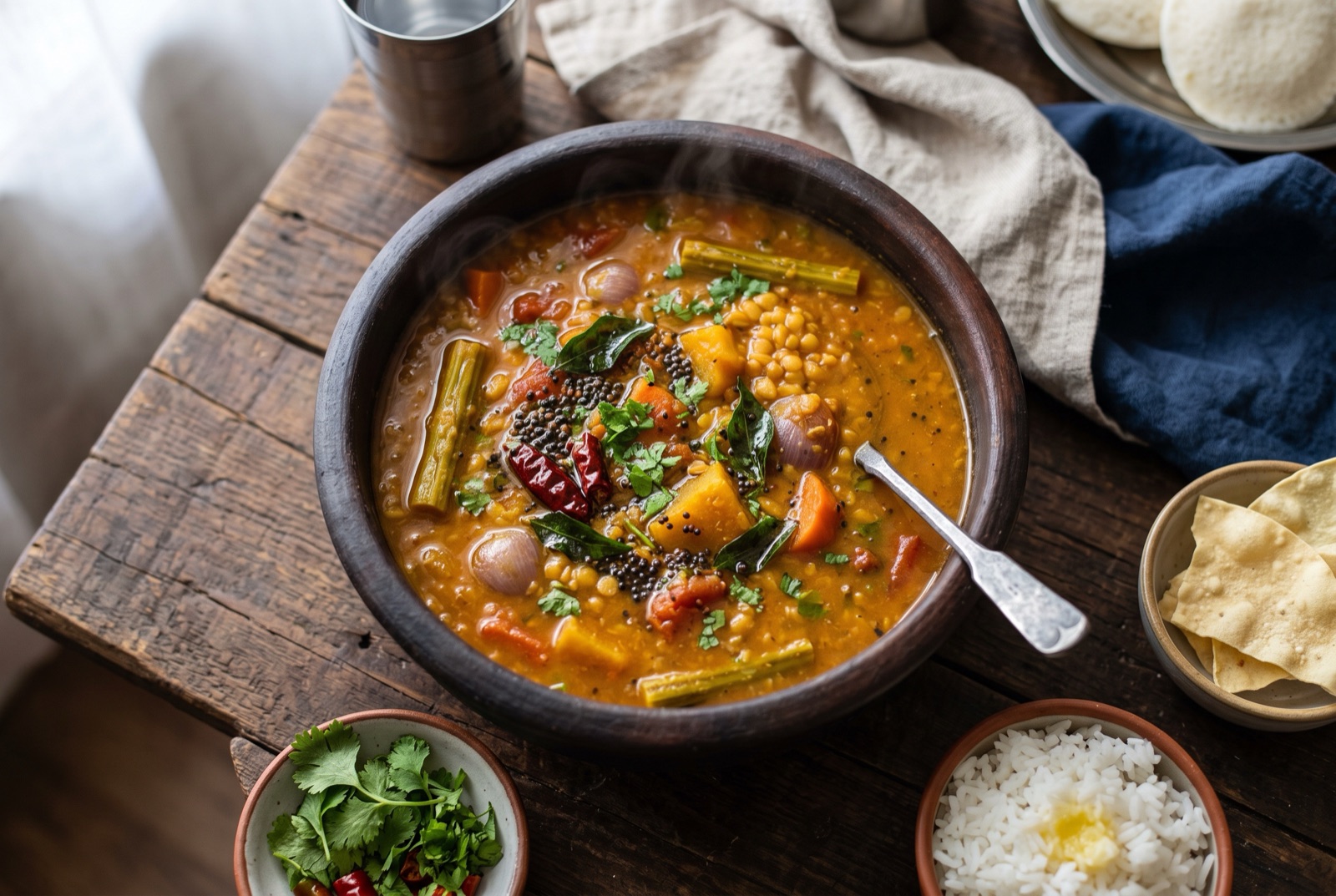
Sambar is a soupy stew of split pigeon peas soured with tamarind, thickened only by the lentils themselves, and flavoured by a roasted spice blend ground with coriander seed, dried chillies, fenugreek and lentils. Vegetables — shallots, aubergine, drumstick, carrot, okra — cook in the tamarind water until tender, then everything simmers together for a few minutes so the sour, the earthy and the spicy stop being separate things. The finish is a tadka of mustard seeds and curry leaves crackling in hot oil, poured over the pot. It tastes tangy, savoury and gently hot, it is eaten across South India at least once a day, and it is the single most useful South Indian recipe to learn.

- Gate
- IndiaTamil Nadu, Karnataka and Kerala
- Prep
- 20 min
- Cook
- 40 min
- Total time
- 1 hr
- Serves
- 4
- Status
- Easy
- Nutrition / serving · estimated
- Calories 230 kcal
- Protein 11 g
- Carbs 33 g
- Fat 6 g
- Fiber 9 g
- Sugar 6 g
- Sodium 620 mg
Why this recipe works.
- Grinds the sambar powder fresh from whole spices, which is the difference between good sambar and a beige one.
- Cooks the vegetables in the tamarind water, not in the dal, so they hold their shape instead of dissolving.
- Gives a clear doneness signal for the tamarind — the raw, sharp edge has to cook off before the dal goes in.
- One pot of dal and a tadka, ready in about an hour, and it feeds idli, dosa or rice equally well.
Ingredients.
26 itemsFor the dal
For the sambar powder
For the vegetables
For the tempering
To finish
Equipment
- Pressure cooker or heavy saucepan
- Small tempering pan
- Spice grinder or mortar
- Whisk
Instructions.
Cook the dal to mush
Pressure cook the toor dal with the turmeric and 600 ml water for 4 whistles, or simmer covered for 45–55 minutes, until the lentils have completely lost their shape. Whisk the cooked dal smooth — it should pour like thin cream with no whole lentils left.
Tip A splash of oil in the cooking water stops the dal foaming over.
Roast and grind the sambar powder
Dry-roast the coriander seeds, chana dal, dried chillies, fenugreek, peppercorns, cumin and curry leaves in a small pan over medium-low heat for 4–5 minutes, until the dal turns golden and the mixture smells toasty rather than green. Cool completely, add the coconut if using, and grind to a coarse powder.
Tip Grinding warm spices makes a paste and clogs the grinder — let them cool properly.
Simmer the vegetables in tamarind water
Squeeze the soaked tamarind hard and strain its liquid into a pot with 300 ml water, the shallots, carrot, drumstick, green chilli, jaggery and salt. Boil for 8 minutes, then add the aubergine and cook 5 minutes more, until the tamarind smells fruity instead of sharp and the carrot yields to a knife tip.
Bring dal and vegetables together
Add the okra and tomato, cook 3 minutes, then pour in the whisked dal with the ground sambar powder. Simmer uncovered for 8–10 minutes, stirring now and then, until the stew thickens slightly and stops tasting of separate parts — it should coat a spoon thinly and taste sour, savoury and warm at once.
Tip Adjust with hot water: pourable for rice, a little thicker for idli and dosa.
Make the tempering
Heat the sesame oil in a small pan until it shimmers, add the mustard seeds and wait for them to pop and jump — about 20 seconds. Add the broken dried chillies, curry leaves and asafoetida and pull the pan off the heat the moment the leaves crackle and go glossy, before they brown.
Pour over and rest
Tip the whole tempering, oil and all, into the sambar and cover the pot immediately for 2 minutes so the aroma settles in. Stir once, scatter with coriander leaves, and taste for salt before serving hot.
Tips from our kitchen.
- Cook the toor dal until it is genuinely mushy and whisk it smooth. Sambar has no thickener other than dissolved lentils, so half-cooked dal gives you thin, grainy broth.
- Add vegetables in order of hardness: carrot and drumstick first, aubergine and pumpkin next, okra and tomato last. All-at-once cooking turns half of them to pulp.
- Fry okra separately in a little oil before it goes in if you dislike its slipperiness — the tamarind helps, but a quick fry helps more.
- Simmer the tamarind water on its own for at least five minutes before the dal joins it. Raw tamarind tastes harsh and metallic; cooked tamarind tastes round and fruity.
- Make the tadka in a small pan and pour it over at the very end, then cover the pot for a minute so the curry-leaf aroma stays in.
- Gingelly (Indian sesame) oil or coconut oil for the tempering, not olive oil — the fat is a flavour here, not just a medium.
Substitutions.
- Freshly ground sambar powder → 3 tbsp shop-bought sambar powder
- Entirely acceptable and what many South Indian homes use on weekdays. Fry it in the tadka oil for 20 seconds before adding it so it does not taste dusty.
- Toor dal (split pigeon peas) → Masoor dal (red lentils), or half toor and half moong dal
- Red lentils cook faster and give a smoother, milder sambar. The flavour is a little flatter but perfectly good.
- Tamarind → 2 tbsp tamarind concentrate, or the juice of 1½ limes added off the heat
- Lime is a genuine compromise rather than a swap: it is sharp where tamarind is deep and fruity. Add it at the end, never at the start.
- Drumstick (moringa pods) → Extra carrot and a few green beans
- Drumstick is sold frozen in Indian shops and worth seeking out — you scrape the soft inside out with your teeth and discard the fibrous shell.
Variations.
- Varutharacha sambar (Kerala)
- Grated coconut is roasted with the spices until deep brown, then ground to a paste and stirred in. Darker, nuttier and considerably richer.
- Vengaya sambar
- Made only with small pearl onions or shallots, left whole so they turn sweet and silky. A Tamil household classic that needs no other vegetable.
- Tiffin sambar
- Thicker, milder and slightly sweet, made without tamarind or with very little, and served specifically with idli, vada and pongal rather than rice.
Storage & reheating.
Sambar keeps 3 days refrigerated and the flavour deepens by the second day. It thickens as it stands, so loosen with hot water when reheating and check the salt again — dal absorbs seasoning as it sits. Reheat gently on the stove; a hard boil breaks the vegetables apart. It freezes for 2 months, though okra and aubergine go soft, so freeze a vegetable-light batch and add fresh vegetables when you reheat it.
Serve with
Steamed rice with a spoon of ghee, or idli and dosa at breakfast, with coconut chutney and a fried papad on the side.
The story behind Sambar.
Sambar is the everyday spine of Tamil, Kannada, Telugu and Malayali cooking, and its usefulness explains its reach: one pot covers rice at lunch, idli at breakfast and dosa at any hour, changing character only by how thin it is made and which vegetables go in. A thicker, sweeter tiffin sambar goes with idli and vada; a looser, sharper one is mixed into the first course of a rice meal with a spoon of ghee and eaten by hand.
The popular origin story credits the Thanjavur court of the Marathas and a prince named Sambhaji who supposedly improvised a soured dal with tamarind. Food historians treat this as folklore rather than record — the tale is repeated far more confidently than the evidence supports, and souring lentils with tamarind is an old and widespread South Indian habit that needs no royal inventor. What is beyond argument is that tamarind, curry leaves, mustard seed and asafoetida form a flavour signature the region has used for centuries, and that sambar is where all four meet.
Regional versions differ enough to argue about. Tamil Nadu keeps the ground blend simple and sharp, and Kumbakonam-style cooks grind fresh spices for each pot. Udupi and coastal Karnataka lean sweeter, adding jaggery and grinding coconut into the masala. Kerala's varutharacha sambar roasts coconut to a deep brown before grinding it in, which makes a darker, nuttier stew; Palakkad Iyer cooking has its own distinct version again. Households also keep the vegetable choice seasonal and personal — vengaya sambar made only with small pearl onions is a classic in its own right, and drumstick is the one vegetable many cooks refuse to leave out.
Questions, answered.
What is the difference between sambar and rasam?
Sambar is a thick lentil stew: cooked toor dal plus vegetables, soured with tamarind and flavoured with a ground blend of coriander, chilli and fenugreek. Rasam is a thin, peppery broth built on tamarind and tomato with black pepper and cumin, containing little or no dal, and it is drunk or poured over rice rather than eaten as a stew. In a South Indian meal both appear, rasam after sambar.
Can I make sambar without a pressure cooker?
Yes. Soak the toor dal for 30 minutes and simmer it in a covered saucepan with plenty of water for 45–55 minutes, until the lentils collapse when pressed against the side of the pan. It takes longer and needs topping up with hot water, but the result is identical. A pressure cooker just does it in 15 minutes.
Why does my sambar taste raw or harsh?
Almost always undercooked tamarind or undercooked spice powder. Tamarind extract needs at least five minutes of simmering on its own before the dal goes in, and a raw spice blend needs to cook in the pot for a few minutes more. If you use shop-bought sambar powder, frying it briefly in the tempering oil fixes the dusty taste.
Which vegetables can go into sambar?
Drumstick, shallots, aubergine, carrot, pumpkin, okra, radish, chayote and tomato are all standard, and most cooks use three or four rather than everything at once. Avoid strongly flavoured vegetables such as broccoli or cabbage, and add each one according to how long it takes to soften.
Is sambar vegan and gluten-free?
The recipe as written is vegan, since the tempering uses sesame or coconut oil rather than ghee. It is naturally gluten-free apart from one catch: most commercial asafoetida (hing) is cut with wheat flour, so buy a gluten-free brand or leave it out if that matters to you.
You might also like.
All recipes →
Keep exploring India.
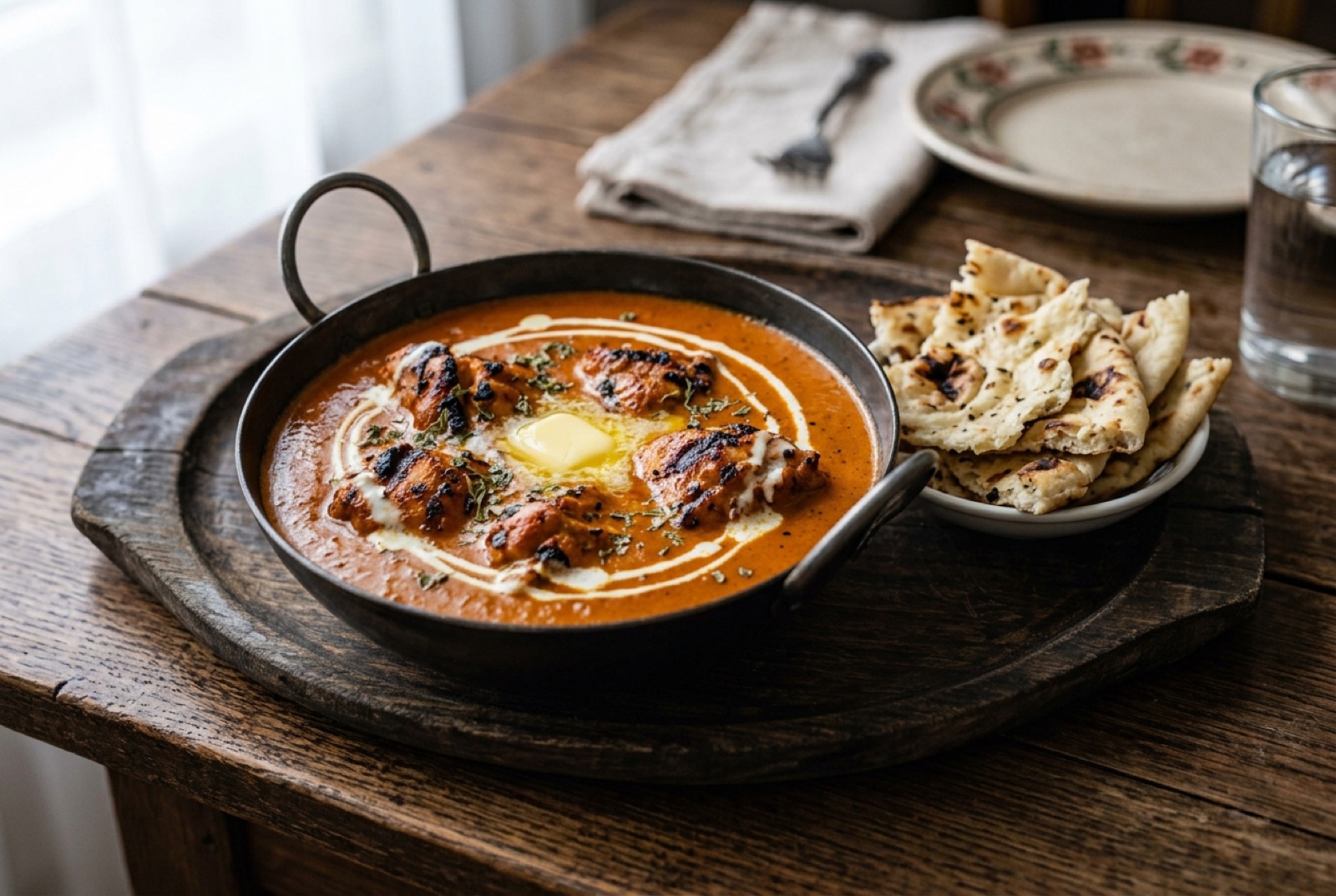
India has 9 more dishes in the atlas — Aloo Paratha and Butter Chicken, and 7 more.
All India recipes Lentils recipes Tamarind recipes Curry leaves recipes soupmainvegetarianvegandairy freeRecipe by The DishRoute Kitchen · published August 19, 2026 · updated August 19, 2026