Pepián.
Guatemalan Toasted Seed and Chile Stew
Pepián de pollo · say it: peh-pee-AHN
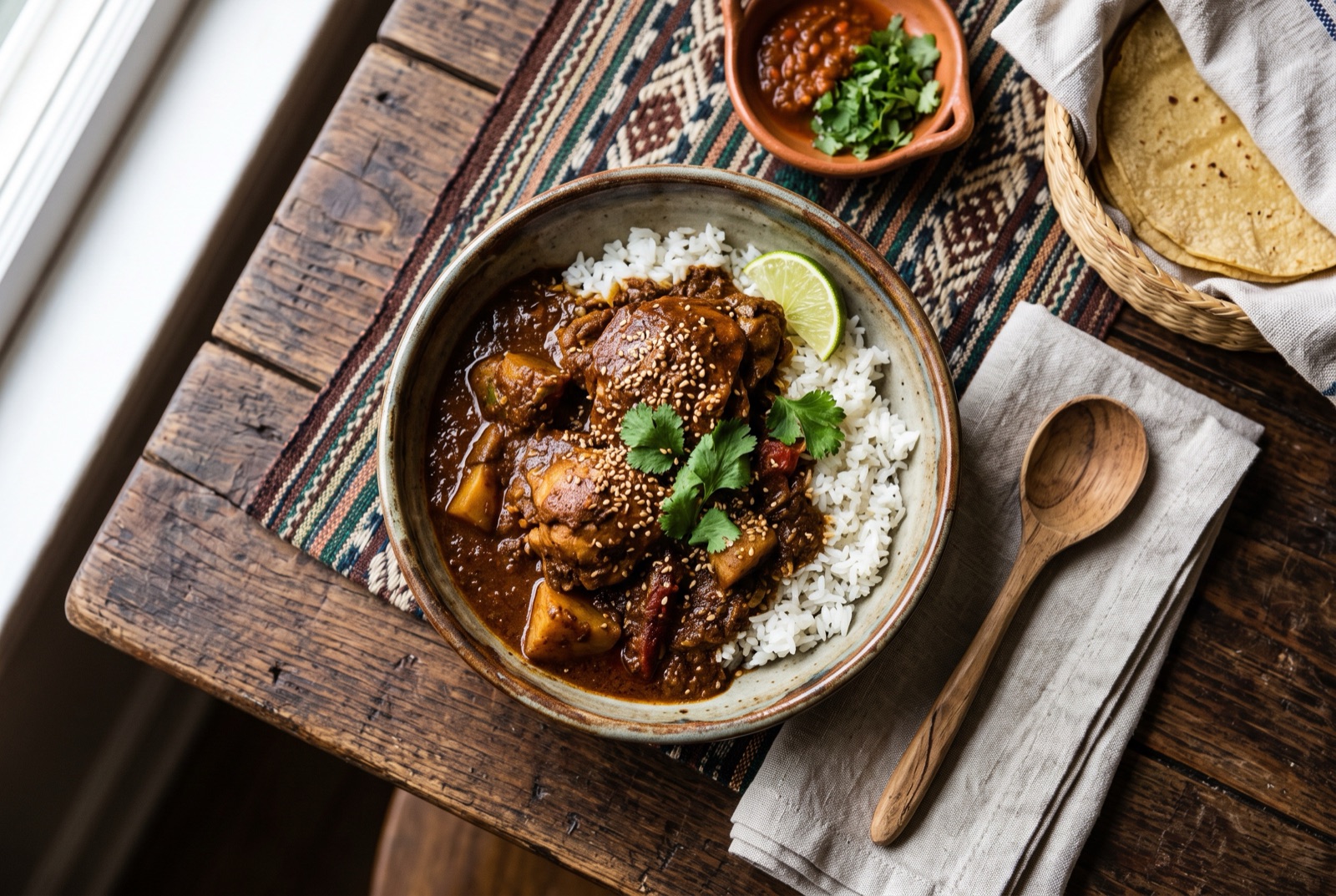
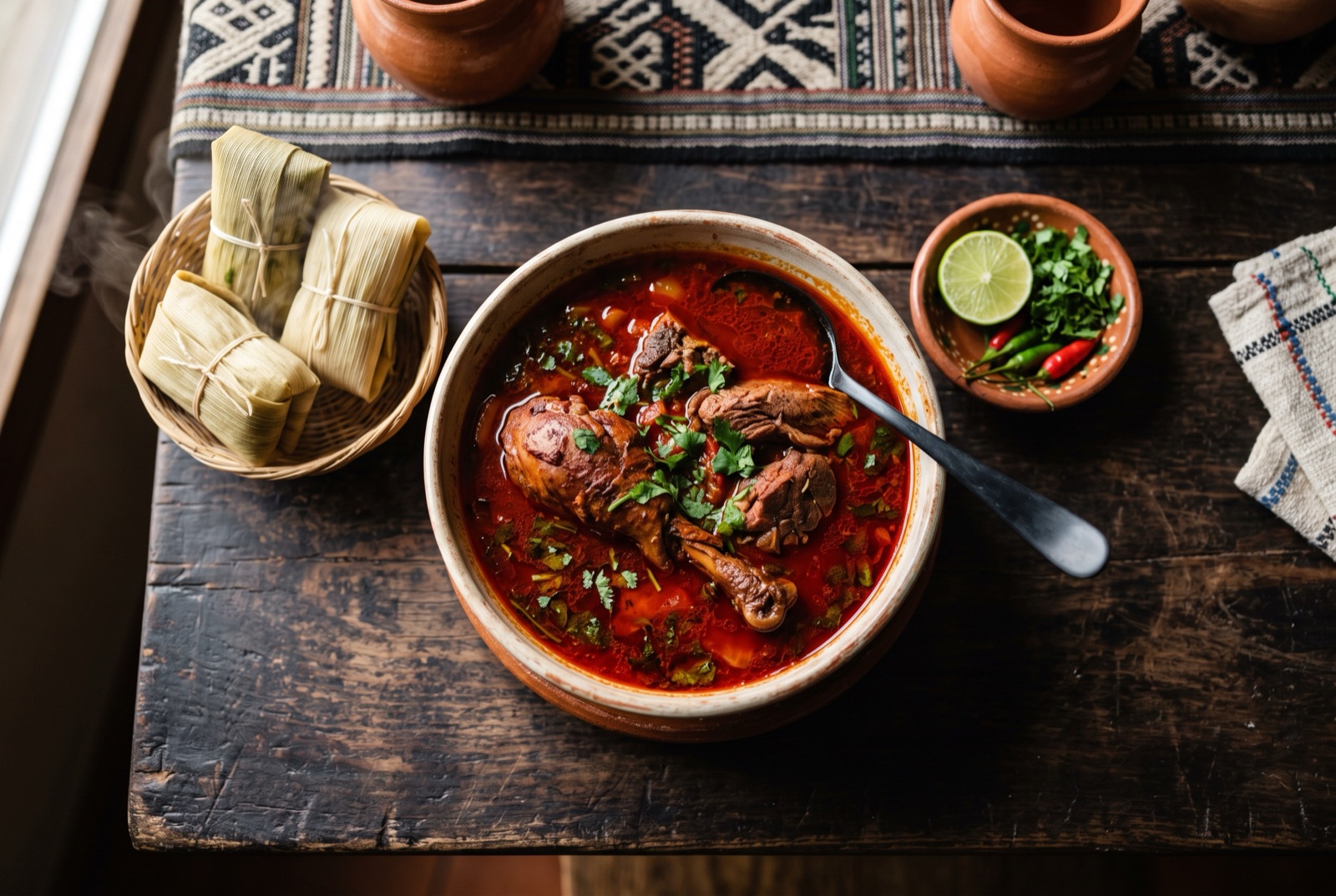
Pepián is a thick, russet-brown stew of chicken in a sauce built from seeds rather than flour or cream. Pumpkin seeds and sesame are toasted dry on a griddle until they pop and smell like popcorn, dried guaque and pasa chiles are toasted until fragrant, tomatoes and onion are charred black in their skins, and the whole lot is blended with broth into a paste that is then fried until it darkens and thickens. The flavour is smoky, nutty and only mildly spicy — closer to a mole in method than to anything hot — with potato and green beans cooked in the same pot. It is the dish Guatemalans name first when asked what their food tastes like, and it is genuinely mestizo: Maya seed-thickening married to Spanish chicken and spice.

- Gate
- GuatemalaGuatemala City and the highlands
- Prep
- 30 min
- Cook
- 1 hr
- Total time
- 1 hr 30 min
- Serves
- 4
- Status
- Takes skill
- Nutrition / serving · estimated
- Calories 610 kcal
- Protein 45 g
- Carbs 31 g
- Fat 34 g
- Fiber 6 g
- Sugar 7 g
- Sodium 890 mg
Why this recipe works.
- Every aromatic is dry-toasted or charred first, which is the whole difference between real pepián and a bland seed gravy.
- The sauce is thickened only by ground seeds, so it stays naturally gluten-free and dairy-free without any substitution.
- Potato and green beans cook in the sauce, so one pot produces a complete plate instead of just stewed chicken.
- Honest chile guidance: guaque and pasa are hard to find abroad, and the recipe tells you exactly what to use instead.
Ingredients.
20 itemsFor the stew
For the recado
To finish
Equipment
- Heavy dry frying pan or comal
- Blender
- Large pot or Dutch oven
- Fine sieve
Instructions.
Poach the chicken
Put the chicken in a large pot with the water, the halved onion and the salt. Bring to a bare simmer and cook uncovered for 25 minutes, skimming the grey foam off the top, until the meat is just cooked through. Lift out the chicken and keep the broth — it becomes the sauce.
Tip Never let it boil hard. A rolling boil makes the broth cloudy and the meat stringy.
Toast the seeds
Set a dry heavy pan over medium heat and toast the pumpkin seeds alone, shaking constantly, until they puff, pop and turn golden with brown freckles — about 4 minutes. Tip them out, then toast the sesame seeds the same way until they are the colour of straw, about 2 minutes.
Tip Take them off the heat while a few are still pale. Carry-over heat finishes the job and burnt seeds ruin the whole sauce.
Toast the chiles and char the vegetables
In the same dry pan, press the opened chiles flat for about 20 seconds a side, until they smell sweet and darken slightly. Remove, then char the tomatoes, tomatillos, quartered onion and unpeeled garlic in the dry pan for 8–10 minutes, turning, until the skins blister and blacken in patches and the tomatoes slump.
Blend the recado
Peel the garlic and drop everything toasted and charred into a blender with the cinnamon, peppercorns, torn tortilla and 500 ml of the hot chicken broth. Blend for a full 2 minutes until the paste is thick, deep brick-red and smooth enough to feel silky between two fingers.
Tip If it still feels sandy, push it through a medium sieve before the next step.
Fry the paste
Heat the oil in the rinsed-out pot over medium heat and pour in the blended recado — it will spit, so stand back. Cook, stirring often, for 8 minutes, until it darkens by a shade, smells toasted rather than raw, and starts to pull away from the base of the pot leaving a slick of oil behind.
Simmer the stew
Stir in another 700 ml of the reserved broth, add the potatoes, and simmer uncovered for 15 minutes. Add the green beans and the poached chicken and cook 10 minutes more, until the potatoes yield to a knife and the sauce coats the back of a spoon like thin cream.
Season and serve
Taste and correct with salt — the sauce should be savoury, smoky and faintly sweet, with the chile heat sitting far in the background. Drop in the cilantro sprigs, rest off the heat for 5 minutes, then ladle over white rice with warm tortillas alongside.
Tips from our kitchen.
- Toast the seeds in a dry pan over medium heat and keep them moving — they go from golden to burnt in about fifteen seconds, and burnt pepitoria makes the whole sauce bitter.
- Toast the dried chiles only until they smell fragrant and turn slightly darker, roughly 20 seconds a side. If they smoke or blacken, throw them out and start again.
- Char the tomatoes, tomatillos, onion and unpeeled garlic on a dry pan until the skins blister and blacken in patches. That soot is flavour, not a mistake — do not peel it all off.
- Blend the paste with hot chicken broth, not water, and blend it far longer than feels necessary. Two full minutes gives a sauce that coats a spoon instead of feeling sandy.
- Fry the blended paste in oil before adding the rest of the broth. It should darken by a shade and start pulling away from the pan, which takes about eight minutes.
- If the finished sauce feels too thick after resting, loosen it with broth rather than water so you do not dilute the seasoning.
Substitutions.
- Guaque and pasa chiles → Guajillo chiles for the guaque, ancho chiles for the pasa
- These are the closest widely available stand-ins and both are mild. Guaque is essentially the Guatemalan name for a guajillo-type chile, so that swap is barely a swap at all.
- Pepitoria (hulled raw pumpkin seeds) → Raw green pumpkin seeds from any health-food aisle
- They must be raw and unsalted so you control the toast. Pre-roasted salted seeds make the sauce salty and slightly stale-tasting.
- Chicken on the bone → Boneless thighs, or pork shoulder in 4 cm cubes
- Bone-in pieces give a better broth, which becomes the sauce. With boneless meat, use good stock instead of the poaching liquid.
Variations.
- Pepián de res
- Made with beef shank instead of chicken, simmered much longer so the broth turns gelatinous and the sauce clings harder.
- Pepián rojo de Chimaltenango
- A brighter, redder highland version with more guaque and less pepitoria, thinner in body and noticeably hotter.
- Meatless pepián
- The same sauce over güisquil (chayote), potato and green beans with vegetable broth — common during Lent and completely convincing.
Storage & reheating.
Pepián keeps 3 days refrigerated and improves overnight as the toasted flavours settle. The sauce thickens considerably when cold, so reheat gently with a splash of broth, stirring until it flows again. It freezes well for up to 3 months — freeze the sauce and chicken together, but leave out the potato, which turns grainy after thawing, and add freshly boiled potato when you reheat.
Serve with
White rice, warm corn tortillas, and a bowl of chirmol on the table for anyone who wants heat.
The story behind Pepián.
Pepián is one of the oldest recorded mestizo dishes in the Americas, and its bones are Maya. Long before the Spanish arrived, cooks in what is now Guatemala were thickening stews with ground toasted seeds and chiles rather than with fat and starch — the same logic that produced the mole family further north in Mexico. When Spanish ingredients arrived, chicken and pork slid into the pot alongside the native turkey, and cinnamon, black pepper and coriander seed joined the chile mix. What did not change was the technique: dry-toast, grind, fry the paste, then stew. In 2007 the Guatemalan government formally declared pepián part of the national cultural patrimony, alongside jocón, kaq ik and plátanos en mole, which is a bureaucratic way of admitting what every household already knew.
The version served in Guatemala City tends to be dark and heavy on pepitoria — hulled pumpkin seeds sold by weight in every market — while highland versions can run redder, thinner and hotter depending on which chiles the local cook favours. Some families add a spoonful of toasted rice or a torn tortilla to the blender for extra body; some insist on a whole charred tomatillo for acidity. Almost everyone includes potato and either green beans or güisquil (chayote), so the stew arrives as a full plate rather than just meat in sauce.
It is celebration food more than weeknight food, partly because of the toasting and blending, and partly because it is what you cook when relatives come. In highland towns pepián shows up at weddings, saint's-day fiestas and funerals alike, ladled over white rice with a stack of tortillas alongside and nothing else on the table. The one thing that is never negotiable is the toasting step: pepián made from raw seeds is a pale, gritty imitation, and any cook will tell you so before you have finished asking.
Questions, answered.
Is pepián spicy?
Not particularly. Guaque and pasa chiles are mild, dried and used mostly for colour and depth rather than heat, so a standard pepián tastes smoky and nutty with only a warm background tingle. Guatemalans add heat at the table with a salsa such as chirmol rather than cooking it into the pot.
What is the difference between pepián and Mexican mole?
They share a technique — toasted seeds, chiles and aromatics ground into a paste that is fried before stewing — but pepián uses far fewer ingredients, leans heavily on pumpkin and sesame seeds, and contains no chocolate or dried fruit. It is also thinner and more broth-like, meant to be spooned over rice rather than blanketed over meat.
Why is my sauce gritty instead of smooth?
The seeds were not blended long enough or the blender was underpowered. Blend the paste with hot broth for a full two minutes, and if it still feels sandy on the tongue, pass it through a medium sieve before frying. Adding a torn corn tortilla to the blender also helps bind the sauce and smooth the texture.
Can I make pepián ahead for a party?
Yes, and most Guatemalan cooks do. Make the sauce and chicken a day in advance, refrigerate, then reheat gently with extra broth and cook the potato and green beans fresh on the day so they keep their texture. The toasted flavours deepen overnight, so the second-day version is arguably better.
Can I use pre-ground pumpkin seed flour?
It works in a pinch but costs you most of the character. Pepián depends on the aroma released when whole seeds pop and brown in a dry pan, and pre-ground flour has already lost that and often tastes slightly rancid. If it is all you have, toast the flour briefly in the dry pan before blending.
You might also like.
All recipes →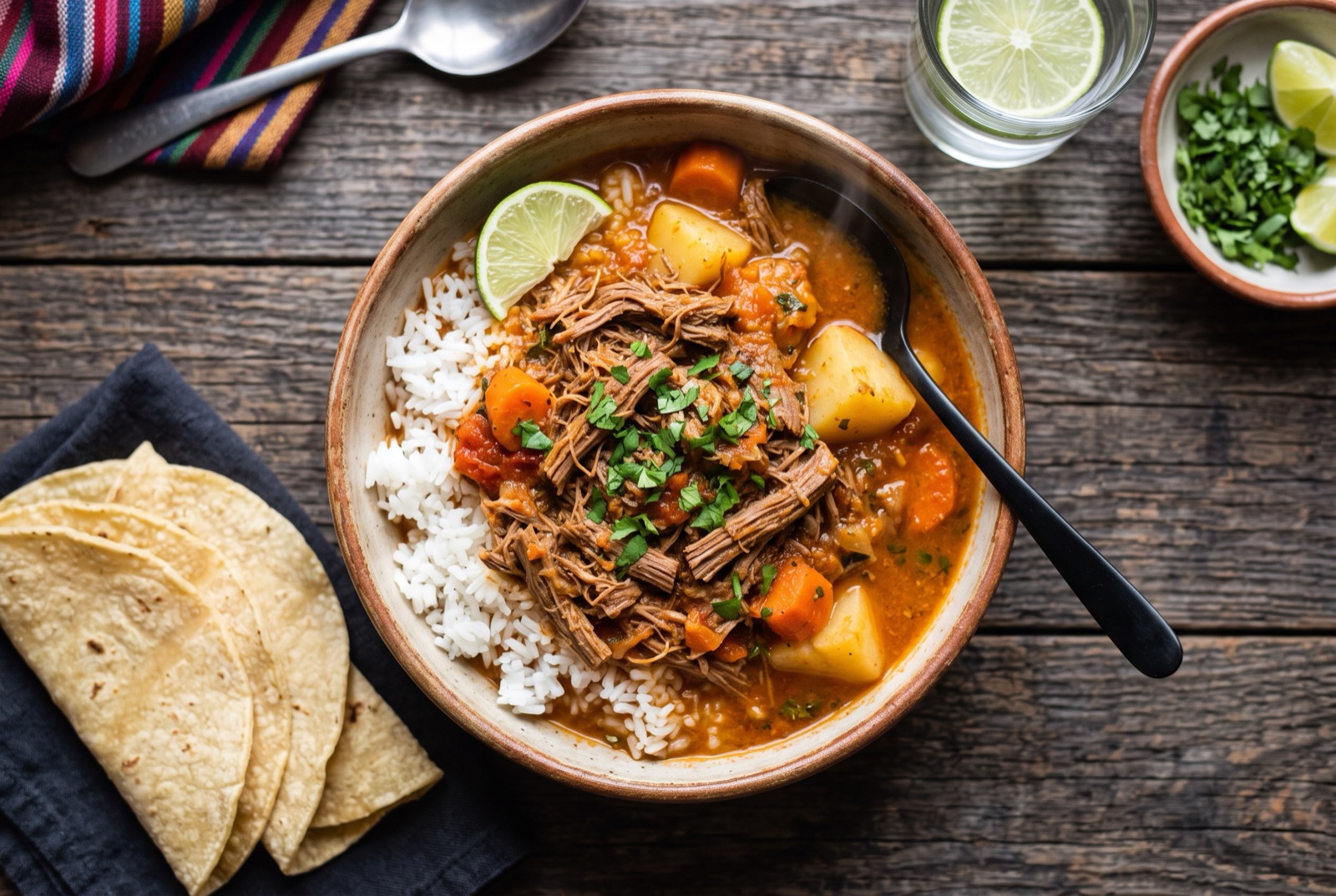
Keep exploring Guatemala.
Guatemala has 9 more dishes in the atlas — Atol de Elote and Chiles Rellenos Guatemaltecos, and 7 more.
Recipe by The DishRoute Kitchen · published August 20, 2026 · updated August 20, 2026