Ackee and Saltfish.
Ackee Fruit with Salt Cod
Ackee and saltfish · say it: AH-kee and SALT-fish
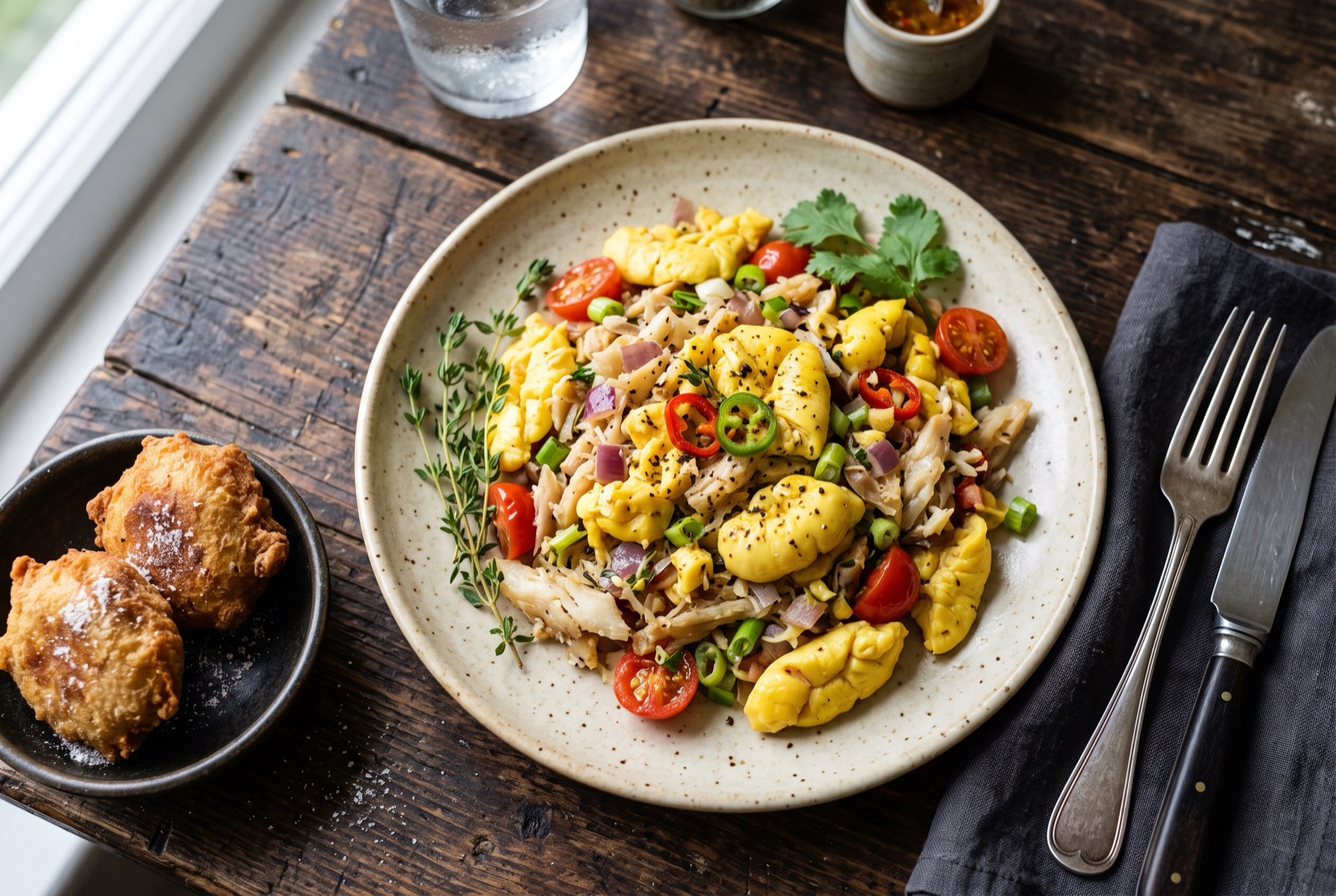
Ackee and saltfish is soft, buttery yellow ackee folded at the last moment into a pan of flaked salt cod cooked down with onion, tomato, scallion, thyme and Scotch bonnet. Ackee is a fruit, but it behaves like scrambled egg — creamy, mild, faintly nutty — and the salt cod does all the seasoning work, so the finished dish tastes savoury and rich rather than fruity. It is Jamaica's national dish and its default proper breakfast, served with fried dumpling, boiled green banana, yam or roasted breadfruit. The technique is genuinely easy; the two things that matter are desalting the cod properly and treating the ackee like something fragile, because it turns to mush if you stir it.

- Gate
- Jamaica
- Prep
- 20 min
- Cook
- 25 min
- Total time
- 12 hr 45 min incl. 12 hr rest
- Serves
- 4
- Status
- Medium
- Nutrition / serving · estimated
- Calories 340 kcal
- Protein 24 g
- Carbs 14 g
- Fat 22 g
- Fiber 4 g
- Sugar 5 g
- Sodium 1250 mg
Why this recipe works.
- A proper desalting method with a taste test, so the dish is seasoned rather than inedibly salty.
- Ackee added at the very end and folded, not stirred, which is the only way to keep the arils whole.
- Clear safety guidance on fresh versus canned ackee that most recipes leave out entirely.
- Balanced for a real breakfast portion, with the classic fried dumpling pairing built into the timing.
Ingredients.
13 itemsFor the fish
For the pan
Equipment
- Large frying pan or skillet
- Colander
- Bowl for soaking the fish
Instructions.
Soak the saltfish
Cover the salt cod with plenty of cold water and leave it in the fridge overnight, changing the water two or three times. This draws out most of the cure without washing away the flavour.
Boil and taste
Drain the fish, cover with fresh water and boil for 10 minutes. Drain again, taste a flake — it should be savoury, not sharply salty — and boil once more in clean water if it is still too strong.
Flake the fish
When cool enough to handle, pull the cod apart into large flakes with your fingers, discarding any skin, bones or tough grey patches. Keep the pieces generous rather than shredding them fine.
Soften the aromatics
Heat the oil in a large pan over medium heat and cook the onion, bell pepper and scallions for 6 minutes, stirring, until the onion is translucent and sweet with no crunch left in it.
Add garlic, thyme and pepper
Stir in the garlic, thyme sprigs, Scotch bonnet, black pepper and ground allspice and cook 1 minute more, until the pan smells strongly of thyme and pepper rather than raw garlic.
Cook down the tomato
Add the chopped tomatoes and cook for 5 minutes, pressing them lightly, until they collapse and the liquid has mostly evaporated and the pan looks glossy rather than wet.
Warm the saltfish through
Fold in the flaked cod and cook 3 minutes so it takes on the seasoning and the edges start to catch slightly on the pan. Taste now and only add salt if it genuinely needs it.
Fold in the ackee
Tip the drained ackee gently over the top, turn the heat to low, and fold it through with a spatula by lifting from underneath — no stirring. Cook 2 minutes just until heated, keeping the arils whole and yellow.
Tip Some broken arils are normal and will make the dish creamier; the goal is that most stay intact.
Serve
Pull out the thyme stems and the pepper if you left it whole, and serve straight from the pan with fried dumplings, boiled green banana or roasted breadfruit.
Tips from our kitchen.
- Soak the salt cod overnight with two or three water changes, then boil it briefly and taste a flake. It should be pleasantly salty, not harsh — if it stings, boil it again in fresh water.
- Drain canned ackee gently in a colander and do not rinse it under a running tap. The arils are already soft and the pressure breaks them.
- Add the ackee only in the last two minutes and fold it through with a spatula, tilting the pan, rather than stirring with a spoon.
- Do not add salt until the very end. Between the cod and the reduction, the pan is usually seasoned enough already.
- Cook the onion and pepper long enough to go properly soft and sweet, around six minutes — crunchy raw onion throws the whole texture off.
- If you want the dish drier and more traditional, let the tomato cook down until the pan looks almost dry before the ackee goes in.
Substitutions.
- Canned ackee → Fresh ackee, boiled 15 minutes and drained
- Only use fresh ackee from pods that opened naturally on the tree, with the seeds and pink membrane discarded. If you are not confident about sourcing, use canned — it is prepared under regulation and completely safe.
- Salt cod → Salted pollock, salted hake, or 300 g fresh cod plus 1 tsp extra salt
- Fresh cod gives you the texture but not the deep cured savour. Salted pollock is what a lot of Jamaican shops actually sell as saltfish anyway.
- Scotch bonnet → Half a habanero, or a pinch of chili flakes
- At breakfast the pepper is usually kept light — a few slices for aroma rather than a full pepper.
Variations.
- Ackee and saltfish with bacon
- Some Kingston versions start by rendering a little chopped bacon or salt pork in the pan and cooking the onions in that fat. Richer, and common in restaurant kitchens.
- Ackee with callaloo
- Stir a handful of chopped steamed callaloo through the pan alongside the ackee for a greener, lighter plate.
- Vegan ackee run down
- Skip the fish entirely and cook the ackee with coconut milk, onion, tomato and thyme. Ackee's texture carries the dish on its own.
Storage & reheating.
Best eaten immediately — reheating breaks the ackee down into a paste. If you must keep it, refrigerate up to 2 days and warm it very gently in a covered pan over low heat, accepting that the texture will be softer. A better approach is to cook the saltfish base ahead, refrigerate that for up to 3 days, and fold in fresh ackee when you reheat it. Do not freeze; ackee collapses completely on thawing.
Serve with
Fried dumplings, boiled green banana, roasted breadfruit or a slice of hard dough bread, with hot Blue Mountain coffee.
The story behind Ackee and Saltfish.
Ackee is not native to Jamaica. The tree came from West Africa in the eighteenth century, almost certainly on slave ships, and its botanical name — Blighia sapida — honours Captain William Bligh, who carried specimens from Jamaica to Kew in 1793. The plant took to the island completely, and today the fruit is far more central to Jamaican cooking than to any West African cuisine.
It is also famously dangerous when handled wrong. Unripe ackee contains hypoglycin A, a toxin that causes severe illness known historically as Jamaican vomiting sickness. The fruit is only safe once the pod has opened naturally on the tree, revealing the three cream-yellow arils around glossy black seeds, and only the arils are eaten — the pink membrane and the seeds are discarded. Jamaican cooks treat this as ordinary common sense, but it is why exported ackee is almost always sold canned, harvested and processed under regulation, and why the United States restricted imports for decades before permitting certified brands.
Salt cod arrived by a very different route. Dried and salted North Atlantic cod was shipped to the Caribbean in enormous quantities as cheap protein for enslaved workers on the sugar estates, part of the same triangular trade that moved sugar and rum north. That imposed ingredient became permanent: saltfish now anchors dishes across the region, from Jamaican saltfish fritters to Puerto Rican bacalaítos. The pairing of an African fruit with a North Atlantic fish, seasoned with Caribbean pepper and thyme, is the island's history compressed onto one breakfast plate — which is exactly why it became the national dish.
Questions, answered.
Is ackee dangerous to eat?
Unripe ackee is genuinely toxic — it contains hypoglycin A, which can cause severe hypoglycaemia and vomiting. The fruit becomes safe only when the pod splits open naturally on the tree, and only the yellow arils are eaten, never the seeds or the pink membrane. Canned ackee is harvested and processed under regulation and carries no risk, which is why it is the standard choice outside Jamaica.
How long do I need to soak salt cod?
Overnight, roughly 12 to 24 hours in cold water, changing the water two or three times. For a faster route, boil the fish for 15 minutes, drain, then boil again in fresh water for 10 more. Always taste a small flake before cooking: it should taste seasoned rather than aggressively salty, since you cannot remove salt once it is in the pan.
What does ackee taste like?
Very mild, creamy and slightly nutty, with a texture closest to soft scrambled egg. It has almost no sweetness despite being a fruit, which is why it works in savoury cooking. On its own it tastes of very little; its role is to carry the salt, pepper and thyme of everything around it.
Why did my ackee turn to mush?
It was stirred or cooked too long. Ackee arils are extremely fragile once cooked and break down under any real agitation. Add them in the final two minutes, off to one side of the pan, and fold gently with a spatula while tilting the pan rather than stirring. Canned ackee is already cooked and needs only to be warmed through.
Can I use fresh cod instead of salt cod?
You can, and the dish will be pleasant, but it will not taste the same. Curing changes cod's texture to something firmer and flakier and gives it a depth that fresh fish does not have. If using fresh cod, poach it briefly, flake it, and season the pan more assertively with salt to compensate.
You might also like.
All recipes →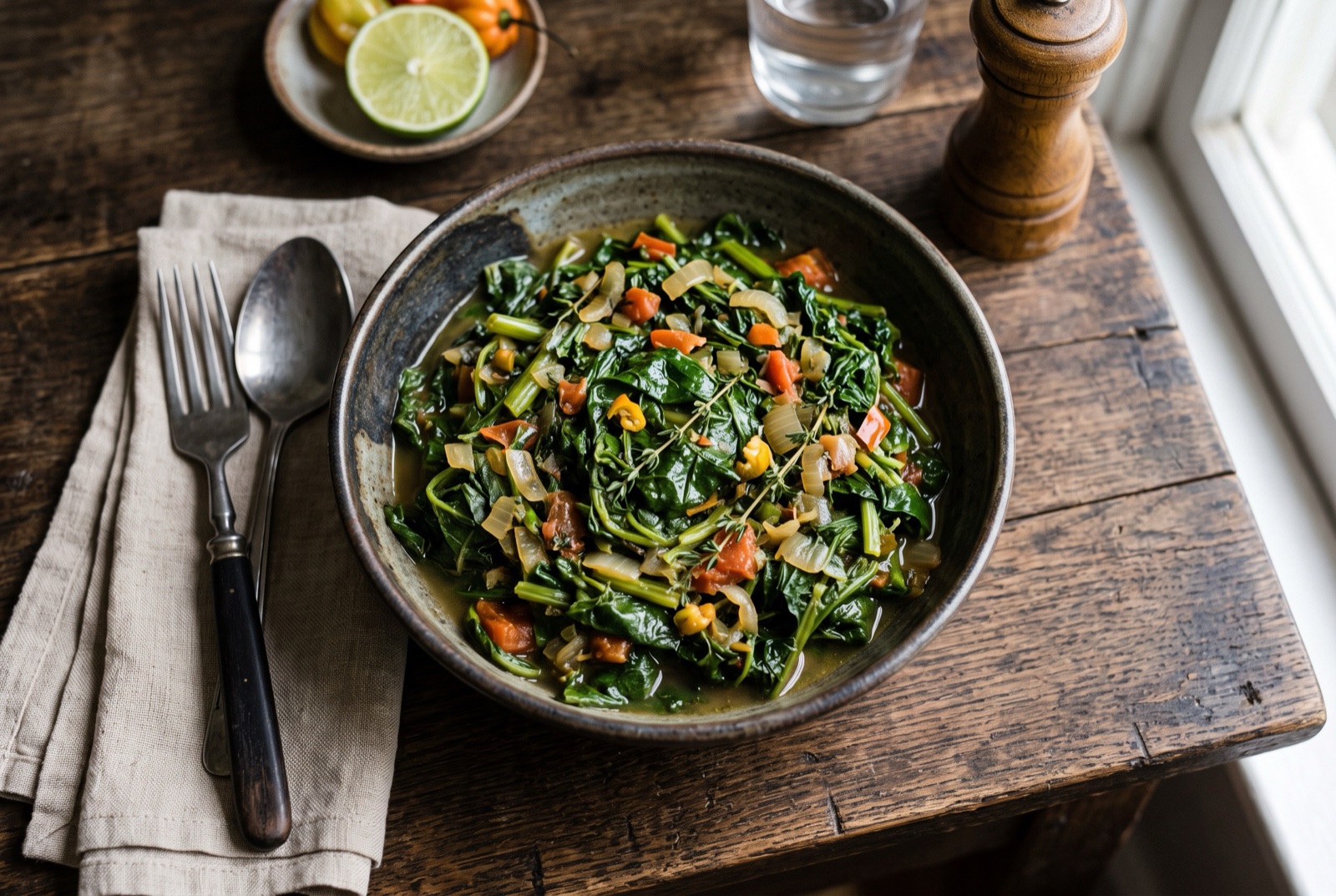
Keep exploring Jamaica.
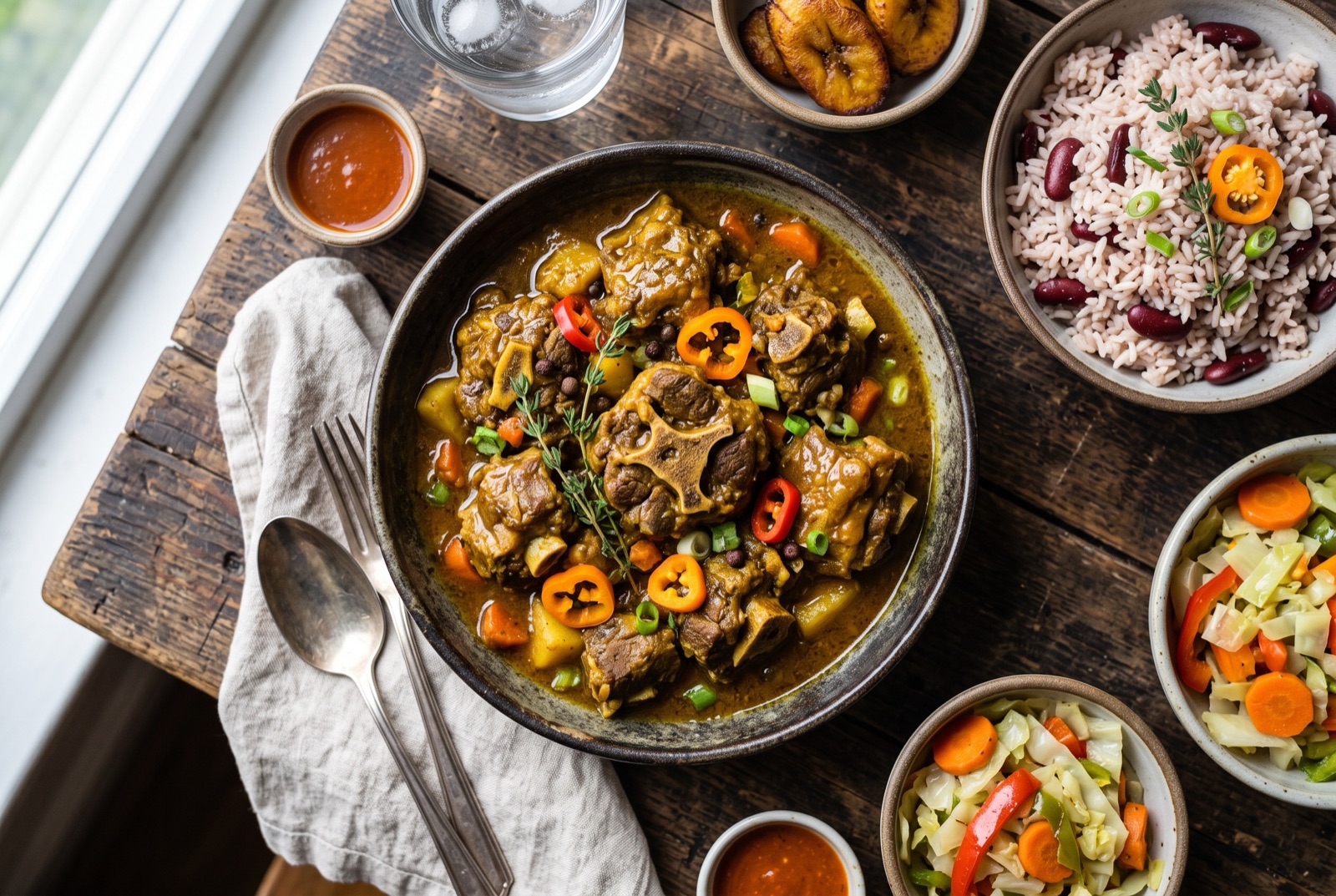
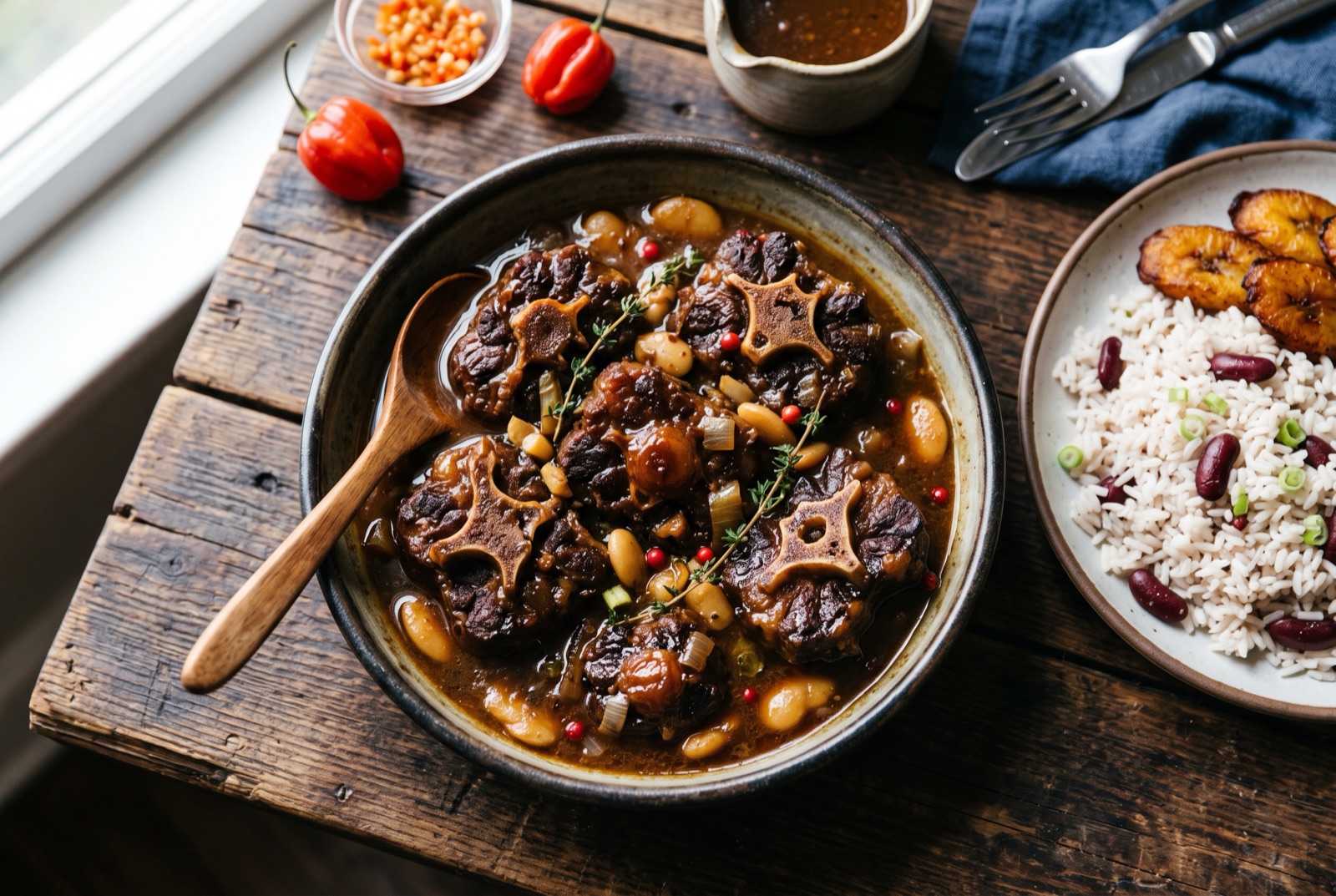
Jamaica has 9 more dishes in the atlas — Brown Stew Oxtail and Curry Goat, and 7 more.
All Jamaica recipes Onion recipes Tomato recipes Thyme recipes breakfastmainpescatariandairy freegluten freeRecipe by The DishRoute Kitchen · published August 20, 2026 · updated August 20, 2026