Jerk Chicken.
Pimento-Smoked Spiced Chicken
Jerk chicken · say it: jurk CHIH-ken
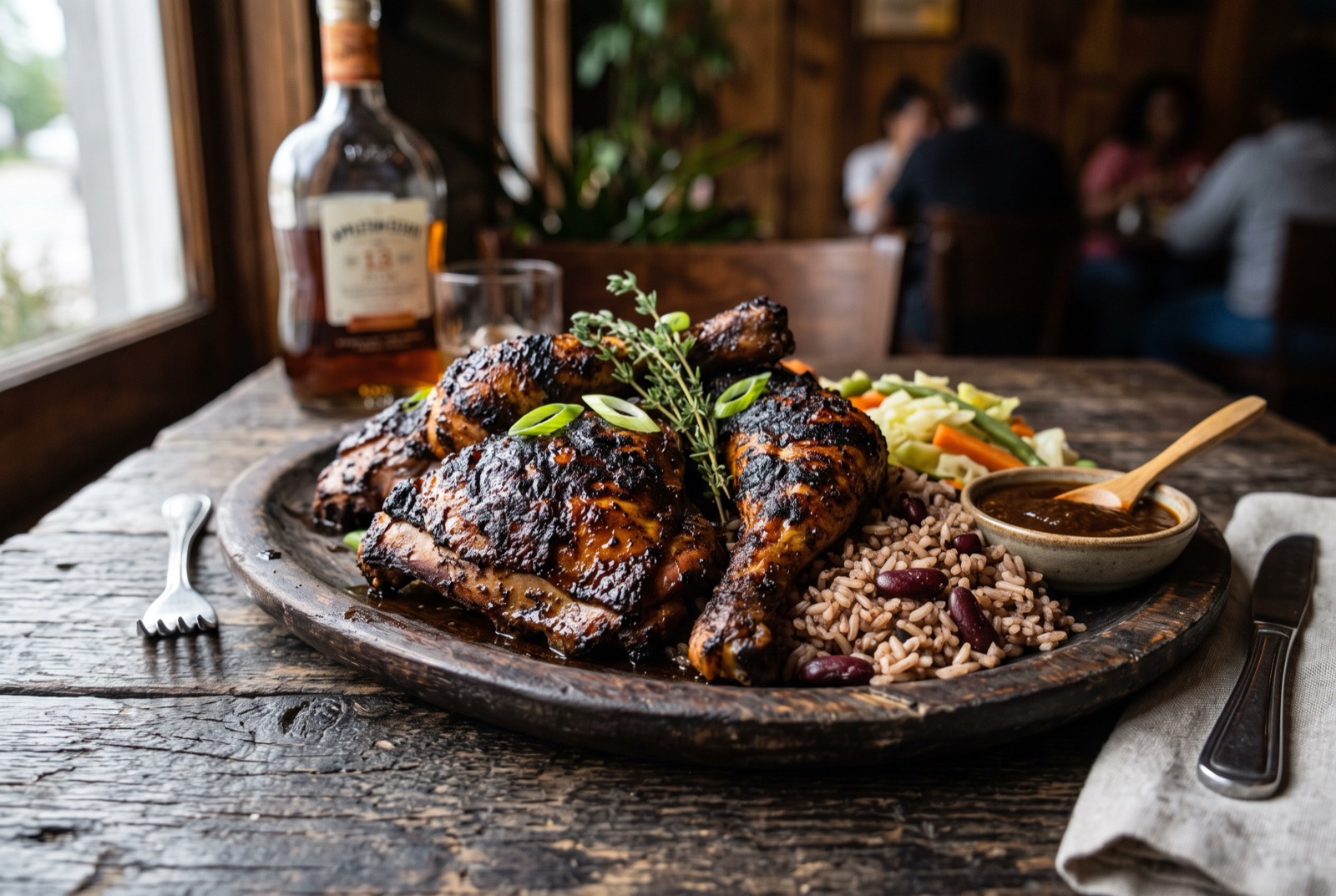
Jerk chicken is chicken cured in a thick, wet, aggressively aromatic paste and then cooked slowly over smoke until the outside is blistered almost black and the inside is still juicy. The flavour is layered rather than simply hot: allspice berries — pimento, the backbone of the whole thing — give a warm clove-and-pepper depth, thyme and scallion carry a green herbal note, and the Scotch bonnet adds a fruity burn that arrives late and stays. It is not a barbecue sauce dish. There is no sugary glaze; the colour comes from spice and smoke. Done properly the marinade dries into a dark crust that you eat along with the meat, and the smoke has driven a centimetre or so into the flesh. It is the single most exported thing Jamaica cooks, and the home version is genuinely achievable if you accept one compromise about the wood.

- Gate
- JamaicaPortland
- Prep
- 25 min
- Cook
- 1 hr 20 min
- Total time
- 9 hr 45 min incl. 8 hr rest
- Serves
- 4
- Status
- Medium
- Nutrition / serving · estimated
- Calories 520 kcal
- Protein 42 g
- Carbs 9 g
- Fat 34 g
- Fiber 1 g
- Sugar 6 g
- Sodium 1100 mg
Why this recipe works.
- A wet marinade with whole toasted pimento berries ground fresh, which tastes nothing like the pre-ground jar version.
- Overnight curing so the seasoning is inside the meat, not just crusted on the outside.
- Indirect low heat first, hard char last — the order that gives blistered skin without dry breast meat.
- Honest about pimento wood: it tells you what smoke substitution actually gets you and what it does not.
Ingredients.
17 itemsFor the chicken
For the marinade
For the fire
Equipment
- Charcoal grill with a lid, or an oven with a broiler
- Blender or food processor
- Mortar and pestle or spice grinder
- Disposable gloves
Instructions.
Wash and score the chicken
Rub the chicken pieces all over with the cut lime and a splash of water, then rinse and pat completely dry. Slash each piece to the bone two or three times on the thickest side so seasoning can reach the middle.
Tip The lime wash is standard Jamaican practice. It also helps the marinade cling to the skin.
Toast and grind the pimento
Toast the whole allspice berries in a dry pan over medium heat for about 60 seconds, shaking constantly, until they smell sharply of clove and pepper and darken a shade. Grind them to a coarse powder while still warm.
Tip Stop the moment the aroma turns from woody to spicy — burnt allspice goes bitter fast.
Blend the marinade
Put the ground allspice, Scotch bonnets, scallions, thyme leaves, garlic, ginger, soy sauce, brown sugar, vinegar, oil, nutmeg, cinnamon, black pepper and salt in a blender. Blitz to a thick, coarse, dark green paste that still shows flecks of scallion — not a smooth puree.
Marinate overnight
Massage the paste into the chicken, working it deep into the slashes and under the skin where you can. Cover and refrigerate at least 8 hours and ideally 24, turning the pieces once so nothing sits dry.
Set up indirect heat
Bank hot coals to one side of the grill, or light only half the burners on a gas grill, and aim for around 160C with the lid down. Scatter a handful of soaked wood chips over the coals and let them start smoking before the chicken goes on.
Smoke low with the lid down
Lay the chicken skin side up on the cool side of the grate, well away from direct flame, and close the lid. Cook for 60 to 70 minutes, turning every 20 minutes and adding more chips as the smoke thins, until the juices run clear at the bone.
Tip Resist opening the lid. Every peek costs several minutes of heat and lets the smoke escape.
Char over the coals
Move the pieces directly over the hot coals for the last 6 to 10 minutes, turning often, until the marinade crust blisters, blackens in patches and smells toasted rather than acrid. Pull anything that starts to flame straight back to the cool side.
Chop and serve
Rest the chicken 5 minutes, then chop it through the bone into rough pieces with a heavy knife or cleaver the way a roadside pan would. Serve piled up with festival, hard dough bread and hot pepper sauce.
Tips from our kitchen.
- Toast the whole allspice berries in a dry pan for a minute before grinding them. Pre-ground allspice has lost most of the volatile oil that makes jerk smell like jerk.
- Wear gloves when handling Scotch bonnets, and do not touch your face for the next hour. The capsaicin oil clings to skin far longer than you expect.
- Score the chicken to the bone in two or three places on each piece so the marinade reaches the middle of the thickest muscle.
- Marinate a minimum of eight hours; twenty-four is better. Under four hours and you have seasoned chicken, not jerk.
- Cook the chicken over indirect heat with the lid down for most of the time, then move it over the coals only at the very end to blister the skin.
- If you use wood chips, soak a handful of pimento wood or hickory and add them to the coals in stages so the smoke lasts the whole cook rather than blowing out in five minutes.
Substitutions.
- Pimento (allspice) wood → Soaked hickory or oak chips plus an extra teaspoon of ground allspice in the marinade
- Pimento wood smoke has a sweet, clove-like edge no other wood copies. Caribbean grocers and online sellers ship dried chips and sticks. Without it the chicken is very good; it just is not identical.
- Scotch bonnet pepper → Habanero, one for one
- The closest match by far — same species, similar fruity heat. Jalapeño or serrano will give heat without the apricot-like aroma that defines jerk.
- Charcoal grill → Oven at 160C for 75 minutes, then 8 minutes under a hot grill
- You lose the smoke and gain convenience. Add half a teaspoon of smoked paprika to the marinade to compensate, and finish close under the broiler for the char.
Variations.
- Jerk pork
- The older version. Use pork shoulder cut into thick slabs and cook it longer and lower — around three hours — until the fat has rendered and the edges are crisp.
- Jerk fish
- Whole snapper scored and stuffed with the marinade, wrapped in foil with a little butter and grilled for 20 minutes. Much faster, and popular along the south coast.
- Oven jerk wings
- Same marinade on chicken wings, roasted at 200C for 35 minutes and turned once. A party format that needs no grill at all.
Storage & reheating.
Cooked jerk chicken keeps 3 days refrigerated and reheats well, which is unusual for grilled chicken — the marinade keeps it moist. Warm it covered at 160C for 15 minutes rather than in a microwave, which turns the crust rubbery. The raw marinated chicken freezes excellently: bag it with the paste and freeze up to 3 months, then thaw overnight in the fridge and cook as normal. Spare marinade keeps 2 weeks refrigerated in a sealed jar.
Serve with
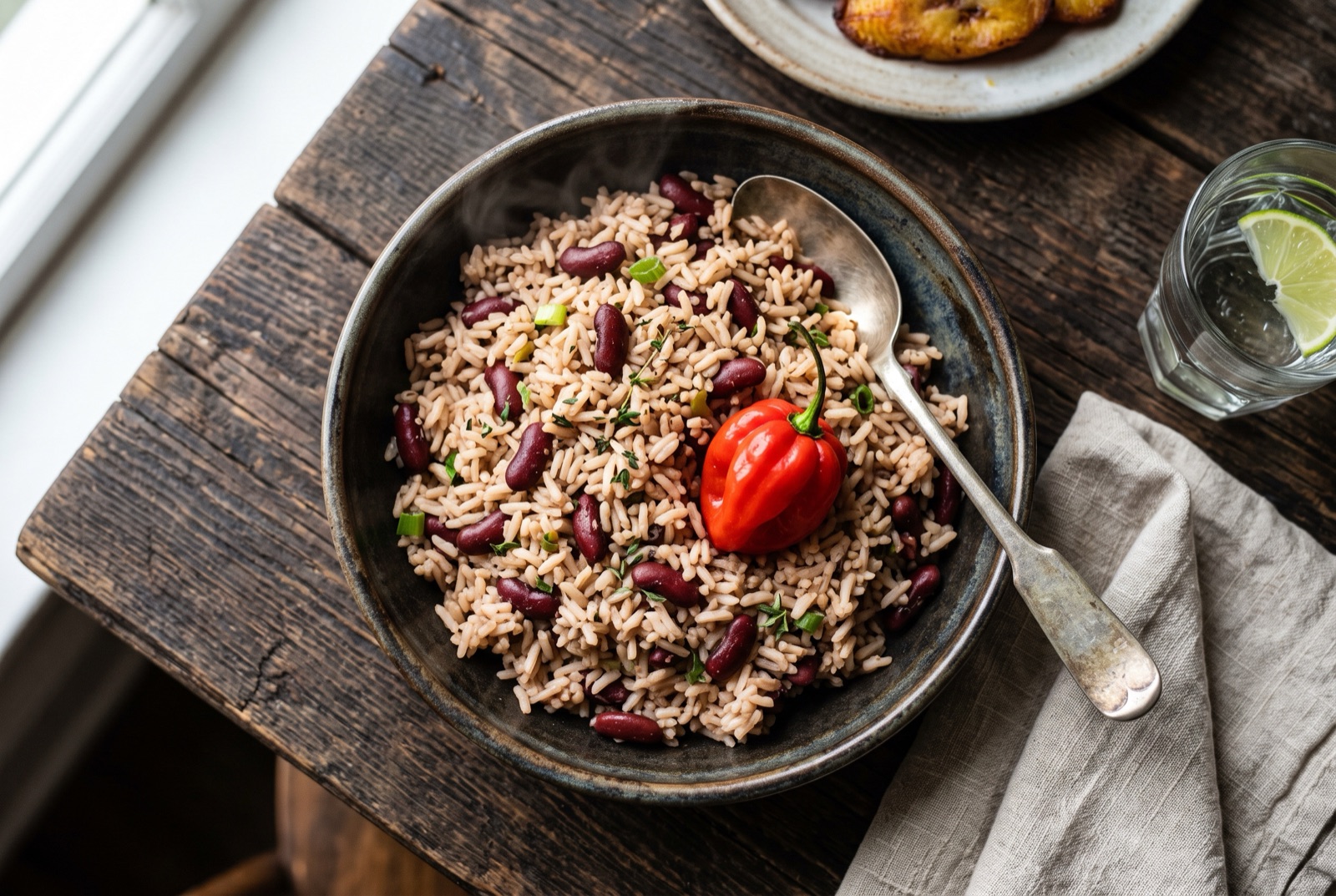
Festival dumplings, hard dough bread and a thin Scotch bonnet pepper sauce; rice and peas if you are making a full plate.
The story behind Jerk Chicken.
Jerk belongs to the Maroons — communities of Africans who escaped enslavement on Spanish and later British plantations and established free settlements in Jamaica's interior, particularly in the Blue and John Crow Mountains of the east. Living in mountainous country where a visible fire meant capture, they cooked meat in covered pits over green pimento wood, seasoning it heavily with what grew around them. Heavy seasoning also preserved. The method borrowed from Taino barbacoa techniques that predated European arrival, and the result was a way of cooking that was quiet, portable and improved with time.
The word itself most likely reaches back to charqui, the Quechua term for dried meat that also gives English "jerky", though the connection is argued and no one can date it precisely. What is not argued is that jerk was originally applied to pork far more than chicken. Wild hogs were the meat the Maroons hunted, and jerk pork remains the older and, for many Jamaicans, the better version. Chicken took over in the twentieth century for the same reason it took over everywhere: it is cheaper, faster and easier to sell by the quarter at a roadside pan.
That roadside pan is now the icon. Boston Bay in Portland is the address most often named as the commercial birthplace of the modern jerk stand, and the drum-pan grill — an oil drum split lengthwise, hinged, and filled with burning pimento wood — spread from there across the island and out into every Jamaican neighbourhood abroad. The meat is chopped with a cleaver into rough pieces, served in foil or on brown paper with festival or hard dough bread, and doused with a thin, fierce pepper sauce. At home, without pimento wood or a drum pan, you can still get most of the way there: a long marinade, indirect heat, wood chips if you have them, and the patience not to rush the skin.
Questions, answered.
What actually makes a marinade "jerk" rather than just spicy?
Two ingredients are non-negotiable: allspice, known in Jamaica as pimento, and Scotch bonnet pepper. Thyme, scallion, garlic and ginger fill in around them, and nutmeg or cinnamon often appear in small amounts. Without pimento the paste may be hot and herbal, but it will not read as jerk to anyone who has eaten the real thing.
How hot is jerk chicken supposed to be?
Genuinely hot, but not painful. Traditional jerk uses one to two Scotch bonnets per chicken, which gives a strong warm burn behind the spice rather than a scorching one. You can remove the seeds and white pith to cut the heat by roughly half while keeping the fruity aroma, or use a single pepper for a mild version that still tastes correct.
Can I make jerk chicken without a grill?
Yes. Roast the marinated chicken at 160C for about 75 minutes on a rack over a tray, then finish it 15 cm under a very hot broiler for 6 to 8 minutes until the skin blisters and darkens. You lose the smoke, so add half a teaspoon of smoked paprika to the marinade. The texture and seasoning are otherwise close.
Why did my jerk chicken burn on the outside and stay raw inside?
The heat was too high and too direct. Jerk is cooked over indirect heat with the lid down for most of the time, in the region of 150 to 170C, and only moved over the coals in the last few minutes to char. If your coals are directly under the meat for the whole cook, the sugars and spices in the marinade will scorch long before the thigh bone is done.
Should I use chicken thighs or a whole chicken?
Bone-in, skin-on thighs and drumsticks are the most forgiving because dark meat tolerates the long smoky cook without drying. A whole chicken cut into quarters is the traditional roadside format and works well too. Skinless breast is the one cut to avoid — it dries out before it takes on enough smoke.
You might also like.
All recipes →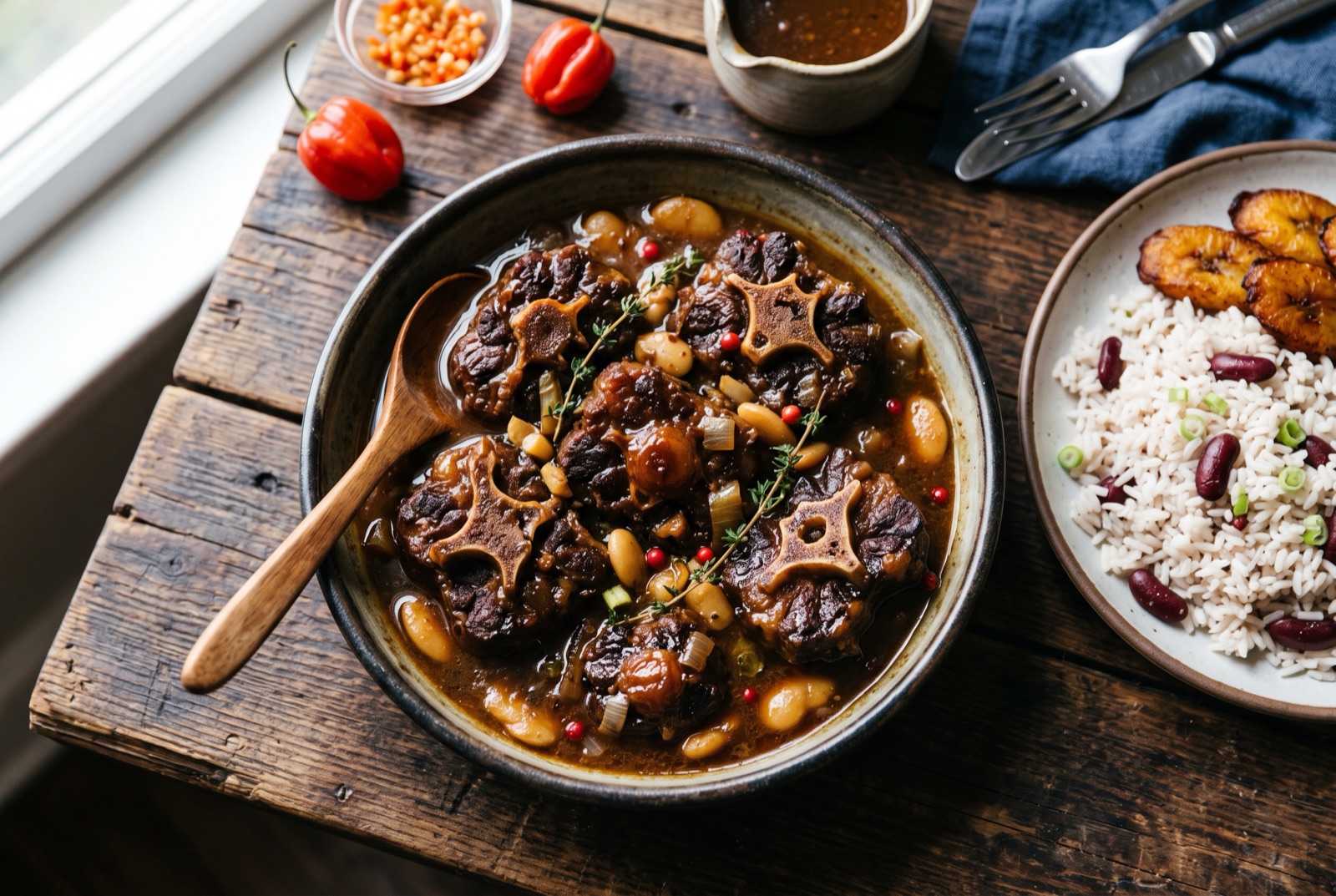
Keep exploring Jamaica.
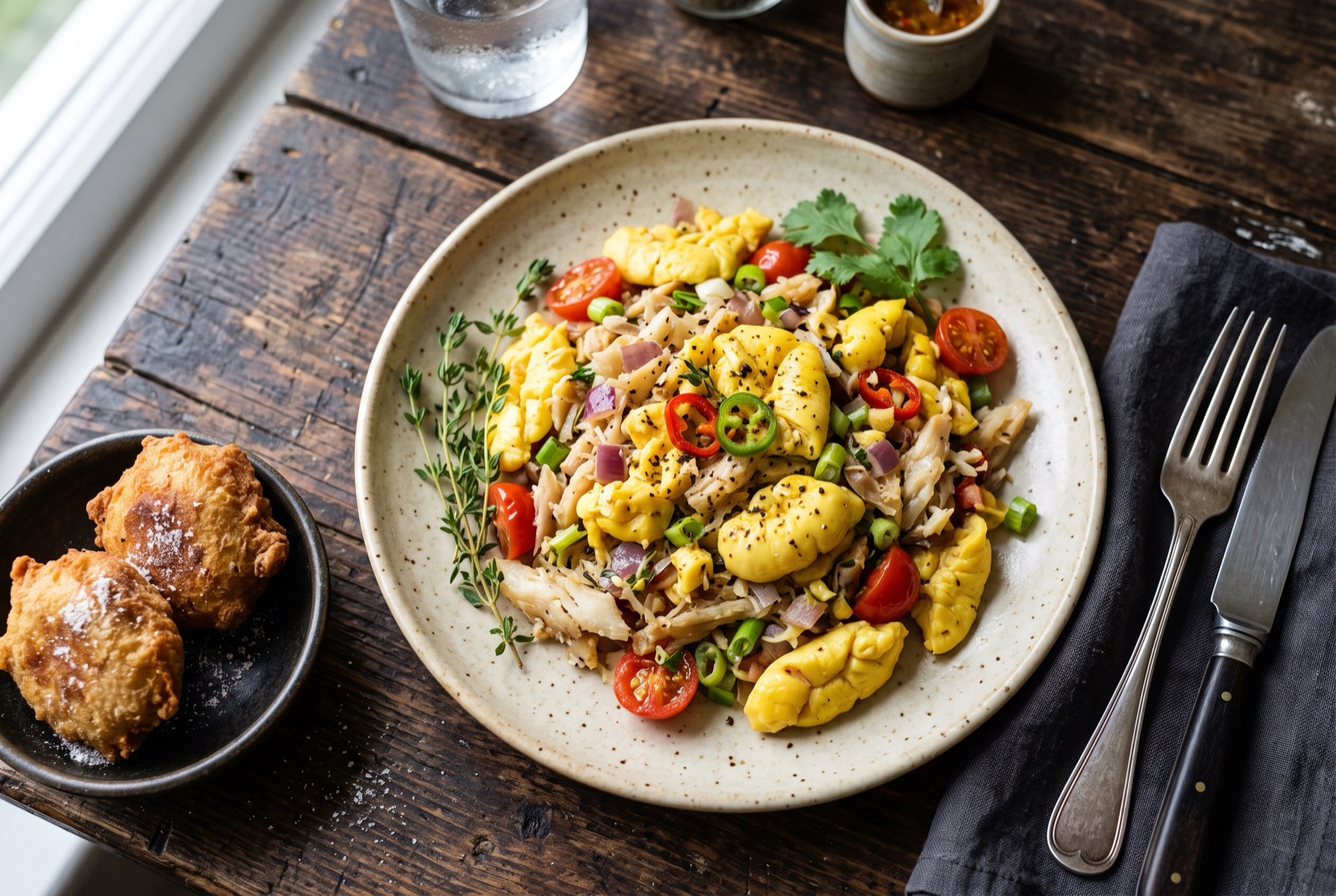
Jamaica has 9 more dishes in the atlas — Ackee and Saltfish and Brown Stew Oxtail, and 7 more.
All Jamaica recipes Chicken recipes Scotch bonnet recipes Allspice recipes maindairy freegluten freeRecipe by The DishRoute Kitchen · published August 20, 2026 · updated August 20, 2026