Rice and Peas.
Coconut Rice with Kidney Beans
Rice and peas · say it: rice and PEAZ
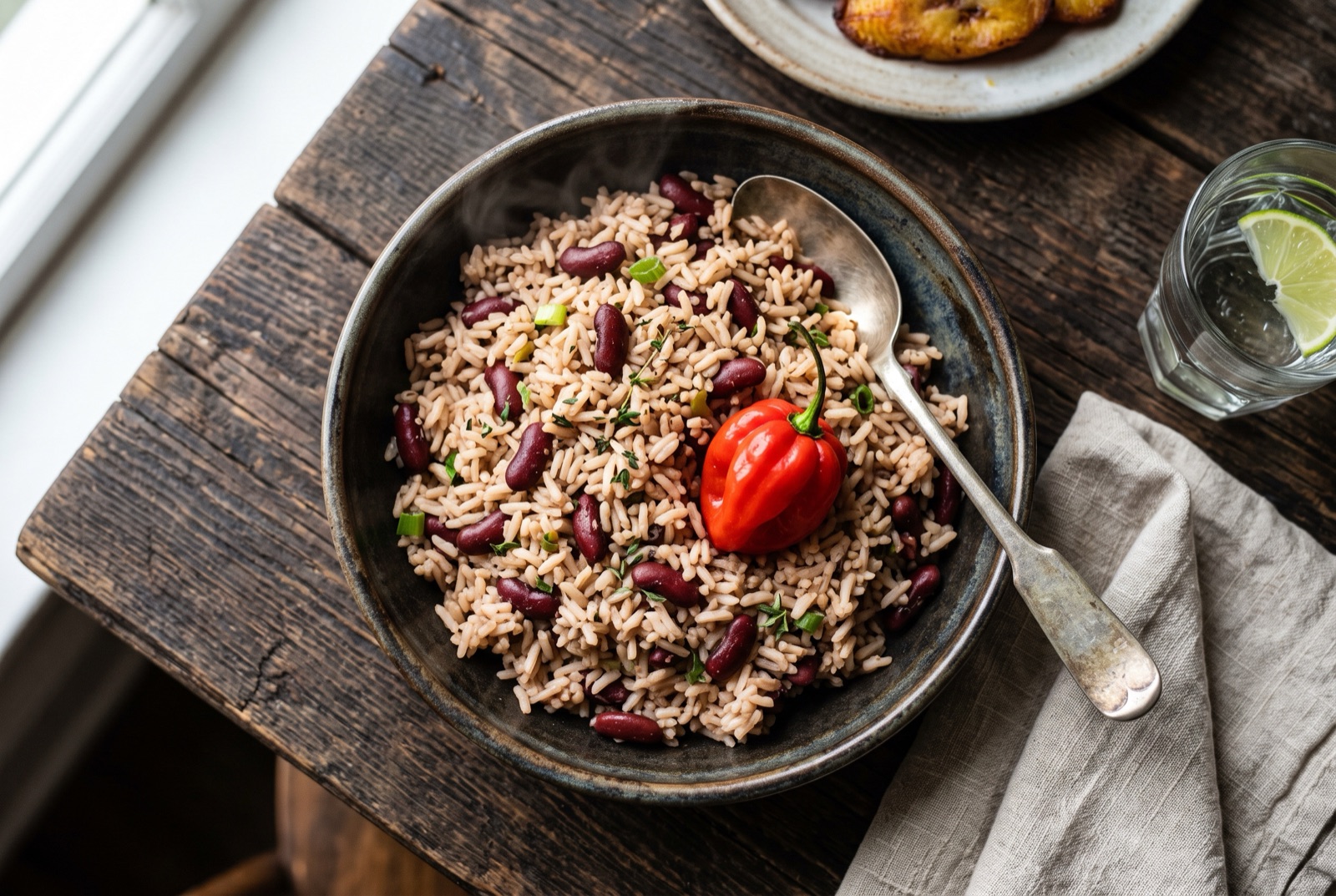
Rice and peas is white rice cooked in the pink-tinted liquid left from boiling red kidney beans, enriched with coconut milk and seasoned with thyme, scallion, garlic, pimento and a whole Scotch bonnet that goes in and comes back out. The result is rice that is faintly sweet from the coconut, savoury and herbal from the thyme, and stained a soft pinkish-brown by the bean liquid — nothing like plain steamed rice, and the fixed accompaniment to almost every Jamaican main. Despite the name there are no peas in it. It is easy, but it is not casual: Jamaicans have strong opinions about the water ratio, whether the beans should be dried or canned, and whether coconut milk from a tin counts. Get the liquid right and it is close to unimprovable.

- Gate
- Jamaica
- Prep
- 15 min
- Cook
- 1 hr 30 min
- Total time
- 9 hr 45 min incl. 8 hr rest
- Serves
- 6
- Status
- Easy
- Nutrition / serving · estimated
- Calories 410 kcal
- Protein 10 g
- Carbs 68 g
- Fat 11 g
- Fiber 6 g
- Sugar 2 g
- Sodium 480 mg
Why this recipe works.
- Cooks the rice in the reserved bean liquid rather than plain water, which is where the colour and half the flavour come from.
- A tested liquid ratio that accounts for the coconut milk, so the rice comes out separate rather than sticky.
- Steaming off the heat at the end, the step that makes the grains fluff instead of clumping.
- Works with dried or canned beans, with the timing and liquid adjusted for each.
Ingredients.
11 itemsFor the beans
For the pot
Equipment
- Heavy pot with a tight-fitting lid
- Measuring jug
- Fork for fluffing
Instructions.
Soak the beans
Cover the dried kidney beans with plenty of cold water and soak overnight, or at least 8 hours. They will roughly double in size and the skins will smooth out.
Boil the beans
Drain, cover with 1.2 litres of fresh water and boil hard for 10 minutes, then simmer 50 to 60 minutes until tender but not collapsing. Keep every drop of the dark pink cooking liquid.
Tip The initial hard boil is not optional — raw kidney beans contain a toxin that a proper boil destroys.
Build the pot liquid
Measure the bean liquid and top up or reduce so that the liquid plus the coconut milk together come to about 900 ml. Pour it into the pot with the beans, coconut milk, scallions, thyme, garlic, allspice, salt and black pepper.
Bring to the boil
Set the pot over medium-high heat and bring to a rolling boil, then taste the liquid. It should taste slightly saltier than you want the rice to be, since the grains will absorb it all.
Add rice and the pepper
Stir in the rinsed rice and the optional coconut oil, then lay the whole Scotch bonnet on top without pushing it under. Let it return to a boil and stir once, gently, around the pepper.
Simmer covered
Turn the heat to the lowest setting, cover tightly, and cook 22 to 25 minutes without lifting the lid or stirring. The rice is ready when small steam craters have formed on the surface and no liquid remains at the bottom.
Steam off the heat
Slide the pot off the burner and leave it covered for 10 minutes. The residual steam finishes the grains and lets them firm up so they separate cleanly.
Fluff and serve
Lift out the Scotch bonnet, thyme stems and scallions, then fluff the rice with a fork from the edges inward. The grains should be separate and stained soft pink-brown, smelling of coconut and thyme.
Tips from our kitchen.
- Soak dried kidney beans overnight and cook them in plenty of water — then save that dark pink liquid. It is the reason the rice turns the right colour.
- Measure the total liquid, coconut milk included, at roughly 1.5 times the volume of rice. More than that and you get porridge.
- Rinse the rice until the water runs almost clear so surface starch does not glue the grains together.
- Put the Scotch bonnet in whole and never stir over it. If it splits, fish it out immediately or the rice becomes seriously hot.
- Once the liquid is absorbed, take the pot off the heat and leave it covered for ten minutes before lifting the lid. Steam finishes the cooking.
- Fluff with a fork, never a spoon. A spoon crushes the grains against each other and turns the surface pasty.
Substitutions.
- Dried red kidney beans → 1 can (400 g) kidney beans, drained, plus 250 ml water
- You lose the coloured cooking liquid, so add a tablespoon of the can liquid back for colour and cut the total added water accordingly.
- Kidney beans → Gungo peas (pigeon peas), fresh, dried or canned
- Gungo rice and peas is the traditional Christmas version and slightly earthier. Fresh gungo peas cook much faster than dried kidney beans.
- Canned coconut milk → Fresh coconut milk, or 50 g creamed coconut dissolved in hot water
- Fresh milk from grated coconut is what older cooks use and is noticeably better. Creamed coconut blocks are a good pantry stand-in.
Variations.
- Gungo rice and peas
- Made with pigeon peas instead of kidney beans, traditional at Christmas when gungo is in season. Earthier and slightly less sweet.
- Rice and peas with salt pork
- A piece of salt beef or pork is boiled with the beans and left in the pot. Common in older household recipes and no longer vegetarian.
- Coconut rice without the peas
- Same pot minus the beans, for a plain coconut rice. Quicker, and a good side for fish where you want the coconut but not the heft.
Storage & reheating.
Keeps 3 days refrigerated. Cool it quickly and refrigerate within an hour: cooked rice left at room temperature can grow Bacillus cereus, which reheating does not neutralise. Reheat with a splash of water in a covered pan over low heat, or in the microwave with a damp piece of paper over the bowl, until steaming hot throughout. It freezes for 2 months in portions and reheats straight from frozen. Never reheat the same batch twice.
Serve with
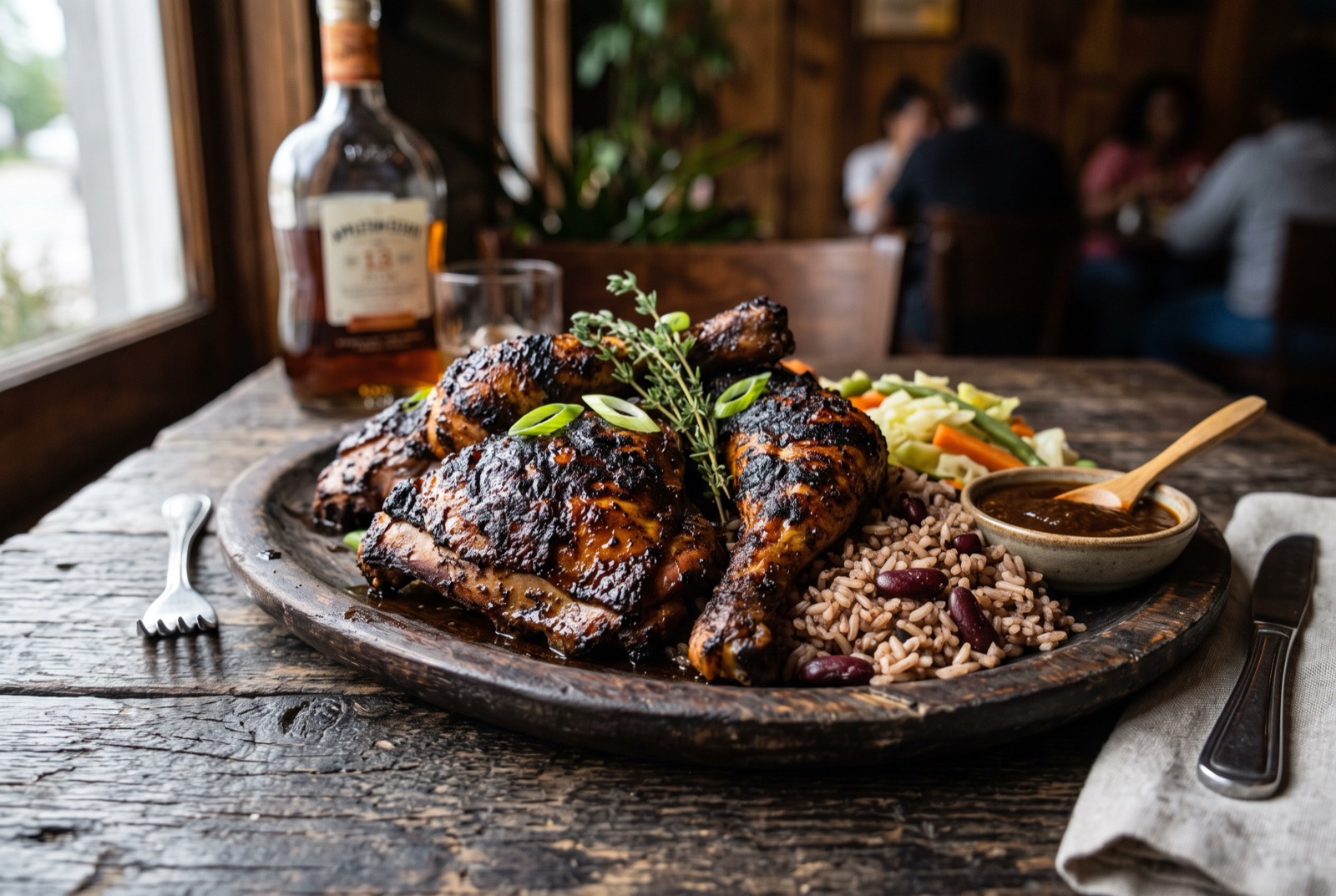
Curry goat, brown stew oxtail, jerk chicken or fried fish — whatever the main is, this is the rice under it.
The story behind Rice and Peas.
The name is the first thing to explain. In much of the Caribbean "peas" means beans, and in Jamaica the dish is usually made with red kidney beans, called red peas locally. Gungo peas — pigeon peas — are the other traditional choice, and gungo rice and peas is what appears on many tables at Christmas, when the crop is in season. Trinidad, Barbados and the rest of the region all have versions; Jamaica's is distinguished by the coconut milk, which many other islands leave out.
The dish is West African in structure. Cooking rice in a single pot with beans and a fat is a pattern that runs from Senegal to Ghana, and it crossed the Atlantic with enslaved Africans, becoming Hoppin' John in the Carolinas, moros y cristianos in Cuba, and rice and peas in Jamaica. What each place added was local: in Jamaica, coconut, thyme and pimento. Coconut palms were planted widely across the island, and the milk pressed from grated fresh coconut — still preferred by older cooks over the tin — gives the rice its richness and a faint sweetness that balances a salty stew.
It belongs above all to Sunday dinner, the week's main event, where it sits beside oxtail, curry goat, brown stew chicken or fried fish. Nobody serves the Sunday meat with plain rice. The Scotch bonnet in the pot is a small piece of technique worth understanding: whole and unbroken, it gives up its floral aroma into the steam without releasing much capsaicin, which is why the rice smells of pepper but does not burn. Cooks watch it and lift it out at the end, and the standard household warning to anyone stirring the pot is not to burst it.
Questions, answered.
Why is it called rice and peas when there are no peas?
In Jamaican and wider Caribbean usage, "peas" means beans. The dish is normally made with red kidney beans, known locally as red peas, or with gungo peas, which are pigeon peas. Green garden peas never appear in it. The naming reflects British colonial-era vocabulary that stayed in use in the Caribbean long after it shifted in Britain.
What is the right liquid to rice ratio?
About 1.5 cups of total liquid for every 1 cup of long-grain rice, counting the coconut milk and the bean cooking water together. Jamaican rice and peas is meant to be fluffy and separate, not creamy, so extra liquid is the most common mistake. Measure it rather than eyeballing, since the coconut milk makes the pot look drier than it is.
Do I have to use dried beans?
No, but you gain something by doing it. Dried kidney beans give you their dark pink cooking liquid, which is what colours the rice and adds body. If you use canned beans, keep a tablespoon or two of the can liquid for colour and reduce the added water to match. Cooking dried beans takes about an hour and can be done days in advance.
Will the whole Scotch bonnet make the rice hot?
Not if it stays intact. Left whole and unpierced, the pepper contributes its distinctive fruity aroma to the steam while releasing very little capsaicin. Remove it before serving. If it bursts during cooking the rice becomes genuinely spicy, which is why the standard instruction in Jamaican kitchens is to never stir the pot in a way that might break it.
Why is my rice sticky or mushy?
Usually too much liquid, but stirring during cooking does it too. Once the pot is covered and simmering, leave it alone — stirring releases starch and breaks the grains. Rinsing the rice first removes surface starch, and resting the covered pot off the heat for ten minutes at the end lets the grains firm up before you fluff them with a fork.
You might also like.
All recipes →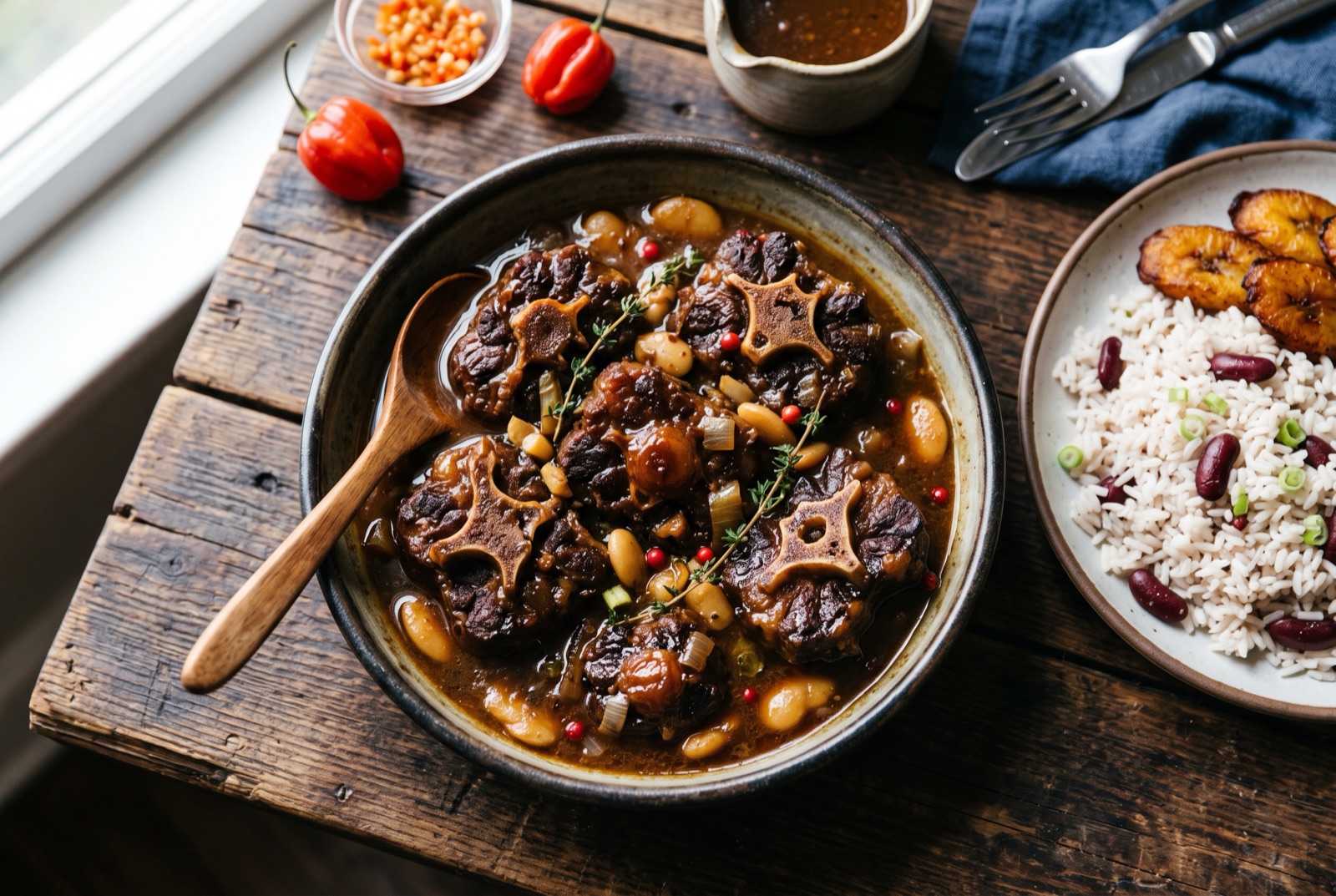
Keep exploring Jamaica.
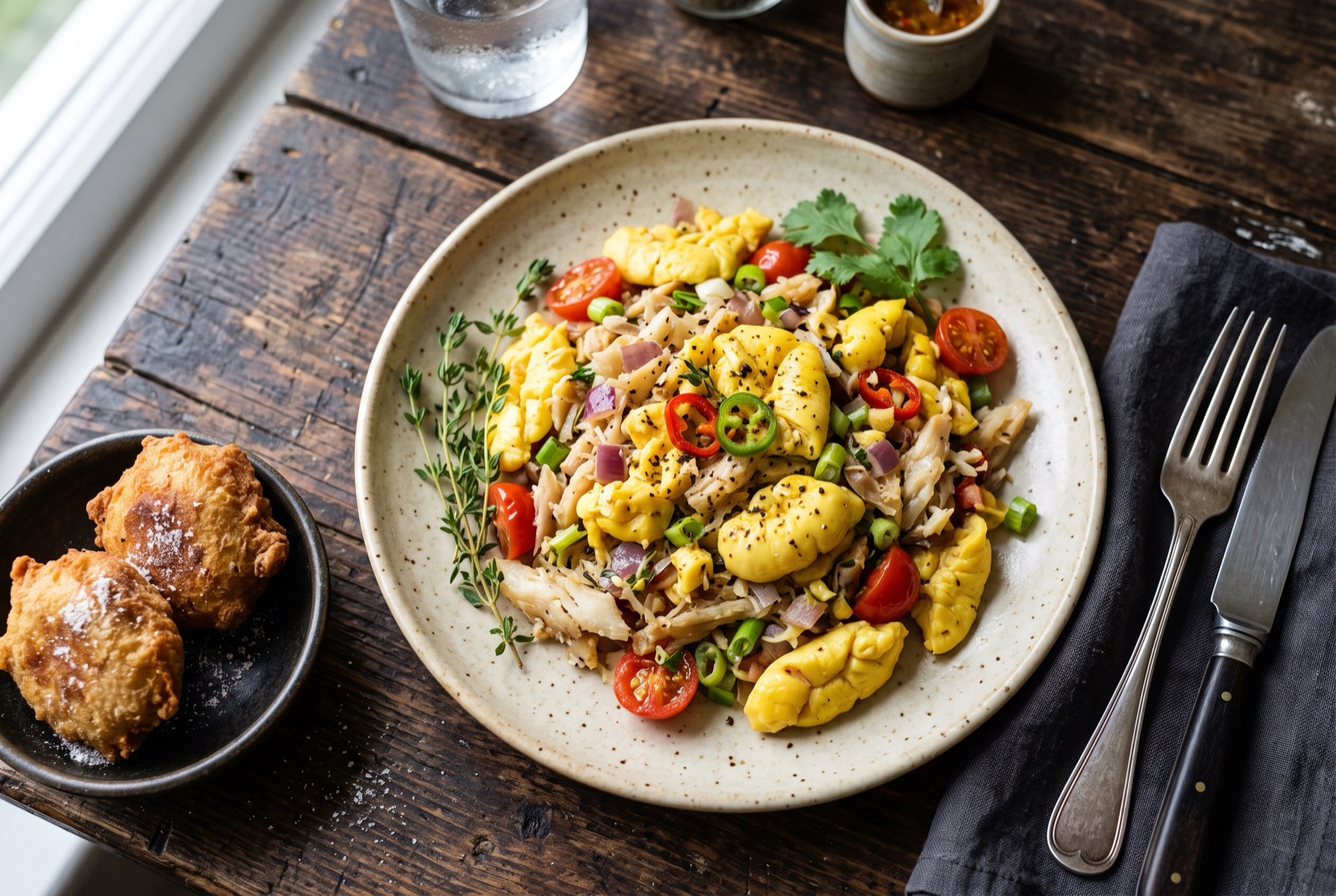
Jamaica has 9 more dishes in the atlas — Ackee and Saltfish and Brown Stew Oxtail, and 7 more.
All Jamaica recipes Rice recipes Coconut milk recipes Thyme recipes sidevegetarianvegandairy freegluten freenut freeRecipe by The DishRoute Kitchen · published August 20, 2026 · updated August 20, 2026