Kenyan Chapati.
Soft Layered Flatbread
Chapati · say it: chah-PAH-tee
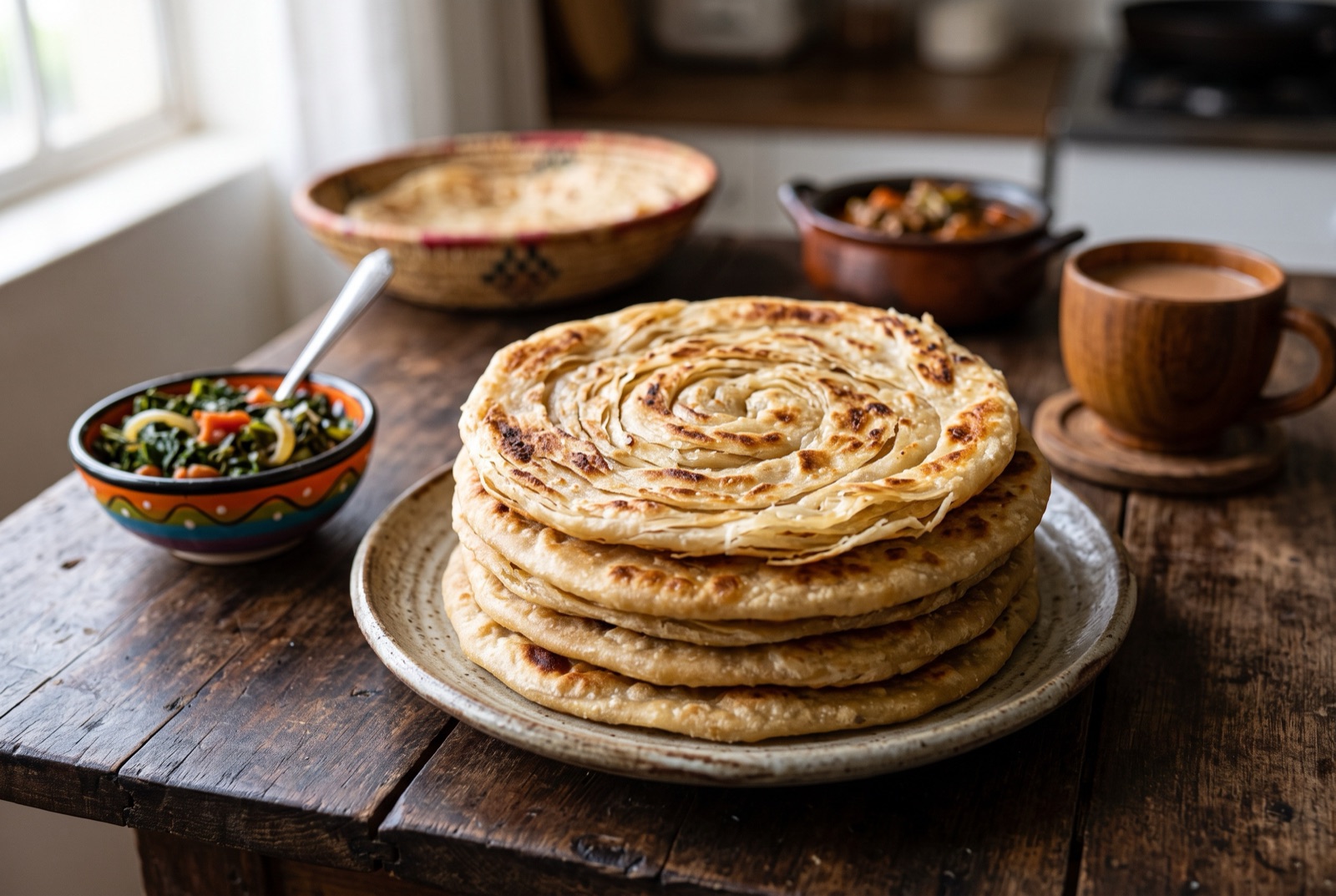
Kenyan chapati is a soft, faintly rich wheat flatbread that pulls apart into layers, and it is a very different animal from the thin Indian roti it descends from. The dough is enriched with oil, rolled out, brushed, coiled into a snail and rolled flat a second time, which builds the internal sheets that make it flake when torn. Fried on a dry pan with a little more oil, it comes out mottled brown, chewy at the edge and tender enough to fold without cracking. It is not a quick bread — expect an hour with rest time — but it is the item most likely to make a Kenyan lunch feel like an occasion.

- Gate
- Kenya
- Prep
- 40 min
- Cook
- 25 min
- Total time
- 1 hr 35 min incl. 30 min rest
- Serves
- 8
- Status
- Medium
- Nutrition / serving · estimated
- Calories 290 kcal
- Protein 6 g
- Carbs 45 g
- Fat 10 g
- Fiber 2 g
- Sodium 440 mg
Why this recipe works.
- The coil-and-reroll lamination is spelled out step by step, which is the whole difference between Kenyan and Indian chapati.
- Uses a soft, wetter dough and a long rest, the two things that keep the bread pliable hours later.
- Explains the pan temperature by what you see rather than by a number on a dial.
- Makes eight, freezes well, and reheats without going leathery.
Ingredients.
6 itemsFor the dough
For shaping and frying
Equipment
- Rolling pin
- Heavy flat frying pan or tawa
- Mixing bowl
- Clean kitchen cloth
Instructions.
Mix a soft dough
Stir the flour, salt and sugar together, then work in the warm water and 3 tablespoons of oil until it comes together in a shaggy mass. Knead on a lightly floured surface for 8 minutes, until the dough is smooth, elastic and soft enough to take a fingerprint that slowly fills back in.
Tip It should feel tacky against the board but leave your palm clean. Add water a spoon at a time if it feels tight.
Rest the dough
Rub the ball with a little oil, cover the bowl with a cloth and leave it at room temperature for 30 minutes. Rested dough rolls thin without pulling back, so do not skip this.
Roll, oil and coil
Divide the dough into 8 pieces. Roll each into a thin round about 25 cm across, brush the whole surface with oil, dust lightly with flour, then roll it up into a tight rope and wind the rope into a flat spiral. Tuck the end underneath and press down gently.
Tip This spiral is the entire trick. A chapati rolled once and fried will taste fine but will not peel into layers.
Rest the coils
Cover the spirals and leave them 10 minutes. The oil firms slightly and the gluten relaxes again, which stops the layers from tearing when you flatten them.
Flatten and fry
Roll each coil out to a round roughly 20 cm across, pressing lightly from the centre outward. Cook on a hot dry pan for 40 seconds, until pale bubbles rise, flip, brush with oil, and cook each side again until dark brown spots appear and the bread puffs in patches.
Tip Press the puffed areas briefly with a folded cloth or spatula — it forces steam through the layers and helps them separate.
Stack and keep warm
Move each finished chapati to a plate and cover with a cloth while you cook the rest, so the stack steams itself soft. Serve warm, torn or folded, with stew or with tea.
Tips from our kitchen.
- Aim for a dough noticeably softer than a bread dough — tacky but not sticking to your palm. A stiff dough bakes into a stiff chapati.
- Rest the dough at least 30 minutes. Gluten that has not relaxed springs back while rolling and you will never get it thin.
- Brush oil generously before coiling, and dust with a little flour on top of it; the flour keeps the layers separate as they cook.
- Roll the coil out gently from the centre. Pressing hard squashes the spiral flat and welds the layers back together.
- The pan is ready when a flick of water skitters and evaporates in about two seconds. Too cool and the chapati dries out before it colours.
- Stack the cooked chapatis on a plate under a clean cloth as you go — trapped steam is what keeps them soft.
Substitutions.
- Plain white flour → Half wholemeal, half white
- Gives a nuttier, denser chapati closer to Indian roti. All wholemeal makes lamination difficult and the bread noticeably tougher.
- Vegetable oil → Melted ghee or the tinned vegetable shortening sold across Kenya
- Both give a richer bread and slightly more distinct layers. Ghee is not vegan and changes the aroma considerably, in a good way.
- Warm water → Warm water with 3 tbsp milk, or hot water straight from the kettle
- Milk softens the crumb. Hot water partly cooks the starch and makes the dough easier to roll thin — a widely used Kenyan trick.
Variations.
- Chapati mbata
- The plain, unlaminated version — rolled once and fried flat. Faster, firmer, and what gets made when there is no time for coiling.
- Sweet chapati
- Made with extra sugar and sometimes a pinch of cardamom, served with tea rather than stew, particularly at the coast.
- Chapo madondo
- Not a different bread but the classic street pairing: chapati folded around a stew of green grams or beans and eaten from the hand.
Storage & reheating.
Wrapped in a cloth and then a bag, chapatis stay soft at room temperature for a day and refrigerate for 4 days, though they stiffen in the cold. Reheat them 20 seconds a side in a dry pan until they soften and steam faintly — the microwave works for 15 seconds but makes them tough beyond that. They freeze very well: stack with baking paper between each, freeze flat, then reheat straight from frozen in a covered pan for about a minute a side. Uncooked rolled discs can also be frozen and fried without thawing.
Serve with
A green gram or bean stew, beef stew, or simply a mug of milky chai.
The story behind Kenyan Chapati.
Chapati entered Kenya with the workers, traders and clerks who arrived from British India during the construction of the Uganda Railway at the end of the nineteenth century, and it stayed. What happened afterwards is a good example of a borrowed food becoming completely local. Indian chapati is typically a thin, unenriched wholemeal disc cooked dry on a tawa. The Kenyan version uses white flour, a generous amount of oil, sometimes a little sugar, and the lamination step with the coil — none of which the original has — and the result is thicker, softer, richer and closer in spirit to a paratha.
In the food hierarchy it sits above ugali and rice as something special. Chapati is Sunday food, visitor food, Christmas food, and the thing children ask their mother to make; a household that cooks it on an ordinary Tuesday is either doing well or celebrating something. On the street it anchors one of Kenya's most reliable cheap meals, chapo madondo, in which a chapati is served with a stew of green grams or beans, folded and eaten by hand from a paper wrapper.
The technique is where cooks compete. Everyone agrees the dough should be soft and well rested, but the number of coils, whether to use hot or cold water, whether to add sugar, and whether the fat should be oil or the tinned vegetable shortening sold locally are all live arguments in Kenyan kitchens. The measurable goal is agreed on, though: a good chapati folds in half without cracking, shows visible layers when torn, and stays soft in a covered basket for hours. A chapati that has gone brittle by dinner was made wrong, whatever the method.
Questions, answered.
Why are my chapatis hard instead of soft?
Three usual culprits: the dough was too stiff, it was not rested long enough, or the pan was too cool so the bread dried out before it browned. Use enough water to make a soft, slightly tacky dough, give it a full 30 minutes covered, and cook on a properly hot pan where each side takes under a minute. Stacking them under a cloth as they come off is the final safeguard.
How do I get the layers to separate?
The coil is what does it. Roll the dough out thin, brush the whole surface with oil, dust lightly with flour, then roll it up into a rope and wind the rope into a spiral like a snail shell. Rest the coils, then roll each one out gently — the oil and flour keep the turns of the spiral from fusing, and they cook into sheets.
Can I make the dough in advance?
Yes. The dough keeps 2 days refrigerated in an oiled bag and is if anything easier to roll after a long rest. Let it come back to room temperature for 30 minutes before shaping, or it will resist and tear. You can also roll and coil the pieces ahead, then flatten and fry them when needed.
What is the difference between Kenyan and Indian chapati?
Kenyan chapati is made from white flour with a substantial amount of oil worked in and laminated by coiling, so it is thicker, softer, richer and layered. Indian chapati or roti is usually thin, unenriched wholemeal, cooked dry, and often puffed over an open flame. The Kenyan version is closer to a paratha in construction, despite keeping the older name.
Do I need a special pan?
No. A heavy cast-iron frying pan or any flat, thick-based pan works as well as a tawa. What matters is even heat and enough mass to stay hot when a cold disc of dough lands on it. Non-stick pans work but rarely give the same dark, mottled spotting.
You might also like.
All recipes →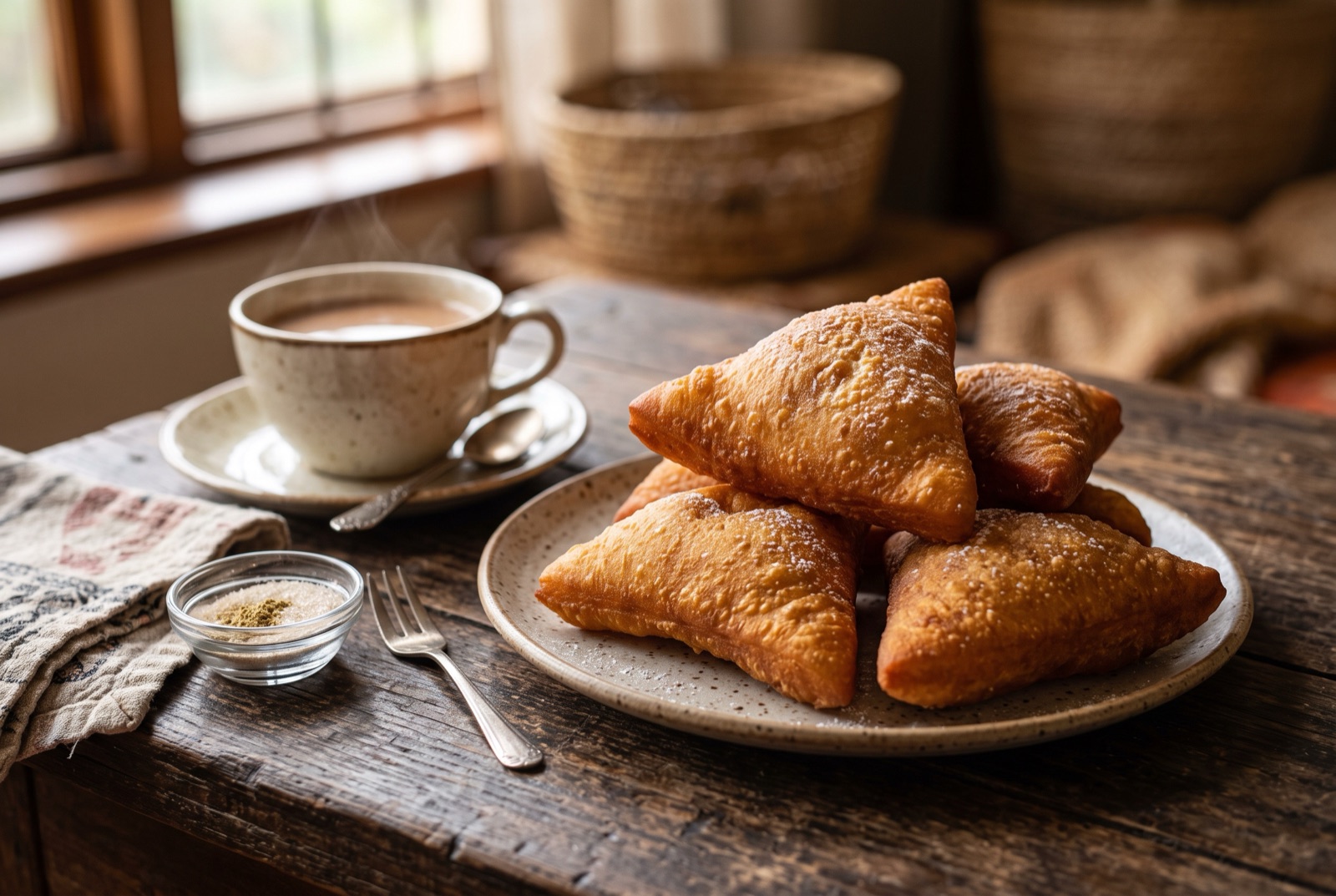
Keep exploring Kenya.
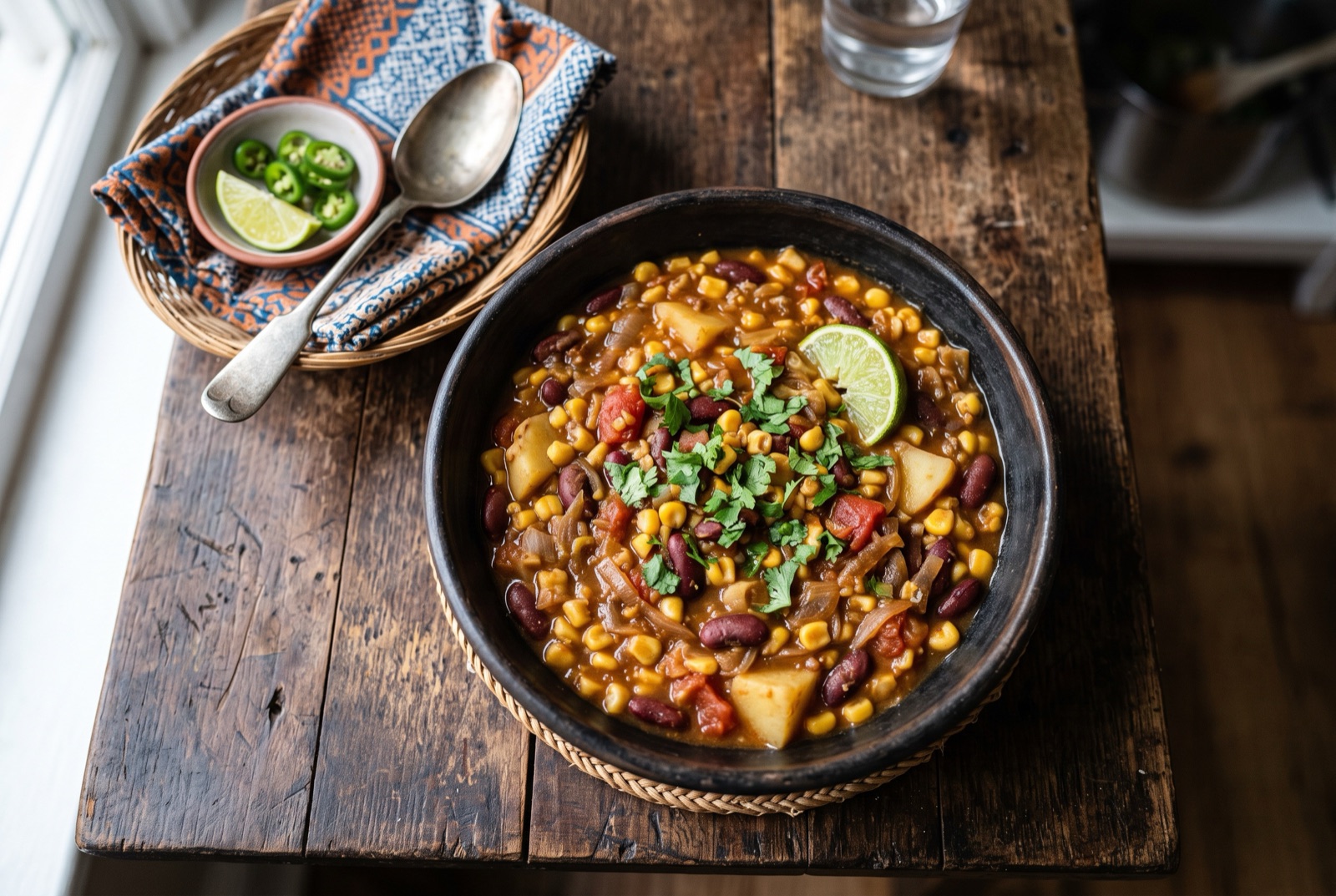
Kenya has 9 more dishes in the atlas — Githeri and Mandazi, and 7 more.
Recipe by The DishRoute Kitchen · published August 20, 2026 · updated August 20, 2026