Khobz Dar.
Algerian Semolina House Bread
خبز الدار · Khobz dar · say it: khobz DAAR
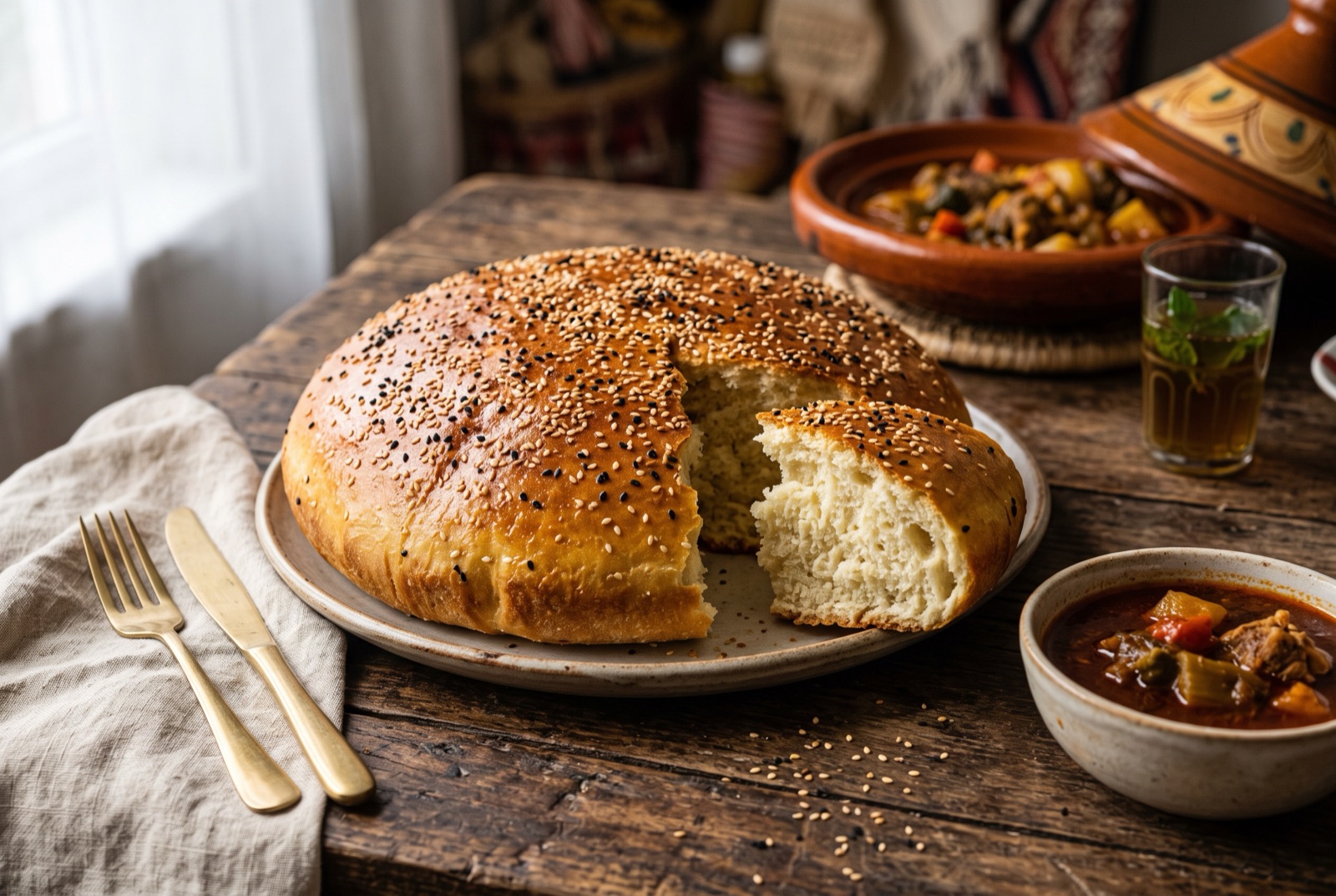
Khobz dar means house bread, and the name is doing real work: this is the loaf a household bakes for itself rather than the baguette it buys on the corner. Fine semolina gives it a pale gold crumb with a slight granular chew, milk and oil keep it soft for days, and the top comes out of the oven shiny and studded with sesame and nigella. It is faintly sweet, salty enough to eat alone, and structurally designed to be torn rather than sliced — the crumb is tight enough to hold sauce without collapsing. Make it the morning of a stew and there will be none left by evening.

- Gate
- Algeria
- Prep
- 25 min
- Cook
- 30 min
- Total time
- 2 hr 25 min incl. 1 hr 30 min rest
- Serves
- 8
- Status
- Easy
- Nutrition / serving · estimated
- Calories 330 kcal
- Protein 9 g
- Carbs 52 g
- Fat 10 g
- Fiber 3 g
- Sodium 460 mg
Why this recipe works.
- A semolina-and-flour blend rather than pure semolina, which gives the soft, tearable crumb this loaf is supposed to have.
- Milk and oil in the dough, so it stays soft on day two instead of going stale by the evening.
- Clear visual markers for both rises and for the bake, since semolina doughs behave differently from plain wheat ones.
- One bowl, no starter, no shaping skill needed — the loaf is pressed into a round rather than boule-shaped.
Ingredients.
11 itemsFor the dough
To finish
Equipment
- Large mixing bowl
- Round cake tin or baking tray, about 24 cm
- Wire cooling rack
- Pastry brush
Instructions.
Mix the dough
Whisk the semolina, flour, yeast, sugar and salt together in a large bowl. Pour in the warm milk and the oil, then add the water gradually, mixing until the dough comes together as a soft mass that is slightly tacky but leaves the sides of the bowl.
Tip Hold back the last 20 ml of water until you see how the semolina behaves. Some brands drink far more than others.
Knead
Turn the dough out and knead for 10 minutes, until it goes from rough and shaggy to smooth and elastic and a small piece stretched between your fingers turns translucent before it tears. Shape into a ball, oil the bowl and return it.
First rise
Cover and leave in a warm spot for 60 minutes, until the dough has doubled and domed and a finger pressed 1 cm into the surface leaves a dent that fills back only slowly.
Shape and second rise
Knock the dough back gently, shape it into a round and press it into an oiled 24 cm tin or onto a lined tray, flattening it to about 3 cm deep. Cover and prove for a further 30 minutes, until visibly puffed and springy to a light touch. Heat the oven to 200°C.
Glaze and seed
Brush the top generously with the beaten egg and milk, scatter over the sesame and nigella seeds, then press them lightly into the surface with a flat palm so they stay put. Prick the loaf here and there with a fork if you want a flatter, more traditional top.
Bake
Bake for 28–30 minutes, until the crust is a deep even gold, the seeds have toasted a shade darker, and the loaf sounds hollow when tapped on the underside. If the top colours fast, tent it loosely with foil for the last ten minutes.
Cool before tearing
Turn the loaf out onto a wire rack and let it cool for at least 20 minutes. Cutting into it hot compresses the crumb and lets all the steam escape at once; twenty minutes later it tears into soft, springy pieces.
Tips from our kitchen.
- Use fine semolina, not coarse. Coarse grains never fully soften in a short bake and leave the crumb gritty.
- Knead until the dough passes a rough windowpane test — stretched thin between your fingers it should go translucent before tearing. Semolina needs longer kneading than plain flour to get there.
- Let the dough rise until doubled and visibly domed, not just puffy. Under-proved semolina bread bakes dense and heavy.
- Press the seeds in with your palm after glazing. Scattered on loose they fall off the moment someone tears a piece.
- Bake until the loaf sounds hollow when tapped underneath and the crust is deep gold, not pale — an underbaked semolina loaf goes gummy as it cools.
- Cool on a rack, not in the tin. Steam trapped underneath softens the base into something damp and unpleasant.
Substitutions.
- Fine semolina → Equal weight of strong white bread flour
- You will get a perfectly good soft loaf, but it will taste like a plain white bread rather than khobz dar — the semolina is what gives the colour, the slight sweetness and the granular chew.
- Milk → Warm water, or any plant milk
- The loaf will be very slightly less tender and will stale a day sooner. Use plant milk and oil instead of any butter, and glaze with sweetened plant milk, and the bread is fully vegan.
- Nigella seeds → Extra sesame, or a mix of sesame and poppy seeds
- Nothing else tastes like nigella, so this is a change rather than a replacement. It is sold cheaply in Middle Eastern shops as sanoudj, kalonji or black seed.
Variations.
- Matlou
- The same enriched dough, divided into two flatter rounds and cooked covered in a dry pan on the hob for about 10 minutes a side. Softer, paler and the version made when the oven is occupied.
- Khobz dar with anise
- A teaspoon of crushed aniseed worked into the dough, which is common around Ramadan and gives the loaf a warm liquorice note under the sesame.
- Small rolls
- The dough divided into eight balls and baked for 18 minutes. Useful for a table where each person wants their own, and the higher crust-to-crumb ratio suits mopping thick sauces.
Storage & reheating.
Keeps three days wrapped in a cloth at room temperature and stays notably softer than a lean loaf thanks to the milk and oil. Do not refrigerate it; the cold accelerates staling and turns the crumb chalky. Slice and freeze for up to three months, toasting straight from frozen. Day-three bread is best torn into a stew or dried out and used as breadcrumbs rather than eaten plain.
Serve with
Any Algerian stew with sauce worth chasing — mtewem, tadjine zitoun — or simply butter and honey at breakfast.
The story behind Khobz Dar.
Algeria eats two kinds of bread and has strong feelings about both. The baguette arrived with French colonial rule, was thoroughly adopted, and is now bought fresh daily from bakeries in every town. Khobz dar is the counterweight: a round semolina loaf made at home, associated with holidays, Ramadan and the days when a family cooks something worth mopping up. Older relatives will point out that the round loaf came first and the baguette is the newcomer, which is true, though nobody actually gives up either.
The country keeps a whole family of home breads alongside it. Khobz el koucha is the general term for oven bread; matlou is a thicker, softer round cooked in a pan on the hob; kesra rakhsissa is unleavened and semolina-heavy; and khobz tajine takes its name from the flat clay plate it is baked on rather than from any stew. Which one a household makes depends on region, on what the bread is for, and often on whether the oven is already on for something else. The variety exists because bread here is not an accompaniment but a utensil — Algerian meals are eaten from a shared platter with the right hand, and a torn piece of bread does the work of a fork.
The sesame and nigella on top are not decoration. Nigella seeds, called sanoudj, carry a faint bitterness and a smell close to oregano that plays against the sweetness of the crumb, and sesame toasts in the oven heat and adds a nutty crunch to the first bite of every piece. Between them they mark the loaf visually as home-baked, which matters in a country where every corner shop sells bread. Baking it fills a house with a smell that people who grew up with it describe in terms of holidays rather than of bread.
Questions, answered.
Why is my khobz dar dense and heavy?
Almost always under-proving or under-kneading. Semolina develops gluten more slowly than white flour, so the dough needs a good ten minutes of kneading, and it needs to genuinely double in size rather than merely puff. In a cool kitchen the first rise can take ninety minutes instead of an hour — go by the look of the dough, not the clock.
Can I make it without an oven?
Yes, and that version has its own name. Shape the dough into two flatter rounds and cook them in a heavy dry pan over low heat, covered, for about 10 minutes a side until browned in patches and firm at the edges. The result is called matlou and is softer, paler and slightly chewier than the baked loaf.
What are the black seeds on top?
Nigella, known in Algeria as sanoudj and sold elsewhere as kalonji or black seed. They are not onion seeds despite the common label, and they taste faintly bitter and herbal, somewhere near oregano. Together with sesame they are the standard topping that identifies a loaf as home-baked.
Can I make the dough the night before?
Yes. After the first knead, cover and refrigerate the dough overnight, then let it come back to room temperature for about an hour before shaping. The slow cold fermentation improves the flavour noticeably and spreads the work across two days, which helps if you are baking for a holiday table.
How is this different from Moroccan khobz?
They are close relatives, both round semolina home loaves used as an eating utensil, and the differences are matters of degree rather than kind. Algerian khobz dar is typically enriched with milk and oil, giving a softer, slightly sweeter crumb, and is usually topped with sesame and nigella. Moroccan khobz is often leaner and flatter. Regional and household versions overlap enough that no clean line can be drawn.
You might also like.
All recipes →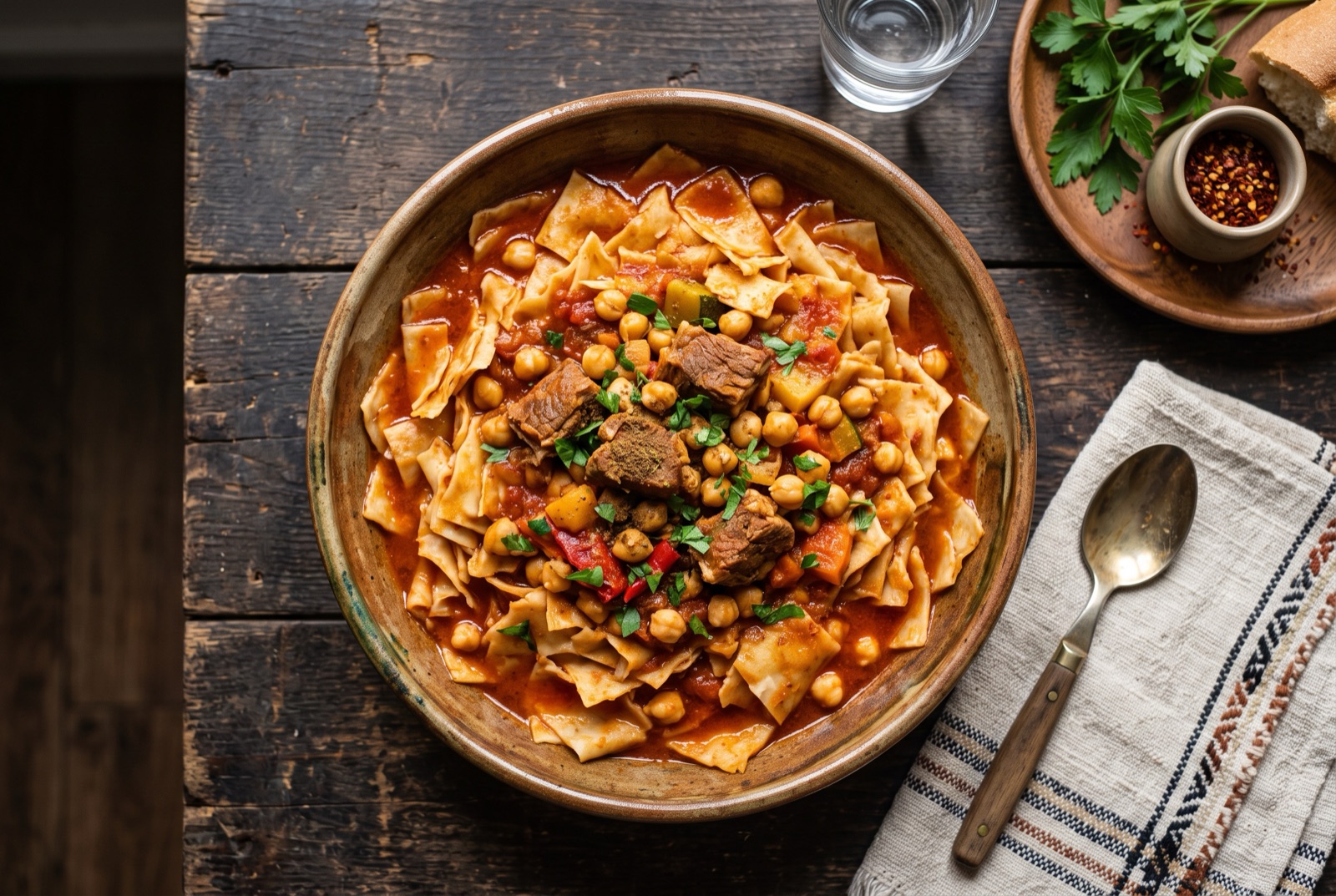
Keep exploring Algeria.
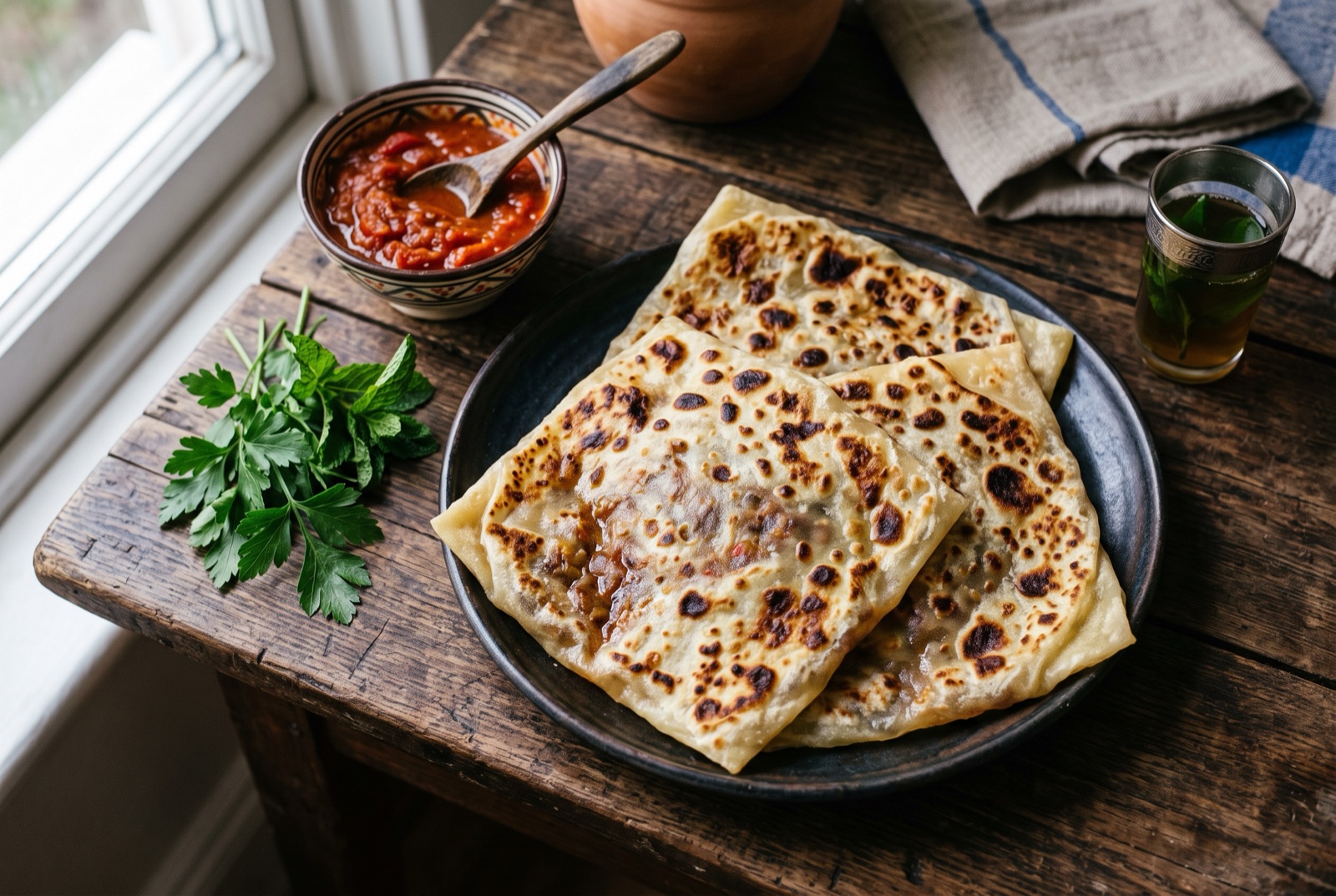
Algeria has 9 more dishes in the atlas — Algerian Chorba Frik and Bourek, and 7 more.
Recipe by The DishRoute Kitchen · published August 20, 2026 · updated August 20, 2026