Kjøttkaker.
Norwegian Meat Patties in Brown Gravy
Kjøttkaker med brun saus · say it: SHUHT-kah-kerr
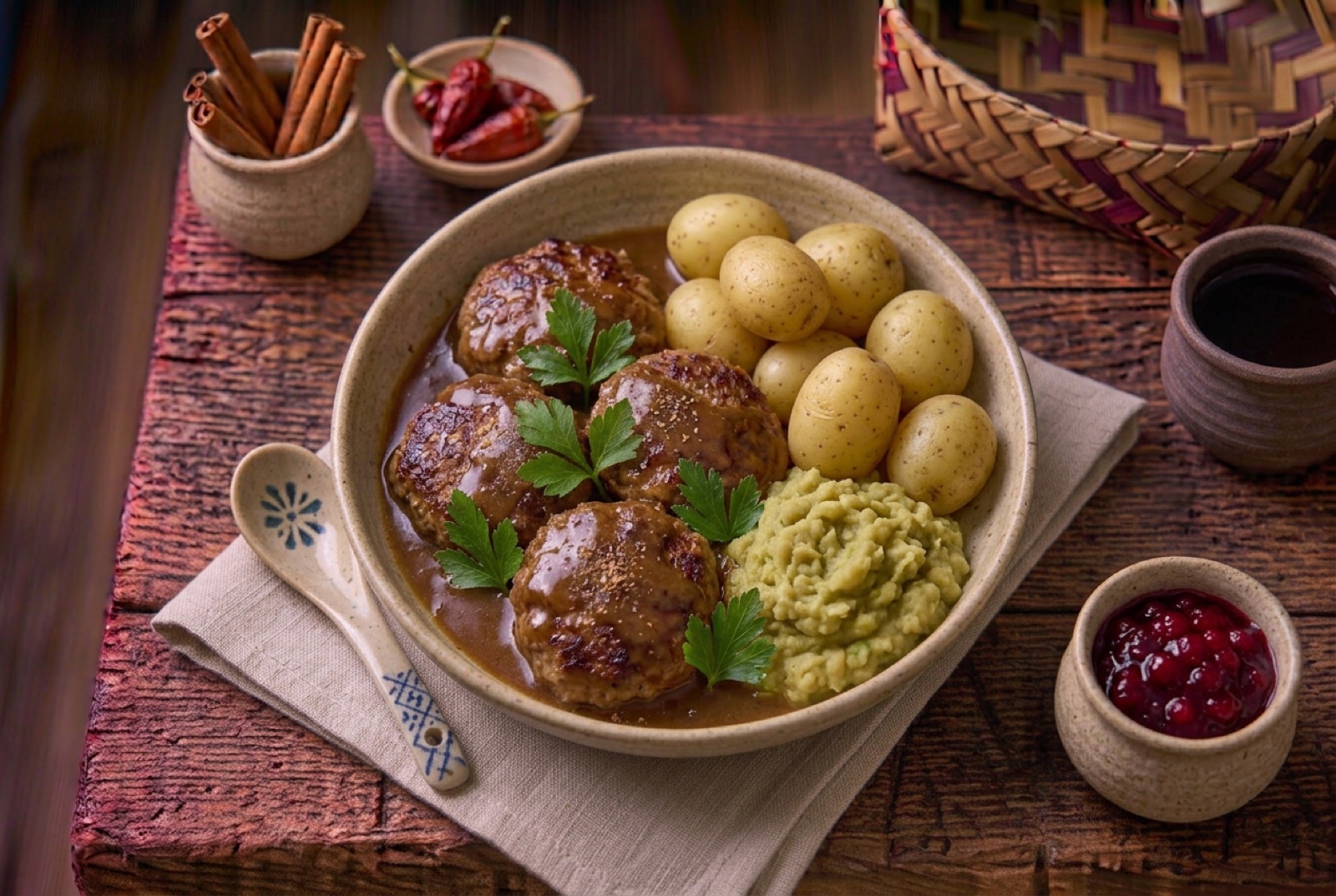
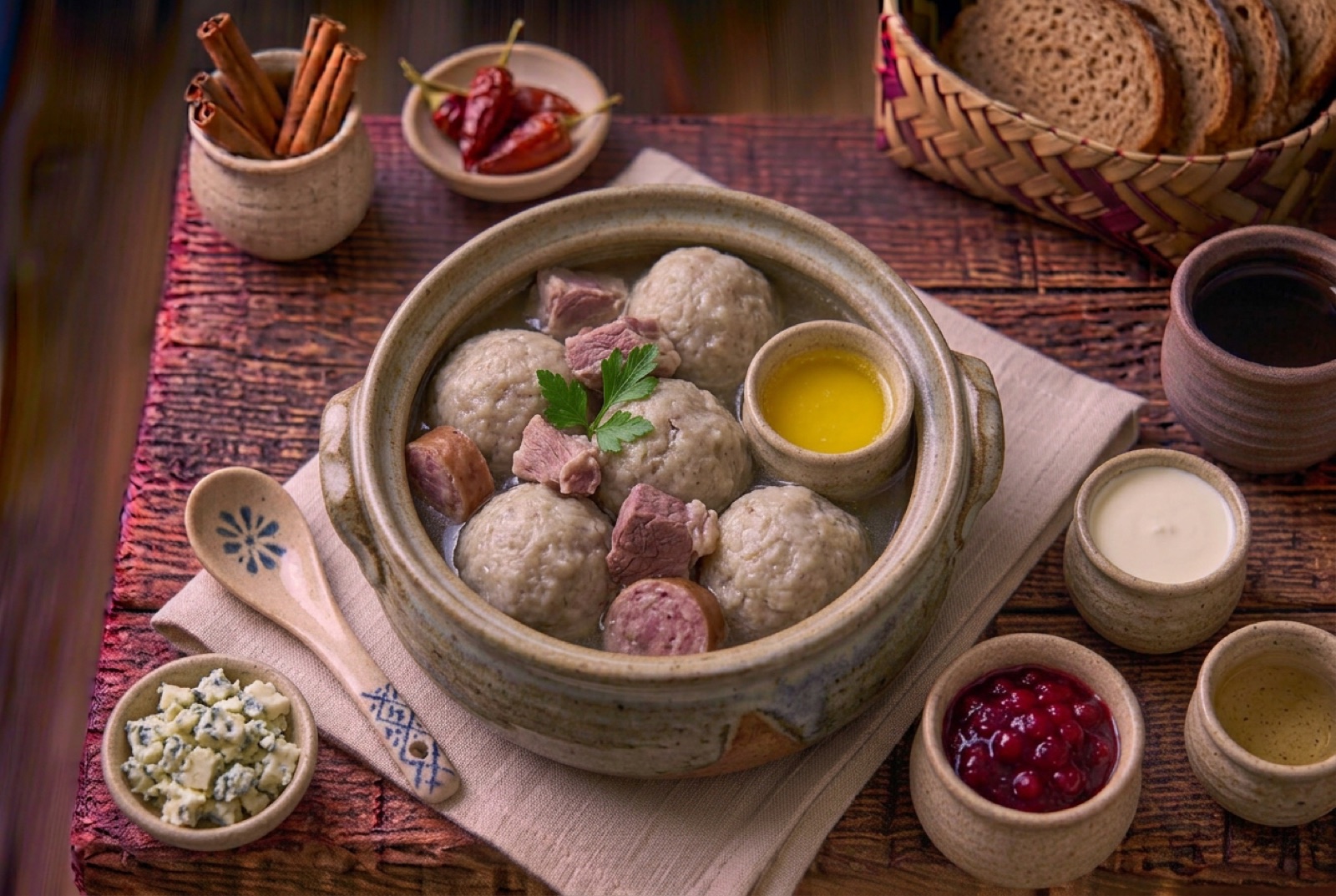
Kjøttkaker are large, coarse meat patties — think three or four to a plate, not fifteen — made from beef worked with salt until the mixture turns sticky, seasoned with nutmeg and ground ginger, browned in butter and then finished by simmering in brun saus, a proper brown gravy built on the fond they leave behind. The texture is the point: dense and slightly springy rather than crumbly, holding together under a fork the way a good sausage does. The flavour is gentle and warmly spiced, so the plate depends on its companions — floury boiled potatoes, ertestuing made from soaked yellow or green peas, and a spoonful of sharp lingonberry jam that cuts straight through the gravy.

- Gate
- Norway
- Prep
- 25 min
- Cook
- 40 min
- Total time
- 1 hr 25 min incl. 20 min rest
- Serves
- 4
- Status
- Medium
- Nutrition / serving · estimated
- Calories 720 kcal
- Protein 44 g
- Carbs 55 g
- Fat 36 g
- Fiber 9 g
- Sodium 1250 mg
Why this recipe works.
- Explains the salt-first mixing step that makes the patties bind — the single thing that separates a proper kjøttkake from a crumbling burger.
- Builds the gravy in the same pan as the meat, so the browned fond becomes the backbone of the sauce instead of being washed away.
- Gives the classic nutmeg-and-ginger seasoning in quantities that read as Norwegian rather than as generic meatballs.
- Includes the ertestuing and lingonberry that make the plate make sense, not just the patties on their own.
Ingredients.
17 itemsFor the patties
For the brown gravy
To serve
Equipment
- Large heavy frying pan or sauté pan
- Mixing bowl
- Wooden spoon or stand mixer with paddle
Instructions.
Work the salt into the meat
Put 700 g of cold ground beef in a bowl with the salt and beat it hard with a wooden spoon for a full minute, until the crumbly mince turns into a single sticky mass that clings to the spoon and pulls away from the bowl in one piece.
Tip This step does the binding. Skip it and the patties will crack apart in the pan no matter how much starch you add.
Add spices and milk
Beat in the grated onion, potato starch, nutmeg, ginger and pepper. Then add the cold milk in four additions, beating each one in completely before the next — the mixture should stay thick and glossy, never sloppy.
Taste-test and chill
Fry a teaspoon of the mixture in a little butter and taste it for salt and nutmeg, correcting the bowl if needed. Cover and chill for 20 minutes so the fat firms up and the patties hold their shape.
Shape and brown
With wet hands, shape the mixture into 12 patties about 8 cm across and 2 cm thick. Melt the butter in a large pan over medium-high heat and fry them in batches for 3 minutes a side, until a deep brown crust forms and the pan base is coated in dark sticky fond. Set them aside — they are not cooked through yet.
Tip Do not crowd the pan. Patties packed together steam instead of browning, and no fond means no gravy.
Build the brown gravy
Lower the heat, add the second lot of butter to the same pan and stir in the flour. Cook it, stirring constantly, for 3–4 minutes until the roux turns the colour of peanut butter and smells toasted rather than floury.
Tip Watch it closely from minute three — the shift from nutty to burnt takes seconds.
Whisk in the stock
Pour in the hot stock a ladle at a time, whisking hard after each addition so the fond lifts off the pan base and the sauce stays smooth. Stir in the syrup, then season with salt and pepper — the gravy should be glossy and just thick enough to coat a spoon.
Simmer the patties in the gravy
Return the patties and any resting juices to the pan, cover, and simmer very gently for 15–20 minutes, turning them once. They are ready when a patty pressed with a fork springs back firmly and the gravy has darkened and reduced slightly around them.
Serve the full plate
Spoon three patties per person onto plates with boiled potatoes and buttered crushed peas, pour over plenty of gravy, and add a spoonful of lingonberry jam to the side of each plate rather than on top.
Tips from our kitchen.
- Mix the salt into the raw meat first and work it for a full minute before anything else goes in — the mixture visibly changes from crumbly to glossy and tacky, and that is the binding happening.
- Keep everything cold. A warm mixture releases fat during frying and the patties turn dry and grainy.
- Add the milk in three or four additions, beating each one in fully. Poured in at once it will not absorb and the mixture goes soupy.
- Fry a teaspoon of the mixture and taste it before shaping. Raw meat mixture tells you nothing about salt level, and this is the only chance to fix it.
- Shape the patties around 8 cm wide and 2 cm thick, wetting your hands between each one. Norwegian kjøttkaker are big; small ones dry out in the gravy.
- Let the gravy bubble the patties for at least 15 minutes. They are not fully cooked when browned, and the simmer is what makes them tender and lets them take on sauce flavour.
Substitutions.
- Potato starch (potetmel) → Cornstarch, or 3 tbsp fine dried breadcrumbs
- Potato starch gives the springiest bind and is what Norwegian recipes call for. Breadcrumbs give a softer, more meatloaf-like patty — perfectly good, just less traditional.
- All beef → Two-thirds beef, one-third pork
- A common household shortcut that makes the patties juicier and more forgiving. It moves them a step toward Danish frikadeller in texture.
- Lingonberry jam → Cranberry sauce, or redcurrant jelly loosened with a squeeze of lemon
- You need something sharp and red beside the gravy; lingonberry is tarter and less sweet than cranberry, so cut the sugar if you swap.
Variations.
- Kjøttkaker i kålstuing
- Served in a creamy stewed-cabbage sauce instead of brown gravy — cabbage simmered in milk-based white sauce with nutmeg. A common west-coast version and arguably better with pork in the mix.
- Medisterkaker
- The Christmas cousin, made from coarsely ground fatty pork (medisterdeig) with the same nutmeg-and-ginger seasoning, fried and served with sauerkraut and gravy.
- Kjøttkaker with mushroom gravy
- Fry sliced mushrooms in the pan before building the roux so they collapse and brown, then continue with the gravy as written.
Storage & reheating.
Cooked kjøttkaker keep three days in the fridge submerged in their gravy, which stops them drying out, and reheat well in a covered pan over low heat with a splash of water stirred through the sauce. They freeze cleanly for three months either raw and shaped, separated by baking paper, or cooked in gravy — cooked and frozen in sauce is the more useful option, since it thaws into a complete dinner. Do not microwave them uncovered; they toughen fast.
Serve with
Boiled floury potatoes, ertestuing (mushy peas), lingonberry jam, and pickled cucumber if you have it.
The story behind Kjøttkaker.
Norwegians are quietly firm that kjøttkaker are not Swedish meatballs. The two are relatives but not twins: Swedish köttbullar are small, round, often mixed with pork and cream, and served in a pale, creamy sauce. Kjøttkaker are big, flattened, usually all beef, and belong to a dark roux-based gravy. The difference is not just size — it changes what the dish is for. Köttbullar can be a buffet item you eat ten of; kjøttkaker are dinner, three per adult, with potatoes.
The dish is a product of the nineteenth-century arrival of the meat grinder in ordinary kitchens, which made it possible to turn cheap, tough cuts into something tender without hours of stewing. That is the same economic logic behind meatloaf in America and frikadeller in Denmark, and Norwegian cookbooks of the period treat it as household economy rather than tradition. The nutmeg and ginger point somewhere else, though: warm baking spices used in savoury cooking are a northern European habit inherited from the medieval spice trade, and in Norway they arrived through the same Hanseatic ports that handled dried cod going out.
Today kjøttkaker sit in the category Norwegians call husmannskost — plain farmhouse cooking — and they are one of the most reliably nostalgic things you can put in front of a Norwegian. They are also, in the honest version of the story, most often eaten out of a tin or a chilled packet from the supermarket, reheated in ready-made gravy on a Tuesday. Home-made ones are better by an obvious margin, mostly because a shop patty is over-emulsified and bouncy while a hand-mixed one keeps some of the grain of the meat.
Questions, answered.
What is the difference between kjøttkaker and Swedish meatballs?
Kjøttkaker are much larger — roughly the size of a palm and slightly flattened — usually made from beef alone, coarsely textured, and simmered in a dark brown gravy. Swedish köttbullar are small and round, often mix beef with pork, contain cream and soaked bread, and come in a pale cream sauce. Kjøttkaker are served as a main course with potatoes, not as a buffet dish.
Why did my patties fall apart in the pan?
Almost always because the salt was not worked into the raw meat long enough. Salt dissolves the muscle proteins that make the mixture sticky and self-binding; if you add it with everything else and mix briefly, nothing binds. Work salt into the meat alone for a minute until the mass turns glossy and clings to the bowl, then add the rest. Mixture that is too warm or too wet also breaks apart.
Can I bake kjøttkaker instead of frying them?
You can bake them at 200°C for about 20 minutes, but you lose the browned fond in the pan, which is what gives brun saus its colour and depth. If you bake them, make the gravy separately with a well-browned butter-flour roux and good beef stock, and expect a milder sauce. Frying then simmering remains the better route.
What are ertestuing and why are they served with this?
Ertestuing is a thick purée of dried green or yellow peas, soaked overnight and boiled until they collapse, seasoned with butter, salt and sometimes a little sugar. It provides a soft, sweet, starchy counterweight to the salty gravy, and along with lingonberry jam it completes the traditional plate. Frozen peas crushed with butter are a fast approximation.
Can I make the gravy without a roux?
Yes — deglaze the pan with stock, simmer to concentrate it, then thicken with a slurry of one tablespoon cornstarch in cold water. The result is glossier and lighter in colour. The traditional roux, cooked until it smells nutty and turns the shade of peanut butter, contributes toasted flavour that a slurry cannot, so brown it properly if you use one.
You might also like.
All recipes →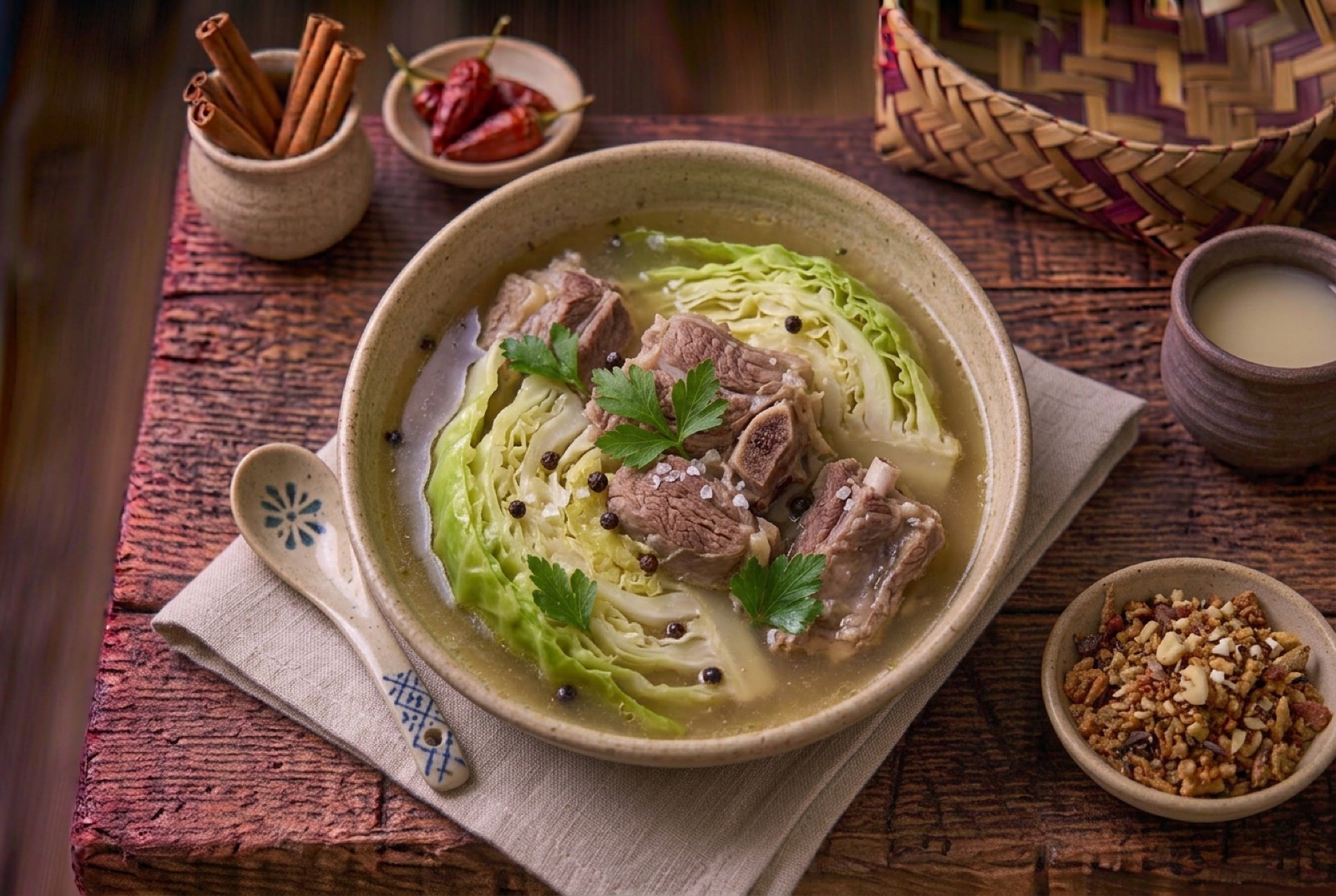
Keep exploring Norway.
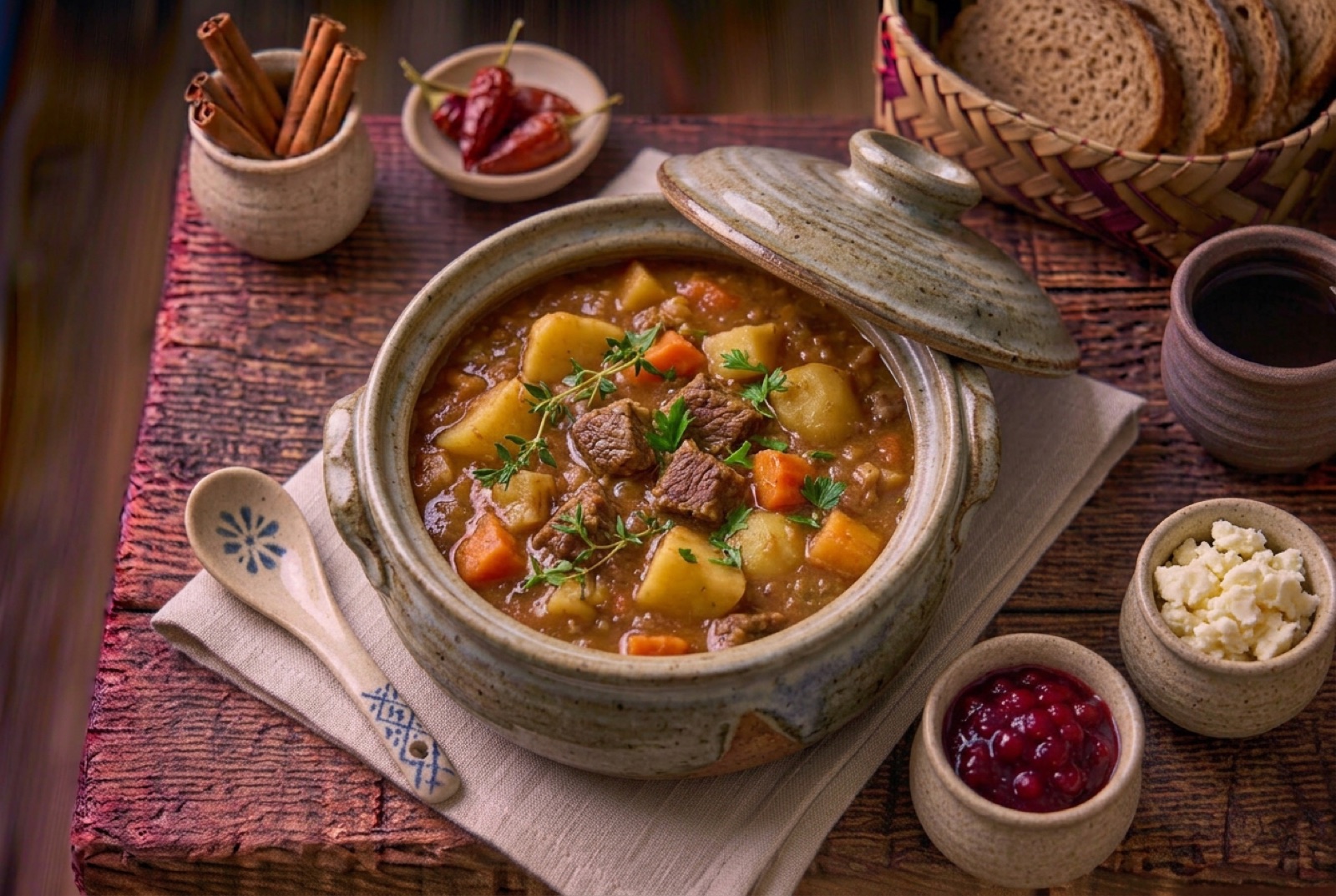
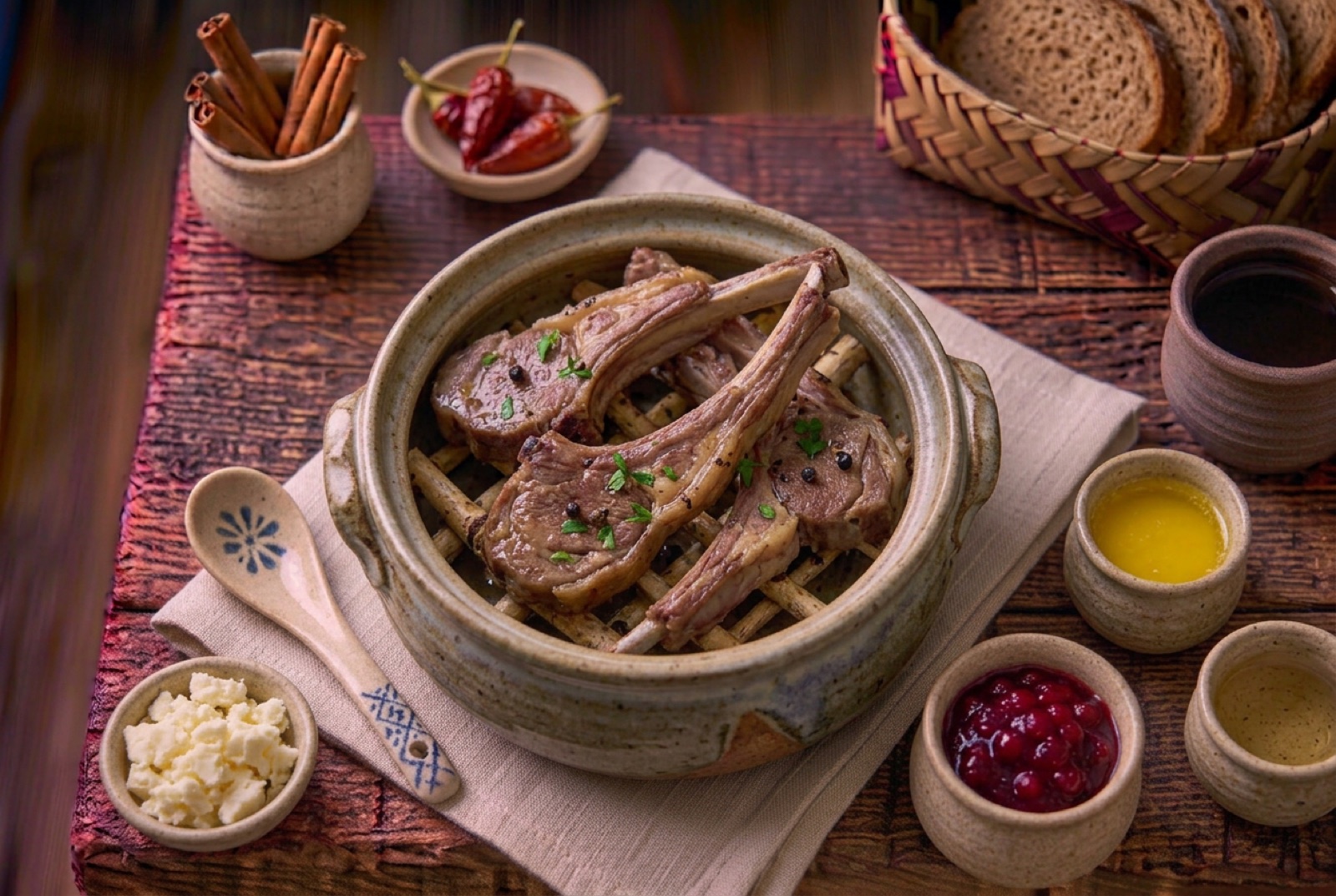
Norway has 9 more dishes in the atlas — Bergensk Fiskesuppe and Fårikål, and 7 more.
Recipe by The DishRoute Kitchen · published August 19, 2026 · updated August 19, 2026