Lapskaus.
Norwegian Sailors' Meat and Root Stew
Brun lapskaus · say it: LAHPS-kows
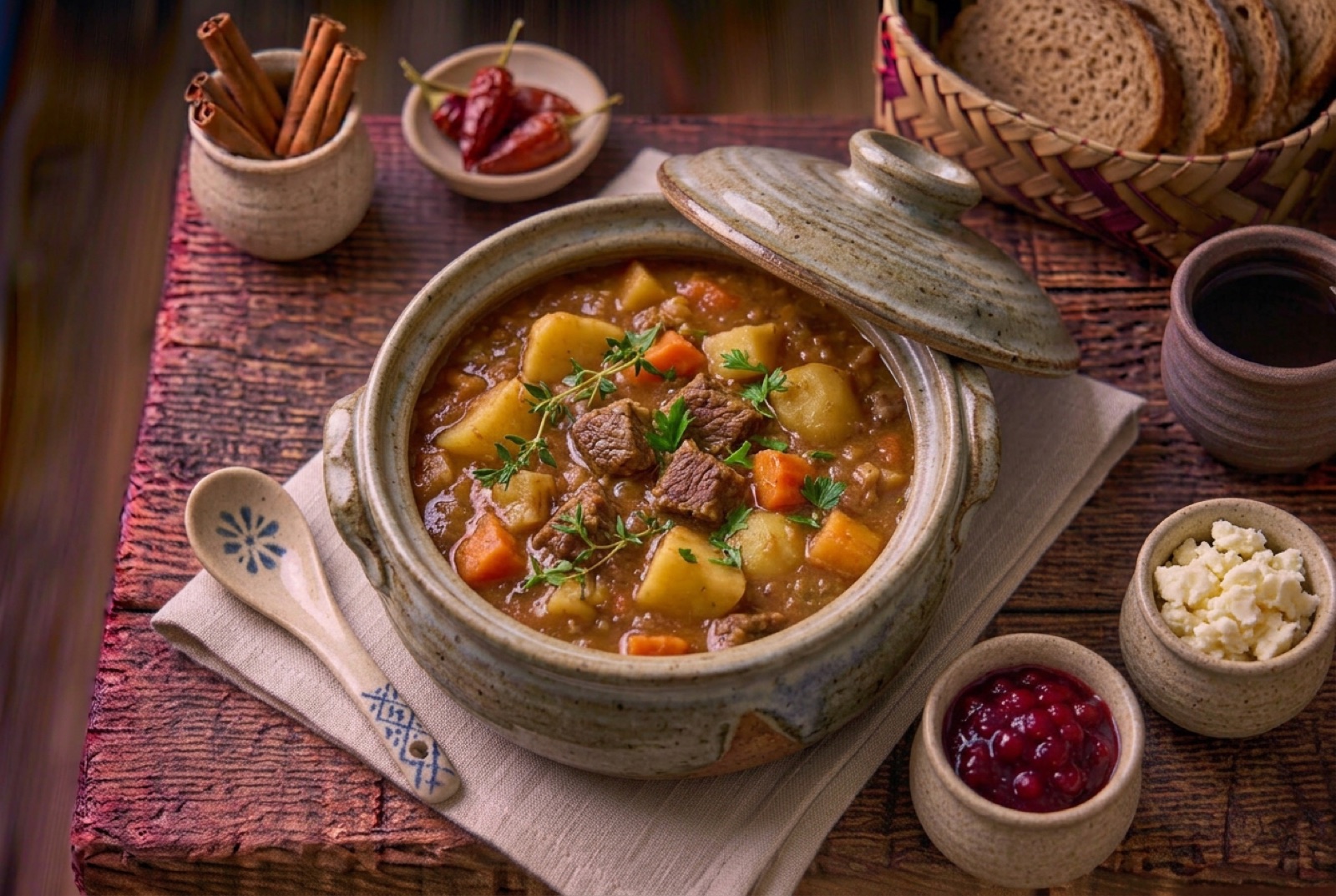
Lapskaus is a one-pot stew of diced meat and root vegetables cooked long enough that the floury potatoes break down completely and thicken everything around them, while the waxy ones stay whole. The result is thick, spoonable and slightly rough-textured — deliberately so; a lapskaus you can pour is a lapskaus that has not finished. The seasoning is minimal, mostly whole peppercorns, bay and salt, because the point is sweet root vegetables against savoury meat and a broth that has been reduced into the potatoes rather than served alongside them. It is cheap, forgiving and specifically designed to use up meat you already have, which is exactly how Norwegians still cook it.

- Gate
- Norway
- Prep
- 25 min
- Cook
- 1 hr 35 min
- Total time
- 2 hr
- Serves
- 4
- Status
- Easy
- Nutrition / serving · estimated
- Calories 540 kcal
- Protein 36 g
- Carbs 48 g
- Fat 21 g
- Fiber 8 g
- Sodium 900 mg
Why this recipe works.
- Uses two kinds of potato on purpose — floury ones to dissolve and thicken, waxy ones to stay in recognisable pieces.
- Browns the meat properly and deglazes, so the stew tastes of roasted beef rather than boiled beef.
- Explains the brun versus lys distinction instead of pretending there is one correct lapskaus.
- Genuinely a leftovers dish: the method works with yesterday's roast, boiled salt meat or sausage with almost no changes.
Ingredients.
14 itemsEquipment
- Large heavy pot or Dutch oven with a lid
- Sharp knife and a sturdy board for the root vegetables
Instructions.
Brown the beef
Heat the oil in a heavy pot over high heat and brown 600 g of beef in two batches, without moving the cubes for the first two minutes, until each batch has a dark crust on at least two sides. Lift the meat out and set it aside.
Tip A crowded pot releases water and the beef greys instead of browning — two batches is not fussiness, it is the difference in colour of the finished stew.
Sweat the alliums and deglaze
Lower the heat to medium, add the onion and leek to the same pot and cook for 6–8 minutes until soft and lightly golden. Pour in a ladle of stock and scrape the base hard with a wooden spoon until every brown patch has lifted and the liquid turns dark.
Start the simmer
Return the beef with its juices, add the rest of the stock, the bay leaves and the peppercorns, and bring to a simmer. Cover and cook at a lazy bubble for 45 minutes, until the beef gives when pressed but is not yet falling apart.
Add the root vegetables
Stir in both kinds of potato, the carrot, the swede and the celeriac. The liquid should barely cover everything — add a splash of hot water if not, but keep it tight. Cover and simmer for another 35–40 minutes without stirring.
Tip Leave it alone. Stirring now smashes the potatoes before the swede is tender.
Bind the pot
Uncover and stir properly for the first time. The floury potatoes should collapse into the liquid and turn it thick and slightly cloudy; press a few pieces against the side of the pot with the spoon to push it further. Simmer uncovered for 5–10 minutes if it is still loose.
Season and rest
Fish out the bay leaves, taste and add salt — it will need more than you expect after a long simmer. Let the pot stand off the heat for 10 minutes so the stew settles and thickens further.
Serve
Ladle into deep bowls, scatter with parsley, and serve with buttered flatbrød and pickled beetroot on the side. Grind extra pepper over each bowl at the table.
Tips from our kitchen.
- Cut everything roughly the same size, about 1.5 cm. Uneven dice means the carrots are still hard when the potatoes have vanished.
- Do not stir for the first hour. Stirring early breaks the potatoes down before the meat is tender and you end up with mash containing chewy beef.
- Start with less liquid than seems right — barely covering the solids. The vegetables release a lot, and lapskaus should be thick enough that a spoon stands briefly.
- In the last ten minutes, mash a few pieces of potato against the side of the pot with a spoon. That is the traditional way to control thickness rather than adding flour.
- Swede is not optional if you want the real flavour. Its faint mustardy bitterness is what keeps the stew from tasting like plain beef and potatoes.
- Salt at the very end. If you started from salted meat, the pot may need none at all.
Substitutions.
- Beef chuck → Leftover roast beef, lamb, boiled salted meat or sliced smoked sausage
- With already-cooked meat, skip the browning and add it in the last 25 minutes — this becomes lys lapskaus, the older and arguably more authentic version.
- Swede (rutabaga) → Turnip, or celeriac plus an extra carrot
- Turnip is sharper and cooks faster, so add it 15 minutes later. Celeriac gives depth but loses the sweetness swede brings.
- Beef stock → Water with a bay leaf and a few peppercorns
- Traditional lapskaus was made with water — the meat and bones made the stock as it cooked. Use good stock if you have it, but water and a longer simmer is genuinely how this dish was built.
Variations.
- Lys lapskaus
- The light version: no browning, salted or pre-cooked meat, and a pale broth. Cleaner and more delicate, and the one most closely descended from ship's rations.
- Lapskaus with leek and parsley root
- Eastern Norwegian households often add leek for sweetness and parsley root for its faint aniseed edge. Add both in the last 30 minutes.
- Sailor's lapskaus with a fried egg
- The German Labskaus habit, adopted in some Norwegian ports: a fried egg and a pickled beetroot or gherkin on top of each bowl.
Storage & reheating.
Lapskaus refrigerates for four days and thickens considerably as it cools — reheat it with a good splash of water or stock, stirring gently over low heat until it loosens back to a spoonable consistency. It freezes for three months, but expect the surviving potato pieces to turn slightly grainy on thawing; that matters less here than in most stews because the dish is already half-collapsed by design. Leftovers are traditionally fried in butter until the base crusts and eaten with a fried egg.
Serve with
Crisp flatbrød with butter, and pickled beetroot or lingonberry jam on the side.
The story behind Lapskaus.
Lapskaus is a North Sea dish before it is a Norwegian one. Some version of it — a stew of salted meat and whatever roots and starch a ship carried — turns up all around the northern shipping ports under obviously related names: Labskaus in Hamburg and Bremen, lobscouse and then scouse in Liverpool, skipperlabskovs in Denmark, lapskojs in Sweden. Liverpudlians are still called Scousers because of it. The common ancestor is not a recipe but a problem: how to feed a crew from a ship's stores of salt beef, dried peas, potatoes and hard biscuit, using one pot and one fire.
Norway kept two versions, and they are genuinely different dishes. Brun lapskaus — the one below — browns fresh meat first and cooks it down into a dark, thick stew. Lys lapskaus, the light version, uses salted or leftover cooked meat with no browning at all, giving a pale, clean-tasting stew closer to the sailors' original. In much of the country the light version is what your grandmother made, because it was built on the previous day's boiled salt meat. Both are still sold in cans in every Norwegian supermarket, which tells you how firmly the dish is embedded in ordinary eating.
It also belongs to the older logic of the Norwegian larder. Root vegetables — potato, carrot, swede, celeriac — are the things that survive a winter in a cold cellar without any preserving at all, and salted meat is what survives everything else. Lapskaus is what those two categories make when you put them in the same pot. That it is traditionally eaten with flatbrød, the dried crisp flatbread that keeps for a year, completes the picture: an entire meal assembled from foods that were designed to last until spring.
Questions, answered.
What is the difference between brun and lys lapskaus?
Brun lapskaus browns raw meat and often uses a darker stock, producing a deep, roasted-tasting stew. Lys lapskaus skips the browning entirely and uses salted or already-cooked meat, giving a pale, milder result. Both are traditional across Norway; the light version is older and grew directly out of using up boiled salt meat, while the brown version reflects later home cooking with fresh beef.
How thick should lapskaus be?
Thick enough to eat with a spoon and hold its shape briefly in the bowl — closer to a coarse stew than a soup. Traditionally the thickening comes only from floury potatoes breaking down, so if it is too loose at the end, mash a few potato pieces against the side of the pot and simmer uncovered for another five minutes rather than adding flour.
Can I make lapskaus with leftover meat?
That is arguably its real purpose. Any cooked meat works — roast beef, lamb, boiled salt beef, ham or sliced smoked sausage. Skip the browning step, cook the vegetables in stock until nearly tender, then stir the meat in for the last 20 to 25 minutes so it heats through without shredding into nothing.
Is lapskaus related to Liverpool scouse?
Yes, both descend from the same North Sea sailors' stew, which appears as Labskaus in northern Germany, lobscouse in England, skipperlabskovs in Denmark and lapskaus in Norway. The dishes have drifted apart — German Labskaus is usually mashed with beetroot and topped with a fried egg — but the shared origin in ship's provisions of salt meat and roots is well documented, and Liverpool's nickname for its residents comes from it.
What do Norwegians eat with lapskaus?
Flatbrød — thin, crisp dried flatbread — spread with butter, and often pickled beetroot or lingonberry jam for acidity. No potatoes on the side, because the potatoes are already in the pot. It is a complete one-bowl meal, usually served for a weekday dinner rather than as a special occasion dish.
You might also like.
All recipes →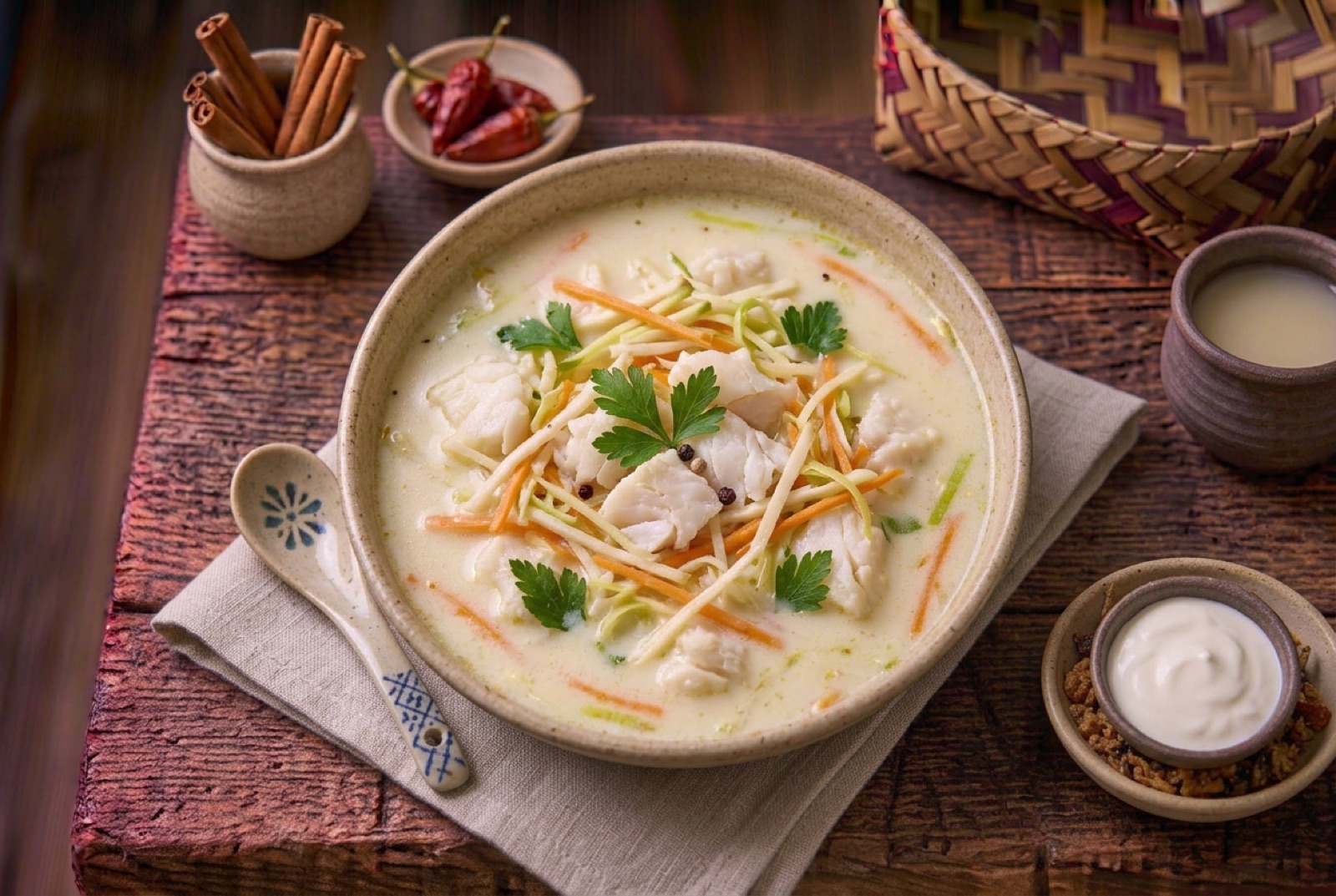
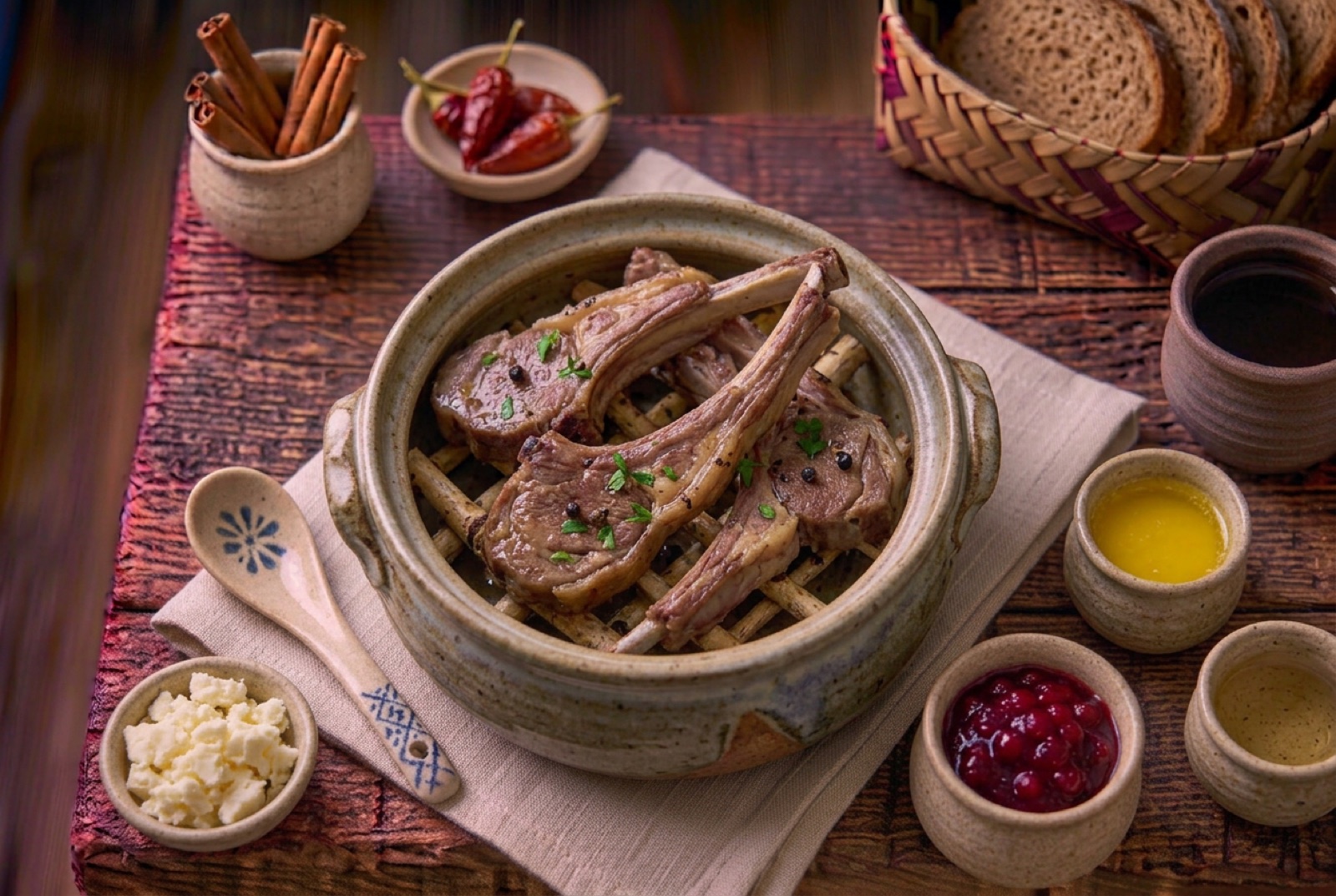
Keep exploring Norway.
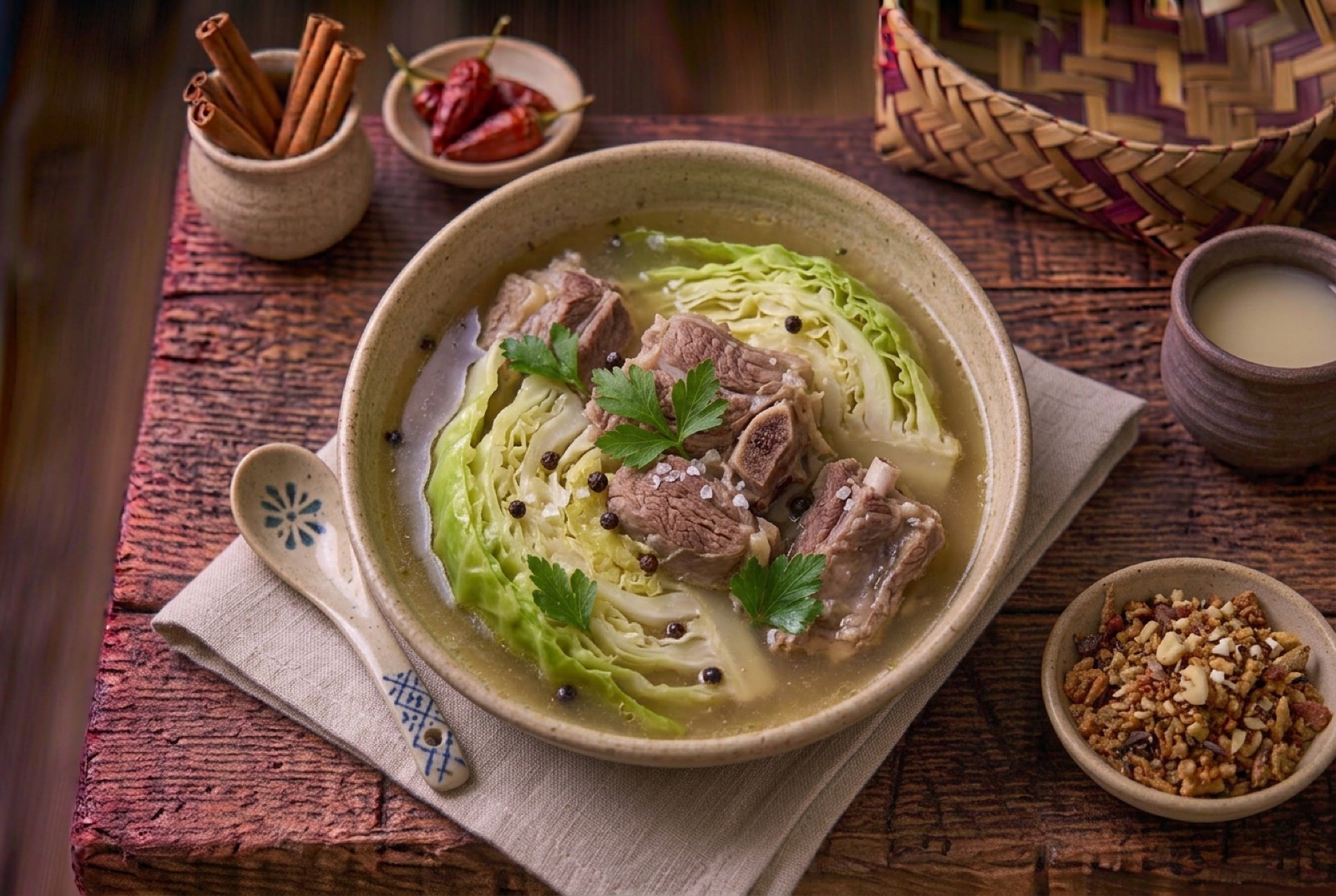
Norway has 9 more dishes in the atlas — Bergensk Fiskesuppe and Fårikål, and 7 more.
Recipe by The DishRoute Kitchen · published August 19, 2026 · updated August 19, 2026