Körözött.
Hungarian Paprika Sheep Cheese Spread
Körözött · say it: KUR-ur-zurt
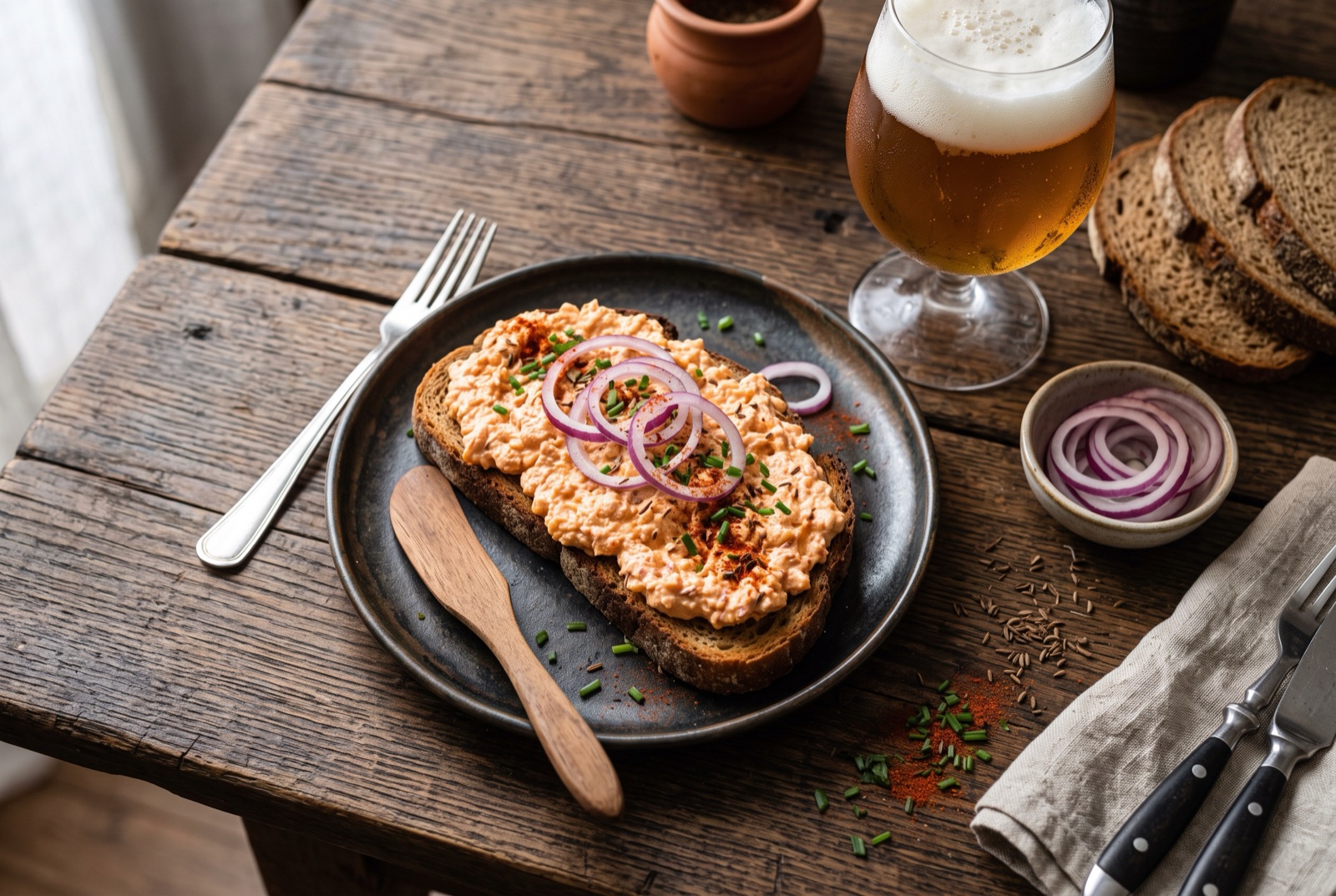
Körözött is a cheese spread built on juhtúró — the crumbly, salty curd made from sheep's milk — beaten smooth with soft butter until it takes on a pale salmon colour from sweet paprika. It tastes sharper and more animal than any cow's-milk spread: the sheep curd brings a tang close to young feta, the butter rounds it, caraway gives the resinous back note that runs through most Hungarian savoury cooking, and finely sliced spring onion keeps it from sitting heavy. There is no cooking involved and it takes fifteen minutes, but it needs a few hours in the fridge before it tastes of anything coherent. In Hungary it arrives at the table in a rough mound, dusted with more paprika, with rye bread, raw onion rings and green peppers around it.

- Gate
- HungaryGreat Plain and Lake Balaton
- Prep
- 15 min
- Cook
- 0 min
- Total time
- 4 hr 15 min incl. 4 hr rest
- Serves
- 6
- Status
- Easy
- Nutrition / serving · estimated
- Calories 290 kcal
- Protein 11 g
- Carbs 5 g
- Fat 25 g
- Fiber 1 g
- Sugar 3 g
- Sodium 520 mg
Why this recipe works.
- Built on real sheep's curd, with a tested cow's-milk fallback rather than a vague suggestion.
- Blooms the paprika in the butter first, so the spread turns properly pink instead of streaky orange.
- Crushes the caraway rather than leaving it whole, which is the difference between aroma and gritty seeds.
- Gives the resting time honestly — this is a spread that is genuinely bad an hour after mixing.
Ingredients.
10 itemsFor the spread
To serve
Equipment
- Mixing bowl
- Fine sieve or potato ricer
- Mortar and pestle
- Wooden spoon or hand mixer
Instructions.
Wake up the caraway
Toast the caraway seeds in a dry pan over medium heat for about 30 seconds, until they smell warm and nutty rather than raw. Tip them straight into a mortar and crush to a coarse grit — you want fragments, not powder.
Tip They burn fast. Pull them off the heat the moment the aroma changes.
Bloom the paprika in butter
Beat the soft butter in a bowl with a wooden spoon until it is pale and creamy, then stir in the sweet paprika and leave it for five minutes. The butter should turn a solid coral orange all the way through, with no dry red specks left on the surface.
Smooth the curd
Press the sheep's curd through a fine sieve or a potato ricer into a second bowl. It will come through in soft threads and lose the chalky crumb it has in the tub — this is the step that decides whether the finished spread is silky or grainy.
Beat the two together
Add the curd to the paprika butter in three additions, beating hard after each until fully absorbed. The mixture will look split and curdled at first and then suddenly come together as one pale salmon-pink cream. Loosen with the sour cream if it is stiffer than soft butter.
Tip If everything is cold it will not emulsify. Warm the bowl briefly in your hands and keep beating.
Season and fold in the onion
Stir in the crushed caraway, the sliced spring onions and the hot paprika if using. Taste, then add salt and black pepper — sheep's curd is already salty, so go carefully and season for a spread eaten on bread, not for a dip.
Rest it, then serve
Cover and refrigerate for at least four hours so the paprika bleeds through and the onion loses its raw edge. Pile it into a bowl in a rough mound, drag a spoon across the top, dust with paprika and serve with bread and raw onion rings.
Tips from our kitchen.
- Mash the sheep curd through a sieve or a potato ricer before anything else. Its natural crumbliness will not beat out later, and lumps of curd in a finished körözött feel like a mistake.
- The butter must be properly soft — pressable with a fingertip, not shiny or melting. Cold butter stays in visible flecks; melted butter makes the spread greasy and it splits in the fridge.
- Stir the paprika into the butter and let it sit for five minutes before the cheese joins. The fat pulls the colour out and the spread turns even pink rather than speckled.
- Toast the caraway seeds for thirty seconds in a dry pan, then crush them in a mortar. Untoasted whole seeds taste soapy and keep their flavour locked up.
- If the mixture feels stiff, loosen it with sour cream a spoonful at a time, not with milk — milk thins the flavour along with the texture.
- Give it four hours in the fridge minimum, overnight if you can. Freshly mixed körözött tastes of raw onion and dry paprika dust and nothing else.
Substitutions.
- Juhtúró (sheep's milk curd) → 200 g quark plus 100 g feta, both mashed and beaten together
- Feta supplies the sheep tang and salt that quark alone cannot. Cut the added salt in the recipe roughly in half if you go this way, and taste before adding any.
- Sweet Hungarian paprika → Any fresh sweet paprika, ideally opened within the last six months
- Age matters far more than origin here. Paprika that has sat in a cupboard for two years goes brown and dusty and will give you a grey spread with no perfume.
- Spring onion → Half a small white onion, grated and squeezed dry
- Grated onion melts in and gives a rounder background; spring onion stays visible and tastes fresher. Both are used in Hungary depending on the season.
Variations.
- Sörös körözött
- A tablespoon of cold lager beaten in at the end. It slackens the spread, adds a faint bitterness against the paprika, and is a genuine summer beer-garden version rather than a gimmick.
- Körözött with cottage cheese
- The everyday Budapest version made with tehéntúró, plain cow's curd. Milder and softer, and what most Hungarians actually eat on a Tuesday.
- Stuffed peppers
- Piped into halved sweet TV paprika peppers or into hollowed-out small tomatoes as a cold starter, which is how it appears at Hungarian buffets and name-day parties.
Storage & reheating.
Keeps four days covered in the fridge and is better on day two than on day one. It stiffens as it chills, so take it out twenty minutes before serving and stir it once to bring back the spreadable texture. Do not freeze — the curd goes grainy and the butter separates on thawing, and no amount of beating brings it back. If you want to make it well ahead, mix everything except the spring onion, then stir that in on the day so it stays sharp and green.
Serve with
Dark rye or sourdough bread, raw white onion rings, sliced radish and sweet green peppers — plus lager or a dry white wine.
The story behind Körözött.
The name is a verb turned into a noun: körözni means to stir or whisk something round, which is precisely what a cook does with a wooden spoon against the side of a bowl until the curd and the butter stop being two things. That plainness is the point. Körözött belongs to the pásztor world of the Hungarian plain — shepherds who made their own sheep cheese, kept butter and paprika, and needed something that spread onto bread and did not require a fire.
It is also the same dish as Austrian Liptauer and Slovak bryndzová nátierka, and pretending otherwise would be dishonest. All three descend from the sheep cheese of the Carpathian uplands and all three survived the break-up of Austria-Hungary in their own kitchens. What separates the Hungarian one is what it leaves out and what it insists on. Capers, mustard and anchovy — standard in Vienna — are largely absent here. Instead körözött doubles down on paprika, both stirred in and dusted over, and on genuine sheep's curd where the Austrians long ago switched to cow's milk Topfen. A version made with plain quark is perfectly normal in Budapest supermarkets, but any Hungarian who grew up with juhtúró will tell you it is a different, milder animal.
Where you meet it matters as much as what is in it. Körözött is csárda food and beer-garden food — the small dish that appears while you are deciding what to order, alongside zsíros kenyér, cured sausage and pickled peppers. At Lake Balaton it is sold in tubs at every lakeside shop. There is also a summer variant that raises eyebrows outside Hungary: a spoonful of beer or a splash of white wine beaten into the mixture to loosen it, which sounds like a bad idea and is in fact very good.
Questions, answered.
What is juhtúró and where do I find it?
Juhtúró is Hungarian sheep's milk curd: crumbly, white and noticeably salty and tangy, sold in tubs at Hungarian and Central European delicatessens and at markets in Hungary itself. Slovak bryndza is the closest relative and works identically. If neither is available, a mix of quark and feta gives you both the texture and the sheep-milk sharpness.
What is the difference between körözött and Liptauer?
They are the same family of spread from the old Austro-Hungarian sheep-cheese trade, but they diverged. Hungarian körözött usually keeps sheep's curd and leans hard on paprika, caraway and onion. Viennese Liptauer switched to cow's milk Topfen and adds capers, gherkin and often mustard. Slovak versions stay closest to the bryndza original.
Why is my körözött orange and streaky instead of pink?
The paprika went in at the end and never made contact with fat. Paprika's colour compounds are fat-soluble, so stirring it into the soft butter first and giving it a few minutes lets the colour dissolve and spread evenly through the whole mixture. Mixing it into cold curd leaves it sitting as visible specks.
Can I make it in a food processor?
Yes, and it is faster, but pulse rather than run it continuously. A processor left running warms the butter through friction and can push the spread past creamy into a slack, oily paste. Blitz the curd and butter until smooth, then fold in the paprika, caraway and onion by hand.
Is körözött very salty?
It should be assertively seasoned, because it is eaten in small amounts on bread rather than by the spoonful. Sheep's curd is already salty, so always taste before adding any salt at all — with feta in the mix you may need none. Underseasoned körözött tastes flat and faintly chalky.
You might also like.
All recipes →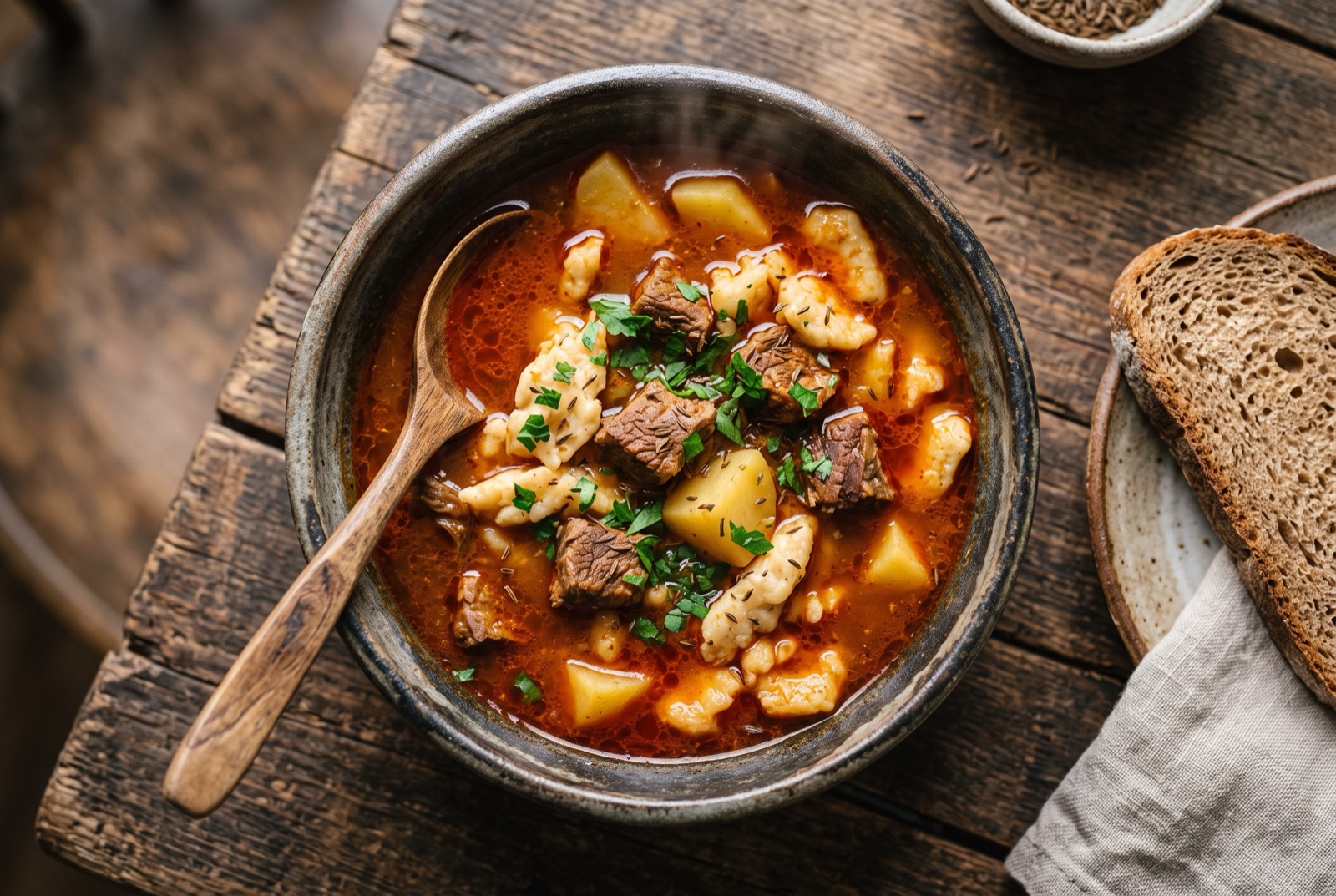

Keep exploring Hungary.
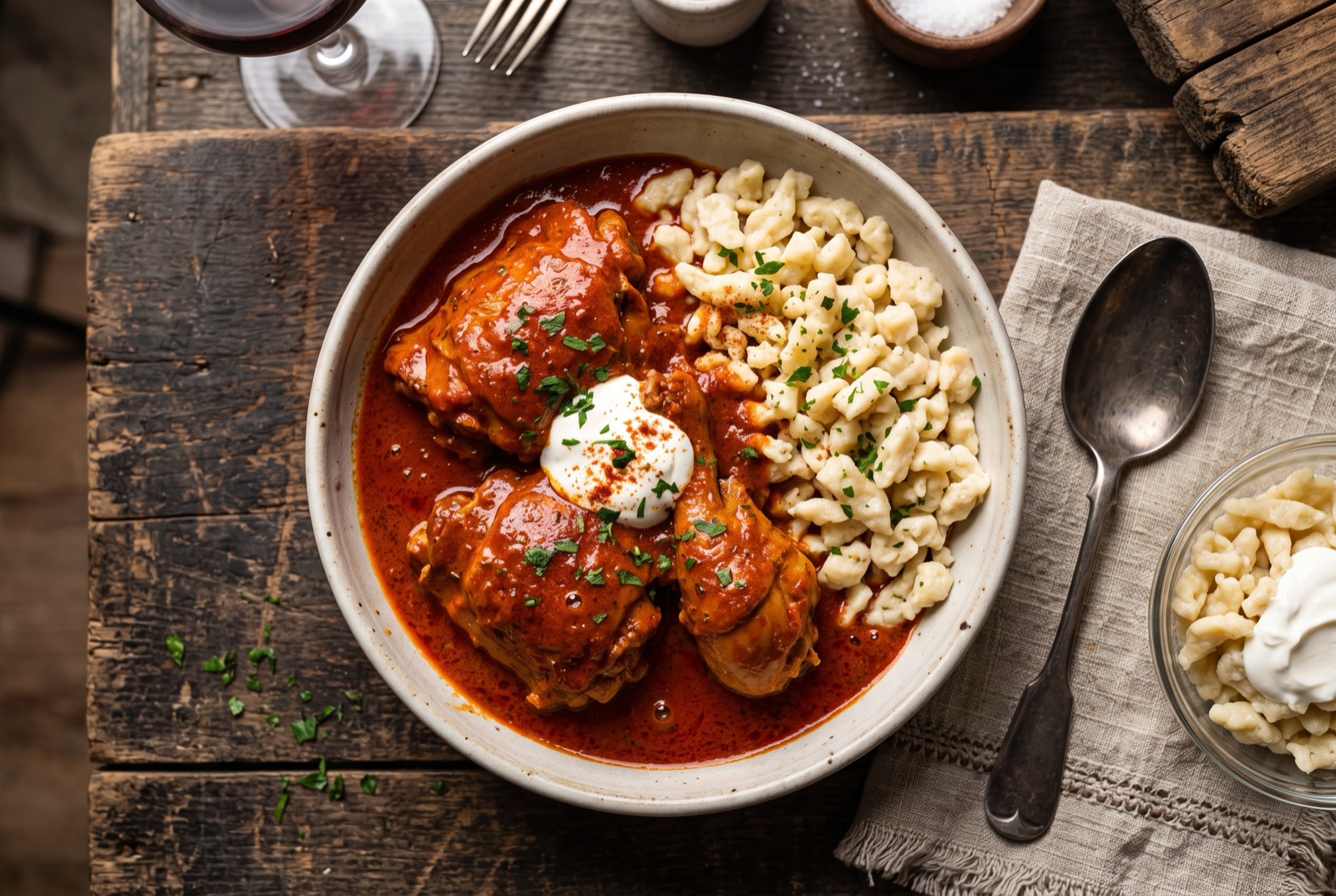
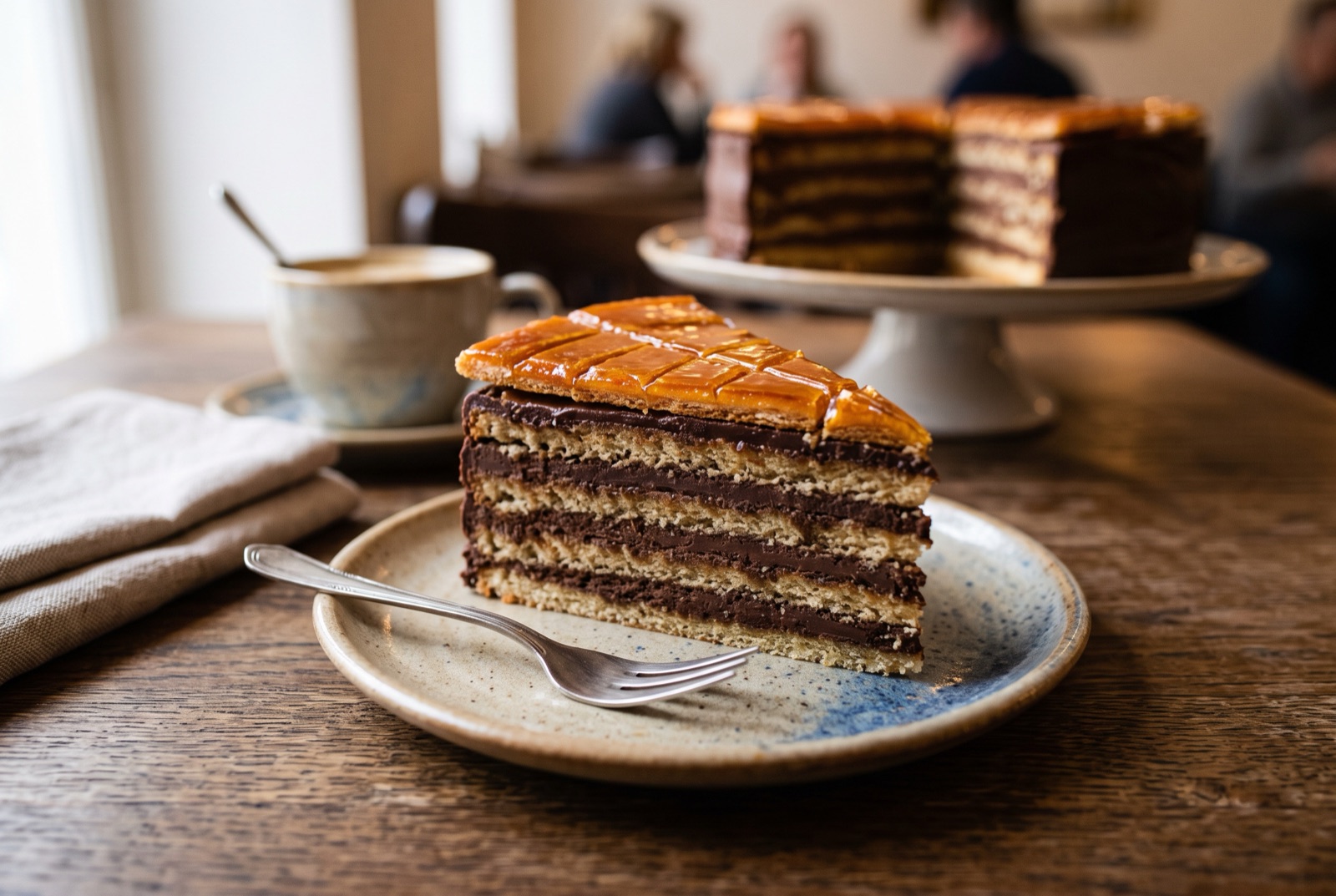
Hungary has 9 more dishes in the atlas — Dobos Torta and Gulyás, and 7 more.
All Hungary recipes Quark recipes Butter recipes Paprika recipes appetizersnackvegetariangluten freenut freeRecipe by The DishRoute Kitchen · published August 20, 2026 · updated August 20, 2026