Rishta.
Libyan Hand-Cut Noodles with Chickpeas
رشتة · say it: RISH-tah
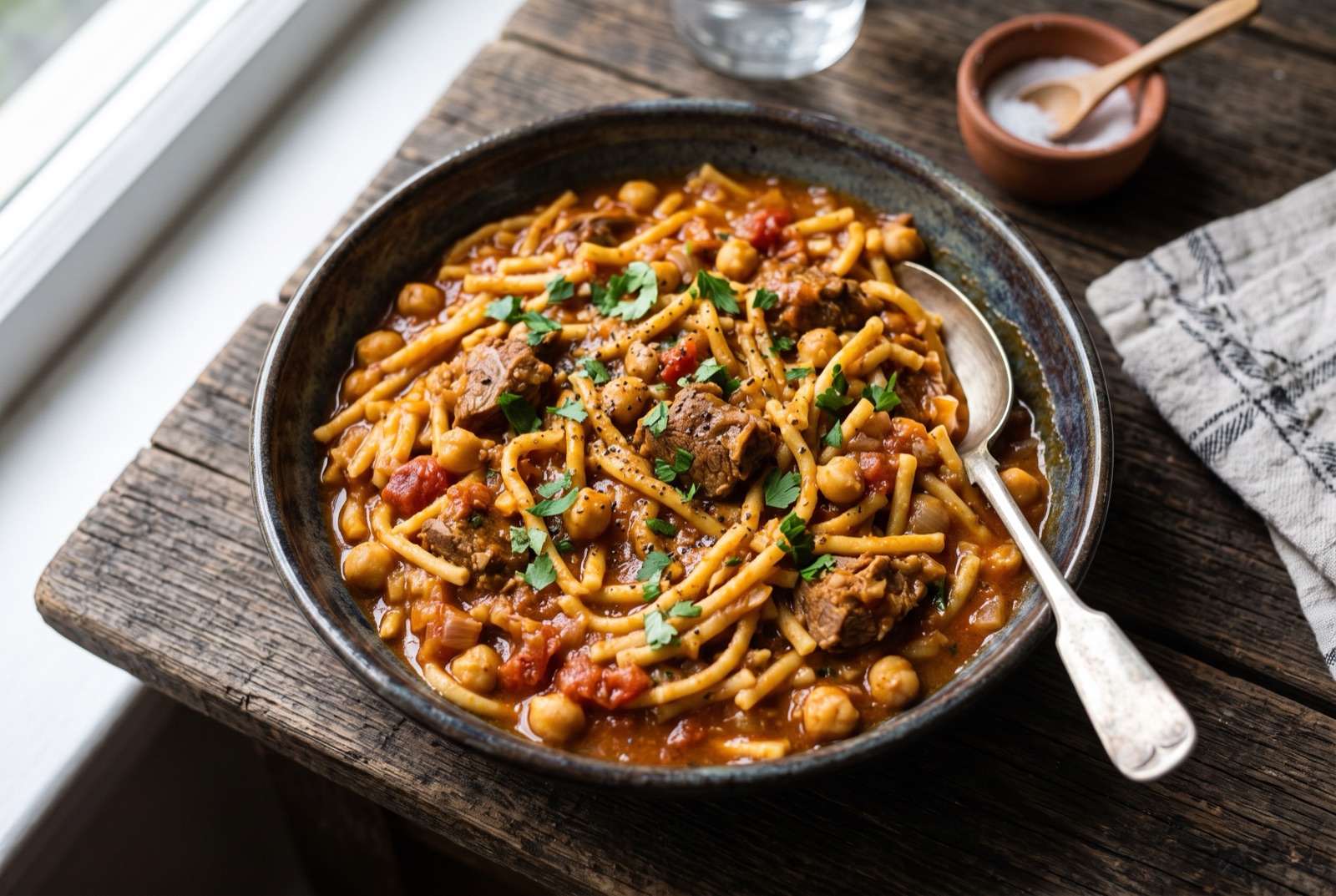
Rishta is fresh pasta cooked in its sauce rather than in water. The dough is nothing more than flour, water and salt, rolled thin, stacked and cut into stubby ribbons, then tipped directly into a simmering pot of lamb, chickpeas and fried tomato paste. Because the noodles release their starch into the sauce instead of into a pot of water thrown down the sink, the liquid thickens as they cook and ends up clinging to everything. The result is somewhere between pasta and stew — soft, slightly chewy strips in a warm, spiced tomato gravy, eaten with a spoon and a lot of black pepper.

- Gate
- Libya
- Prep
- 40 min
- Cook
- 1 hr
- Total time
- 2 hr 10 min incl. 30 min rest
- Serves
- 4
- Status
- Medium
- Nutrition / serving · estimated
- Calories 700 kcal
- Protein 35 g
- Carbs 84 g
- Fat 24 g
- Fiber 9 g
- Sodium 780 mg
Why this recipe works.
- Cooks the noodles in the sauce, the single technique that defines rishta and that most written versions skip.
- Uses a firm, low-hydration dough that survives simmering instead of dissolving into the pot.
- Times the lamb so it is already tender before the noodles go in and nothing gets overcooked waiting.
- Gives a workable rolling and cutting routine for cooks who have never made fresh pasta by hand.
Ingredients.
17 itemsFor the noodles
For the sauce
To finish
Equipment
- Long rolling pin
- Large heavy pot
- Sharp knife or pastry wheel
- Floured tray or cloth
Instructions.
Make and rest the dough
Mix the flour, semolina and salt, add the cold water and olive oil and bring it together, then knead for 8 minutes until you have a firm, smooth dough that springs back slowly when pressed. Wrap it and leave it to rest for 30 minutes at room temperature.
Tip It should feel noticeably drier than bread dough. If it sticks to the table, work in a little more flour.
Start the sauce
Heat the olive oil in a large pot and brown the diced lamb over high heat until the pieces have coloured on at least two sides. Add the onion and garlic and cook for 6 minutes until soft and golden at the edges.
Fry the paste and spices
Stir in the tomato paste and fry it for 3 minutes until it turns brick-dark and the oil runs orange, then add the hararat, turmeric and chilli flakes and cook for a further 30 seconds until the pot smells warm and sweet.
Simmer the lamb
Pour in the water, add the chickpeas, season with salt and pepper, and simmer covered for 40 minutes, until the lamb is tender enough to crush against the side of the pot and the sauce has darkened.
Roll and cut the noodles
Divide the rested dough into four, and roll each piece out on a well-floured surface to about 2 mm — thin enough to see the shadow of your hand through it. Dust each sheet heavily, stack them, then cut across into 1 cm strips and again into 4 cm lengths.
Cook the noodles in the sauce
Shake the excess flour off the noodles and scatter them into the simmering pot a handful at a time, stirring gently after each addition so they separate. Cook uncovered for 10 to 12 minutes, until the noodles are tender with a slight chew and the sauce has thickened enough to coat the back of a spoon.
Tip Top up with hot water if the pot tightens before the noodles are done. It should stay saucy, not claggy.
Rest and serve
Take the pot off the heat, taste for salt and grind over more black pepper than feels reasonable. Let it stand for 5 minutes so the noodles relax, scatter the parsley over the top and serve in deep bowls with bread.
Tips from our kitchen.
- Keep the dough firm and slightly dry. A soft, tacky dough tears when rolled and turns to mush in the sauce.
- Flour the sheets generously before stacking them, or the layers fuse and you will be cutting one thick slab.
- Cut the strips short, around 4 cm. Long noodles tangle into knots in a crowded pot and cook unevenly.
- Shake the excess flour off the cut noodles before they go in, otherwise the sauce turns cloudy and pasty.
- Watch the liquid level once the noodles are in. If the sauce tightens too fast, loosen it with hot water rather than letting it catch.
- Let the pot stand off the heat for five minutes before serving so the noodles relax and the sauce settles around them.
Substitutions.
- Hand-cut rishta → 350 g dried tagliatelle or pappardelle, broken into 4 cm lengths
- Cook it in the sauce exactly the same way and add an extra 200 ml of water, since dried pasta drinks considerably more. Not the same texture, but the method survives, which matters more.
- Lamb shoulder → Chicken thighs, or leave the meat out entirely
- Chicken needs only 25 minutes of simmering. A meatless version leaning on chickpeas and well-fried tomato paste is common in lean weeks.
- Cooked chickpeas → Dried chickpeas soaked overnight and simmered with the lamb from the start
- Better texture and better broth, but add 30 minutes and do not salt the pot until they have softened.
Variations.
- Rishta with dried mint
- Crumble a teaspoon of dried mint over the pot in the last minute. It pushes the dish towards the flavour profile of Libyan soups and is common in some households.
- Rishta bil khodra
- Add diced pumpkin and courgette to the sauce fifteen minutes before the noodles. They soften into the gravy and stretch the pot to feed more people.
- Dried rishta for the store cupboard
- Make a double batch of noodles, spread half on a floured tray and leave them uncovered for a day until brittle. Stored in a jar they keep for weeks and go straight into the sauce.
Storage & reheating.
Refrigerate for up to 2 days. The noodles keep drinking sauce as they sit, so the dish sets thick and needs a good splash of water and gentle stirring when reheating over low heat. Uncooked cut noodles keep 2 days in the fridge under a cloth, or can be dried completely on a tray and stored in a jar for several weeks. Freezing the finished dish is not worth it — the noodles come back soft and the sauce separates.
Serve with
Bread for the sauce left in the bottom of the pot, harissa on the side, and a sharp onion and tomato salad.
The story behind Rishta.
The word rishta comes from Persian, where it means thread, and it travelled west with the same movement of language and food that carried noodles across the Islamic world centuries ago. Versions of it are still made in Algeria and Tunisia, and further east under related names, usually with the same defining habit: the noodles finish in the sauce. It matters that this tradition long predates Libya's twentieth-century pasta enthusiasm — dried Italian spaghetti and macaroni are genuinely popular here, but rishta is the older, home-rolled layer underneath them.
Making it is a slow, sociable job, which is part of why it has thinned out in daily cooking. The dough has to be rolled thin by hand, floured heavily, folded and cut, and the strips laid out to dry a little so they do not stick together. Households that still make it tend to do it in bulk, often with more than one person at the table cutting, and dry the surplus for later. Where the fresh version has faded, dried rishta and short shop-bought pasta stand in.
What cannot be substituted is the cooking method. Boiling the noodles separately and pouring sauce over them produces a perfectly decent plate of pasta and something that is no longer rishta — the whole texture of the dish depends on the starch going into the sauce. Libyan cooks judge the pot by whether the sauce has thickened enough to coat the back of a spoon by the time the noodles are done, and they will add a ladle of hot water rather than let it get there too early.
Questions, answered.
Can I boil the noodles separately and add sauce afterwards?
You can, but it stops being rishta. The dish depends on the noodle starch dissolving into the sauce and thickening it, which is exactly what gets poured away if you boil them in water. If you cook them separately the sauce stays thin and the noodles taste of nothing in particular, so keep them in the pot even if it feels crowded.
How thin should I roll the dough?
About 2 mm — thin enough that you can see the shadow of your hand moving underneath the sheet, but not so thin that it becomes translucent and fragile. Remember the noodles will swell in the sauce, so a sheet that looks slightly too thick when raw is usually about right once cooked.
My sauce got too thick before the noodles were cooked. What now?
Add hot water a ladle at a time and stir gently. This is completely normal, especially with fresh noodles, and Libyan cooks expect to top the pot up once or twice. Use hot rather than cold water so the simmer does not stall, and check the salt again at the end since the extra liquid dilutes the seasoning.
Do I need a pasta machine?
No. A long rolling pin and a floured table are what this dough was designed for, and hand-rolled sheets of slightly uneven thickness are traditional rather than a flaw. If you do have a machine, run the dough to the second-thickest setting — rishta should be noticeably thicker than tagliatelle.
Can the noodles be made in advance?
Yes. Cut noodles will sit for a couple of hours on a well-floured tray under a cloth, or up to two days in the fridge. For longer storage, spread them in a single layer and leave them uncovered until completely brittle, then keep them in a jar for several weeks and add them straight to the sauce, allowing a few extra minutes of cooking.
You might also like.
All recipes →
Keep exploring Libya.
Libya has 9 more dishes in the atlas — Bazin and Bsisa, and 7 more.
Recipe by The DishRoute Kitchen · published August 20, 2026 · updated August 20, 2026