Panta Bhat.
Bengali Fermented Rice in Water
পান্তা ভাত · say it: PAHN-tah BHAHT
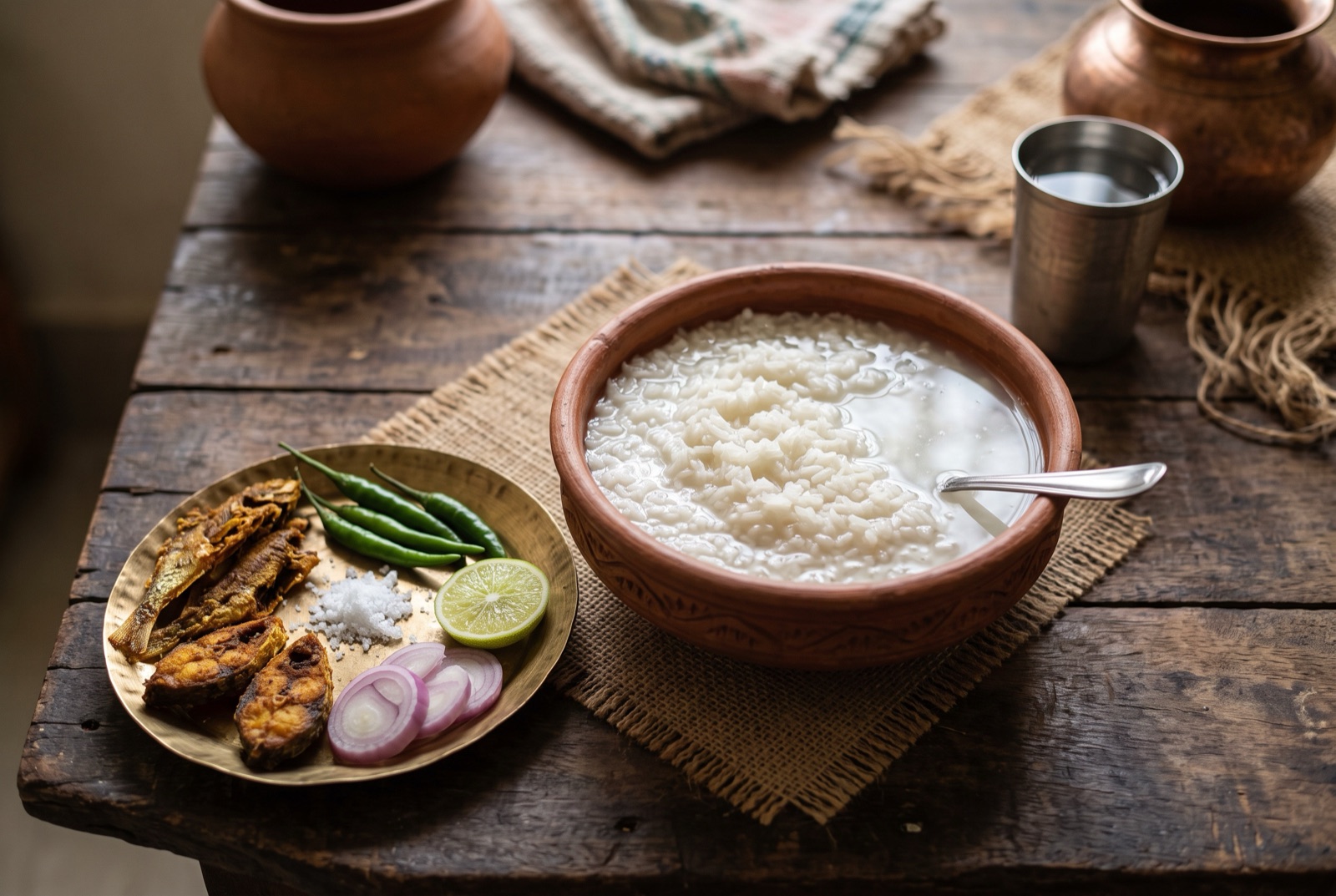
Panta bhat is cooked rice covered with water and left overnight at room temperature, so that wild fermentation turns it faintly sour and slightly fizzy by morning. It is eaten cold, straight from the bowl with its cloudy water, seasoned at the table with salt, raw onion, a crushed green chile and often a drizzle of mustard oil. The taste is mild and lactic — think of a very gentle sourdough or the tang of buttermilk — with the cooling water doing as much work as the rice. This is a genuine peasant breakfast, invented to keep rice edible overnight in a hot climate without refrigeration, and it is also, once a year, the single most photographed dish in Bangladesh.

- Gate
- BangladeshThe rice belt
- Prep
- 10 min
- Cook
- 20 min
- Total time
- 10 hr 30 min incl. 10 hr rest
- Serves
- 4
- Status
- Easy
- Nutrition / serving · estimated
- Calories 380 kcal
- Protein 9 g
- Carbs 76 g
- Fat 5 g
- Fiber 2 g
- Sodium 420 mg
Why this recipe works.
- The real overnight method, not a same-day imitation made by adding lemon juice to cold rice.
- Clear guidance on how far the fermentation should go and how to tell when it has gone too far.
- Explains the accompaniments as a system, so the meal balances sour, salty, sharp and fried.
- A dish that costs almost nothing and genuinely tastes of somewhere.
Ingredients.
9 itemsFor the panta
At the table
Equipment
- Wide bowl or earthenware pot with a loose cover
- Rice pot
Instructions.
Cook the rice plain
Boil 400 g of rice in plenty of unsalted water until just tender, then drain it well and spread it out to cool to room temperature. No salt, butter or oil goes in — fat interferes with the fermentation and can turn the rice slimy overnight.
Cover with water
Tip the cooled rice into a wide bowl or clay pot and pour in enough cool drinking water to sit about 3 cm above the surface. Cover loosely with a plate or a cloth so air can still move, and leave it on the counter, out of direct sun.
Tip A clay pot is traditional and keeps the contents a few degrees cooler than a metal or plastic bowl.
Ferment overnight
Leave it for 8–12 hours at warm room temperature. In the morning the water should look faintly cloudy, small bubbles should rise when you tap the bowl, and it should smell mildly sour and yeasty — like the surface of a sourdough starter, not sharp or alcoholic.
Tip If your kitchen is below 20°C give it longer; above 30°C start checking at six hours.
Prepare the accompaniments
Just before eating, slice the onion thinly, fry the dried fish in a dry pan until it crisps and smells strong, and mash the boiled potato with a tablespoon of raw mustard oil, chopped onion, green chile and salt if you are making bhorta.
Serve cold and season at the table
Ladle the rice into bowls with plenty of its own sour water. Each person adds salt, a drizzle of raw mustard oil and a squeeze of lime, crushes a green chile into the bowl, and eats it with the fingers, taking bites of onion and fried fish alongside.
Tips from our kitchen.
- Use plain parboiled or short-grain rice cooked without salt or fat. Buttered, oiled or salted rice ferments unevenly and can turn slimy rather than sour.
- Cover the rice with water by about 3 cm and leave the container loosely covered, not sealed. The fermentation wants a little air exchange.
- Eight to twelve hours at warm room temperature is the window. Below 20°C it may need a full day; above 30°C it can be ready in six hours.
- It should smell faintly sour and yeasty, like the top of a sourdough starter. Any sharp alcoholic or off smell means it has gone too far — throw it out.
- Do not drain the water unless you dislike it. The sour liquid is traditionally eaten with the rice and is the cooling part of the dish.
- Crush the green chile between your fingers into the bowl rather than slicing it — the fragmented flesh disperses heat through the water in a way slices do not.
Substitutions.
- Fried dried fish (shutki) → A fried egg, or fried eggplant slices
- Shutki is very pungent and not to everyone's taste. An egg or fried eggplant gives the same role — something hot, salty and fried against the cold sour rice.
- Mustard oil → A neutral oil with a small dab of English mustard stirred in
- The raw mustard pungency is part of the flavour. If you have no mustard at all, the dish still works with salt and onion alone.
- Parboiled rice → Any leftover plain white rice
- Basmati and jasmine ferment perfectly well but go softer overnight. Short and medium grains hold their texture better in the water.
Variations.
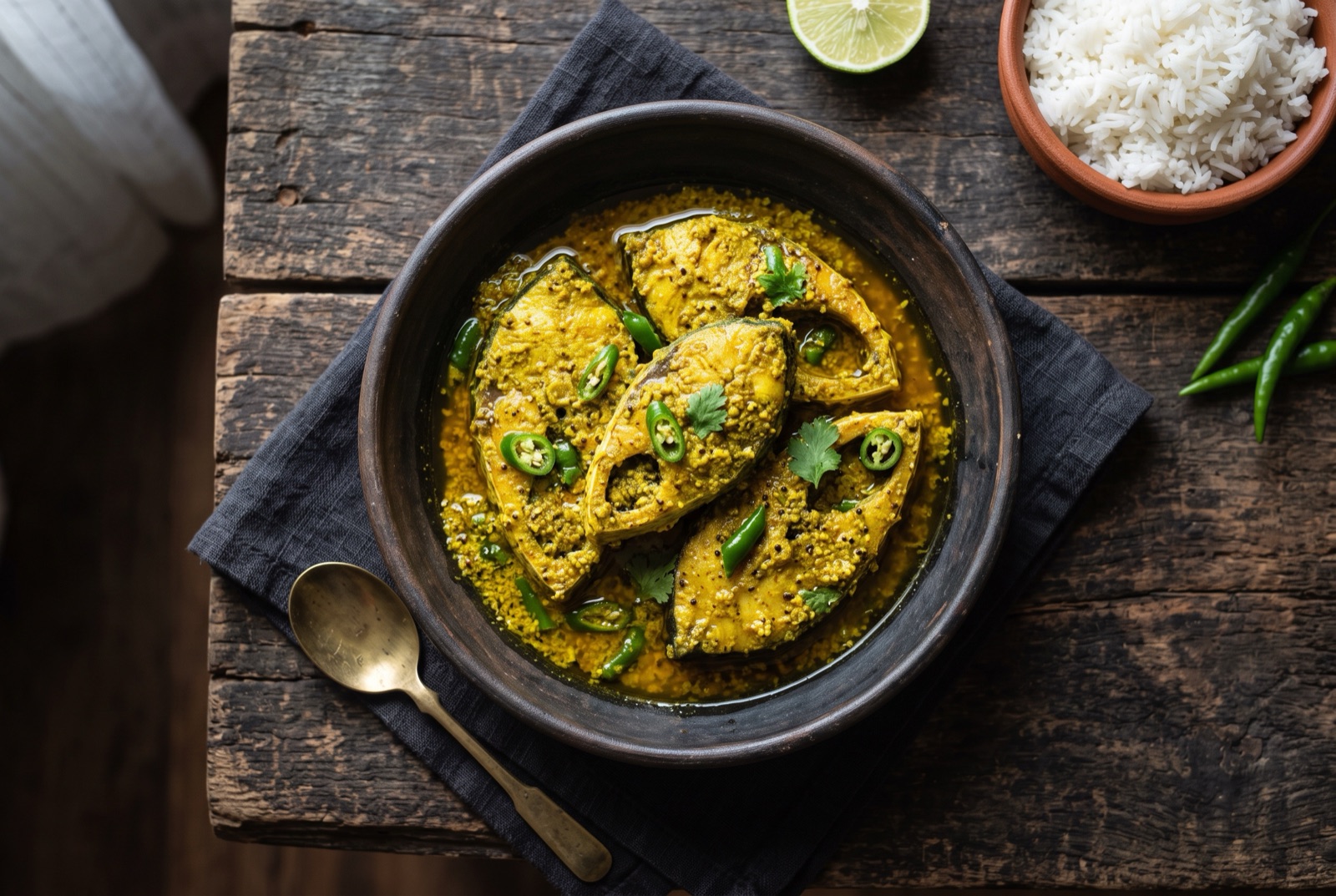
- Panta ilish
- The Pohela Boishakh version: panta bhat served with a piece of fried hilsa, fried dried chile and lime. Ceremonial rather than everyday, and expensive.
- Panta with aloo bhorta
- Served with mashed potato worked with raw mustard oil, chopped onion, green chile and salt. The most common everyday pairing in Bangladeshi homes.
- Pakhala bhata
- The Odia version from eastern India, often finished with yogurt and a tempering of mustard seeds and curry leaves rather than eaten plain.
Storage & reheating.
Panta bhat is a one-day food. Once fermented it should be eaten within a few hours at room temperature, or refrigerated and eaten the same day, since the souring continues and eventually tips into spoilage. Do not attempt to keep it for a second night — the safe window has already been used. If the water has gone cloudy-thick, smells alcoholic or sharp, or the rice feels slippery, discard it rather than tasting.
Serve with
Aloo bhorta or begun bhaja, fried dried fish or a fried egg, raw onion, whole green chiles and a wedge of lime — everything salted at the table, not in the pot.
The story behind Panta Bhat.
The logic behind panta bhat is entirely practical. In a delta climate where cooked rice spoils within hours, covering yesterday's rice with water slows the growth of the microbes that would ruin it and encourages the lactic bacteria that merely sour it. What began as preservation became a food in its own right, and for a great many rural Bangladeshi households panta bhat with a chile and an onion was, and in places still is, breakfast before a morning of field work. It is cheap, it is filling, and the cold water is genuinely welcome in April heat.
Once a year the dish changes register completely. On Pohela Boishakh, the first day of the Bengali year in mid-April, panta bhat is eaten ceremonially across Bangladesh, most famously with fried ilish. Crowds in Dhaka dress in red and white, fill the Ramna park area at dawn, and eat panta ilish from clay bowls. The pairing is modern rather than ancient — hilsa is expensive and out of season in April, and the combination raises regular complaints from conservationists about juvenile fish being caught for the occasion — but the ritual is now firmly established. There is a real irony in the country's cheapest food being served for one day a year with its most expensive fish.
Nutritionally the fermentation does something worth knowing about: overnight soaking increases the availability of iron and some B vitamins in the rice and reduces its phytate content, which is one reason the dish held up as a working breakfast on very little else. Traditional households drink the sour water, called panta's jol, along with the rice rather than draining it.
The accompaniments are where households differ. Fried dried fish (shutki) or a small fried ilish for those who can afford it, mashed potato with mustard oil, fried eggplant, a bitter green, a slice of lime, pickled mango. What stays constant is the raw onion, the whole green chile bitten between mouthfuls, and the salt added by each person at the table.
Questions, answered.
Is panta bhat safe to eat?
Yes, when the fermentation is controlled. Lactic bacteria acidify the water and inhibit spoilage organisms, which is why the technique existed before refrigeration. Use freshly cooked plain rice, cover it fully with clean water, keep it loosely covered, and eat it within roughly twelve hours at warm room temperature. If it smells alcoholic or sharply off, or the rice feels slimy, throw it away.
What does panta bhat taste like?
Mildly sour and slightly fizzy, in the range of buttermilk or a gentle sourdough, with the rice softer and looser than freshly cooked. Eaten plain it is bland by design — the seasoning comes from what you add at the table: salt, raw onion, crushed green chile, mustard oil and something fried and salty on the side.
Why is panta bhat eaten at Bengali New Year?
On Pohela Boishakh in mid-April, Bangladeshis eat panta bhat, usually with fried hilsa, as a deliberate return to the simplest rural food at the start of the year. Public celebrations in Dhaka centre on it. The pairing with expensive hilsa is a relatively modern addition and draws criticism, since April is outside the fish's natural season.
Can I make panta bhat in the fridge?
Not properly. Refrigeration slows lactic fermentation almost to a stop, so the rice will be cold and wet but not sour. The souring needs warm room temperature. If your kitchen is cool, leave it somewhere warmer, or give it a full 24 hours and check the smell before eating.
Do I drink the water or drain it?
Traditionally you eat it, water and all — the sour liquid is considered the cooling part of the meal and it carries most of the fermentation flavour. Some people drain off part of it if they find it too sour or too watery for eating with the hand. Draining all of it leaves you with plain soft rice and loses the point of the dish.
You might also like.
All recipes →
Keep exploring Bangladesh.
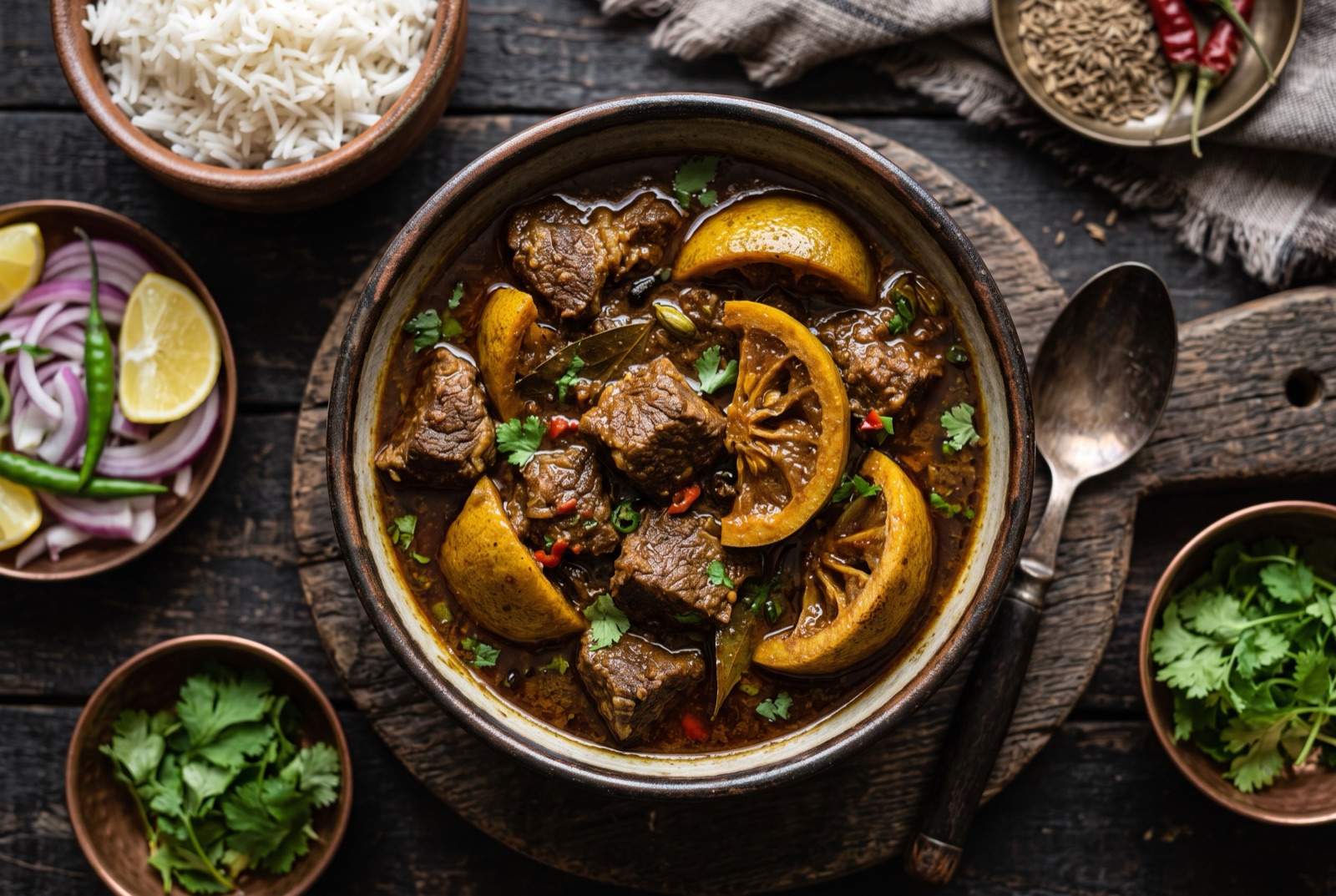
Bangladesh has 9 more dishes in the atlas — Beef Bhuna and Beef Shatkora, and 7 more.
All Bangladesh recipes Rice recipes Onion recipes Green chili recipes breakfastgluten freedairy freenut freeRecipe by The DishRoute Kitchen · published August 20, 2026 · updated August 20, 2026