Peameal Bacon Sandwich.
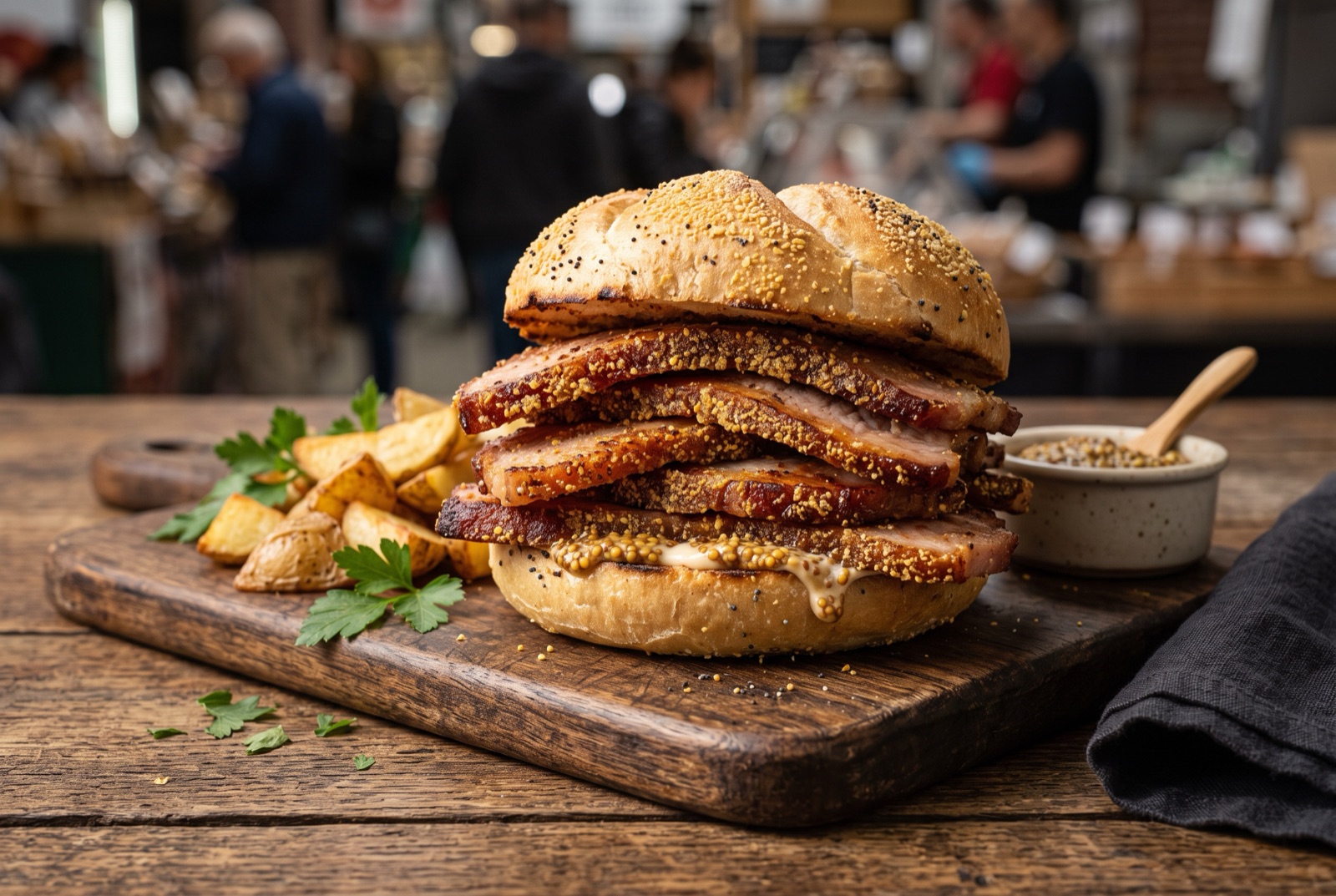
Cornmeal-Crusted Back Bacon Bun
Peameal bacon on a bun · say it: PEE-meal
Peameal bacon is a whole pork loin cured in brine, rolled in coarse cornmeal and sliced thick — unsmoked, so it tastes of clean pork and salt rather than smoke, with a faint sweetness from the cure. Griddled, the cornmeal crust turns sandy and crisp while the meat stays pale, juicy and firm, closer to a pork chop than to streaky bacon. Piled three or four slices deep on a soft kaiser roll with a smear of mustard, it is the standard breakfast at Toronto's St. Lawrence Market and one of the very few foods the city genuinely owns. The cure is three days of doing nothing; the actual cooking takes fifteen minutes. If you buy peameal ready-made, this becomes a ten-minute breakfast.

- Gate
- CanadaToronto, Ontario
- Prep
- 25 min
- Cook
- 15 min
- Total time
- 72 hr 40 min incl. 72 hr rest
- Serves
- 4
- Status
- Easy
- Nutrition / serving · estimated
- Calories 560 kcal
- Protein 46 g
- Carbs 45 g
- Fat 20 g
- Fiber 3 g
- Sodium 1480 mg
Why this recipe works.
- A three-day wet cure with maple and mustard seed produces genuinely traditional peameal, not a spice-rubbed pork chop pretending to be one.
- The cornmeal crust is applied and rested so it grips the meat instead of falling off in the pan.
- Cooking temperatures are written for lean loin, which goes from juicy to chalky in the space of about a minute.
- Includes a ten-minute path for anyone starting from shop-bought peameal.
Ingredients.
14 itemsFor the cure
For the coating
To assemble
Equipment
- Non-reactive container large enough to submerge the loin
- Kitchen scale accurate to 1 g
- Meat thermometer
- Heavy skillet or griddle
- Sharp slicing knife
Instructions.
Make the brine
Bring 500 ml of the water to a simmer with the kosher salt, brown sugar, maple syrup, mustard seeds, cracked pepper, garlic and bay, stirring until the salt and sugar dissolve. Take it off the heat, add the remaining cold water, and cool it completely. Only when it is cold, whisk in the weighed curing salt.
Tip Never add the loin to warm brine. The meat has to stay in the fridge zone throughout.
Cure for three days
Submerge the loin in the cold brine, weighing it down with a small plate so no part floats above the surface, and refrigerate for 3 days. Turn it once a day. By the end the meat should feel firm and springy rather than soft, and its cut surface will have turned an even pale pink.
Rinse, dry and coat
Lift the loin out, rinse it under cold water and pat it bone dry with paper towels. Spread the cornmeal on a tray and roll the loin in it, pressing firmly with your palms so a thick, even yellow coat sticks to every surface, including the ends.
Set the crust
Rest the coated loin uncovered on a rack in the fridge for at least an hour. The surface will dry to the touch and the cornmeal will bond to the meat — this is what stops it shedding when you slice and cook.
Slice
Cut the loin into slices 8 to 10 mm thick with a sharp knife, pressing straight down rather than sawing so the crust stays intact. You should get twelve to sixteen slices; four per sandwich is the market standard.
Griddle the slices
Melt a knob of butter in a heavy pan over medium-high heat and cook the slices in batches for 3 to 4 minutes a side, until the cornmeal is toasted deep gold and audibly crisp and the meat reads 62°C in the centre. It should be pale pink inside, not white.
Tip Lean loin passes from juicy to chalky in about a minute. Use a thermometer and pull it early.
Build the sandwich
Toast the split kaiser rolls cut-side down in the same pan for 30 seconds, until they take on the pork fat and turn gold. Spread the bottoms with mustard, stack on three or four hot slices, close, press once, and eat standing up.
Tip Assemble at the last second — the crust softens fast once mustard meets it.
Tips from our kitchen.
- Curing salt (Prague Powder #1) is needed for a multi-day brine — it keeps the meat safe and gives peameal its characteristic pale pink colour. Weigh it exactly; it is not interchangeable with table salt.
- Choose the centre-cut of the loin, evenly thick from end to end. Tapered ends cure unevenly and the thin end overcooks in the pan while the thick end is still cold.
- Coarse cornmeal or polenta grind, not fine cornflour. Fine meal turns to paste on the wet surface instead of forming a crust you can hear.
- After coating, leave the loin uncovered in the fridge for an hour. The crust dries onto the meat and stops sliding off when you slice.
- Slice 8 to 10 mm thick. Thin slices dry out before the crust colours; thicker than a centimetre and the middle stays cold unless you finish it in the oven.
- Pull the slices at 62–63°C internal. Loin is lean and unforgiving — a few degrees more and it turns dry and chalky.
Substitutions.
- Home-cured pork loin → Shop-bought peameal bacon, sliced 8 mm thick
- Widely sold in Canada and increasingly elsewhere. Skip straight to the griddling step and the whole sandwich takes ten minutes.
- Cornmeal coating → Coarse semolina, or ground yellow split peas for the historical original
- Ground yellow peas are how it was actually done before cornmeal took over, and they give a slightly earthier crust. Semolina behaves almost identically to cornmeal.
- Kaiser roll → A soft brioche bun or an English muffin
- You want a soft roll with a light crust. A crusty baguette-style roll fights the meat and pushes the filling out the back.
Variations.
- Peameal with egg and cheddar
- A fried egg and a slice of sharp Ontario cheddar melted over the hot meat. The most common upgrade at Toronto counters.
- Maple-glazed roast
- Instead of slicing, roast the whole cured loin at 160°C, brushing with maple syrup every 15 minutes until it reaches 62°C. Sunday dinner rather than breakfast.
- Peameal Benedict
- Thick griddled slices on a toasted English muffin with poached eggs and hollandaise — a diner brunch fixture across Ontario.
Storage & reheating.
Cured, uncooked peameal keeps a week refrigerated wrapped in paper, and freezes for 3 months — freeze it in slices with paper between them so you can take out what you need. Cooked slices keep 3 days in the fridge and reheat best in a dry pan for a minute a side; a microwave turns the cornmeal crust soft and the meat rubbery. Assembled sandwiches should be eaten immediately, since the crust loses its snap within a few minutes of meeting mustard.
Serve with
Yellow or grainy mustard, sliced dill pickles, and black coffee. Maple syrup on the side is a legitimate and much-argued option.
The story behind Peameal Bacon Sandwich.
Peameal bacon is a Toronto invention born of the nineteenth-century pork trade. The city was a major pork-packing centre — it earned the nickname Hogtown honestly — and processors needed a way to keep cured loins from spoiling before they reached British markets. The answer was to roll the wet-cured meat in ground yellow field peas, which drew moisture off the surface and formed a protective coat. That pea meal is where the name comes from. When yellow peas became more expensive than corn, processors switched to cornmeal, and the coating has been cornmeal for well over a century — which is why the name confuses every visitor who looks at the yellow crust and asks where the peas are.
What separates it from other bacons is the cut and the absence of smoke. Peameal comes from the boneless loin, the lean muscle running along the back, so it is meat rather than fat with streaks of meat. It is wet-cured in brine and never smoked, which leaves the flavour clean and pork-forward. British back bacon is the closest relative but is usually smoked or dry-cured and never coated; American bacon comes from the belly and is a different food entirely. The unhelpfully vague term "Canadian bacon" used in the United States usually refers to a pre-cooked, smoked round of loin that has little to do with what a Toronto butcher would hand you.
The sandwich itself is inseparable from the St. Lawrence Market, where the Carousel Bakery has served peameal on a kaiser roll for decades and where a queue forms most Saturday mornings well before anyone should reasonably be eating grilled pork. The construction is fixed by custom: soft kaiser, three or four thick slices, mustard, and that is the argument settled. People add cheese, egg or maple syrup, and nobody stops them, but the plain version is the one the city defends.
Questions, answered.
Why is it called peameal if it is coated in cornmeal?
Because it originally was coated in ground yellow field peas. Toronto pork packers in the 1800s rolled cured loins in pea meal to draw off surface moisture and help the meat keep on its way to British markets. When cornmeal became cheaper and easier to source than dried peas, processors switched the coating but kept the name. The crust has been cornmeal for well over a century and the name has never caught up.
What is the difference between peameal bacon and Canadian bacon?
Peameal bacon is a wet-cured, unsmoked pork loin rolled in cornmeal and sold raw, to be cooked at home. What is sold in the United States as "Canadian bacon" is usually a smoked, fully cooked round of loin with no coating, closer to a thin slice of ham. They come from the same cut but taste noticeably different: peameal is clean and pork-forward, the American product is smoky and already cooked.
Do I need curing salt to make peameal at home?
For a brine lasting three days at refrigerator temperature, yes. Curing salt containing sodium nitrite protects against dangerous bacteria across a long low-temperature cure, and it also produces the pale pink colour that distinguishes cured loin from plain roast pork. Use precisely the weight given, weighed on a scale. If you prefer not to use it, do not extend the brine — season and cook the loin fresh as a pork chop instead.
Why did my cornmeal crust fall off in the pan?
The surface was too wet, or the coated loin was not rested before slicing. Pat the cured loin thoroughly dry, press the cornmeal on firmly rather than sprinkling it, then leave the coated meat uncovered in the fridge for an hour so the crust dries and adheres. Also make sure the pan is properly hot before the slices go in — meat laid into a lukewarm pan sticks and drags its coating off.
Can I cook peameal bacon in the oven?
Yes, and it is the easier route when you are feeding several people. Lay the slices on a rack over a baking tray and roast at 200°C for 12 to 15 minutes, turning once, until the internal temperature is 62°C. The crust will be drier and less crisp than a griddled one, so many cooks finish the slices for 30 seconds a side in a hot pan before assembling.
You might also like.
All recipes →
Keep exploring Canada.
Canada has 9 more dishes in the atlas — Bannock and Bloody Caesar, and 7 more.
Recipe by The DishRoute Kitchen · published August 20, 2026 · updated August 20, 2026