Poulet DG.
Cameroonian Chicken with Fried Plantain
Poulet Directeur Général · say it: poo-LEH day-ZHAY
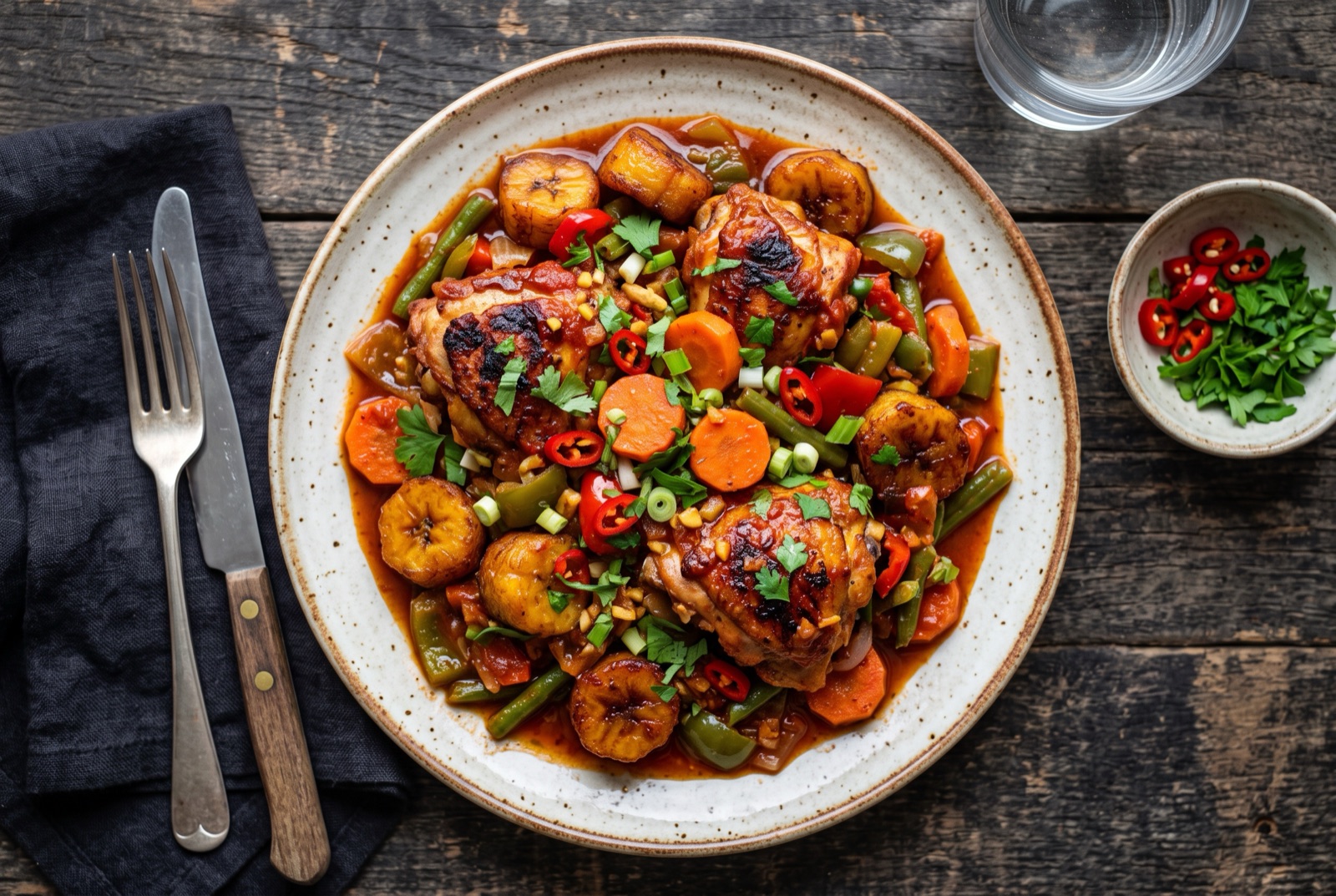
Poulet DG is chicken and ripe plantain, each fried separately until golden, then folded together in a bright tomato-and-pepper sauce with carrot, green beans and strips of sweet pepper. Nothing stews for long: everything is cooked to its own best texture first and combined at the last minute, so the plantain stays sweet and slightly caramelised at the edges, the vegetables keep a snap, and the chicken holds a crisp surface under the sauce. The taste is sweet-savoury and mildly spiced rather than fiery, closer to a warm-weather braise than to a heavy stew. The name is short for poulet Directeur Général — director-general chicken — an affectionate joke about a dish rich enough that only the boss was eating it.

- Gate
- CameroonLittoral and Centre
- Prep
- 30 min
- Cook
- 45 min
- Total time
- 1 hr 45 min incl. 30 min rest
- Serves
- 5
- Status
- Medium
- Nutrition / serving · estimated
- Calories 720 kcal
- Protein 41 g
- Carbs 58 g
- Fat 37 g
- Fiber 7 g
- Sugar 21 g
- Sodium 960 mg
Why this recipe works.
- Fries each component separately so the plantain stays caramelised instead of dissolving into the sauce.
- Marinates the chicken with ginger, garlic and thyme first, which seasons the meat rather than only the coating.
- Uses a short, sharp sauce reduction so the vegetables keep their bite and colour.
- Explains exactly how ripe the plantain must be, which is where most home versions go wrong.
Ingredients.
18 itemsFor the chicken
For frying
For the sauce
To finish
Equipment
- Large frying pan or wok
- Deep pan for frying plantain
- Wire rack
- Sharp knife
Instructions.
Marinate the chicken
Rub the chicken pieces with the grated garlic and ginger, thyme, white pepper and salt. Cover and leave at room temperature for 30 minutes, or refrigerate up to overnight for a deeper seasoning.
Fry the chicken
Heat 2 cm of oil in a deep pan over medium-high heat and fry the chicken in batches for about 8 minutes per batch, turning, until the skin is a deep even brown and firm to the touch rather than pale and soft. Drain on a rack; the pieces do not need to be cooked through yet.
Tip Do not crowd the pan. Two roomy batches brown far better than one crammed one.
Fry the plantain
In the same oil, fry the plantain slices in a single layer for 2 to 3 minutes a side, until the edges are burnished amber and the centres yield to a fork. Lift onto the rack and salt lightly while hot.
Tip They darken fast once the sugars start catching. Stay at the pan for this one.
Blanch the vegetables
Drop the carrot batons into boiling salted water for 2 minutes, add the green beans for 1 minute more, then drain and run under cold water. They should still squeak against the teeth.
Build the sauce
Pour off all but 3 tablespoons of the frying oil. Cook the sliced onions over medium heat for 6 minutes until soft and translucent, stir in the tomato paste and fry for 2 minutes until it turns brick red, then add the blended tomato, scotch bonnet and bay leaves.
Reduce and return the chicken
Simmer the sauce for 12 to 15 minutes, stirring occasionally, until it darkens, loses its raw tomato smell and the oil separates out at the edges. Pour in the stock, return the chicken, and simmer 10 minutes more until cooked through and the sauce clings to the pieces.
Fold everything together
Add the pepper strips, carrots and green beans and toss for 2 minutes so they warm through but keep their colour. Turn off the heat, fold in the fried plantain with two or three gentle turns of a wide spoon, and scatter over the parsley. Serve straight from the pan.
Tips from our kitchen.
- Plantains should be yellow with plenty of black patching and give slightly when squeezed. Green or barely yellow plantain fries dry and starchy and leaves the dish flat.
- Fry the plantain in a single uncrowded layer and turn once. Crowding steams them soft, and soft plantain breaks apart when it meets the sauce.
- Drain everything on a rack rather than paper towels so the fried surfaces stay crisp until assembly.
- Cut the carrot and green beans on a bias into similar lengths — they should read as one component with the pepper strips, not as three separate garnishes.
- Fold the plantain in at the very end, off direct heat, using a wide spoon and as few turns as possible.
- If the sauce looks thin, reduce it before the chicken goes back in. Adding the fried pieces to a watery sauce softens them for nothing.
Substitutions.
- Ripe plantain → Firm, barely ripe banana in a pinch, or sweet potato batons
- Neither is a real replacement. Banana turns to mush and is too sweet; sweet potato gives you the sweetness and body but none of the plantain's slight chew. Plantains are widely stocked in African, Caribbean and Latin American shops and ripen on the counter in a few days.
- Scotch bonnet → Habanero, or half a red chilli plus a pinch of paprika
- Scotch bonnet carries a fruity aroma alongside the heat, which is part of the dish. A generic chilli gives heat without perfume, so add a little sweet pepper to compensate.
- Chicken thighs → A whole chicken jointed into 8 pieces, or drumsticks
- Thighs are the most forgiving because they stay juicy through frying and reheating. Breast dries out and is not recommended unless cut into large chunks and added at the last moment.
Variations.
- Poulet DG aux champignons
- Mushrooms fried separately and folded in with the vegetables, adding an earthy note that stands up well to the sweetness of the plantain.
- Grilled version
- The chicken marinated and grilled over charcoal instead of fried, then chopped into the sauce. Lighter, smokier, and a common home shortcut.
- Poisson DG
- The same treatment with thick fish steaks in place of chicken, fried firm and added at the end so they do not break up.
Storage & reheating.
Best eaten the day it is made, because the plantain softens overnight. Leftovers keep 2 days refrigerated and reheat best in a wide pan over medium heat, uncovered, so the sauce tightens rather than steams. Microwaving turns the plantain pasty. Do not freeze the assembled dish; if you want a head start, fry and freeze the chicken alone, then make the sauce and fry fresh plantain on the day.
Serve with
Nothing, really — it is a complete plate. A green salad with a sharp vinaigrette on the side cuts the richness if you want one.
The story behind Poulet DG.
Poulet DG is young by the standards of Cameroonian cooking, a restaurant and celebration dish that spread through Douala and Yaoundé over recent decades rather than a village recipe passed down for centuries. The name itself is the story. Chicken, in a country where meat was expensive and plantain was cheap, was already a marker of a good day; add fried plantain, imported vegetables and enough oil to fry everything twice, and you had a plate associated with people who had arrived — directors, ministers, anyone with a company car. Calling it Directeur Général was a wink, and the joke stuck so completely that the full phrase is now rarely said aloud.
What makes it interesting technically is that it is assembled, not simmered. Most West and Central African stews get their character from long cooking in one pot, where every ingredient surrenders its texture to the sauce. Poulet DG does the opposite. The chicken is browned or deep-fried, the plantain fried to order, the vegetables barely cooked, and the sauce built separately to coat rather than to submerge. The result reads almost like a stir-fry in a region that does not stir-fry, which is exactly why it looks so good on a serving platter and why it became the dish caterers reach for at weddings and christenings.
There is no fixed version. Some cooks use whole jointed chicken, others use thighs alone. Some add mushrooms, some add leeks, and the argument over whether green beans belong is real. What is agreed on is the plantain, which must be genuinely ripe — yellow with black patches, not the firm green plantain used for savoury boiling. That ripeness is what supplies the sweetness the sauce plays against, and substituting an underripe plantain is the single most common way the dish is ruined outside Cameroon.
Questions, answered.
Why is it called Poulet DG?
DG stands for Directeur Général, French for director-general or chief executive. The name is a joke about the cost of the dish: chicken plus ripe plantain plus imported vegetables plus enough oil to fry everything was, for a long time, a meal associated with people at the top of a company. The nickname stuck and is now used seriously on restaurant menus across Cameroon.
How ripe should the plantains be?
Yellow with substantial black patching, soft enough to dent under thumb pressure but not squashy. At that stage the starch has converted to sugar, so the slices caramelise on the outside and stay creamy inside. Green or pale yellow plantain will fry into dry, bland chips that contribute nothing to the dish.
Can I bake the plantain instead of frying it?
Yes. Toss the slices in a little oil and roast at 200C for about 25 minutes, turning once, until the edges are deep brown. They come out drier and less rich than fried, and you lose some of the caramelised crust, but it is a reasonable trade if you would rather not deep-fry. Do not skip the browning entirely.
Is Poulet DG spicy?
Only mildly. One scotch bonnet across a dish serving four to six gives a warm background heat, and the sweetness of the plantain softens it further. It is usually served with a separate chilli sauce so anyone who wants real heat can add it themselves, which makes it a safe dish for guests with mixed tolerance.
Can I make it ahead for a party?
Partly. Fry the chicken and make the sauce up to a day ahead and refrigerate them separately. On the day, reheat the sauce, fry the plantain fresh, blanch the vegetables and assemble at the last minute. The plantain is the only component that genuinely will not wait, so plan the timing around it.
You might also like.
All recipes →
Keep exploring Cameroon.
Cameroon has 9 more dishes in the atlas — Achu Soup and Beignets Haricots, and 7 more.
All Cameroon recipes Chicken recipes Plantain recipes Carrot recipes maindairy freegluten freehalal friendlyRecipe by The DishRoute Kitchen · published August 20, 2026 · updated August 20, 2026