Rendang Padang.
Minangkabau Dry-Braised Coconut Beef
Randang · Rendang Padang · say it: REN-dahng PAH-dahng
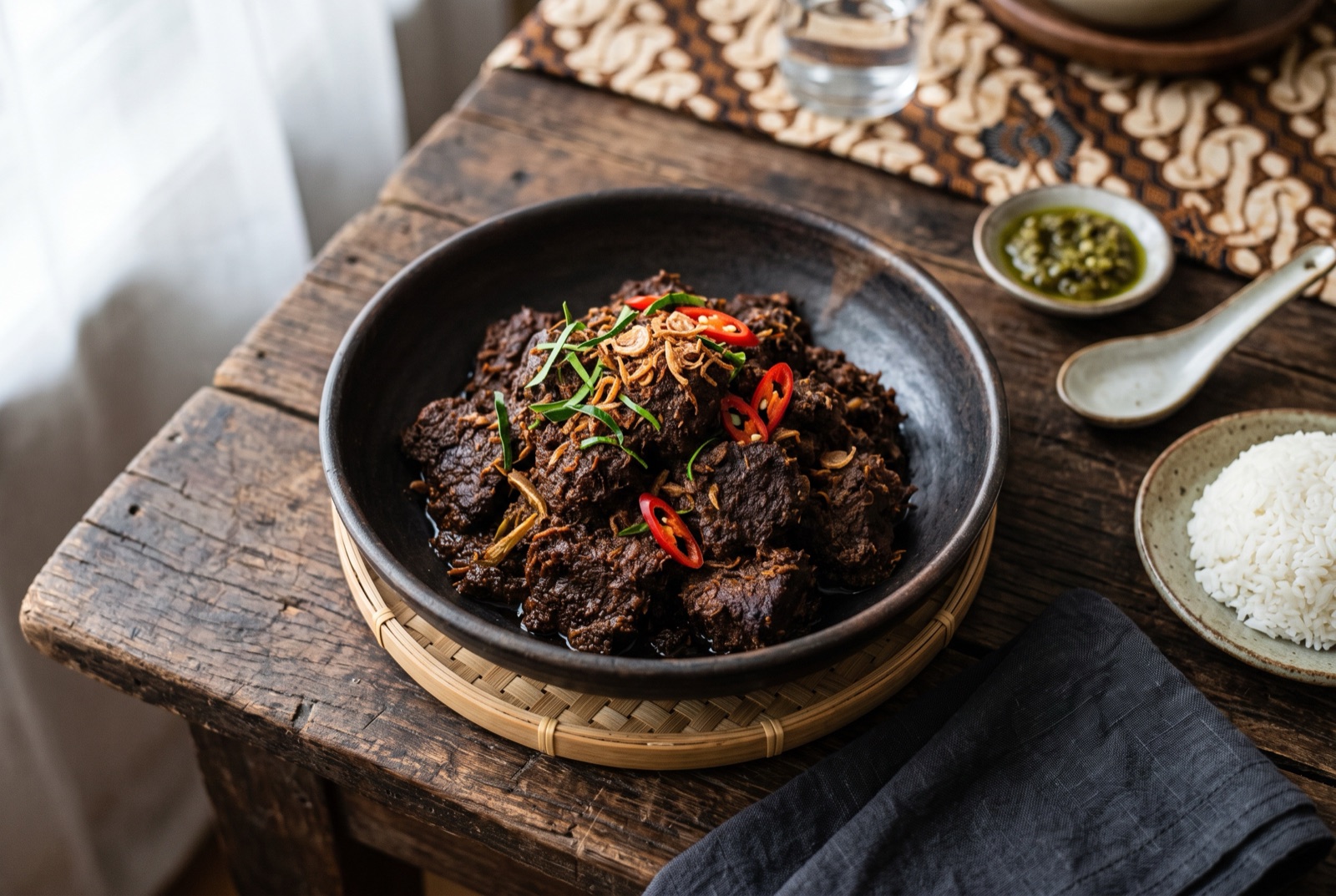
Rendang is not a curry, and the confusion costs people a good dinner. It starts as one — chunks of beef in coconut milk and spice paste — but you keep cooking long after a curry would be finished, past the point where the sauce thickens, until the coconut milk breaks, releases its oil, and the meat begins to fry in that oil while the spices toast around it. What comes out is dark brown, barely wet, intensely savory, and sweet-hot in a way that keeps building. Padang-style rendang, the dry Minangkabau original, is drier and darker than the saucier versions sold elsewhere. It takes three to four hours and almost no skill, only patience and a wooden spoon.

- Gate
- IndonesiaWest Sumatra
- Prep
- 40 min
- Cook
- 3 hr 30 min
- Total time
- 4 hr 30 min incl. 20 min rest
- Serves
- 6
- Status
- Takes skill
- Nutrition / serving · estimated
- Calories 615 kcal
- Protein 39 g
- Carbs 13 g
- Fat 46 g
- Fiber 4 g
- Sugar 6 g
- Sodium 780 mg
Why this recipe works.
- Takes the beef all the way to true dry rendang and tells you exactly what the pot looks like at each stage, so you can stop at kalio if you prefer sauce.
- Includes kerisik — toasted ground coconut — which is what separates real rendang from beef in coconut sauce.
- Uses chuck rather than lean cuts, so three hours of cooking makes the meat tender instead of stringy.
- Honest about heat: the chile quantity is scaled for a Western palate, with instructions for taking it back to Padang strength.
Ingredients.
18 itemsFor the beef
For the spice paste
For the pot
For the kerisik
Equipment
- Wide heavy pot or deep sauté pan (a wok is traditional)
- Blender or food processor for the spice paste
- Dry frying pan for the kerisik
- Wooden spoon
Instructions.
Make the kerisik
Toast the coconut in a dry pan over medium-low heat, stirring constantly, for 8–12 minutes until it goes from pale to the color of milk chocolate and smells like toffee. Blend or pound it while still warm until the oil comes out and it collapses into a dark, slightly wet paste. Set aside.
Tip The moment it starts smelling nutty, watch it every second — burnt coconut turns the whole dish bitter and there is no fixing it.
Blend the spice paste
Drain the soaked chiles and blend them with the shallots, garlic, ginger, galangal, fresh turmeric, candlenuts and coriander, adding a splash of the coconut milk to get the blades moving. Run the machine until you have a smooth red-orange paste with no visible chile skins.
Fry the paste
Scrape the paste into a wide heavy pot over medium heat and cook it, stirring often, for 10–12 minutes. It is ready when the raw shallot smell is gone, the color has darkened to brick red, and you can see oil pooling at the edges of the pan.
Tip Undercooked paste tastes sharp and vegetal at the end of four hours. This ten minutes is the one you cannot rush.
Add the coconut milk and beef
Pour in the coconut milk and add the lemongrass, kaffir lime leaves, turmeric leaf, salam leaves, palm sugar, tamarind and salt. Bring to a simmer, stir in 1 kg of beef, and leave the pot uncovered from here to the end.
Simmer to the gulai stage
Cook at a lazy simmer for about 90 minutes, stirring every 15 minutes and scraping the base. The sauce will still be pale and soupy, and the beef will be cooked but not yet tender. Do not raise the heat to hurry it.
Reduce to kalio
Continue for another 60–75 minutes, stirring more often as the pot thickens. The sauce turns caramel brown, coats the beef, and clings to the spoon — this is kalio, and if you want a saucy dish you can stop here and season to taste.
Tip You will see fat starting to bead on the surface. That is the coconut beginning to break, and it means the last stage is close.
Fry it dry
Stir in the kerisik and keep cooking, now stirring almost constantly, for a final 30–45 minutes. The sauce will break into shimmering coconut oil, the solids will turn dark brown and cling to the meat, and the pot will start to sound like frying rather than bubbling.
Tip Done is when a spoon dragged across the base leaves a clear track that does not fill in, and the meat is coated in a dry, almost-black crust.
Rest and serve
Pull out the lemongrass, leaves and turmeric leaf, then taste and correct with salt and a pinch more palm sugar. Let the rendang sit at least 20 minutes before serving with steamed rice — the flavor settles noticeably as it cools.
Tips from our kitchen.
- Soak the dried chiles in hot water for 20 minutes before blending, or the paste will stay gritty no matter how long you run the machine.
- Use full-fat coconut milk, never light. The whole technique depends on the coconut fat separating out at the end — light coconut milk simply evaporates and leaves you with dry beef.
- Do not cover the pot. Rendang is a reduction, and a lid puts the water straight back in.
- Stir more often as it thickens. For the first hour, every 15 minutes is fine; in the last 40 minutes it needs almost constant attention or the sugars scorch on the bottom.
- Toast the coconut for the kerisik over medium-low heat and stay with it. It goes from golden to burnt in under a minute, and burnt kerisik makes the whole pot bitter.
- Rendang tastes better on day two. If you can, make it a day ahead and reheat gently with a splash of water.
Substitutions.
- Fresh galangal → Frozen galangal slices, or 2 tsp galangal powder
- Frozen is very close to fresh and Asian supermarkets always carry it. Do not substitute ginger — galangal is sharper and more medicinal, and its absence is noticeable. Ginger alone makes a good stew that is not rendang.
- Kaffir lime leaves and turmeric leaf → Lime zest, and omit the turmeric leaf
- Turmeric leaf is hard to find outside Southeast Asia and the dish survives without it. Kaffir lime leaves freeze well, so buy a bag when you see them.
- Beef chuck → Beef shank, brisket, or jackfruit for a vegan version
- Any collagen-rich cut works. Young green jackfruit makes a genuinely good meat-free rendang and needs only about 60 minutes of simmering.
- Dried red chiles → Kashmiri chile for color plus a smaller amount of hot chile
- Padang cooks use large mild chiles for the deep red base and add bird's eye chiles for heat. Splitting the job this way lets you get the color without the burn.
Variations.
- Kalio
- Stop cooking about 45 minutes early, while the sauce is still a thick, glossy caramel-brown gravy. Lighter, saucier and eaten with rice as an everyday dish rather than a feast one.
- Rendang ayam
- The same paste with bone-in chicken thighs instead of beef. Reduce total cooking to about 75 minutes — chicken cannot take four hours and will shred to threads.
- Rendang jengkol or rendang telur
- Sumatran versions built on jengkol beans or on hard-boiled eggs. Rendang telur, made with egg fried into crisp shards, is a Payakumbuh specialty sold as a shelf-stable snack.
Storage & reheating.
Properly dry rendang keeps 5–7 days refrigerated and freezes for 3 months, which is the whole point of the technique. Reheat in a pan over low heat with 2–3 tablespoons of water, stirring until the coating loosens and the meat steams. Microwaving works but dulls the aroma. If your rendang is still saucy, treat it like any braise and eat it within 3 days.
Serve with
Plain steamed rice, a green vegetable such as stir-fried cassava leaves or water spinach, and sambal hijau — the green chile relish that always sits on a Padang table.
The story behind Rendang Padang.
Rendang belongs to the Minangkabau people of West Sumatra, and it was built for a purpose: to keep. Long cooking drives off the water, coconut oil and spices coat the meat, and the result stays edible for days without refrigeration — useful in a hot climate, and essential to merantau, the Minangkabau tradition in which young men leave home to seek their fortune elsewhere in the archipelago. Rendang travelled with them, which is why Padang food is now sold in every Indonesian city and far beyond, in Malaysia and Singapore where cooks make their own related versions.
At home in Sumatra it is ceremonial food, not weeknight food. Rendang appears at weddings, at adat gatherings, at the feasts marking the end of Ramadan, cooked in enormous woks over wood fire by several people taking turns at the stirring. Minangkabau cooks recognize distinct stages along the way and name them: gulai while the sauce is still loose and pale, kalio once it has reduced to a thick caramel-brown gravy, and only rendang at the very end, when the liquid is gone and the meat is dark and glossy. Many people genuinely prefer kalio and stop there. Stopping early is not a mistake, but it is a different dish, and a Minang cook will tell you which one you made.
The spice paste is the other half of the identity. Shallots, garlic, ginger, turmeric and a great deal of dried red chile go into it, but galangal and lemongrass are what make it taste Sumatran rather than generically curried, and kerisik — coconut toasted dark then ground to a paste — is what deepens the color and gives rendang its faintly nutty finish. In 2011 a CNN reader poll voted rendang the most delicious food in the world, an internet result Indonesians have enjoyed ever since. Nobody in Padang seemed surprised.
Questions, answered.
What is the difference between rendang and kalio?
They are the same pot at different times. Kalio is the stage where the coconut milk has reduced to a thick brown gravy and the dish still has sauce; rendang is what you get if you keep cooking another 40–60 minutes until the liquid is gone, the coconut oil has separated, and the meat fries dark in that oil. Many restaurants outside Indonesia serve kalio and call it rendang.
Why did my rendang turn out dry and tough instead of tender?
Almost always the wrong cut or too high a heat. Lean cuts like sirloin or round have no collagen to melt, so hours of cooking just squeezes them dry. Use chuck, shank or brisket, and keep the pot at a lazy simmer with occasional bubbles rather than a rolling boil, which tightens the muscle fibres before they have time to soften.
Can I make rendang in a pressure cooker or slow cooker?
Partly. A pressure cooker tenderizes the beef quickly, but it traps steam, and rendang needs evaporation — so pressure cook for 25 minutes, then transfer everything to a wide pan and do the final uncovered reduction on the stove. A slow cooker never reaches the temperature where the coconut oil separates, so it produces a decent coconut beef stew but not rendang.
How spicy is authentic rendang?
In West Sumatra, very. A traditional paste can use 20 or more dried chiles per kilo of beef, and the heat is part of the flavor rather than a challenge. This recipe uses about half that, which gives clear warmth without numbing the spices. Add more dried chile for depth and color, and bird's eye chiles if you want real burn.
What is kerisik and do I need it?
Kerisik is grated coconut toasted in a dry pan until deep brown, then pounded or blended until it releases its oil and turns into a dark paste. It adds nuttiness, color and body, and it is what makes the difference between rendang and beef in coconut sauce. You can leave it out and still eat well, but the result will taste noticeably flatter.
You might also like.
All recipes →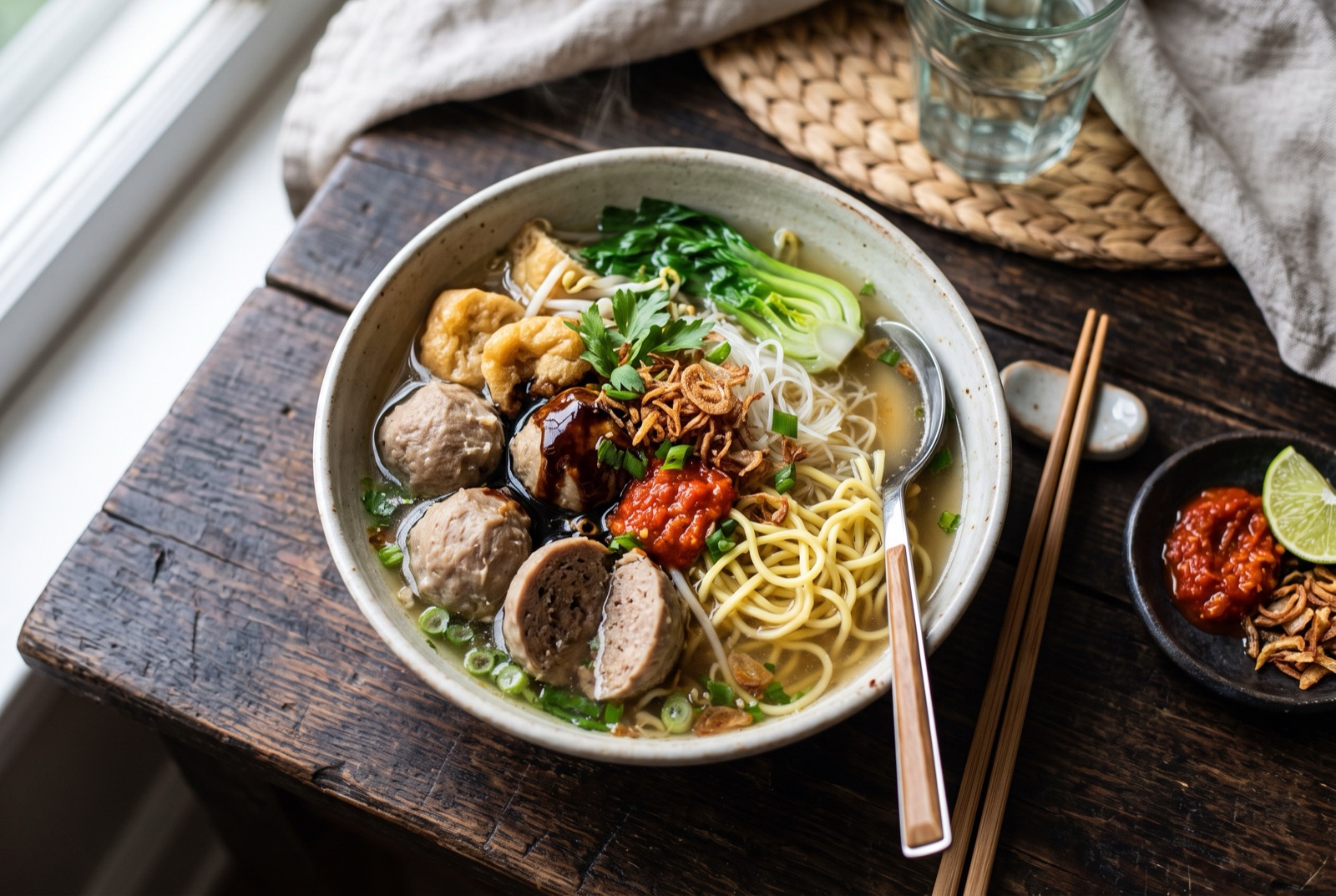
Keep exploring Indonesia.
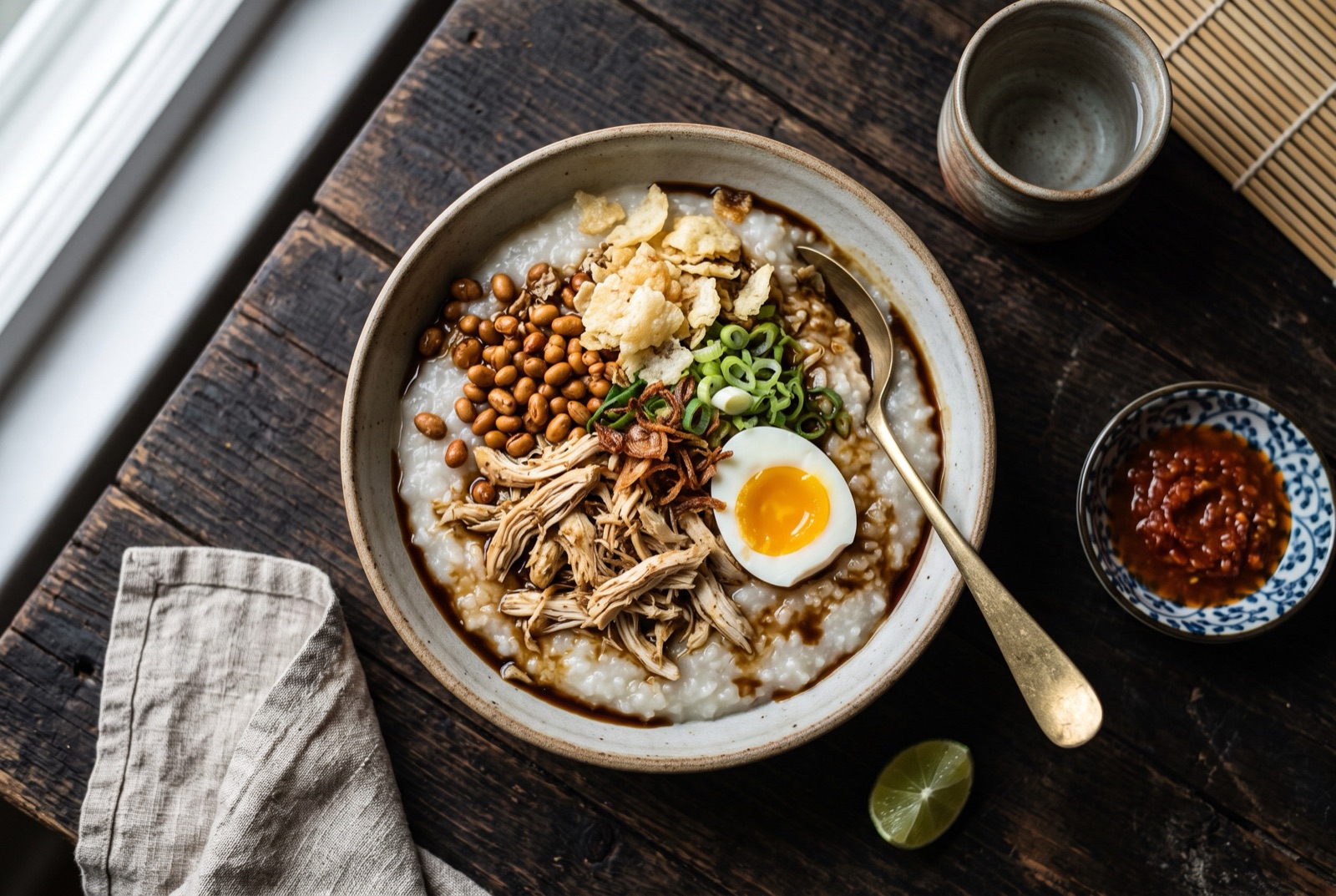
Indonesia has 9 more dishes in the atlas — Bakso and Bubur Ayam, and 7 more.
All Indonesia recipes Beef chuck recipes Garlic recipes Ginger recipes maingluten freedairy freehalal friendlyRecipe by The DishRoute Kitchen · published August 19, 2026 · updated August 19, 2026