Selsko Meso.
Macedonian Village Pork and Mushroom Pot
Селско месо · say it: SEL-sko MEH-so
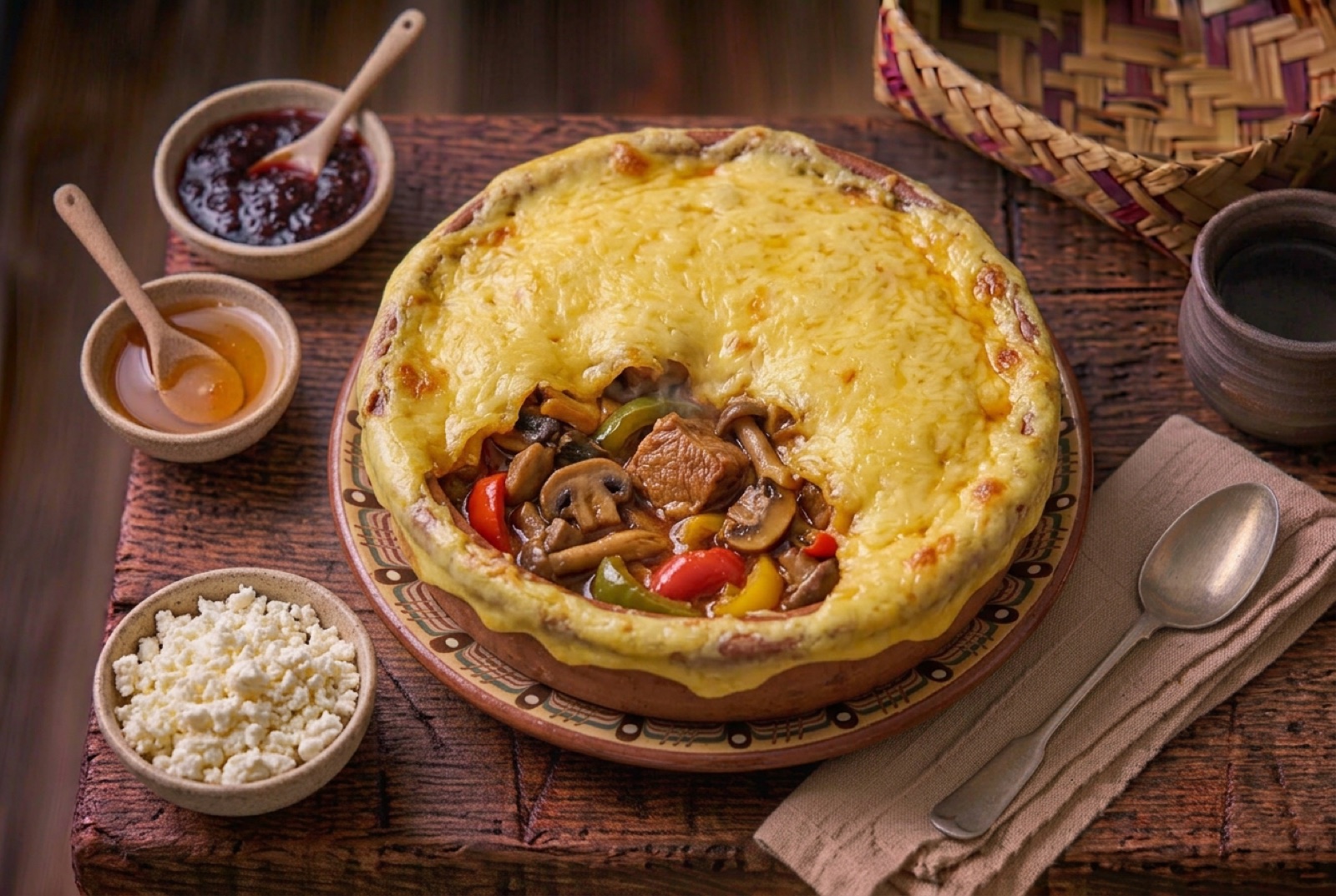
Selsko meso means village meat, and it is what a Macedonian kitchen makes when it wants something rich without anything fussy: cubes of pork browned hard, then baked slowly in a small clay pot with mushrooms, sliced peppers, onion, a splash of white wine and enough paprika to stain the sauce orange. Near the end a slice of kashkaval goes on top and melts into a lid, or an egg is cracked in to set in the heat. The result is dense, savoury and slightly winey, with mushrooms that have given up their liquid and taken on the meat. It arrives at the table in the pot it cooked in, still spitting at the rim.

- Gate
- North MacedoniaNationwide, strongest in Skopje taverns
- Prep
- 25 min
- Cook
- 1 hr 30 min
- Total time
- 1 hr 55 min
- Serves
- 4
- Status
- Medium
- Nutrition / serving · estimated
- Calories 610 kcal
- Protein 48 g
- Carbs 15 g
- Fat 38 g
- Fiber 4 g
- Sodium 780 mg
Why this recipe works.
- Meat is browned in batches first, so the sauce gets real fond rather than the grey wash you get from a crowded pan.
- Mushrooms are cooked separately until their water has driven off, which keeps the finished pot thick instead of watery.
- Works in individual clay pots or one shared dish, with timings given for both.
- Explains the cheese-versus-egg finish rather than picking one and pretending the other does not exist.
Ingredients.
15 itemsFor the pot
To finish
Equipment
- Heavy frying pan
- Clay pots or a lidded ovenproof casserole
- Sharp knife
Instructions.
Brown the pork
Pat the pork cubes dry and season with salt. Heat 2 tablespoons of oil in a heavy pan until it shimmers and brown the meat in two or three batches, 4 to 5 minutes per batch, until each piece has at least two deeply coloured faces. Set aside.
Tip Wait for the meat to release itself from the pan before turning it — if it sticks, the crust has not formed yet.
Sear the mushrooms
Add the remaining oil and the mushrooms to the same pan over high heat. Cook without stirring for 2 minutes, then toss and continue for 5 to 6 minutes until they have shrunk by half, squeak against the pan and take on brown edges. Lift them out.
Soften onions and peppers
Lower the heat, add the onions and peppers to the pan and cook for 8 minutes until they slump and the onion edges turn gold. Stir in the garlic and tomato paste and cook 1 minute more, until the paste darkens from bright red to brick.
Build the sauce
Take the pan off the heat and stir in the paprika so it dissolves into the fat without scorching. Return to the heat, pour in the wine and scrape the base clean, then let it bubble for 3 minutes until the sharp alcohol smell has gone. Add the stock, bay leaves and black pepper.
Fill the pots and bake
Divide the pork, mushrooms and sauce between four clay pots, or tip everything into one lidded casserole. The liquid should come about two-thirds of the way up the meat. Cover and bake at 180°C for 60 minutes, until the pork gives no resistance to a fork.
Melt the cheese
Uncover, lay a thick slice of kashkaval over each pot and return to the oven for 10 minutes, until the cheese has slumped into a lid with blistered brown spots and the sauce is bubbling up around its edges.
Serve straight from the pot
Scatter parsley over each pot and take them to the table on wooden boards while they are still spitting. Warn people that the clay stays scorching for a good ten minutes.
Tips from our kitchen.
- Cut the pork into generous 3 cm cubes. Smaller pieces shred and disappear into the sauce during the long bake.
- Brown the meat in two or three batches with space between the cubes — a crowded pan steams and you lose the browned base the sauce is built on.
- Cook the mushrooms in a dry-ish hot pan until they squeak and colour before adding them, or they will release water into the pot and thin the sauce.
- Use a dry white wine you would actually drink. Macedonian Smederevka or any crisp unoaked white is right; sweet wine makes the sauce cloying.
- Add the cheese only in the last 10 minutes. Longer and it separates into oil and rubber instead of melting into a lid.
- If your clay pot is unglazed, soak it in cold water for 15 minutes and always start it in a cold oven — a thermal shock will crack it.
Substitutions.
- Kashkaval → Young provolone, mild Gouda or a firm Emmental
- You want a semi-firm cheese that melts without turning stringy. Feta-style white cheese does not work here; it crumbles and stays sour.
- Pork shoulder → Veal shoulder or boneless chicken thigh
- Veal is common in restaurants and cooks in a similar time. Chicken thighs need only 35 to 40 minutes in the oven, so add them later.
- Mixed forest mushrooms → Chestnut mushrooms plus 15 g dried porcini, soaked
- The soaking liquid, strained, replaces some of the stock and gets you much of the woodland depth without foraging.
Variations.
- Со јајце (with egg)
- Instead of cheese, crack a whole egg into each pot for the final 8 minutes so the white sets and the yolk stays liquid over the meat.
- Telesko selsko
- The veal version served in most Skopje taverns — slightly leaner, slightly more delicate, and usually finished with cheese rather than egg.
- Meat-free selsko
- Mushrooms only, doubled in quantity and mixed with firm ones like king oyster, cooked the same way. Not traditional, but it holds up because the mushrooms were always half the point.
Storage & reheating.
Refrigerate for up to 3 days in a sealed container. Reheat covered at 170°C for about 20 minutes, adding a splash of stock, since the sauce tightens considerably once chilled. Melt fresh cheese on top after reheating rather than reusing the old crust, which will have gone leathery. It freezes for 2 months, but freeze it before the cheese stage — dairy toppings turn grainy after thawing. Cooked mushrooms soften further on reheating, which most people find an improvement.
Serve with
Crusty white bread, a shopska-style salad of tomato, cucumber and grated white cheese, and a glass of the same white wine used in the pot.
The story behind Selsko Meso.
Every Balkan country has a tavern dish that exists mainly to be ordered without thinking, and in North Macedonia that dish is selsko meso. It belongs to the family of gjuveč and tava cooking — food built in a fired-clay vessel and taken from oven to table — that runs through the whole region and traces back to Ottoman-era kitchens where communal ovens did the slow work and each household brought its own pot. The clay holds heat so evenly that the meat can sit at a bare simmer for an hour without drying out, and it arrives at the table hot enough to keep bubbling through the first few bites.
The name points at a rural idea rather than a specific village: this is meat cooked plainly, with what a farmhouse would have had to hand in autumn — pork from the annual pig, wild mushrooms from the beech and oak forests that cover much of the country, peppers and onions from the garden, and a splash of the household wine. Macedonia has been a wine region since antiquity, and the Tikveš valley in the centre of the country still produces most of it, so cooking with wine here is ordinary rather than a flourish.
What separates one version from another is the topping. Some kitchens finish with a thick slice of kashkaval, the region's firm yellow sheep or cow cheese, which browns and blisters into a crust. Others crack an egg over the pot in the last minutes so the yolk stays soft. A few do both. Restaurants often use veal instead of pork, and the mushrooms shift with the season, from cultivated button mushrooms in spring to whatever the forest gives up in autumn. None of these is the wrong version; the constant is the clay pot and the long, quiet bake.
Questions, answered.
What does selsko meso actually mean?
It translates literally as village meat, describing a style of cooking rather than a fixed formula: meat baked slowly in a clay pot with whatever a rural household had — mushrooms, peppers, onions and wine. Every tavern and family makes it slightly differently, and all of the versions carry the same name.
Can I make it without a clay pot?
Yes. A small cast-iron casserole, a Dutch oven or even a deep ovenproof frying pan with a lid all work. Clay heats gently and evenly and keeps the dish sizzling at the table, but the braise itself does not depend on it. Reduce the oven by about 10°C if you use metal, which conducts heat faster.
Why is my sauce thin and watery?
Almost always the mushrooms. They are mostly water, and if they go into the pot raw they release all of it during the bake. Sauté them separately in a hot pan until they have shrunk, squeaked and started to colour, then add them. Leaving the lid off for the final 15 minutes also concentrates the sauce.
Should I use cheese or an egg on top?
Both are genuinely traditional and you will be served either one in North Macedonia. Cheese gives a browned, savoury lid and makes the dish richer; an egg keeps it lighter and gives you a soft yolk to stir through the sauce. If you are cooking individual pots, do half and half and let people choose.
Can I prepare it in advance for guests?
Yes, and it improves overnight. Complete everything up to the cheese, cool and refrigerate. On the day, bring the pots back to a bubble in a 180°C oven for around 25 minutes, then add the cheese for the last 10. The meat will be more tender than it was the first day.
You might also like.
All recipes →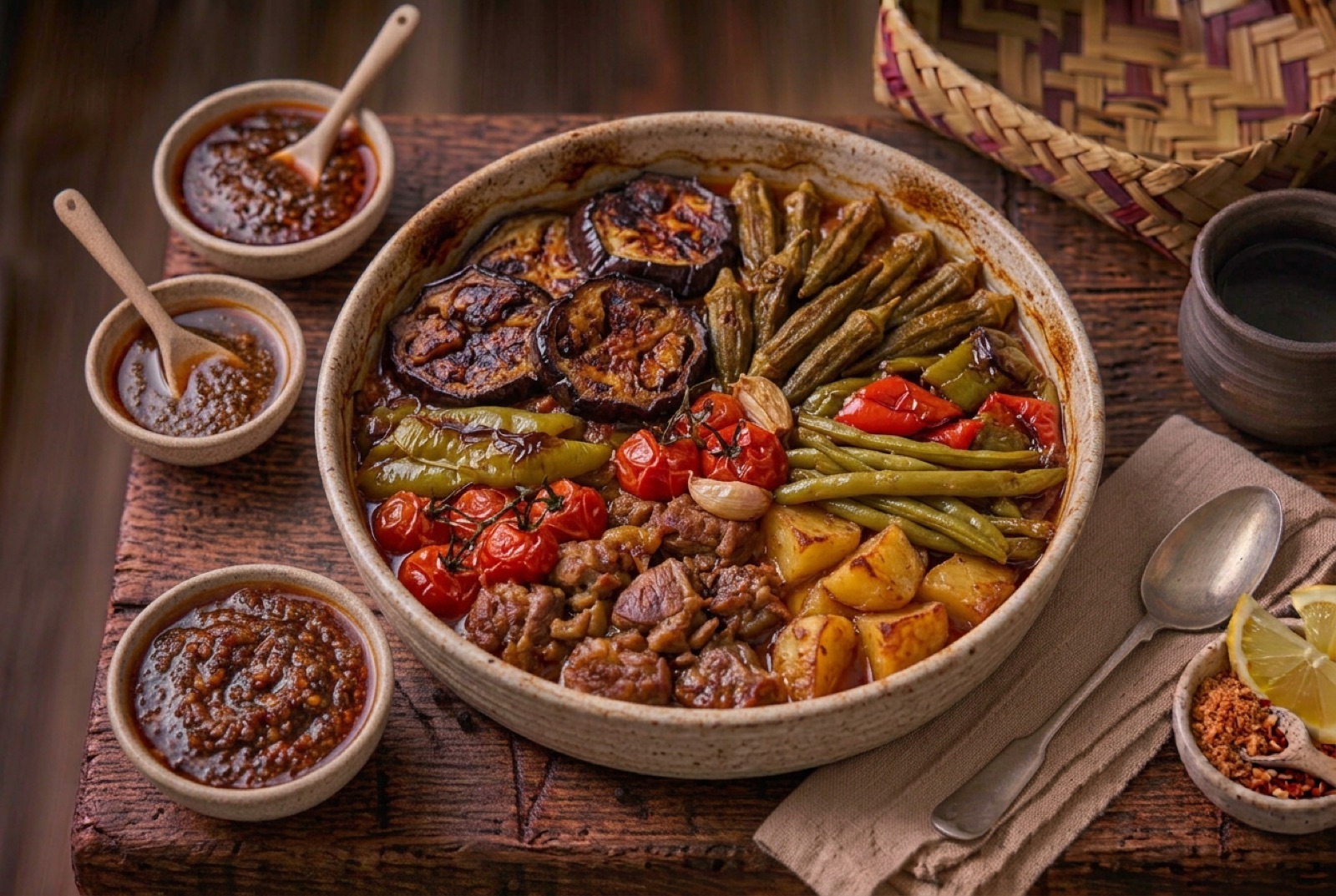
North Macedonia2 hr 55 min
Turli Tava
Macedonian Mixed Vegetable and Meat Bake

North Macedonia2 hr 55 min
Pastrmajlija
Macedonian Boat-Shaped Meat Flatbread
North Macedonia1 hr 30 min
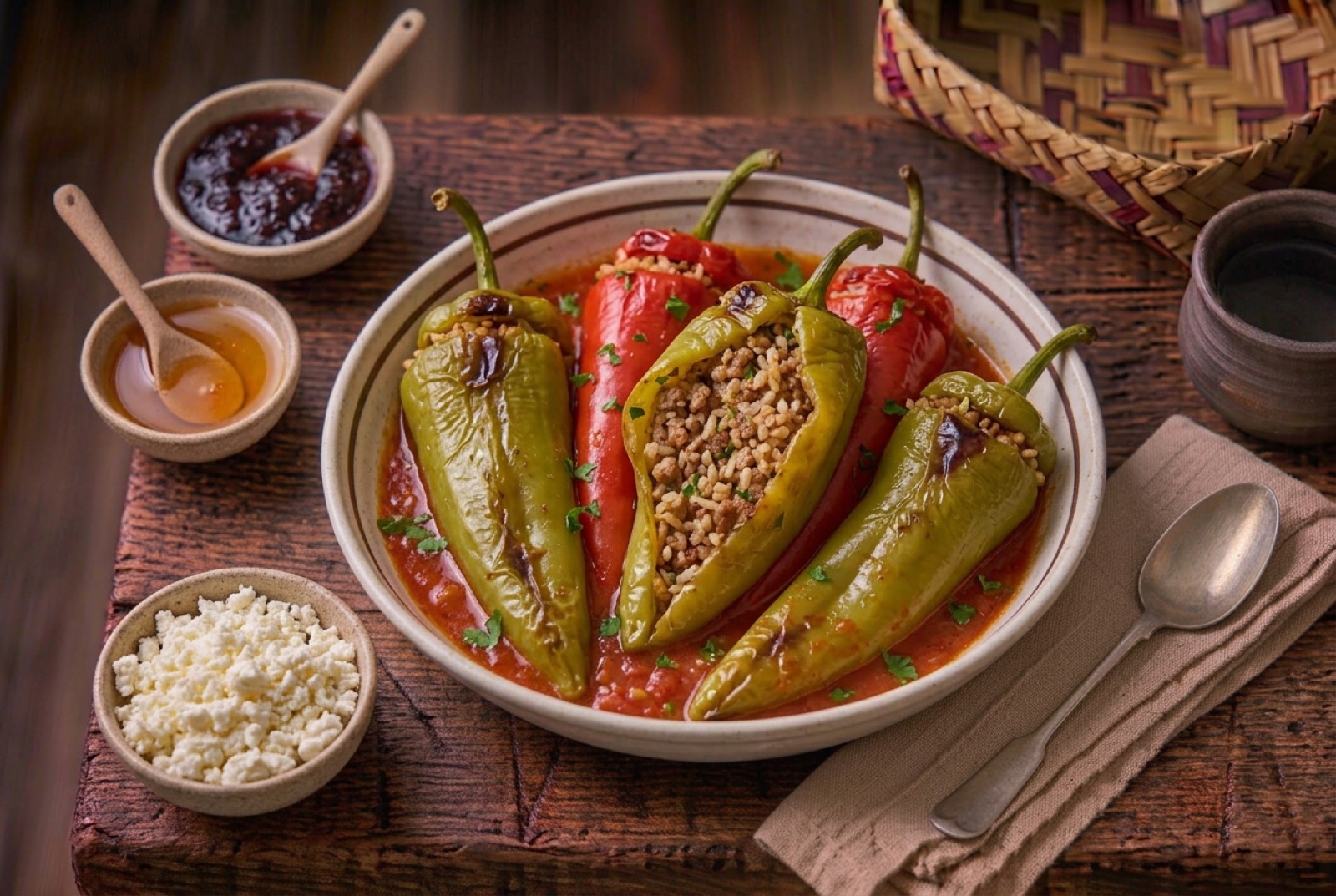
Polneti Piperki
Macedonian Stuffed Peppers in Tomato
North Macedonia3 hr 45 min
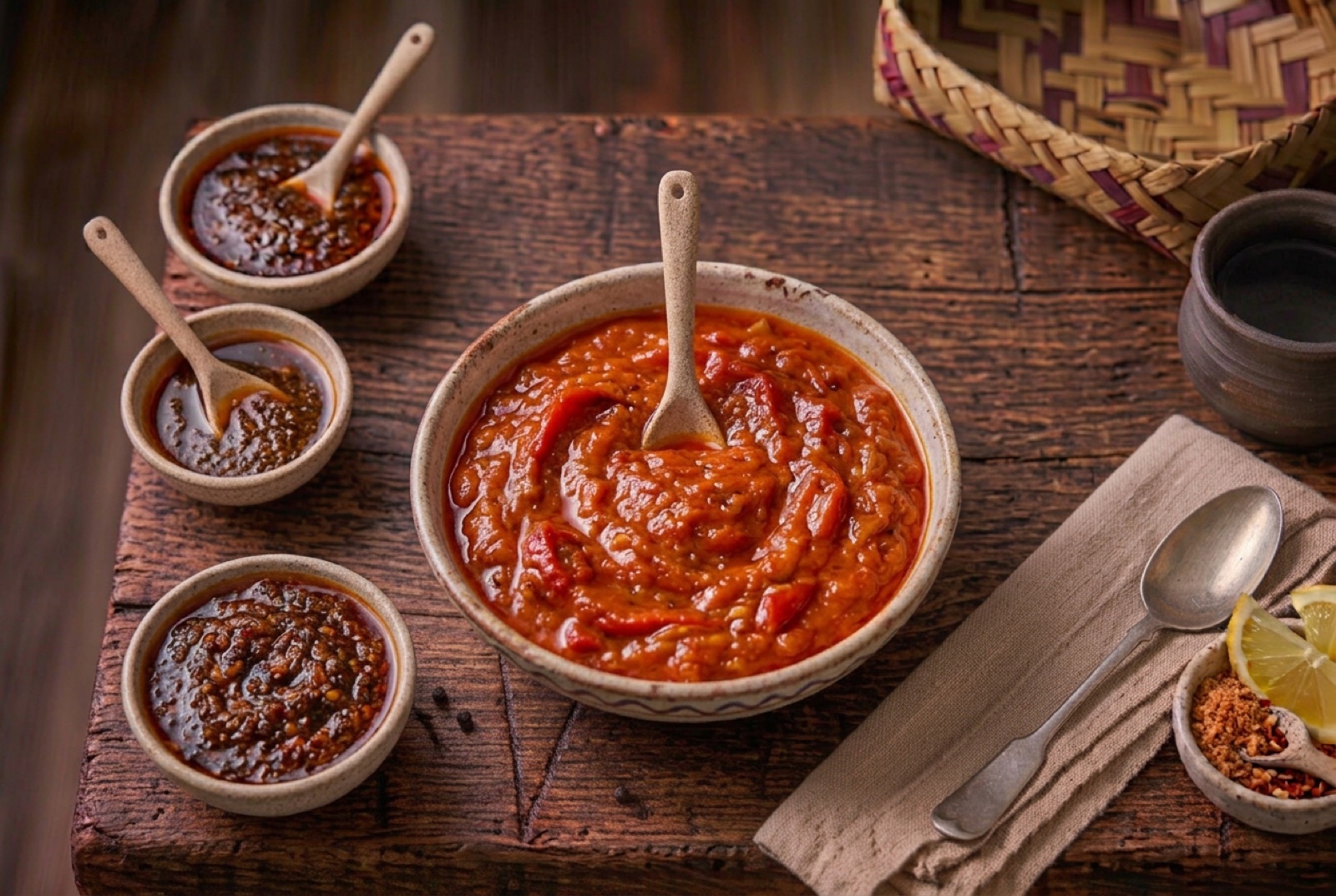
Macedonian Ajvar
Roasted Red Pepper Relish
Keep exploring North Macedonia.
North Macedonia has 9 more dishes in the atlas — Macedonian Ajvar and Mekici, and 7 more.
All North Macedonia recipes Pork shoulder recipes Mushrooms recipes Bell pepper recipes maingluten freenut freeRecipe by The DishRoute Kitchen · published August 20, 2026 · updated August 20, 2026